

Nissan Xterra Camshaft Position Sensor Location and Replacement Guide


Content in this publication
- Understanding the Camshaft Position Sensor
- Camshaft Sensor Location by Model Year
- Symptoms of a Faulty Camshaft Position Sensor
- How to Test the Sensor
- Tools You’ll Need
- Step-by-Step Replacement Process
- Why This Sensor Matters
- Preventive Maintenance Tips
- Common Questions
- Model Reference Table
- Final Thoughts
Understanding the Camshaft Position Sensor
The camshaft position sensor is a critical component that helps your Nissan Xterra’s engine determine the exact timing for fuel injection and ignition. When it starts to fail, you may experience rough idling, poor acceleration, stalling, or even a complete no-start condition. Knowing where it’s located and how to inspect or replace it can save you both time and costly repairs.
Camshaft Sensor Location by Model Year
2000–2004 Nissan Xterra (3.3L V6 Engine)
On early-generation Nissan Xterra models equipped with the 3.3-liter V6 engine, the camshaft position sensor is mounted behind the right-hand (passenger-side) cylinder head, close to the firewall.
This location makes access somewhat tight, so patience and precision are essential. To reach it:
- Open the hood and stand at the passenger side of the engine bay.
- Locate the rear of the engine block near the firewall.
- Use a flashlight to identify a small sensor with a wire connector secured by a single 10 mm bolt.
- Move hoses gently to gain better visibility, but avoid pulling or stretching cables.
Pro Tip: Work only when the engine is cool to avoid burns. Wearing gloves helps prevent cuts from sharp edges near the firewall.
2005–2015 Nissan Xterra (4.0L V6 Engine)
The second-generation Xterra’s 4.0-liter V6 engine offers much easier access to the sensor. You’ll find it on the front of the engine, near the timing chain cover, on the passenger side.
To locate it:
You may be interested in reading Nissan Xterra Transmission Fluid: Complete Guide for All Models
- Open the hood and look directly at the timing chain cover — the large metal casing behind the radiator fan and pulleys.
- The sensor sits on the side of this cover, close to where the valve cover ends.
- Look for a plastic connector attached with a single bolt.
- Use a flashlight to confirm the wire runs upward toward the engine control unit (ECU).
This layout makes replacement far easier than the older configuration since you can reach the sensor directly from the front without removing major components.
Symptoms of a Faulty Camshaft Position Sensor
A defective sensor disrupts synchronization between the crankshaft and camshaft, leading to poor performance and inconsistent ignition timing. Watch for these warning signs:
- Engine misfires or stalls unexpectedly
- Extended cranking before the engine starts
- Rough idling or poor throttle response
- Reduced fuel economy
- Check Engine Light displaying P0340 or P0345 codes
If these issues arise, inspecting or testing the camshaft position sensor should be a top priority.
How to Test the Sensor
Step 1: Scan for Error Codes
Use an OBD-II scanner under the dashboard to check for related trouble codes. Codes P0340 or P0345 confirm a camshaft position circuit malfunction.
Step 2: Visual Inspection
Check the sensor and its wiring harness for:
- Cracked plastic housing
- Loose or corroded connectors
- Damaged or oil-soaked wiring
Step 3: Voltage and Signal Testing
With a multimeter, test the signal output from the sensor while cranking the engine. A healthy sensor should produce a consistent voltage pulse. If no signal is detected, the sensor needs replacement.
You may be interested in readingNissan Xterra Transmission Fluid: Complete Guide for All ModelsYou may be interested in reading
 Nissan Xterra Engine Oil Capacity & Maintenance Guide
Tools You’ll Need
- 10 mm socket or wrench
- Flashlight or inspection light
- OBD-II scanner (optional but recommended)
- Multimeter (for signal testing)
- Safety gloves
Step-by-Step Replacement Process
- Disconnect the battery: Always disconnect the negative terminal to prevent electrical shorts.
- Locate the sensor: Use the section above depending on your Xterra’s engine.
- Remove the connector: Press the locking tab and pull gently to detach the wire harness.
- Unscrew the bolt: Use a 10 mm wrench or socket to remove the retaining bolt.
- Extract the sensor: Wiggle it carefully out of the housing — avoid using excessive force.
- Install the new sensor: Insert it straight into the slot and ensure it’s flush with the engine surface.
- Tighten the bolt: Do not overtighten — snug fit is enough.
- Reconnect the wiring harness and battery.
After installation, start the engine and confirm smooth idling and immediate start. Clear any stored codes using your OBD-II scanner.
Why This Sensor Matters
The camshaft position sensor enables the ECU to determine the exact camshaft rotation angle. This synchronization allows precise fuel injection and spark timing. Without accurate data, the engine “guesses,” causing inefficient combustion and potential misfires.
A failed sensor doesn’t just affect drivability — it can harm components like the catalytic converter due to unburned fuel entering the exhaust.
Preventive Maintenance Tips
- Inspect connectors every 20,000 miles.
- Keep the engine bay clean to prevent oil contamination.
- Replace the sensor proactively every 100,000 miles if signs of wear appear.
- Store a compact OBD-II scanner in your glove box for quick diagnostics.
Common Questions
Is it safe to drive with a bad camshaft sensor?
No. Driving with a malfunctioning sensor risks sudden stalling and increased fuel consumption. It’s best to replace it as soon as possible.
Can I replace it myself?
Yes. The procedure is simple with basic tools and can be completed in under 30 minutes on the 4.0L engine.
Do I need to reset anything after replacement?
Usually, no. Once the new sensor is installed and the battery reconnected, the ECU will automatically recalibrate. You may clear the old fault codes with a scanner.
You may be interested in readingNissan Xterra Transmission Fluid: Complete Guide for All ModelsYou may be interested in reading
Nissan Xterra Engine Oil Capacity & Maintenance GuideYou may be interested in reading
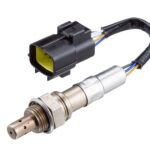 Nissan Xterra Oxygen Sensor: Complete Guide to Location, Symptoms, and Replacement
Will it cause poor fuel economy?
Absolutely. Incorrect timing from a failed sensor leads to inefficient combustion and wasted fuel.
Model Reference Table
| Model Year | Engine Type | Sensor Location | Accessibility |
|---|---|---|---|
| 2000–2004 | 3.3L V6 | Behind right cylinder head | Difficult |
| 2005–2015 | 4.0L V6 | Front of engine near timing chain cover | Easy |
Final Thoughts
By understanding your Nissan Xterra camshaft position sensor location, you gain control over one of the most critical aspects of engine performance. Whether you own an early 3.3L model or a newer 4.0L version, locating, testing, and replacing the sensor is well within reach. With a few basic tools, a steady hand, and attention to detail, you can restore your Xterra’s smooth performance and avoid unnecessary mechanic costs.
If you want to know other articles similar to Nissan Xterra Camshaft Position Sensor Location and Replacement Guide you can visit the category Service and Parts.
Ford Mondeo Key Fob Not Working: Complete Troubleshooting & Fix Guide
Ford Mondeo Gearbox Replacement Cost: What You Really Need to Know
Ford Mondeo Alternator Replacement Cost: Complete Guide for Smart Owners
Ford Mondeo Oil Service Reset: The Complete DIY Guide We Wish We Had Earlier
Ford Mondeo Service Reset: The Complete DIY Guide We Actually Use
Ford Mondeo Headlight Bulb Replacement: The Complete DIY Guide
Leave a Reply
More content of your interest