

Peugeot 308 GTI Reliability: The Honest Long-Term Verdict

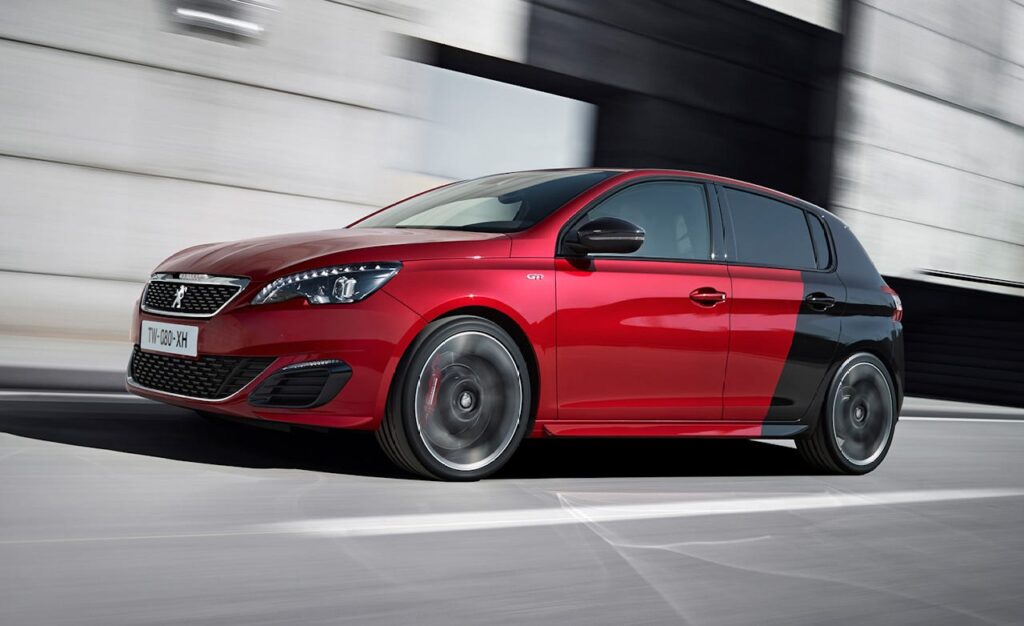
The Peugeot 308 GTI is one of those cars that sneaks up on you. On paper, it’s a front-wheel-drive hot hatch with a 1.6-litre turbo engine. In reality? It’s a lightweight missile with a proper mechanical limited-slip differential and enough character to make your commute feel like qualifying laps at Brands Hatch.
But here’s the real question we all ask before buying one:
Is the Peugeot 308 GTI reliable?
Today, we’re diving deep—beyond forum gossip and surface-level reviews—to unpack real-world ownership, mechanical durability, common issues, maintenance costs, and whether this French firecracker is a smart long-term buy.
Content in this publication
- Understanding the Peugeot 308 GTI Platform
- Engine Reliability: The 1.6 THP Under Pressure
- Timing Chain: A Weak Link or Overblown Fear?
- Turbocharger Longevity
- Gearbox and Clutch Reliability
- Differential Durability: The Torsen LSD
- Cooling System: Can It Handle the Heat?
- Electrical Reliability and Electronics
- Suspension and Chassis Durability
- Brake System Reliability
- Real-World Owner Feedback
- How Does It Compare to Rivals?
- High Mileage Peugeot 308 GTI: What Happens After 100k?
- Maintenance Costs Breakdown
- Reliability by Model Year
- Track Use vs Daily Driving Reliability
- Modifications and Reliability
- What Usually Kills a 308 GTI?
- Warning Signs to Watch For
- Long-Term Ownership Verdict
Understanding the Peugeot 308 GTI Platform
Before judging reliability, we need context.
The 308 GTI (particularly the 2015–2021 generation) sits on the EMP2 platform, shared with various PSA models. Under the bonnet lies the 1.6 THP turbocharged engine—tuned aggressively in GTI trim to produce up to 270 PS.
That’s serious power from a small displacement. And whenever engineers extract big numbers from small engines, reliability becomes a key talking point.
Engine Reliability: The 1.6 THP Under Pressure
Is the 1.6 THP a Strong Engine?
Short answer: Yes—when maintained properly.
The 1.6 THP in the 308 GTI is not the same fragile early-generation unit seen in older Peugeot and Mini applications. By the time it powered the GTI, PSA had:
- Improved timing chain design
- Strengthened pistons and internals
- Refined oil circulation
- Updated ECU calibrations
Still, this engine runs high boost. And high boost means heat. Heat means stress. Stress demands maintenance discipline.
We’ve seen these patterns among owners:
- Carbon buildup (direct injection issue)
- High oil consumption if neglected
- Ignition coil wear
- Occasional thermostat housing leaks
- Turbo wastegate rattle in high-mileage units
The key word here is occasional. These are not epidemic failures—but they do appear in poorly maintained examples.
Timing Chain: A Weak Link or Overblown Fear?
Earlier THP engines suffered timing chain stretch.
In the GTI? The revised setup is significantly more robust.
Still, we recommend:
- Oil changes every 5,000–7,000 miles
- Using high-quality synthetic oil (0W-30 or 5W-30 PSA-approved)
- Listening for cold start rattles
Preventative care transforms this from a concern into a non-issue.
Turbocharger Longevity
Turbochargers are like athletes. Treat them right, and they’ll run for years.
Abuse them—hard shutdowns, poor oil quality, aggressive remaps—and failure becomes likely.
With proper maintenance, the 308 GTI’s turbo regularly exceeds:
- 100,000+ miles without rebuild
- No shaft play issues
- Stable boost delivery
Gearbox and Clutch Reliability
The 308 GTI comes exclusively with a 6-speed manual gearbox.
Good news?
It’s durable.
Known Observations
- Clutch wear accelerates with track use
- Gear synchros can feel notchy in high-mileage cars
- No widespread gearbox failures reported
If driven aggressively daily, expect clutch replacement around 60–80k miles.
Differential Durability: The Torsen LSD
One of the GTI’s biggest strengths is its mechanical Torsen limited-slip differential.
Unlike electronic systems, this is a proper mechanical unit.
Reliability verdict:
- Extremely durable
- No common failure pattern
- Requires clean gearbox oil
For enthusiasts, this is a major win.
Cooling System: Can It Handle the Heat?
Performance engines live and die by cooling efficiency.
The 308 GTI’s cooling system is well designed, but:
You may be interested in reading Peugeot 308 SW Reliability: The Honest Long-Term Ownership Guide
- Thermostat housing leaks can occur
- Radiator fans may fail in rare cases
- Overheating usually linked to neglected coolant changes
Track use demands upgraded cooling for extreme climates—but for road driving, it’s solid.
Electrical Reliability and Electronics
Modern Peugeots have improved dramatically in electrical reliability.
The GTI benefits from:
- Stable ECU systems
- Few sensor failures
- Minimal infotainment glitches
Occasional issues include:
- Parking sensor faults
- Window regulator wear
- Battery drain if left unused
Nothing catastrophic. Mostly minor annoyances.
Suspension and Chassis Durability
The GTI features:
- Lowered sport suspension
- Stiffer bushings
- Larger brakes
What Wears Out?
- Front lower control arm bushes
- Drop links
- Brake discs (especially if tracked)
These are wear items, not design flaws.
Brake System Reliability
The 270 version features massive front discs with red calipers.
Stopping power is fantastic.
But:
- Discs are expensive
- Pads wear quickly under spirited driving
- Brake dust is heavy
Performance comes at a price.
Real-World Owner Feedback
Owners consistently report:
- Strong engine when serviced regularly
- Few major failures
- High reliability for a performance hatch
- Cheap to run compared to German rivals
Many cars exceed 100,000 miles with original engine internals intact.
How Does It Compare to Rivals?
Let’s be honest—we don’t buy hot hatches in isolation.
Compared to:
- Volkswagen Golf GTI
- Ford Focus ST
- Renault Megane RS
The 308 GTI holds up surprisingly well.
It’s:
- More reliable than older Megane RS turbo setups
- Comparable to Golf GTI Mk7 reliability
- Less prone to gearbox issues than some Focus ST units
That’s impressive for a French performance car stereotype.
High Mileage Peugeot 308 GTI: What Happens After 100k?
Beyond 100,000 miles:
Expect:
- Suspension refresh
- Clutch replacement
- Brake overhaul
- Possible carbon cleaning
But catastrophic engine failures? Rare when maintained.
Maintenance Costs Breakdown
Here’s what we typically budget:
- Oil service: Moderate
- Brake pads: Higher than standard 308
- Discs: Expensive (especially 270 variant)
- Clutch replacement: Moderate
- Major engine repair: Rare but costly
Overall? Affordable for a performance car.
Reliability by Model Year
2015–2016 Models
Early cars. Slightly more reported sensor glitches.
2017–2018 Facelift
Improved infotainment stability. Best balance of price and reliability.
2019–2021 Final Models
Most refined. Strong reliability record.
Track Use vs Daily Driving Reliability
Daily driven? Very reliable.
Tracked frequently?
- Brake wear skyrockets
- Oil temps need monitoring
- Suspension components wear faster
The car can handle track days—but maintenance intervals shrink.
You may be interested in readingPeugeot 308 SW Reliability: The Honest Long-Term Ownership GuideYou may be interested in reading
 Dacia Duster Insurance Group: What You Really Need to Know Before You Buy
Modifications and Reliability
Remaps push power beyond 300 PS easily.
But here’s the catch:
- Stock internals are strong, not invincible
- High boost tunes increase turbo stress
- Clutch lifespan decreases rapidly
If buying modified, inspect carefully.
What Usually Kills a 308 GTI?
Neglect.
Not design flaws.
Skipping oil changes.
Using cheap fuel.
Ignoring warning lights.
This engine rewards discipline and punishes laziness.
Warning Signs to Watch For
Before buying, check for:
- Rattling at cold start
- Excessive blue smoke
- Coolant smell
- Clutch slipping under boost
- Uneven brake wear
A pre-purchase inspection is strongly recommended.
Long-Term Ownership Verdict
So—is the Peugeot 308 GTI reliable?
Yes.
It’s not bulletproof like a naturally aspirated Toyota. But for a high-output turbocharged hot hatch, it performs impressively.
Maintain it properly, and it will reward you with:
- Strong engine longevity
- Engaging driving dynamics
- Manageable ownership costs
- Daily usability
It’s the kind of car that proves French engineering deserves more respect.
Final Thoughts: Should You Buy One?
If we’re honest with ourselves, buying a GTI is never just about reliability.
It’s about excitement. Character. That moment when boost hits mid-corner and you grin like a child.
The Peugeot 308 GTI delivers that feeling—without the horror stories some expect.
Treat it well, service it religiously, and it will serve you well in return.
Is it perfect?
No.
Is it fragile?
Also no.
It sits comfortably in that sweet spot where performance meets real-world durability.
And that’s exactly why it remains one of the most underrated hot hatches of its generation.
Frequently Asked Questions
1. Is the Peugeot 308 GTI engine reliable long term?
Yes, especially post-2015 revisions. Proper oil maintenance is critical.
2. Does the 308 GTI have timing chain problems?
Early THP engines did, but the GTI version is significantly improved.
3. Is it expensive to maintain?
More than a standard 308, but cheaper than many German rivals.
4. How many miles can a 308 GTI last?
With good maintenance, 150,000+ miles is achievable.
5. Is the 308 GTI reliable for daily driving?
Absolutely. It balances comfort and performance very well.
You may be interested in readingPeugeot 308 SW Reliability: The Honest Long-Term Ownership GuideYou may be interested in reading
Dacia Duster Insurance Group: What You Really Need to Know Before You BuyYou may be interested in reading
 Are Dacia Dusters Any Good? Honest Real-World Ownership Review
If you want to know other articles similar to Peugeot 308 GTI Reliability: The Honest Long-Term Verdict you can visit the category Blog.
Volvo XC60 Quality: A Deep Dive Into Premium Craftsmanship and Everyday Excellence
Volvo XC60 Reliability by Year: The Complete Owner’s Guide

Which Ford Kuga Engine Is Best? The Ultimate Buyer’s Guide

Pros and Cons Mazda CX-30: The Real-World Ownership Breakdown
Peugeot 308 Years to Avoid: The Ultimate Buyer’s Guide

Dacia Duster Reliability: The Real Story Behind This Budget SUV
Leave a Reply
More content of your interest