
Skoda Fabia Fuel Tank Capacity: How Far Can We Really Go?

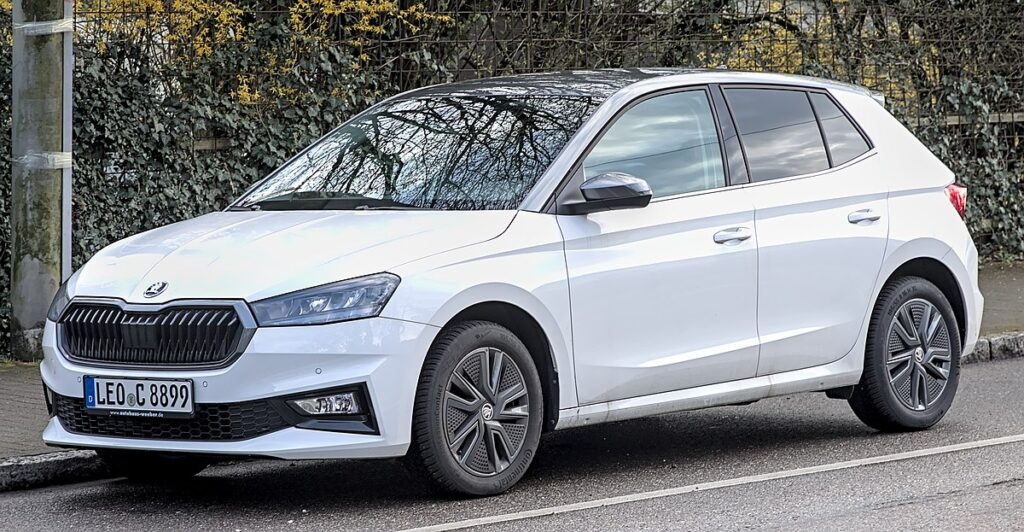
Fuel tank capacity doesn’t sound exciting—until we’re coasting past a petrol station with 40 miles left in the tank and no idea when the next one appears. That’s when numbers start to matter. With the Skoda Fabia, those numbers tell a surprisingly practical story.
The Fabia has always been a small car with big ambitions: city-friendly, motorway-capable, and designed for drivers who care about efficiency without sacrificing freedom. In this guide, we unpack everything about Skoda Fabia fuel tank capacity—across generations, engines, body styles, and real-world driving.
We’ll explore how far each Fabia can go, what affects its range, and how to squeeze every mile from every litre.
Content in this publication
- Why Fuel Tank Capacity Actually Matters
- Skoda Fabia Fuel Tank Capacity by Generation
- Hatchback vs Estate: Is There a Difference?
- Real-World Driving Range: What Those Litres Become
- How Driving Style Changes Everything
- Urban vs Motorway Use
- Fuel Tank Location and Design
- How to Maximise Your Fabia’s Range
- Is a Larger Tank Always Better?
- Comparing the Fabia to Rivals
- Long Trips in a Small Car: The Fabia Experience
- When Should We Refuel?
- The Psychology of Range
- Future Outlook: Will Fabia Tanks Change?
- Final Thoughts: Small Car, Big Horizon
- FAQs
Why Fuel Tank Capacity Actually Matters
Fuel tank size isn’t just a spec on a brochure. It directly shapes how we live with a car.
A larger tank means:
- Fewer stops on long journeys
- More flexibility in rural areas
- Better planning for commuters
- Less “range anxiety” on motorways
In a supermini like the Fabia, tank capacity becomes part of the car’s personality. Is it a short-hop city runner? Or a surprisingly capable road-tripper?
Spoiler: it’s the second one.
Skoda Fabia Fuel Tank Capacity by Generation
Across four generations, the Fabia has remained consistent, with subtle upgrades as engines became more efficient.
Fabia Mk1 (1999–2007)
- Fuel tank capacity: ~45 litres
- Petrol & diesel variants
- Simple, lightweight platform
This first Fabia already punched above its weight. A 45-litre tank in a small hatchback meant weekend trips were easy without constant refuelling.
Fabia Mk2 (2007–2014)
- Fuel tank capacity: ~45 litres
- Improved aerodynamics
- More refined petrol and TDI engines
Skoda kept the same tank size but improved efficiency. The result? More miles per tank without changing the hardware.
Fabia Mk3 (2014–2021)
- Fuel tank capacity: ~45 litres
- Lighter MQB-A0 platform
- Turbocharged TSI engines
With better MPG across the range, the Mk3 Fabia quietly became one of the longest-range cars in its class.
Fabia Mk4 (2021–Present)
- Fuel tank capacity: ~50 litres
- Larger body, wider stance
- Even more efficient powertrains
This is where things get interesting. The latest Fabia grows its tank to around 50 litres, turning a humble supermini into a genuine long-distance companion.
Hatchback vs Estate: Is There a Difference?
The Fabia Estate (Combi) often surprises people. It looks bigger, feels roomier—but in most generations, it shares the same tank size as the hatchback.
Typical figures:
- Hatchback: 45–50 litres
- Estate: 45–50 litres
What changes isn’t capacity—it’s how we use the range. Estate owners tend to:
- Carry more weight
- Travel longer distances
- Drive on motorways more often
That means the usable range can feel different, even with the same tank.
Real-World Driving Range: What Those Litres Become
Tank size is only half the story. MPG does the rest.
Let’s translate litres into miles.
Typical Fabia Range by Engine Type
- 1.0 MPI Petrol
- MPG: ~50–55
- 45L tank → ~500–550 miles
- 50L tank → ~550–600 miles
- 1.0 TSI Petrol
- MPG: ~55–60
- 45L → ~560–600 miles
- 50L → ~620–660 miles
- 1.4 / 1.6 TDI Diesel
- MPG: ~65–75
- 45L → ~650–750 miles
- 50L → ~720–830 miles
That’s not “small car” range. That’s cross-country range.
How Driving Style Changes Everything
We all know the feeling: two drivers, same car, wildly different fuel bills.
You may be interested in reading Skoda Fabia Timing Belt Replacement Cost – What We Really Pay
Range is shaped by:
- Speed consistency
- Gear selection
- Load and passengers
- Tyre pressure
- Terrain (city vs motorway)
A Fabia driven gently on the motorway can feel endless. The same car in stop-start city traffic will drink noticeably more.
Think of the tank as a backpack. The heavier we walk, the faster we empty it.
Urban vs Motorway Use
City Driving
- Frequent stops
- Cold starts
- Lower gears
- Higher fuel consumption
In town, a 45-litre tank might feel like:
- 380–450 miles per fill
Motorway Cruising
- Steady speeds
- Higher gears
- Optimal engine load
On long trips:
- 500–750 miles per tank is realistic
This is why Fabia owners often underestimate how capable their car really is.
Fuel Tank Location and Design
The Fabia’s tank is:
- Mounted beneath the rear seat area
- Made from high-strength plastic
- Designed to reduce slosh and vapour
This design:
- Improves crash safety
- Keeps weight low
- Maintains cabin and boot space
We never see it—but it’s doing a quiet, crucial job.
How to Maximise Your Fabia’s Range
Small habits create big differences.
Simple Range-Boosting Tips
- Keep tyres properly inflated
- Avoid unnecessary roof racks
- Use cruise control on motorways
- Shift up early in petrol models
- Don’t carry permanent boot clutter
Each tip adds a few extra miles. Together, they can stretch a tank by 10–15%.
Is a Larger Tank Always Better?
Not necessarily.
A bigger tank:
- Adds weight
- Increases fill-up cost
- Takes longer to refuel
Skoda strikes a smart balance. The Fabia’s tank is:
- Large enough for real journeys
- Small enough to stay light and agile
- Matched perfectly to efficient engines
It’s not about more. It’s about enough.
Comparing the Fabia to Rivals
In the supermini class:
| Model | Tank Capacity |
|---|---|
| Skoda Fabia Mk4 | ~50L |
| VW Polo | ~40–45L |
| Ford Fiesta | ~42L |
| Toyota Yaris | ~36–42L |
| Peugeot 208 | ~44L |
The Fabia quietly leads the pack.
That extra 5–10 litres is the difference between:
- “We should stop soon.”
- “We’ll make it home.”
Long Trips in a Small Car: The Fabia Experience
There’s something liberating about watching the fuel gauge move slowly.
In a Fabia, long trips feel:
You may be interested in readingSkoda Fabia Timing Belt Replacement Cost – What We Really PayYou may be interested in reading
 Skoda Fabia Clutch Replacement Cost: What You’ll Really Pay
- Calm
- Predictable
- Low-stress
We stop when we want—not when the car demands it.
That’s real freedom.
When Should We Refuel?
Modern Fabias are conservative with warnings.
- Low fuel light usually appears with:
- ~6–7 litres remaining
- That equals:
- 50–90 miles of range
It’s a safety net, not a dare.
Treat it as a polite nudge, not a challenge.
The Psychology of Range
Fuel capacity isn’t just technical—it’s emotional.
A bigger tank gives us:
- Confidence
- Flexibility
- Calm
The Fabia doesn’t shout about it. It just delivers.
Future Outlook: Will Fabia Tanks Change?
As electrification grows:
- Mild-hybrid systems improve MPG
- Tanks may shrink slightly
- Range may stay the same
Efficiency replaces volume.
The goal remains unchanged:
Go further with less.
Final Thoughts: Small Car, Big Horizon
The Skoda Fabia proves something beautiful: size doesn’t limit ambition.
With up to 50 litres on board and engines that sip rather than gulp, this humble supermini becomes a quiet marathon runner. It’s the car that turns “just popping out” into “maybe we’ll keep driving.”
We don’t buy a Fabia for drama.
We buy it for confidence.
And nothing builds confidence like knowing how far we can go.
FAQs
1. What is the fuel tank capacity of the Skoda Fabia?
Most generations have a 45-litre tank, while the latest Fabia Mk4 offers around 50 litres.
2. Does the Fabia Estate have a larger fuel tank?
No, hatchback and estate versions usually share the same tank size.
3. How far can a Skoda Fabia go on a full tank?
Depending on engine and driving style, between 450 and 800 miles.
4. When does the low fuel light come on?
Typically with around 6–7 litres remaining.
5. Is the Fabia’s tank large for its class?
Yes. It’s among the largest in the supermini segment.
Skoda Fabia Timing Belt Replacement Cost – What We Really PayYou may be interested in reading
Skoda Fabia Clutch Replacement Cost: What You’ll Really PayYou may be interested in reading
 Skoda Fabia Handbrake Adjustment – The Complete DIY Guide
If you want to know other articles similar to Skoda Fabia Fuel Tank Capacity: How Far Can We Really Go? you can visit the category Service and Parts.
Ford Mondeo Towing Capacity: The Complete Real-World Guide
Ford Mondeo Key Fob Battery Change: The Complete Step-by-Step Guide
Ford Mondeo Boot Space: The Complete Practical Guide for Everyday Drivers
Ford Mondeo Estate Boot Size: The Ultimate Practicality Guide
Ford Mondeo Tyre Pressure: The Complete Guide for Safe, Smooth Driving
Ford Mondeo Length: Dimensions, Generations, and Real-World Insights
Leave a Reply
More content of your interest