

Skoda Fabia Tyre Pressure Reset – The Complete Owner’s Guide

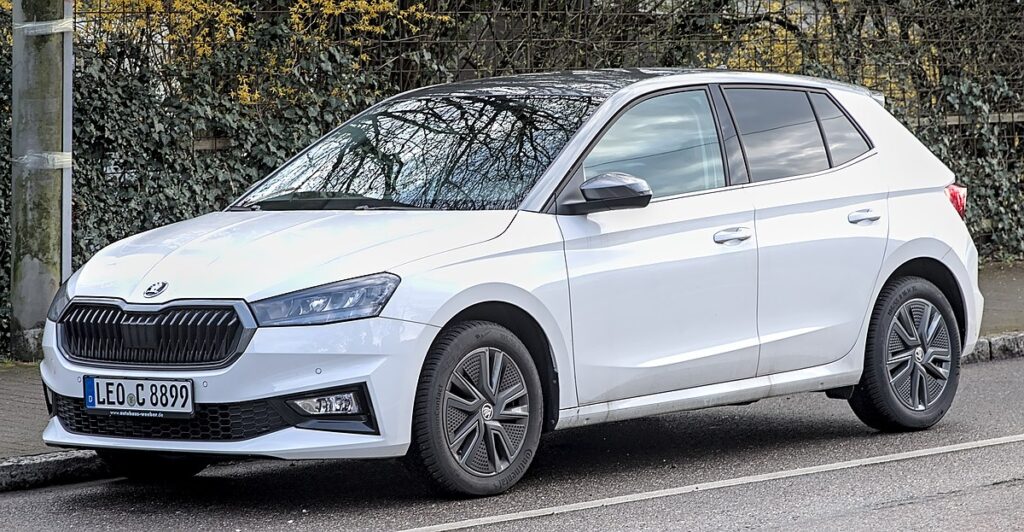
Tyre pressure warnings have a knack for popping up at the worst possible moment. You’re already late, coffee in hand, engine running—and there it is: the amber tyre symbol glowing like a tiny judge of your life choices. If you drive a Skoda Fabia, this moment is familiar.
The good news? Resetting the tyre pressure system in a Fabia is simple once you understand how it thinks. And that’s what this guide is all about. We’re not just pressing buttons—we’re decoding the logic behind the warning so you can stay one step ahead of it.
Whether you drive a Mk1, Mk2, Mk3, or the latest Fabia, we’ll walk you through:
- Why the light comes on
- What it actually measures
- How to reset it correctly
- Common mistakes that keep the warning alive
- Real-world habits that stop it coming back
Let’s take the mystery out of that dashboard icon.
Content in this publication
- How the Skoda Fabia Tyre Pressure System Works
- Why the Warning Light Appears
- Before You Reset: Do This First
- Skoda Fabia Tyre Pressure Reset – Step by Step
- What Happens After a Reset?
- Common Reset Mistakes We See All the Time
- When the Light Won’t Go Out
- Real-World Driving Scenarios
- The Psychology of the Warning Light
- Tyre Pressure Habits That Keep the Light Off
- Is It Safe to Drive With the Light On?
- Reset vs Repair – Knowing the Difference
- The Reset as a Ritual
- Closing Thoughts
- FAQs
How the Skoda Fabia Tyre Pressure System Works
Unlike some cars that use physical sensors inside each wheel, most Fabia models rely on an indirect TPMS. It doesn’t measure air pressure directly. Instead, it watches wheel speed through the ABS system.
A softer tyre rolls differently. The system spots that change and says, “Something’s off.”
It’s clever. It’s also a little sensitive.
That’s why the system needs a reset whenever you:
- Inflate your tyres
- Change wheels
- Rotate front and rear tyres
- Replace a punctured tyre
- Adjust pressure for heavy loads
Without a reset, the car still thinks the old pressures are correct.
Why the Warning Light Appears
The Fabia isn’t accusing you of neglect. It’s reacting to change.
Common triggers include:
- Seasonal temperature drops
- Slow leaks or punctures
- Uneven wear
- After visiting a tyre shop
- Swapping from summer to winter wheels
Sometimes, it even lights up after a perfectly normal motorway run. Heat expands air. Pressure rises. Then it cools. The system notices the difference and panics politely.
Before You Reset: Do This First
Resetting without correcting the pressure is like silencing a smoke alarm while the toast is still burning.
Always:
- Park on a flat surface
- Let the tyres cool for 20–30 minutes
- Check pressures with a reliable gauge
- Inflate to the values on the door jamb sticker
Typical Fabia pressures range between:
- Front: 32–36 PSI
- Rear: 30–34 PSI
Exact values depend on engine, wheels, and load.
Only reset after all tyres are correct.
Skoda Fabia Tyre Pressure Reset – Step by Step
Many models have a physical TPMS button.
- Switch ignition on (engine can be off)
- Locate the TPMS button—often near the gear lever or glovebox
- Press and hold for 2–3 seconds
- Listen for a chime or watch for a dash confirmation
- Start driving normally
The system now treats current pressures as the new baseline.
For Fabia Mk3 and Mk4 (Infotainment Method)
Newer models reset through the screen.
You may be interested in reading Skoda Fabia Window Regulator Replacement: The Complete Hands-On Guide
- Turn ignition on
- Open the infotainment system
- Navigate to:
- Vehicle → Settings → Tyres
- Select Store Tyre Pressures
- Confirm
That’s it. The car recalibrates silently in the background.
What Happens After a Reset?
The Fabia enters a “learning phase.”
Over the next few miles, it observes:
- Wheel speed
- Rolling circumference
- Driving patterns
It builds a new reference profile. If a tyre loses pressure later, it compares against this fresh baseline.
Drive normally for at least 10 minutes to complete calibration.
Common Reset Mistakes We See All the Time
Resetting With Low Tyres
This teaches the system that low is normal. The next puncture might go unnoticed.
Resetting on a Slope
Uneven load distribution skews the baseline.
Resetting After Only One Tyre Is Inflated
The system assumes imbalance is correct.
Ignoring Temperature Effects
Cold mornings can drop PSI by 3–5 points. Always check when tyres are cold.
When the Light Won’t Go Out
Sometimes the warning persists.
Try this sequence:
- Recheck all four tyres
- Add 2 PSI above recommended
- Reset
- Drive 10–15 minutes
- Lower back to spec
- Reset again
If it still remains:
- Check for slow punctures
- Inspect valve stems
- Scan for ABS faults
A failing wheel speed sensor can mimic pressure loss.
Real-World Driving Scenarios
Long Motorway Trips
Sustained speed warms tyres. Pressure rises. When you stop and restart, the system may detect change.
Reset after the trip once tyres cool.
Seasonal Wheel Changes
Winter wheels? New alloys? Always reset immediately after installation.
The system must relearn rolling characteristics.
Heavy Loads and Towing
Extra weight flattens tyres slightly. Inflate to the “full load” values and reset.
Otherwise, the light becomes a regular travel companion.
The Psychology of the Warning Light
That little amber icon doesn’t just warn—it nags.
You may be interested in readingSkoda Fabia Window Regulator Replacement: The Complete Hands-On GuideYou may be interested in reading
 Skoda Fabia Headlight Bulb Type – The Complete Owner’s Guide
It makes us:
- Second-guess long trips
- Pull into petrol stations unnecessarily
- Lose trust in the car
A proper reset restores confidence. It turns the system back into a guardian, not a heckler.
Tyre Pressure Habits That Keep the Light Off
- Check pressures monthly
- Use the same gauge consistently
- Adjust when tyres are cold
- Reset after any change
- Inspect for nails or screws regularly
Think of the system like a memory. You’re teaching it what “healthy” looks like.
Is It Safe to Drive With the Light On?
Short distances? Usually yes.
But the light means:
- Reduced grip
- Longer braking distance
- Increased fuel consumption
- Higher blowout risk
It’s a whisper before a shout. Listen early.
Reset vs Repair – Knowing the Difference
A reset hides nothing.
If a tyre loses air again within days, that’s not electronics—that’s physics.
The Fabia is telling you a story. The trick is knowing when it’s a false alarm and when it’s a confession.
The Reset as a Ritual
We like to treat it as a ritual:
- Inflate
- Inspect
- Reset
- Drive
- Relax
It’s five minutes that can save a tyre, a wheel, or a roadside breakdown.
Closing Thoughts
The Skoda Fabia tyre pressure reset isn’t just a button press—it’s a conversation with your car.
You’re saying, “These are healthy tyres. Watch them.”
And the Fabia replies, “Got it. I’ll let you know if something changes.”
Once you understand that relationship, the warning light stops being an annoyance and becomes what it was meant to be: a quiet co-pilot keeping you safe.
FAQs
1. How long does the Fabia take to relearn after a reset?
Usually within 5–10 minutes of normal driving.
2. Can I reset without inflating the tyres?
You can—but you shouldn’t. It trains the system incorrectly.
No. Newer models use the infotainment screen instead.
4. Will the reset clear a puncture?
No. It only recalibrates the reference pressure.
5. Why does the light return after a few days?
Most often due to a slow leak or temperature-related pressure loss.
You may be interested in readingSkoda Fabia Window Regulator Replacement: The Complete Hands-On GuideYou may be interested in reading
Skoda Fabia Headlight Bulb Type – The Complete Owner’s GuideYou may be interested in reading
 Kia Niro Boot Space: How Practical Is It Really?
If you want to know other articles similar to Skoda Fabia Tyre Pressure Reset – The Complete Owner’s Guide you can visit the category Service and Parts.
Ford Mondeo Towing Capacity: The Complete Real-World Guide
Ford Mondeo Key Fob Battery Change: The Complete Step-by-Step Guide
Ford Mondeo Boot Space: The Complete Practical Guide for Everyday Drivers
Ford Mondeo Estate Boot Size: The Ultimate Practicality Guide
Ford Mondeo Tyre Pressure: The Complete Guide for Safe, Smooth Driving
Ford Mondeo Length: Dimensions, Generations, and Real-World Insights
Leave a Reply
More content of your interest