

Suzuki Swift Engine Oil Capacity: Complete Guide for Every Generation & Engine Type

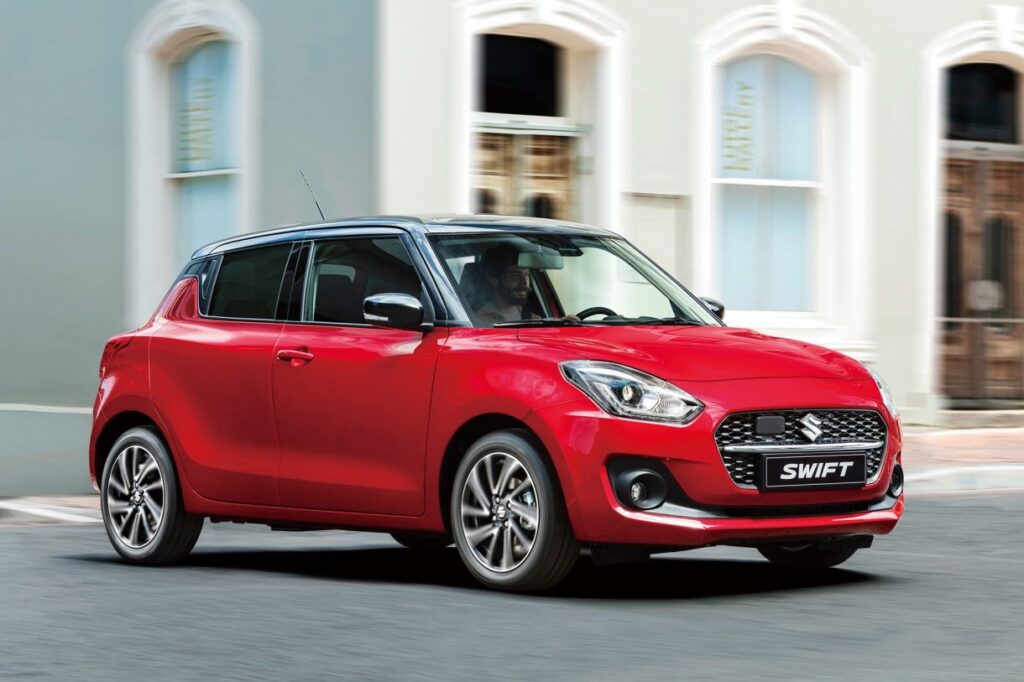
Maintaining the correct engine oil capacity is one of the simplest yet most critical steps in keeping a Suzuki Swift running smoothly. As a range that spans decades, multiple generations, and a wide variety of engines—from the early G-series units to the modern DualJet and DDiS diesels—the Swift requires precise oil quantities and interval timing for optimal performance.
Below, we deliver the most comprehensive, detailed, and search-optimised engine oil capacity guide for the Suzuki Swift, covering every model from 1989 to the present, including petrol, diesel, AllGrip, and high-performance engine variants.
Content in this publication
- Understanding Suzuki Swift Engine Oil Capacity by Generation
- Suzuki Swift SF (1989–2003): Engine Oil Capacities
- Suzuki Swift RS (2004–2010): Engine Oil Capacities
- Suzuki Swift AZ (2010–Present): Engine Oil Capacities
- Recommended Engine Oils for Suzuki Swift
- Key Symptoms of Incorrect Oil Levels
- How Much Oil Should You Buy?
- Service Interval Tips for Long Engine Life
- Conclusion
- FAQs
Understanding Suzuki Swift Engine Oil Capacity by Generation
To provide the clearest structure, we break down the information by Swift generation and engine code, offering exact oil fill quantities, filter capacities, and recommended service intervals.
Suzuki Swift SF (1989–2003): Engine Oil Capacities
1.0L Swift (G10A Engine)
| Model Years | Engine Code | Oil Capacity (L) | Filter Capacity (L) | Oil Change Interval |
|---|---|---|---|---|
| 1989–1993 | G10A | 3.3 | 0.3 | 10,000 km / 6 months |
| 1994–2000 | G10A | 3.3 | 0.3 | 10,000 km / 12 months |
| 2001–2003 | G10A | 3.3 | 0.3 | 15,000 km / 12 months |
1.3L Swift (G13 Series Engines)
| Model | Engine Code | Oil Capacity | Filter | Interval |
|---|---|---|---|---|
| Swift 1.3 (1989–1993) | G13BA | 3.3 | 0.2 | 10,000 km / 6 months |
| Swift 1.3 (1994–2000) | G13BA | 3.3 | 0.3 | 10,000 km / 12 months |
| Swift 1.3 GTi 16V (1989–1997) | G13B | 3.3 | 0.2 | 10,000 km / 6 months |
| Swift 1.3 16V (2001–2003) | G13BB SOHC | 3.3 | 0.3 | 15,000 km / 12 months |
1.6L Swift (G16B Engine)
| Model | Engine Code | Capacity | Filter | Interval |
|---|---|---|---|---|
| 1.6 (1989–1997) | G16B | 3.3 | 0.2 | 10,000 km / 6 months |
| 1.6 4×4 (1991–1997) | G16B | 3.3 | 0.3 | 10,000 km / 6 months |
Suzuki Swift RS (2004–2010): Engine Oil Capacities
Petrol Engines (M-Series)
| Model | Engine Code | Capacity (L) | Interval |
|---|---|---|---|
| Swift 1.3 (2004–2010) | M13A | 3.7 | 15,000 km / 12 months |
| Swift 1.3 4×4 | M13A | 3.7 | 15,000 km / 12 months |
| Swift 1.5 | M15A | 3.7 | 15,000 km / 12 months |
| Swift 1.6 (2006–2010) | M16A | 3.7 | 15,000 km / 12 months |
Diesel Engines (Fiat-Sourced Z13DT)
| Model | Engine Code | Capacity (L) | Interval | Notes |
|---|---|---|---|---|
| Swift 1.3 Diesel (2005–2010) | Z13DT | 3.2 | 15,000 km / 12 months | Non-DPF |
| Swift 1.3 Diesel DPF | Z13DT | 3.2 | 15,000 km / 12 months | DPF regeneration requires correct low-SAPS oil |
Suzuki Swift AZ (2010–Present): Engine Oil Capacities
1.2L Petrol (K12B & K12B DualJet)
| Model | Engine Code | Capacity (L) | Filter (L) | Interval |
|---|---|---|---|---|
| 1.2 (2010–2014) | K12B | 3.1 | 0.2 | 15,000 km / 12 months |
| 1.2 DualJet (2014– ) | K12B DualJet | 3.1 | 0.2 | 15,000 km / 12 months |
| 1.2 AllGrip 4×4 (2013–2014) | K12B | 3.1 | 0.2 | 15,000 km / 12 months |
| 1.2 AllGrip DualJet (2014– ) | K12B DualJet | 3.1 | 0.2 | 15,000 km / 12 months |
1.6L Sport (M16A VVT)
| Model | Engine Code | Capacity | Filter | Interval |
|---|---|---|---|---|
| Swift Sport 1.6 (2012–2014) | M16A VVT | 3.9 | 0.2 | 15,000 km / 12 months |
| Swift Sport (2014– ) | M16A VVT | 3.9 | 0.2 | 15,000 km / 12 months |
Diesel Engines (D13A / DDiS)
| Model | Engine Code | Capacity | Interval | Type |
|---|---|---|---|---|
| 1.3 Diesel (2010–2014) | D13A | 3.2 | Flexible | Non-DPF |
| 1.3 Diesel DPF (2010–2014) | D13A | 3.2 | Flexible | DPF |
| 1.3 DDiS (2014– ) | D13A | 3.2 | Flexible | Updated emissions system |
These “Flexible” service schedules often adjust oil change intervals based on driving conditions—urban driving shortens the interval significantly.
You may be interested in reading Suzuki Swift Towing Capacity: The Complete, Expert Guide for Every Model Year
Recommended Engine Oils for Suzuki Swift
Petrol Engines
- 5W-30 Fully Synthetic (ACEA A5/B5 or A3/B4 depending on engine)
- 0W-20 for DualJet engines (improves fuel efficiency)
Diesel Engines
- 5W-30 Low-SAPS (ACEA C2/C3)
Required for DPF-equipped models.
High-Performance Swift Sport (M16A VVT)
- 5W-40 Fully Synthetic
- High-temperature resistance recommended for spirited driving
Key Symptoms of Incorrect Oil Levels
Keeping oil at the correct level is vital. Low or overfilled oil can cause:
- Ticking or knocking sounds
- Increased fuel consumption
- VVT malfunction (common on M-series engines)
- DPF clogging on diesel models
- Hard cold starts
- Excessive engine vibrations
How Much Oil Should You Buy?
To avoid running short, we recommend:
| Engine Type | Recommended Purchase |
|---|---|
| Small petrol (1.0–1.3L) | 4 litres |
| Mid-size petrol (1.5–1.6L) | 5 litres |
| 1.2 L K-Series | 4 litres |
| Diesel (Z13DT / D13A) | 4 litres |
| Swift Sport (M16A) | 5 litres |
This ensures enough oil for filling plus topping up after circulation.
Service Interval Tips for Long Engine Life
To maximise Swift reliability:
You may be interested in readingSuzuki Swift Towing Capacity: The Complete, Expert Guide for Every Model YearYou may be interested in reading
 How to Reset the Service Light on a Renault Captur: The Complete Expert Guide
- Change the oil earlier than scheduled if driving mostly short trips
- Always replace the oil filter at every change
- Use high-quality fully-synthetic oil
- Avoid mixing oil types
- Monitor oil every 1,000 km for consumption issues
- Clean or replace PCV valves periodically
Conclusion
This guide provides the most complete, engine-specific overview of Suzuki Swift oil capacities, serving as a one-stop resource for owners, technicians, and enthusiasts. By using the correct oil quantity and recommended viscosity, every Swift—from the earliest G-series models to the latest DualJet systems—can remain smooth, efficient, and reliable for years to come.
FAQs
1. What is the most common Suzuki Swift oil type?
5W-30 fully synthetic is the most widely used across petrol and diesel models.
2. How often should I change the oil on a Swift Sport?
Every 15,000 km or 12 months, but more frequently if driven hard.
3. Do diesel Swifts with DPF require special oil?
Yes—low-SAPS ACEA C2/C3 oil is mandatory to protect the DPF.
You may be interested in readingSuzuki Swift Towing Capacity: The Complete, Expert Guide for Every Model YearYou may be interested in reading
How to Reset the Service Light on a Renault Captur: The Complete Expert GuideYou may be interested in reading
 Renault Captur Dashboard Warning Lights: Complete Guide to All Symbols, Meanings & Fixes (2013–2024)
4. How do I know if my Swift is burning oil?
Check for blue smoke, low dipstick readings, or oily spark plugs.
5. Is it safe to slightly overfill the engine?
No—overfilling can damage seals, increase pressure, and cause engine fouling.
If you want to know other articles similar to Suzuki Swift Engine Oil Capacity: Complete Guide for Every Generation & Engine Type you can visit the category Service and Parts.
How to Reset Volvo XC60 Infotainment System: The Complete Practical Guide
Volvo XC60 Gearbox Oil Change: The Complete Expert Guide
Volvo XC60 Engine Management Light: Causes, Fixes, and What It Really Means

Skoda Kamiq Size Comparison: Dimensions, Space & Real-World Practicality
Volvo XC60 Headlight Adjustment for Europe: The Complete Practical Guide
Volvo XC60 City Safety Service Required: What It Means, Causes, and Fixes
Leave a Reply
More content of your interest