
Toyota Corolla Cross 0 to 60: Real-World Acceleration Explained

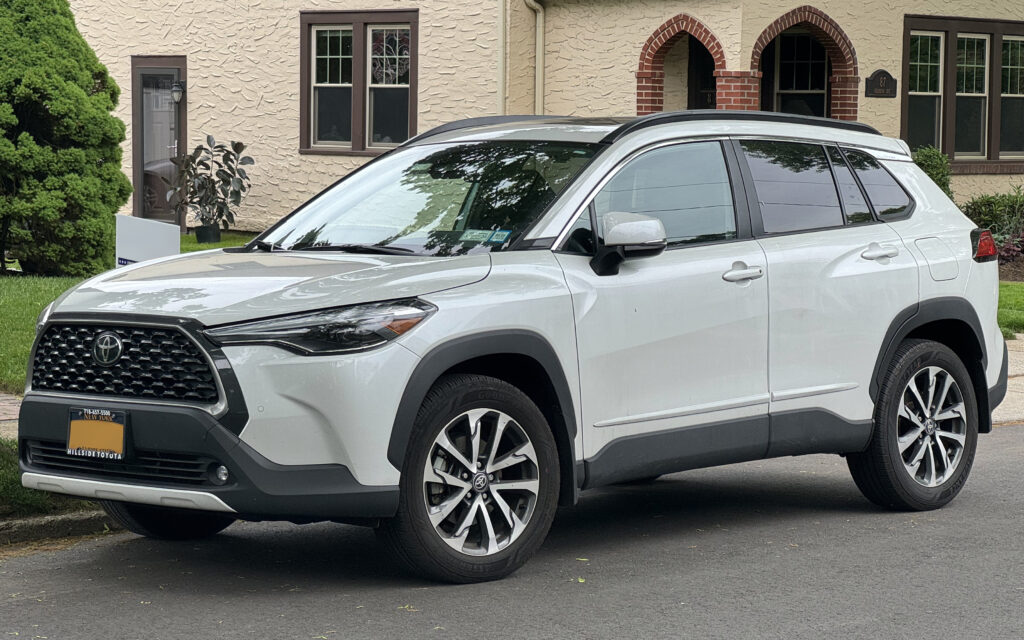
When we talk about acceleration, most people imagine sports cars launching like rockets. But here’s the twist — everyday SUVs are where acceleration actually matters the most. Merging into traffic, overtaking trucks, climbing hills with passengers… that’s real life.
So today we’re diving deep into the Toyota Corolla Cross 0-60 time — not just the numbers, but what they actually feel like behind the wheel.
Because specs on paper?
They’re just the trailer.
We want the full movie.
Content in this publication
- Why 0-60 Matters More Than Horsepower
- Toyota Corolla Cross Engine Options Overview
- Toyota Corolla Cross 0 to 60 Time (Official Estimates)
- Why the Hybrid Feels Faster Than It Should
- Real-World Acceleration: City Driving
- Highway Merging Performance
- AWD Impact on 0-60
- CVT vs eCVT: The Hidden Acceleration Factor
- Passenger and Cargo Effect on 0-60
- Cold Weather vs Hot Weather Acceleration
- Elevation Impact (Mountains vs Sea Level)
- Comparison With Competitors
- Is It Fast? Or Just Adequate?
- Throttle Response and Pedal Feel
- Fuel Economy vs Acceleration Trade-Off
- Towing and Hill Climbing
- Can You Improve 0-60 Performance?
- What Owners Usually Say
- The Psychology of “Enough Power”
- Final Thoughts: The Acceleration Philosophy
- Conclusion
- FAQs
Why 0-60 Matters More Than Horsepower
Horsepower sounds impressive at parties.
0-60 time saves you from stress on the highway.
The Daily Driving Reality
You rarely floor the pedal for top speed. Instead, you constantly:
- Join fast-moving traffic
- Pass slower cars
- Accelerate uphill
- Drive with passengers and luggage
That’s why the 0-60 metric is basically a real-world confidence indicator.
If a car feels slow from 0-60, you notice it every day.
Toyota Corolla Cross Engine Options Overview
The Corolla Cross comes in two personalities — think twins raised in different environments.
Gasoline Version
- 2.0L naturally aspirated engine
- CVT automatic transmission
- Front-wheel drive or AWD
- Focus on reliability and simplicity
Hybrid Version
- 2.0L engine + electric motors
- eCVT transmission
- Standard AWD (in most markets)
- Focus on efficiency and instant torque
And this difference changes everything about acceleration.
Toyota Corolla Cross 0 to 60 Time (Official Estimates)
Here’s the number everyone came for:
| Version | 0-60 mph |
|---|---|
| Gasoline FWD | ~9.2 – 9.5 seconds |
| Gasoline AWD | ~9.6 – 10.0 seconds |
| Hybrid AWD | ~7.8 – 8.2 seconds |
Yes — the hybrid is dramatically quicker.
Not because it’s powerful…
Because electric torque cheats physics.
Why the Hybrid Feels Faster Than It Should
Electric motors deliver maximum torque instantly.
What That Means In Practice
Gas engine:
Builds power gradually
Electric motor:
Full push immediately
So even with similar horsepower, the hybrid launches harder.
It’s like the difference between pushing a shopping cart vs pulling it with a rope — same force, different response.
Real-World Acceleration: City Driving
In urban driving, the hybrid feels like a different category car.
Gas Model Behavior
- Smooth but gradual acceleration
- Needs revs to wake up
- Fine for calm drivers
Hybrid Behavior
- Immediate response at low speed
- Effortless starts from traffic lights
- Feels lighter than it actually is
The funny part?
At 30 mph, the hybrid often feels quicker than turbo SUVs.
Highway Merging Performance
Let’s simulate a common situation: short on-ramp.
Gas Corolla Cross
You press the pedal → CVT raises RPM → speed builds steadily.
Safe? Yes.
Relaxed? Not always.
Hybrid Corolla Cross
You press → instant surge → then engine joins.
The merge feels planned instead of negotiated.
AWD Impact on 0-60
All-wheel drive adds traction but also weight.
Why AWD Slows the Gas Model
- More drivetrain friction
- Extra weight
- Same engine output
So acceleration drops slightly.
You may be interested in reading Kia EV6 Top Speed: How Fast Can This Electric Crossover Really Go?
Why AWD Helps the Hybrid
Electric rear motor adds:
- Extra torque
- Better launch grip
- Faster takeoff
That’s why hybrid AWD is quicker than gas FWD — unusual but true.
Most people blame engines.
Transmission behavior actually shapes acceleration feel.
Traditional CVT (Gas Model)
- Simulates gears
- Builds RPM slowly
- Prioritizes efficiency
eCVT (Hybrid)
- No real gears
- Electric assist fills gaps
- Constant push sensation
The result:
Hybrid feels like continuous acceleration instead of waiting for power.
Passenger and Cargo Effect on 0-60
Here’s where real life hits the stopwatch.
With 4 Adults + Luggage
Gas model:
~+1.2 seconds slower
Hybrid:
~+0.6 seconds slower
Electric torque compensates for weight.
Gas engine has to fight physics alone.
Cold Weather vs Hot Weather Acceleration
Temperature changes engine behavior.
Cold Conditions
- Gas engine slower warm-up
- Hybrid battery limited briefly
Hybrid still wins because electric torque works immediately.
Hot Conditions
- Gas loses power due to air density
- Hybrid less affected
So the hybrid’s advantage grows in extreme climates.
Elevation Impact (Mountains vs Sea Level)
Naturally aspirated engines hate altitude.
Every 1,000 meters:
~3% power loss
Gas Corolla Cross in Mountains
Feels noticeably slower
Hybrid Corolla Cross in Mountains
Electric torque compensates → minimal loss
That’s why hybrids feel surprisingly strong in high cities.
Comparison With Competitors
Let’s place it in context.
| Vehicle | 0-60 |
|---|---|
| Corolla Cross Gas | ~9.5 s |
| Corolla Cross Hybrid | ~8.0 s |
| Honda HR-V | ~9.4 s |
| Hyundai Kona 2.0 | ~9.2 s |
| Subaru Crosstrek 2.0 | ~9.0 s |
| Turbo SUVs | ~7.0 – 7.5 s |
The hybrid lands in the “quick enough to never think about it” category.
Is It Fast? Or Just Adequate?
Here’s the honest answer.
Not sporty fast.
But confidently quick.
What It Feels Like
- Calm around town
- Secure on highways
- Effortless for daily life
Acceleration doesn’t excite you — it reassures you.
And honestly, for a compact SUV, that’s the goal.
Throttle Response and Pedal Feel
Acceleration isn’t just time — it’s response.
Gas Version
- Soft initial pedal mapping
- Designed for fuel economy
Hybrid Version
- Immediate response
- Easier modulation in traffic
Drivers interpret this as “power”, even if peak output is similar.
Fuel Economy vs Acceleration Trade-Off
Usually faster means thirstier.
You may be interested in readingKia EV6 Top Speed: How Fast Can This Electric Crossover Really Go?You may be interested in reading
 Kia EV6 Real World Range UK — What Owners Actually Experience
Here? The opposite.
Hybrid gives:
- Better 0-60
- Better fuel consumption
- Better smoothness
It’s basically the rare free lunch in automotive engineering.
Towing and Hill Climbing
Acceleration matters when climbing.
Gas Model
Needs planning on steep grades
Hybrid Model
Electric torque handles inclines calmly
You’ll notice it most with:
- Passengers
- Air conditioning on
- Mountain roads
Can You Improve 0-60 Performance?
Yes — without modifying the car.
Driver Technique
- Smooth full throttle, not stabbing
- Roll into pedal instead of shocking CVT
Maintenance Factors
- Tire pressure
- Clean air filter
- Fresh transmission fluid
Small details = measurable difference.
What Owners Usually Say
After long-term use, drivers rarely complain about speed.
They describe it as:
- Predictable
- Relaxing
- Easy to trust
And that’s the real victory — a car that never makes you second-guess a maneuver.
The Psychology of “Enough Power”
There’s a hidden threshold in daily driving:
Around 8 seconds to 60 = stress-free driving
Below that, drivers stop thinking about acceleration entirely.
The hybrid version crosses that line.
Final Thoughts: The Acceleration Philosophy
The Corolla Cross doesn’t try to impress your neighbor.
It tries to remove effort from your day.
Gas model: practical and dependable
Hybrid: quietly quick and confidence-building
One is transportation.
The other is frictionless mobility.
Conclusion
So what’s the real takeaway?
The Toyota Corolla Cross 0-60 time isn’t about racing — it’s about comfort psychology. The hybrid transforms the driving experience from planning ahead to reacting naturally. And that’s the difference between a car you operate and a car you trust.
Acceleration, in this case, equals peace of mind.
FAQs
1. Is the hybrid Corolla Cross faster than the gas version?
Yes. Roughly 1.5–2 seconds quicker to 60 mph due to electric torque.
2. Does AWD make the Corolla Cross slower?
For gas models yes, for hybrid models no — it actually helps acceleration.
3. Is 9 seconds 0-60 slow for an SUV?
Not slow, just average. Comfortable but not sporty.
4. Does altitude affect acceleration?
Yes — gas engines lose power. Hybrids lose far less.
5. Will passengers noticeably slow it down?
Gas model yes, hybrid much less.
You may be interested in readingKia EV6 Top Speed: How Fast Can This Electric Crossover Really Go?You may be interested in reading
Kia EV6 Real World Range UK — What Owners Actually ExperienceYou may be interested in reading
 Skoda Superb Fuel Consumption: Real-World MPG, Costs & Efficiency Secrets
If you want to know other articles similar to Toyota Corolla Cross 0 to 60: Real-World Acceleration Explained you can visit the category Driving.
Volvo XC60 Wading Depth: How Deep Can It Really Go?

Volkswagen Tiguan Driving Modes: The Complete Guide to Smarter, Smoother, and More Dynamic Driving
Volvo XC60 Fuel Consumption: Real MPG, Efficiency & Tips
Volvo XC60 MPG: Real-World Fuel Economy, Costs & What to Expect
Audi Q5 MPG: Real-World Fuel Economy, Tips, and Performance Insights
Can BMW X3 Go Off Road? The Real Truth About Its Capabilities
Leave a Reply
More content of your interest