
Toyota Corolla Cross L vs LE vs XLE — The Real Differences Explained

Buying a compact SUV today feels like standing in front of a coffee shop menu with 87 drink names. Same base drink… wildly different experiences.
That’s exactly what happens when you compare the Toyota Corolla Cross L vs LE vs XLE. On paper, they look almost identical — same engine, same body, same reliability reputation. But live with them for a week and suddenly the small details matter more than horsepower ever did.
So today we’re not just listing features.
We’re going to live inside each trim and figure out who each one is actually built for.
Content in this publication
- Why Trim Levels Matter More Than Horsepower
- Quick Overview Comparison
- Exterior Styling Differences
- Interior Quality: Where You Actually Live
- Technology Differences
- Comfort Features Breakdown
- Driving Experience — Surprisingly Similar
- Safety Features
- Daily Use Scenarios
- Ownership Experience Over Time
- Resale Value Differences
- Who Should Buy Each Trim
- The Psychological Factor
- Real-World Cost Perspective
- Our Honest Recommendation
- Final Thoughts
- FAQs
Why Trim Levels Matter More Than Horsepower
We often obsess over engines — 2.0L vs 2.5L, hybrid vs gas — but daily happiness in a car rarely comes from acceleration.
It comes from:
- Touchpoints
- Convenience features
- Cabin comfort
- Technology usability
The L, LE, and XLE are basically three personalities wearing the same outfit.
Think of them like:
- L → The minimalist roommate
- LE → The balanced adult
- XLE → The “I deserve nice things” version of you
Quick Overview Comparison
Before diving deep, here’s the fast snapshot.
| Trim | Personality | Best For |
|---|---|---|
| L | Bare essentials | Budget-focused buyers |
| LE | Smart balance | Most people |
| XLE | Comfort-focused | Daily commuters & long trips |
Exterior Styling Differences
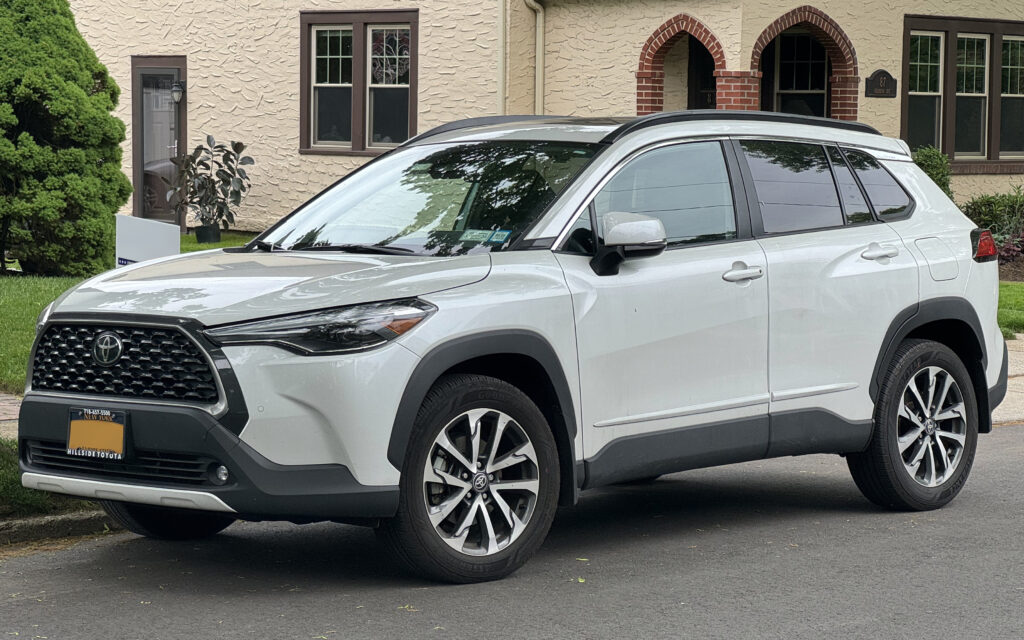
At a glance, they look identical… until they don’t.
L — Functional, Not Flashy
The base trim focuses on simplicity.
What you notice immediately:
- Smaller wheels
- Black exterior accents
- No roof rails
- Traditional key entry
It looks like a practical appliance — and honestly, some people love that.
LE — The Sweet Spot Appearance
This is where the Corolla Cross starts looking like a modern SUV instead of a rental car.
Changes from L:
- Alloy wheels
- Roof rails
- Color-keyed mirrors
- More polished front grille
Suddenly the car feels intentional.
The XLE doesn’t scream luxury — it whispers it.
Subtle but important upgrades:
- Larger wheels
- LED lighting upgrades
- Chrome touches
- More refined detailing
Park them side by side and the XLE simply looks “finished.”
Interior Quality: Where You Actually Live
This is the biggest separation between trims.
L Interior — The Honest Cabin
You get everything necessary — nothing more.
Features:
- Cloth seats
- Manual climate control
- Basic infotainment
- Key ignition
It’s durable, easy to clean, and great if you treat cars like tools.
You may be interested in reading Toyota Corolla Cross Competitors: The Real Rivals in the Compact SUV Arena
But… it won’t make you smile after a long day.
LE Interior — Everyday Comfort Begins
Here’s where daily usability improves dramatically.
Additions:
- Better upholstery
- Push-button start
- Smart key entry
- Upgraded touchscreen
- More storage solutions
You start interacting with the car less and enjoying it more.
XLE Interior — Quiet Luxury
Now we move from transportation to experience.
Upgrades:
- SofTex seats
- Heated front seats
- Automatic climate control
- Leather steering wheel
- Ambient improvements
You don’t realize how much these matter until winter mornings happen.
Technology Differences
Modern drivers don’t ask “does it drive well?”
They ask, “does it connect instantly?”
Infotainment Screen Sizes
| Trim | Screen |
|---|---|
| L | Smaller basic display |
| LE | Larger upgraded screen |
| XLE | Fully featured display |
Connectivity Features
L
- Bluetooth
- Basic smartphone pairing
LE
- Wireless Apple CarPlay/Android Auto
- Better interface speed
XLE
- Enhanced audio experience
- More intuitive menus
- Faster response
The difference isn’t features — it’s friction.
XLE simply removes small annoyances.
Comfort Features Breakdown
Seats
| Trim | Seat Feel |
|---|---|
| L | Firm & durable |
| LE | Balanced comfort |
| XLE | Cushioned and supportive |
Climate Control
- L → Manual knobs
- LE → Improved airflow
- XLE → Automatic temperature logic
Automatic climate control sounds boring — until you never touch a knob again.
Driving Experience — Surprisingly Similar
All trims share the same engine.
What that means:
- Acceleration = identical
- Fuel economy = nearly identical
- Reliability = identical
So the decision is purely lifestyle, not performance.
Safety Features
Good news: safety isn’t paywalled heavily here.
Standard Across All Trims
You still get:
- Pre-collision warning
- Lane keeping assist
- Adaptive cruise control
- Road sign assist
Toyota wisely kept the core safety intact.
XLE Adds Convenience Safety
Not safer — just easier:
- Blind spot monitoring
- Rear cross-traffic alerts
You avoid stress, not accidents.
Daily Use Scenarios
Commuting
- L: works fine
- LE: pleasant
- XLE: relaxing
Road Trips
- L: tolerable
- LE: comfortable
- XLE: enjoyable
City Parking
Higher trims help more because sensors reduce mental effort.
Ownership Experience Over Time
Year 1
You save money with the L.
Year 3
You appreciate the LE.
You may be interested in readingToyota Corolla Cross Competitors: The Real Rivals in the Compact SUV ArenaYou may be interested in reading
 Toyota Corolla Cross vs RAV4: The Real-World SUV Showdown
Year 5
You wish you bought the XLE.
That’s the honest lifecycle psychology.
Resale Value Differences
Higher trims retain value better because used buyers want features but not new-car prices.
So ironically:
XLE often costs less long-term than L.
Who Should Buy Each Trim
Buy the L if:
- You keep cars 10+ years
- You don’t care about tech
- You want the lowest payment
Buy the LE if:
- You want value
- You drive daily
- You appreciate convenience
Buy the XLE if:
- You commute long distances
- You share the car with family
- You plan to resell in 4–6 years
The Psychological Factor
People rarely regret buying more comfort.
They often regret buying less.
Cars are daily spaces — not occasional purchases.
Real-World Cost Perspective
Over a typical ownership period:
| Trim | Emotional Cost |
|---|---|
| L | Minor daily annoyances |
| LE | Neutral satisfaction |
| XLE | Quiet appreciation |
Sometimes luxury is just removing irritation.
Our Honest Recommendation
For most drivers:
LE is the rational choice.
XLE is the happy choice.
L is the financial choice.
And your personality decides the winner.
Final Thoughts
The Toyota Corolla Cross doesn’t change its driving character across trims — it changes your relationship with it.
The engine takes you places.
The trim determines how you feel getting there.
Choose based on mornings, not money.
Because you don’t experience a car once —
you experience it every single day.
FAQs
1. Is the engine different between L, LE, and XLE?
No. All trims use the same powertrain, so performance is identical.
2. Which trim has the best value?
The LE usually offers the best balance of price and features.
3. Does XLE improve fuel economy?
No meaningful difference — comfort upgrades don’t change efficiency.
You may be interested in readingToyota Corolla Cross Competitors: The Real Rivals in the Compact SUV ArenaYou may be interested in reading
Toyota Corolla Cross vs RAV4: The Real-World SUV ShowdownYou may be interested in reading
 Toyota Corolla Cross vs Mazda CX-30: Practical Comfort or Driving Soul?
4. Is the L too basic?
Only if you care about convenience features. Mechanically it’s just as solid.
5. Which trim sells best used?
The XLE tends to be most desirable in the second-hand market.
If you want to know other articles similar to Toyota Corolla Cross L vs LE vs XLE — The Real Differences Explained you can visit the category Models.
Ford Mondeo vs Skoda Superb: The Ultimate Executive Saloon Showdown
Ford Mondeo vs VW Passat: The Ultimate Comparison Guide
Ford Mondeo vs Toyota Camry: Which Sedan Truly Wins?
Ford Mondeo vs Skoda Octavia: The Ultimate Comparison Guide
Ford Mondeo vs Taurus: The Ultimate Sedan Showdown
Ford Mondeo vs Mazda 6: The Ultimate Saloon Showdown
Leave a Reply
More content of your interest