

Toyota Corolla Cross Tank Size: Fuel Capacity, Range, and Real-World Driving Insights

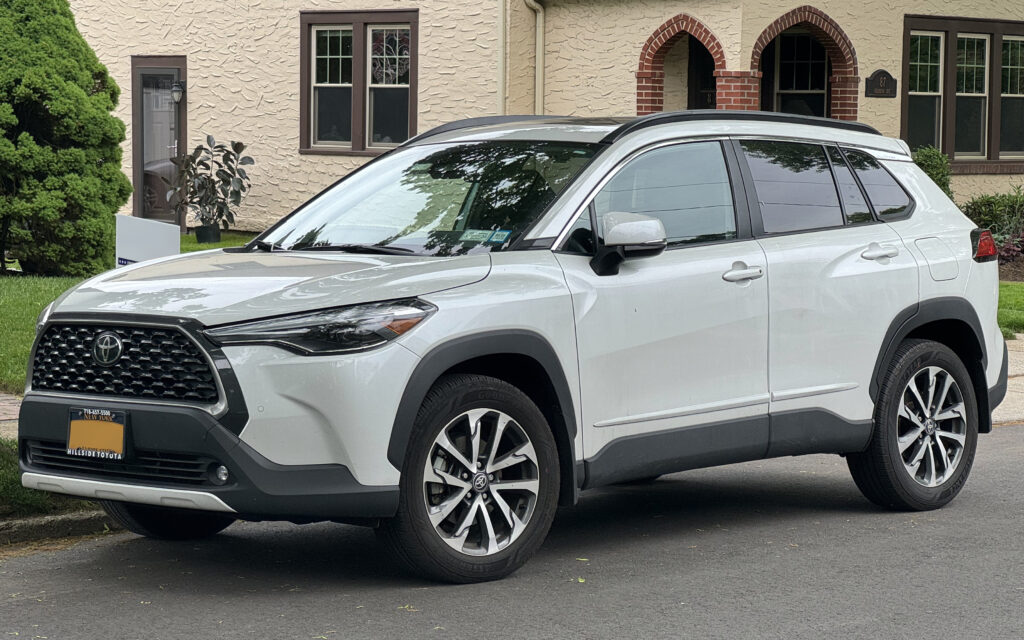
We’ve all been there — cruising peacefully down the highway, music humming, scenery flowing like a movie… and then the fuel warning light pops on like an unwanted guest. Suddenly the journey turns into a math problem.
That’s exactly why the Toyota Corolla Cross tank size matters more than most people think.
Fuel capacity isn’t just a number on a spec sheet.
It directly controls:
- How far we can travel between stops
- Road-trip confidence
- Running costs
- And surprisingly… driving enjoyment
So today, we’re not just answering “how big is the tank?”
We’re unpacking what that capacity means in real life — city driving, highways, hybrid efficiency, and everyday practicality.
Let’s dive in.
Content in this publication
- Understanding Fuel Tank Size in Modern Crossovers
- Official Toyota Corolla Cross Tank Size
- Why Hybrid Gets a Smaller Tank
- Estimated Driving Range (Real Numbers)
- City vs Highway Fuel Range
- Fuel Tank Material and Design
- Fuel Gauge Behavior Explained
- How Often Will You Refuel?
- Fuel Economy vs Tank Size Philosophy
- Does AWD Affect Fuel Range?
- How Weather Affects Your Tank Range
- Refueling Tips for Maximum Range
- Comparing Tank Size with Competitors
- Fuel Type Recommendations
- What Happens If You Run Empty?
- Long-Distance Travel Strategy
- Why the Corolla Cross Feels “Endless” on Fuel
- Ownership Cost Perspective
- Is the Tank Size Enough for Families?
- The Real Meaning of Tank Size
- Final Thoughts
- FAQs
Understanding Fuel Tank Size in Modern Crossovers
Before jumping straight to the Corolla Cross, let’s clarify something.
A fuel tank size is not only about liters or gallons — it’s about usable range.
Think of it like a backpack:
- A big bag with heavy items = tiring
- A medium bag with efficient packing = perfect
Modern SUVs prefer balance over brute size. Instead of massive tanks, automakers focus on fuel efficiency so we travel farther with less weight.
And Toyota… masters this philosophy.
Official Toyota Corolla Cross Tank Size
Here’s the core answer:
Petrol (Gasoline) Models
- Fuel Tank Capacity: 47 liters (12.4 gallons)
Hybrid Models
- Fuel Tank Capacity: 43 liters (11.4 gallons)
At first glance, the hybrid tank seems smaller.
But here’s the twist — you’ll usually drive farther with it.
We’ll prove that soon.
Why Hybrid Gets a Smaller Tank
You might wonder:
If hybrids go farther, shouldn’t they get bigger tanks?
Actually no — and Toyota engineers are clever here.
A hybrid carries:
- Battery pack
- Electric motor
- Inverter system
To maintain weight balance and cargo space, the tank is slightly reduced. But because fuel consumption drops dramatically, total range increases.
It’s like swapping a big water bottle for a purifier — you refill less often anyway.
Estimated Driving Range (Real Numbers)
Let’s turn tank size into something meaningful: distance.
Gasoline Corolla Cross Range
Average fuel consumption: ~6.8 – 7.5 L/100km (31–34 MPG)
Range estimate:
- Around 620 – 700 km (385 – 435 miles) per tank
Hybrid Corolla Cross Range
Average fuel consumption: ~4.3 – 4.8 L/100km (49–55 MPG)
Range estimate:
- Around 800 – 950 km (500 – 590 miles) per tank
Yes — the hybrid travels almost 250 km more despite a smaller tank.
That’s efficiency magic.
City vs Highway Fuel Range
Real life rarely matches brochure numbers.
Let’s see what happens in daily driving.
Urban Driving
Frequent stops actually benefit hybrids.
- Petrol: ~550 km
- Hybrid: ~900 km
Traffic lights become your ally instead of your enemy.
Highway Driving
Continuous speed helps gasoline engines catch up.
- Petrol: ~700 km
- Hybrid: ~850 km
Hybrid still wins — just by a smaller margin.
Fuel Tank Material and Design
Toyota didn’t just pick a size — they engineered the tank carefully.
You may be interested in reading Toyota Corolla Cross Fuel Tank Capacity: The Real-World Guide Drivers Actually Need
Construction Features
- Multi-layer plastic tank
- Evaporation-control chamber
- Internal baffling to prevent sloshing
- Crash-safety deformation zones
Why it matters:
You get smoother fuel readings, less vapor loss, and improved safety.
Basically, the gauge won’t swing wildly when cornering like old SUVs did.
Fuel Gauge Behavior Explained
Many owners notice something interesting:
The Corolla Cross gauge drops slowly at first… then faster near empty.
That’s intentional.
Toyota programs the gauge to:
- Reduce anxiety during normal driving
- Encourage refueling before running dry
The last bar often equals 70–90 km remaining.
So when the light turns on — you still have breathing room.
How Often Will You Refuel?
Let’s translate range into real life.
Weekly Commuter (15 km/day)
Hybrid: fill every 6–8 weeks
Petrol: fill every 4–5 weeks
City Delivery Driver (60 km/day)
Hybrid: every 2 weeks
Petrol: every 8–10 days
Road-Trip Traveler
Hybrid: once per day
Petrol: once every 7–8 hours driving
Fewer stops = less fatigue.
Fuel Economy vs Tank Size Philosophy
Old SUVs solved range problems with giant tanks (60–80L).
Modern crossovers solve it with efficiency.
Advantages of smaller tanks:
- Lower vehicle weight
- Better handling
- Faster refueling
- Reduced emissions
- Lower fuel cost per fill-up
Toyota chooses intelligent range instead of brute capacity.
Does AWD Affect Fuel Range?
Yes — slightly.
All-wheel drive adds:
- Extra differential
- Driveshaft weight
- Friction losses
Estimated impact:
- Petrol AWD: −6% range
- Hybrid AWD-i: −4% range
But the hybrid’s electric rear motor compensates surprisingly well.
How Weather Affects Your Tank Range
Fuel capacity stays the same — range doesn’t.
Cold Weather
- Battery efficiency drops
- Engine runs more often
- Range decreases ~10–18%
Hot Weather
- AC increases consumption
- Range decreases ~5–8%
Perfect Conditions (20–25°C)
You’ll achieve near advertised numbers.
Think of fuel economy like athletic performance — climate matters.
Refueling Tips for Maximum Range
Small habits stretch every liter.
Best Practices
- Fill up in early morning (denser fuel)
- Avoid topping off after first click
- Keep tires properly inflated
- Use ECO driving mode
- Accelerate progressively
These can add 80–120 km per tank.
That’s a free road trip extension.
Comparing Tank Size with Competitors
| Model | Tank Size | Typical Range |
|---|---|---|
| Corolla Cross Hybrid | 43 L | ~900 km |
| Corolla Cross Petrol | 47 L | ~650 km |
| Hyundai Kona | 50 L | ~700 km |
| Mazda CX-30 | 51 L | ~680 km |
| Honda HR-V | 50 L | ~720 km |
Despite smaller tanks, Toyota leads in total distance.
Efficiency beats volume.
Fuel Type Recommendations
Toyota recommends:
- Minimum: Regular unleaded (87 AKI / 91 RON)
- Premium: No significant benefit
Using premium won’t improve mileage enough to justify cost.
Spend the difference on snacks instead.
You may be interested in readingToyota Corolla Cross Fuel Tank Capacity: The Real-World Guide Drivers Actually NeedYou may be interested in reading
 Toyota Corolla Cross Engine Capacity — What’s Really Under the Hood?
What Happens If You Run Empty?
Modern Toyotas protect themselves.
After empty:
- Hybrid runs briefly on battery
- Fuel pump shuts down to prevent damage
- Engine limits restart attempts
But don’t make it a habit — fuel pumps rely on gasoline cooling.
Rule of thumb: refill at ¼ tank.
Long-Distance Travel Strategy
For road trips, we use a simple approach:
- Fill at 25% remaining
- Stretch during refuel
- Reset trip computer
- Monitor average consumption
This keeps range predictable and avoids stress.
Hybrid owners especially enjoy fewer interruptions — drives feel continuous.
Why the Corolla Cross Feels “Endless” on Fuel
Psychology matters.
When a car exceeds 800 km per tank, we stop thinking about fuel constantly.
The vehicle fades into the background — and the journey becomes the focus.
That’s what Toyota optimized for:
Not maximum tank size, but minimum mental load.
Ownership Cost Perspective
Smaller tank + higher efficiency means:
- Lower fill-up price
- Fewer station visits
- More predictable budgeting
Even though fuel capacity is modest, ownership convenience feels premium.
Is the Tank Size Enough for Families?
Absolutely.
Typical weekly driving:
- School runs
- Grocery trips
- Work commute
Hybrid owners often forget their last fuel stop.
The car blends into daily life like a reliable appliance.
And reliability is Toyota’s real superpower.
The Real Meaning of Tank Size
We often obsess over liters…
But drivers actually care about freedom.
Freedom from:
- Planning fuel stops
- Budget anxiety
- Range calculations
The Corolla Cross delivers that not by carrying more fuel —
but by wasting less.
Final Thoughts
The Toyota Corolla Cross tank size might look modest on paper:
- 47L petrol
- 43L hybrid
Yet in the real world, it punches far above its weight.
The hybrid especially transforms daily driving. You refuel less often, plan less, and think less about fuel altogether — and that’s the hidden luxury.
Instead of giving us a giant tank, Toyota gave us something smarter:
Confidence.
And honestly… that’s what most drivers actually want.
FAQs
1. How big is the Toyota Corolla Cross fuel tank?
The gasoline version holds 47 liters (12.4 gallons), while the hybrid version holds 43 liters (11.4 gallons).
2. Why does the hybrid have a smaller tank?
Because improved efficiency allows longer range, and space is needed for the battery system.
3. How far can the Corolla Cross go on a full tank?
Gas models travel about 620–700 km, while hybrid models can reach 800–950 km depending on conditions.
4. Does AWD reduce fuel range?
Yes slightly — about 4–6% depending on drivetrain configuration.
No. Regular unleaded fuel is recommended and works perfectly.
You may be interested in readingToyota Corolla Cross Fuel Tank Capacity: The Real-World Guide Drivers Actually NeedYou may be interested in reading
Toyota Corolla Cross Engine Capacity — What’s Really Under the Hood?You may be interested in reading
 Toyota Corolla Cross Engine Oil Capacity: The Complete Owner’s Guide
If you want to know other articles similar to Toyota Corolla Cross Tank Size: Fuel Capacity, Range, and Real-World Driving Insights you can visit the category Service and Parts.
Ford Mondeo Key Fob Not Working: Complete Troubleshooting & Fix Guide
Ford Mondeo Gearbox Replacement Cost: What You Really Need to Know
Ford Mondeo Alternator Replacement Cost: Complete Guide for Smart Owners
Ford Mondeo Oil Service Reset: The Complete DIY Guide We Wish We Had Earlier
Ford Mondeo Service Reset: The Complete DIY Guide We Actually Use
Ford Mondeo Headlight Bulb Replacement: The Complete DIY Guide
Leave a Reply
More content of your interest