
Toyota Corolla Cross vs Honda HR-V: The Compact SUV Showdown We’ve All Been Waiting For

Choosing a compact SUV today feels a bit like standing in front of a coffee shop menu with 47 variations of the same latte. Everything looks familiar — but the differences matter.
Two names constantly sit at the top of the shortlist: Toyota Corolla Cross and Honda HR-V.
Both promise reliability. Both target families and daily commuters. Both claim to be the “smart choice.”
So… which one actually is?
We spent time dissecting every angle — design, driving feel, engines, fuel economy, tech, practicality, ownership cost, and long-term satisfaction — to answer the question you really care about:
Which one should we actually buy?
Let’s dive deep.
Content in this publication
- Why This Comparison Matters More Than Ever
- Exterior Design: Conservative Confidence vs Sporty Expression
- Interior Design Philosophy: Practical vs Minimalist
- Cabin Comfort and Seating Position
- Practicality and Cargo Space
- Engine Performance and Power Delivery
- Hybrid Systems Compared
- Fuel Economy: The Daily Cost Battle
- Ride Comfort and Suspension Feel
- Steering and Driving Engagement
- Technology and Infotainment
- Safety Features and Driver Assistance
- Reliability Expectations
- Maintenance and Ownership Cost
- Resale Value
- Who Each Car Is Perfect For
- Daily Living Comparison
- Final Thoughts: Heart vs Brain
- Conclusion
- FAQs
Why This Comparison Matters More Than Ever
Compact SUVs are replacing sedans worldwide. People want:
- Higher seating position
- Better practicality
- Efficient engines
- Affordable running costs
- Stress-free ownership
The Corolla Cross and HR-V sit right in the center of that sweet spot — not too cheap, not too expensive.
This is the “default smart car” segment now.
Exterior Design: Conservative Confidence vs Sporty Expression
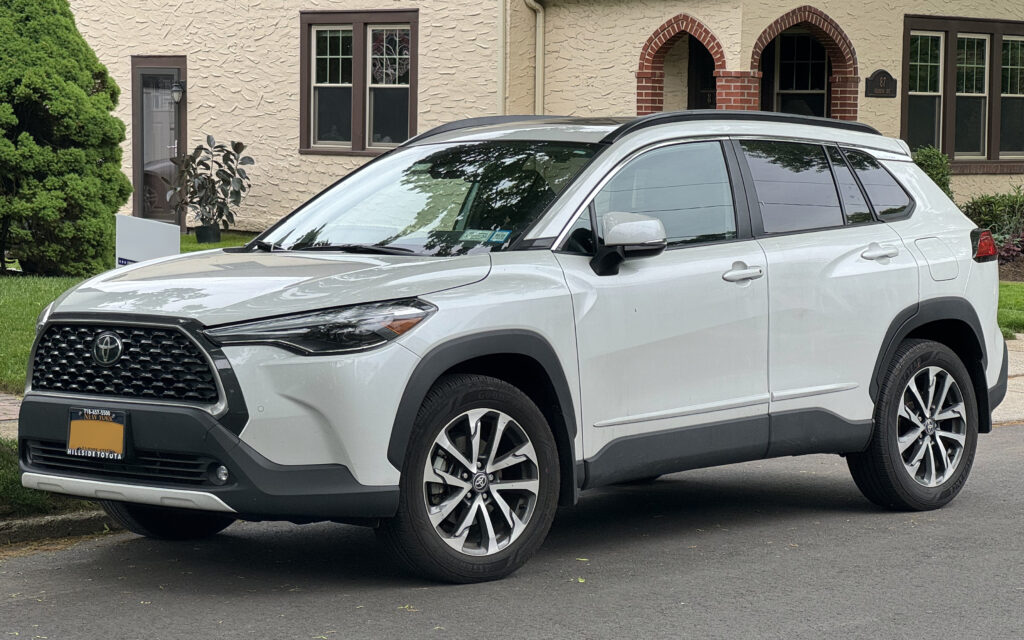
Toyota Corolla Cross — The Safe Suit
Toyota went with familiar styling. Think of it as business-casual fashion: clean, mature, dependable.
Key styling traits:
- Wide grille
- Squared wheel arches
- SUV-like stance
- Understated lines
It looks like it belongs in any driveway — and that’s exactly the point.
Honda HR-V — The Athletic Jacket
Honda went the opposite route. Sleeker, smoother, more urban.
Visual highlights:
- Coupe-like roofline
- Hidden rear door handles
- Slim headlights
- Minimalist surfaces
The HR-V looks younger and more modern — like it’s already thinking about tomorrow.
Verdict
- Want timeless and neutral → Corolla Cross
- Want stylish and expressive → HR-V
Interior Design Philosophy: Practical vs Minimalist
Inside the Corolla Cross
Toyota builds interiors like appliances: simple, logical, durable.
What we notice immediately:
- Big physical buttons
- Clear gauges
- Easy infotainment layout
- Familiar Toyota ergonomics
Everything works on first try. No learning curve.
Inside the HR-V
Honda feels like a tech-inspired living room.
Key characteristics:
- Horizontal dash layout
- Hidden air vents
- Cleaner cabin look
- More premium vibe
It’s calmer and more modern — but slightly less intuitive at first.
First Impression
The Corolla Cross feels ready to work.
The HR-V feels ready to impress.
Cabin Comfort and Seating Position
Front Seats
Both cars do comfort well — but differently.
Corolla Cross
- Upright seating
- Great outward visibility
- Feels like a traditional SUV
HR-V
- Lower, car-like driving position
- More enveloping seats
- Better for long drives
Rear Seats
Here’s where it gets interesting.
HR-V wins rear passenger comfort
You may be interested in reading Toyota Corolla Cross vs Mazda CX-5: The Sensible Choice or The Soulful One?
Why?
- More legroom
- Better seat angle
- Flatter floor
The Corolla Cross is good, but the Honda feels more lounge-like.
Practicality and Cargo Space
Boot Capacity
We care about groceries, luggage, strollers — real life matters.
| Feature | Corolla Cross | HR-V |
|---|---|---|
| Cargo space | Larger | Smaller |
| Tall items | Easier | Harder |
| Seat folding | Simple | Flexible |
Magic Seats Advantage
Honda has a secret weapon: Magic Seats.
They allow:
- Tall plants
- Bicycles upright
- Big boxes behind front seats
It’s clever engineering — surprisingly useful.
Practicality Verdict
- Maximum trunk space → Corolla Cross
- Flexibility and creativity → HR-V
Engine Performance and Power Delivery
Toyota Corolla Cross Engine Options
Toyota focuses on smooth reliability.
Common setups:
- 2.0L petrol
- Hybrid powertrain (in many markets)
Driving character:
- Calm acceleration
- Linear response
- Predictable behavior
Honda HR-V Engine Options
Honda emphasizes efficiency and refinement.
Typical setups:
- 1.5L naturally aspirated
- Hybrid e:HEV system
Driving character:
- Softer throttle
- Quiet operation
- City-friendly performance
Acceleration Feel
Neither car is fast — but they feel different.
- Corolla Cross: steady and confident
- HR-V: gentle and relaxed
Think coffee vs tea energy.
Hybrid Systems Compared
Toyota Hybrid
Toyota prioritizes:
- Proven durability
- Strong efficiency
- Familiar hybrid feel
You’ll notice:
- Engine kicks in more often
- Slight rubber-band effect under acceleration
Honda Hybrid
Honda hybrid behaves more electric-like.
You get:
- Smooth starts
- Silent city driving
- Seamless transitions
Hybrid Verdict
- Best reliability reputation → Toyota
- Best smoothness → Honda
Fuel Economy: The Daily Cost Battle
Both vehicles aim to save money long-term.
Typical real-world behavior:
City Driving
- HR-V hybrid slightly better
- More EV operation
Highway Driving
- Corolla Cross hybrid slightly better
- Stable cruising efficiency
Petrol versions
Very similar — differences are minor.
Ride Comfort and Suspension Feel
Corolla Cross Ride
- Softer suspension
- Absorbs potholes well
- Family-friendly tuning
Feels built for rougher roads.
HR-V Ride
- Firmer control
- More stable cornering
- Less body roll
Feels more like a car than an SUV.
Comfort Verdict
- Bad roads → Corolla Cross
- Smooth roads & curves → HR-V
Steering and Driving Engagement
The HR-V is the driver’s choice.
Why?
- Sharper steering
- More natural handling
- More responsive cornering
The Corolla Cross is easier — but less exciting.
You may be interested in readingToyota Corolla Cross vs Mazda CX-5: The Sensible Choice or The Soulful One?You may be interested in reading
 Kia EV6 Models: The Complete Guide to Every Version, Trim, and Personality
It doesn’t want to play.
It wants to commute.
Technology and Infotainment
Toyota Approach
- Simple interface
- Reliable software
- Larger buttons
Less flashy, more dependable.
Honda Approach
- Cleaner graphics
- More modern UI
- Better integration feel
Feels newer — but occasionally slower to learn.
Safety Features and Driver Assistance
Both include:
- Adaptive cruise control
- Lane keep assist
- Emergency braking
- Blind spot monitoring
Real-world behavior
Toyota systems:
- Conservative
- Early warnings
Honda systems:
- Smoother corrections
- Less intrusive
Reliability Expectations
Here’s the big one.
Both brands are reliable — but their reputations differ subtly.
Toyota
- Long-term durability legend
- Hybrid battery confidence
- Lower mechanical stress
Honda
- Excellent engineering
- Slightly more sensitive electronics historically
- Still extremely dependable
Long-term ownership mindset
Toyota = peace of mind
Honda = satisfaction + enjoyment
Maintenance and Ownership Cost
Typical expectations:
Corolla Cross
- Slightly cheaper servicing
- Wider parts availability
- Predictable wear items
HR-V
- Similar service intervals
- Slightly higher parts cost
- Good fuel savings in city
Over 5–10 years, differences are small — but Toyota often edges it.
Resale Value
Both hold value well.
But historically:
- Toyota depreciates slower
- Hybrids especially hold price
The Corolla Cross is usually easier to sell later.
Who Each Car Is Perfect For
Choose Corolla Cross If We Want:
- Long-term reliability confidence
- Bigger trunk
- Softer ride
- Lower ownership anxiety
Choose HR-V If We Want:
- Better driving feel
- More rear comfort
- Stylish design
- Smarter interior flexibility
Daily Living Comparison
| Situation | Better Choice |
|---|---|
| Family road trips | Corolla Cross |
| City commuting | HR-V |
| Bad roads | Corolla Cross |
| Driving enjoyment | HR-V |
| Resale value | Corolla Cross |
| Cabin feel | HR-V |
Final Thoughts: Heart vs Brain
This comparison isn’t about right or wrong.
It’s personality.
The Corolla Cross is the rational friend — dependable, predictable, always there.
The HR-V is the thoughtful friend — refined, calm, and surprisingly clever.
If we choose Toyota, we sleep peacefully.
If we choose Honda, we smile more while driving.
Conclusion
Both the Toyota Corolla Cross and Honda HR-V succeed because they avoid extremes. They’re not performance machines, not luxury cars, not bargain basement — they’re balanced tools for everyday life.
And that’s exactly why they dominate this segment.
Pick Corolla Cross for confidence.
Pick HR-V for character.
Either way, we win.
FAQs
1. Which is more reliable, Corolla Cross or HR-V?
Both are extremely reliable, but Toyota historically has a slight long-term durability edge.
2. Which has better fuel economy?
The HR-V hybrid is better in the city, while the Corolla Cross hybrid performs slightly better on highways.
3. Which is bigger inside?
The Corolla Cross has a larger trunk, but the HR-V offers more rear passenger comfort.
You may be interested in readingToyota Corolla Cross vs Mazda CX-5: The Sensible Choice or The Soulful One?You may be interested in reading
Kia EV6 Models: The Complete Guide to Every Version, Trim, and PersonalityYou may be interested in reading
 Kia EV6 Competitors: The Real Rivals in the Electric Crossover Arena
4. Which drives better?
The Honda HR-V feels more engaging and stable in corners.
5. Which keeps value better?
The Toyota Corolla Cross generally has stronger resale value.
If you want to know other articles similar to Toyota Corolla Cross vs Honda HR-V: The Compact SUV Showdown We’ve All Been Waiting For you can visit the category Models.
Ford Mondeo vs Skoda Superb: The Ultimate Executive Saloon Showdown
Ford Mondeo vs VW Passat: The Ultimate Comparison Guide
Ford Mondeo vs Toyota Camry: Which Sedan Truly Wins?
Ford Mondeo vs Skoda Octavia: The Ultimate Comparison Guide
Ford Mondeo vs Taurus: The Ultimate Sedan Showdown
Ford Mondeo vs Mazda 6: The Ultimate Saloon Showdown
Leave a Reply
More content of your interest