

Toyota Corolla Cross Weight: The Real Story Behind the Numbers

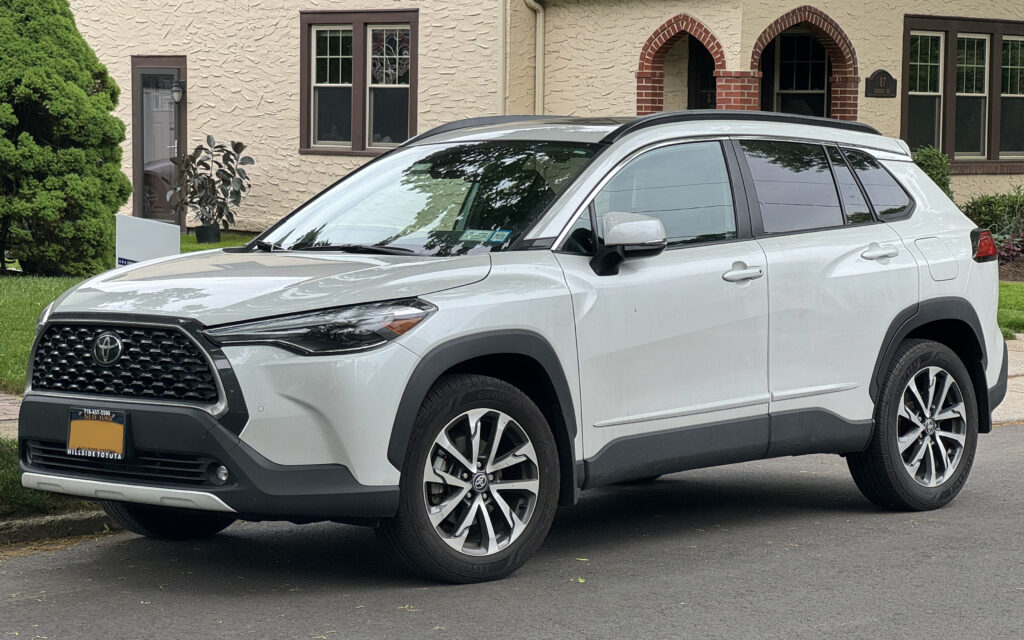
We often obsess over horsepower, fuel economy, and touchscreen sizes… yet one of the most important specs quietly sits in the background: weight.
The Toyota Corolla Cross weight influences everything — fuel consumption, ride comfort, braking distance, tire wear, and even long-term reliability. Think of weight as the invisible hand shaping the personality of a car. Two SUVs can share the same engine, but the heavier one feels like hiking with a backpack full of rocks.
So today, we’re going deep. Not just listing numbers — we’ll decode what those kilos actually mean in daily driving.
Content in this publication
- Why Vehicle Weight Matters More Than Most People Think
- Understanding the Toyota Corolla Cross Platform
- Toyota Corolla Cross Weight by Version
- Why the Hybrid Isn’t Much Heavier
- Weight Distribution: The Hidden Advantage
- How Weight Affects Fuel Economy
- Acceleration vs Weight: The Feel Factor
- Braking Performance and Weight
- Handling Characteristics Explained
- Ride Comfort: Mass as a Shock Absorber
- Tire Wear and Maintenance Impact
- Payload Capacity vs Curb Weight
- Towing Capacity Considerations
- Weight vs Safety
- Comparing Weight to Rivals
- Urban Driving Benefits of Moderate Weight
- Highway Stability Explained
- Hybrid Weight Advantage in Traffic
- Long-Term Durability and Weight
- Why Toyota Didn’t Make It Lighter
- Real-World Driving Personality
- Final Thoughts: The Philosophy Behind the Mass
- Conclusion
- FAQs
Why Vehicle Weight Matters More Than Most People Think
We tend to imagine cars as machines powered by engines. In reality, they’re machines moving mass. And physics always wins.
What Weight Affects Immediately
- Acceleration response
- Braking distance
- Fuel economy
- Tire wear
- Suspension longevity
- Stability at highway speeds
If power is the heartbeat of a car, weight is its body mass index. Healthy balance = happy vehicle.
Understanding the Toyota Corolla Cross Platform
Before discussing weight, we need context.
The Corolla Cross sits between:
- Hatchbacks (lighter)
- Compact SUVs (heavier)
It’s built on Toyota’s TNGA-C platform — the same architecture used for compact sedans and crossovers. That’s key because it explains why the car feels car-like instead of truck-like.
Toyota Corolla Cross Weight by Version
Let’s break it down.
Gasoline Model Curb Weight
Typically ranges between:
1,350 kg – 1,430 kg (2,976 – 3,152 lbs)
Variation depends on:
- AWD vs FWD
- Wheel size
- Trim level
- Market specifications
Hybrid Model Curb Weight
Hybrid versions add batteries and electric motors:
1,430 kg – 1,520 kg (3,152 – 3,351 lbs)
So yes — hybrid equals heavier. But interestingly… not dramatically heavier.
Why the Hybrid Isn’t Much Heavier
You’d expect batteries to add huge weight, right?
Toyota compensates using:
- Aluminum components
- Thinner high-strength steel
- Smaller fuel tank
- Compact battery placement
The result: about 80–100 kg difference — less than the weight of one adult passenger.
Total weight matters — but where the weight sits matters more.
Front-Biased vs Balanced SUV
Most SUVs:
- Heavy nose
- High center of gravity
- More body roll
Corolla Cross:
- Battery low in chassis
- Short front overhang
- Wide track width
That’s why it corners flatter than expected.
How Weight Affects Fuel Economy
We can think of fuel consumption as energy spent moving mass.
Simple Rule
Every extra 100 kg ≈ 3–5% more fuel consumption
So how does the Corolla Cross perform?
Real-World Impact
- Gas version: efficient for class
- Hybrid: excels because electric torque offsets weight
The hybrid feels lighter than it actually is — because electric motors remove inertia hesitation.
Acceleration vs Weight: The Feel Factor
Numbers lie sometimes.
Two cars can share identical horsepower but feel completely different.
Why?
Power-to-weight ratio.
The Corolla Cross is tuned for smoothness rather than speed. Its moderate weight means:
- Calm takeoff
- Predictable acceleration
- No jerky throttle
It behaves like a commuter, not a sprinter — and that’s intentional.
Braking Performance and Weight
Brakes fight momentum.
You may be interested in reading Toyota Corolla Cross Tank Size: Fuel Capacity, Range, and Real-World Driving Insights
Momentum = mass × velocity
So heavier cars require:
- Larger brake rotors
- Stronger calipers
- Softer brake tuning
Corolla Cross Strategy
Toyota chooses:
- Progressive braking feel
- Early regenerative braking (hybrid)
- Conservative stopping calibration
Result: less nose dive, smoother stops.
Handling Characteristics Explained
Weight influences cornering more than horsepower ever will.
Light SUVs Feel Nervous
They bounce and wander.
Heavy SUVs Feel Lazy
They roll and hesitate.
Corolla Cross Balance
The sweet spot:
- Stable but not sluggish
- Composed but not floaty
It drives like a raised hatchback — which many drivers prefer.
Ride Comfort: Mass as a Shock Absorber
Here’s a secret:
A slightly heavier car rides better.
Why?
Mass absorbs road imperfections. The Corolla Cross weight helps:
- Reduce vibration
- Smooth potholes
- Prevent bounce
Too light = jittery
Too heavy = dull
This one lands in the middle.
Tire Wear and Maintenance Impact
Heavier vehicles burn tires faster.
But the Corolla Cross avoids that problem due to:
- Modest curb weight
- Balanced suspension geometry
- Conservative torque output
Average Tire Life
Typically longer than turbocharged rivals.
That’s part of its low ownership cost reputation.
Payload Capacity vs Curb Weight
Weight isn’t only about what the car weighs — but what it can carry.
Typical Payload
Around 450–520 kg
Meaning:
- 5 adults
- Luggage
- Weekend gear
And still within safe limits.
Towing Capacity Considerations
This is where weight really matters.
Light vehicles struggle towing.
The Corolla Cross:
- Not a heavy hauler
- But stable with light trailers
Practical Uses
- Small bike rack
- Light utility trailer
- Camping gear
It’s a lifestyle SUV, not a workhorse.
Weight vs Safety
Heavier cars often win crash physics — but modern engineering changes that.
Toyota relies on:
- Crumple zones
- Energy absorption structure
- High-strength steel
Instead of brute mass.
So safety comes from design, not bulk.
Comparing Weight to Rivals
Let’s put things in perspective.
You may be interested in readingToyota Corolla Cross Tank Size: Fuel Capacity, Range, and Real-World Driving InsightsYou may be interested in reading
 Toyota Corolla Cross Fuel Tank Capacity: The Real-World Guide Drivers Actually Need
Typical Compact SUVs
- Heavier turbo SUVs: 1,500–1,700 kg
- Subcompact crossovers: 1,200–1,300 kg
- Corolla Cross: perfectly in the middle
That middle ground is deliberate — optimizing efficiency and comfort simultaneously.
Urban Driving Benefits of Moderate Weight
In city traffic, heavy SUVs feel exhausting.
The Corolla Cross:
- Easy steering effort
- Smooth braking
- Predictable throttle
Weight contributes to low mental fatigue during driving.
And that’s underrated.
Highway Stability Explained
Light cars wander. Heavy ones feel planted.
The Corolla Cross weight creates:
- Straight-line stability
- Reduced crosswind sensitivity
- Comfortable cruising
It feels confident without feeling bulky.
Hybrid Weight Advantage in Traffic
Ironically, the heavier hybrid feels lighter in traffic.
Because electric motors:
- Deliver instant torque
- Remove engine lag
- Smooth stop-and-go motion
So real-world perception beats spec sheets.
Long-Term Durability and Weight
Lower weight = less stress on parts.
That means:
- Longer suspension life
- Reduced bushing wear
- Extended brake lifespan
One reason compact Toyotas age gracefully.
Why Toyota Didn’t Make It Lighter
You might ask — why not reduce weight further?
Because:
- Too light hurts comfort
- Too light reduces stability
- Too light increases noise
Toyota engineers targeted a human-comfort weight, not a spec-sheet weight.
Real-World Driving Personality
Let’s summarize the feel:
- Calm acceleration
- Predictable handling
- Smooth braking
- Stable cruising
The Corolla Cross weight shapes a relaxed driving experience — like walking in comfortable shoes instead of running spikes.
Final Thoughts: The Philosophy Behind the Mass
The magic of the Corolla Cross isn’t extreme power or extreme efficiency.
It’s balance.
Its weight represents a compromise between:
- Efficiency
- Comfort
- Stability
- Longevity
Instead of chasing numbers, Toyota tuned behavior.
And that’s why many drivers feel instantly comfortable behind the wheel — even if they don’t know why.
Conclusion
Understanding the Toyota Corolla Cross weight reveals something deeper: this SUV was engineered for real life, not showroom bragging rights.
It’s heavy enough to feel secure, light enough to stay efficient, and balanced enough to remain comfortable for years.
Not flashy.
Not aggressive.
Just intelligently calibrated — like a well-packed suitcase that never feels heavy no matter how far you walk.
FAQs
1. What is the curb weight of the Toyota Corolla Cross?
It ranges roughly between 1,350 kg and 1,520 kg depending on trim and hybrid system.
2. Is the hybrid Corolla Cross heavier than the gas version?
Yes, but only about 80–100 kg heavier, which is minimal in real driving feel.
3. Does the weight affect fuel economy?
Absolutely. The moderate weight helps efficiency, and the hybrid offsets added mass with electric torque.
You may be interested in readingToyota Corolla Cross Tank Size: Fuel Capacity, Range, and Real-World Driving InsightsYou may be interested in reading
Toyota Corolla Cross Fuel Tank Capacity: The Real-World Guide Drivers Actually NeedYou may be interested in reading
Toyota Corolla Cross Engine Capacity — What’s Really Under the Hood?4. Is the Corolla Cross heavy for its class?
No — it sits right in the middle of compact SUV weights, contributing to balanced handling.
5. Does vehicle weight affect reliability?
Yes. Lower stress on components generally improves long-term durability, which benefits this model.
If you want to know other articles similar to Toyota Corolla Cross Weight: The Real Story Behind the Numbers you can visit the category Service and Parts.
Ford Mondeo Key Fob Not Working: Complete Troubleshooting & Fix Guide
Ford Mondeo Gearbox Replacement Cost: What You Really Need to Know
Ford Mondeo Alternator Replacement Cost: Complete Guide for Smart Owners
Ford Mondeo Oil Service Reset: The Complete DIY Guide We Wish We Had Earlier
Ford Mondeo Service Reset: The Complete DIY Guide We Actually Use
Ford Mondeo Headlight Bulb Replacement: The Complete DIY Guide
Leave a Reply
More content of your interest