

Toyota Yaris Cross Fuel Tank Capacity: Everything You Need to Know

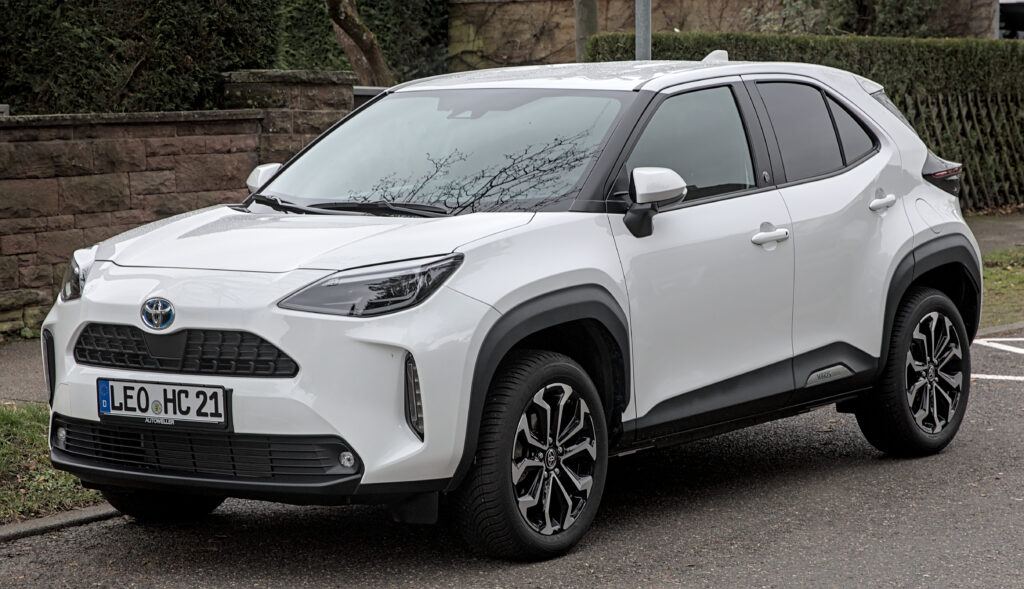
When it comes to compact SUVs and hybrids, the Toyota Yaris Cross stands out as one of the most efficient and city-friendly options. Yet, one specification always raises curiosity — its fuel tank capacity. In this detailed guide, we’ll uncover the real size of the Yaris Cross’s fuel tank, explore why it matters, how it affects driving range, and compare it with similar vehicles. Consider this your complete breakdown of a small number that has a surprisingly large impact.
Content in this publication
- What Is the Fuel Tank Capacity of the Toyota Yaris Cross?
- Why the Tank Size Matters
- Comparison with Competing Models
- How Far Can You Drive on a Full Tank?
- Regional and Variant Differences
- Pros and Cons of the 36-Litre Tank
- How to Maximise Range with a Small Tank
- Common Misconceptions About Fuel Tank Capacity
- Why Toyota Opted for 36 Litres
- How to Verify Your Yaris Cross’s Fuel Tank Size
- H2: Summary Table of Tank Capacities
- Is 36 Litres Enough for You?
- Final Thoughts
- FAQs
What Is the Fuel Tank Capacity of the Toyota Yaris Cross?
The fuel tank capacity simply tells us how much fuel your car can hold when filled to the brim. It’s the total “reservoir” that powers your journey.
- Hybrid models: Approximately 36 litres (standard specification across Europe).
- Petrol-only versions: Around 42 litres (available in certain Asian and Latin American markets).
So, the general rule is: Hybrid = 36 L, Petrol = 42 L, depending on your market.
Why the Tank Size Matters
Some drivers overlook tank size when comparing cars. But if you think about it, that little number has a big influence on your driving rhythm.
Driving Range and Convenience
Knowing your tank size helps you estimate how far you can go between refills. If your Yaris Cross averages 4 L/100 km and has a 36 L tank, your theoretical range is roughly 900 km. In the real world, you’ll get slightly less — usually around 700–800 km — depending on your driving style and terrain.
Fueling Habits and Costs
Smaller tanks can mean more frequent stops, even for efficient cars. The Yaris Cross’s small tank is offset by its exceptional fuel economy, so while the refills come more often, they’re lighter on the wallet.
Vehicle Design and Weight
Compact SUVs like the Yaris Cross balance fuel capacity with weight and space. A smaller tank helps keep the car agile, reduces emissions, and makes room for hybrid components — all of which improve efficiency.
Comparison with Competing Models
To understand the Yaris Cross’s tank better, let’s see how it stacks up against similar vehicles.
| Model | Fuel Tank Capacity | Type |
|---|---|---|
| Toyota Yaris Cross (Hybrid) | 36 L | Hybrid Crossover |
| Toyota Yaris Cross (Petrol) | 42 L | Petrol Crossover |
| Renault Captur | 45 L | Petrol SUV |
| Honda HR-V | 40 L | Hybrid SUV |
| Mazda CX-3 | 48 L | Petrol SUV |
As you can see, the Yaris Cross has one of the smaller tanks in its class. But that’s not necessarily a disadvantage — its hybrid efficiency compensates beautifully, offering strong range performance despite the smaller tank.
How Far Can You Drive on a Full Tank?
Now, let’s talk about what everyone really wants to know: how far can you go?
You may be interested in reading How to Reset the Tyre Pressure Warning System on a Toyota Yaris Cross – Quick and Easy Guide
Theoretical Range
Using the Yaris Cross Hybrid as an example:
- Tank size: 36 L
- Average consumption: 4 L/100 km
- Range: around 900 km in optimal conditions.
For the petrol version (42 L tank, 5.5 L/100 km average), expect roughly 760 km of range.
Real-World Conditions
Your mileage will vary. City traffic, mountainous terrain, and cold weather reduce efficiency. Most drivers realistically get 600–700 km per tank, depending on how they drive.
The Reserve Zone
When the low-fuel light appears, you still have around 5–6 litres left in the tank. It’s best not to rely on this often, but it’s a comfort to know you have a bit of buffer.
Regional and Variant Differences
Because the Yaris Cross is sold in multiple regions, specifications vary slightly.
Hybrid vs. Petrol Versions
- Hybrid: 36 L tank, tuned for efficiency and urban driving.
- Petrol: 42 L tank, designed for longer highway distances and fewer stops.
Market Variations
In Europe, the Yaris Cross is almost exclusively hybrid, while in some Asian and Latin American markets, petrol versions are available with the larger tank. Always check your owner’s manual or dealer specifications to confirm your model’s exact capacity.
Pros and Cons of the 36-Litre Tank
Pros
- Lightweight, improving efficiency and handling.
- Perfect for city or short-distance driving.
- Frees up space for hybrid components and boot capacity.
- Aligns with the car’s eco-friendly design.
Cons
- Requires slightly more frequent refills on long road trips.
- May feel limiting for rural drivers with fewer fuel stations.
- A smaller tank can give a psychological sense of shorter range, even when actual distance remains competitive.
How to Maximise Range with a Small Tank
Even with a 36-litre tank, smart driving can stretch your range further.
- Maintain steady speeds: Hybrid systems work best at consistent, moderate speeds.
- Avoid unnecessary idling: Use “EV mode” whenever possible in traffic.
- Monitor tire pressure: Under-inflated tires increase fuel consumption.
- Lighten your load: Remove excess cargo that adds weight.
- Refuel before quarter tank: Keeps the fuel pump healthy and ensures smoother starts.
Common Misconceptions About Fuel Tank Capacity
“A bigger tank means better range.”
Not always. Efficiency plays a far greater role than sheer volume. A small tank in a hybrid can still outperform larger petrol SUVs in range.
“When the dash shows zero, the tank is empty.”
False. There’s usually a reserve of several litres — enough to drive another 50–80 km safely.
“All Yaris Cross models have the same tank.”
Incorrect. Tank size varies by region and powertrain type. Always verify your car’s specification before assuming.
You may be interested in readingHow to Reset the Tyre Pressure Warning System on a Toyota Yaris Cross – Quick and Easy GuideYou may be interested in reading
 Toyota Yaris Cross Dashboard Symbols: The Complete 2021–2025 Guide
Why Toyota Opted for 36 Litres
From an engineering standpoint, Toyota had solid reasons to go for a smaller tank:
- Weight optimization: Lighter car = better efficiency.
- Urban focus: The Yaris Cross is meant for city use, not long-haul touring.
- Hybrid packaging: The fuel tank competes for space with the hybrid battery system.
- Safety and compliance: Smaller tanks meet safety regulations more easily across global markets.
The result is a clever balance — enough range for daily life, yet compact enough to keep the Yaris Cross nimble and efficient.
How to Verify Your Yaris Cross’s Fuel Tank Size
If you’re uncertain about your car’s specifications, here’s how to check:
- Owner’s Manual: The quickest and most reliable source.
- Vehicle Identification Number (VIN): Your local Toyota dealer can confirm tank size using the VIN.
- Refuelling Test: Track how many litres you add when filling from “E” to “F.”
- Manufacturer’s Label: Some vehicles include tank capacity on the door-frame sticker.
H2: Summary Table of Tank Capacities
| Variant | Region | Tank Capacity | Notes |
|---|---|---|---|
| Yaris Cross Hybrid | Europe | 36 L | Standard for most markets |
| Yaris Cross Petrol | Asia / LATAM | 42 L | Non-hybrid version |
| Yaris Cross AWD-i | Europe | 36 L | Hybrid all-wheel drive |
| Yaris Cross Adventure | Global | 36 L | Same as hybrid variant |
Is 36 Litres Enough for You?
It depends on how you drive and where you live. For city drivers, the Yaris Cross’s 36-litre tank is more than enough. For those in rural or remote areas, it just means planning your refuelling stops strategically.
What Toyota did right was match the tank size to the car’s purpose — light, efficient, and urban-smart. You might not travel 1,000 km per tank, but you’ll enjoy excellent economy and fewer emissions.
Final Thoughts
Understanding the fuel tank capacity gives you insight into how your car behaves, how far you can go, and what kind of trips it’s best suited for. The Yaris Cross’s modest tank is a deliberate engineering choice — prioritizing efficiency, compact design, and hybrid balance over brute capacity.
If your lifestyle involves mostly urban or suburban driving, it’s a perfect fit. For long-distance travelers, it’s still capable, just with a bit of planning. Either way, the Yaris Cross proves that less can indeed be more — especially when every litre takes you that much further.
FAQs
Q1: What is the official fuel tank capacity of the Toyota Yaris Cross?
The hybrid model typically holds 36 litres, while petrol versions in certain regions may offer up to 42 litres.
Q2: How many kilometres can I travel on a full tank?
Expect between 700 and 900 km depending on driving conditions, load, and terrain.
Q3: Does the low-fuel light mean the tank is empty?
No. You’ll still have around 5–6 litres in reserve, giving roughly 50–80 km of additional range.
How to Reset the Tyre Pressure Warning System on a Toyota Yaris Cross – Quick and Easy GuideYou may be interested in reading
Toyota Yaris Cross Dashboard Symbols: The Complete 2021–2025 GuideYou may be interested in reading
 Toyota Yaris Cross Towing Capacity: Complete 2025 Guide
Q4: Why did Toyota choose a smaller tank?
To reduce weight, improve hybrid efficiency, and maximize interior space.
Q5: Can I increase my range without a bigger tank?
Yes. Maintain correct tire pressure, drive smoothly, avoid idling, and plan refuelling to keep your system running efficiently.
If you want to know other articles similar to Toyota Yaris Cross Fuel Tank Capacity: Everything You Need to Know you can visit the category Service and Parts.
How to Reset Volvo XC60 Infotainment System: The Complete Practical Guide
Volvo XC60 Gearbox Oil Change: The Complete Expert Guide
Volvo XC60 Engine Management Light: Causes, Fixes, and What It Really Means

Skoda Kamiq Size Comparison: Dimensions, Space & Real-World Practicality
Volvo XC60 Headlight Adjustment for Europe: The Complete Practical Guide
Volvo XC60 City Safety Service Required: What It Means, Causes, and Fixes
Leave a Reply
More content of your interest