
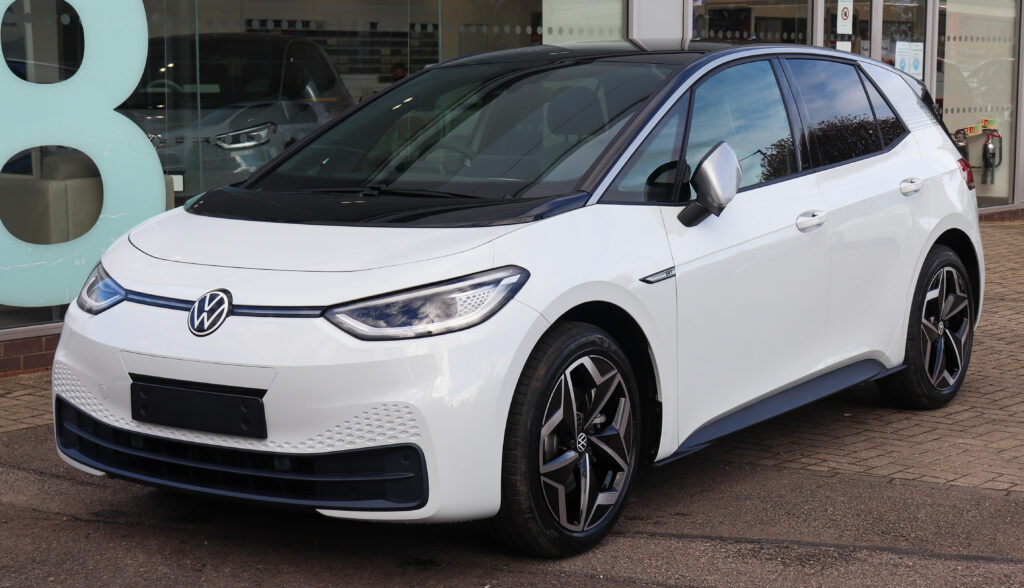
Volkswagen ID.3 Charging Time: The Real-World Guide We All Needed

Charging an electric car shouldn’t feel like decoding a secret language. Yet for many new EV drivers, it does. How long does it really take? What changes at home versus on the motorway? And why does the last 20% sometimes feel like watching paint dry?
Today, we’re unpacking Volkswagen ID.3 charging time in a way that actually makes sense. No fluff. No tech jargon traps. Just the truth about how long this electric hatchback takes to refuel—whether you’re sipping coffee at home or sprinting through a motorway services stop.
We’ll walk through every battery size, every charger type, and every real-world scenario. By the end, you’ll know exactly what to expect—and how to charge smarter, not slower.
Content in this publication
- Understanding the Volkswagen ID.3 Charging Basics
- What “Charging Time” Really Means
- Volkswagen ID.3 Charging Time by Charger Type
- Why Charging Slows Down Near 80%
- Real-World Charging Scenarios
- How Temperature Affects Charging Time
- Charging Costs vs Time
- How to Reduce Charging Time in Practice
- Is the ID.3 “Slow” Compared to Rivals?
- Future Updates and Improvements
- Common Myths About ID.3 Charging Time
- The Human Side of Charging
- Closing Thoughts: Is ID.3 Charging Time Practical?
- FAQs
Understanding the Volkswagen ID.3 Charging Basics
Before we talk minutes and percentages, we need a quick foundation. The ID.3 has been sold with multiple battery sizes and charging capabilities. Each version behaves differently.
ID.3 Battery Options at a Glance
- 45 kWh (Pure)
- 58 kWh (Pro)
- 77 kWh (Pro S)
Each battery size affects:
- Total charging time
- Maximum charging speed
- Real-world range recovery
Bigger battery = longer total charge, but also more miles gained per session.
What “Charging Time” Really Means
When people ask, “How long does the ID.3 take to charge?” the honest answer is: it depends.
Charging time changes based on:
- Charger power (kW)
- Battery size
- Current battery percentage
- Temperature
- Whether you’re AC or DC charging
EVs don’t charge like phones. They slow down near the top. That final 20% is like trying to fill a glass that’s already full—it takes patience.
Volkswagen ID.3 Charging Time by Charger Type
Let’s break it down in real-world terms.
1. Home Charging (7 kW Wallbox)
This is the everyday setup for most owners.
| Battery | 0–100% Time |
|---|---|
| 45 kWh | ~7 hours |
| 58 kWh | ~8.5 hours |
| 77 kWh | ~11–12 hours |
This is “overnight and forget” charging. Plug in after dinner, wake up with a full battery.
2. Public AC Charging (11 kW)
Some public chargers—and a few homes—offer 11 kW AC.
| Battery | 0–100% Time |
|---|---|
| 45 kWh | ~5 hours |
| 58 kWh | ~6.5 hours |
| 77 kWh | ~8.5 hours |
Great for shopping centres, gyms, or a long lunch.
3. DC Fast Charging (50 kW)
Now we’re in road-trip territory.
| Battery | 10–80% Time |
|---|---|
| 45 kWh | ~30 minutes |
| 58 kWh | ~35–40 minutes |
| 77 kWh | ~45 minutes |
Perfect for a coffee stop.
You may be interested in reading VW ID.3 Service Reset: The Complete Owner’s Guide
4. High-Power DC (100–170 kW)
This is where the ID.3 shines.
| Battery | Peak Speed | 10–80% Time |
|---|---|---|
| 45 kWh | ~100 kW | ~25 minutes |
| 58 kWh | ~120 kW | ~30 minutes |
| 77 kWh | up to 170 kW | ~30–35 minutes |
In half an hour, you’re back on the road with hundreds of miles ready.
Why Charging Slows Down Near 80%
The ID.3 uses a “charging curve.” It starts fast, then tapers.
- 10–50%: Lightning quick
- 50–80%: Still fast
- 80–100%: Turtle mode
That last 20% can take almost as long as the first 60%.
Pro tip: On road trips, charge from 10% to 80%. It’s the sweet spot for speed.
Real-World Charging Scenarios
Daily Commuter
- Plug in at home
- Add 150–200 miles overnight
- Zero stress, zero queues
Weekend Getaway
- Top up to 90% at home
- One 25–30 minute fast charge en route
- Back before your podcast ends
Long Road Trip
- Start at 100%
- Stop every 2–3 hours
- 20–30 minute breaks
- Travel rhythm feels natural
Charging becomes a pause, not a problem.
How Temperature Affects Charging Time
Cold weather slows everything:
- Battery warms itself
- Charging speed drops
- First few minutes feel sluggish
Preconditioning (setting navigation to a fast charger) helps warm the battery and restore speed.
Winter charging might take:
- 5–10 minutes longer per stop
- Slightly slower peak speeds
Still manageable. Just not instant coffee-fast.
Charging Costs vs Time
Time isn’t the only metric—we care about value.
- Home charging: Cheapest, slowest
- Public AC: Moderate cost, moderate speed
- DC fast charging: Fastest, most expensive
We often mix them:
- Home for daily life
- Fast chargers for travel
That balance keeps ownership affordable and flexible.
How to Reduce Charging Time in Practice
Small habits make a big difference:
- Arrive at chargers below 20%
- Leave at 80% on trips
- Precondition before fast charging
- Avoid 100% unless needed
- Use high-power chargers when traveling
Charging is strategy, not just plugging in.
Is the ID.3 “Slow” Compared to Rivals?
Not at all.
You may be interested in readingVW ID.3 Service Reset: The Complete Owner’s GuideYou may be interested in reading
 Volkswagen ID.3 Battery Capacity: Powering the Electric Everyday
Compared to similar EVs:
- Faster than older Leafs
- On par with Tesla Model 3 SR
- Better than most compact EVs
The 77 kWh version with 170 kW charging is genuinely quick.
Future Updates and Improvements
Volkswagen has improved charging curves via software updates:
- Better thermal management
- Faster mid-range charging
- More stable peak speeds
Your ID.3 ages like a smartphone—getting better with time.
Common Myths About ID.3 Charging Time
“It takes all night every time.”
Only if you’re empty. Most days, you’re topping up, not refilling.
“Fast charging ruins the battery.”
Modern battery management prevents harm when used normally.
“EVs are slower than petrol on trips.”
You stop anyway. Now your car refuels while you stretch.
The Human Side of Charging
Charging changes how we travel. We pause. We breathe. We stop chasing minutes like they’re running from us.
Instead of “How fast can we go?” it becomes “Where should we stop?”
The ID.3 doesn’t just change how we drive—it changes how we move.
Closing Thoughts: Is ID.3 Charging Time Practical?
Absolutely.
- Overnight at home: effortless
- On the road: 25–35 minute breaks
- Daily life: invisible
- Long trips: predictable
The Volkswagen ID.3 charging time fits real life. It bends to routines. It respects rhythms. It doesn’t demand perfection—just a plug.
And once it becomes habit, you’ll wonder why petrol ever felt convenient.
FAQs
1. How long does it take to charge the ID.3 at home?
Around 7–12 hours depending on battery size and wallbox power.
2. How fast can the ID.3 charge on the motorway?
Up to 170 kW on the 77 kWh model, adding 10–80% in about 30 minutes.
3. Can I charge the ID.3 with a normal socket?
Yes, but it’s very slow—often 24+ hours. It’s for emergencies only.
VW ID.3 Service Reset: The Complete Owner’s GuideYou may be interested in reading
Volkswagen ID.3 Battery Capacity: Powering the Electric EverydayYou may be interested in reading
 Volkswagen ID.3 Battery Life: How Long It Really Lasts
4. Does charging slow down in winter?
Yes, slightly. Preconditioning helps reduce delays.
5. Is it bad to fast charge often?
No. The battery system manages heat and wear automatically.
If you want to know other articles similar to Volkswagen ID.3 Charging Time: The Real-World Guide We All Needed you can visit the category Service and Parts.
How to Reset Volvo XC60 Infotainment System: The Complete Practical Guide
Volvo XC60 Gearbox Oil Change: The Complete Expert Guide
Volvo XC60 Engine Management Light: Causes, Fixes, and What It Really Means
Skoda Kamiq Size Comparison: Dimensions, Space & Real-World Practicality
Volvo XC60 Headlight Adjustment for Europe: The Complete Practical Guide
Volvo XC60 City Safety Service Required: What It Means, Causes, and Fixes
Leave a Reply
More content of your interest