

Volkswagen Tiguan Insurance Group: Complete Guide to Costs, Ratings, and Factors


The Volkswagen Tiguan has carved out a reputation as one of the most practical and refined compact SUVs on the road. It blends German engineering with family-friendly usability, delivering a vehicle that feels equally at home on city streets and long motorway drives.
But there’s one question that inevitably pops up for buyers in the UK and other insurance-group markets:
What insurance group is the Volkswagen Tiguan in—and how expensive is it to insure?
Insurance groups play a surprisingly powerful role in determining ownership costs. Two cars that look similar on the outside can sit in completely different insurance brackets, which means dramatically different premiums.
In this in-depth guide, we’ll unpack everything about the Volkswagen Tiguan insurance group, including how groups work, what ratings different Tiguan models receive, and the hidden factors that can push insurance prices up or down.
Think of this article as your roadmap to understanding Tiguan insurance costs before you buy.
Content in this publication
- Understanding Car Insurance Groups
- Typical Volkswagen Tiguan Insurance Groups
- Why the Tiguan Isn’t in a Low Insurance Group
- Volkswagen Tiguan Insurance Groups by Trim Level
- Insurance Groups for Older Tiguan Generations
- Petrol vs Diesel Insurance Groups
- Factors That Affect Tiguan Insurance Costs
- How the Tiguan Compares to Rival SUVs
- Tips to Reduce Tiguan Insurance Costs
- Is the Volkswagen Tiguan Expensive to Insure?
- Final Thoughts on Volkswagen Tiguan Insurance Groups
Understanding Car Insurance Groups
Before we dive into the Tiguan specifically, we need to understand how insurance groups work.
What Are Insurance Groups?
In the UK insurance system, cars are placed into groups ranging from 1 to 50.
- Group 1: cheapest cars to insure
- Group 50: most expensive cars to insure
The group assigned to a car reflects how risky or costly insurers believe it is to cover.
Generally speaking:
- Small city cars → low groups
- Performance vehicles → high groups
- Family SUVs → middle groups
The Volkswagen Tiguan typically sits somewhere in the middle of this scale.
How Insurance Groups Are Determined
Insurance groups are assigned by the Group Rating Panel, which evaluates vehicles using detailed technical criteria.
Key factors include:
- Repair costs
- Parts prices
- Safety systems
- Crash performance
- Theft risk
- Engine power
- Vehicle value
Imagine insurance groups as a risk thermometer—the higher the number, the hotter the insurer’s risk.
Typical Volkswagen Tiguan Insurance Groups
The Tiguan isn’t a cheap city hatchback, but it’s also not a high-performance luxury SUV.
Most Tiguan models fall within:
Insurance Group 14 to Group 30
This range depends heavily on:
- Engine choice
- Trim level
- Performance output
- Equipment level
Example Volkswagen Tiguan Insurance Groups
Below are approximate group ratings for common Tiguan variants.
| Tiguan Model | Engine | Insurance Group |
|---|---|---|
| Tiguan 1.5 TSI Life | Petrol | 14–16 |
| Tiguan 1.5 TSI Elegance | Petrol | 16–18 |
| Tiguan 2.0 TDI Life | Diesel | 17–20 |
| Tiguan 2.0 TDI R-Line | Diesel | 20–24 |
| Tiguan 2.0 TSI 4Motion | Petrol AWD | 24–28 |
| Tiguan R Performance | High performance | 29–30 |
In short:
- Entry-level Tiguans = cheaper insurance
- High-performance models = higher insurance groups
Why the Tiguan Isn’t in a Low Insurance Group
You might expect a family SUV to be cheaper to insure.
However, several characteristics push the Tiguan slightly higher than average.
1. Vehicle Value
The Tiguan is a premium-leaning SUV.
Compared to smaller SUVs like the Nissan Qashqai or Hyundai Tucson, the Tiguan often has higher purchase prices.
Higher value vehicles cost more to replace.
2. Advanced Technology
Modern Tiguans come loaded with technology such as:
- adaptive cruise control
- digital cockpit
- lane assist
- radar sensors
- parking sensors
While these systems improve safety, they also increase repair costs after accidents.
A simple bumper repair may involve expensive radar calibration.
3. Engine Power
The Tiguan offers strong engines, especially the 2.0 TSI and performance variants.
More power generally means:
- higher speeds
- greater accident risk
- higher insurance group
Volkswagen Tiguan Insurance Groups by Trim Level
Trim levels significantly affect insurance ratings.
Life Trim
The Life trim is typically the most affordable Tiguan to insure.
Key characteristics:
- moderate engine options
- smaller wheels
- fewer high-end features
Insurance groups usually fall around 14–18.
Elegance Trim
The Elegance trim adds more luxury and equipment.
Typical additions include:
- larger wheels
- upgraded interior
- additional electronics
Insurance groups rise slightly to 16–20.
R-Line Trim
Sporty styling and larger wheels define the R-Line.
While it doesn’t dramatically increase power, insurers may rate it higher due to:
You may be interested in reading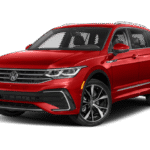 Volkswagen Tiguan Engine Light: Causes, Fixes, and What It Really Means
- expensive bodywork
- sport styling parts
- larger alloy wheels
Insurance groups typically sit around 20–24.
Tiguan R Performance
At the top of the range is the Volkswagen Tiguan R.
This model produces roughly 320 horsepower.
Insurance groups usually land between 29 and 30.
Why so high?
Because it behaves more like a performance car than a family SUV.
Insurance Groups for Older Tiguan Generations
The Tiguan has been around since 2007.
Each generation carries slightly different insurance ratings.
First Generation (2007–2016)
Early models generally sit between:
Group 15 and Group 22
They are cheaper to insure because:
- simpler electronics
- lower purchase price today
- fewer advanced sensors
Second Generation (2016–Present)
The second generation brought:
- MQB platform
- digital cockpit
- advanced safety tech
Insurance groups increased slightly to 14–30 depending on spec.
Petrol vs Diesel Insurance Groups
Many buyers wonder whether petrol or diesel Tiguans are cheaper to insure.
The answer is: it depends on the engine size and power output.
Petrol Engines
Common petrol engines include:
- 1.5 TSI
- 2.0 TSI
Insurance groups:
- 1.5 TSI: group 14–18
- 2.0 TSI: group 22–28
The 1.5 TSI is generally the cheapest to insure.
Diesel Engines
Diesel variants include:
- 2.0 TDI 150
- 2.0 TDI 200
Insurance groups usually sit between:
17 and 24
Diesels sometimes carry slightly higher groups due to:
- higher torque
- stronger towing ability
Factors That Affect Tiguan Insurance Costs
Insurance groups are only part of the story.
Two drivers with identical cars may pay completely different premiums.
Let’s explore why.
Driver Age
Young drivers face the highest premiums.
For example:
- A 20-year-old driving a Tiguan may pay double or triple what a 40-year-old pays.
Experience matters.
Driving History
Insurance companies look closely at your past.
Risk increases if you have:
- accidents
- penalty points
- previous claims
A clean record helps lower premiums dramatically.
Location
Where you live plays a huge role.
Urban areas with high theft or accident rates usually lead to:
- higher premiums
Rural areas may be cheaper.
Annual Mileage
More miles mean more exposure to accidents.
Typical mileage categories include:
- under 5,000 miles
- 5,000–10,000 miles
- 10,000–20,000 miles
The more you drive, the more you pay.
Security Features
The Tiguan benefits from excellent security systems.
Many models include:
You may be interested in readingVolkswagen Tiguan Engine Light: Causes, Fixes, and What It Really MeansYou may be interested in reading
Volkswagen Tiguan Engine Size: Complete Guide to Tiguan Engines- immobiliser
- alarm system
- keyless entry protection
Better security reduces theft risk and can lower insurance.
How the Tiguan Compares to Rival SUVs
Insurance groups often influence buyers comparing similar SUVs.
Let’s see how the Tiguan stacks up.
Volkswagen Tiguan vs Nissan Qashqai
The Nissan Qashqai usually sits in groups 10–20.
This makes it slightly cheaper to insure than the Tiguan.
However, the Tiguan offers:
- stronger engines
- more premium feel
- larger interior
Volkswagen Tiguan vs Toyota RAV4
The Toyota RAV4 generally sits between groups 21–30.
Hybrid systems and higher vehicle value raise insurance costs.
In some cases, the RAV4 can be more expensive to insure than the Tiguan.
Volkswagen Tiguan vs Kia Sportage
The Kia Sportage usually sits between groups 12–24.
Insurance costs are similar to the Tiguan depending on engine choice.
Tips to Reduce Tiguan Insurance Costs
Insurance premiums can feel unpredictable.
But there are ways to lower them.
Choose a Smaller Engine
If insurance cost matters, choose:
- 1.5 TSI petrol
- lower trim levels
Avoid high-performance variants.
Increase Your Voluntary Excess
A higher voluntary excess lowers premiums.
But be sure you can afford the excess if you claim.
Add a Named Driver
Adding an experienced driver (like a parent or partner) may reduce premiums.
This strategy works best for younger drivers.
Install Additional Security
Extra security can help insurers see the vehicle as lower risk.
Options include:
- steering wheel locks
- driveway parking
- tracking systems
Compare Insurance Quotes
Never accept the first quote.
Always compare insurers.
Prices can vary dramatically—even for the same driver.
Is the Volkswagen Tiguan Expensive to Insure?
Overall, the Tiguan sits comfortably in the mid-range insurance category.
It isn’t as cheap as a small hatchback, but it’s also far from the most expensive SUV to insure.
For most drivers:
- Entry-level models → moderate insurance costs
- Performance models → higher premiums
If affordability matters, stick with smaller engines and lower trims.
Final Thoughts on Volkswagen Tiguan Insurance Groups
The Volkswagen Tiguan insurance group varies widely depending on the exact model, but most versions fall between Group 14 and Group 30.
That puts the Tiguan firmly in the middle of the insurance spectrum for SUVs.
What makes the Tiguan appealing is that it balances:
- strong performance
- premium build quality
- practical family usability
—without pushing insurance costs into extreme territory.
If you choose the right engine and trim level, the Tiguan can be surprisingly affordable to insure.
And for many drivers, the combination of practicality and refinement makes the Tiguan a smart long-term choice.
FAQs About Volkswagen Tiguan Insurance Group
1. What insurance group is the Volkswagen Tiguan in?
Most Volkswagen Tiguan models fall between insurance group 14 and group 30, depending on engine size and trim level.
2. Is the Volkswagen Tiguan expensive to insure?
Not particularly. It usually sits in the mid-range insurance category for SUVs.
3. Which Tiguan model is cheapest to insure?
The 1.5 TSI Life trim is typically the cheapest Tiguan to insure.
4. Do diesel Tiguans cost more to insure than petrol models?
Diesel versions sometimes sit in slightly higher insurance groups due to higher torque and towing capability.
5. Does the Tiguan R cost more to insure?
Yes. The Tiguan R sits in much higher insurance groups because of its high performance and increased vehicle value.
You may be interested in readingVolkswagen Tiguan Engine Light: Causes, Fixes, and What It Really MeansYou may be interested in reading
Volkswagen Tiguan Engine Size: Complete Guide to Tiguan EnginesYou may be interested in reading
 Where to Find Reliable Fiat Repair Services Near Me
If you want to know other articles similar to Volkswagen Tiguan Insurance Group: Complete Guide to Costs, Ratings, and Factors you can visit the category Service and Parts.
Volkswagen Tiguan Tyre Size: Complete Guide to All Sizes, Fitment, and Performance
Volkswagen Tiguan Engine Size: Complete Guide to Tiguan Engines
Volkswagen Tiguan Engine Light: Causes, Fixes, and What It Really Means
Volkswagen Tiguan Oil Type: Complete Guide to the Right Engine Oil
Volkswagen Tiguan Key Battery Replacement: The Complete Practical Guide
Volkswagen Tiguan Warning Lights: Complete Dashboard Symbols Guide
Leave a Reply
More content of your interest