
VW ID.3 0–100 km/h: Electric Acceleration Explained

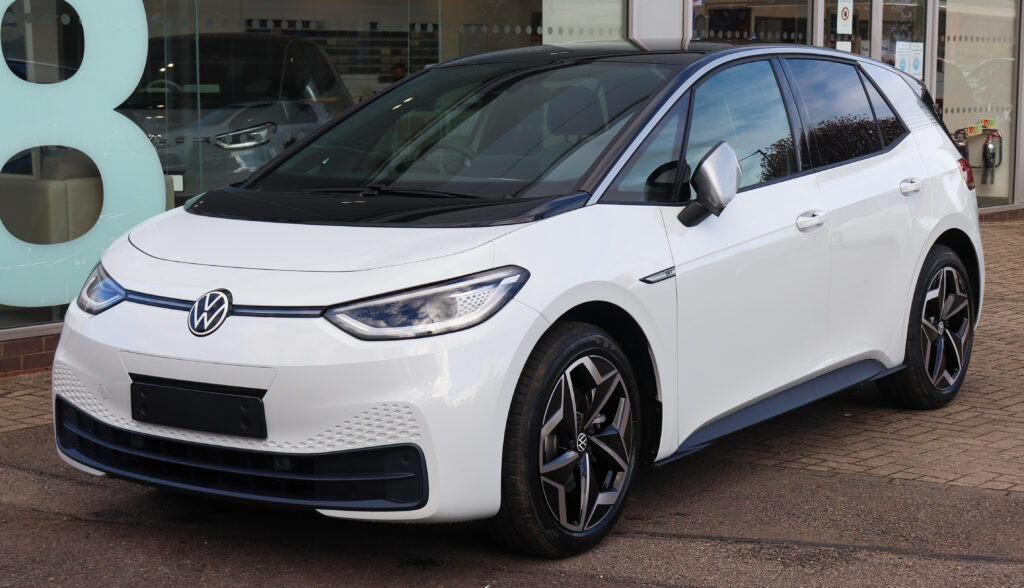
Acceleration used to be a muscle-car thing. Big engines. Loud exhausts. Burnt rubber. Then electricity rewrote the rules. The Volkswagen ID.3 doesn’t shout. It launches. And that 0–100 km/h sprint? It’s the moment most drivers realize EVs are no longer “future cars”—they’re now cars.
In this deep dive, we explore how fast the VW ID.3 really is, what affects its 0–100 km/h time, how each version compares, and why electric acceleration feels different from anything you’ve driven before.
Content in this publication
- Why 0–100 km/h Still Matters in an EV World
- VW ID.3 0–100 km/h Times by Version
- What Makes the ID.3 Feel Faster Than the Numbers
- Electric vs Petrol: A Different Kind of Speed
- How Driving Modes Affect 0–100 Performance
- Real-World Acceleration: What Owners Report
- The GTX: VW’s Electric Hot Hatch
- Does Battery Size Affect Acceleration?
- Temperature, Charge Level, and Performance
- Is the ID.3 “Fast Enough” for Real Life?
- Acceleration and Urban Driving
- Highway Merging and Overtakes
- How It Compares to Rivals
- Acceleration vs Efficiency: The Balancing Act
- What Acceleration Tells Us About VW’s EV Future
- Is 0–100 the Right Metric for EVs?
- Closing Thoughts: Speed Without Stress
- FAQs
Why 0–100 km/h Still Matters in an EV World
We all know range and charging dominate EV conversations. But acceleration remains the emotional hook.
0–100 km/h tells us:
- How responsive a car feels in daily driving
- How confident overtakes will be
- Whether a car feels “alive” or “appliance-like”
- How modern the powertrain really is
With EVs, this metric becomes even more fascinating because torque arrives instantly. No lag. No rev build. Just go.
VW ID.3 0–100 km/h Times by Version
Volkswagen offers multiple ID.3 configurations, and acceleration varies significantly.
Typical Factory Figures
- ID.3 Pure (110 kW / 148 hp) – ~8.9 seconds
- ID.3 Pro (150 kW / 204 hp) – ~7.3 seconds
- ID.3 Pro S (150 kW / 204 hp) – ~7.3 seconds
- ID.3 GTX (220 kW / 295 hp) – ~5.7 seconds
That means even the “slowest” ID.3 is quicker than many traditional hatchbacks. The GTX, meanwhile, plays in hot-hatch territory.
What Makes the ID.3 Feel Faster Than the Numbers
Paper stats don’t tell the whole story. The ID.3 feels quicker than its stopwatch time.
Why?
- Instant torque from 0 rpm
- Single-speed transmission
- No gear changes interrupting momentum
- Low center of gravity from the battery pack
- Perfect traction management from software
The sensation is like being pulled forward by an invisible hand. It’s smooth, silent, and strangely addictive.
Electric vs Petrol: A Different Kind of Speed
In a petrol hatchback:
- You press the pedal
- Engine revs
- Gearbox downshifts
- Turbo spools
- Then… acceleration happens
In the ID.3:
- You press
- You move
No drama. No delay. Just motion. It’s like switching from dial-up to fiber internet.
How Driving Modes Affect 0–100 Performance
The ID.3 offers multiple drive modes:
- Eco – Limits power for efficiency
- Comfort – Balanced output
- Sport – Sharpest throttle response
Only Sport mode delivers the full launch character. In Eco, the same car feels relaxed and restrained. It’s like owning two personalities in one shell.
Real-World Acceleration: What Owners Report
Owners consistently describe:
You may be interested in reading Volkswagen ID.3 Top Speed – How Fast Is VW’s Electric Hatchback Really?
- “Feels quicker than a GTI around town”
- “Silent but shocking off the line”
- “Passengers laugh the first time”
Even the Pro model surprises drivers used to combustion engines. The GTX, meanwhile, feels borderline mischievous.
The GTX: VW’s Electric Hot Hatch
Why the GTX Changes Everything
With 295 hp and rear-wheel drive, the GTX brings:
- Sub-6-second 0–100 km/h
- Sport-tuned suspension
- Sharper steering
- Aggressive throttle mapping
It’s not a gimmick. It’s Volkswagen saying: electric can be fun.
Does Battery Size Affect Acceleration?
Indirectly, yes.
Larger batteries:
- Add weight
- But allow higher sustained output
- Enable performance-focused power delivery
The Pro and Pro S share similar acceleration because the motor defines the sprint, not the battery capacity. However, the GTX’s upgraded motor changes the equation.
Temperature, Charge Level, and Performance
EV acceleration isn’t always identical.
Factors that influence 0–100:
- Battery temperature
- State of charge (below 20% reduces power)
- Ambient weather
- Traction conditions
Cold batteries protect themselves. Low charge limits output. The car remains quick—but not at peak fury.
Is the ID.3 “Fast Enough” for Real Life?
Let’s be honest: most drivers don’t need 4-second launches.
The ID.3 Pro’s 7.3 seconds is:
- Faster than most compact hatchbacks
- Comparable to many turbo petrol cars
- More than enough for confident overtakes
It feels brisk, modern, and effortlessly capable.
Acceleration and Urban Driving
In cities, the ID.3 shines:
- Traffic gaps disappear
- Roundabouts feel stress-free
- Short merges become trivial
- Stop-start traffic feels smooth
It’s not about racing. It’s about control.
Highway Merging and Overtakes
That instant torque becomes safety.
- Slip into fast lanes
- Pass slow trucks
- Exit tight ramps
There’s no waiting for power. It’s always there.
You may be interested in readingVolkswagen ID.3 Top Speed – How Fast Is VW’s Electric Hatchback Really?You may be interested in reading
 BMW 1 Series MPG: Real-World Fuel Economy Explained
How It Compares to Rivals
| Model | 0–100 km/h |
|---|---|
| VW ID.3 Pro | ~7.3s |
| Renault Megane E-Tech | ~7.4s |
| MG4 EV Long Range | ~7.7s |
| Tesla Model 3 RWD | ~6.1s |
| ID.3 GTX | ~5.7s |
The ID.3 sits comfortably in the competitive middle—until the GTX arrives and shakes the table.
Acceleration vs Efficiency: The Balancing Act
More speed often means:
- Higher energy consumption
- More aggressive driving
- Reduced range
But EVs let you choose. Calm today. Play tomorrow.
That flexibility is the real revolution.
What Acceleration Tells Us About VW’s EV Future
The ID.3 proves Volkswagen understands:
- EVs must be emotional
- Speed matters
- Driving feel matters
This isn’t an experiment. It’s a foundation.
Is 0–100 the Right Metric for EVs?
Maybe not entirely.
EV magic lives in:
- 0–50 km/h
- 30–80 km/h
- Mid-range punch
That’s where the ID.3 truly shines.
Closing Thoughts: Speed Without Stress
The VW ID.3 doesn’t try to be a supercar. It simply redefines what “quick” means in everyday life.
From silent launches to effortless overtakes, its 0–100 km/h time is just the headline. The real story is how easy speed becomes.
It’s not about racing the world.
It’s about flowing through it.
FAQs
Is the VW ID.3 faster than a Golf?
Yes. Most ID.3 versions match or beat standard Golf petrol models in 0–100 km/h.
Which ID.3 is the fastest?
The ID.3 GTX, with around 5.7 seconds.
Does low battery reduce acceleration?
Yes. Below ~20%, power output is limited.
Is acceleration smooth or aggressive?
Smooth by default. Aggressive in Sport mode.
You may be interested in readingVolkswagen ID.3 Top Speed – How Fast Is VW’s Electric Hatchback Really?You may be interested in reading
BMW 1 Series MPG: Real-World Fuel Economy ExplainedYou may be interested in reading
 BMW 1 Series 0–60 MPH: Real-World Speed, Thrill, and Everyday Power
Does winter affect 0–100 times?
Cold batteries can slightly reduce peak performance.
If you want to know other articles similar to VW ID.3 0–100 km/h: Electric Acceleration Explained you can visit the category Driving.
Volvo XC60 Wading Depth: How Deep Can It Really Go?

Volkswagen Tiguan Driving Modes: The Complete Guide to Smarter, Smoother, and More Dynamic Driving
Volvo XC60 Fuel Consumption: Real MPG, Efficiency & Tips
Volvo XC60 MPG: Real-World Fuel Economy, Costs & What to Expect
Audi Q5 MPG: Real-World Fuel Economy, Tips, and Performance Insights
Can BMW X3 Go Off Road? The Real Truth About Its Capabilities
Leave a Reply
More content of your interest