

Tesla Model 3 Efficiency

Content in this publication
- Why Tesla Model 3 Efficiency Matters More Than Ever
- Understanding Tesla Model 3 Efficiency
- Why the Tesla Model 3 Is So Efficient
- Battery Technology and Energy Density
- Tesla Model 3 Miles Per kWh Explained
- How Driving Style Changes Efficiency
- The Role of Regenerative Braking
- Temperature and Tesla Model 3 Efficiency
- How Highway Speeds Affect Efficiency
- Wheel Size and Tire Choice Matter
- Tesla Model 3 vs Other EVs for Efficiency
- Charging Efficiency Explained
- Tesla Software Improves Efficiency Constantly
- Real-World Tesla Model 3 Efficiency Tips
- The Psychology of Efficient EV Driving
- Can Tesla Model 3 Efficiency Save Money?
- Long-Term Battery Degradation and Efficiency
- Tesla Model 3 Highland Efficiency Improvements
- Common Myths About Tesla Efficiency
- How Terrain Impacts Tesla Model 3 Efficiency
- The Future of Tesla Efficiency
- Why Tesla Model 3 Efficiency Still Leads the Industry
- Conclusion
- FAQs
Why Tesla Model 3 Efficiency Matters More Than Ever
The electric vehicle market feels like a racetrack these days. Every manufacturer promises longer range, faster charging, and futuristic technology. Yet when we peel back the glossy marketing layers, one factor quietly determines whether an EV truly excels in everyday life: efficiency.
That’s exactly where the Tesla Model 3 shines.
Efficiency is the hidden engine behind lower charging costs, greater driving range, smarter battery usage, and even reduced battery degradation over time. Think of it like athletic endurance. Two runners may have the same energy, but the one who uses it more intelligently travels farther with less strain.
And honestly, that’s what makes the Tesla Model 3 so fascinating. It doesn’t simply rely on a massive battery. Instead, it squeezes every electron for maximum value.
In this guide, we’ll explore everything about Tesla Model 3 efficiency — from real-world miles per kWh to driving habits, climate effects, wheel sizes, charging strategies, and how the Model 3 compares to rivals. We’ll also uncover why many EV enthusiasts still consider it the benchmark for electric efficiency.
Understanding Tesla Model 3 Efficiency
What Does EV Efficiency Actually Mean?
When we discuss efficiency in an electric vehicle, we’re essentially asking one question:
How far can the car travel using a certain amount of electricity?
For EVs, efficiency is commonly measured in:
- Miles per kWh
- Wh/mile
- kWh/100 miles
- kWh/100 km
The Tesla Model 3 usually performs exceptionally well in all these categories.
For example:
| Measurement | Tesla Model 3 Typical Result |
|---|---|
| Miles per kWh | 4.0–5.0 |
| Wh per mile | 200–260 |
| kWh per 100 miles | 20–25 |
Those numbers may seem abstract initially, but they translate into something very practical:
Lower Electricity Bills
A highly efficient EV consumes less energy during every journey. That means cheaper charging costs at home and fewer stops on long trips.
Why the Tesla Model 3 Is So Efficient
Aerodynamics Play a Massive Role
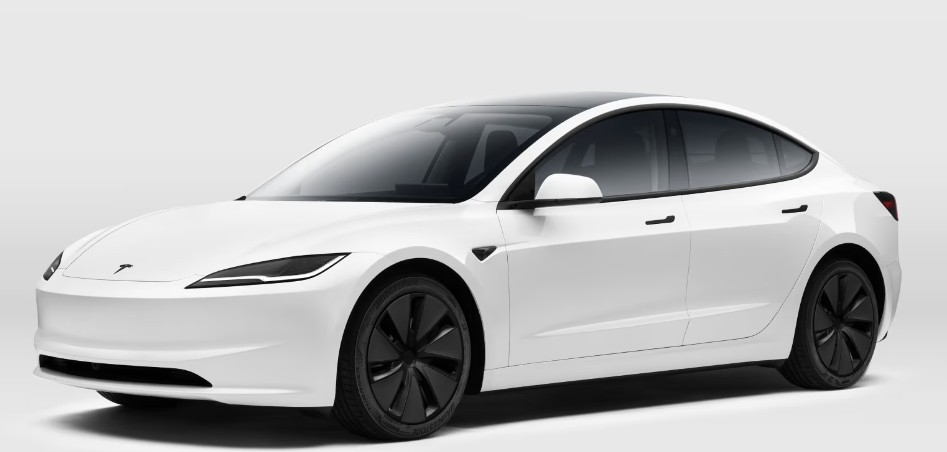
The Model 3 slices through the air like a pebble skipping across water. Its aerodynamic design dramatically reduces drag.
Tesla engineered the car with:
- Flush door handles
- Smooth underbody panels
- Minimal front grille openings
- Curved roofline
- Narrow panel gaps
The result is an impressively low drag coefficient.
That matters because highway driving becomes an invisible battle against air resistance. Above 60 mph, aerodynamic drag becomes the largest energy consumer in most EVs.
The Model 3 handles this battle beautifully.
Battery Technology and Energy Density
Tesla’s Battery Chemistry Advantage
Tesla’s battery systems remain among the most advanced in the automotive world.
Different Model 3 variants use different battery chemistries:
- LFP batteries in some Rear-Wheel Drive models
- NCA or NCM chemistry in Long Range and Performance versions
Each chemistry has trade-offs, but Tesla optimizes them intelligently for efficiency.
Why Smaller Batteries Can Still Deliver Big Range
Here’s the clever part.
Some competitors use enormous batteries to achieve decent range. Tesla often achieves similar range figures with smaller battery packs because the car wastes less energy overall.
That’s efficiency in action.
It’s similar to comparing:
- A fuel-efficient bicycle rider
- To a pickup truck with an oversized fuel tank
The truck may carry more energy, but it burns through it faster.
Tesla Model 3 Miles Per kWh Explained
Real-World Efficiency Numbers
Most Tesla Model 3 owners report:
- 4–5 miles per kWh in moderate conditions
- Around 3–4 miles per kWh in colder weather
- Higher efficiency during city driving
- Lower efficiency at high highway speeds
The Rear-Wheel Drive version tends to be the efficiency champion.
Typical Efficiency by Variant
| Variant | Estimated Efficiency |
|---|---|
| Model 3 RWD | 4.5–5.0 mi/kWh |
| Model 3 Long Range | 4.0–4.5 mi/kWh |
| Model 3 Performance | 3.5–4.2 mi/kWh |
Performance always comes with a trade-off. More power usually means slightly lower efficiency.
Still, even the Performance model remains remarkably efficient compared to many EV rivals.
How Driving Style Changes Efficiency
Aggressive Driving Hurts Range Fast
Electric cars reward smoothness.
Hard acceleration feels thrilling in a Tesla, but it also drains energy rapidly.
Rapid launches:
- Increase battery demand
- Generate more heat
- Reduce overall efficiency
Smooth Driving Unlocks Incredible Efficiency
Gentle acceleration combined with regenerative braking creates an almost magical driving rhythm.
Many Tesla owners become efficiency enthusiasts over time because the car gamifies energy use.
You start noticing:
- Terrain changes
- Wind resistance
- Tire pressure
- Traffic flow
- Outside temperature
Suddenly, driving becomes strategic instead of mechanical.
The Role of Regenerative Braking
Recovering Energy While Driving
One reason the Tesla Model 3 excels in city driving is regenerative braking.
When we lift off the accelerator:
- The motors reverse function
- Kinetic energy converts back into electricity
- The battery recovers energy
Instead of wasting momentum as heat through brake pads, the Model 3 recycles it.
That’s one of the reasons city efficiency can actually exceed highway efficiency in EVs.
One-Pedal Driving Efficiency Benefits
Tesla’s one-pedal driving system helps:
- Reduce brake wear
- Improve energy recovery
- Enhance smoothness
- Maximize range
It also feels surprisingly addictive after a few days.
Temperature and Tesla Model 3 Efficiency
Cold Weather Is the Biggest Efficiency Enemy
Winter affects all EVs.
The Tesla Model 3 is no exception.
Cold weather impacts:
You may be interested in reading Tesla Model 3 Miles Per Charge: Real-World Range, Battery Performance, and What to Expect
- Battery chemistry
- Cabin heating demand
- Tire resistance
- Air density
Efficiency can drop significantly in freezing temperatures.
Why Heat Pumps Changed Everything
Newer Tesla Model 3 versions include a heat pump system.
That’s important because traditional electric heaters consume substantial power.
Heat pumps are more efficient at warming the cabin, which helps preserve driving range during winter.
How Highway Speeds Affect Efficiency
Speed Kills Range
This surprises many first-time EV owners.
Driving at:
- 70 mph
- 80 mph
- or faster
can dramatically reduce efficiency.
Why?
Aerodynamic drag rises exponentially with speed.
The difference between 60 mph and 80 mph is not linear. It’s massive.
The Sweet Spot for Maximum Efficiency
Most Tesla Model 3 drivers achieve peak efficiency around:
- 45–65 mph
That’s where the balance between rolling resistance and aerodynamic drag works best.
Wheel Size and Tire Choice Matter
Bigger Wheels Usually Reduce Efficiency
Large wheels may look fantastic, but they typically:
- Increase weight
- Reduce aerodynamic performance
- Increase rolling resistance
That’s why smaller aero wheels often deliver better range.
Best Wheel Setup for Efficiency
The most efficient configuration usually includes:
- Smaller wheels
- Aero covers
- Low rolling resistance tires
Tesla’s aero wheel covers may not look glamorous to everyone, but they genuinely improve efficiency.
Tesla Model 3 vs Other EVs for Efficiency
How the Model 3 Compares
The Tesla Model 3 remains one of the most efficient EVs on sale.
Compared to many rivals:
- It uses less energy per mile
- Charges efficiently
- Maintains excellent highway range
Efficiency Comparison Table
| Vehicle | Approx Efficiency |
|---|---|
| Tesla Model 3 RWD | 4.5–5.0 mi/kWh |
| Hyundai Ioniq 6 | 4.0–4.8 mi/kWh |
| BMW i4 | 3.2–4.0 mi/kWh |
| Polestar 2 | 3.0–3.8 mi/kWh |
| Ford Mustang Mach-E | 2.8–3.7 mi/kWh |
The Model 3 consistently ranks near the top.
Charging Efficiency Explained
Not All Charging Is Perfectly Efficient
Energy loss occurs during charging.
Some electricity converts into:
- Heat
- Battery conditioning
- System overhead
Tesla’s charging ecosystem is impressively optimized, helping minimize these losses.
Home Charging vs Supercharging
Home charging tends to be:
- Cheaper
- Gentler on the battery
- More efficient overall
Meanwhile, Supercharging prioritizes speed and convenience.
Both systems work seamlessly within Tesla’s ecosystem.
Tesla Software Improves Efficiency Constantly
Over-the-Air Updates Matter
One fascinating advantage of Tesla ownership is software evolution.
The car you buy today may become:
- Smarter
- More efficient
- Better optimized
through future software updates.
Tesla frequently improves:
- Battery management
- Thermal systems
- Regenerative braking behavior
- Route planning
It’s almost like the car ages backward.
Real-World Tesla Model 3 Efficiency Tips
Simple Habits That Increase Range
Want better efficiency immediately?
Here are practical tips:
Drive Smoothly
Avoid sudden acceleration.
Use Chill Mode
Tesla’s Chill Mode softens throttle response.
Precondition the Battery
Especially important in winter.
Keep Tires Properly Inflated
Low pressure increases rolling resistance.
Avoid Carrying Unnecessary Weight
Extra cargo hurts efficiency.
Use Seat Heaters Instead of Cabin Heat
Seat heaters consume less power.
The Psychology of Efficient EV Driving
Tesla Changes How We Think About Energy
Gasoline cars hide inefficiency.
Most drivers barely think about:
- Fuel burn
- Engine waste
- Idle consumption
But EVs visualize everything.
The Tesla interface constantly shows:
- Energy graphs
- Consumption trends
- Regeneration data
- Projected range
That transparency changes driver behavior.
We become more intentional.
Almost like pilots monitoring aircraft systems.
You may be interested in readingTesla Model 3 Miles Per Charge: Real-World Range, Battery Performance, and What to ExpectYou may be interested in reading
How to Drive Tesla Model 3 2021: The Complete Beginner-to-Pro GuideCan Tesla Model 3 Efficiency Save Money?
Electricity Costs vs Gasoline
The savings can be substantial.
For many drivers:
- Charging costs far less than gasoline
- Maintenance costs decrease
- Brake wear reduces
- Energy efficiency lowers total ownership cost
Cost Per Mile Example
A Tesla Model 3 may cost:
- 3–6 cents per mile
depending on electricity rates.
Many gasoline vehicles cost:
- 12–20 cents per mile or more
That gap becomes enormous over years of ownership.
Long-Term Battery Degradation and Efficiency
Does Efficiency Decline Over Time?
Some degradation is inevitable.
However, Tesla batteries generally hold up well.
Many Model 3 vehicles retain:
- 85–90% battery capacity
after very high mileage.
Healthy Charging Habits Help
To preserve efficiency long-term:
- Avoid frequent 100% charging unless needed
- Limit extreme heat exposure
- Use scheduled charging
- Keep software updated
Battery care resembles caring for an athlete’s stamina rather than fixing a fragile machine.
Tesla Model 3 Highland Efficiency Improvements
The Refreshed Model Became Even Better
The refreshed “Highland” Model 3 introduced several efficiency-focused upgrades.
These include:
- Improved aerodynamics
- Reduced cabin noise
- Better wheel design
- Enhanced thermal management
- Updated suspension tuning
Tesla refined details many people barely notice individually, but together they improve efficiency meaningfully.
That’s often Tesla’s philosophy:
- Hundreds of tiny optimizations
- Adding up to major real-world gains
Common Myths About Tesla Efficiency
Myth 1: Bigger Battery Means Better Efficiency
Not necessarily.
A heavier battery can reduce efficiency.
Myth 2: EVs Are Always More Efficient in Cities
Usually true, but weather and driving style still matter enormously.
Myth 3: Fast Charging Ruins Efficiency
Occasional Supercharging is perfectly manageable. The key is balanced charging habits over time.
Myth 4: Performance Models Are Inefficient
The Model 3 Performance still outperforms many rivals in efficiency despite its immense acceleration.
How Terrain Impacts Tesla Model 3 Efficiency
Hills Change Everything
Climbing steep hills consumes energy rapidly.
However:
- Descending recovers some energy through regeneration.
Tesla’s efficiency calculations constantly adapt based on terrain.
Wind Is the Invisible Enemy
Strong headwinds can dramatically reduce range.
It’s like cycling against a giant invisible hand pushing backward.
Tailwinds, meanwhile, can produce astonishing efficiency numbers.
The Future of Tesla Efficiency
Battery Innovation Continues
Future improvements may include:
- Better battery density
- Faster charging
- Lighter materials
- Improved motor efficiency
- Advanced AI energy management
Tesla continues chasing incremental gains relentlessly.
And honestly, efficiency may become even more important than raw battery size in the next decade.
Why Tesla Model 3 Efficiency Still Leads the Industry
The Model 3 succeeds because Tesla engineered the entire ecosystem around efficiency.
Not just:
- The battery
- Or the motors
But everything.
The software.
The aerodynamics.
The thermal systems.
The regenerative braking.
The charging network.
The rolling resistance.
The energy visualization tools.
It all works together like a symphony instead of isolated instruments.
That’s why the Model 3 remains one of the most efficient EVs ever produced.
And in a world increasingly obsessed with sustainable mobility, efficiency isn’t just a technical specification anymore.
It’s the difference between a good EV and a truly transformative one.
Conclusion
The Tesla Model 3 proves that efficiency is far more than a marketing buzzword. It directly shapes ownership costs, range confidence, driving enjoyment, and long-term usability.
Tesla didn’t simply build an electric sedan with a large battery. They engineered a remarkably intelligent machine capable of stretching every kilowatt-hour further than most competitors.
From aerodynamic design to regenerative braking and software optimization, the Model 3 demonstrates what happens when every component serves a singular mission: maximizing efficiency.
And perhaps that’s why so many drivers remain captivated by it.
Because driving a highly efficient EV feels less like consuming energy… and more like mastering it.
FAQs
Is the Tesla Model 3 the most efficient Tesla?
The Rear-Wheel Drive Model 3 is generally among the most efficient Tesla vehicles thanks to its lighter weight and optimized drivetrain.
How many miles per kWh does a Tesla Model 3 get?
Most drivers achieve around 4–5 miles per kWh depending on weather, speed, wheels, and driving style.
Does cold weather reduce Tesla Model 3 efficiency?
Yes. Cold temperatures can significantly reduce efficiency because batteries and cabin heating require additional energy.
You may be interested in readingTesla Model 3 Miles Per Charge: Real-World Range, Battery Performance, and What to ExpectYou may be interested in reading
How to Drive Tesla Model 3 2021: The Complete Beginner-to-Pro GuideYou may be interested in reading
 Which Tesla Model S Is the Fastest?
Which Tesla Model 3 version is most efficient?
The standard Rear-Wheel Drive version typically delivers the best efficiency and lowest energy consumption.
Do bigger wheels reduce Tesla Model 3 efficiency?
Yes. Larger wheels generally increase rolling resistance and aerodynamic drag, lowering overall efficiency.
If you want to know other articles similar to Tesla Model 3 Efficiency you can visit the category Driving.
Ford F-150 MPG: Fuel Economy, Engines, and Real-World Costs

Jeep Wrangler MPG: Real Fuel Economy, Engine Differences, and Ways to Save Gas

Vauxhall Antara Fuel Consumption: MPG, Costs and Real-World Economy

Dacia Jogger MPG: Real-World Fuel Economy Explained
Vauxhall Meriva MPG: Real-World Fuel Economy Guide

Hyundai i40 MPG: Real-World Fuel Economy Guide
Leave a Reply
More content of your interest