
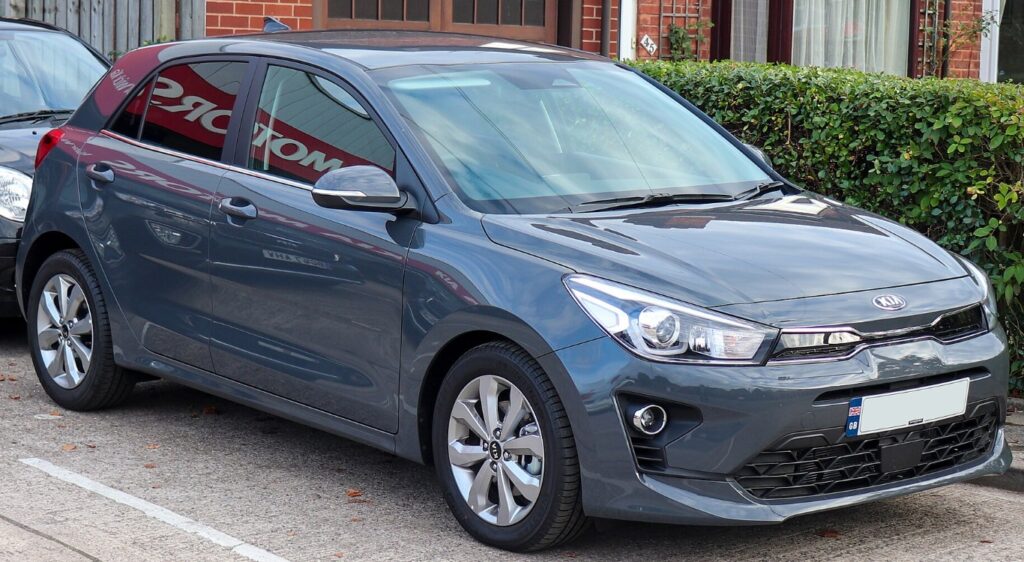
Kia Rio Fuel Tank Capacity: Everything We Need to Know

Content in this publication
- Why Fuel Tank Capacity Matters More Than You Think
- What Is the Kia Rio Fuel Tank Capacity?
- How the Kia Rio Fuel Tank Has Evolved Over Time
- Fuel Tank Capacity vs Fuel Efficiency: The Real Story
- Estimated Driving Range on a Full Tank
- Sedan vs Hatchback: Any Difference?
- How Driving Style Affects Fuel Usage
- Fuel Type Recommendations for Kia Rio
- Real-World Fuel Consumption: What Drivers Experience
- How to Maximize Your Kia Rio’s Fuel Range
- Fuel Tank Design and Safety Features
- Comparing Kia Rio Fuel Tank with Competitors
- Does Fuel Tank Size Affect Maintenance Costs?
- Urban vs Highway Driving: What Changes?
- Fuel Warning Light: When Does It Come On?
- Is the Kia Rio Good for Long Trips?
- Environmental Impact and Fuel Efficiency
- Common Myths About Fuel Tank Capacity
- Conclusion: The Perfect Balance of Capacity and Efficiency
- FAQs About Kia Rio Fuel Tank Capacity
Why Fuel Tank Capacity Matters More Than You Think
Let’s be honest—most of us don’t think about fuel tank capacity until we’re staring at that low fuel light, wondering if we’ll make it to the next gas station. But when it comes to a practical car like the Kia Rio, fuel tank size plays a bigger role than we often realize.
It’s not just about how much fuel you can hold—it’s about range, efficiency, convenience, and peace of mind. Think of it like a backpack on a long hike: the bigger and smarter it’s packed, the further you can go without stopping.
So, how does the Kia Rio stack up?
What Is the Kia Rio Fuel Tank Capacity?
Standard Fuel Tank Size Across Models
The Kia Rio typically comes with a fuel tank capacity of around 45 liters (11.9 gallons). This figure is consistent across most modern generations, especially from 2017 onward.
- Fuel tank capacity: ~45 liters
- Equivalent in gallons: ~11.9 gallons
- Fuel type: Regular unleaded gasoline
This capacity strikes a balance between compact design and practical range, which is exactly what we expect from a subcompact sedan or hatchback.
How the Kia Rio Fuel Tank Has Evolved Over Time
Older Generations vs Modern Models
Interestingly, the fuel tank size hasn’t changed dramatically over the years. Kia has kept it relatively consistent, focusing instead on improving fuel efficiency.
- 2000–2005 models: ~45 liters
- 2006–2011 models: ~45 liters
- 2012–2016 models: ~43–45 liters
- 2017–present: ~45 liters
Why no major increase? Because modern engines are more efficient—so instead of carrying more fuel, the car uses less.
Fuel Tank Capacity vs Fuel Efficiency: The Real Story
Why Capacity Alone Doesn’t Tell the Whole Story
Let’s pause for a second. A bigger tank doesn’t always mean better performance. What matters is how far you can go with that fuel.
The Kia Rio shines here.
Average Fuel Economy
Depending on the engine and driving conditions:
- City: 28–33 MPG
- Highway: 36–41 MPG
- Combined: ~32–36 MPG
Now let’s connect the dots.
Estimated Driving Range on a Full Tank
With a 45-liter tank and solid fuel economy, the Kia Rio delivers an impressive range.
Typical Range Calculation
- City range: ~400–450 miles
- Highway range: ~500–550 miles
That’s like driving from New York to Cleveland without refueling. Not bad for a compact car, right?
Sedan vs Hatchback: Any Difference?
Same Tank, Different Feel
Whether you’re driving the sedan or hatchback version of the Kia Rio, the fuel tank capacity remains the same.
However, the perceived efficiency might feel different because:
- Hatchbacks are slightly heavier
- Driving habits vary
- Cargo load impacts fuel usage
But in terms of raw capacity—no difference.
How Driving Style Affects Fuel Usage
Are You a Smooth Cruiser or Aggressive Driver?
Let’s be real—how we drive matters just as much as what we drive.
Fuel consumption can vary significantly based on:
- Rapid acceleration
- Hard braking
- High-speed driving
- Idling in traffic
Think of fuel like water in a bottle. Sip it slowly, and it lasts. Chug it recklessly, and it’s gone in no time.
Fuel Type Recommendations for Kia Rio
What Should We Put in the Tank?
The Kia Rio is designed to run on regular unleaded gasoline (87 octane).
Using premium fuel won’t necessarily improve performance or efficiency—it’s like putting gourmet coffee beans into a basic coffee machine. Nice idea, but unnecessary.
Real-World Fuel Consumption: What Drivers Experience
Beyond Official Numbers
In real-world conditions, most Kia Rio owners report:
- 30–35 MPG combined
- Slight drops in heavy traffic
- Better performance on highways
Factors that influence real-world results:
- Weather conditions
- Road terrain
- Tire pressure
- Maintenance habits
How to Maximize Your Kia Rio’s Fuel Range
Simple Tips That Actually Work
Want to stretch every liter further? Here’s what we can do:
- Maintain proper tire pressure
- Avoid aggressive driving
- Remove unnecessary weight
- Use cruise control on highways
- Keep up with regular maintenance
These small habits can make a noticeable difference—sometimes adding 50+ miles per tank.
Fuel Tank Design and Safety Features
More Than Just a Metal Container
The Kia Rio’s fuel tank is engineered with safety in mind.
Key features include:
- Reinforced materials to prevent leaks
- Evaporative emission control systems
- Secure fuel cap design
- Crash-resistant positioning
It’s not just about holding fuel—it’s about doing it safely and efficiently.
Comparing Kia Rio Fuel Tank with Competitors
How Does It Stack Up?
Let’s compare:
- Toyota Yaris: ~42 liters
- Honda Fit: ~40 liters
- Hyundai Accent: ~45 liters
The Kia Rio sits comfortably at the top of this segment, offering one of the best balances between tank size and efficiency.
Does Fuel Tank Size Affect Maintenance Costs?
Surprisingly, Yes (A Little)
A larger tank means:
- Slightly higher refueling costs per fill
- Fewer trips to the gas station
But overall, maintenance costs remain low because:
- The Rio uses affordable fuel
- It’s built for efficiency
- Parts and servicing are budget-friendly
Urban vs Highway Driving: What Changes?
City Life vs Open Roads
In the city:
- Frequent stops reduce efficiency
- Range decreases
On highways:
- Steady speeds improve MPG
- Range increases significantly
It’s like jogging versus sprinting—consistency wins.
Fuel Warning Light: When Does It Come On?
How Much Fuel Is Left?
In most Kia Rio models, the fuel warning light activates when:
- حوالي 5–7 liters remain
- Roughly 40–60 miles of range left
That’s your gentle nudge—not a panic alarm. But still, don’t push your luck.
Is the Kia Rio Good for Long Trips?
Short Answer: Absolutely
Thanks to its fuel tank capacity and efficiency:
- Fewer fuel stops
- Lower fuel costs
- Comfortable range
It’s a great companion for road trips, daily commutes, and everything in between.
Environmental Impact and Fuel Efficiency
Small Car, Smaller Footprint
The Kia Rio’s efficient fuel usage means:
- Lower CO2 emissions
- Reduced environmental impact
- Better sustainability compared to larger vehicles
Driving efficiently isn’t just good for your wallet—it’s good for the planet.
Common Myths About Fuel Tank Capacity
Let’s Clear Things Up
- Myth: Bigger tank = better car
- Reality: Efficiency matters more
- Myth: Premium fuel improves range
- Reality: Not in a Kia Rio
- Myth: Always fill to the top
- Reality: Overfilling can damage systems
Conclusion: The Perfect Balance of Capacity and Efficiency
When we step back and look at the big picture, the Kia Rio’s fuel tank capacity hits a sweet spot. It’s not oversized, and it’s not limiting—it’s perfectly tuned for real-world driving.
With around 45 liters of fuel capacity, paired with impressive fuel efficiency, the Rio offers a driving experience that feels both economical and reliable.
It’s like having just the right amount of coffee in your cup—not too much to waste, not too little to leave you wanting more.
FAQs About Kia Rio Fuel Tank Capacity
1. What is the exact fuel tank capacity of the Kia Rio?
Most Kia Rio models have a fuel tank capacity of approximately 45 liters (11.9 gallons).
2. How far can a Kia Rio go on a full tank?
Depending on driving conditions, it can travel 400 to 550 miles on a full tank.
3. Does the fuel tank size differ between models?
No, sedan and hatchback versions typically share the same fuel tank capacity.
4. What type of fuel should I use in a Kia Rio?
Regular unleaded gasoline (87 octane) is recommended.
5. Is the Kia Rio fuel-efficient compared to competitors?
Yes, it offers excellent fuel efficiency, making it one of the most economical cars in its class.
If you want to know other articles similar to Kia Rio Fuel Tank Capacity: Everything We Need to Know you can visit the category Service and Parts.
MG HS Tyre Pressure Guide: Correct PSI and TPMS
Toyota Yaris Cross Dashboard Symbols

BMW 3 Series Warning Lights: The Complete Guide to Understanding Every Dashboard Symbol
Nissan Qashqai Fuel Tank Capacity: Complete Guide

Suzuki Swift Fuel Tank Capacity: Complete Guide
Mazda CX-5 Weight (2013–2026): Complete Guide in Pounds and KG
Leave a Reply
More content of your interest