
Mazda CX-5 Weight (2013–2026): Complete Guide in Pounds and KG

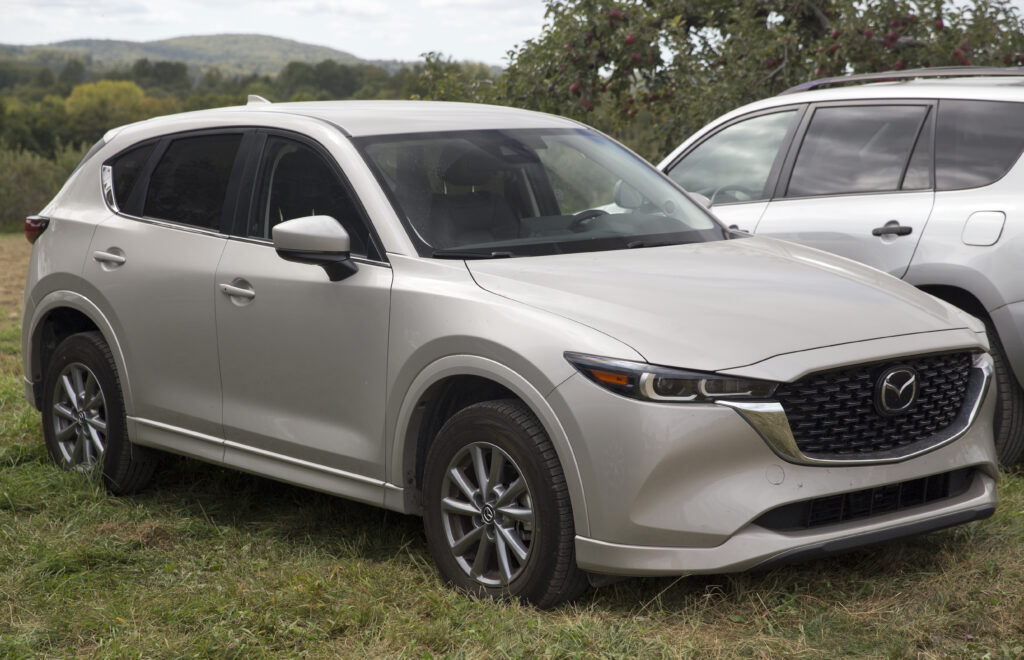
How much does a Mazda CX-5 weigh? Depending on the model year, engine, drivetrain, and trim level, the Mazda CX-5 has a curb weight ranging from approximately 3,194 to 3,940 pounds (1,449 to 1,787 kg) across the 2013–2026 model years.
The redesigned 2026 Mazda CX-5 weighs 3,856 pounds (1,749 kg) according to Mazda's published U.S. specifications. Meanwhile, the 2025 model weighs between 3,679 and 3,871 pounds, depending on the configuration.
Vehicle weight matters more than many drivers realize. It influences fuel economy, acceleration, braking, handling, tire wear, and the amount of cargo a vehicle can safely carry.
In this guide, we'll explore Mazda CX-5 weight by year, compare generations, explain the differences between front-wheel drive and all-wheel drive, and examine how curb weight relates to payload and gross vehicle weight rating.
Content in this publication
- Mazda CX-5 Weight by Year (2013–2026)
- What Does Mazda CX-5 Curb Weight Mean?
- Mazda CX-5 Weight by Generation
- 2013 Mazda CX-5 Weight
- 2014–2016 Mazda CX-5 Weight
- 2017–2018 Mazda CX-5 Weight
- 2019–2021 Mazda CX-5 Weight
- 2022–2025 Mazda CX-5 Weight
- 2026 Mazda CX-5 Weight: How Heavy Is the New Model?
- 2025 vs 2026 Mazda CX-5 Weight Comparison
- Mazda CX-5 FWD vs AWD Weight
- Mazda CX-5 Turbo vs Non-Turbo Weight
- Mazda CX-5 Gasoline vs Diesel Weight
- Mazda CX-5 Curb Weight vs Gross Vehicle Weight
- Mazda CX-5 Payload Capacity Explained
- Does Mazda CX-5 Weight Affect Fuel Economy?
- Does Mazda CX-5 Weight Affect Acceleration?
- Does Mazda CX-5 Weight Affect Braking?
- Mazda CX-5 Weight and Towing Capacity
- Mazda CX-5 Weight in Pounds vs Kilograms
- Does Mazda CX-5 Weight Differ by Country?
- How to Find the Exact Weight of Your Mazda CX-5
- Is the Mazda CX-5 a Heavy SUV?
- Frequently Asked Questions About Mazda CX-5 Weight
- Final Thoughts: Mazda CX-5 Weight From 2013 to 2026
Mazda CX-5 Weight by Year (2013–2026)
The following chart shows published curb-weight figures for U.S.-market Mazda CX-5 models from 2013 through 2026.
Complete Mazda CX-5 Weight Chart
| Model Year | Curb Weight (lbs) | Curb Weight (kg) |
|---|---|---|
| 2013 | 3,208–3,426 | 1,455–1,554 |
| 2014 | 3,194–3,532 | 1,449–1,602 |
| 2015 | 3,223–3,560 | 1,462–1,615 |
| 2016 | 3,212–3,589 | 1,457–1,628 |
| 2017 | 3,527–3,655 | 1,600–1,658 |
| 2018 | 3,563–3,693 | 1,616–1,675 |
| 2019 | 3,541–3,940 | 1,606–1,787 |
| 2020 | 3,541–3,825 | 1,606–1,735 |
| 2021 | 3,552–3,836 | 1,611–1,740 |
| 2022 | 3,717–3,836 | 1,686–1,740 |
| 2023 | 3,728–3,867 | 1,691–1,754 |
| 2024 | 3,710–3,867 | 1,683–1,754 |
| 2025 | 3,679–3,871 | 1,669–1,756 |
| 2026 | 3,856 | 1,749 |
Note: These are published U.S.-market curb-weight figures, not universal weights for every vehicle sold worldwide. The 2018 figures follow Mazda's manufacturer specification deck. Differences in engines, drivetrain, equipment, regional specifications, and published measurement conventions can produce different figures.
Key Findings From the Weight Chart
A few interesting patterns emerge when we compare Mazda CX-5 weight across different model years.
- Lightest listed version: The 2014 Mazda CX-5 Sport with a 2.0-liter engine and manual transmission, at approximately 3,194 pounds.
- Heaviest listed version: The 2019 Mazda CX-5 Signature with the 2.2-liter diesel engine, at approximately 3,940 pounds.
- 2025 Mazda CX-5: Between 3,679 and 3,871 pounds.
- 2026 Mazda CX-5: A published curb weight of 3,856 pounds.
- Major generational changes: The second-generation redesign arrived for 2017, followed by another substantial redesign for 2026.
Overall, the CX-5 has become heavier as Mazda has introduced new safety equipment, enhanced interior comfort, additional technology, and larger vehicle dimensions.
However, weight has not increased every single year. Some updates have reduced curb weight, while particular powertrain combinations have made certain older models heavier than newer versions.
What Does Mazda CX-5 Curb Weight Mean?
Before comparing individual models, we should understand what curb weight actually measures.
Curb weight is the weight of a vehicle in its normal operating condition, including standard equipment and operating fluids, but without passengers or cargo.
Under Mazda's U.S. definition of base curb weight, the vehicle includes a full fuel tank.
Curb weight is useful because it allows us to compare vehicles without accounting for passengers, luggage, or other temporary loads.
What Is Included in Curb Weight?
The measurement generally includes:
- Engine and transmission
- Body, chassis, and suspension
- Wheels and tires
- Standard safety equipment
- Engine oil and other operating fluids
- Full fuel tank under Mazda's U.S. definition
- Factory-installed standard equipment
What Is Excluded From Curb Weight?
Curb weight does not normally include:
- Driver and passengers
- Luggage and groceries
- Temporary cargo
- Additional aftermarket accessories
- Trailer tongue weight
Optional equipment can also affect the actual vehicle weight.
This distinction is important because the weight of a fully loaded Mazda CX-5 can be substantially higher than its published curb weight.
Mazda CX-5 Weight by Generation
The Mazda CX-5 has evolved through three generations represented in our 2013–2026 comparison.
Each generation introduced changes to vehicle dimensions, equipment, and mechanical components.
First Generation: 2013–2016
The original CX-5 was relatively lightweight compared with newer versions.
Early models featured Mazda's Skyactiv engineering philosophy, which emphasized efficiency and weight-conscious vehicle design.
Depending on the year and configuration, first-generation U.S. CX-5 models weighed approximately 3,194–3,589 pounds.
Several factors contributed to their comparatively low weight:
- Smaller and lighter engine options
- Availability of manual transmissions on selected models
- Fewer electronic convenience systems
- Simpler interior equipment
- Smaller overall body dimensions
These characteristics helped provide responsive handling and competitive fuel economy.
Second Generation: 2017–2025
The second-generation Mazda CX-5 introduced a more sophisticated design, improved cabin refinement, and additional technology.
The vehicle also gained new equipment over its production life.
Among U.S. models, available features included:
- More advanced driver-assistance systems
- Improved sound insulation
- Additional comfort equipment
- Turbocharged gasoline engine options
- Expanded infotainment technology
- Standard all-wheel drive beginning with the 2022 model year
Consequently, many second-generation versions weighed more than first-generation models.
For example, the 2017 CX-5 weighed approximately 3,527–3,655 pounds, while the 2025 version ranged from 3,679–3,871 pounds.
Third Generation: 2026
The 2026 Mazda CX-5 represents another major redesign.
The new model features larger exterior dimensions, additional rear-seat space, updated technology, and an improved interior layout.
Mazda lists a U.S. curb weight of 3,856 pounds.
The 2026 model also features:
- Standard i-Activ all-wheel drive in the U.S.
- A 2.5-liter naturally aspirated gasoline engine
- A six-speed automatic transmission
- A longer wheelbase
- Updated safety and driver-assistance equipment
- Increased passenger and cargo space
The revised dimensions and equipment help explain why the redesigned version is heavier than many earlier CX-5 configurations.
2013 Mazda CX-5 Weight
The 2013 Mazda CX-5 marked the beginning of the model's history in the United States.
This first model year used a 2.0-liter Skyactiv-G gasoline engine.
Its curb weight depended primarily on the transmission, drivetrain, and equipment level.
| 2013 Configuration | Curb Weight |
|---|---|
| Sport FWD manual | 3,208 lbs |
| Touring FWD automatic | 3,272 lbs |
| Grand Touring FWD automatic | 3,272 lbs |
| AWD automatic | 3,426 lbs |
The relatively lightweight design contributed to the first CX-5's reputation for engaging driving dynamics.
Even today, drivers looking for a lighter compact SUV may find the original CX-5 interesting.
However, buyers should also consider vehicle condition, maintenance history, and safety equipment rather than focusing exclusively on weight.
2014–2016 Mazda CX-5 Weight
Between 2014 and 2016, Mazda introduced changes to the CX-5's engine lineup and equipment.
The larger 2.5-liter gasoline engine became available on additional trims, increasing performance while also affecting weight.
2014 Mazda CX-5
The 2014 model weighed approximately 3,194–3,532 pounds.
The lightest configuration was the Sport FWD with a 2.0-liter engine and manual transmission.
Higher-equipped models with the 2.5-liter engine and AWD were heavier.
2015 Mazda CX-5
The 2015 Mazda CX-5 weighed approximately 3,223–3,560 pounds.
As with the previous year, vehicle specifications varied according to engine choice, transmission, and drivetrain.
2016 Mazda CX-5
The 2016 CX-5 weighed approximately 3,212–3,589 pounds.
This was the final model year before the second-generation redesign for the U.S. market.
The 2.0-liter manual model remained among the lightest configurations, while 2.5-liter AWD models were considerably heavier.
2017–2018 Mazda CX-5 Weight
The 2017 redesign introduced a more refined version of Mazda's compact crossover.
Although the CX-5 maintained its focus on handling, the newer design incorporated additional comfort and safety improvements.
2017 Mazda CX-5 Curb Weight
Mazda's published specifications listed:
| Drivetrain | Weight |
|---|---|
| Front-wheel drive | 3,527 lbs |
| All-wheel drive | 3,655 lbs |
The AWD configuration weighed 128 pounds more than the comparable FWD version.
2018 Mazda CX-5 Curb Weight
Mazda's 2018 specification deck listed:
| Drivetrain | Weight |
|---|---|
| Front-wheel drive | 3,563 lbs |
| All-wheel drive | 3,693 lbs |
The figures show a 130-pound difference between FWD and AWD.
For drivers considering an older Mazda CX-5, this provides a useful illustration of how drivetrain selection can influence curb weight.
2019–2021 Mazda CX-5 Weight
These model years brought further changes to the available powertrains.
Notably, the CX-5 gained turbocharged gasoline variants and, for a limited period in the U.S., a diesel engine.
2019 Mazda CX-5 Weight
The 2019 Mazda CX-5 weighed approximately 3,541–3,940 pounds across the published configurations.
Some examples include:
| Configuration | Weight |
|---|---|
| 2.5L gasoline FWD | 3,541 lbs |
| 2.5L gasoline AWD | 3,679 lbs |
| 2.5L turbo AWD | 3,825 lbs |
| 2.2L diesel AWD | 3,940 lbs |
The diesel-powered Signature model was particularly heavy compared with standard gasoline versions.
2020 Mazda CX-5 Weight
The 2020 Mazda CX-5 weighed approximately 3,541–3,825 pounds.
The naturally aspirated FWD versions were the lightest, while AWD turbo models occupied the upper end of the range.
2021 Mazda CX-5 Weight
The 2021 Mazda CX-5 weighed approximately 3,552–3,836 pounds.
At this stage, both FWD and AWD configurations remained available in the United States.
From the following model year, however, Mazda made AWD standard across the U.S. CX-5 range.
2022–2025 Mazda CX-5 Weight
The later second-generation models were generally heavier than their early predecessors.
A significant reason was the move to standard AWD in the United States.
2022 Mazda CX-5
The 2022 model weighed approximately 3,717–3,836 pounds.
Naturally aspirated 2.5-liter variants occupied the lower end, while the turbocharged configurations weighed more.
2023 Mazda CX-5
The 2023 Mazda CX-5 weighed approximately 3,728–3,867 pounds.
The difference between standard and turbo versions remained noticeable, reflecting the added hardware and equipment associated with certain configurations.
2024 Mazda CX-5
The 2024 model weighed approximately 3,710–3,867 pounds.
Actual figures depended on the selected trim and equipment.
2025 Mazda CX-5
Mazda lists a curb-weight range of 3,679–3,871 pounds for the 2025 U.S. CX-5.
Examples include:
| 2025 CX-5 Configuration | Curb Weight |
|---|---|
| 2.5 S AWD | 3,679 lbs |
| 2.5 S Preferred AWD | 3,679 lbs |
| 2.5 S Carbon Edition AWD | 3,752 lbs |
| 2.5 S Premium Plus AWD | 3,752 lbs |
| 2.5 Carbon Turbo AWD | 3,871 lbs |
| 2.5 Turbo Signature AWD | 3,871 lbs |
These figures illustrate why two Mazda CX-5 vehicles from the same model year may not weigh exactly the same.
Even with identical basic body dimensions, the engine and trim specifications can affect the final curb weight.
2026 Mazda CX-5 Weight: How Heavy Is the New Model?
The redesigned 2026 Mazda CX-5 has a published U.S. curb weight of 3,856 pounds (approximately 1,749 kg).
Unlike previous years, Mazda's U.S. specification deck provides a common published curb-weight figure across the launch lineup.
2026 Mazda CX-5 Weight by Trim
| 2026 Trim | Published Curb Weight |
|---|---|
| 2.5 S AWD | 3,856 lbs |
| 2.5 S Select AWD | 3,856 lbs |
| 2.5 S Preferred AWD | 3,856 lbs |
| 2.5 S Premium AWD | 3,856 lbs |
| 2.5 S Premium Plus AWD | 3,856 lbs |
This is Mazda's published specification figure; the actual weight of an individual vehicle may differ with installed accessories or additional equipment.
2026 Mazda CX-5 Weight Specifications
| Specification | 2026 Mazda CX-5 |
|---|---|
| Curb weight | 3,856 lbs |
| Curb weight in kg | 1,749 kg |
| Gross vehicle weight rating | 4,914 lbs |
| Engine | 2.5L gasoline |
| Transmission | 6-speed automatic |
| Drivetrain | AWD |
| Seating capacity | 5 |
| Maximum U.S. towing capacity | 1,500 lbs |
The 2026 model is substantially larger than earlier generations, with an overall length of approximately 184.6 inches and a wheelbase of 110.8 inches.
These changes provide additional passenger and cargo space without moving the CX-5 into the same size category as Mazda's larger SUVs.
2025 vs 2026 Mazda CX-5 Weight Comparison
One of the most interesting questions is whether the redesigned 2026 Mazda CX-5 is heavier than the previous model.
The answer depends on which 2025 version we're comparing.
| Specification | 2025 CX-5 | 2026 CX-5 |
|---|---|---|
| Standard-engine curb weight | 3,679 lbs | 3,856 lbs |
| Turbocharged curb weight | Up to 3,871 lbs | No U.S. turbo launch trim |
| Drivetrain | AWD | AWD |
| Engine | 2.5L / 2.5L Turbo | 2.5L |
| Transmission | 6-speed automatic | 6-speed automatic |
Compared with the 2025 standard-engine base model, the 2026 CX-5 is approximately 177 pounds heavier, an increase of about 4.8%.
However, the 2026 model's listed curb weight is slightly below the published figure for some 2025 turbocharged configurations.
Why Is the 2026 Mazda CX-5 Heavier?
Several changes help explain the difference.
Larger dimensions: The third-generation CX-5 is longer and features a longer wheelbase than its predecessor.
Expanded passenger space: The updated cabin provides more space, particularly for rear passengers.
Additional technology: The latest version offers updated infotainment, displays, safety systems, and convenience equipment.
Improved refinement: Modern SUVs incorporate numerous structural and comfort-related components that influence total vehicle weight.
Standard AWD: All-wheel drive remains part of the standard U.S. powertrain configuration.
While greater weight can influence acceleration and fuel consumption, vehicle engineering also plays a major role in how the CX-5 performs.
Mazda CX-5 FWD vs AWD Weight
One of the clearest differences in curb weight comes from drivetrain selection.
Front-wheel-drive vehicles generally weigh less because they do not require the same complete set of components as an AWD system.
Why Does AWD Add Weight?
An AWD system typically requires additional hardware, including:
- Rear differential
- Driveshaft
- Additional axle shafts
- Power-distribution components
- Supporting mechanical equipment
Depending on the vehicle's design, these components can add more than 100 pounds.
Mazda CX-5 FWD vs AWD Examples
| Model Year | FWD Weight | AWD Weight | Difference |
|---|---|---|---|
| 2017 | 3,527 lbs | 3,655 lbs | 128 lbs |
| 2018 | 3,563 lbs | 3,693 lbs | 130 lbs |
| 2020, 2.5L | 3,541 lbs | 3,679 lbs | 138 lbs |
| 2021, 2.5L | 3,552 lbs | 3,691 lbs | 139 lbs |
These comparisons demonstrate how the same basic vehicle can weigh significantly more when equipped with AWD.
Is the Extra AWD Weight Worth It?
That depends on driving conditions.
AWD may be especially useful for drivers who regularly encounter:
- Snow-covered roads
- Wet or slippery conditions
- Loose gravel
- Steep or uneven surfaces
However, AWD does not automatically improve braking performance or eliminate the need for appropriate tires.
For drivers operating primarily on dry urban roads, an older FWD CX-5 may offer some advantages in weight and mechanical simplicity.
For U.S. buyers shopping for a 2022–2026 model, this comparison is largely historical because AWD became standard.
Mazda CX-5 Turbo vs Non-Turbo Weight
Turbocharged Mazda CX-5 models generally weigh more than their naturally aspirated counterparts.
The additional weight can come from turbocharger hardware, cooling components, supporting systems, and differences in equipment.
For example, the 2025 U.S. CX-5 has published figures of:
- Standard 2.5L AWD: 3,679 pounds in base configuration.
- 2.5L Turbo AWD: Up to 3,871 pounds in the published lineup.
That is a difference of 192 pounds between these particular configurations.
Importantly, not all of that difference should be attributed to the turbocharger itself. Trim-level equipment can also contribute.
Does a Heavier Turbo CX-5 Feel Slower?
Not necessarily.
A turbocharged engine can provide substantially more torque than a naturally aspirated engine.
This additional output may compensate for the higher curb weight and improve acceleration.
The result is that a heavier turbo model can still feel more responsive during overtaking or highway driving.
Weight is only one factor. Engine output, gearing, traction, and vehicle tuning are also important.
Mazda CX-5 Gasoline vs Diesel Weight
Engine type can significantly affect vehicle weight.
Diesel engines often incorporate components designed to withstand higher combustion pressures, along with emissions-control systems and other specialized hardware.
The 2019 U.S.-market Mazda CX-5 Signature diesel illustrates this difference.
Its published curb weight of approximately 3,940 pounds exceeds the weight of many gasoline-powered CX-5 versions.
However, this should not be interpreted as a universal comparison between every diesel and gasoline CX-5.
In markets such as Australia and parts of Europe, Mazda has offered different engines and equipment combinations.
For an accurate comparison, we always need to match the model year, drivetrain, transmission, and regional specifications.
Mazda CX-5 Curb Weight vs Gross Vehicle Weight
Curb weight and gross vehicle weight rating are frequently confused.
Although both describe vehicle weight, they represent very different measurements.
What Is Gross Vehicle Weight Rating (GVWR)?
GVWR is the maximum allowable total weight of a fully loaded vehicle, as specified by its manufacturer.
This includes the vehicle itself, passengers, luggage, accessories, and any applicable trailer tongue load.
The GVWR should never be exceeded.
Mazda CX-5 GVWR Examples
| Model | Gross Vehicle Weight Rating |
|---|---|
| 2018 CX-5 FWD | 4,544 lbs |
| 2018 CX-5 AWD | 4,669 lbs |
| 2025 CX-5 2.5L | 4,724 lbs |
| 2025 CX-5 2.5L Turbo | 4,828 lbs |
| 2026 CX-5 | 4,914 lbs |
These ratings refer to particular U.S. model specifications.
The correct rating for an individual vehicle is shown on its vehicle certification label.
Can a Mazda CX-5 Weigh More Than Its Curb Weight?
Absolutely.
Imagine loading your CX-5 with:
- A driver
- Four passengers
- Several suitcases
- Camping equipment
- Additional accessories
Every added item increases the vehicle's operating weight.
The important consideration is ensuring that the combined load remains within the manufacturer's limits.
Mazda CX-5 Payload Capacity Explained
Payload capacity measures how much combined passenger and cargo weight a vehicle can safely carry.
It includes people, luggage, and other items added to the vehicle.
Although curb weight and GVWR help explain payload, we should not assume that subtracting a generic published curb weight from GVWR gives the exact payload allowance for every specific car.
Factory options, accessories, and vehicle-specific weight information matter.
How to Find Your Mazda CX-5 Payload Rating
For a U.S.-market CX-5, open the driver's door and locate the Tire and Loading Information label.
Look for the statement indicating the maximum combined weight of occupants and cargo.
This is the most useful figure when planning to carry a full passenger load.
For example, if passengers use most of the available payload allowance, less capacity remains for heavy luggage.
Why Payload Capacity Matters
Exceeding the permitted load can adversely affect:
- Braking performance
- Steering response
- Vehicle stability
- Suspension components
- Tire performance
- Mechanical durability
When carrying particularly heavy items, we recommend verifying the vehicle's actual load limits instead of relying on estimates from online vehicle specifications.
Does Mazda CX-5 Weight Affect Fuel Economy?
Yes. Vehicle mass is one factor influencing fuel consumption.
A heavier vehicle generally requires more energy to accelerate, especially during stop-and-go driving.
However, fuel economy also depends on:
- Engine efficiency
- Transmission gearing
- Aerodynamic resistance
- Tire design
- Road conditions
- Driving style
- Vehicle maintenance
City Driving
In city traffic, the engine repeatedly accelerates the vehicle from low speeds.
Greater vehicle mass can increase the energy required for those accelerations.
This means additional weight may have a more noticeable effect in urban driving.
Highway Driving
At steady highway speeds, aerodynamic drag becomes an increasingly important factor.
Consequently, a heavier SUV is not automatically less efficient than every lighter competitor.
Engine calibration, aerodynamics, and drivetrain efficiency can offset some weight-related disadvantages.
Does Carrying Extra Cargo Reduce MPG?
It can.
Additional passengers and luggage increase the vehicle's operating weight, which may raise fuel consumption.
To maintain efficiency, we suggest avoiding unnecessary cargo and keeping tires inflated according to Mazda's recommendations.
Does Mazda CX-5 Weight Affect Acceleration?
Vehicle weight can influence acceleration because more mass requires more force to reach a particular speed.
If two otherwise identical vehicles have the same engine output, the lighter one will generally have an acceleration advantage.
However, this relationship becomes more complicated when comparing different engines.
For example, a heavier turbocharged CX-5 may accelerate more quickly than a lighter naturally aspirated version because of its greater engine output.
Why Power-to-Weight Ratio Matters
Power-to-weight ratio relates engine output to vehicle mass.
It helps explain why some vehicles feel more responsive than others.
A vehicle with strong horsepower and torque relative to its weight will often deliver better acceleration.
Still, actual performance depends on gearing, traction, torque delivery, and other factors.
Does Mazda CX-5 Weight Affect Braking?
Yes. A heavier vehicle traveling at the same speed carries more kinetic energy.
Brakes must dissipate this energy when slowing the vehicle.
However, braking distance is not determined by weight alone.
Important factors include:
- Tire grip
- Brake system design
- Road surface
- Brake temperature
- Suspension behavior
- Anti-lock braking system calibration
A well-engineered heavier SUV can provide excellent braking performance.
Nevertheless, carrying excessive cargo or exceeding manufacturer load limits can compromise braking and handling.
Mazda CX-5 Weight and Towing Capacity
Curb weight and towing capacity are related vehicle specifications, but they describe different things.
Curb weight tells us how much the SUV weighs. Towing capacity tells us how much trailer weight the manufacturer permits under specified conditions.
For example, Mazda's U.S. specifications list:
| Model | Maximum Towing Capacity |
|---|---|
| 2018 Mazda CX-5 | 2,000 lbs |
| 2026 Mazda CX-5 | 1,500 lbs |
These figures demonstrate why towing capacity should never be estimated using curb weight alone.
The redesigned 2026 CX-5 is heavier than many older models but has a lower published U.S. towing rating than the 2018 version.
Does a Heavier CX-5 Tow More?
Not necessarily.
Towing capacity depends on several factors:
- Engine performance
- Transmission capability
- Cooling systems
- Chassis design
- Braking capability
- Manufacturer certification
Trailer tongue weight also counts toward the vehicle's load limits.
Always check the towing specification for the exact vehicle, model year, and market.
Mazda CX-5 Weight in Pounds vs Kilograms
Vehicle weight is commonly expressed in pounds in the United States and kilograms in many other countries.
We can convert between the two using a simple formula.
Kilograms = Pounds ÷ 2.20462
For example:
3,856 ÷ 2.20462 = approximately 1,749 kg.
Mazda CX-5 Weight Conversion Chart
| Pounds | Kilograms |
|---|---|
| 3,200 lbs | 1,451 kg |
| 3,300 lbs | 1,497 kg |
| 3,400 lbs | 1,542 kg |
| 3,500 lbs | 1,588 kg |
| 3,600 lbs | 1,633 kg |
| 3,700 lbs | 1,678 kg |
| 3,800 lbs | 1,724 kg |
| 3,856 lbs | 1,749 kg |
| 3,900 lbs | 1,769 kg |
| 4,000 lbs | 1,814 kg |
These conversions are useful when comparing North American CX-5 specifications with international vehicle information.
Does Mazda CX-5 Weight Differ by Country?
Yes.
The Mazda CX-5 has been sold in numerous markets, and specifications are not identical worldwide.
For example, a CX-5 sold in Australia may have different powertrain or equipment combinations from a U.S.-market vehicle of the same model year.
Similarly, some European versions feature powertrains not offered in the United States.
The redesigned 2026 CX-5 also has different regional specifications, including mild-hybrid equipment in certain international markets.
As a result, we should avoid using U.S. curb-weight figures as universal specifications.
When researching a Mazda CX-5 in Australia, the United Kingdom, Europe, or another market, consult the specifications published by Mazda for that specific country.
How to Find the Exact Weight of Your Mazda CX-5
Online charts provide a useful starting point, but the precise specifications of an individual vehicle can depend on its configuration.
If you need weight information for registration, loading, transportation, or another technical purpose, use an authoritative vehicle-specific source.
Check the Vehicle Certification Label
The manufacturer's vehicle certification label is generally located around the driver's door opening.
It contains important information such as:
- Gross vehicle weight rating
- Gross axle weight ratings
- Vehicle identification information
- Other certification details
This label provides the actual weight ratings assigned to the vehicle.
Check the Owner's Manual
Mazda owner manuals include specifications and explanations of vehicle weight limits.
They are particularly useful for understanding payload, GVWR, and axle ratings.
Consult Mazda Specifications
Manufacturer specification documents can identify the published curb weight for a particular model and drivetrain.
For example, Mazda's 2026 U.S. specification deck provides the 3,856-pound figure used throughout this guide.
Use a Vehicle Scale When Necessary
If you need to know exactly how much your particular CX-5 currently weighs, a suitable vehicle scale can provide the actual measured weight.
This can be especially useful when the vehicle has accessories or carries additional equipment.
Is the Mazda CX-5 a Heavy SUV?
The Mazda CX-5 falls within the broad weight range commonly associated with compact crossover SUVs.
It is substantially heavier than many small hatchbacks, but lighter than numerous larger three-row SUVs.
Its weight reflects a combination of passenger space, structural design, available equipment, and drivetrain hardware.
The 2026 model's 3,856-pound curb weight is not unusual for an AWD compact crossover.
Still, whether a vehicle feels heavy depends on more than its mass.
Steering calibration, suspension tuning, power delivery, and weight distribution influence the driving experience.
Mazda has traditionally emphasized responsive handling in the CX-5, and these engineering choices remain relevant when evaluating newer models.
Frequently Asked Questions About Mazda CX-5 Weight
1. How much does a 2026 Mazda CX-5 weigh?
The 2026 Mazda CX-5 has a published U.S. curb weight of 3,856 pounds (approximately 1,749 kilograms). The redesigned model comes with a 2.5-liter gasoline engine, six-speed automatic transmission, and standard AWD in the United States.
2. How much does a 2025 Mazda CX-5 weigh?
The 2025 Mazda CX-5 weighs between 3,679 and 3,871 pounds (1,669–1,756 kg), depending on the engine and trim. Standard naturally aspirated models are generally lighter than higher-equipped turbocharged versions.
3. What is the lightest Mazda CX-5 model?
Among the listed U.S. configurations from 2013 through 2026, the 2014 Mazda CX-5 Sport FWD with a 2.0-liter engine and manual transmission is the lightest at approximately 3,194 pounds (1,449 kg).
4. Is the Mazda CX-5 heavier with AWD?
Yes. AWD versions generally weigh more than comparable FWD models because they require additional drivetrain components. For example, Mazda's 2018 specifications show a 130-pound difference between FWD and AWD versions.
5. What is the difference between Mazda CX-5 curb weight and GVWR?
Curb weight is the vehicle's weight without passengers or cargo, while GVWR is its maximum permitted fully loaded weight. For the 2026 U.S. Mazda CX-5, the published curb weight is 3,856 pounds and the GVWR is 4,914 pounds.
Final Thoughts: Mazda CX-5 Weight From 2013 to 2026
The Mazda CX-5 has changed considerably since its introduction, and its curb weight reflects those developments.
Early first-generation versions were relatively lightweight, with some configurations weighing close to 3,200 pounds. Later models became heavier as Mazda introduced more powerful engines, standard AWD, additional safety systems, and greater passenger comfort.
The redesigned 2026 Mazda CX-5 weighs 3,856 pounds (1,749 kg) according to Mazda's U.S. specifications, making it heavier than most early CX-5 variants but not necessarily heavier than every previous turbocharged or diesel model.
When comparing CX-5 weights, we recommend considering four essential details: model year, engine, drivetrain, and trim.
Most importantly, remember that curb weight is not the same as payload capacity or gross vehicle weight rating.
By understanding these measurements, we can make better decisions about vehicle performance, fuel efficiency, cargo loading, and everyday practicality.
If you want to know other articles similar to Mazda CX-5 Weight (2013–2026): Complete Guide in Pounds and KG you can visit the category Service and Parts.
Nissan Qashqai Fuel Tank Capacity: Complete Guide

Suzuki Swift Fuel Tank Capacity: Complete Guide
Kia Sportage Dashboard Symbols and Warning Lights

MINI Cooper Weight (2002–2027): Complete Weight Chart & Guide

Toyota RAV4 Engine Sizes: Complete Guide (1994–2026)

Toyota RAV4 Weight (2002–2026): Complete Guide by Year and Model
Leave a Reply
More content of your interest