

Hyundai Kona Dashboard Warning Lights


Hyundai Kona dashboard warning lights tell us about vehicle faults, safety reminders and systems currently in use. The first step is to identify the symbol, check whether it is flashing and read the message beside it. A red oil-pressure warning needs a very different response from a blue high-beam indicator or a green READY light.
In this guide, we explain 30 common warning lights and indicators, with a symbol image for each and practical advice on what to do next. Coverage includes engine-equipped Konas and the Kona Electric, with equipment-specific features clearly labelled. A Kona Hybrid shares some symbols with both, but its own handbook remains the reference for hybrid-system messages.
Model note: equipment, graphics, colours and warning behaviour vary by model year, market and powertrain. These are representative symbols, not a claim that every Kona has every feature. Some reference images show a monochrome symbol or several regional variants together; read the colour description and the actual dashboard message.
Content in this publication
- What do Hyundai Kona warning light colours mean?
- Urgent warnings and occupant safety reminders
- Amber Hyundai Kona warning lights
- Driver-assistance, lighting and weather warnings
- Status indicators that are not always faults
- Hyundai Kona Electric dashboard warning lights
- What should we do when a warning light appears?
- Petrol, hybrid and electric Kona: why the version matters
- Understanding your Kona’s dashboard
- Frequently asked questions
- 1. What does the yellow triangle mean on a Hyundai Kona?
- 2. Can we drive a Hyundai Kona with the check engine light on?
- 3. Why is the Kona tyre pressure light still on after inflation?
- 4. What does the turtle symbol mean on a Kona Electric?
- 5. Is a dashboard service warning the same as a maintenance reminder?
What do Hyundai Kona warning light colours mean?
| Colour or behaviour | How we should interpret it |
|---|---|
| Red | Often urgent, but it can also indicate an applied parking brake or an unfastened seat belt. Identify the cause promptly. |
| Amber or yellow | Usually a fault, limitation or condition needing attention. Some amber indicators simply show a selected function. |
| Green, blue, white or grey | Usually system status, such as lights on, readiness, assistance availability or standby. |
| Flashing | Meaning depends on the system: flashing ESC can be normal intervention, while a flashing engine warning needs urgent attention. |
We should never decide whether to continue from colour alone. Changed braking, heavy steering, smoke, overheating or a major loss of power makes the situation more urgent, whatever the lamp colour. Pull over somewhere safe before reading detailed instructions.
Urgent warnings and occupant safety reminders
The following symbols deserve prompt attention. Some are normal before starting or while parked, but a warning that stays on during driving needs its cause identified.
Engine oil pressure warning light
 | Red · Petrol/gasoline and engine-equipped versionsThe oil can warns that engine oil pressure is too low. We need to pull over safely and switch the engine off promptly; continuing can cause serious damage. Check the oil level using the procedure in your manual and add the correct oil only if needed. A normal level does not prove that oil pressure is healthy. If the warning persists, arrange assistance rather than continuing the journey. |
Parking brake and brake fluid warning light
 | Red · All powertrainsThis light can simply mean the parking brake is applied. Release it fully before moving. If the light remains on, or appears while driving, low brake fluid or a braking problem may be involved. Stop somewhere safe. A soft pedal, longer stopping distance, a fluid leak or a persistent warning means we should not continue driving. Have the vehicle inspected; topping up fluid alone does not resolve its underlying loss. |
ABS and brake lights together: EBD warning
 | Red and amber together · All powertrainsThe combined ABS and brake warnings can indicate a problem with Electronic Brake Force Distribution or the wider braking system. This is more serious than an ABS light on its own. Brake balance and stopping behaviour may change, particularly during sudden braking. Ease off, avoid abrupt manoeuvres and stop safely. Arrange urgent inspection, and use recovery if braking is abnormal or the red brake warning remains unexplained. |
12-volt charging system warning light
 | Red · Charging-system message varies by powertrainThe battery outline concerns the low-voltage electrical supply; it is not a direct reading of the Kona Electric’s remaining driving range. On an engine-equipped Kona, an alternator or charging-circuit fault may be responsible. If it appears while the vehicle is running, reach a safe stopping place and seek assistance. Do not assume that fitting a new battery fixes the problem. Electric models need diagnosis of their own low-voltage charging equipment. |
Power steering warning light
 | Amber · EPS or MDPSA steering wheel with an exclamation mark points to a fault in the powered steering assistance. Hyundai may call the system EPS or MDPS, depending on the manual. Steering effort can change, especially at low speeds. Keep a firm grip and move to a safe stopping place if control becomes difficult. We should arrange inspection when this light remains on after starting, rather than relying on repeated restarts to clear it. |
Airbag and restraint system warning light
 | Red · SRSThe seated-person-and-circle symbol relates to the Supplemental Restraint System. A brief startup check is normal, but a persistent light means the airbag or associated restraint system needs inspection. Some protection may not operate as intended in a collision. We should book prompt diagnosis and continue using seat belts. This is different from a passenger-airbag OFF status indicator, which can have a legitimate explanation on equipped vehicles. |
Seat belt reminder
 | Usually red · All powertrainsThe seated figure wearing a diagonal belt reminds an occupant to buckle up. Fasten every occupied seat’s belt correctly before driving. Depending on the version, the display may identify an individual rear seat and sound a chime. If the reminder stays on when everyone is secured, check for luggage on a passenger seat and inspect the buckle for obstruction. A persistent unexplained reminder needs attention rather than a buckle bypass device. |
Amber Hyundai Kona warning lights
These indicators usually call for checks or diagnosis. The exact message and the way the car behaves determine whether we can move to a nearby safe place or need roadside assistance.
Check engine light: malfunction indicator lamp
 | Amber · Engine-equipped versions onlyThe engine outline is the Malfunction Indicator Lamp, often called the check engine light. It can relate to engine management, emissions or the powertrain. We cannot identify the failed component from this symbol alone. Arrange diagnosis promptly. A flashing light, rough running, substantial power loss or an unusual smell calls for a safe stop and assistance. Avoid hard acceleration, and do not disconnect the battery simply to erase useful fault information. |
Tyre pressure warning light
 | Amber · TPMSA tyre-shaped outline with an exclamation mark usually means one or more tyres are significantly underinflated. Stop safely, check for visible damage and measure the pressures. Use the cold-pressure values on the vehicle’s label, not the maximum pressure moulded into the tyre. Flashing for around a minute before staying on commonly indicates a TPMS fault. We still need to check pressures manually because the monitoring system may not be reliable. |
Anti-lock braking system warning light
 | Amber · ABSIf ABS stays illuminated after the startup check, anti-lock assistance has a fault. Conventional hydraulic braking may remain available, but a wheel can lock during hard braking. Leave extra space, avoid sudden braking and arrange inspection. We should not treat the car as fully protected just because the pedal feels normal. If the red brake warning also appears, use the more urgent advice for the combined ABS and brake warning above. |
Master warning light: triangle with an exclamation mark
 | Amber · Read the accompanying messageThe triangle is a general attention signal, not the name of one faulty part. Depending on equipment, it can accompany blocked driver-assistance sensors, exterior-light faults, a tyre-monitoring problem or a low washer-fluid message. Read the cluster message before choosing an action. We should judge urgency by that message and any other warning lamps. Photograph it only when safely parked so the workshop can see the exact wording. |
Electronic stability control light
 | Amber · ESCA car with skid marks behaves differently depending on whether it flashes or stays on. Flashing during a slippery manoeuvre generally means ESC is intervening to help maintain stability. Reduce speed and drive smoothly. A continuously illuminated light after the startup check can indicate a system fault. We should arrange diagnosis and allow more margin on wet or icy roads; stability assistance cannot overcome poor grip or excessive speed. |
ESC OFF indicator
 | Amber · Stability control disabledThe skid symbol with OFF shows that stability control has been switched off, or certain functions have been disabled according to the selected setting. For ordinary road use, we normally want ESC enabled. Check whether its button was pressed and restore the normal setting as described in the manual. If the indicator will not clear, or other stability warnings appear, have the system checked rather than assuming it is a harmless setting. |
All-wheel drive warning light
 | Amber · AWD/4WD-equipped versions onlyThe drivetrain-style symbol can indicate an AWD system malfunction. It does not mean the same thing as the AWD LOCK indicator. Avoid relying on four-wheel traction when the warning is present, particularly on slippery slopes or loose ground. Arrange inspection if it remains on after startup. Two-wheel-drive Konas do not have this system, so we should confirm the vehicle specification before using an AWD explanation for a similar-looking display. |
Immobilizer or smart key indicator
 | Usually amber · Appearance variesThe car-and-key symbol relates to key recognition and the anti-theft system. Some illumination before starting is normal; a blinking indicator or a no-start condition needs the exact message checked. Make sure the correct key is inside the vehicle and try the manual’s emergency starting method if its battery is weak. A spare key can help identify a key-specific problem. We should seek assistance if the vehicle still cannot recognize an authorized key. |
Driver-assistance, lighting and weather warnings
An unavailable assistance feature does not replace our responsibility to steer, brake and monitor traffic. Treat any system marked unavailable as something we cannot rely on.
Forward collision or Forward Safety warning
 | Amber or red · Equipment-dependentA collision-style symbol can mean Forward Collision-Avoidance Assist is unavailable, disabled or faulty. On newer versions, a red flashing warning can accompany active collision intervention. Respond to traffic immediately rather than studying the icon while moving. When safely parked, read the message and check whether the relevant camera or radar area is obstructed by dirt, snow or ice. Persistent warnings after clearing an obstruction require inspection; do not rely on automatic braking. |
Lane keeping or Lane Safety indicator
 | Grey/white, green or amber · Version-dependentThe car-between-lanes symbol shows lane-assistance status. On newer Konas, grey can mean operating conditions are not met, green can indicate readiness or intervention, and amber can mean the feature is disabled, unavailable or faulty. Earlier displays use different conventions, so check your manual. Poor lane markings and an obscured camera can affect availability. We must keep steering and watching the road ourselves, even when the indicator is green. |
LED headlight warning light
 | Amber · If equippedA lamp with an exclamation mark indicates a problem with the LED headlight system or a related component. It differs from an ordinary lights-on indicator. Check whether the headlights actually illuminate and whether a message names the affected side. Arrange repair promptly, especially before a night journey. If lighting is inadequate for the conditions, stop safely rather than continuing on the assumption that the remaining lamp provides enough visibility. |
Icy road warning light
 | Snowflake · Ambient-temperature warningThe snowflake alerts us that the outside temperature is low enough for slippery conditions to be possible. It does not confirm that the road is frozen and does not diagnose a vehicle fault. Reduce speed, increase following distance and take extra care on bridges, shaded stretches and untreated roads. Exact activation thresholds depend on the model. Ice can also be present when the warning is absent, so road conditions remain the deciding factor. |
Status indicators that are not always faults
Several dashboard symbols show a selected function or a normal operating condition. We still need to understand them, especially when a colour changes or a warning message accompanies the icon.
Low fuel warning light
 | Usually amber · Petrol/gasoline versionsThe fuel-pump symbol means the fuel level is low. Refuel as soon as practical rather than treating the remaining range estimate as a guarantee. Traffic, hills, temperature and driving style can change how far the vehicle will travel. We should avoid routinely running the tank nearly empty. This symbol does not apply to the Kona Electric, which uses a high-voltage battery gauge and its own low-charge warning. |
Auto Stop indicator
 | Usually green during a normal stop · ISG-equipped versionsThe circular-arrow A relates to Idle Stop and Go, which can temporarily stop an engine in traffic. A normal Auto Stop indication is not an engine failure. The system may decline to stop the engine because its operating conditions are not satisfied, including temperature or electrical demand. Colour and blinking behaviour vary, so check any accompanying message. The electric Kona has no combustion-engine idle-stop cycle to interpret in this way. |
High beam indicator
 | Blue · Main beam headlightsThe headlamp with straight rays confirms that high beams are on, including while flashing the headlights. It is a status indicator rather than a fault warning. Dip the beam when needed to avoid dazzling other road users. A separate automatic high-beam indicator may include an A, but it does not remove our responsibility to monitor lighting. If the blue light appears unexpectedly, check the lighting stalk before assuming a headlight malfunction. |
Rear fog light indicator
 | Usually amber · Where fittedThe rear fog lamp symbol confirms that the high-intensity rear fog light is switched on. Its amber colour does not automatically mean a fault. Use it according to visibility and local rules, and switch it off when conditions improve so it does not dazzle following drivers. Front and rear fog indicators differ in orientation and colour. We should identify which lamp the control operates rather than treating both symbols as interchangeable. |
AWD LOCK indicator
 | Usually amber · Selected AWD versionsThe drivetrain symbol with LOCK indicates that the driver has selected the system’s low-speed traction mode. It is not the same as an AWD malfunction warning, and it does not promise a permanently locked mechanical differential at every speed. Use the mode only under the conditions described in your model’s manual. Return to the appropriate normal setting after leaving the slippery or loose surface for which it was selected. |
Downhill brake control indicator
 | Green or amber · DBC-equipped versionsThe vehicle-on-a-slope symbol belongs to Downhill Brake Control. Green generally shows that the function is selected, while flashing green can indicate active speed control during descent. An amber indication can mean a fault. The feature is only an aid, so we still need to select a suitable speed and watch the surface. Availability and operating limits differ between versions; a persistent amber warning should be checked before relying on the system. |
Hyundai Kona Electric dashboard warning lights
Electric-specific indicators describe propulsion readiness, charging and available power. These examples use shared Hyundai/Kia-style symbol artwork for recognition; their meanings below are based on the Kona Electric manual.
READY indicator
 | Green · Kona Electric; similar status on hybridsThe ready-to-drive indicator, shown here as a car above a double arrow, confirms that the electric drive system is ready to move the vehicle. The car can be operational without engine noise, so keep the brake applied and check the selected gear. On the Kona Electric, an unexpectedly absent or blinking READY indication needs the message and manual checked; the vehicle may not be available for normal driving. We should not confuse a silent but READY car with a fully switched-off vehicle. |
Electric vehicle service warning light
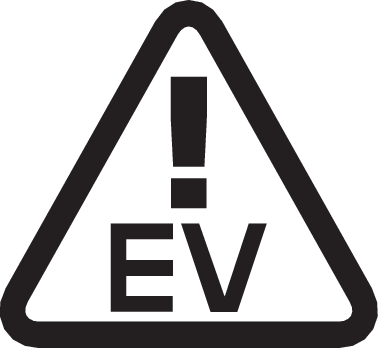 | Amber · Kona ElectricThe EV warning symbol (shown here as a triangle with an exclamation mark and EV) indicates a problem in the electric vehicle control system when it stays on after the startup check or appears while driving. Despite its name, this is not simply a scheduled maintenance reminder. Have the vehicle inspected by a workshop qualified for the electric powertrain. If power is restricted or the car instructs us to stop, move to safety and arrange assistance. Do not touch orange high-voltage cables or components. |
Power down indicator: turtle symbol
 | Amber · Kona ElectricThe turtle means available drive power has been limited to protect electric-drive components. Possible conditions include low battery charge, a very cold or hot traction battery, or a hot motor. The indicator alone does not always mean a component has failed. Acceleration can be reduced and the car may struggle or roll back on a slope. Avoid sudden demands, follow the display and seek assistance if safe progress is impossible, especially with the service warning. |
High-voltage battery low-charge warning
 | Amber · Kona ElectricThe traction-battery warning tells us that the main battery’s charge is low. Plan to charge promptly at a reachable, working charger; do not assume that the displayed distance is a guaranteed reserve. Heating, motorway speeds and gradients affect consumption. If the power-down indicator also appears, acceleration may already be restricted. This warning concerns energy for propulsion, whereas the conventional battery-outline charging warning relates to the low-voltage electrical system. |
Charging connector or charging indicator
 | Kona Electric · Colour and behaviour vary by yearA plug-related indicator reports charging or connector status. On the newer Kona Electric, the green connector light can illuminate when the charging cable is connected; earlier versions describe a charging indicator with different behaviour. We should verify active charging using the charging screen or charger rather than the symbol alone. A connected plug does not prove that energy is flowing, because scheduled charging, completion or an interruption may explain the display. |
What should we do when a warning light appears?
Read the message and assess the vehicle
Keep attention on the road, ease off if necessary and find a safe place to stop. Note the symbol, its colour, whether it flashes and any accompanying sound or message. Ask whether the brakes, steering and power delivery feel normal. These details help distinguish a reminder from a fault that makes continued driving unsafe.
Separate the startup check from a persistent warning
Several lamps illuminate briefly when the ignition or Start/Stop button is switched on so the vehicle can check its systems. Some remain on until the engine starts, the electric drivetrain becomes READY, or a normal condition such as an applied parking brake is cleared. We should investigate lamps that remain on unexpectedly or reappear while driving. There is no single self-test duration that applies to every indicator.
Stop for overheating, brake problems or severe power loss
Not every important warning uses a standalone icon. An overheating message, a temperature gauge in the hot range or a transmission-temperature warning also needs attention. Pull over safely and follow the model-specific instructions. Never open a hot cooling-system cap. On electric models, a regenerative-braking warning accompanied by the red brake warning can mean increased pedal effort and a longer stopping distance. Do not continue if braking is impaired.
Check simple causes without erasing the evidence
When parked, we can check seat belts, tyre pressures, fuel or battery charge, lighting settings and visible camera obstructions. Keep a record of the warning before restarting or changing settings. Clearing a diagnostic code does not repair its cause, and disconnecting the battery can erase information the workshop needs. Avoid replacing a sensor solely because its name appears in a fault description.
Petrol, hybrid and electric Kona: why the version matters
A petrol Kona has combustion-engine warnings such as oil pressure and the check engine light. The Kona Electric instead adds warnings for its high-voltage battery and electric drive system. Hybrid versions combine an engine with an electric system, so an engine being silent does not always mean the vehicle is switched off. We should identify the powertrain before following advice about starting, charging or low energy.
There are also differences within each powertrain. An AWD model can have symbols that a front-wheel-drive version lacks. A newer digital cluster may show Forward Safety or Lane Safety states differently from an earlier cluster. Additional indicators, including EPB, AUTO HOLD, blind-spot assistance, speed-limit assistance or exhaust-filter warnings, depend on the exact vehicle. This guide covers common symbols rather than every possible cluster message.
Understanding your Kona’s dashboard
We get the most useful answer by combining the symbol, its behaviour and the accompanying message. Deal with urgent mechanical or braking warnings immediately, arrange diagnosis for persistent fault lights and learn which indicators simply show a selected function. Keep the correct owner’s manual available so an unfamiliar Hyundai Kona warning light can be matched to your vehicle’s year, equipment and powertrain.
Frequently asked questions
1. What does the yellow triangle mean on a Hyundai Kona?
It is usually the master warning light. Read the cluster message to identify the issue, which can involve a blocked assistance sensor, a lighting fault or another condition needing attention. The triangle alone does not identify a failed component or establish whether the vehicle is safe to drive.
2. Can we drive a Hyundai Kona with the check engine light on?
A steady light with no symptoms still needs prompt diagnosis; it is not permission to keep driving indefinitely. If it flashes, the engine runs roughly, power drops substantially or another urgent warning appears, stop safely and seek assistance. The exact fault and vehicle condition determine the next step.
3. Why is the Kona tyre pressure light still on after inflation?
Check every tyre against the correct cold-pressure label and look for a slow leak. The system may need the update procedure described in the manual. A light that flashes before staying on suggests a TPMS malfunction rather than simply low pressure. Do not assume every Kona has the same reset button or procedure.
4. What does the turtle symbol mean on a Kona Electric?
It means propulsion power has been restricted. Low battery charge or battery and motor temperatures can trigger it. Read the message, avoid demanding acceleration and charge if low charge is the cause. If the service warning also appears, or the vehicle cannot move safely, arrange professional assistance.
5. Is a dashboard service warning the same as a maintenance reminder?
No. A scheduled maintenance reminder concerns routine servicing, while the Kona Electric service warning indicates an electric-system problem when it persists. Similar-looking messages should be checked against the correct manual. We should not reset a fault warning as though it were only an oil-change or service-interval reminder.
Reference manuals and symbol artwork: Hyundai Kona SX2 owner’s manual; Hyundai Kona Electric 2025 warning and indicator lights. Representative symbol images: DASH-LIGHTS Kona guide, Kona manual reference images and shared electric-drive symbols from the Kia electric owner’s manual. Always follow the handbook supplied for your own vehicle.
If you want to know other articles similar to Hyundai Kona Dashboard Warning Lights you can visit the category Service and Parts.
Volvo S90 Engine Oil: Type, Capacity & Change Guide
Volvo S90 Boot Space: Size, Capacity and Practicality
SEO Title: Volvo S90 Oil Capacity: Complete Guide by Engine

Kia Sorento Oil Type: Complete Guide by Year & Engine
Kia Sorento Engine Capacity: Complete Guide by Year
Peugeot 308 Clutch Replacement Cost: Complete UK Guide for 2026
Leave a Reply
More content of your interest