
Ford Ranger vs D-Max: Which Pickup Is Better?

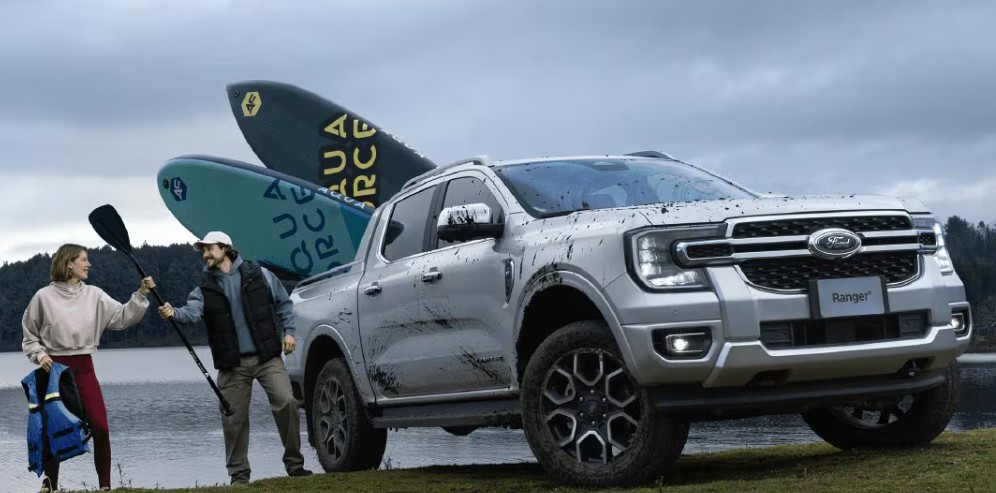
The Ford Ranger vs D-Max debate is not simply a contest between two pickup trucks. It is a clash between two different philosophies.
The Ford Ranger approaches the segment like a Swiss Army knife wearing a tailored jacket. It wants to work hard, tow confidently, tackle muddy trails, carry the family and still feel polished enough for the daily commute.
The Isuzu D-Max takes a more traditional route. It feels like a well-made hammer: straightforward, dependable and designed to keep doing its job long after the novelty has disappeared.
So, which one should we buy?
That depends on what we expect from a pickup. The Ranger generally leads in performance, refinement, technology and model variety. The D-Max fights back with mechanical simplicity, a proven work-focused character and the kind of reassuring toughness that appeals to owners planning to keep their vehicle for many years.
In this detailed comparison, we will examine engines, towing, payload, comfort, off-road capability, safety, technology, ownership costs and everyday usability. Because specifications differ by country, trim level and model year, we will focus mainly on the current-generation global models while highlighting the areas buyers should verify locally.
Content in this publication
- Ford Ranger vs Isuzu D-Max at a Glance
- What Is the Main Difference Between the Ranger and D-Max?
- Ford Ranger Engine Options
- Isuzu D-Max Engine Options
- Ford Ranger vs D-Max Towing Capacity
- Payload and Load-Carrying Ability
- Ride Comfort and Everyday Driving
- Interior Quality and Cabin Design
- Technology and Infotainment
- Ford Ranger vs D-Max Off-Road Capability
- Safety and Driver-Assistance Features
- Fuel Economy
- Reliability and Long-Term Ownership
- Maintenance and Repair Costs
- Price and Value for Money
- Which Pickup Is Better for Work?
- Which Is Better for Families?
- Which Is Better for Touring and Camping?
- Ford Ranger vs D-Max: Pros and Cons
- Ford Ranger vs D-Max: Final Verdict
- Frequently Asked Questions
Ford Ranger vs Isuzu D-Max at a Glance
Before we crawl underneath the details, here is the broad picture:
| Category | Ford Ranger | Isuzu D-Max |
|---|---|---|
| Engine variety | Excellent | More limited |
| Maximum performance | Ranger wins | Adequate but less powerful |
| Towing ability | Up to 3,500 kg on many models | Up to 3,500 kg on many models |
| Payload | Strong, configuration-dependent | Strong, especially work variants |
| Interior refinement | More car-like | Functional and durable |
| Infotainment | More advanced | Simpler and easier to learn |
| Off-road ability | Excellent, with more drive modes | Strong and confidence-inspiring |
| Long-term simplicity | More complex | D-Max advantage |
| Model selection | Very broad | More focused |
| Best suited to | Mixed work, family and leisure use | Work, towing and long ownership |
Both pickups can be serious tools. The real difference is how they make us feel while doing the job.
The Ranger often makes difficult tasks feel easier through power and technology. The D-Max makes them feel manageable through predictability and straightforward engineering.
What Is the Main Difference Between the Ranger and D-Max?
The central difference is refinement versus simplicity.
The Ford Ranger is positioned as a broad pickup family. Depending on the market, we may find basic work trucks, family-friendly double cabs, premium Wildtrak or Platinum variants, performance-oriented Raptors and even plug-in hybrid versions. That breadth allows buyers to choose a Ranger that behaves almost like a commercial vehicle, an SUV or an off-road performance truck.
The D-Max range is less theatrical. Although higher trims can be comfortable and well equipped, the Isuzu remains closely connected to its commercial roots. Its controls, engine behaviour and cabin atmosphere tend to communicate durability before luxury.
Neither approach is inherently better.
A contractor who wants easily understood controls, a proven diesel engine and fewer unnecessary distractions may prefer the D-Max. A buyer who uses the same vehicle for school runs, highway travel, towing and weekend adventures may find the Ranger easier to live with.
Ford Ranger Engine Options
A Broader Powertrain Lineup
The Ranger’s greatest mechanical advantage is choice.
Exact availability depends on the country, but current Ranger lineups can include:
- A 2.0-litre single-turbo diesel
- A 2.0-litre bi-turbo diesel
- A 3.0-litre V6 turbo-diesel
- A 3.0-litre twin-turbo petrol V6 in the Raptor
- A 2.3-litre petrol plug-in hybrid powertrain in selected markets
For example, New Zealand’s Ranger Platinum uses a 3.0-litre V6 diesel producing 184 kW and 600 Nm, paired with a 10-speed automatic transmission. Lower Ranger variants may use a 2.0-litre diesel with less power but potentially lower purchase and running costs.
This variety gives us room to match the engine to the job. We do not necessarily need a V6 to carry tools around town, just as we may not want the entry-level engine if we regularly tow a large caravan through steep terrain.
How the Ranger Feels on the Road
The Ranger’s stronger engines deliver effortless acceleration by pickup standards. The V6 diesel is particularly attractive because its 600 Nm torque output provides confident overtaking and relaxed towing.
Its 10-speed automatic transmission helps keep the engine within a useful power band, although frequent shifting may feel busy under certain conditions. When calibrated well, the transmission disappears into the background. When hunting between gears on rolling roads, it can remind us that more ratios do not always mean more serenity.
Even with the smaller diesel engines, the Ranger generally feels responsive and polished. Ford has worked hard to make it behave like a modern passenger vehicle without completely removing the toughness expected from a body-on-frame pickup.
Isuzu D-Max Engine Options
The Familiar 3.0-Litre Turbo-Diesel
The heart of the D-Max is commonly Isuzu’s 3.0-litre four-cylinder turbo-diesel.
In New Zealand specifications, this engine produces 140 kW and 450 Nm, with peak torque available from 1,600 to 2,600 rpm. That broad torque delivery is useful when pulling away with a trailer, climbing a hill or carrying a heavy load.
Some markets also receive smaller diesel options. In Australia, for instance, Isuzu advertises both 3.0-litre and 2.2-litre turbo-diesel engines. The 3.0-litre produces 450 Nm, while the newer 2.2-litre is listed with 400 Nm and an eight-speed automatic transmission.
Isuzu’s strategy is clear: offer engines designed around practical low-speed pulling power rather than chasing class-leading acceleration.
How the D-Max Feels on the Road
The D-Max diesel is not usually as quiet or forceful as the Ranger V6. Push the accelerator firmly and we are more likely to hear the engine working.
Yet there is something reassuring about its delivery. The torque arrives predictably, the throttle feels easy to judge and the powertrain rarely pretends to be something it is not.
For daily driving, the difference may be noticeable but not decisive. The D-Max has enough muscle for normal commuting, overtaking and towing. It simply lacks the effortless surge available from the stronger Ranger engines.
Engine Verdict
The Ford wins for performance, refinement and choice.
The Isuzu wins for simplicity and a more traditional work-truck feel.
Ford Ranger vs D-Max Towing Capacity
Towing is one of the main reasons people buy either pickup, and on paper the two are closely matched.
Many conventional Ford Ranger variants offer a maximum braked towing capacity of 3,500 kg when properly equipped. The Ranger Raptor is normally rated lower because its performance suspension and intended purpose differ from those of work-focused models.
The current D-Max also offers up to 3,500 kg of braked towing capacity across many Australian variants, according to Isuzu.
That creates an apparent tie, but a maximum towing figure tells only half the story.
Why Maximum Towing Numbers Can Mislead Us
We must also consider:
- Gross vehicle mass
- Gross combination mass
- Kerb weight
- Payload remaining after passengers and accessories
- Tow-ball download
- Trailer weight distribution
- Local licence and road regulations
A pickup may legally tow 3,500 kg in isolation but have little payload remaining once we add a driver, passengers, bull bar, canopy, camping equipment and the trailer’s downward force on the tow ball.
Ford’s towing calculator, for example, uses 10% of the loaded trailer weight as the assumed tow-ball downforce when estimating payload. The company also reminds owners to check the limits for their specific model.
That means a 3,500 kg trailer could place roughly 350 kg on the tow ball before we add people or cargo. Suddenly, the generous payload figure begins shrinking like ice in the sun.
Which Pickup Is Better for Towing?
For outright engine strength, the Ranger V6 has an advantage. Its additional torque can make highway merging, steep climbs and overtaking feel less stressful.
The D-Max counters with an engine built around steady low-speed pulling. It may not sprint uphill, but it feels composed and purposeful. Many buyers also value the D-Max’s work-focused reputation when planning years of regular towing.
Our choice should therefore depend on priorities:
- Choose the Ranger V6 for stronger acceleration and easier high-speed towing.
- Choose the D-Max for straightforward diesel performance and a traditional heavy-duty character.
- Choose either only after calculating the real loaded weights of the exact variant.
Payload and Load-Carrying Ability
Payload varies enormously between cab styles, drivetrains and trim levels.
A basic single-cab chassis usually carries more than a luxurious double-cab pickup because the simpler vehicle weighs less before we load anything into it.
Ford states that the Australian Ranger range offers payload capacity of up to approximately 1,412 kg, depending on body style, configuration and grade. Ford also notes that higher-specification pickups lose payload as their kerb weight rises.
Isuzu has historically offered D-Max work variants with payloads above 1,400 kg, although exact current figures must be checked against the relevant model and market. An Australian 1.9-litre single-cab chassis variant, for example, was previously listed with a payload of up to 1,405 kg.
The Practical Load-Bed Difference
Numbers matter, but bed design matters too.
You may be interested in reading Ford Ranger Versus Ford Maverick: Which Pickup Fits Your Life?
The Ranger’s tray area is generally thoughtfully designed, with useful tie-down points and available accessories. Certain models provide steps integrated behind the rear wheels, making it easier to reach into the cargo box. That sounds minor until we have climbed onto a tyre five times in one afternoon.
The D-Max tray is more traditional. It is sturdy, square and ready for commercial accessories, canopies or drawer systems. The experience is not as polished, but the space is easy to use.
For builders, farmers and tradespeople, the lower-grade variants of both vehicles deserve attention. Premium trims may look better in the showroom, but their extra equipment reduces payload and makes scratches much more painful.
Ride Comfort and Everyday Driving
Ford Ranger Ride Quality
The Ranger is one of the most SUV-like pickups in its class.
Its steering feels relatively direct, the body is well controlled and the suspension handles urban roads with surprising maturity. We still feel the rear axle over sharp bumps, particularly when the load bed is empty, but the Ranger usually settles quickly.
On the highway, it feels planted and stable. Wind and diesel noise are generally controlled well, especially in higher trims.
This is where the Ranger’s development budget becomes obvious. It does not merely transport us; it tries to reduce the effort involved.
Isuzu D-Max Ride Quality
The D-Max feels firmer and more utilitarian.
With no load in the back, the rear suspension can hop or jiggle over broken roads. Add several hundred kilograms, and the ride often becomes calmer because the suspension is finally doing the job it was designed to do.
The steering is predictable rather than sporty. The cabin may transmit more diesel sound and road texture, but visibility is good and the vehicle is easy to place once we become familiar with its dimensions.
Comfort Verdict
For commuters and families, the Ranger is the more comfortable choice.
For owners who regularly carry weight, the D-Max’s firmer ride may be a perfectly acceptable trade-off for its work-oriented setup.
Interior Quality and Cabin Design
Open the Ranger’s door and we can almost forget we are climbing into a commercial vehicle.
Higher trims use large vertical touchscreens, digital instruments, soft-touch materials and SUV-like detailing. The layout feels modern, and the cabin can appear several years ahead of more conservative rivals.
The D-Max interior is less dramatic. Its dashboard is straightforward, physical controls remain easy to locate and the materials appear selected for durability rather than visual theatre.
That simplicity has value.
Touchscreens are excellent when they work smoothly. However, we may not enjoy navigating menus to change a basic setting while bouncing along a corrugated road. The D-Max’s more conventional approach can be easier when wearing gloves or working in dusty conditions.
Rear-Seat Practicality
In double-cab form, both pickups can carry adults in the rear, but neither offers the same comfort as a large family SUV.
The Ranger generally provides a more inviting rear cabin, with better perceived quality and stronger technology integration. The D-Max is practical but feels more upright and businesslike.
Families should test child-seat installation, rear legroom and door-opening width before choosing. A specification sheet cannot tell us whether a child seat leaves enough room for the front passenger’s knees.
Technology and Infotainment
The Ranger leads this category.
Depending on trim, it may include:
- A large portrait-oriented touchscreen
- Digital instrument displays
- Wireless smartphone integration
- Connected navigation
- Multiple exterior camera views
- Trailer-assistance features
- Configurable drive modes
- Remote functions through a mobile application
Some Ranger towing systems can store trailer profiles and support trailer-related camera coverage when the correct factory equipment is fitted.
The D-Max covers the important features but usually avoids the Ranger’s digital overload. Its infotainment system provides the expected smartphone connectivity, while higher trims add convenience and safety technology.
The Ranger’s system is more impressive. The D-Max’s system may be easier for owners who simply want to connect a phone, select a radio station and get moving.
When More Technology Becomes More Complexity
Technology can improve safety and convenience, but it also introduces additional sensors, modules and software.
A Ranger buyer receives more capability, yet may face a steeper learning curve and greater complexity outside the warranty period.
A D-Max buyer sacrifices some visual sparkle but gains a cabin that feels less dependent on menus.
It is the difference between a modern smartwatch and a rugged analogue watch. The smartwatch does far more. The analogue watch may be all we need.
Ford Ranger vs D-Max Off-Road Capability
Both pickups are capable away from sealed roads when fitted with proper four-wheel drive, suitable tyres and the correct equipment.
Ranger Off-Road Strengths
The Ranger’s advantages can include:
- Multiple selectable drive modes
- Available locking rear differential
- Advanced camera views
- Strong low-range gearing
- High-output engine options
- Sophisticated traction-control calibration
- Up to 800 mm of water-wading ability on relevant Australian Ranger models under specified conditions
The technology can make the Ranger surprisingly easy to drive on sand, mud and steep tracks. Instead of asking us to manage every variable manually, the vehicle adjusts throttle response, gear selection and traction systems to suit the selected terrain.
D-Max Off-Road Strengths
The D-Max takes a more old-school approach.
Its strong chassis, low-range transfer case, useful ground clearance and available rear differential lock provide the fundamentals we need. Recent versions also use electronic traction aids to help manage loose or uneven surfaces.
The D-Max may feel less sophisticated, but it is far from helpless. Its predictable throttle and clear sense of mechanical connection can actually inspire confidence.
Which One Is Better Off-Road?
The Ranger is generally the more advanced and versatile off-road package.
The D-Max remains highly capable, particularly for owners who value simple controls and do not need a separate mode for every type of dirt.
Tyres remain crucial. A basic pickup on quality all-terrain tyres can outperform an expensive flagship wearing road-biased rubber.
Safety and Driver-Assistance Features
Modern versions of both pickups offer extensive safety equipment, although availability varies by trim.
Common systems can include:
- Autonomous emergency braking
- Lane-departure warning
- Lane-keeping assistance
- Blind-spot monitoring
- Rear cross-traffic alert
- Traffic-sign recognition
- Adaptive cruise control
- Parking sensors
- Reversing cameras
The Ranger often provides the more refined integration of these features, particularly on higher trims. Its surround-view cameras and towing-related technology can be genuinely useful in a large vehicle.
The D-Max also places strong emphasis on active safety. Its system may occasionally feel conservative or intrusive, depending on road markings and local calibration, but the underlying protection is valuable.
We should test the driver-assistance features during a proper road test. A system that sounds brilliant in a brochure may become irritating if it intervenes too frequently on the roads we use every day.
Fuel Economy
Fuel consumption depends on engine, transmission, tyre size, body style, load and driving conditions.
In general, the smaller diesel Ranger engines should consume less fuel than the V6 when driven similarly, although the V6 may work less strenuously while towing.
The D-Max’s 3.0-litre engine is not the smallest or newest diesel in the segment, but it is designed to deliver useful torque without chasing extreme power. Real-world economy can be respectable during steady highway travel.
You may be interested in readingFord Ranger Versus Ford Maverick: Which Pickup Fits Your Life?You may be interested in reading
Ford Ranger Versus Toyota Tacoma: Which Midsize Truck Wins?However, neither pickup will be truly economical when fitted with heavy accessories, oversized tyres and roof-mounted equipment.
A steel bull bar, winch, canopy, drawers and all-terrain tyres may transform a pickup into the adventure machine of our dreams, but they also make the engine haul around a small garden shed every day.
For the best real-world economy, we should:
- Keep tyre pressures correct.
- Remove unnecessary cargo.
- Avoid aggressive acceleration.
- Choose sensible tyre sizes.
- Reduce roof-mounted drag.
- Service the engine on schedule.
- Match the engine to our workload.
Reliability and Long-Term Ownership
Reliability is one of the most sensitive parts of any pickup comparison because individual experiences vary enormously.
The D-Max has a strong reputation among owners who value durable diesel engineering and long service life. Isuzu’s commercial-vehicle background contributes to that image. The 3.0-litre engine is tuned less aggressively than the Ranger’s most powerful diesel, which some long-term buyers may find reassuring.
The Ranger is also designed for demanding work, but its wider range of advanced systems adds complexity. Bi-turbo hardware, 10-speed transmissions, digital interfaces, numerous driver aids and electronically managed drive modes provide real benefits while also creating more potential points of failure as the vehicle ages.
That does not automatically make the Ranger unreliable. It simply means maintenance history and diagnostic support matter.
What Matters More Than the Badge?
For used buyers, condition is more important than brand mythology.
We should check:
- Complete service records
- Correct engine oil specification
- Evidence of frequent heavy towing
- Transmission behaviour when cold and hot
- Underbody damage
- Four-wheel-drive operation
- Differential-lock engagement
- Signs of water crossings
- Aftermarket electrical modifications
- Diesel particulate filter operation
- Uneven tyre wear
- Chassis or tray damage
A neglected D-Max can be a worse purchase than a well-maintained Ranger. A beautifully detailed pickup can still hide a life spent dragging an overloaded trailer through construction sites.
Maintenance and Repair Costs
Routine servicing costs depend heavily on the market, dealer network and service plan.
The D-Max may hold an advantage for owners seeking mechanical familiarity and a relatively focused engine range. Independent diesel workshops often understand Isuzu’s traditional work-truck approach, although modern emissions and safety systems still require proper diagnostic equipment.
The Ranger’s large sales volume means parts and expertise are widely available in many countries. However, more complex engines, transmissions and electronics can lead to higher repair bills once the warranty expires.
Before buying, we should compare:
- Scheduled service intervals
- Fixed-price servicing programs
- Warranty length
- Roadside-assistance coverage
- Parts availability in rural areas
- Insurance premiums
- Replacement tyre prices
- Automatic-transmission servicing requirements
A low purchase price can lose its shine quickly if the nearest qualified workshop is several hours away.
Price and Value for Money
The D-Max often makes its strongest argument in the practical middle of the market.
It may not provide the Ranger’s premium ambience, but it gives buyers the essential pickup ingredients: a strong diesel engine, usable towing capacity, a proper four-wheel-drive system and a durable cabin.
The Ranger range stretches much further. Entry-level versions can compete with work-focused D-Max models, while high-end Rangers climb into luxury-SUV territory.
That means the Ranger can be either excellent value or surprisingly expensive, depending on how enthusiastically we tick the options.
Avoid Paying for Features We Will Not Use
Before ordering the most glamorous trim, we should ask:
- Will we really use the advanced off-road modes?
- Do we need a V6 for occasional light towing?
- Are leather seats sensible for muddy work clothes?
- Is a premium wheel package worth the higher tyre cost?
- Will the vehicle spend more time in traffic than on trails?
- Does the added equipment reduce the payload we require?
The best pickup is not the one with the longest equipment list. It is the one whose equipment matches our life.
Which Pickup Is Better for Work?
For pure commercial use, the D-Max is enormously convincing.
Its cabin is functional, its diesel power is predictable and its personality suits long days carrying tools or travelling between sites. Lower trims avoid unnecessary luxuries and may offer excellent payload.
The Ranger remains a strong work vehicle, particularly in XL or similar commercial specifications. It can also provide more engine and body-style choice.
We would lean toward the D-Max for buyers who place durability, simplicity and regular load carrying above everything else.
We would choose the Ranger when the work vehicle must also serve as a comfortable mobile office, family car or long-distance tourer.
Which Is Better for Families?
The Ranger takes the family crown.
Its quieter cabin, more polished suspension, stronger infotainment and premium trim options make it easier to live with during daily commuting and long trips.
That said, both pickups have limitations compared with SUVs:
- The rear ride can be firm.
- The overall length makes parking harder.
- The open load bed requires a cover or canopy.
- Rear-seat comfort is acceptable rather than luxurious.
- Child seats reduce available passenger space.
- Wet or dirty cargo needs careful separation from luggage.
A Ranger Wildtrak or Platinum may feel luxurious, but it is still built on a ladder-frame platform. Physics has not read the marketing brochure.
Which Is Better for Touring and Camping?
This contest is close.
The Ranger offers greater engine choice, stronger premium comfort and sophisticated off-road tools. The V6 diesel is especially appealing when carrying a canopy, roof equipment, recovery gear and camping supplies.
The D-Max makes an excellent touring platform because of its straightforward nature and load-focused character. Buyers travelling far from large cities may appreciate its relative simplicity and Isuzu’s commercial reputation.
For remote travel, preparation matters more than badges. We need proper tyres, recovery points, spare parts, water, communication equipment and a realistic understanding of payload.
A heavily modified pickup can become legally overloaded before the family climbs aboard. That applies equally to the Ranger and D-Max.
Ford Ranger vs D-Max: Pros and Cons
Ford Ranger Advantages
- Wider selection of engines and trims
- Strong V6 diesel performance
- More refined ride and handling
- Superior infotainment options
- More advanced towing technology
- Excellent family usability
- Sophisticated off-road drive modes
- Premium models feel genuinely upscale
Ford Ranger Disadvantages
- More mechanical and electronic complexity
- High-spec versions can become expensive
- Premium trims may have reduced payload
- Ten-speed transmission behaviour may not suit everyone
- Large screens can make simple functions feel complicated
Isuzu D-Max Advantages
- Strong work-focused character
- Proven 3.0-litre diesel approach
- Predictable low-speed torque
- Straightforward cabin layout
- Excellent towing capability in suitable variants
- Good commercial and touring potential
- Appeals to long-term ownership
- Less distracted by luxury ambitions
Isuzu D-Max Disadvantages
- Less powerful than the strongest Rangers
- Firmer, more utilitarian ride
- Cabin feels less premium
- Narrower engine selection
- Less advanced infotainment
- Engine noise is more noticeable under acceleration
Ford Ranger vs D-Max: Final Verdict
Choosing between the Ford Ranger and Isuzu D-Max is like choosing between a high-tech multitool and a heavy-duty spanner.
The Ranger is the stronger all-rounder. It offers more engines, more technology, better refinement and a wider range of personalities. It can be a basic work truck on Monday, a family vehicle on Friday and a serious adventure machine by Saturday morning.
The D-Max is more focused. It does not chase the Ranger through every corner of the market. Instead, it concentrates on the qualities many pickup owners care about most: torque, durability, towing, load carrying and straightforward operation.
For most private buyers, families and drivers who spend significant time on highways, the Ford Ranger is the better overall pickup.
For tradespeople, long-term owners and buyers who value simplicity over sophistication, the Isuzu D-Max may be the smarter purchase.
Our final recommendation is simple:
- Buy the Ranger for comfort, technology, power and versatility.
- Buy the D-Max for work-focused practicality, simplicity and long-term confidence.
- Buy neither until we compare the payload, towing limits and standard equipment of the exact variants available locally.
The badge may start the conversation, but the correct configuration makes the decision.
Frequently Asked Questions
1. Is the Ford Ranger better than the Isuzu D-Max?
The Ford Ranger is generally better for buyers seeking stronger performance, more technology, greater comfort and a broader trim selection. The D-Max may be better for owners prioritising mechanical simplicity, work use and straightforward long-term ownership.
2. Which is more reliable, the Ranger or D-Max?
The D-Max has a strong reputation for durable, work-focused diesel engineering. The Ranger can also provide dependable service, but some variants use more complicated engines, transmissions and electronic systems. Maintenance history matters more than reputation when buying used.
3. Can the D-Max tow as much as the Ranger?
Many current Ranger and D-Max variants are rated to tow up to 3,500 kg with a braked trailer. However, the usable limit depends on payload, tow-ball download, gross combination mass and the exact vehicle configuration.
4. Which pickup is more comfortable for daily driving?
The Ranger is usually more comfortable. Its suspension, steering, cabin insulation and infotainment feel closer to those of a modern SUV. The D-Max has a firmer, more commercial ride, particularly when its cargo bed is empty.
You may be interested in readingFord Ranger Versus Ford Maverick: Which Pickup Fits Your Life?You may be interested in reading
Ford Ranger Versus Toyota Tacoma: Which Midsize Truck Wins?You may be interested in reading
Ford Ranger Versus Chevy Colorado: Which Midsize Truck Wins?5. Is the Ford Ranger V6 worth choosing over the D-Max?
The Ranger V6 is worth considering when we regularly tow heavy trailers, travel long distances or want effortless acceleration. The D-Max’s 3.0-litre diesel remains capable, but the Ranger’s 600 Nm V6 provides noticeably stronger performance than the 450 Nm D-Max engine in comparable markets.
If you want to know other articles similar to Ford Ranger vs D-Max: Which Pickup Is Better? you can visit the category Models.
Peugeot RCZ vs VW Scirocco: Which Coupe Makes More Sense?
Peugeot RCZ vs Toyota 86: Which Sports Coupe Makes More Sense?
Peugeot RCZ vs 308 CC: Which Used Peugeot Is the Better Choice?
Peugeot RCZ vs Audi TT: Which Stylish Sports Coupe Makes More Sense?
BYD Shark 6 2025 vs 2026: What Actually Changed?
BMW i7 vs Porsche Taycan: Luxury EVs With Very Different Personalities
Leave a Reply
More content of your interest