
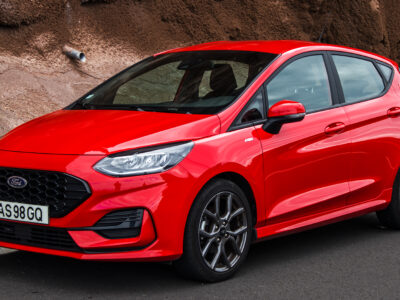
Ford Ranger vs Mitsubishi Triton: The Complete Pickup Comparison

Choosing between the Ford Ranger and Mitsubishi Triton is not as simple as comparing two specification sheets. Both pickups can tow heavy trailers, carry serious loads, tackle muddy tracks, and handle the daily school run. Yet they approach those jobs with noticeably different personalities.
The Ranger feels like the polished all-rounder. It blends work-truck muscle with SUV-style comfort, powerful engine options, advanced towing technology, and one of the most sophisticated cabins in the midsize pickup class.
The Triton takes a slightly different route. It focuses on practical capability, manageable dimensions, straightforward controls, strong four-wheel-drive hardware, and attractive value. It may not always deliver the Ranger’s showroom sparkle, but it often provides everything an owner genuinely needs without adding unnecessary weight, complexity, or expense.
So, which truck deserves a place in our driveway?
In this Ford Ranger vs Mitsubishi Triton comparison, we examine performance, towing, payload, off-road ability, comfort, technology, practicality, ownership costs, and everyday usability. Specifications differ among countries, model years, engines, and body styles, so buyers should always confirm the limits of the exact vehicle they are considering.
Content in this publication
- Ford Ranger vs Mitsubishi Triton at a Glance
- Design and Road Presence
- Engine Performance
- Transmission and Drivetrain
- Towing Capacity
- Payload and Worksite Use
- Off-Road Capability
- Ride Comfort and Handling
- Interior Quality and Cabin Space
- Infotainment and Connectivity
- Safety and Driver Assistance
- Fuel Economy
- Reliability and Long-Term Ownership
- Pricing and Value for Money
- Resale Value
- Modification and Accessory Potential
- Ford Ranger vs Mitsubishi Triton for Daily Driving
- Ford Ranger vs Mitsubishi Triton for Families
- Ford Ranger vs Mitsubishi Triton for Work
- Ford Ranger vs Mitsubishi Triton: Main Strengths
- Potential Drawbacks
- Which Ford Ranger Should We Compare With the Triton?
- Our Final Verdict
- Frequently Asked Questions
Ford Ranger vs Mitsubishi Triton at a Glance
Before opening the toolbox and inspecting every nut and bolt, here is the broad picture.
| Category | Ford Ranger | Mitsubishi Triton |
|---|---|---|
| Overall character | Refined, powerful and technology-rich | Practical, capable and value-focused |
| Engine choice | Usually broader | Usually simpler |
| Maximum towing | Up to 3,500 kg on many mainstream variants | Up to 3,500 kg on current Australian models |
| Off-road approach | Advanced drive modes and available full-time 4WD | Proven Super Select 4WD on selected variants |
| Interior | More premium and SUV-like | Functional and easy to understand |
| Ride quality | Generally composed and refined | Firm but controlled |
| Payload | Strong, especially on work-focused variants | Competitive, depending on configuration |
| Technology | Usually class-leading | Useful without being overwhelming |
| Best suited to | Mixed work, family and recreational use | Buyers seeking capability and value |
Current Australian Ranger models advertise maximum braked towing of up to 3,500 kg and payload of up to 1,412 kg, depending on the grade, body style, and configuration. Mitsubishi states that the current Triton can also tow up to 3,500 kg in eligible configurations, while its 2.4-litre bi-turbo diesel produces 150 kW and 470 Nm.
Those headline numbers look remarkably close. However, pickups are not purchased by numbers alone. How a truck behaves while carrying, towing, commuting, and climbing matters just as much as what appears in the brochure.
Design and Road Presence
The Ranger Looks Bigger and Bolder
The Ford Ranger has adopted the squared-off styling language associated with larger American trucks. Its upright grille, broad shoulders, C-shaped lighting, and muscular bonnet give it substantial visual presence.
Park one beside a typical family SUV and it looks ready to swallow the SUV for breakfast.
That confidence will appeal to buyers who want their pickup to feel expensive and imposing. Higher Ranger trims add distinctive wheels, LED lighting, sports bars, roof rails, and premium exterior details. Even work-oriented versions generally look purposeful rather than plain.
There is a downside. The Ranger’s size can become noticeable in narrow streets, older car parks, and tight off-road trails. Its commanding stance is useful on an open highway but less charming when we are attempting a seven-point turn behind a crowded supermarket.
The Triton Uses a Sharper, More Functional Shape
The latest Triton has become wider, stronger-looking, and more assertive than its predecessor. Its squared body, high bonnet, reinforced visual stance, and pronounced front design give it a more serious appearance.
It does not imitate the Ranger. Instead, it looks like a tool designed around durability.
The Triton’s styling may divide opinion more sharply. Some drivers will admire its angular face and industrial character, while others may prefer the Ranger’s cleaner proportions. Beauty remains subjective, of course. A pickup covered in mud rarely wins a fashion contest anyway.
Which Pickup Wins on Styling?
The Ranger has the stronger premium image, while the Triton looks tougher and more utilitarian. We would choose the Ranger for visual sophistication and the Triton for understated work-truck character.
Engine Performance
Ford Ranger Engine Choices
One of the Ranger’s greatest advantages is the breadth of its powertrain range. Availability changes by market, but buyers may encounter:
- A 2.0-litre single-turbo diesel
- A 2.0-litre bi-turbo diesel
- A 3.0-litre V6 turbo-diesel
- A petrol V6 in the Ranger Raptor
- A plug-in hybrid powertrain in selected markets
- Manual or automatic transmissions, depending on the version
The 3.0-litre V6 diesel is the star for drivers seeking effortless performance. In New Zealand specification, Ranger Platinum uses a 3.0-litre V6 diesel producing 184 kW and 600 Nm, paired with a 10-speed automatic transmission and full-time four-wheel drive.
That torque arrives with the relaxed authority of a locomotive. The engine rarely feels strained, even when overtaking, climbing, or towing. Press the accelerator and the Ranger moves forward with confidence rather than drama.
The four-cylinder engines are still capable. They make more sense for buyers prioritising purchase price, payload, or fuel use over outright strength. However, when heavily loaded, they naturally require more effort than the V6.
Mitsubishi Triton Engine Performance
The current Australian Triton uses a 2.4-litre bi-turbo diesel producing 150 kW and 470 Nm. It is Mitsubishi’s most powerful Triton powertrain to date in that market.
On paper, it cannot match the Ranger V6’s torque. On the road, however, the gap may matter less than we expect during ordinary driving. The Triton delivers useful low- and mid-range pulling power, responds cleanly, and feels capable when accelerating with passengers or cargo.
The engine can sound more agricultural under hard acceleration. The Ranger, particularly in V6 form, is usually smoother and quieter. Nevertheless, the Triton’s diesel is well suited to its mission. It is not trying to perform a concert; it is trying to move a trailer up a hill.
Which Pickup Feels Faster?
The Ranger wins when comparing the strongest mainstream diesel options. Its V6 provides more effortless acceleration, stronger overtaking performance, and greater reserves when towing.
Against a lower-output Ranger four-cylinder, the comparison becomes more balanced. The Triton’s bi-turbo engine provides competitive real-world strength and should satisfy most owners who are not chasing maximum performance.
Transmission and Drivetrain
Ranger Gearbox Characteristics
Many Ranger variants use a 10-speed automatic transmission. Ten ratios allow the engine to remain within an efficient operating range, but the gearbox can feel busy in certain conditions. It may change gears frequently as speed, gradient, and accelerator position vary.
When calibrated well, the transmission feels smooth and intelligent. It can hold lower gears during descents and select an appropriate ratio when towing. Some drivers, however, may prefer the simpler rhythm of a six-speed automatic.
Triton Gearbox Characteristics
The Triton commonly pairs its diesel engine with a six-speed automatic, although configurations differ by market. With fewer gears, the transmission generally feels more predictable.
It may not deliver the Ranger’s seamless high-speed flexibility, but it rarely leaves us wondering which of ten ratios it plans to select next. That simplicity can be reassuring for owners who intend to keep their truck for many years.
Full-Time and Part-Time Four-Wheel Drive
Selected Ranger variants offer a full-time four-wheel-drive system that can be used on sealed roads, along with low range for difficult terrain.
Higher Triton variants offer Mitsubishi’s Super Select four-wheel-drive system. Its major advantage is the ability to use a four-wheel-drive mode on high-grip sealed surfaces, while still providing locked and low-range settings for more demanding conditions.
Both systems are highly useful. The Triton’s Super Select arrangement remains one of its strongest selling points because it combines everyday security with genuine off-road flexibility.
Towing Capacity
Maximum Braked Towing
Many mainstream Ranger variants offer a maximum braked towing capacity of 3,500 kg when correctly equipped. Current Australian Triton models can also reach 3,500 kg.
Does that make them equal?
Not necessarily.
Maximum towing capacity is only one part of the equation. We must also examine:
- Gross vehicle mass
- Gross combination mass
- Kerb weight
- Payload
- Tow-ball download
- Accessory weight
- Passenger weight
- Axle limits
- Trailer dimensions
- Local licensing and towing regulations
A pickup may be rated to tow 3,500 kg but lose a significant amount of usable payload once the trailer applies weight to the tow ball. Add four adults, a canopy, a bull bar, camping equipment, and a full tray, and the legal margin can shrink faster than ice cream in summer.
Ford’s Australian towing calculator uses 10 percent of the fully loaded trailer weight when estimating tow-ball download, while advising owners to confirm the precise limit in the vehicle documentation.
Ranger Towing Experience
The Ranger is particularly impressive when towing because of its broad torque, stable chassis, sophisticated transmission, and available driver-assistance systems.
Depending on trim and market, useful towing features may include:
- Integrated trailer brake control
- Trailer light checks
- Tow-haul drive modes
- Blind-spot monitoring with trailer coverage
- Multiple camera views
- Trailer stability control
- Towing information through the infotainment system
The V6 diesel is the obvious choice for frequent heavy towing. It does not increase the official 3,500 kg limit on mainstream variants, but it can make moving that weight feel considerably easier.
Triton Towing Experience
The Triton’s newer chassis, wider body, upgraded suspension, and 470 Nm diesel engine have improved its towing credentials. Mitsubishi also highlights Trailer Stability Assist, designed to help control trailer sway.
At moderate trailer weights, the Triton feels confident and well matched to the task. With a trailer approaching the legal maximum, the Ranger V6 has a clear performance advantage. The Mitsubishi may need more throttle on steep climbs and will not accelerate as effortlessly.
Still, the Triton can be the smarter financial choice when towing is occasional rather than constant. Why pay for a bigger engine and more equipment when our boat, horse trailer, or caravan only leaves home several times each year?
Towing Winner
The Ford Ranger wins for frequent or heavy towing, especially with the V6 diesel. The Triton remains a credible tow vehicle and may offer better value for lighter recreational loads.
Payload and Worksite Use
Payload figures vary enormously according to cab type, drivetrain, trim, engine, accessories, and tray configuration.
The highest payload numbers usually belong to basic cab-chassis work variants. Premium double-cab pickups carry more equipment and therefore have less capacity left for passengers and cargo.
Ford advertises Ranger payload of up to 1,412 kg in Australia, although that figure does not apply to every model.
Mitsubishi provides examples exceeding 1,200 kg on selected Triton cab-chassis configurations. One published example calculates a payload of 1,209 kg for a Triton GLX+ Double Cab Cab Chassis, based on its stated gross vehicle mass and kerb mass.
Which Is Better for Tradespeople?
For builders, farmers, technicians, and mobile crews, the decision may depend more on configuration than brand.
The Ranger offers:
You may be interested in reading Ford Ranger vs D-Max: Which Pickup Is Better?
- A wider model range
- Strong cab-chassis choices
- High available payload
- More advanced cabin technology
- Broad accessory support
- Excellent towing assistance
The Triton offers:
- Competitive payload in work variants
- Straightforward mechanical packaging
- Useful four-wheel-drive hardware
- Generally attractive pricing
- A manageable driving experience
- Strong standard equipment on many grades
The Ranger feels like a mobile office. The Triton feels like a reliable toolbox. Both descriptions are compliments—it simply depends on which one we need.
Off-Road Capability
Ford Ranger Off-Road Performance
The Ranger combines strong ground clearance, low-range gearing, available locking differentials, sophisticated drive modes, underbody protection, and solid suspension articulation.
Its wide track creates stability, while electronic terrain modes help adjust throttle response, transmission behaviour, traction control, and four-wheel-drive settings.
Water-wading capability reaches up to 800 mm on eligible Australian Ranger variants when the specified conditions are followed.
The Ranger’s main limitation is its size. On broad dirt roads, desert tracks, and open trails, it feels planted and confident. In dense woodland or narrow mountain routes, its width can turn every branch into an enthusiastic paint inspector.
Mitsubishi Triton Off-Road Performance
The Triton has a long history of genuine off-road use. Its Super Select system, available rear differential lock, low-range gearing, terrain settings, and strong chassis make it a serious machine beyond the asphalt.
It often feels slightly easier to place on narrow trails. Its steering and dimensions can inspire confidence where the Ranger begins to feel bulky.
The Triton’s firmer ride may also work in its favour on rough surfaces. It communicates what the tyres are doing, although occupants may notice sharper bumps more clearly.
Which Is Better in Mud, Sand and Rocks?
In sand, both perform well when tyre pressures are adjusted correctly and momentum is maintained. The Ranger’s engine power is useful on steep dunes, while the Triton’s four-wheel-drive system provides excellent flexibility.
In mud, tyre choice will matter more than the badge on the grille.
On rocky terrain, wheelbase, tyre sidewalls, clearance, traction aids, and driver experience determine the outcome. A base truck wearing proper all-terrain tyres may travel farther than a luxury version on large wheels and road-focused rubber.
Off-Road Winner
This category is extremely close. The Ranger offers more electronic sophistication and power. The Triton counters with an excellent four-wheel-drive system, practical dimensions, and a direct, trustworthy feel.
For broad, fast trails, we would choose the Ranger. For narrow, technical routes, the Triton makes a compelling argument.
Ride Comfort and Handling
Ranger on the Road
The Ranger is one of the most refined pickups in its class. Its steering feels accurate, its body remains controlled through bends, and the suspension manages broken surfaces without turning the cabin into a paint shaker.
Like most leaf-sprung pickups, it can still bounce when the tray is empty. Yet the movement is generally well managed. Add moderate weight and the ride often settles further.
At highway speed, the Ranger feels secure and remarkably SUV-like. Wind and diesel noise are well suppressed in higher trims, and the driving position remains comfortable on long journeys.
Triton on the Road
The Triton feels more traditional. Its ride can be firmer, especially without cargo, and sharper road imperfections may travel into the cabin.
That does not make it uncomfortable. The latest generation is more composed and substantial than older Tritons. Steering is generally light enough for town use, while the chassis feels stable at speed.
The Mitsubishi’s controls are easy to judge, and its slightly less bulky character can make it feel friendlier in traffic.
Comfort Winner
The Ranger wins for ride refinement, highway confidence, and overall polish. The Triton is perfectly usable every day, but it reminds us more frequently that there is a ladder frame and a working tray beneath the cabin.
Interior Quality and Cabin Space
Ford Ranger Cabin
Inside, the Ranger moves closer to a modern SUV than a traditional work vehicle. Depending on trim, we may find:
- A large portrait-style touchscreen
- A digital instrument display
- Wireless smartphone connectivity
- Multiple charging points
- Premium upholstery
- Dual-zone climate control
- Surround-view cameras
- Clever storage compartments
- Connected vehicle services
The dashboard looks modern without becoming completely dependent on touch-sensitive controls. Important functions remain reasonably accessible.
Higher trims feel genuinely premium, although some hard plastics remain where durability matters. That is sensible. A pickup dashboard should survive boots, dust, tools, children, coffee, and the occasional unidentified farm substance.
Mitsubishi Triton Cabin
The Triton’s interior is more conservative. Physical switches, clear displays, and simple menus make it easy to operate.
Material quality has improved, particularly in higher grades, but it generally lacks the Ranger’s visual sophistication. The design prioritises function over theatre.
That simplicity may age well. Large screens and complicated menus impress in a showroom, but physical buttons are difficult to beat when we are wearing gloves or bouncing along a corrugated track.
Rear-Seat Space
Both pickups provide usable rear seating in double-cab form. The Ranger generally feels more spacious and relaxed, particularly for taller passengers.
The Triton’s rear cabin is suitable for families and work crews, although legroom, seat angle, and under-thigh support should be checked during a test drive. Adults should sit in the rear before purchase rather than relying on a salesperson’s optimistic description of “excellent space.”
Infotainment and Connectivity
The Ranger normally holds the advantage here. Its large screen, clear graphics, available connected navigation, camera integration, and trailer functions create a more advanced experience.
The Triton covers the essentials:
- Apple CarPlay
- Android Auto
- Bluetooth
- USB connections
- Reversing camera
- Audio controls
- Available navigation or upgraded audio, depending on trim
The Mitsubishi system may look less dramatic, but basic functions are straightforward.
Technology should reduce stress, not create a second job. Drivers who value cutting-edge displays will favour the Ranger. Those who simply want music, maps, calls, and a reversing camera may be entirely satisfied with the Triton.
Safety and Driver Assistance
Equipment varies by trim and country, but both pickups can include a substantial collection of active safety features.
Commonly available systems include:
- Autonomous emergency braking
- Lane-departure warning
- Lane-keeping assistance
- Blind-spot monitoring
- Rear cross-traffic alert
- Adaptive cruise control
- Traffic-sign recognition
- Driver-attention monitoring
- Parking sensors
- Reversing or surround-view cameras
The Ranger often integrates its systems more smoothly and may offer more sophisticated towing-related assistance.
The Triton’s safety package is competitive, although some alerts may feel eager depending on the market calibration. During a test drive, we should pay attention not only to which systems exist but also to how naturally they operate.
A safety feature that constantly frustrates us may be switched off. A well-calibrated system is more likely to remain active and therefore provide real protection.
Fuel Economy
Comparing fuel consumption requires care. Engine, body style, tyres, transmission, load, driving speed, terrain, and test procedure all affect the result.
Generally, a four-cylinder Triton should use less fuel than a Ranger V6 diesel in similar conditions. The difference may be modest during gentle highway travel and more noticeable in urban use.
The Ranger’s smaller diesel engines can be competitive, although its size and weight still influence consumption.
Real-world fuel use will rise substantially when:
- Towing a caravan
- Carrying heavy equipment
- Fitting aggressive off-road tyres
- Adding roof racks or rooftop tents
- Driving at high motorway speeds
- Using four-wheel drive on soft terrain
- Completing short, cold journeys
The Triton may be the more economical choice for cost-conscious owners. The Ranger V6 asks us to exchange extra fuel for extra smoothness and strength.
Reliability and Long-Term Ownership
Reliability cannot be judged from reputation alone. Modern pickups contain turbochargers, diesel emissions equipment, sensors, advanced transmissions, electronic driver aids, and complex infotainment systems.
Both trucks require correct maintenance.
Ranger Ownership Considerations
The Ranger’s popularity creates several advantages:
- Broad dealer and repair knowledge
- Strong aftermarket accessory availability
- Easy access to owner communities
- Good demand in many used markets
- Wide availability of work and recreational upgrades
Its complexity can also increase repair costs outside warranty. A 10-speed transmission, advanced four-wheel-drive system, large infotainment display, and numerous sensors offer clear benefits, but there are simply more components capable of developing faults.
Triton Ownership Considerations
The Triton appeals to buyers who value simpler specifications and predictable running costs. Mitsubishi often competes aggressively through warranty coverage, service plans, and pricing, although exact terms vary by country.
Parts availability and dealer coverage should be researched locally. In countries where Triton sales are strong, maintenance support is usually straightforward. In less established markets, Ranger ownership may be easier.
Which One Is More Reliable?
There is no honest universal answer.
Condition, servicing, usage, model year, and engine choice matter more than internet folklore. A carefully maintained Ranger may outlast a neglected Triton, and the reverse is equally true.
You may be interested in readingFord Ranger vs D-Max: Which Pickup Is Better?You may be interested in reading
Ford Ranger Versus Ford Maverick: Which Pickup Fits Your Life?For used examples, we should prioritise:
- Complete service history
- Correct oil and fluid specifications
- Evidence of sensible towing practices
- Chassis and underbody condition
- Transmission behaviour
- Diesel particulate filter operation
- Cooling-system health
- Signs of water entry or off-road damage
- Electrical and infotainment operation
- Independent mechanical inspection
Pricing and Value for Money
The Triton’s strongest weapon is often its price.
Comparable Triton variants commonly undercut similarly equipped Ranger models. Mitsubishi may also include generous standard equipment at a lower trim level.
The Ranger costs more because it frequently provides more:
- Greater powertrain choice
- A more refined cabin
- Stronger brand demand
- Advanced towing tools
- More sophisticated infotainment
- Broader lifestyle customisation
- Higher premium potential
Yet “more” does not automatically mean “better value.”
A truck is good value when we regularly use what we paid for. A V6 engine, 360-degree camera, premium sound system, and elaborate drive modes make sense for some owners. For others, they are expensive decorations surrounding a tray full of gardening equipment.
Resale Value
Ranger resale values are often strong because the model enjoys broad recognition and demand. Popular trims, clean examples, and well-maintained 4x4 double cabs can be particularly desirable.
The Triton may depreciate more quickly in some markets, although its lower initial purchase price can offset part of that difference.
Resale depends on:
- Local brand popularity
- Engine and transmission
- Cab style
- Four-wheel-drive specification
- Mileage
- Service history
- Modifications
- Accident history
- Exterior condition
- Demand for used commercial vehicles
A heavily modified pickup may appeal to a small group of enthusiasts but frighten ordinary buyers. Tasteful, reversible upgrades are usually safer for resale.
Modification and Accessory Potential
The Ranger has one of the largest accessory ecosystems in the segment. Owners can easily find:
- Bull bars
- Winches
- Canopies
- Hard lids
- Suspension kits
- Long-range fuel tanks
- Lighting upgrades
- Roof platforms
- Towing equipment
- Underbody protection
- Drawer systems
- Camping accessories
The Triton also has healthy aftermarket support, especially in Australia, New Zealand, Southeast Asia, and other strong pickup markets. However, Ranger owners will usually encounter a wider selection.
Before adding accessories, remember that every kilogram reduces available payload. A steel bull bar, winch, canopy, drawers, auxiliary battery, fridge, rooftop tent, and passengers can consume hundreds of kilograms before a single bag enters the tray.
Modification is a balancing act. Build a travelling fortress and we may accidentally leave no legal capacity for travellers.
Ford Ranger vs Mitsubishi Triton for Daily Driving
For daily commuting, the Ranger is the more refined choice. It feels quieter, smoother, and more technologically advanced.
The Triton can be easier to justify financially. It performs the same fundamental tasks while potentially costing less to buy and fuel.
Choose the Ranger for daily use when:
- Cabin comfort is a priority
- We drive long highway distances
- The truck replaces a family SUV
- Strong acceleration matters
- We value advanced cameras and infotainment
- We frequently tow
Choose the Triton for daily use when:
- Purchase price matters more
- We prefer straightforward controls
- We need genuine four-wheel-drive capability
- The truck will face worksite wear
- We want useful equipment without luxury pricing
- We do not need V6 performance
Ford Ranger vs Mitsubishi Triton for Families
The Ranger is generally the stronger family vehicle. Its rear-seat space, ride refinement, storage, technology, and cabin ambience make it easier to live with.
That said, the Triton remains a practical family truck. Higher trims can include enough comfort and safety equipment for school runs, holidays, and weekend adventures.
Families should inspect:
- Child-seat mounting points
- Rear air vents
- Door-opening width
- Side-step height
- Rear legroom
- Storage for small items
- Camera quality
- Canopy security
- Ride comfort when unladen
A tall pickup may look adventurous, but lifting a sleeping toddler into a child seat every evening quickly turns adventure into weight training.
Ford Ranger vs Mitsubishi Triton for Work
The result is closer for commercial use.
The Ranger offers greater choice and a highly polished working environment. Drivers who spend ten hours a day inside the vehicle may appreciate its seats, technology, storage, and highway refinement.
The Triton may deliver a lower total entry cost and sufficient capability for most trades. Its practical cabin is unlikely to make owners nervous when dust, tools, and muddy clothing arrive.
For fleet operators, the final decision should consider:
- Purchase discounts
- Warranty conditions
- Service intervals
- Downtime
- Dealer proximity
- Fuel use
- Insurance
- Tyre costs
- Payload requirements
- Expected resale value
The cheapest showroom price does not always create the lowest lifetime cost.
Ford Ranger vs Mitsubishi Triton: Main Strengths
Reasons to Buy the Ford Ranger
- Strong V6 diesel option
- Excellent towing performance
- More refined ride
- Premium cabin presentation
- Advanced infotainment
- Broad model range
- Strong aftermarket support
- Useful towing technology
- Spacious family-friendly interior
- Strong desirability in many used markets
Reasons to Buy the Mitsubishi Triton
- Competitive purchase price
- Strong 2.4-litre bi-turbo diesel
- Up to 3,500 kg towing in eligible versions
- Excellent Super Select four-wheel-drive system
- Practical cabin controls
- Good worksite suitability
- Competitive payload configurations
- Easier-to-understand model philosophy
- Potentially lower fuel consumption than a Ranger V6
- Strong capability without excessive luxury
Potential Drawbacks
Ford Ranger Weaknesses
The Ranger may cost considerably more once we select a desirable engine, trim, accessories, and towing equipment. Its size can also feel cumbersome in tight spaces.
The technology-rich design introduces complexity, while the 10-speed transmission may seem overly active to drivers accustomed to simpler gearboxes.
Premium variants can also lose useful payload because luxury equipment increases kerb weight.
Mitsubishi Triton Weaknesses
The Triton cannot match the Ranger V6’s performance. Its cabin feels less premium, its ride may be firmer, and its infotainment lacks the Ranger’s visual impact.
Some buyers may also find its exterior styling too angular. Depending on location, resale demand and aftermarket choice may be weaker than the Ranger’s.
Which Ford Ranger Should We Compare With the Triton?
A fair comparison requires equivalent models.
Comparing a base Triton GLX with a Ranger Platinum is like comparing work boots with polished leather shoes. Both cover our feet, but they were designed for different occasions.
Useful comparison groups include:
Work Models
Compare entry-level or mid-grade 4x2 and 4x4 cab-chassis variants. Focus on payload, tray requirements, service support, and purchase price.
Mid-Range Double Cabs
Compare variants such as Ranger XLS or XLT with equivalent Triton GLX+, GLX-R, or GLS versions, depending on the market.
This is often the most meaningful comparison for families, tradespeople, and recreational buyers.
Compare Ranger Wildtrak or Platinum with the highest Triton trims. The Ranger usually wins for luxury and engine performance, while the Triton may retain a substantial price advantage.
Performance Models
The Ranger Raptor belongs in a different category. Its high-output petrol V6, specialised suspension, and reduced 2,500 kg towing capacity make it an off-road performance truck rather than a direct Triton rival. New Zealand specifications list 292 kW, 583 Nm, and 2,500 kg towing capacity for the Ranger Raptor.
Our Final Verdict
The Ford Ranger is the better all-round pickup, but the Mitsubishi Triton may be the smarter purchase.
That distinction matters.
The Ranger wins through refinement, engine choice, towing confidence, interior quality, technology, family comfort, and broad market support. It feels more complete, particularly when equipped with the 3.0-litre V6 diesel. For owners who tow regularly, travel long distances, or use one vehicle for work and family life, the Ranger is difficult to beat.
The Triton fights back with value, straightforward usability, competitive towing, strong payload options, and an excellent available four-wheel-drive system. It may lack the Ranger’s polish, but it does not lack purpose. For buyers who need a capable pickup without paying for every available luxury, the Mitsubishi makes considerable sense.
Our choice would depend on the job:
- Choose the Ford Ranger for maximum refinement, stronger performance, frequent towing, family use, and advanced technology.
- Choose the Mitsubishi Triton for value, practical work, dependable off-road hardware, simpler operation, and controlled ownership costs.
The Ranger is the Swiss Army knife with polished metal and twenty attachments. The Triton is the heavy-duty folding knife we can drop in the dirt and keep using.
Both work. The better one is the truck whose strengths match our real life—not the imaginary expedition pictured in the brochure.
Frequently Asked Questions
1. Is the Ford Ranger better than the Mitsubishi Triton?
The Ford Ranger is generally better for performance, refinement, towing technology, interior quality, and family use. The Mitsubishi Triton can be the better-value choice for buyers who prioritise practical capability and lower purchase costs.
2. Which can tow more, the Ranger or Triton?
Many mainstream Ranger and current Triton variants can tow up to 3,500 kg when correctly equipped. Exact limits vary by configuration, and buyers must also consider payload, tow-ball load, gross combination mass, and axle ratings.
3. Is the Triton more fuel-efficient than the Ranger?
A Triton four-cylinder diesel will often use less fuel than a Ranger V6 diesel under similar conditions. However, actual consumption depends heavily on load, tyres, terrain, driving style, and towing.
4. Which pickup is better off-road?
Both are highly capable. The Ranger offers strong power and sophisticated electronic systems, while selected Triton models provide Mitsubishi’s flexible Super Select four-wheel-drive system. Tyres and driver skill can matter more than the difference between the two vehicles.
You may be interested in readingFord Ranger vs D-Max: Which Pickup Is Better?You may be interested in reading
Ford Ranger Versus Ford Maverick: Which Pickup Fits Your Life?You may be interested in reading
Ford Ranger Versus Toyota Tacoma: Which Midsize Truck Wins?5. Which is better for families, the Ranger or Triton?
The Ranger is usually the better family pickup because of its smoother ride, more spacious cabin, advanced technology, and SUV-like refinement. The Triton remains a practical alternative when budget and ruggedness are higher priorities.
If you want to know other articles similar to Ford Ranger vs Mitsubishi Triton: The Complete Pickup Comparison you can visit the category Models.
How to Identify Your Ford Fiesta Model
Toyota RAV4 Engine Oil Capacity: Complete Guide

Vauxhall Corsa Models: Complete Guide to Generations, Trims and Versions (1993–2026)
Kia Sportage Trim Levels: Complete 2027 Comparison
Toyota Corolla Cross vs RAV4: Which SUV Is Better?
Haval Jolion vs Omoda C5: Which SUV Is Better?
Leave a Reply
More content of your interest