
How to Identify Your Ford Fiesta Model

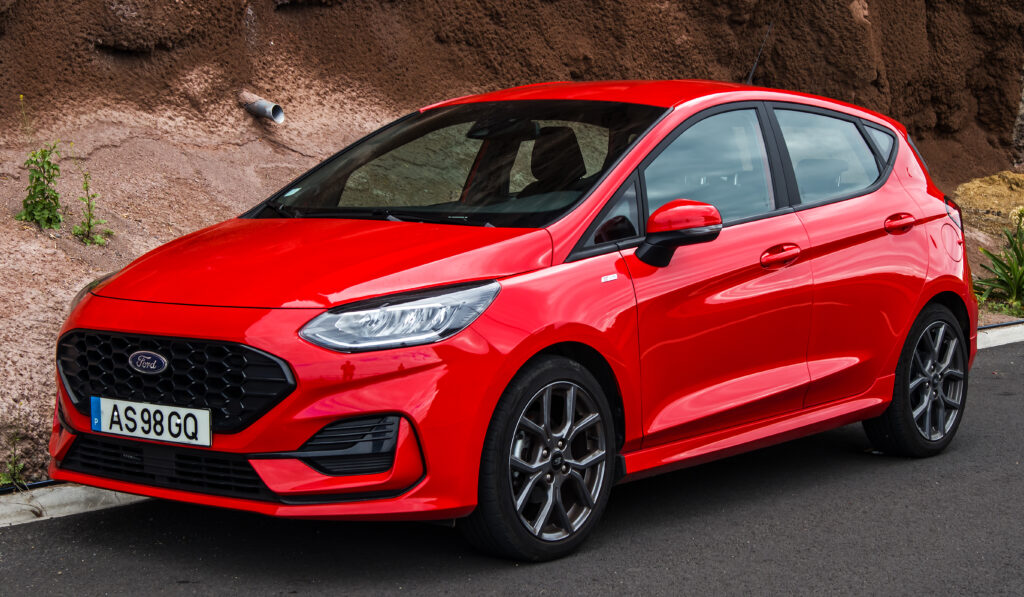
If you own a Ford Fiesta but aren't entirely sure which version you have, you're certainly not alone. With numerous generations, trim levels, engine options, and special editions produced over the years, identifying your exact Ford Fiesta model can sometimes be confusing.
You might know that you drive a Fiesta, but is it a Zetec, Titanium, ST-Line, Active, or ST? Is it a Mk6, Mk7, or Mk8? And how can you determine the exact engine and model year?
Fortunately, there are several straightforward ways to find this information.
In this guide, we'll explain how to identify your Ford Fiesta model, where to find your Vehicle Identification Number (VIN), how to recognise different generations, and how to distinguish between Ford Fiesta trim levels.
Whether you're ordering replacement parts, arranging insurance, buying a used Fiesta, or simply curious about your car, we'll help you identify exactly what you're driving.
Content in this publication
- How Do I Know What Ford Fiesta Model I Have?
- 1. Identify Your Ford Fiesta Using the VIN
- 2. Check Your Ford Fiesta Model by Registration Number
- 3. Identify Your Ford Fiesta Generation
- Ford Fiesta Generations by Year
- 4. Ford Fiesta Mk7 vs Mk8: How to Tell the Difference
- 5. Check Whether Your Fiesta Is a Facelift Model
- 6. Identify Your Ford Fiesta Trim Level
- Ford Fiesta Trim Levels Explained
- 7. How to Tell if Your Fiesta Is an ST or ST-Line
- 8. Identify Your Ford Fiesta by Engine Type
- 9. Check the Ford Fiesta Identification Plate
- 10. Use Ford's Vehicle Information Services
- 11. Check the Original Owner's Manual and Paperwork
- 12. Identify Your Fiesta Using Exterior Features
- 13. Identify Your Fiesta Using Interior Features
- 14. Can You Identify a Ford Fiesta from Its Badges?
- 15. Why Ford Fiesta Model Identification Matters
- 16. Common Mistakes When Identifying a Ford Fiesta
- 17. Step-by-Step Ford Fiesta Identification Checklist
- Frequently Asked Questions
- Conclusion
How Do I Know What Ford Fiesta Model I Have?
The easiest way to identify your Ford Fiesta model is to check its vehicle registration documents, VIN, manufacturer's identification plate, and original specifications.
You can also identify many versions by examining their exterior appearance, interior equipment, badges, and engine characteristics.
However, there's an important distinction between three pieces of information:
- Generation: Whether your Fiesta is a Mk6, Mk7, Mk8, or another generation.
- Trim level: Whether it's a Zetec, Titanium, ST-Line, Active, ST, or another specification.
- Engine version: Whether it has a 1.0 EcoBoost, 1.25 petrol, 1.5 TDCi diesel, or another engine.
These details are related, but they're not interchangeable.
For example, two Ford Fiesta Mk7 cars might look almost identical while having different engines and equipment levels.
The most reliable approach is to combine your VIN with the vehicle's original build information.
1. Identify Your Ford Fiesta Using the VIN
Every modern Ford Fiesta has a unique Vehicle Identification Number, commonly called the VIN.
This identification code is one of the most useful ways to determine which Fiesta you own.
What Is a Ford Fiesta VIN?
A VIN is a unique 17-character combination of letters and numbers assigned to a vehicle during manufacturing.
It can be used to identify information such as the manufacturer, vehicle type, production details, and relevant specifications.
An authorised Ford dealer can use the VIN to access vehicle-specific information through Ford's systems.
Depending on the market and available records, this may include:
- Vehicle model and production information.
- Original engine and transmission specifications.
- Factory-installed equipment.
- Vehicle build information.
- Compatible replacement parts.
- Relevant service and maintenance details.
Importantly, not every basic VIN decoder displays the exact trim level or complete factory options.
For the most accurate identification, manufacturer-backed records are preferable.
Where Is the VIN on a Ford Fiesta?
There are several places where you can find your Fiesta's VIN.
At the bottom of the windscreen
On many UK Ford Fiesta models, the VIN is visible through a small window near the lower passenger-side corner of the windscreen.
You should be able to read it from outside the vehicle without opening the bonnet.
The precise position can differ between markets.
Inside the driver's door opening
Open the driver's door and examine the door frame or pillar.
Look for a manufacturer's label or identification plate containing the VIN and other vehicle information.
On vehicle documents
You can also find the VIN on documents such as:
- The V5C registration certificate in the UK.
- Insurance documents.
- Original vehicle purchase paperwork.
- Service records.
- Manufacturer documentation.
If you're purchasing a used Ford Fiesta, check that the VIN displayed on the vehicle matches its official paperwork.
2. Check Your Ford Fiesta Model by Registration Number
If you live in the United Kingdom, your car's registration number can help you identify important details about your Fiesta.
The DVLA vehicle information service allows you to check information associated with a registered vehicle.
Depending on the available records, you may find:
- Year of manufacture.
- Date of first registration.
- Engine capacity.
- Fuel type.
- Vehicle colour.
- CO2 emissions.
- Tax status.
This information is particularly useful when distinguishing between Fiesta generations or verifying an engine's approximate size.
However, there's a limitation.
A registration lookup does not necessarily confirm the exact Ford Fiesta trim level.
For example, it may identify a Ford Fiesta with a 998cc petrol engine without clearly distinguishing between a Zetec, Titanium, or ST-Line.
You'll need additional information to verify the factory specification.
Is the Registration Year the Same as the Model Year?
Not necessarily.
A Ford Fiesta manufactured in late 2017 might have been registered for the first time in 2018.
Similarly, a car registered during a particular year could belong to a generation introduced several years earlier.
Manufacturing dates, registration dates, and model years describe different things.
This distinction is especially important when identifying facelifted models or purchasing replacement components.
3. Identify Your Ford Fiesta Generation
The Ford Fiesta was produced across multiple generations between 1976 and 2023.
In the UK, enthusiasts commonly use the names Mk1 through Mk8.
However, international generation numbering can differ because certain facelifted models are counted differently.
For example, the car commonly known as the Mk7 in the UK is often described as the sixth-generation Fiesta internationally.
The following table uses common UK terminology.
Ford Fiesta Generations by Year
| Ford Fiesta Generation | Approximate UK Years | Main Characteristics |
|---|---|---|
| Mk1 | 1976–1983 | Original compact Fiesta design |
| Mk2 | 1983–1989 | Updated styling with a redesigned front end |
| Mk3 | 1989–1995 | Larger body and more rounded styling |
| Mk4 | 1995–1999 | Rounded headlights and smoother exterior |
| Mk5 | 1999–2002 | Significant facelift of the Mk4 |
| Mk6 | 2002–2008 | Taller body and more angular design |
| Mk7 | 2008–2017 | Modern aerodynamic styling, facelifted for 2013 |
| Mk8 | 2017–2023 | More refined design and updated technology |
These dates represent approximate UK model periods. Production and sales dates varied internationally, and registration years can overlap.
Ford Fiesta Mk6: 2002–2008
The Ford Fiesta Mk6 introduced a noticeably different exterior design compared with earlier generations.
It featured a taller body, more angular headlights, and an updated interior.
Common UK versions included:
- Finesse.
- LX.
- Zetec.
- Ghia.
- Zetec S.
- Fiesta ST.
A facelift during the middle of its production period introduced changes to the lighting, interior, and exterior detailing.
One of the easiest ways to recognise this generation is by its relatively upright body shape and headlight design.
Ford Fiesta Mk7: 2008–2017
The Ford Fiesta Mk7 became one of the most recognisable Fiesta generations in the UK.
Introduced in 2008, it featured a more aerodynamic shape with swept-back headlights and a sportier profile.
A significant facelift arrived for the 2013 model year.
This facelift introduced a large trapezoidal front grille, making later Mk7 models relatively easy to distinguish from earlier examples.
Common trims included Zetec, Titanium, Zetec S, ST-Line, and ST, depending on the year.
If your Fiesta was manufactured between 2008 and 2017, there's a good chance it belongs to this generation.
Ford Fiesta Mk8: 2017–2023
The Ford Fiesta Mk8 introduced a more modern interior, improved technology, and a redesigned exterior.
One of the most noticeable differences is the dashboard, which commonly features a tablet-style central infotainment screen.
Trim levels included Trend, Titanium, ST-Line, Active, and ST, among others.
A facelift introduced in 2022 brought redesigned headlights, updated bumpers, and a repositioned Ford badge.
Ford ended Fiesta production in July 2023.
If your car belongs to this generation, identifying the exact trim and production date is especially useful when choosing replacement parts.
4. Ford Fiesta Mk7 vs Mk8: How to Tell the Difference
Confusing the Mk7 and Mk8 is relatively common, especially when comparing later Mk7 cars with early Mk8 examples.
Although both share the familiar Fiesta hatchback silhouette, several features make identification easier.
| Feature | Fiesta Mk7 | Fiesta Mk8 |
|---|---|---|
| Main UK production period | 2008–2017 | 2017–2023 |
| Dashboard | More integrated centre console | More horizontal dashboard design |
| Infotainment | Older integrated display layouts | Tablet-style central screen on many versions |
| Exterior | Swept-back headlights | Updated headlight and body design |
| Interior | Earlier-generation controls | More modern layout and technology |
| Rear design | Earlier tail-light arrangement | Redesigned rear lights and tailgate |
The dashboard is often one of the easiest places to start.
Many Mk8 models feature a prominent freestanding infotainment screen positioned above the centre dashboard.
By comparison, Mk7 models generally have an older-style centre console with controls integrated into the dashboard.
However, avoid relying exclusively on the screen, especially if the vehicle has been modified.
The VIN and production information remain more reliable.
5. Check Whether Your Fiesta Is a Facelift Model
Sometimes identifying the generation isn't enough.
Ford introduced significant design updates during the lifespan of several Fiesta generations.
These updates are commonly referred to as facelifts.
Ford Fiesta Mk7 Facelift
The most recognisable Mk7 facelift appeared around 2013.
The updated version received a large trapezoidal front grille, redesigned headlights, and revised exterior details.
Earlier Mk7 models had a different front bumper and grille arrangement.
If your Fiesta has the large grille commonly associated with Ford's early-2010s styling, it may be a facelifted Mk7.
Ford Fiesta Mk8 Facelift
The facelifted Mk8 was introduced for 2022.
One of its most distinctive features is the position of the Ford badge.
You may be interested in reading SEAT Arona Trim Levels: The Complete, No-Nonsense Guide to Every Version
On the earlier Mk8, the Ford badge was positioned near the front edge of the bonnet.
On the facelifted version, the badge sits within the front grille.
The revised model also received updated headlight styling and other exterior changes.
This makes the front grille and Ford badge useful visual clues when identifying a 2022 or 2023 Fiesta.
6. Identify Your Ford Fiesta Trim Level
Once you've established the generation, the next step is identifying the trim level.
Ford offered numerous Fiesta trims throughout the model's history.
Some were designed for affordability, while others focused on comfort, sporty styling, or performance.
Understanding these differences helps when comparing vehicles or determining which equipment should have been fitted at the factory.
Ford Fiesta Trim Levels Explained
| Trim Level | Typical Characteristics |
|---|---|
| Style | Basic everyday equipment |
| Trend | Entry-level specification on later models |
| Zetec | Popular mid-range specification |
| Zetec S | Sportier styling on certain older generations |
| Titanium | Comfort and technology-focused equipment |
| Titanium X | Higher specification with additional features |
| ST-Line | Performance-inspired exterior and interior styling |
| ST-Line X | ST-Line styling with additional equipment |
| Active | Raised ride height and crossover-inspired styling |
| Active X | Higher-equipped Active variant |
| Vignale | Premium-oriented equipment and finishes |
| ST | Genuine Ford Performance hot hatch |
Not every trim was offered in every year or country.
Equipment packages and optional extras also changed throughout production.
Let's examine some of the most common models.
Ford Fiesta Zetec
The Zetec was one of the best-known Fiesta trims in the UK.
Depending on the generation, it commonly offered a balance between affordability and everyday equipment.
Typical features could include alloy wheels, air conditioning, front fog lights, and upgraded interior details.
However, the exact specification varied considerably by model year.
A Zetec badge alone isn't always enough to identify the original factory specification, particularly if the vehicle has been modified.
Ford Fiesta Titanium
The Titanium generally represented a more comfort-focused and better-equipped Fiesta.
Depending on the model year, Titanium versions could include features such as:
- Automatic climate control.
- Upgraded infotainment.
- Automatic headlights.
- Enhanced interior materials.
- Additional convenience technology.
Titanium X versions typically added further equipment.
Nevertheless, the presence of features such as climate control or parking sensors doesn't automatically prove that a Fiesta is a Titanium.
Many features were also available as optional extras.
Ford Fiesta ST-Line
The Ford Fiesta ST-Line was designed to offer sporty styling without being the full Ford Performance ST model.
Common visual characteristics include sporty bumpers, distinctive alloy wheels, sports seats, and ST-Line badging.
Some versions also featured suspension changes.
Importantly, the ST-Line could be equipped with regular Fiesta engines, including certain 1.0-litre EcoBoost variants.
An ST-Line is not the same vehicle as a Fiesta ST.
This is one of the most important distinctions when identifying sporty Fiesta models.
Ford Fiesta Active
The Fiesta Active introduced crossover-inspired styling to the range.
It is generally recognisable by its raised stance and distinctive exterior details.
Typical identifying features include:
- Black wheel-arch cladding.
- Additional body protection.
- A raised suspension setup.
- Unique grille and bumper styling.
- Active badging.
The Active is still a Fiesta hatchback, rather than a separate SUV.
It offers different styling and suspension characteristics from conventional Fiesta trims.
Ford Fiesta ST
The Fiesta ST is the high-performance version developed by Ford Performance.
Depending on the generation, it features a more powerful engine, upgraded suspension, performance-focused components, and distinctive styling.
For example, the Mk7 Fiesta ST used a turbocharged 1.6-litre EcoBoost petrol engine, while the Mk8 ST used a turbocharged 1.5-litre three-cylinder EcoBoost engine.
The earlier 2000s Fiesta ST used a naturally aspirated 2.0-litre petrol engine.
These mechanical differences are useful when distinguishing a genuine ST from an ST-Line.
7. How to Tell if Your Fiesta Is an ST or ST-Line
This is a particularly common question among Ford Fiesta owners.
Both versions can have sporty styling, large alloy wheels, and prominent badges.
However, they are fundamentally different models.
| Feature | Fiesta ST-Line | Fiesta ST |
|---|---|---|
| Main purpose | Sporty everyday driving | High-performance driving |
| Engine | Regular Fiesta engine options | Generation-specific performance engine |
| Suspension | May have sports suspension | Performance-developed setup |
| Exterior | ST-inspired styling | Dedicated performance styling |
| Interior | Sport-themed equipment | Performance-focused equipment |
| Performance | Depends on engine | Generally significantly higher |
The engine is one of the most reliable ways to verify the difference.
If the car has a regular 1.0 EcoBoost engine and ST-Line styling, it is not a genuine Fiesta ST.
However, because badges and body kits can be changed, appearance alone should never be treated as definitive proof.
If you're buying a used Fiesta advertised as an ST, confirm the VIN, engine type, and original factory records before purchasing.
8. Identify Your Ford Fiesta by Engine Type
Another important part of model identification is determining which engine your Fiesta has.
Ford offered numerous petrol and diesel engines across its production history.
Common Fiesta engine families included:
| Engine | Fuel Type | Notes |
|---|---|---|
| 1.25 Duratec | Petrol | Naturally aspirated engine used in older models |
| 1.4 Duratec | Petrol | Available on selected older Fiestas |
| 1.6 Duratec | Petrol | Used in certain earlier versions |
| 1.0 EcoBoost | Petrol | Turbocharged engine offered in various outputs |
| 1.1 Ti-VCT | Petrol | Naturally aspirated engine on later models |
| 1.4 TDCi | Diesel | Found in older diesel Fiestas |
| 1.5 TDCi | Diesel | Available on selected later generations |
| 1.6 TDCi | Diesel | Used in various older diesel models |
| 1.5 EcoBoost ST | Petrol | Performance engine in the Mk8 ST |
This isn't an exhaustive engine list, and availability varied by country and model year.
Where Can You Find Your Fiesta Engine Details?
Start by examining your V5C registration certificate or equivalent vehicle documentation.
The engine capacity and fuel type can help narrow down the possibilities.
You may also find engine information on the manufacturer's identification plate or in the original sales paperwork.
A Ford dealer can provide more detailed identification using the VIN.
Why Engine Identification Matters
Knowing the precise engine is particularly important when arranging maintenance.
For example, Ford used different timing-belt and timing-chain arrangements across Fiesta engines and production periods.
Even engines with similar names or capacities may require different maintenance procedures.
This is especially relevant when researching timing belt replacement, engine oil specifications, spark plugs, or compatible replacement parts.
Never select an engine component based solely on the Fiesta's registration year.
9. Check the Ford Fiesta Identification Plate
The manufacturer's identification plate is another valuable source of information.
Depending on the year and market, it may be located around the door opening or elsewhere on the vehicle.
This plate can include the VIN, type-approval information, vehicle weights, and manufacturer-specific codes.
Some Fiesta identification plates also display the model name, trim designation, engine information, or emissions classification.
However, the exact information printed on the label varies.
What Do the Codes Mean?
Manufacturer identification plates may contain technical codes associated with the vehicle's configuration.
These can relate to the vehicle type, manufacturing information, or mechanical specifications.
Some codes require Ford documentation to interpret correctly.
If you're unsure about a particular code, a Ford dealership or specialist parts supplier may be able to identify it.
Avoid assuming that every letter or number is a trim-level code.
10. Use Ford's Vehicle Information Services
Ford provides owner support and vehicle-related services that can help you access information about your car.
Depending on the country and service availability, you may be able to search using your VIN or add the vehicle to your Ford account.
This can help you locate the relevant owner's manual, maintenance information, or other vehicle-specific resources.
However, not every service displays the complete original build specification.
If you need confirmation of the precise trim level, factory options, or engine variant, contacting an authorised Ford dealer is often the best approach.
Can a Ford Dealer Identify My Exact Fiesta?
Yes, a Ford dealer can generally use your VIN to check vehicle-specific manufacturer information.
The level of detail available may depend on the model's age and the records retained.
For newer Fiesta models, the information may be more comprehensive.
For older vehicles, some historical equipment details may be less readily accessible.
When contacting the dealer, ask specifically for the original model derivative, engine, transmission, and factory equipment rather than simply asking whether the vehicle is a Fiesta.
11. Check the Original Owner's Manual and Paperwork
The owner's manual can help you understand the vehicle's features and identify certain differences between generations.
However, one important limitation is that Ford often supplied manuals covering several engines and trims.
Consequently, the manual may mention features your specific Fiesta doesn't have.
For example, a manual might explain automatic climate control even if your car has manual air conditioning.
The original purchase invoice or vehicle order specification can be more informative.
You may be interested in readingSEAT Arona Trim Levels: The Complete, No-Nonsense Guide to Every VersionYou may be interested in reading
 SEAT Arona VW Equivalent: The Complete Comparison Guide
If available, these records may show the exact trim, engine output, transmission, optional packages, and original colour.
Service invoices can also contain valuable information, although descriptions provided by workshops aren't always as specific as manufacturer build records.
12. Identify Your Fiesta Using Exterior Features
If you don't have access to the paperwork, exterior styling can help narrow down the model.
Start by inspecting the front grille, bumpers, alloy wheels, side skirts, and rear badging.
For example, the Fiesta Active usually features distinctive plastic wheel-arch cladding and a slightly raised appearance.
ST-Line models generally have sportier styling.
Titanium models often feature more traditional premium-oriented exterior detailing.
The Fiesta ST normally has dedicated performance styling.
However, exterior equipment isn't conclusive.
Previous owners may have installed aftermarket wheels, replaced bumpers, removed badges, or fitted body kits.
That's why external styling should be treated as supporting evidence rather than proof.
13. Identify Your Fiesta Using Interior Features
The interior can provide additional clues.
Different Fiesta generations and trims featured different dashboards, steering wheels, seats, and infotainment systems.
Look for features such as:
- Seat upholstery and stitching.
- Steering wheel design.
- Climate control type.
- Dashboard layout.
- Infotainment screen.
- Instrument cluster.
- Interior trim finishes.
A sporty flat-bottom steering wheel or heavily bolstered seats may suggest an ST-Line or ST variant, depending on the model year.
A more comfort-oriented interior may suggest Titanium or Vignale.
Still, factory options and modifications can make identification difficult.
We recommend comparing these features with a model-year-specific Ford brochure.
14. Can You Identify a Ford Fiesta from Its Badges?
Badges can be helpful, but they aren't always reliable.
Many Fiesta models have badges identifying their trim or engine family.
Examples include Titanium, ST-Line, Active, ST, and EcoBoost.
However, some cars have minimal badging, while others have had their original badges removed or replaced.
Furthermore, an EcoBoost badge describes an engine family rather than a specific trim level.
A Fiesta Titanium and a Fiesta ST-Line could both use a 1.0 EcoBoost engine.
Therefore, we shouldn't assume that two cars with identical engine badges have identical specifications.
15. Why Ford Fiesta Model Identification Matters
Knowing your exact Ford Fiesta model is more than a matter of curiosity.
It has practical benefits throughout vehicle ownership.
Ordering the Correct Replacement Parts
Different generations and engines often require different parts.
Brake discs, filters, headlights, suspension components, and engine parts may vary between versions.
Identifying the correct VIN, engine, and build period reduces the risk of ordering incompatible components.
Understanding Maintenance Requirements
Engine oil specifications, timing-system maintenance, and service requirements can differ significantly between Fiesta engines.
Following an incorrect maintenance schedule could result in unnecessary expense or mechanical problems.
Use the service information appropriate to your exact vehicle.
Getting Accurate Insurance Information
Insurance companies may distinguish between different Fiesta trims and engine outputs.
A Ford Fiesta ST can fall into a very different insurance category from a regular Fiesta Zetec.
Providing the correct vehicle details helps ensure that your insurance quotation and policy reflect the car you actually own.
Buying or Selling a Used Fiesta
Accurate model identification is also important when determining a vehicle's market value.
Higher-specification Fiesta models may command different prices from entry-level versions, depending on their age, mileage, condition, and demand.
When selling your Fiesta, listing the correct trim, engine, and transmission makes your advertisement more informative.
When buying, verifying those details can help you avoid misleading listings.
16. Common Mistakes When Identifying a Ford Fiesta
Several mistakes can lead to incorrect model identification.
Confusing the registration year with the generation
A Fiesta registered in 2018 isn't automatically a Mk8. It could be an earlier model registered later.
Assuming an ST-Line is a genuine ST
An ST-Line has performance-inspired styling, but that doesn't make it equivalent to the Ford Performance ST.
Trusting aftermarket badges
Badges can be removed, replaced, or added.
Identifying the engine only by capacity
Two engines with similar capacities can have very different mechanical specifications.
Relying on an incomplete VIN decoder
Some vehicle lookup services display only basic information and may not identify the exact trim.
Ignoring regional differences
Fiesta models sold in the UK, Europe, Australia, and North America didn't always share identical trims, engines, or generation names.
Using information intended for another market can produce incorrect results.
17. Step-by-Step Ford Fiesta Identification Checklist
If you want to identify your Fiesta as accurately as possible, follow this process.
Step 1: Find the VIN
Check the windscreen, driver's door opening, or vehicle documentation.
Step 2: Confirm the manufacturing year
Use the registration documents or reliable manufacturer information.
Step 3: Determine the generation
Compare the production period and vehicle design with the Mk6, Mk7, and Mk8 characteristics.
Step 4: Identify the engine
Check the original specification, engine capacity, fuel type, and engine designation.
Step 5: Examine the trim
Look for identifying features associated with Zetec, Titanium, ST-Line, Active, or ST.
Step 6: Verify the factory specification
Use a Ford dealer or reliable manufacturer-backed records to confirm the original trim and equipment.
Step 7: Record the information
Keep a record of the VIN, build date, generation, trim, engine, and transmission.
Once you've completed these steps, you'll have the information needed to identify your Fiesta more confidently and select compatible parts.
Frequently Asked Questions
1. How Can I Tell if My Ford Fiesta Is a Mk6, Mk7, or Mk8?
The easiest starting point is the manufacturing year and exterior design. In common UK terminology, the Mk6 was produced approximately from 2002 to 2008, the Mk7 from 2008 to 2017, and the Mk8 from 2017 to 2023. Check the VIN and original vehicle details to confirm the generation, particularly around model changeover years.
2. Can I Find My Ford Fiesta Trim Level Using the VIN?
Yes, the VIN can help a Ford dealer identify the original factory specification. However, basic online VIN decoders don't always display the exact trim level. Manufacturer-backed records are usually the most reliable source.
3. How Do I Know if My Ford Fiesta Is a Zetec or Titanium?
Compare the original equipment, interior features, and manufacturer's specifications. Titanium models generally had more comfort and technology features than equivalent Zetec versions, but the differences varied by year. The best confirmation comes from the original vehicle order details or a Ford dealer's VIN-based lookup.
4. What Is the Difference Between a Ford Fiesta ST and ST-Line?
The Fiesta ST is a genuine Ford Performance model with a dedicated performance engine and upgraded mechanical components. The ST-Line is primarily a sport-styled version of the regular Fiesta. Both can look similar, but their engines, performance, and factory specifications are different.
5. Can I Identify My Ford Fiesta Model Without the VIN?
Yes, you can make a preliminary identification using the manufacturing year, registration documents, exterior styling, badges, and interior features. However, these methods may not confirm the exact factory trim and options. The VIN is the preferred method for more accurate verification.
Conclusion
Identifying your Ford Fiesta model doesn't have to be complicated.
The most important thing is understanding the difference between the vehicle's generation, trim level, engine, and model year.
We can often recognise a Fiesta Mk6, Mk7, or Mk8 by its exterior design and production period, while features such as badges, wheels, seats, and dashboard equipment can help narrow down the trim.
However, the most reliable way to identify your exact Ford Fiesta model is to use the VIN alongside the original manufacturer specifications.
This approach helps eliminate confusion between versions such as Zetec, Titanium, ST-Line, Active, and ST.
Whether you're maintaining your vehicle, searching for parts, checking insurance details, or preparing to buy a used Fiesta, knowing its exact specification will help you make better-informed decisions.
And if you're ever uncertain, an authorised Ford dealer can help you verify the details using your vehicle's identification number.
You may be interested in readingSEAT Arona Trim Levels: The Complete, No-Nonsense Guide to Every VersionYou may be interested in reading
SEAT Arona VW Equivalent: The Complete Comparison GuideYou may be interested in reading
 SEAT Arona Reliability Guide: The Complete, Data-Driven Analysis Every Buyer Needs
If you want to know other articles similar to How to Identify Your Ford Fiesta Model you can visit the category Models.
Honda Passport vs Toyota 4Runner: Which SUV Is Better?
Honda Passport vs Ford Bronco: Which SUV Is Better?
Honda Passport vs Ford Explorer: Which SUV Is Better?
Honda Passport or Pilot: Which SUV Is Better?
Honda Passport vs Jeep Grand Cherokee: Which SUV Is Better?
Honda Passport vs Nissan Pathfinder: Which SUV Is Better?
Leave a Reply
More content of your interest