

Kia Sportage Gas Tank Size: Complete Guide

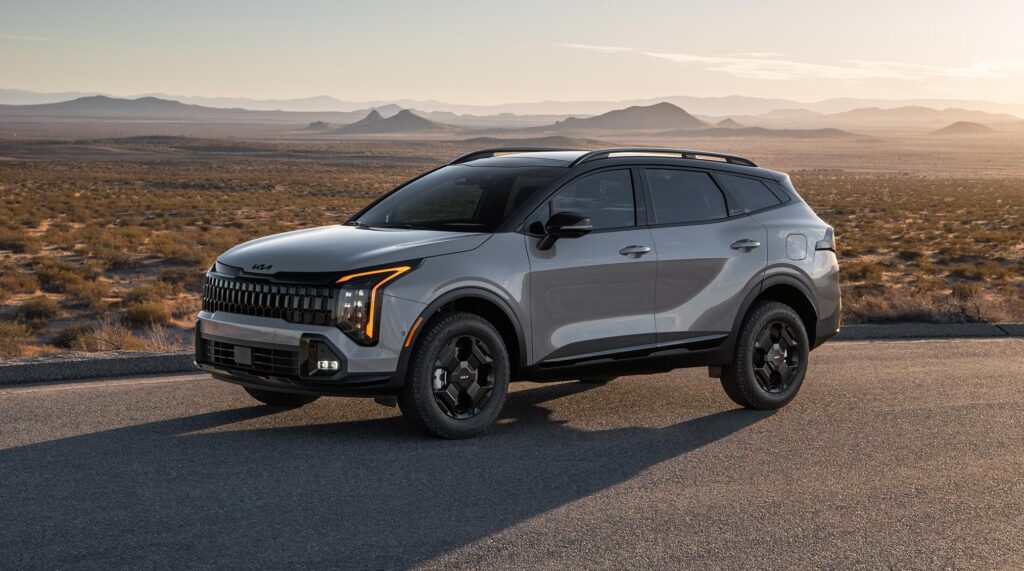
The Kia Sportage gas tank size varies depending on the model year, engine type, and whether we're driving a gasoline, hybrid, or plug-in hybrid version. Understanding the exact fuel tank capacity helps us calculate driving range, estimate refueling costs, and determine how often we'll need to visit a gas station.
For recent U.S.-market Kia Sportage models, fuel tank capacity generally ranges from 11.1 to 14.3 US gallons (approximately 42 to 54 liters), depending on the powertrain and model specifications.
Older generations offered larger tanks, with some gasoline models featuring a capacity of 16.4 gallons.
In this guide, we'll explore the Kia Sportage fuel tank capacity by year, compare conventional gasoline and hybrid versions, calculate potential driving distances, and explain how fuel efficiency affects the number of miles we can travel on a full tank.
Content in this publication
- How Big Is the Kia Sportage Gas Tank?
- Kia Sportage Gas Tank Size by Year
- 2027 Kia Sportage Gas Tank Size
- 2026 Kia Sportage Gas Tank Size
- 2025 Kia Sportage Gas Tank Size
- 2024 and 2023 Kia Sportage Fuel Capacity
- 2017–2022 Kia Sportage Gas Tank Size
- 2016 Kia Sportage Gas Tank Size
- Kia Sportage Hybrid Gas Tank Size
- Kia Sportage Plug-In Hybrid Gas Tank Size
- How Many Miles Can a Kia Sportage Go on a Full Tank?
- Kia Sportage Fuel Tank Capacity in Liters
- How Much Does It Cost to Fill a Kia Sportage?
- Does AWD Affect the Kia Sportage Gas Tank Size?
- Which Kia Sportage Has the Largest Gas Tank?
- Why Doesn't My Kia Sportage Take the Full Tank Capacity?
- When Should You Refuel a Kia Sportage?
- How to Improve Kia Sportage Fuel Economy
- Is a Bigger Gas Tank Better?
- How to Find Your Exact Kia Sportage Gas Tank Capacity
- Frequently Asked Questions
- Conclusion: Kia Sportage Gas Tank Size Explained
How Big Is the Kia Sportage Gas Tank?
The conventional gasoline Kia Sportage in the 2026 and 2027 model years has a 14.3-gallon fuel tank, equivalent to approximately 54.1 liters in the U.S. market.
The standard hybrid has a slightly smaller 13.7-gallon tank, while plug-in hybrid specifications can differ and should be verified against the applicable owner's manual.
Here's a quick comparison of commonly published capacities.
| Kia Sportage Version | US Gallons | Liters |
|---|---|---|
| Gasoline (2026–2027) | 14.3 | 54.1 |
| Hybrid HEV (2026–2027) | 13.7 | 51.9 |
| Plug-in Hybrid PHEV (selected models) | 11.1 | 42.0 |
| Gasoline (2017–2022) | 16.4 | 62.1 |
| Gasoline (2016) | 15.3 | 57.9 |
These figures primarily refer to U.S.-market specifications. International versions, including diesel models and vehicles sold in Europe or Australia, may have different capacities.
Kia Sportage Gas Tank Size by Year
One of the most important details to understand is that Kia has changed the Sportage fuel tank capacity across different generations.
The following table provides a useful comparison for popular U.S. model years.
| Model Year | Gasoline | Hybrid | Plug-in Hybrid |
|---|---|---|---|
| 2027 | 14.3 gal | 13.7 gal | Verify by market |
| 2026 | 14.3 gal | 13.7 gal | Verify by manual |
| 2025 | 14.3 gal | 13.7 gal | 11.1 gal |
| 2024 | 14.3 gal | 13.7 gal | 11.1 gal |
| 2023 | 14.3 gal | 13.7 gal | 11.1 gal |
| 2022 | 16.4 gal | — | — |
| 2021 | 16.4 gal | — | — |
| 2020 | 16.4 gal | — | — |
| 2019 | 16.4 gal | — | — |
| 2018 | 16.4 gal | — | — |
| 2017 | 16.4 gal | — | — |
| 2016 | 15.3 gal | — | — |
For some newer plug-in hybrid models, published fuel tank specifications are inconsistent between materials. Owners should confirm the exact capacity using the manual for their model year and market.
Notice that one of the biggest changes occurred with the 2023 redesign.
Kia reduced the conventional gasoline model's tank capacity from 16.4 gallons to 14.3 gallons while introducing additional electrified powertrain options.
Although the newer gasoline version holds less fuel, improved efficiency can help compensate for the smaller tank.
2027 Kia Sportage Gas Tank Size
The 2027 Kia Sportage gasoline model continues with a 14.3-gallon fuel tank in the U.S. market.
This applies to conventional gasoline configurations, including popular trims such as LX, EX, SX, X-Line, SX Prestige, and X-Pro Prestige.
2027 Kia Sportage Fuel Capacity by Engine
| Powertrain | Fuel Tank Capacity |
|---|---|
| 2.5L gasoline | 14.3 gallons |
| 1.6L turbo hybrid | 13.7 gallons |
| 1.6L turbo plug-in hybrid | Check applicable specifications |
The important takeaway is that the hybrid versions prioritize fuel efficiency rather than simply increasing gasoline storage.
This means we shouldn't assume that a vehicle with a larger gas tank will automatically travel farther.
A more efficient engine can deliver a longer driving range while consuming fewer gallons.
2026 Kia Sportage Gas Tank Size
The 2026 Kia Sportage is available with several powertrain configurations.
Its standard gasoline version has a 14.3-gallon fuel tank, regardless of whether we choose front-wheel drive or all-wheel drive.
2026 Kia Sportage Gasoline Models
The conventional 2026 Sportage uses a 2.5-liter four-cylinder engine producing approximately 187 horsepower.
The 14.3-gallon tank remains consistent across its gasoline configurations.
However, fuel economy changes depending on the drivetrain.
| Configuration | Combined MPG | Calculated Full-Tank Range |
|---|---|---|
| FWD gasoline | 28 MPG | 400 miles |
| AWD gasoline | 26 MPG | 372 miles |
| X-Pro Prestige AWD | 24 MPG | 343 miles |
These distances are theoretical calculations based on combined fuel economy ratings and full nominal tank capacity.
Actual results depend on driving conditions, vehicle load, temperature, and road characteristics.
2026 Kia Sportage Hybrid Gas Tank Size
The 2026 Kia Sportage Hybrid features a 13.7-gallon fuel tank.
Although this is slightly smaller than the conventional gasoline version, the hybrid powertrain uses fuel more efficiently.
For example, a Sportage Hybrid achieving 42 MPG combined could theoretically travel approximately 575 miles using its full 13.7-gallon capacity.
A hybrid configuration averaging 35 MPG would have a theoretical range of approximately 480 miles.
This demonstrates why gasoline consumption matters more than tank size alone.
2025 Kia Sportage Gas Tank Size
The 2025 Kia Sportage maintains a 14.3-gallon fuel tank in its conventional gasoline versions.
The standard hybrid offers 13.7 gallons, while the plug-in hybrid has an 11.1-gallon capacity.
Does the 2025 Sportage Have a Bigger Tank Than the 2024?
No. The gasoline and standard hybrid configurations retain the same fuel tank capacities.
When comparing the 2024 and 2025 Sportage, fuel tank size shouldn't be a major deciding factor.
Instead, we recommend considering:
- Fuel economy and engine performance.
- Vehicle condition and maintenance history.
- Purchase price and financing costs.
- Available technology and safety equipment.
- Warranty coverage.
- Long-term reliability.
- Annual fuel and maintenance expenses.
Even a small difference in fuel efficiency can have a meaningful impact on total ownership costs over several years.
2024 and 2023 Kia Sportage Fuel Capacity
The 2023 redesign introduced significant changes to the Kia Sportage lineup.
Earlier gasoline models offered a 16.4-gallon tank, but the redesigned generation reduced conventional gasoline capacity to 14.3 gallons.
The 2023 and 2024 hybrid versions feature 13.7-gallon tanks, while the plug-in hybrid versions use 11.1-gallon tanks.
Why Did Kia Reduce the Gas Tank Size?
There are several possible reasons manufacturers reduce fuel tank capacity when redesigning a vehicle.
These include:
- Improved fuel efficiency.
- Vehicle weight reduction.
- Packaging requirements.
- Updated chassis architecture.
- Space for electrified components.
- Crash protection considerations.
- Manufacturing and engineering priorities.
However, we shouldn't assume that Kia reduced the tank for one specific reason without an official engineering explanation.
What matters to drivers is the relationship between fuel capacity and efficiency.
If a vehicle consumes less gasoline per mile, it may offer a competitive driving range despite having a smaller tank.
2017–2022 Kia Sportage Gas Tank Size
The 2017–2022 U.S.-market Kia Sportage generally has a 16.4-gallon fuel tank, equivalent to approximately 62.1 liters.
This is considerably larger than the tank in the redesigned 2023–2027 gasoline models.
The 16.4-gallon capacity applies to the conventional gasoline configurations of this generation, including naturally aspirated and turbocharged versions.
How Much Bigger Is the Older Sportage Tank?
Let's compare the capacities:
- 2017–2022 Kia Sportage: 16.4 gallons.
- 2023–2027 gasoline Sportage: 14.3 gallons.
- Difference: 2.1 gallons.
The older Sportage carries approximately 15% more gasoline relative to the newer tank's capacity.
This might appear advantageous for long-distance driving.
However, the older model's driving range still depends on its MPG rating.
A less efficient engine may consume the additional gasoline before achieving any meaningful range advantage.
Is the Older Sportage Better for Road Trips?
It depends on the specific engine and drivetrain.
An older Sportage with a larger fuel tank can be convenient when traveling through areas with limited fuel stations.
However, newer models may offer improved efficiency, additional safety equipment, and more advanced driver assistance technology.
We should compare the actual combined and highway MPG ratings rather than relying on tank capacity alone.
2016 Kia Sportage Gas Tank Size
The 2016 U.S.-market Kia Sportage has a 15.3-gallon gasoline tank.
This equals approximately 57.9 liters.
The capacity applies to the main gasoline trims, including LX, EX, and SX.
Interestingly, the 2016 model sits between the newer generation's 14.3-gallon tank and the larger 16.4-gallon capacity introduced for 2017.
If we're buying a used Sportage, confirming the exact model year is essential because consecutive years may belong to different vehicle generations.
Kia Sportage Hybrid Gas Tank Size
The Kia Sportage Hybrid combines a gasoline engine with an electric motor to improve fuel economy.
Recent U.S.-market Sportage Hybrid models feature a 13.7-gallon fuel tank, equivalent to approximately 51.9 liters.
Despite having a smaller tank than the gasoline Sportage, the hybrid can achieve a longer driving range.
Why Does the Hybrid Have a Smaller Tank?
Hybrid vehicles contain additional electrical components, including:
- A high-voltage battery.
- An electric motor.
- Power control electronics.
- Regenerative braking hardware.
- Additional electrical wiring and cooling systems.
These components influence how manufacturers organize the available space inside a vehicle.
The hybrid's smaller gasoline tank is part of its overall powertrain and packaging design.
However, its improved efficiency means it doesn't need as much fuel to travel the same distance.
Is the Sportage Hybrid Better for Long Trips?
For many drivers, yes.
You may be interested in reading Kia Sportage Weight Guide (2022–2025): Complete Curb Weight Breakdown by Trim, Engine & Drivetrain
The Sportage Hybrid can be particularly attractive when we want fewer fuel stops and lower gasoline consumption.
However, its efficiency advantage varies depending on the driving environment.
Hybrid systems often provide considerable benefits in city traffic because regenerative braking captures energy during deceleration.
On highways, the efficiency advantage may be smaller, particularly at sustained high speeds.
Nevertheless, the Sportage Hybrid can be a practical option for drivers who regularly combine urban commuting with longer journeys.
Kia Sportage Plug-In Hybrid Gas Tank Size
The Kia Sportage Plug-In Hybrid (PHEV) combines a turbocharged gasoline engine with an electric motor and a rechargeable battery.
Many U.S. Sportage PHEV models have an 11.1-gallon fuel tank, equivalent to approximately 42 liters.
However, some newer published specifications differ, so the exact figure should be verified for the particular vehicle.
Why Does the Plug-In Hybrid Have a Smaller Tank?
Unlike the standard hybrid, the plug-in hybrid can receive electricity from an external charging station or compatible home charging equipment.
This allows us to complete certain journeys using electricity rather than gasoline.
For example, if we commute 20 miles per day and have reliable charging access, much of our daily driving may be covered by the electric motor.
Consequently, we may not need to visit a gas station very frequently.
How Far Can the Sportage PHEV Drive?
The 2026 U.S. Kia Sportage Plug-In Hybrid offers an estimated electric-only driving range of up to approximately 34 miles under applicable test conditions.
Once the usable electric driving range is depleted, the vehicle can continue operating with its gasoline engine and hybrid system.
The total distance depends on the remaining gasoline, battery charge, driving conditions, and efficiency.
Because electric driving contributes to its overall range, comparing a PHEV directly with a gasoline-only model requires more than simply multiplying tank capacity by MPG.
How Many Miles Can a Kia Sportage Go on a Full Tank?
Driving range depends on two factors:
- Fuel tank capacity.
- Average fuel economy.
We can estimate it using the following formula:
Driving Range = Fuel Tank Capacity × Miles Per Gallon
For example, a gasoline Sportage with a 14.3-gallon tank averaging 28 MPG has an estimated full-tank range of:
14.3 × 28 = 400.4 miles.
This gives us approximately 400 miles under the assumed conditions.
Kia Sportage Estimated Range by Fuel Economy
| Fuel Tank | Average MPG | Theoretical Range |
|---|---|---|
| 14.3 gallons | 24 MPG | 343 miles |
| 14.3 gallons | 26 MPG | 372 miles |
| 14.3 gallons | 28 MPG | 400 miles |
| 13.7 gallons | 35 MPG | 480 miles |
| 13.7 gallons | 38 MPG | 521 miles |
| 13.7 gallons | 42 MPG | 575 miles |
| 16.4 gallons | 25 MPG | 410 miles |
These examples are mathematical estimates rather than guaranteed ranges or official ratings for every model.
Real-world driving distances may be lower or higher.
What Affects the Kia Sportage Driving Range?
Several factors can influence how far we travel before refueling.
City driving: Traffic congestion, repeated acceleration, and prolonged idling can increase gasoline consumption.
Highway speeds: Higher speeds generally increase aerodynamic resistance and reduce efficiency.
Air conditioning: Climate control systems can increase the vehicle's energy requirements.
Vehicle weight: Additional passengers, luggage, and accessories can reduce MPG.
Tire pressure: Underinflated tires increase rolling resistance.
Road conditions: Mountain roads, steep inclines, and rough surfaces may require more fuel.
Weather: Very cold temperatures can affect fuel efficiency, particularly on short trips.
Driving habits: Aggressive acceleration and frequent heavy braking can significantly reduce driving range.
For the most accurate estimate, we recommend tracking fuel consumption across several complete fill-ups.
Kia Sportage Fuel Tank Capacity in Liters
In many countries, fuel tank capacity is measured in liters rather than gallons.
One U.S. gallon equals approximately 3.785 liters.
We can convert gallons into liters using this formula:
Liters = US Gallons × 3.78541
Here's a useful conversion table.
| US Gallons | Liters |
|---|---|
| 11.1 | 42.0 |
| 13.7 | 51.9 |
| 14.3 | 54.1 |
| 15.3 | 57.9 |
| 16.4 | 62.1 |
It's important to remember that the U.S. gallon is different from the Imperial gallon.
An Imperial gallon is larger, meaning the same tank capacity produces a different number when expressed in Imperial gallons.
Also, the table converts U.S. fuel tank capacities into liters. It doesn't mean that every international Sportage model uses these exact tank sizes.
How Much Does It Cost to Fill a Kia Sportage?
The cost of filling a Kia Sportage depends on the local gasoline price and how much fuel is already in the tank.
We can estimate an empty-to-full refill using the formula:
Refueling Cost = Tank Capacity × Gasoline Price per Gallon
Let's assume gasoline costs $3.50 per gallon.
| Tank Capacity | Full-Tank Cost |
|---|---|
| 11.1 gallons | $38.85 |
| 13.7 gallons | $47.95 |
| 14.3 gallons | $50.05 |
| 15.3 gallons | $53.55 |
| 16.4 gallons | $57.40 |
These are illustrative figures, not current gasoline prices.
In everyday driving, the actual refill cost is generally lower because some gasoline remains in the tank when we stop at a station.
Is the Kia Sportage Hybrid Cheaper to Run?
The hybrid can offer lower gasoline expenses because it requires fewer gallons to cover the same distance.
Let's compare two hypothetical Sportage configurations covering 12,000 miles annually.
| Category | Gasoline | Hybrid |
|---|---|---|
| Average economy | 28 MPG | 42 MPG |
| Annual mileage | 12,000 | 12,000 |
| Gallons consumed | 429 | 286 |
| Fuel price | $3.50 | $3.50 |
| Annual fuel cost | $1,500 | $1,000 |
Under these assumptions, the hybrid saves approximately $500 annually in gasoline.
Over five years, that could represent roughly $2,500 in fuel savings if driving patterns and gasoline prices remain unchanged.
However, actual savings depend on the hybrid's purchase price, insurance, maintenance, fuel economy, and driving habits.
Does AWD Affect the Kia Sportage Gas Tank Size?
Many drivers assume that all-wheel-drive vehicles need larger fuel tanks.
However, this isn't necessarily true.
For example, the 2026 gasoline Kia Sportage uses a 14.3-gallon tank in both front-wheel-drive and all-wheel-drive configurations.
The major difference is fuel efficiency.
Why Does AWD Use More Gas?
AWD vehicles have additional drivetrain components, which can increase weight and mechanical losses.
As a result, an AWD Sportage may consume more gasoline than a comparable FWD model.
This means two Sportage vehicles with identical tank capacities can achieve different driving ranges.
If maximizing fuel economy is our priority, comparing the published MPG ratings of FWD and AWD versions is essential.
Which Kia Sportage Has the Largest Gas Tank?
Among the U.S.-market generations discussed in this guide, the 2017–2022 Kia Sportage gasoline models have the largest tank at 16.4 gallons.
Here's how the main versions compare:
| Model | Tank Size |
|---|---|
| 2017–2022 gasoline | 16.4 gallons |
| 2016 gasoline | 15.3 gallons |
| 2023–2027 gasoline | 14.3 gallons |
| Recent standard hybrid | 13.7 gallons |
| Selected plug-in hybrid | 11.1 gallons |
However, the vehicle with the largest tank isn't always the one offering the greatest driving range.
For example, an efficient hybrid can travel farther using fewer gallons.
This is one reason why we should consider fuel economy and tank capacity together.
Why Doesn't My Kia Sportage Take the Full Tank Capacity?
Some drivers notice that their Sportage accepts fewer gallons than the manufacturer's advertised fuel tank capacity.
For example, we might own a Sportage with a 14.3-gallon tank but only manage to add 11 or 12 gallons during refueling.
This doesn't necessarily indicate a problem.
Fuel Remaining When the Warning Light Appears
The low-fuel warning light doesn't mean the gas tank is completely empty.
You may be interested in readingKia Sportage Weight Guide (2022–2025): Complete Curb Weight Breakdown by Trim, Engine & DrivetrainYou may be interested in reading
 How to Reset the Oil Light on a Kia Sportage: Complete Step-by-Step Guide (2025 Update)
It activates when the vehicle detects that gasoline is running low.
There may still be a meaningful amount of fuel inside the tank.
The exact remaining quantity depends on the model and the conditions under which the warning appears.
The Fuel Pump Stops Automatically
Gas station pumps are designed to stop dispensing gasoline automatically when the nozzle detects that the normal filling level has been reached.
Different pumps can stop at slightly different points.
We should avoid repeatedly trying to add gasoline after the nozzle automatically shuts off.
Overfilling can interfere with the vehicle's evaporative emissions system and create other problems.
The Fuel Gauge Isn't Perfectly Precise
The dashboard fuel gauge provides an estimated fuel level.
Its reading may be affected by:
- Vehicle inclination.
- Fuel movement within the tank.
- Tank shape.
- Fuel-level sensor calibration.
- Electronic measurement characteristics.
As a result, a gauge displaying one-quarter remaining doesn't necessarily mean exactly 25% of the nominal tank capacity is available.
When Should You Refuel a Kia Sportage?
We recommend refueling before the gasoline level becomes extremely low.
This is especially important when traveling through rural areas or regions where gas stations are far apart.
Rather than waiting for the tank to become nearly empty, we can establish a refueling routine based on our average fuel consumption.
For example, someone driving 40 to 50 miles daily may need to refuel more frequently than someone traveling only 10 miles per day.
Can Driving on Empty Damage the Kia Sportage?
Running out of gasoline can cause the engine to stall, potentially leaving the vehicle stranded in an unsafe location.
Repeatedly driving with extremely low fuel levels can also expose the fuel delivery system to undesirable conditions.
Although modern vehicles include safeguards, consistently allowing the tank to become almost empty is unnecessary.
Maintaining a reasonable fuel reserve is a simple way to reduce the risk of unexpected problems.
How to Improve Kia Sportage Fuel Economy
Even though we cannot easily change the vehicle's factory fuel tank capacity, we can improve efficiency through everyday driving habits.
Maintain the Correct Tire Pressure
Underinflated tires create additional rolling resistance.
This means the engine must work harder to move the vehicle.
We should check tire pressures regularly and follow the recommendations on the vehicle's tire information label.
Accelerate Smoothly
Rapid acceleration requires more energy.
Smooth acceleration and predictable braking can help reduce unnecessary fuel consumption.
Avoid Excessive Idling
When the engine runs while the vehicle remains stationary, it consumes gasoline without covering any distance.
Reducing unnecessary idling can improve overall efficiency.
Remove Unnecessary Weight
Carrying heavy objects increases the energy required to accelerate and climb hills.
Removing unnecessary cargo may help improve fuel economy.
Maintain the Vehicle Properly
Following Kia's recommended maintenance schedule helps keep the vehicle operating as intended.
Regular inspections can also identify issues affecting fuel consumption.
Drive at Reasonable Highway Speeds
Aerodynamic resistance increases substantially as speed rises.
Driving at moderate, consistent speeds can help improve gasoline efficiency compared with sustained high-speed travel.
Use Eco Mode When Appropriate
Some Sportage models include an Eco driving mode.
Depending on the powertrain, this mode may adjust throttle response, transmission operation, and other vehicle settings to encourage efficient driving.
However, driving habits remain important, and Eco Mode doesn't guarantee a specific improvement in MPG.
Is a Bigger Gas Tank Better?
A larger gas tank provides additional fuel storage and may reduce refueling frequency.
This can be helpful for drivers who regularly travel long distances.
However, there are disadvantages.
A larger tank requires additional physical space, and carrying more gasoline increases vehicle weight.
For drivers primarily commuting in urban areas, efficiency and running costs may be more important than tank size.
Gasoline vs Hybrid: Which Sportage Is Better?
The conventional gasoline Sportage may be attractive if we prefer a traditional engine and potentially lower initial purchase price.
The Sportage Hybrid can be more appealing when we want to reduce gasoline consumption, particularly in mixed and city driving.
The plug-in hybrid may be the best fit for drivers with reliable charging access who can complete a substantial portion of their daily travel using electricity.
Ultimately, our decision should depend on annual mileage, driving conditions, purchase price, charging availability, and long-term operating expenses.
How to Find Your Exact Kia Sportage Gas Tank Capacity
Although online tables are useful, the owner's manual remains one of the best ways to verify the exact capacity of a particular Sportage.
This is especially important for imported vehicles and international specifications.
To confirm the correct capacity, identify:
- The model year.
- The country or market where the vehicle was originally sold.
- The engine and powertrain.
- Whether the vehicle uses FWD or AWD.
- The manufacturer's published specifications.
We can then locate the fuel tank capacity in the vehicle's technical specifications.
If the information remains unclear, an authorized Kia dealership can help identify the correct configuration using the vehicle identification number (VIN).
Frequently Asked Questions
1. How many gallons does a Kia Sportage hold?
Recent U.S.-market Kia Sportage gasoline models generally hold 14.3 gallons, while standard hybrid models have a 13.7-gallon capacity.
Many plug-in hybrid versions have an 11.1-gallon tank, although some newer published specifications differ.
Older gasoline Sportage models from 2017 to 2022 have a larger 16.4-gallon tank.
2. How far can a Kia Sportage go on a full tank?
A gasoline Sportage averaging 28 MPG with a 14.3-gallon tank has a theoretical range of approximately 400 miles.
A Sportage Hybrid averaging 42 MPG with a 13.7-gallon tank could theoretically travel approximately 575 miles.
Actual driving range depends on the specific model, road conditions, weather, vehicle load, and driving habits.
3. Does the Kia Sportage Hybrid have a smaller gas tank?
Yes. Recent U.S. Kia Sportage Hybrid models have a 13.7-gallon fuel tank, compared with 14.3 gallons for the conventional gasoline version.
Despite the smaller capacity, the hybrid can achieve a longer driving range because it consumes less gasoline per mile.
4. What type of gas does the Kia Sportage use?
Recent U.S.-market Kia Sportage gasoline and hybrid models generally specify regular unleaded gasoline with an octane rating of 87 AKI or higher.
However, fuel requirements can differ depending on engine configuration and country.
We should always follow the fuel recommendations in the owner's manual rather than assuming all Sportage engines have identical requirements.
5. Why does my Kia Sportage only take 12 gallons?
A Sportage with a 14.3-gallon tank may only accept 12 gallons because some gasoline remains when we stop to refuel.
Low-fuel warning lights don't indicate that the tank is completely empty.
Automatic pump shutoff and variations in fuel gauge readings can also affect the amount added during a refill.
If the vehicle consistently shows unusually inaccurate fuel readings, the fuel-level sensor or related components may need inspection.
Conclusion: Kia Sportage Gas Tank Size Explained
The Kia Sportage gas tank size depends on the model year, engine, and powertrain configuration.
For recent U.S.-market models, the conventional gasoline Sportage generally has a 14.3-gallon fuel tank, while the standard hybrid has a 13.7-gallon capacity.
Many plug-in hybrid versions use an 11.1-gallon tank, although owners should verify the exact specification for their particular model.
Older gasoline models, especially those from 2017 through 2022, offer a larger 16.4-gallon fuel tank.
However, a larger tank doesn't necessarily provide better fuel economy or a longer driving range.
The best way to evaluate the Kia Sportage is to consider fuel tank capacity, MPG, driving range, and overall running costs together.
You may be interested in readingKia Sportage Weight Guide (2022–2025): Complete Curb Weight Breakdown by Trim, Engine & DrivetrainYou may be interested in reading
How to Reset the Oil Light on a Kia Sportage: Complete Step-by-Step Guide (2025 Update)You may be interested in reading
 Kia Sportage vs Mazda CX-5: Which Compact SUV Deserves Your Attention?
By understanding these factors, we can estimate our refueling expenses, plan longer journeys more effectively, and choose the Kia Sportage version that best matches our driving needs.
If you want to know other articles similar to Kia Sportage Gas Tank Size: Complete Guide you can visit the category Blog.
Volvo S90 Reliability: Problems, Costs & Best Years
Is Haval Jolion a Good Car? Honest Review, Reliability, Pros and Cons
How to Start Haval Jolion With Spare Key: Complete Guide
How to Calculate Per Diem on an Auto Loan

How to Calculate the Residual Value of a Car

Is the Honda Passport Selling Well? Sales Numbers Tell the Story
Leave a Reply
More content of your interest