

Kia Sportage Weight Guide: Curb, Kerb & GVWR

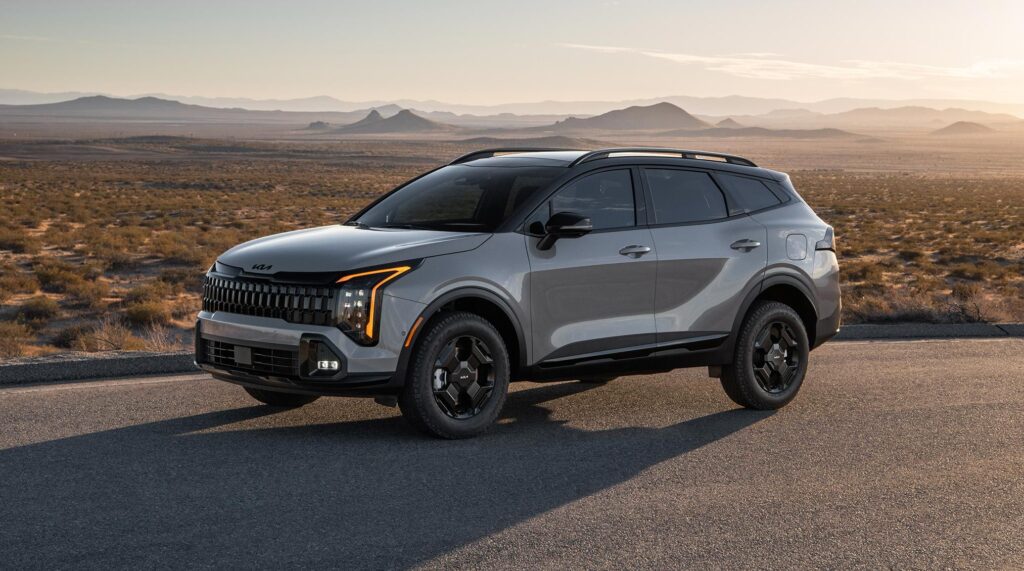
How much does a Kia Sportage weigh? The answer depends on the model year, engine, drivetrain, trim level, and country where the vehicle is sold.
The Kia Sportage is one of the most popular compact SUVs, combining everyday practicality with comfortable driving dynamics and a choice of petrol, diesel, hybrid, and plug-in hybrid powertrains in different markets.
However, understanding the Kia Sportage weight involves more than finding a single number. We also need to consider curb weight, gross vehicle weight rating (GVWR), payload capacity, and towing restrictions.
For example, a petrol Sportage with front-wheel drive is generally lighter than an all-wheel-drive version. Meanwhile, a plug-in hybrid carries additional battery components that increase its overall weight.
In this comprehensive guide, we'll explore the Kia Sportage's weight specifications, compare different powertrains, explain important weight-related terms, and show how these figures affect everyday driving.
Content in this publication
- How Much Does a Kia Sportage Weigh?
- Understanding Kia Sportage Weight Terminology
- 2026 Kia Sportage Curb Weight by Model
- Kia Sportage Gross Vehicle Weight Rating
- Kia Sportage Weight in Australia
- Kia Sportage Kerb Weight in the UK
- 2025 vs 2026 Kia Sportage Weight
- What Factors Affect Kia Sportage Weight?
- How Does Kia Sportage Weight Affect Performance?
- How Much Weight Can a Kia Sportage Carry?
- Kia Sportage Weight for Family Road Trips
- Kia Sportage Weight and Towing Capacity
- Does Kia Sportage Weight Affect Tyre Pressure?
- How Much Weight Can the Kia Sportage Roof Carry?
- How to Find Your Kia Sportage's Exact Weight
- How to Weigh a Kia Sportage Correctly
- Is the Kia Sportage a Heavy SUV?
- Which Kia Sportage Version Is the Lightest?
- Which Kia Sportage Version Is the Heaviest?
- Tips for Managing Kia Sportage Weight
- Kia Sportage Weight: Key Takeaways
- Frequently Asked Questions
- Conclusion
How Much Does a Kia Sportage Weigh?
The 2026 Kia Sportage weighs approximately 3,434 to 4,307 pounds (1,558 to 1,954 kg) in its US-market configurations, depending on the powertrain, drivetrain, equipment, and trim level.
Petrol versions are generally the lightest, followed by conventional hybrids. Plug-in hybrid models are typically the heaviest.
Kia Sportage Weight by Powertrain
The following table summarizes the manufacturer's published curb-weight ranges for the 2026 US-market Sportage.
| Kia Sportage Version | Curb Weight (lbs) | Approx. Weight (kg) |
|---|---|---|
| 2.5L Petrol FWD | 3,434–3,697 | 1,558–1,677 |
| 2.5L Petrol AWD | 3,603–3,827 | 1,634–1,736 |
| 1.6L Hybrid FWD | 3,598–3,831 | 1,632–1,738 |
| 1.6L Hybrid AWD | 3,803–3,994 | 1,725–1,812 |
| 1.6L Plug-in Hybrid AWD | 4,215–4,307 | 1,912–1,954 |
These are manufacturer-published minimum and maximum figures rather than the exact weights of every individual trim.
Equipment packages and optional features can change the final vehicle weight.
Quick takeaway: A typical Kia Sportage weighs somewhere between 1.5 and 2.0 metric tonnes, but the exact figure depends heavily on the model.
Understanding Kia Sportage Weight Terminology
Before comparing versions, it's important to distinguish the different measurements used in vehicle specifications.
Manufacturers publish several weight ratings because each serves a different purpose.
What Is Kia Sportage Curb Weight?
Curb weight refers to the weight of a vehicle with its standard operating fluids and fuel but without passengers or cargo.
In general, it includes:
- Engine and transmission
- Chassis and body structure
- Standard equipment
- Engine oil and coolant
- Fuel
- Installed drivetrain components
Passengers, luggage, and separately carried equipment are not included.
The exact definition used in published specifications may differ slightly between markets.
For buyers, curb weight is useful when comparing different engines or evaluating how a vehicle's mass might influence acceleration and fuel consumption.
What Is Kia Sportage Kerb Weight?
Kerb weight is the term commonly used in the United Kingdom, Australia, and several other markets.
It describes essentially the same concept as curb weight, although measurement standards can differ.
For example, some European kerb-weight standards include an allowance for a driver and luggage, while other definitions exclude occupants.
This is why we should avoid comparing figures from different countries without checking how they were calculated.
What Is Gross Vehicle Weight Rating?
The Gross Vehicle Weight Rating (GVWR) is the maximum permitted weight of the fully loaded vehicle.
It includes the vehicle itself, passengers, luggage, accessories, and other loads carried by the SUV.
Unlike curb weight, GVWR is a safety-related limit established by the manufacturer.
Exceeding this limit can affect braking performance, suspension components, tyres, and vehicle stability.
What Is Gross Vehicle Weight?
Gross vehicle weight, or GVW, is the actual weight of the vehicle at a particular moment, including everything on board.
This number changes depending on the amount of fuel, passengers, and cargo.
For example, the same Sportage could have a relatively low gross vehicle weight when driven by one person and a much higher weight when carrying five occupants and luggage.
The actual GVW must remain within the vehicle's GVWR.
What Is Payload Capacity?
Payload capacity is the amount of additional weight the vehicle can safely carry.
This includes people, cargo, installed accessories, and any trailer tongue weight transferred to the vehicle.
A basic calculation is:
Payload Capacity = GVWR − Actual Vehicle Weight Before Loading
For accurate loading decisions, the vehicle's tyre-and-loading label should take priority over calculations based on general published curb-weight ranges.
2026 Kia Sportage Curb Weight by Model
The 2026 Kia Sportage is available in several configurations in the United States.
Although the exterior design and passenger compartment are similar, mechanical differences can produce noticeable weight variations.
Kia Sportage 2.5L Petrol Weight
The non-hybrid Sportage sold in the United States uses a 2.5-litre four-cylinder petrol engine.
It is available with front-wheel drive or all-wheel drive, depending on the trim.
| Drivetrain | Minimum Curb Weight | Maximum Curb Weight |
|---|---|---|
| Front-wheel drive | 3,434 lbs | 3,697 lbs |
| All-wheel drive | 3,603 lbs | 3,827 lbs |
The lightest published configuration weighs approximately 1,558 kg.
Choosing AWD adds mechanical components, including equipment for delivering power to the rear wheels.
As a result, comparable AWD versions generally weigh more than their FWD equivalents.
This difference is worth considering if we primarily drive in urban conditions and rarely need additional traction.
Kia Sportage Hybrid Weight
The Kia Sportage Hybrid combines a turbocharged petrol engine with an electric motor and high-voltage battery.
The system is designed to improve efficiency while retaining the practicality of a conventional SUV.
Its published 2026 US curb-weight ranges are:
- Hybrid FWD: 3,598–3,831 lbs
- Hybrid AWD: 3,803–3,994 lbs
The additional electrical components increase vehicle mass, although the hybrid system can reduce fuel consumption significantly compared with a conventional petrol powertrain.
A heavier vehicle does not automatically consume more fuel if its powertrain operates more efficiently.
This is especially relevant during city driving, where regenerative braking and electric assistance can help recover or reduce energy consumption.
Kia Sportage Plug-in Hybrid Weight
The Sportage Plug-in Hybrid, often called the Sportage PHEV, is generally the heaviest version.
Unlike a conventional hybrid, it uses a larger rechargeable battery designed to provide meaningful electric-only driving capability.
For the 2026 US model, Kia publishes the following weights:
| Specification | Sportage PHEV AWD |
|---|---|
| Minimum curb weight | 4,215 lbs |
| Maximum curb weight | 4,307 lbs |
| Approximate metric range | 1,912–1,954 kg |
| Gross vehicle weight rating | 5,379 lbs |
The PHEV's larger battery and related electrical components contribute to its additional weight.
However, when regularly charged, the vehicle can complete some journeys using electricity rather than petrol.
For drivers with convenient home charging and predictable commuting distances, this can provide an efficiency benefit despite the higher curb weight.
Kia Sportage Gross Vehicle Weight Rating
While curb weight tells us how much the vehicle weighs before loading, GVWR establishes how heavy it is allowed to become.
The 2026 US-market models have different ratings depending on the powertrain.
| Kia Sportage Version | GVWR (lbs) | Approx. GVWR (kg) |
|---|---|---|
| Petrol FWD | 4,740 | 2,150 |
| Petrol AWD | 4,872 | 2,210 |
| Hybrid FWD | 4,982 | 2,260 |
| Hybrid AWD | 5,092 | 2,310 |
| Plug-in Hybrid AWD | 5,379 | 2,440 |
We can see that the plug-in hybrid has the highest gross vehicle weight rating.
However, a higher GVWR does not necessarily mean a higher usable payload.
Because the PHEV itself is heavier, some of its additional allowable gross weight accommodates the vehicle's own components.
When purchasing an SUV for carrying passengers and cargo, the individual payload rating is more useful than GVWR alone.
Kia Sportage Weight in Australia
Australian-market Kia Sportage models differ from those sold in the United States.
The engine selection includes petrol, diesel, and hybrid configurations, with weight specifications published in kilograms.
For the 2026 Australian model range, the kerb weights include:
| Kia Sportage Engine | Kerb Weight (kg) |
|---|---|
| 2.0L Petrol FWD | 1,610 |
| 1.6L Turbo Petrol AWD | 1,715 |
| 2.0L Turbo Diesel AWD | 1,764 |
| 1.6L Hybrid FWD | 1,733 |
| 1.6L Hybrid AWD | 1,793 |
These figures illustrate how much the engine and drivetrain can influence the weight of an otherwise similarly sized SUV.
Australian specifications should not be substituted for US or UK specifications, as vehicle configurations and measurement conventions differ.
Kia Sportage Diesel Weight
The Australian Sportage with the 2.0-litre turbo-diesel engine has a published kerb weight of approximately 1,764 kg for the 2026 specification.
Diesel powertrains can be comparatively heavy because of their engine construction, emissions equipment, and associated drivetrain components.
However, diesel engines also offer strong torque characteristics that can be useful for long-distance driving and towing.
Whether a diesel Sportage is appropriate depends on how frequently we travel long distances, the availability of fuel, and local operating requirements.
Kia Sportage Hybrid Weight in Australia
The Australian hybrid comes in both front-wheel-drive and all-wheel-drive configurations.
The front-wheel-drive hybrid has a kerb weight of approximately 1,733 kg, while the AWD hybrid weighs approximately 1,793 kg.
That represents a difference of around 60 kg between the published configurations.
Although relatively modest compared with the vehicle's overall mass, the added weight can influence efficiency and handling.
In return, AWD can provide additional traction when conditions require it.
Kia Sportage Kerb Weight in the UK
The Kia Sportage sold in the United Kingdom has its own engine lineup and specifications.
UK buyers may encounter petrol, hybrid, and plug-in hybrid models, depending on the model year.
The UK-market Sportage also differs dimensionally from some versions sold in other regions.
Consequently, we should not assume that an American Sportage Hybrid and a British Sportage Hybrid have identical weights.
Why UK Kerb Weight Can Differ
Several factors explain these differences:
- Different engine specifications
- Regional equipment requirements
- Left-hand-drive versus right-hand-drive components
- Different emissions equipment
- Variations in wheelbase and body dimensions
- Standard and optional equipment
- Different weight measurement standards
Older UK Sportage technical specifications, for example, listed kerb weights of approximately 1,649 kg for a front-wheel-drive hybrid, 1,715 kg for an AWD hybrid, and 1,905 kg for an AWD plug-in hybrid.
Those figures relate to earlier UK specifications and should not be treated as the definitive weights of the updated 2026 range.
For a new UK Sportage, we should confirm the weight for the exact engine, transmission, and trim combination.
2025 vs 2026 Kia Sportage Weight
Vehicle weight can change between model years even when the basic platform remains similar.
For example, Kia's published US specifications show slightly different curb weights for the 2025 and 2026 petrol models.
| Version | 2025 Curb Weight | 2026 Curb Weight |
|---|---|---|
| Petrol FWD | 3,396–3,661 lbs | 3,434–3,697 lbs |
| Petrol AWD, standard range | 3,566–3,809 lbs | 3,603–3,827 lbs |
The 2025 Sportage X-Pro versions had their own published AWD weight range, so they should not be assumed to match every other AWD configuration.
You may be interested in reading How to Reset the Oil Light on a Kia Sportage
The changes between model years are not enormous, but they demonstrate why relying on a generic model-name weight can be misleading.
Revised equipment, design changes, and model-year specifications can all affect the final figure.
For used Sportage buyers, checking the exact model year is particularly important.
What Factors Affect Kia Sportage Weight?
Several mechanical and equipment choices influence the overall weight of a Kia Sportage.
Understanding them helps explain why two vehicles that look almost identical might have different curb weights.
1. Engine Type
The engine is one of the most important factors.
Different engines require different supporting systems, cooling equipment, and transmissions.
Diesel engines may be heavier than similarly sized petrol engines, although this is not a universal rule.
Hybrid models add electric motors and battery systems, while plug-in hybrids generally have larger batteries and charging components.
2. Front-Wheel Drive vs All-Wheel Drive
Front-wheel-drive vehicles typically use fewer drivetrain components.
AWD versions require additional mechanical equipment to transfer power to the rear wheels.
This can include:
- A propeller shaft
- Rear differential components
- Additional drive shafts
- Couplings and associated hardware
These parts contribute to the overall vehicle mass.
If most of our driving takes place on paved roads in mild conditions, FWD may offer adequate traction with less weight.
AWD can be more appealing for snow, slippery roads, or other demanding conditions, although it does not replace suitable tyres.
3. Hybrid Battery Size
Battery size plays an especially important role in electrified vehicles.
A conventional hybrid uses a relatively small battery that supports the petrol engine and stores recovered braking energy.
A plug-in hybrid requires a larger battery to deliver a longer electric-only range.
Additional battery capacity usually increases mass.
This is a major reason why the Sportage PHEV weighs more than the conventional hybrid.
4. Trim Level and Optional Equipment
Higher trim levels often include additional comfort and convenience features.
Examples include panoramic sunroofs, powered seats, premium sound systems, larger wheels, and extra electronic equipment.
Individually, these items may not add enormous amounts of weight.
Together, however, they can create a meaningful difference between the lightest and heaviest configurations.
This explains why manufacturers often publish a curb-weight range rather than a single figure.
5. Wheels, Tyres, and Accessories
Larger wheels can change the vehicle's unsprung mass, although the final difference depends on wheel construction and tyre selection.
Accessories also matter.
Roof racks, tow bars, protective equipment, and aftermarket components increase the actual weight of the vehicle.
Some additions are relatively light, while others can consume a noticeable portion of the available payload.
How Does Kia Sportage Weight Affect Performance?
Vehicle mass affects several aspects of driving, but the relationship is not always straightforward.
A heavier Sportage may have more powerful propulsion systems or different suspension tuning that offset some disadvantages.
Acceleration and Power Delivery
All else being equal, a heavier vehicle requires more energy to accelerate.
However, we should compare weight alongside horsepower, torque, gearing, and drivetrain efficiency.
A Sportage Hybrid may weigh more than a basic petrol model while still providing strong low-speed acceleration because of electric motor assistance.
This means curb weight alone cannot tell us which Sportage will feel faster.
Braking Performance
Bringing a heavier vehicle to a stop requires managing more kinetic energy at the same speed.
Braking performance therefore depends on vehicle mass, tyres, brake components, road conditions, and the effectiveness of the braking system.
When a Sportage is heavily loaded, stopping distances can increase.
Maintaining appropriate following distances becomes particularly important when carrying passengers, luggage, or towing a trailer.
Cornering and Handling
Mass and its distribution influence how a vehicle behaves through corners.
Heavier vehicles can experience greater demands on their tyres and suspension during rapid changes of direction.
However, suspension geometry, centre of gravity, tyre quality, and electronic stability systems also matter.
A well-engineered heavier SUV can still feel stable and composed.
Fuel Consumption
Vehicle weight contributes to fuel consumption because additional energy is required for acceleration and climbing hills.
The effect is most noticeable in stop-start conditions and on routes with frequent elevation changes.
At steady motorway speeds, aerodynamic drag is also an important factor.
Hybrid systems can offset some of the disadvantages associated with additional weight through electric assistance and regenerative braking.
Consequently, we should compare official and real-world fuel consumption rather than assume that the lightest version will always be the most economical.
How Much Weight Can a Kia Sportage Carry?
The amount of weight a Kia Sportage can carry depends on its payload rating.
Payload is different from towing capacity and cargo-space volume.
A vehicle can have a large boot without necessarily having a high payload allowance.
How to Calculate Sportage Payload Capacity
We can estimate the theoretical carrying capacity by subtracting curb weight from GVWR.
Consider a 2026 US-market petrol FWD Sportage at the upper end of its published curb-weight range.
| Measurement | Weight |
|---|---|
| Gross vehicle weight rating | 4,740 lbs |
| Example curb weight | 3,697 lbs |
| Calculated difference | 1,043 lbs |
This leaves a calculated 1,043 pounds, or approximately 473 kg, between the example vehicle weight and the maximum gross vehicle weight rating.
However, this is only an illustrative calculation.
Actual vehicle capacity can differ because of vehicle-specific equipment, accessories, and the curb-weight definition used.
For the precise permissible occupant-and-cargo load, always check the tyre-and-loading information label on the vehicle.
Does Passenger Weight Count as Payload?
Yes.
Passenger weight counts toward the available vehicle capacity.
Suppose we are carrying four adults with a combined weight of 650 pounds.
We also plan to load 200 pounds of luggage.
Our total passenger-and-luggage load would be:
650 + 200 = 850 pounds
If the vehicle-specific capacity label allows 1,043 pounds, that would leave 193 pounds before considering any additional equipment or trailer tongue weight.
This is why payload becomes particularly important during family holidays.
Kia Sportage Weight for Family Road Trips
The Sportage offers useful passenger space and a practical luggage compartment, making it suitable for travelling with family or friends.
However, loading the vehicle safely requires more than checking whether everything fits inside.
Let's consider a hypothetical trip.
| Item | Weight |
|---|---|
| Driver | 80 kg |
| Front passenger | 70 kg |
| Three rear passengers | 180 kg |
| Suitcases and luggage | 80 kg |
| Additional equipment | 20 kg |
| Total added weight | 430 kg |
In this example, the passengers and cargo add 430 kg to the vehicle.
That may be within the available capacity of some Sportage configurations, but it must be checked against the exact vehicle's weight limits.
We should also consider how the load is distributed.
Heavy items are generally best positioned low in the luggage compartment and secured against movement.
Loose objects can become dangerous during sudden braking.
Kia Sportage Weight and Towing Capacity
Vehicle weight and towing capability are closely related, but they are not interchangeable.
A heavier vehicle does not automatically have a higher towing capacity.
Manufacturers also consider engine performance, transmission durability, cooling systems, braking capability, and chassis design.
2026 Kia Sportage Towing Capacity in the USA
For the 2026 US-market Sportage, Kia publishes the following towing ratings:
| Powertrain | Braked Trailer Rating |
|---|---|
| 2.5L Petrol | 2,500 lbs |
| 1.6L Hybrid | 2,000 lbs |
| 1.6L Plug-in Hybrid | 2,000 lbs |
These ratings are for appropriately equipped vehicles and trailers fitted with the required braking systems.
The published unbraked trailer rating is 1,653 pounds, although the applicable safe limit also depends on trailer equipment and legal requirements.
Why Towing Capacity Differs Between Countries
Towing ratings can differ between the United States, the United Kingdom, and Australia.
The 2026 Australian-market Sportage, for example, has published braked towing capacities of up to 1,900 kg for certain diesel and hybrid versions.
Those figures should not be applied to American Sportage models.
Different regulations, testing practices, and mechanical specifications can produce different ratings.
When towing, we should also check the maximum permissible combination weight, where specified, rather than looking only at the trailer's weight.
Trailer Tongue Weight Matters
Trailer tongue weight, sometimes called towball download, is the downward force the trailer applies to the towing connection.
It counts toward the load carried by the vehicle.
You may be interested in readingHow to Reset the Oil Light on a Kia SportageYou may be interested in reading
Kia Sportage vs Mazda CX-5: Which Compact SUV Deserves Your Attention?Therefore, a Sportage may be within its trailer towing limit but still exceed its vehicle payload or rear axle rating if heavily loaded.
In the US, Kia lists a maximum permissible static vertical coupling load of 220 pounds for the 2026 Sportage configurations covered here.
Other markets may specify different towball limits.
Does Kia Sportage Weight Affect Tyre Pressure?
Yes, vehicle loading influences tyre operating conditions.
Tyres must support the weight placed on each axle while maintaining proper contact with the road.
Driving with incorrect tyre pressure can affect handling, braking, and tyre wear.
A fully loaded Sportage places more demand on its tyres than one carrying only a driver.
Some vehicles specify different tyre pressures for normal and heavily loaded conditions.
We should always follow the pressure guidance for the exact tyre size and loading condition shown on the vehicle label or in the owner's manual.
We should not increase tyre pressure arbitrarily based only on how heavy the vehicle feels.
The tyre's load capacity must also be suitable for the vehicle.
How Much Weight Can the Kia Sportage Roof Carry?
Roof-loading capacity is different from the overall vehicle payload.
The maximum permitted roof load depends on the vehicle, roof equipment, and fitted roof-rack system.
We should check both the manufacturer's vehicle roof-load limit and the rack manufacturer's rating.
The lower permitted value governs.
Roof cargo can include:
- Roof boxes
- Bicycles
- Camping equipment
- Ski and snowboard carriers
- Other secured travel accessories
When calculating the roof load, we must include the weight of the roof bars and any attached carriers, not just the items inside a roof box.
Roof-mounted equipment can also raise the vehicle's centre of gravity.
This may affect cornering and crosswind stability.
Roof loads continue to count toward the vehicle's overall weight limits.
How to Find Your Kia Sportage's Exact Weight
Because Kia Sportage weights vary across markets and configurations, identifying the precise specifications of our vehicle is essential.
Step 1: Identify the Model Year
Start by confirming the Sportage's model year.
Vehicles registered during the same calendar year may belong to different model years.
A 2025 Sportage and a 2026 Sportage may have different published curb weights and GVWR figures.
Step 2: Identify the Engine and Drivetrain
Determine whether the vehicle is petrol, diesel, hybrid, or plug-in hybrid.
Next, establish whether it uses FWD or AWD.
These are among the most important variables when identifying weight specifications.
Step 3: Check the Vehicle Labels
On US-market Sportage models, the driver's door opening contains important vehicle information labels.
The certification label identifies the gross vehicle weight rating and axle weight ratings.
The tyre-and-loading label provides the maximum combined weight of occupants and cargo.
These labels are more useful for safe loading than a general weight figure from an online specifications table.
Step 4: Review the Owner's Manual
The owner's manual contains additional information about weight ratings, loading requirements, and towing restrictions.
We should use the documentation corresponding to the correct model year and market.
Step 5: Weigh the Vehicle if Necessary
If we need the actual weight rather than a manufacturer's specification, a certified vehicle scale is the most reliable option.
This can be especially useful when the Sportage has aftermarket accessories or frequently carries heavy equipment.
How to Weigh a Kia Sportage Correctly
Weighing a vehicle is relatively straightforward when an appropriate public or commercial vehicle scale is available.
For an accurate result, we should first decide what we want to measure.
If our goal is to estimate the vehicle's empty operating weight, we should remove passengers and cargo and document the fuel level.
If our goal is to check safe loading, we should weigh the vehicle in the condition in which it will travel.
That includes passengers, luggage, accessories, and any connected trailer tongue load.
Where possible, weighing the front and rear axles separately can help determine whether either axle is overloaded.
It's possible to remain below the overall GVWR while exceeding an individual axle rating.
This is especially important when carrying heavy items toward the rear of the vehicle.
Is the Kia Sportage a Heavy SUV?
The Kia Sportage falls within the expected weight range for a modern compact SUV, although hybrid and plug-in hybrid versions can be noticeably heavier.
The vehicle combines substantial passenger space, modern safety equipment, and a relatively versatile body design.
Compared with a smaller hatchback, the Sportage generally carries additional mass because of its body dimensions, chassis requirements, and available AWD components.
However, the weight of a vehicle should not be considered independently of its design.
Powertrain efficiency, braking hardware, suspension calibration, and structural engineering all affect how well the SUV performs.
For everyday driving, the Sportage's weight is not necessarily a disadvantage.
We should evaluate it alongside fuel economy, ride comfort, driving dynamics, and practical requirements.
Which Kia Sportage Version Is the Lightest?
Among the 2026 US-market versions covered in this guide, the 2.5-litre petrol FWD model has the lowest published minimum curb weight.
At 3,434 pounds, or approximately 1,558 kg, it is considerably lighter than the PHEV.
If minimizing vehicle mass is our main priority, a lower-specification petrol FWD model is generally the starting point.
However, the lightest version is not necessarily the best choice for every driver.
A hybrid may deliver better fuel efficiency, while AWD may offer additional traction in slippery conditions.
Similarly, a plug-in hybrid can reduce petrol usage for drivers who regularly charge the battery.
The ideal configuration depends on our priorities rather than weight alone.
Which Kia Sportage Version Is the Heaviest?
The 2026 US-market Sportage Plug-in Hybrid AWD has the highest published curb-weight range among the versions compared here.
Its weight reaches approximately 4,307 pounds, equivalent to 1,954 kg.
Much of the additional mass comes from its electrified powertrain and larger battery system.
Nevertheless, this higher weight is part of the trade-off required to provide extended electric driving capability while retaining a petrol engine.
For drivers planning to buy a Sportage PHEV, it is worth considering home charging availability, typical trip distances, fuel costs, and payload requirements.
Tips for Managing Kia Sportage Weight
We can improve safety and practicality by being mindful of how the Sportage is loaded.
A few good habits make a significant difference.
- Check the payload label: Use the vehicle-specific maximum occupant-and-cargo rating.
- Remove unnecessary items: Avoid carrying heavy equipment that we rarely use.
- Pack heavy items low: This helps reduce unnecessary changes to the vehicle's centre of gravity.
- Secure luggage: Prevent heavy objects from moving during braking.
- Check tyre pressures: Follow the manufacturer's guidance for the vehicle's load.
- Respect towing restrictions: Account for trailer tongue weight and vehicle combination limits.
- Avoid exceeding axle limits: Total vehicle weight is not the only safety restriction.
These practices are particularly important when preparing for long journeys.
Kia Sportage Weight: Key Takeaways
The most important figures depend on which Sportage we own or plan to purchase.
For the 2026 US model, the published curb-weight range extends from 3,434 pounds for the lightest petrol configuration to 4,307 pounds for the heaviest plug-in hybrid configuration.
Hybrid models sit between those extremes, although specific ranges overlap because of drivetrain and equipment differences.
Australian and UK models have different specifications, so their weight figures cannot automatically be compared with American versions.
Most importantly, we should remember that curb weight, GVWR, and payload describe different things.
Curb weight tells us how much the vehicle weighs before loading.
GVWR establishes the maximum permitted loaded weight.
Payload tells us how much additional weight the vehicle can carry.
Understanding all three provides a much more useful picture of the Sportage's capabilities.
Frequently Asked Questions
1. How much does a Kia Sportage weigh in kg?
The 2026 US-market Kia Sportage weighs approximately 1,558 to 1,954 kg, depending on engine, drivetrain, equipment, and trim. Australian and UK models have different specifications. For the exact figure, we should consult the documentation for the relevant model year and market.
2. How much does a Kia Sportage Hybrid weigh?
The 2026 US-market Kia Sportage Hybrid has a published curb-weight range of 3,598 to 3,994 pounds, or approximately 1,632 to 1,812 kg, across its FWD and AWD configurations. The AWD versions generally weigh more because of their additional drivetrain components.
3. Is the Kia Sportage Plug-in Hybrid heavier than the petrol version?
Yes. The 2026 US-market Sportage PHEV weighs between 4,215 and 4,307 pounds, making it heavier than the conventional petrol versions. The larger high-voltage battery and additional electrified components are important reasons for the difference.
4. What is the maximum gross vehicle weight of a Kia Sportage?
For the 2026 US-market Sportage, GVWR ranges from 4,740 pounds for petrol FWD models to 5,379 pounds for PHEV AWD models. These figures represent the maximum permitted fully loaded vehicle weight and should not be confused with curb weight or payload capacity.
5. Does the weight of a Kia Sportage affect towing capacity?
Weight is one of several factors related to towing performance, but a heavier Sportage does not automatically have a higher towing rating. Engine specifications, transmission design, cooling, brakes, and manufacturer limits also matter. We should always follow the towing rating for the exact model and market.
Conclusion
Understanding Kia Sportage weight helps us make better decisions about vehicle selection, everyday driving, family travel, and towing.
The Sportage is available with several powertrains, and each configuration offers a different balance of weight, efficiency, traction, and practicality.
For the 2026 US-market range, petrol FWD versions are generally the lightest, conventional hybrids occupy the middle of the lineup, and plug-in hybrids carry the most weight.
However, we should never rely on curb weight alone when determining how much cargo a vehicle can safely carry.
The gross vehicle weight rating, payload label, axle ratings, and towing restrictions are equally important.
By checking these specifications and understanding what they mean, we can use the Kia Sportage more safely, efficiently, and confidently—whether we're commuting to work, travelling with family, or preparing for a long road trip.
You may be interested in readingHow to Reset the Oil Light on a Kia SportageYou may be interested in reading
Kia Sportage vs Mazda CX-5: Which Compact SUV Deserves Your Attention?You may be interested in reading
 Kia Sportage vs MG HS Comparison: Which SUV Reigns Supreme in 2025?
If you want to know other articles similar to Kia Sportage Weight Guide: Curb, Kerb & GVWR you can visit the category Blog.
Toyota RAV4 Dashboard Warning Lights and Symbols Explained

Toyota RAV4 LE vs XLE: Which Trim Level Is Better?
Kia Sportage Boot Space: Size, Litres and Dimensions
Top 10 Toyota Yaris Cross Alternatives: Best Small SUVs to Consider in 2026

Toyota RAV4 Reliability: Is the RAV4 a Dependable SUV? Common Problems, Best Years, and Lifespan

Does Mercedes A-Class Have a Renault Engine?
Leave a Reply
More content of your interest