
Ford Ka Engine Size: Complete Guide to Every Generation

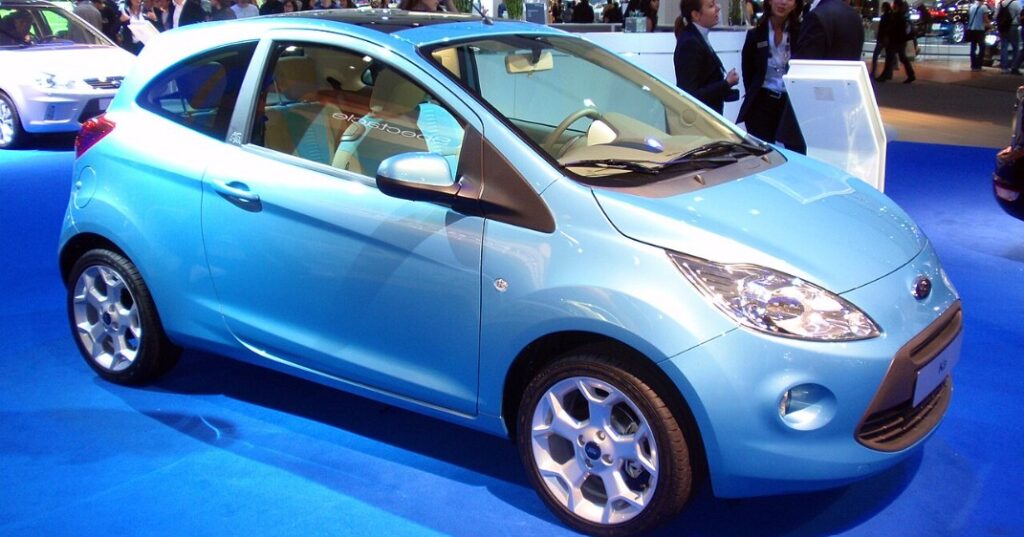
The Ford Ka engine size question sounds simple until we look beneath the bonnet. Over its long life, the Ka was sold in several forms, built on different platforms, and powered by a surprisingly varied collection of petrol and diesel engines.
Depending on the model year and market, a Ford Ka may have a 1.2-litre, 1.3-litre, 1.5-litre, or 1.6-litre engine. Some early cars used Ford’s tough but old-fashioned Endura-E unit, while later models adopted more modern Duratec, Duratorq, Fire, and Ti-VCT technology.
The answer, therefore, depends on which Ka we are discussing:
- The original three-door Ford Ka
- The sporty SportKa
- The second-generation European Ka
- The larger five-door Ford Ka+
- Market-specific versions sold outside Europe
In this guide, we will break down the Ford Ka engine range by generation, explain how engine capacity affects performance and fuel economy, and help used-car buyers identify the most suitable version.
Content in this publication
- What Engine Size Does a Ford Ka Have?
- Ford Ka Engine Sizes at a Glance
- First-Generation Ford Ka Engine Size
- Ford SportKa Engine Size
- Ford StreetKa Engine Size
- Second-Generation Ford Ka Engine Size
- Ford Ka 1.2-Litre Petrol Engine
- Ford Ka 1.3-Litre Diesel Engine
- Ford Ka+ Engine Size
- Ford Ka+ 1.2 Ti-VCT Engine
- Facelifted Ford Ka+ Engine Size
- Ford Ka+ 1.5-Litre Diesel Engine
- Does a Bigger Ford Ka Engine Mean Better Performance?
- Which Ford Ka Engine Is Most Economical?
- Which Ford Ka Engine Is Most Reliable?
- How to Find Your Ford Ka Engine Size
- Best Ford Ka Engine for New Drivers
- Best Ford Ka Engine for Motorway Driving
- Best Ford Ka Engine for City Driving
- Common Mistakes When Comparing Ford Ka Engines
- Ford Ka Engine Size Comparison
- Is a 1.2-Litre Engine Too Small for the Ford Ka?
- Should We Buy a Ford Ka Based on Engine Size Alone?
- Conclusion: Which Ford Ka Engine Size Is Best?
- Frequently Asked Questions
What Engine Size Does a Ford Ka Have?
Most Ford Ka models have an engine measuring between 1.2 and 1.3 litres. However, that broad answer does not tell the full story.
The main Ford Ka engine sizes include:
| Ford Ka version | Common engine size | Fuel type |
|---|---|---|
| First-generation Ka | 1.3 litres | Petrol |
| Later first-generation Ka | 1.3 litres | Petrol |
| SportKa | 1.6 litres | Petrol |
| StreetKa | 1.6 litres | Petrol |
| Second-generation Ka | 1.2 litres | Petrol |
| Second-generation Ka diesel | 1.3 litres | Diesel |
| Early Ka+ | 1.2 litres | Petrol |
| Facelifted Ka+ | 1.2 litres | Petrol |
| Ka+ diesel in selected markets | 1.5 litres | Diesel |
The second-generation Ka’s common 1.2-litre petrol engine had an actual displacement of 1,242 cc, while the first Ka’s familiar 1.3-litre petrol unit was approximately 1,299 cc. The Ka+ 1.2 Ti-VCT was another distinct engine rather than simply a recycled version of the second-generation unit.
That distinction matters when ordering parts, comparing insurance, checking road-tax information, or diagnosing mechanical problems.
Ford Ka Engine Sizes at a Glance
Before exploring each generation, here is a quick overview of the most significant choices.
1.2-Litre Petrol
The 1.2-litre petrol engine appeared in the second-generation Ka and the later Ka+, although these cars did not necessarily use the same engine.
It was designed primarily for:
- Urban driving
- Low running costs
- Affordable insurance
- Simple everyday transportation
- Drivers who rarely carried heavy loads
1.3-Litre Petrol
The 1.3-litre petrol engine is strongly associated with the original Ford Ka. It was not especially advanced, quiet, or powerful, but it suited the lightweight hatchback reasonably well.
1.3-Litre Diesel
A 1.3-litre turbodiesel was offered in the second-generation Ka in several European markets. It provided more low-speed torque and better long-distance economy than the petrol model.
1.5-Litre Diesel
Some versions of the later Ford Ka+ were available with a 1.5-litre diesel engine. Availability varied by country, trim level, and production year.
1.6-Litre Petrol
The 1.6-litre engine belonged primarily to the SportKa and StreetKa. It gave these models considerably more personality than the standard 1.3-litre hatchback.
First-Generation Ford Ka Engine Size
The first-generation Ford Ka arrived in Europe in 1996. Its curved body, compact proportions, and cheerful character made it look unlike almost anything else in Ford showrooms.
Underneath the playful exterior, however, the early Ka was relatively conventional.
Early Ford Ka 1.3-Litre Engine
Most early first-generation cars used a 1.3-litre four-cylinder petrol engine. One widely sold version produced approximately 60 horsepower and had an engine displacement close to 1,300 cc. Contemporary specifications list the European Ka 1.3i as a 1.3-litre inline-four with about 59 bhp.
This engine was part of Ford’s older Endura-E family. Its roots stretched back much further than the Ka itself, and it was hardly a masterpiece of refinement.
At idle, it could sound slightly mechanical. At higher revs, it made its presence known like an alarm clock rattling on a bedside table. Yet it also had several practical strengths:
- Straightforward construction
- Affordable servicing
- Readily available replacement parts
- Familiarity among independent mechanics
- Adequate performance in a lightweight vehicle
The engine’s modest output was less of a problem than the figures suggest because the original Ka weighed less than many modern city cars.
Was the 1.3-Litre Ka Slow?
By modern standards, yes. It was not designed for effortless motorway overtaking or rapid acceleration with four occupants aboard.
Still, the original Ka’s sharp steering and small footprint made it feel energetic around town. Speed was not its main trick. Agility was.
It was like a small terrier: not especially powerful, but eager to dart through gaps and change direction quickly.
Later Duratec 1.3-Litre Engine
Ford eventually replaced the older Endura-E unit in many markets with a more modern 1.3-litre Duratec petrol engine.
Although both engines were commonly described as 1.3 litres, they were not identical. The later unit generally offered:
- Better refinement
- Improved emissions performance
- More modern engine management
- Slightly stronger performance
- A smoother everyday driving experience
This is why engine size alone should never be used to identify replacement components. Two Ka models advertised as “1.3” may require different ignition, cooling, timing, filtration, and fuel-system parts.
Ford SportKa Engine Size
The SportKa was the mischievous member of the family. Ford widened the body, revised the suspension, sharpened the styling, and installed a larger engine.
SportKa 1.6-Litre Petrol Engine
The Ford SportKa used a 1.6-litre Duratec petrol engine. Ford’s period brochure described the SportKa as the performance-focused model and highlighted its 1.6-litre Duratec unit, sport-tuned suspension, wider stance, and short-throw gear change.
This was a substantial step up from the standard 1.3-litre Ka.
The extra engine capacity delivered:
- Stronger acceleration
- More useful mid-range torque
- Better overtaking ability
- A more entertaining exhaust note
- Greater confidence on faster roads
The SportKa was not a modern turbocharged hot hatch. Its performance was more honest and mechanical. We pressed the accelerator, the revs rose, and the car gathered speed without electronic theatre.
Is the 1.6-Litre SportKa a Hot Hatch?
It sits somewhere between a warm hatch and a small traditional hot hatch.
Its appeal came from the relationship between the engine, chassis, steering, and compact body rather than from an enormous power figure. The 1.6-litre engine gave the chassis enough energy to become playful without overwhelming the front tyres.
For enthusiasts, this is arguably the most desirable factory Ford Ka engine size.
Ford StreetKa Engine Size
The StreetKa was a two-seat convertible related to the original Ka. Although its styling and body were quite different, it shared the 1.6-litre petrol engine associated with the SportKa.
Why Did the StreetKa Need a Bigger Engine?
A convertible body normally adds weight because additional structural reinforcement is required when the fixed roof disappears.
The larger 1.6-litre engine helped compensate for that weight and gave the StreetKa the relaxed flexibility expected from a lifestyle-oriented roadster.
Even so, the StreetKa was more about sunny-day character than outright speed. Think of it as a small café terrace on wheels rather than a miniature racing car.
Second-Generation Ford Ka Engine Size
The second-generation Ford Ka arrived for the 2008–2009 model period in Europe. Despite wearing familiar Ford styling, it was mechanically related to the Fiat 500 and Fiat Panda architecture.
This change brought a completely different engine range.
Ford Ka 1.2-Litre Petrol Engine
The most common second-generation engine was the 1.2-litre four-cylinder petrol, with an actual displacement of 1,242 cc.
Typical specifications included approximately:
- 69 PS
- 102 Nm of torque
- Five-speed manual transmission
- Front-wheel drive
- Multipoint fuel injection
Published specifications for this version list 1,242 cc, approximately 69 horsepower, and 102 Nm of torque.
How Does the 1.2-Litre Ford Ka Perform?
The 1.2-litre Ka is best suited to urban and suburban use. It starts to feel less enthusiastic when asked to accelerate quickly at motorway speeds, especially with passengers and luggage.
However, that does not make it a poor engine.
Its strengths include:
- Predictable power delivery
- Reasonable fuel economy
- Simple non-turbocharged operation
- Manageable servicing costs
- Sufficient performance for city traffic
The engine rewards drivers who use the gearbox. Allow the revs to fall too low, and it can feel sleepy. Keep it in the appropriate gear, and it becomes much more responsive.
Is the 1.2 Ka Suitable for Motorway Driving?
Yes, but expectations matter.
It can maintain normal motorway speeds, yet overtaking may require planning. On a steep incline, a downshift may be necessary. With several adults aboard, the engine has to work harder.
For occasional motorway journeys, it is acceptable. For frequent high-speed travel, a larger and more powerful car may feel calmer.
Ford Ka 1.3-Litre Diesel Engine
The second-generation Ka was also offered with a 1.3-litre turbodiesel engine in parts of Europe.
Although described as a Ford Ka diesel, the engine was closely connected to the small diesel family used across several Fiat-developed models. The second-generation Ka’s range is widely documented as including a 1.2-litre petrol and a 1.3-litre turbodiesel.
Advantages of the 1.3-Litre Diesel
The diesel engine offered:
- Stronger low-rev pulling power
- Better economy on long journeys
- More relaxed open-road driving
- A longer range between fuel stops
- Easier progress on hills
In simple terms, the diesel had more shove without needing to be revved as hard.
Disadvantages of the Diesel Ka
The diesel is not automatically the best option for every buyer.
Potential drawbacks include:
- Greater mechanical complexity
- Diesel particulate filter concerns on some versions
- Turbocharger-related repair risk
- Costlier fuel-system components
- Reduced suitability for repeated short journeys
- Limited availability in some countries
A diesel city car can be a contradiction. Diesel engines often prefer sustained journeys at operating temperature, while many Ka owners use their cars for short urban trips.
Who Should Buy the Diesel Version?
The 1.3 diesel makes the most sense for someone who regularly travels longer distances and can verify that the vehicle has been maintained properly.
For low annual mileage and mostly short trips, the 1.2 petrol will often be the simpler choice.
Ford Ka+ Engine Size
The Ford Ka+ replaced the European Ka in many markets from 2016. Despite the familiar name, it was a notably different vehicle.
The Ka+ had:
- Five doors
- Five seats
- A more practical interior
- A larger body
- A different platform
- A separate engine family
It was positioned as an affordable small hatchback rather than an ultra-compact three-door city car.
Ford Ka+ 1.2 Ti-VCT Engine
The principal Ka+ engine was a 1.2-litre Ti-VCT petrol unit, sold in more than one power output.
Common European versions produced around:
- 70 PS
- 85 PS
The 85 PS version is documented with a displacement of approximately 1,196 cc, 112 Nm of torque, and a five-speed manual transmission.
Ford brochures also listed 70 PS and 85 PS forms of the 1.2 Ti-VCT engine.
What Does Ti-VCT Mean?
Ti-VCT stands for Twin Independent Variable Camshaft Timing.
In practical language, the system can adjust valve timing to improve the balance between:
- Low-speed response
- Higher-rev performance
- Fuel efficiency
- Emissions
- Everyday drivability
We do not need to understand every internal movement to appreciate the goal. The engine tries to breathe differently depending on what the driver asks it to do.
70 PS vs 85 PS Ka+ Engine
Both versions share the same basic capacity, but their outputs differ.
The 70 PS model is suitable for:
- Short urban journeys
- Learner drivers
- Budget-conscious ownership
- Light passenger loads
The 85 PS model is preferable for:
- Regular motorway use
- Carrying several occupants
- Hillier areas
- Drivers wanting easier acceleration
- Buyers who value flexibility
The stronger version does not transform the Ka+ into a performance car, but it feels less strained when joining faster traffic.
Facelifted Ford Ka+ Engine Size
Ford updated the Ka+ for the 2018 model year, introducing revised styling and the raised Ka+ Active derivative.
The updated range continued to include a small 1.2-litre petrol engine, although specifications and engine details could differ from earlier Ka+ versions depending on market and production date.
Ford’s official European overview presented the refreshed Ka+ and Ka+ Active as part of the 2018 range.
Ford Ka+ Active Engine
The Ka+ Active looked slightly more adventurous thanks to:
- Raised ride height
- Protective body cladding
- Roof rails
- Unique chassis tuning
- SUV-inspired styling details
However, its engine remained focused on economy rather than off-road performance. The word “Active” did not mean four-wheel drive or a large engine.
It was essentially hiking footwear paired with city trousers.
Ford Ka+ 1.5-Litre Diesel Engine
In selected European markets, later Ka+ models could be ordered with a 1.5-litre TDCi diesel engine.
This was the largest-capacity diesel commonly associated with the European Ka+.
Why Choose the 1.5 Diesel?
Compared with the small petrol engine, it offered:
- More torque
- Better long-distance economy
- Easier motorway cruising
- Greater flexibility when fully loaded
- Stronger performance on gradients
Yet the familiar diesel warning still applies: buyers should examine the vehicle’s mileage, service history, emissions equipment, and previous driving pattern.
A neglected diesel can turn apparent fuel savings into an expensive repair bill.
Does a Bigger Ford Ka Engine Mean Better Performance?
Usually, but not always.
Engine size is only one piece of the puzzle. Performance also depends on:
- Power output
- Torque
- Vehicle weight
- Gear ratios
- Engine technology
- Turbocharging
- Emissions tuning
- Throttle response
For example, a newer 1.2-litre engine may feel smoother and more efficient than an older 1.3-litre unit. Meanwhile, the 1.6-litre SportKa is faster not merely because it is larger, but because the entire car was configured for more energetic driving.
We should treat engine capacity as the size of the kitchen, not the quality of the meal. A larger kitchen creates possibilities, but the final result depends on how everything works together.
Which Ford Ka Engine Is Most Economical?
The answer depends heavily on journey type.
Best for Short Urban Trips
A naturally aspirated petrol engine, such as the 1.2-litre unit, is normally the safest all-round choice for repeated short trips.
It warms up relatively quickly and avoids some of the emissions-system complications associated with diesel engines.
Best for Long-Distance Economy
A well-maintained diesel may consume less fuel during sustained high-mileage driving.
However, fuel economy should not be viewed in isolation. We must also consider:
- Purchase price
- Annual mileage
- Insurance
- Road tax
- Maintenance costs
- Diesel-system repair risk
- Local emissions restrictions
A car that saves a little fuel but needs an expensive injector, turbocharger, or emissions-system repair may not be economical overall.
Which Ford Ka Engine Is Most Reliable?
No Ford Ka engine is guaranteed to be trouble-free. Condition and service history often matter more than the badge printed on the boot.
That said, the simpler naturally aspirated petrol engines have an obvious appeal.
Why Petrol Engines Often Suit Used Ka Buyers
They generally avoid:
- Diesel particulate filter concerns
- High-pressure diesel injector costs
- Turbocharger complications on diesel models
- Problems caused by repeated short diesel journeys
The older 1.3-litre Ka engine is mechanically simple, but age-related deterioration is now a major factor. Rubber hoses, cooling components, sensors, seals, wiring, and corrosion may matter more than the engine’s original reputation.
Service History Beats Engine Size
A carefully maintained 1.2-litre Ka with regular oil changes is usually a safer purchase than a neglected 1.3 or 1.6 with missing records.
Before buying, check for:
- Cold-start noises
- Warning lights
- Uneven idle
- Exhaust smoke
- Coolant loss
- Oil leaks
- Overheating history
- Timing-belt or timing-chain requirements
- Correct oil specification
- Evidence of regular servicing
Ford notes that oil requirements vary by model year and engine and advises owners to follow the specification in the vehicle’s manual.
How to Find Your Ford Ka Engine Size
Do not rely solely on an online advertisement. Sellers occasionally enter the wrong engine size, power output, or model year.
You can verify the engine through several sources.
Check the Vehicle Registration Document
The registration certificate may display engine capacity in cubic centimetres.
Examples include:
- 1,242 cc for a 1.2-litre engine
- 1,299 cc for certain 1.3-litre engines
- Approximately 1,596 cc for a 1.6-litre engine
Use the VIN
A Ford dealer or reliable vehicle-data service can decode the vehicle identification number and match it to the original engine specification.
Check the Owner’s Manual
The handbook contains engine-specific fluid capacities, servicing information, fuse details, and operating instructions. Ford provides access to digital owner documentation through its support services.
Look for the Engine Code
The engine code may appear on:
- A label in the engine bay
- The engine block
- Service invoices
- Timing-belt records
- Parts receipts
- Dealer-maintained digital records
Why Is the Engine Code Important?
Two engines can share the same advertised capacity but use different components.
The engine code helps identify the correct:
- Spark plugs
- Oil filter
- Timing components
- Auxiliary belt
- Thermostat
- Clutch
- Sensors
- Gaskets
- Ignition parts
Best Ford Ka Engine for New Drivers
For a new driver, the small petrol engines are usually the most logical choices.
A 1.2-litre or standard 1.3-litre Ka may provide:
- Manageable acceleration
- Lower insurance than a sporty model
- Simple controls
- Easy urban manoeuvrability
- Affordable routine maintenance
The SportKa’s 1.6-litre engine is more entertaining, but insurers may classify it differently because of its performance-oriented specification.
A new driver should compare actual insurance quotations rather than assuming that every Ka is equally cheap to insure.
Best Ford Ka Engine for Motorway Driving
For regular motorway journeys, we would generally favour:
- The more powerful Ka+ 1.2 petrol over its lower-output equivalent
- A well-maintained diesel for genuinely high annual mileage
- The 1.6-litre SportKa if practicality and fuel costs are secondary
The early 1.3 and second-generation 1.2 can travel on motorways, but they may feel noisy and require more gear changes.
The Ka was designed as a small car. Asking it to behave like a long-wheelbase executive saloon is rather like asking a bicycle to impersonate a sofa.
Best Ford Ka Engine for City Driving
The 1.2-litre petrol is arguably the sweet spot for urban use.
It offers enough power for:
- Traffic lights
- Roundabouts
- Parking
- Short commutes
- School runs
- Local shopping trips
It also avoids the mismatch between diesel technology and repeated short journeys.
For drivers covering mostly low-speed urban miles, simplicity can be more valuable than impressive brochure economy.
Common Mistakes When Comparing Ford Ka Engines
Several misunderstandings regularly appear in used-car listings and online discussions.
Mistake 1: Assuming Every 1.3 Engine Is the Same
The original Ka used different 1.3-litre engine designs during its production life. Parts are not automatically interchangeable.
Mistake 2: Confusing the Ka with the Ka+
The Ka+ is larger, has five doors, and uses a different platform and engine range.
Mistake 3: Calling Every Small Engine a Three-Cylinder
Several familiar Ford Ka engines are four-cylinder units. Buyers should check the exact model rather than applying assumptions based on current small-car trends.
Mistake 4: Choosing Diesel for Low Mileage
A diesel engine may return excellent official economy yet remain a poor choice for someone driving only a few short miles each day.
Mistake 5: Buying Only by Engine Capacity
A 1.2-litre car with the higher power output may suit a buyer better than a tired 1.3-litre model. Condition, output, weight, and gearing all matter.
Ford Ka Engine Size Comparison
Here is a practical summary of how the main engines compare.
| Engine | Main strength | Main weakness | Best suited to |
| 1.2 petrol | Simplicity and urban usability | Limited overtaking power | City driving |
| 1.3 petrol | Affordable and familiar | Older design or vehicle age | Budget ownership |
| 1.3 diesel | Torque and economy | Greater complexity | Longer journeys |
| 1.5 diesel | Stronger long-distance ability | Diesel repair risk | High-mileage use |
| 1.6 petrol | Performance and character | Higher fuel and insurance costs | Enthusiastic driving |
Is a 1.2-Litre Engine Too Small for the Ford Ka?
No. In most versions, the 1.2-litre engine is appropriately matched to the car’s intended role.
It becomes less ideal when the vehicle is:
- Frequently fully loaded
- Driven in mountainous regions
- Used for constant motorway travel
- Expected to overtake rapidly
- Carrying heavy equipment
For normal city use, it is sufficient. Small engines are not automatically weak engines; they simply require realistic expectations.
Should We Buy a Ford Ka Based on Engine Size Alone?
Definitely not.
The engine size should help narrow the search, but the final decision should also consider:
- Structural corrosion
- MOT or inspection history
- Cooling-system condition
- Clutch operation
- Gearbox behaviour
- Suspension noises
- Tyre condition
- Warning lights
- Service records
- Evidence of accident repair
On first-generation cars, rust can be more serious than a minor engine fault. On newer Ka+ models, maintenance history and electrical condition may deserve closer attention.
A shiny bonnet can hide an unpleasant story underneath. We should inspect the whole car, not become hypnotised by one number in the advertisement.
Conclusion: Which Ford Ka Engine Size Is Best?
The best Ford Ka engine size depends on how we plan to use the car.
For straightforward urban driving, the 1.2-litre petrol is usually the most sensible option. It is simple, widely available, and well matched to the Ka’s city-car purpose.
The original 1.3-litre petrol remains an affordable choice, although vehicle age, corrosion, and maintenance history now matter enormously.
The 1.3-litre and 1.5-litre diesels make more sense for longer journeys and higher annual mileage, but buyers should carefully inspect the turbocharger, fuel system, emissions equipment, and service records.
For drivers who value personality and performance, the 1.6-litre SportKa is the standout. It turns the humble Ka into something far more playful.
Ultimately, the right Ka is not necessarily the one with the biggest engine. It is the car whose engine, condition, history, and intended use fit together neatly. When those pieces align, even the smallest Ka can feel like the right tool for the job.
Frequently Asked Questions
1. What is the most common Ford Ka engine size?
The most common sizes are 1.2 and 1.3 litres. First-generation Ka models are closely associated with 1.3-litre petrol engines, while the second-generation Ka commonly used a 1.2-litre petrol engine. The later Ka+ was also widely sold with a 1.2-litre petrol unit.
2. Does the Ford Ka have a 1.6-litre engine?
Yes. The Ford SportKa and StreetKa used a 1.6-litre petrol engine. This gave them stronger performance than the standard 1.3-litre first-generation Ka.
3. Is the Ford Ka 1.2 engine good?
The 1.2-litre petrol engine is generally suitable for city driving, short commutes, and ordinary daily use. It is not especially fast, but it offers simple, predictable performance. Service history and mechanical condition remain crucial when buying a used example.
4. Is a diesel Ford Ka better than the petrol model?
A diesel Ka can be better for frequent long journeys because of its torque and fuel economy. A petrol model is usually more suitable for short trips and low annual mileage because it is simpler and less vulnerable to problems associated with underused diesel-emissions systems.
5. How can I confirm my Ford Ka engine size?
Check the registration document, vehicle identification number, owner’s manual, engine code, or dealer service records. Do not rely only on the model badge because cars with similar names may use different engines.
If you want to know other articles similar to Ford Ka Engine Size: Complete Guide to Every Generation you can visit the category Service and Parts.
Kia Sorento Service Reset: How to Reset the Service Light
Kia Sorento Fuel Tank Capacity: Gallons, Litres and Model Differences
Kia Sorento Tyre Pressure: Recommended PSI, Bar and Complete Guide
Kia Sorento Boot Space: How Much Luggage Space Does It Really Have?
Kia Sorento Towing Capacity: How Much Can a Sorento Tow?

Honda Passport Payload Capacity: How Much Weight Can It Carry?
Leave a Reply
More content of your interest