

BMW 8 Series Weight: Complete Guide by Model and Body Style

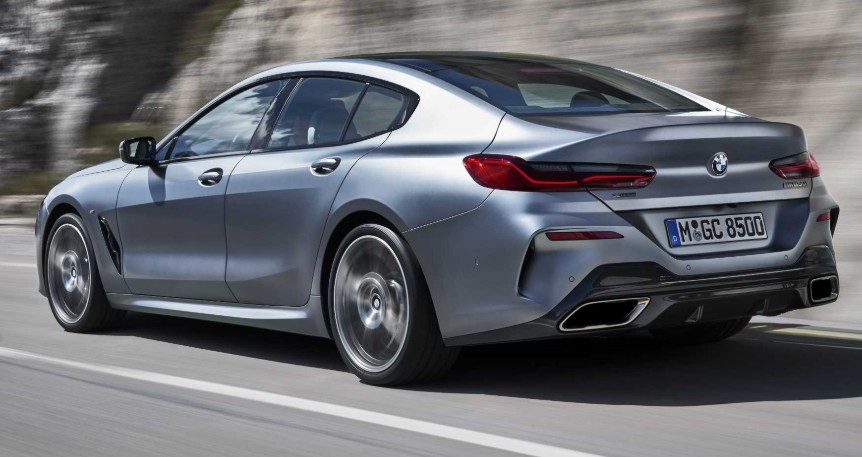
The BMW 8 Series weight is one of those specifications that seems simple until we start comparing the actual cars. An 840i Coupe, an M850i xDrive Convertible, and an M8 Gran Coupe may all wear an 8 Series badge, but they certainly do not put the same number on the scales.
Depending on the model, drivetrain, body style, equipment, and market, a modern BMW 8 Series generally weighs somewhere around 3,900 to 4,800 pounds, or roughly 1,770 to 2,180 kilograms.
That is a substantial spread.
Think of the 8 Series family less like one car wearing different outfits and more like several variations built from the same luxury-performance recipe. Add xDrive, a V8 engine, extra doors, structural reinforcement for a convertible roof, larger brakes, luxury equipment, or high-performance hardware and the kilograms quickly begin piling up.
Yet BMW has spent considerable effort making the 8 Series feel smaller and lighter from behind the steering wheel than its measurements suggest.
So, how much does a BMW 8 Series actually weigh? Which version is the lightest? Why is the Convertible heavier than the Coupe? And does all that mass hurt performance?
Let's break it down.
Content in this publication
- How Much Does a BMW 8 Series Weigh?
- BMW 840i Weight
- BMW 840i xDrive Weight
- BMW M850i xDrive Weight
- BMW 8 Series Coupe Weight
- BMW 8 Series Convertible Weight
- BMW 8 Series Gran Coupe Weight
- BMW M8 Weight
- BMW 8 Series Weight by Engine
- Does xDrive Add Weight to the BMW 8 Series?
- Curb Weight vs Gross Vehicle Weight
- How Does BMW Keep the 8 Series Weight Under Control?
- How Does Weight Affect BMW 8 Series Performance?
- BMW 8 Series Weight Distribution
- Is the BMW 8 Series Too Heavy?
- Which BMW 8 Series Is the Lightest?
- BMW 8 Series Weight Compared With Smaller BMWs
- Does BMW 8 Series Weight Affect Fuel Economy?
- Does Weight Affect Tire Wear?
- Does BMW 8 Series Weight Affect Towing?
- How to Find the Exact Weight of Your BMW 8 Series
- Why BMW 8 Series Weight Figures Differ Online
- Is a Lighter BMW 8 Series Better?
- Best BMW 8 Series for Drivers Concerned About Weight
- BMW 8 Series Weight: What Really Matters
- Conclusion
- Frequently Asked Questions
How Much Does a BMW 8 Series Weigh?
Most recent BMW 8 Series models fall within approximately 3,900–4,800 lb (1,770–2,180 kg) in curb weight.
The lighter end of the spectrum normally belongs to rear-wheel-drive six-cylinder Coupe models, while heavily equipped V8-powered xDrive, Convertible, M8, and ALPINA versions sit toward the upper end.
BMW's recent 8 Series family has included the Coupe, Convertible, and Gran Coupe, with variants such as the 840i, 840i xDrive, M850i xDrive, M8 and, in some markets/model years, the ALPINA B8. BMW's 2025 U.S. documentation, for example, identifies the 840i, 840i xDrive and M850i xDrive across the three principal body configurations, alongside performance derivatives.
A useful general guide looks like this:
| BMW 8 Series Version | Approximate Curb Weight |
|---|---|
| 840i Coupe | 3,900–4,000 lb |
| 840i xDrive Coupe | 4,000–4,150 lb |
| M850i xDrive Coupe | 4,400–4,500 lb |
| 840i Convertible | 4,200–4,350 lb |
| 840i xDrive Convertible | 4,350–4,500 lb |
| M850i xDrive Convertible | 4,600–4,800 lb |
| 840i Gran Coupe | 4,100–4,300 lb |
| 840i xDrive Gran Coupe | 4,250–4,400 lb |
| M850i xDrive Gran Coupe | 4,450–4,650 lb |
| M8 Models | Roughly 4,300–4,600+ lb |
These numbers should be treated as representative rather than universal. BMW specifications can differ between countries, model years, measurement standards, optional equipment and individual configurations.
BMW 8 Series Weight in Pounds
If we're shopping or researching in the United States, pounds are normally the easiest measurement to understand.
A typical 8 Series weighs around two tons or slightly more.
That's hefty, certainly, but hardly surprising. We're talking about a large luxury grand tourer carrying sophisticated suspension hardware, powerful engines, substantial brakes, sound insulation, large wheels, advanced electronics, safety structures and interiors loaded with comfort equipment.
The 8 Series isn't trying to be a featherweight Mazda MX-5.
It's a luxury express train wearing running shoes.
BMW 8 Series Weight in Kilograms
For markets using metric measurements, expect approximately:
1,770 kg to 2,180 kg
depending on specification.
Six-cylinder Coupes generally occupy the lower end, while V8 Convertibles and highly equipped performance models move toward the upper end.
When comparing international specifications, however, we shouldn't blindly compare one number with another. European specifications may use an EU measurement methodology incorporating items such as a driver allowance, while U.S. curb-weight definitions can differ.
That alone can explain apparent discrepancies between two trustworthy specification sheets.
BMW 840i Weight
The 840i is generally the lightest version of the modern 8 Series family.
Its biggest advantage comes under the hood.
Instead of the larger V8 fitted to the M850i, the 840i uses BMW's turbocharged inline-six engine. The six-cylinder powertrain weighs less while still delivering the smooth power delivery that has made BMW straight-six engines famous.
The result is arguably one of the sweetest combinations in the range.
We lose some V8 thunder but gain a car that can feel slightly more balanced and less nose-heavy.
BMW 840i Coupe Weight
A rear-wheel-drive BMW 840i Coupe generally comes in around 3,900 to 4,000 pounds, depending on specification.
That makes it one of the lightest ways into the 8 Series.
Calling a roughly two-ton luxury Coupe "light" sounds a little like calling a small elephant athletic, but context matters.
Compared with the more complicated xDrive and V8 variants, the 840i Coupe genuinely carries less mechanical baggage.
Why the 840i Coupe Is Relatively Light
Several factors help:
- Six-cylinder engine rather than a V8
- Rear-wheel drive on certain versions
- Fixed metal roof
- Two-door body structure
- Less drivetrain hardware than xDrive models
- Extensive use of aluminum and other lightweight materials
The result is an 8 Series that still feels properly luxurious without carrying every possible kilogram of hardware.
BMW 840i xDrive Weight
Adding BMW's xDrive all-wheel-drive system increases weight.
That's inevitable.
An all-wheel-drive system requires additional components such as a transfer case, drive shafts and associated hardware. Individually these pieces may not sound dramatic, but together they increase curb weight.
An 840i xDrive Coupe generally weighs a little over 4,000 pounds, commonly roughly 4,000–4,150 lb depending on year and specification.
Is that additional weight worthwhile?
For drivers frequently dealing with rain, snow, slippery roads or cold winters, probably.
The added traction can be more useful than saving a hundred or so pounds.
BMW M850i xDrive Weight
Now things get considerably heavier—and considerably more entertaining.
The M850i xDrive adds BMW's powerful twin-turbocharged V8 alongside standard all-wheel-drive hardware and performance-oriented equipment.
A typical M850i xDrive Coupe sits around 4,400–4,500 pounds.
That sounds enormous until the accelerator hits the carpet.
With immense torque available almost instantly, the M850i can launch with the urgency of something much lighter.
This is one reason simply comparing power-to-weight figures doesn't tell the full story. Modern all-wheel-drive traction, sophisticated transmissions and turbocharged torque can make a heavy grand tourer feel shockingly quick.
Why Is the M850i Heavier Than the 840i?
The biggest contributors include:
- Larger twin-turbocharged V8
- Standard xDrive system
- Bigger cooling requirements
- Performance brakes
- Additional drivetrain components
- Performance-oriented suspension hardware
- Larger wheels and tires on many configurations
- Extra equipment depending on specification
Each addition is another coin dropped into the weight jar.
Eventually, those coins become hundreds of pounds.
BMW 8 Series Coupe Weight
The Coupe tends to be the lightest body style in equivalent configurations.
That's no accident.
A fixed roof provides excellent structural rigidity without requiring the additional reinforcement needed when engineers cut the roof away to create a Convertible.
With only two doors and a more compact body configuration than the Gran Coupe, the Coupe represents the traditional interpretation of the 8 Series.
Long hood. Low roof. Wide stance.
Grand-touring proportions through and through.
Is the 8 Series Coupe Heavy for a Sports Car?
Yes—but describing the 8 Series purely as a sports car misses the point.
It's better understood as a luxury grand tourer.
Grand touring cars are designed to combine serious performance with long-distance comfort. They need excellent seats, substantial noise insulation, powerful climate control, premium audio equipment, sophisticated suspension and enough refinement to turn a six-hour motorway journey into something remarkably easy.
That comfort has weight.
The magic trick is making us forget about it once the road begins twisting.
BMW 8 Series Convertible Weight
Convertibles are usually the heaviest equivalent versions of the 8 Series.
Why?
Removing a fixed roof takes away an important structural component. Engineers must strengthen other parts of the body to preserve rigidity, handling and crash performance.
Then we need to add the powered folding-roof mechanism itself.
The scales notice.
A six-cylinder BMW 840i Convertible can sit around 4,200–4,500 pounds, depending particularly on whether it uses rear-wheel drive or xDrive.
The V8-powered M850i xDrive Convertible can push toward roughly 4,600–4,800 pounds depending on configuration.
Why Does a Convertible Weigh More Than a Coupe?
The extra mass typically comes from:
- Additional chassis reinforcement
- Folding-roof mechanism
- Electric roof motors
- Structural bracing
- Modified body components
- Additional rollover-protection hardware
Imagine cutting the roof off a cardboard box.
Suddenly the box flexes.
To make it rigid again, we need to strengthen the bottom and sides. Cars are vastly more sophisticated, obviously, but the basic structural principle is similar.
Does the Extra Convertible Weight Matter?
On paper, absolutely.
In normal driving?
Less than we might expect.
BMW compensates with powerful engines, adaptive suspension technology and carefully calibrated chassis systems.
The Convertible may not feel quite as sharp as an equivalent Coupe at the limit, but that's rarely the purpose of buying one.
Lower the roof on a clear evening, hear the engine properly and suddenly that extra weight seems like a very reasonable trade.
BMW 8 Series Gran Coupe Weight
The Gran Coupe stretches the 8 Series formula into a four-door luxury performance car.
Despite its name, it functions more like a sleek fastback-style sports sedan than a conventional two-door coupe.
That longer body and pair of additional doors increase weight.
A typical 840i Gran Coupe can weigh around 4,100–4,300 pounds, while xDrive adds more.
An M850i xDrive Gran Coupe usually lands somewhere in the mid-4,000-pound range.
Why Is the Gran Coupe Heavier?
Compared with the Coupe, we gain:
- Two additional doors
- Longer body
- Longer wheelbase
- More rear-seat space
- Additional structural material
- Larger passenger compartment
But we also gain practicality.
For many owners, that's a fantastic exchange.
A Gran Coupe can carry four adults far more convincingly than the Coupe while retaining most of the low-slung personality that makes the 8 Series attractive.
BMW M8 Weight
The M8 sits at the brutal end of the 8 Series family.
BMW M takes the already rapid 8 Series platform and adds the hardware required for dramatically higher performance.
The result is not necessarily lighter.
Instead, the engineering goal is to make every kilogram work harder.
Depending on body style and model year, BMW M8 variants broadly sit around 4,300 to 4,600 pounds or more.
The Convertible is normally heavier than the Coupe, while the Gran Coupe lands somewhere around the same broad neighborhood depending on configuration.
Why Isn't the M8 Extremely Lightweight?
Because modern performance cars must do far more than simply go fast.
The M8 combines:
- Twin-turbo V8 power
- All-wheel-drive capability
- Large high-performance brakes
- Advanced cooling
- Adaptive chassis technology
- Luxury interior equipment
- Extensive safety equipment
- High-speed stability
- Everyday usability
Building a 600-plus-horsepower luxury car that remains comfortable in traffic and devastatingly fast on an open road involves compromises.
Weight is one of them.
BMW 8 Series Weight by Engine
Engine choice plays a huge role in total mass.
3.0-Liter Inline-Six Models
The 840i's turbocharged six-cylinder configuration is normally the lightest.
That gives the six-cylinder cars advantages beyond fuel consumption.
Less weight over the front axle can influence steering response and chassis balance.
For everyday driving, the 840i may therefore be the hidden gem of the range.
We don't necessarily need maximum horsepower to enjoy a better-balanced grand tourer.
4.4-Liter V8 Models
V8 versions add both weight and character.
And what character.
The additional cylinders, turbocharging hardware, cooling requirements and stronger associated components increase mass, but the payoff is enormous torque and effortless acceleration.
Where the 840i gathers speed smoothly, the M850i attacks the horizon.
Different flavors. Same restaurant.
Does xDrive Add Weight to the BMW 8 Series?
Yes.
BMW xDrive adds mechanical components that a rear-wheel-drive car simply does not need.
Depending on the particular model, the increase can amount to well over 100 pounds.
But focusing exclusively on the penalty ignores the benefits.
xDrive can improve:
- Launch traction
- Wet-weather confidence
- Snow performance
- Corner-exit grip
- High-power stability
For a powerful luxury GT driven year-round, the tradeoff makes considerable sense.
Curb Weight vs Gross Vehicle Weight
Here's where specifications often become confusing.
Curb weight and gross vehicle weight are not interchangeable.
Curb weight essentially describes the car itself in road-ready condition according to the relevant measurement standard.
Gross vehicle weight relates to the maximum allowable total weight when occupants and cargo are added.
That distinction matters.
If one website says an 8 Series weighs 4,300 pounds and another gives a figure above 5,000 pounds, they may not actually disagree.
One could be quoting curb weight while the other is quoting gross vehicle weight.
What Is BMW 8 Series Curb Weight?
For shoppers, curb weight is normally the most useful specification because it allows relatively direct comparisons between vehicles.
When people ask, "How much does a BMW 8 Series weigh?" this is usually the figure they're trying to find.
What Changes the Actual Weight?
Even two cars carrying exactly the same model badge may not weigh precisely the same amount.
Real-world weight can change with:
- Optional equipment
- Wheel size
- Tire choice
- Brake packages
- Audio systems
- Seat equipment
- Driver-assistance technology
- Fuel quantity
- Accessories
- Regional specification
This is why manufacturer specifications sometimes present minimum or approximate weights.
How Does BMW Keep the 8 Series Weight Under Control?
Modern luxury cars are loaded with equipment, so engineers need to save mass wherever practical.
BMW has historically used a mixture of advanced materials across the 8 Series platform, including aluminum and lightweight structural components.
The strategy isn't about turning the 8 Series into a super-light track car.
It's about preventing an already complex luxury GT from becoming unnecessarily heavy.
Lightweight Materials Matter
Saving 5 kg in one location doesn't sound exciting.
Save 5 kg in ten different locations and suddenly we've removed 50 kg.
That's roughly the mass of a small adult.
Engineers obsess over these small reductions because weight affects practically everything a car does:
- Acceleration
- Braking
- Handling
- Fuel economy
- Tire wear
- Suspension response
- Emissions
Weight is the passenger a car carries everywhere, even when nobody is sitting in the passenger seat.
How Does Weight Affect BMW 8 Series Performance?
More weight requires more energy to accelerate.
Physics doesn't negotiate.
Yet modern 8 Series models compensate with powerful turbocharged engines and quick-shifting automatic transmissions.
That's why even heavier V8 variants can produce startling acceleration.
Acceleration
The M850i and M8 demonstrate how power can overwhelm weight.
An engine producing enormous torque, combined with sophisticated all-wheel-drive traction, launches the car aggressively despite its mass.
This is where modern engineering feels almost unfair.
Twenty years ago, a car this heavy would often have felt heavy.
Today, electronic chassis systems, huge tires and tremendous power disguise much of that bulk.
Braking
Weight also affects braking.
A heavier car contains more kinetic energy at a given speed, meaning the braking system must work harder.
That's why performance 8 Series models use substantial brakes.
But tires matter just as much.
Big brakes can provide excellent thermal capacity, but the tire ultimately provides the contact patch connecting braking force to the road.
Handling
Mass is hardest to hide in tight corners.
A heavy car carries momentum, and rapid direction changes expose that reality.
BMW counters this through a low center of gravity, wide track, adaptive suspension and sophisticated chassis tuning.
On flowing roads, the 8 Series can feel beautifully composed.
On extremely tight roads, however, physics reminds us that we're piloting a large GT rather than a tiny sports coupe.
BMW 8 Series Weight Distribution
BMW has long emphasized balanced vehicle dynamics, and weight distribution plays an important part.
Where the mass sits can matter nearly as much as how much mass exists.
A 4,300-pound car with poorly concentrated weight can feel clumsy.
A 4,300-pound car with carefully located components and a low center of gravity can feel remarkably agile.
That's why raw curb weight only tells part of the story.
Is the BMW 8 Series Too Heavy?
For a pure sports car?
Perhaps.
For a luxury grand tourer?
Not really.
The 8 Series has to deliver refinement, crash protection, technology, powerful engines, quiet cruising, premium materials and highway stability.
Those requirements naturally create mass.
The better question is whether the car manages its weight effectively.
And generally, that's where the 8 Series succeeds.
It doesn't become weightless.
It simply persuades us not to think about the number very often.
Which BMW 8 Series Is the Lightest?
Generally, a rear-wheel-drive 840i Coupe represents one of the lightest modern 8 Series configurations.
That makes it particularly interesting for enthusiasts who value balance over maximum horsepower.
It provides plenty of performance without carrying the full mechanical arsenal of the M850i xDrive or M8.
Sometimes less really is more.
Which BMW 8 Series Is the Heaviest?
High-specification Convertibles tend to be among the heaviest versions because they combine large engines, all-wheel-drive systems, luxury equipment and roof-related structural reinforcement.
Certain ALPINA or high-performance configurations can also approach the upper end of the 8 Series weight spectrum.
BMW 8 Series Weight Compared With Smaller BMWs
Move downward through BMW's lineup and the difference becomes obvious.
A smaller BMW performance coupe can weigh hundreds of pounds less.
For perspective, BMW currently lists some modern M2 configurations around the high-3,000-pound range, demonstrating just how much additional vehicle exists in a large luxury grand tourer such as an 8 Series.
But again, buyers aren't choosing between identical products.
An M2 prioritizes compact performance.
An 8 Series prioritizes performance plus luxury, presence and long-distance comfort.
Comparing them purely by kilograms is like comparing hiking boots with tailored dress shoes based only on weight.
They're designed for different jobs.
Does BMW 8 Series Weight Affect Fuel Economy?
Yes.
All else being equal, moving more mass requires more energy.
That means heavier xDrive, V8 and Convertible models generally have a disadvantage compared with lighter six-cylinder configurations.
But engine design, gearing, aerodynamics, tire specification and driving style can influence consumption just as dramatically.
Highway driving reduces the importance of vehicle weight somewhat because aerodynamic drag becomes increasingly important once we're cruising at speed.
Around town, however, repeatedly accelerating a heavy car from a standstill requires energy.
Lots of it.
Does Weight Affect Tire Wear?
It can.
A heavy performance car asks a lot from its tires.
Combine substantial curb weight with high torque, large wheels and enthusiastic driving and tire wear can accelerate surprisingly quickly.
The rear tires—or all four on heavily driven xDrive cars—can have a tough life.
Proper tire pressure therefore matters considerably.
So does alignment.
A poorly aligned 4,500-pound performance car can chew through expensive tires like they're snacks at a road-trip fuel stop.
Does BMW 8 Series Weight Affect Towing?
Vehicle weight alone does not determine towing capacity.
This distinction is important.
A heavy vehicle is not automatically a good tow vehicle.
Towing capability depends on factors including chassis design, cooling capacity, braking, drivetrain configuration, manufacturer approval and hitch ratings.
Always use the official towing specification for the exact market and model rather than calculating towing ability from curb weight.
How to Find the Exact Weight of Your BMW 8 Series
If we need the precise specification rather than an internet estimate, the exact vehicle documentation is the best source.
Check:
- Vehicle identification plate or label
- Owner documentation
- BMW specification sheet
- VIN-based vehicle information
- Registration documentation where applicable
- Certified weighbridge for actual measured weight
A weighbridge is particularly useful if we've added accessories or need the real loaded weight rather than a factory specification.
Why BMW 8 Series Weight Figures Differ Online
Search for BMW 8 Series weight and we'll quickly encounter conflicting numbers.
That doesn't automatically mean somebody is wrong.
Differences often result from:
- Different model years
- Coupe versus Convertible
- Gran Coupe versus Coupe
- RWD versus xDrive
- 840i versus M850i
- M Sport versus full M model
- U.S. versus European specifications
- Curb weight versus EU unladen weight
- Optional equipment
- Gross weight mistakenly presented as curb weight
Before comparing figures, compare the labels attached to those figures.
That's the trick.
Is a Lighter BMW 8 Series Better?
Not necessarily.
If our priority is steering response, efficiency and a slightly more delicate feel, the lighter 840i Coupe makes enormous sense.
But perhaps we live somewhere with snowy winters.
Then xDrive may be worth the added mass.
Maybe we want the glorious V8 soundtrack and enormous torque of an M850i.
Worth another few hundred pounds?
For many enthusiasts, absolutely.
Perhaps we want open-air cruising.
Then the structural weight added by the Convertible becomes irrelevant compared with the pleasure of lowering the roof.
Weight is one ingredient, not the whole recipe.
Best BMW 8 Series for Drivers Concerned About Weight
For buyers who want to minimize mass without abandoning the 8 Series experience, we'd start with the 840i Coupe, particularly in rear-wheel-drive form where available.
It combines:
- Lower weight than V8 variants
- Excellent straight-six refinement
- Strong performance
- Traditional rear-wheel-drive character
- Fixed-roof rigidity
- Grand-touring comfort
The M850i makes more sense when performance and V8 character matter more than saving weight.
And the Gran Coupe wins when rear-seat usefulness becomes part of the equation.
BMW 8 Series Weight: What Really Matters
It's easy to become hypnotized by specification sheets.
3,950 pounds.
4,300 pounds.
4,600 pounds.
Numbers begin competing with one another.
But weight should always be interpreted within the vehicle's purpose.
The BMW 8 Series isn't designed to be an ultralight sports car. It is designed to travel quickly, comfortably and confidently while surrounding its occupants with the refinement expected from a flagship-style grand tourer.
Viewed through that lens, its substantial curb weight makes far more sense.
BMW's challenge isn't eliminating mass completely.
It's controlling it.
And that's arguably more interesting.
Conclusion
The BMW 8 Series weight generally ranges from about 3,900 to 4,800 pounds, depending on body style, engine, drivetrain, equipment and measurement method.
The 840i Coupe typically occupies the lighter end, particularly in rear-wheel-drive form, while xDrive adds additional hardware and weight. Moving to the M850i introduces the heavier V8 powertrain and performance equipment, while Convertibles gain structural reinforcement and roof mechanisms. Gran Coupe models add doors, body length and additional passenger space.
Does all that weight ruin the 8 Series?
Hardly.
This isn't a featherweight sports machine attempting to dance like a Lotus. It's a grand tourer—a car designed to cross countries with the speed of an express train and the comfort of a first-class cabin.
And that distinction matters.
For most buyers, we would focus less on finding the absolute lightest number and more on selecting the configuration that matches how the car will actually be used.
If agility and efficiency come first, look toward the 840i Coupe.
If all-weather traction matters, xDrive is likely worth its weight.
If V8 drama is non-negotiable, the M850i delivers it.
And if practicality matters as much as style, the Gran Coupe remains one of the most versatile expressions of the 8 Series formula.
Frequently Asked Questions
1. How much does a BMW 8 Series weigh?
A modern BMW 8 Series generally weighs around 3,900 to 4,800 pounds (approximately 1,770 to 2,180 kg) depending on engine, body style, drivetrain, model year and equipment.
2. How much does a BMW 840i weigh?
A BMW 840i Coupe generally weighs around 3,900–4,150 pounds, depending largely on whether it uses rear-wheel drive or BMW xDrive. Convertible and Gran Coupe versions normally weigh more.
3. Why is the BMW 8 Series Convertible heavier?
The Convertible requires additional structural reinforcement to compensate for the missing fixed roof. Its powered folding-roof mechanism, motors and associated components also increase weight.
4. Is the BMW M850i heavier than the 840i?
Yes. The M850i generally weighs several hundred pounds more because it combines a larger twin-turbocharged V8 engine with xDrive, enhanced cooling systems and additional performance hardware.
5. Which BMW 8 Series weighs the least?
Among modern versions, the rear-wheel-drive BMW 840i Coupe is generally one of the lightest configurations because it combines the smaller six-cylinder engine with a fixed-roof body and avoids the additional hardware associated with xDrive.
If you want to know other articles similar to BMW 8 Series Weight: Complete Guide by Model and Body Style you can visit the category Service and Parts.
Kia Sorento Service Reset: How to Reset the Service Light
Kia Sorento Fuel Tank Capacity: Gallons, Litres and Model Differences
Kia Sorento Tyre Pressure: Recommended PSI, Bar and Complete Guide
Kia Sorento Boot Space: How Much Luggage Space Does It Really Have?
Kia Sorento Towing Capacity: How Much Can a Sorento Tow?

Honda Passport Payload Capacity: How Much Weight Can It Carry?
Leave a Reply
More content of your interest