
BMW 8 Series Years: Generations, Best Years, and Complete History

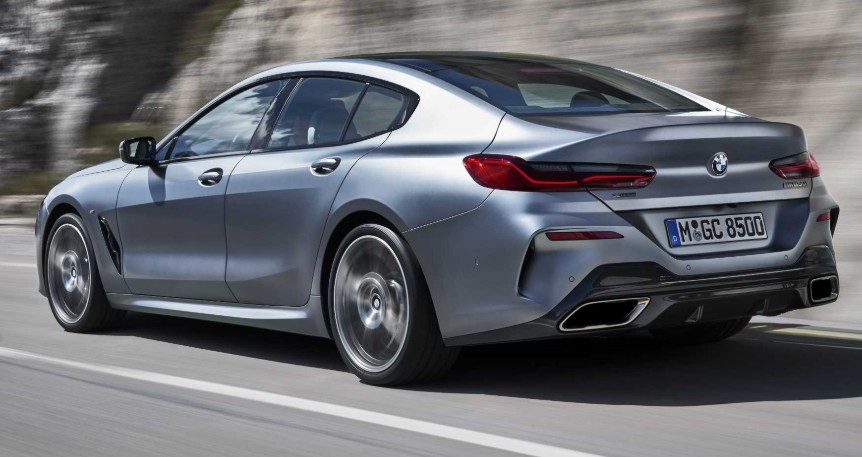
Few BMWs have lived a life quite as unusual as the 8 Series. It arrived as a futuristic flagship, disappeared for nearly two decades, and then returned wearing sharper clothes, turbocharged engines, and enough technology to make its ancestor look like a mechanical time capsule.
That unusual history makes searching for BMW 8 Series years slightly more complicated than it sounds. Unlike a 3 Series or 5 Series, there isn't one uninterrupted production timeline stretching through multiple decades. Instead, we have two distinct eras: the original E31 from the late 1980s and 1990s, followed by the modern G14, G15, and G16 family beginning in 2018.
BMW itself dates original E31 production from May 1989 through May 1999. The company then left the 8 Series name dormant until the modern generation arrived roughly two decades later.
So which BMW 8 Series years matter most? Which generation should we buy? Are older cars becoming collectibles? And where do the M850i and M8 fit into the story?
Let's unravel the timeline.
Content in this publication
- BMW 8 Series Years at a Glance
- First-Generation BMW 8 Series Years: 1989–1999
- 1993 BMW 8 Series: The 840Ci Expands the Range
- 1992–1996 BMW 850CSi: The Collector's Choice
- 1994–1996 BMW 8 Series Years: The Lineup Evolves
- 1997–1999 BMW 8 Series: Final E31 Years
- Why Was the BMW 8 Series Discontinued in 1999?
- The Missing BMW 8 Series Years: 2000–2017
- 2018 BMW 8 Series: The Name Returns
- 2019 BMW 8 Series Years and the Modern Expansion
- 2020 BMW 8 Series: The Gran Coupe Changes the Formula
- BMW M8 Years: When the 8 Series Goes Full M
- 2021 BMW 8 Series: A Strong Used-Car Candidate
- 2022 BMW 8 Series: Mature Modern Luxury
- 2023 BMW 8 Series Facelift
- 2024 BMW 8 Series: Luxury Without Reinvention
- 2025 BMW 8 Series Years and Models
- 2026 BMW 8 Series: A Late Chapter of the Modern Generation
- Best BMW 8 Series Years to Buy
- BMW 8 Series Years to Approach Carefully
- Which BMW 8 Series Generation Is Most Reliable?
- BMW 840i: The Sensible Modern Choice
- BMW M850i: The Modern Grand-Touring Sweet Spot
- BMW 850CSi vs M8: Two Eras, Two Philosophies
- Is the BMW E31 Becoming a Classic?
- What to Check Before Buying Any BMW 8 Series
- How Many Generations of BMW 8 Series Are There?
- Which BMW 8 Series Year Should We Choose?
- Conclusion: The Strange and Brilliant BMW 8 Series Timeline
- Frequently Asked Questions About BMW 8 Series Years
BMW 8 Series Years at a Glance
The easiest way to understand the BMW 8 Series is to divide its history into two generations.
The first-generation BMW E31 was produced from 1989 through 1999. It was exclusively a two-door coupe and included six-, eight- and twelve-cylinder engineering projects during development, although production cars became famous primarily for their V8 and V12 engines.
Then came silence.
BMW didn't simply redesign the 8 Series immediately afterward. Instead, the name disappeared from showrooms for almost 20 years.
The second era began in 2018 with today's broader 8 Series family. Depending on the market, buyers have been offered Coupe, Convertible, and four-door Gran Coupe versions alongside the high-performance M8.
In other words, the simplified BMW 8 Series timeline looks like this:
- 1989–1999: First-generation BMW 8 Series E31
- 2000–2017: No production BMW 8 Series
- 2018 onward: Second-generation 8 Series family
- G15: 8 Series Coupe
- G14: 8 Series Convertible
- G16: 8 Series Gran Coupe
- M8: High-performance M derivative of the modern generation
That giant gap is one of the characteristics that makes the 8 Series so interesting. It isn't merely another BMW model that gradually evolved. It effectively lived two separate lives.
First-Generation BMW 8 Series Years: 1989–1999
When BMW introduced the E31 at the 1989 Frankfurt Motor Show, it wasn't trying to create an ordinary sports coupe.
This was the flagship.
BMW describes the original 8 Series as a grand tourer designed to combine long-distance capability with sports-car character. Production officially ran from May 1989 until May 1999.
Think of the E31 as the technological equivalent of arriving at a 1990 business meeting carrying a laptop while everyone else still has paper folders.
Its wedge-shaped body, pop-up headlights, pillarless side windows, sophisticated electronics and available V12 made it look and feel enormously advanced.
1989 BMW 8 Series: Where the Story Began
The earliest production year brought us the BMW 850i.
Powered by a 5.0-liter V12, the 850i produced 300 hp according to BMW's historical archive. That might sound modest beside today's turbocharged performance cars, but in 1989 this was serious machinery.
The 850i also established the formula that would define the original 8 Series: effortless speed rather than raw aggression.
It was built to cross countries, not merely attack racetracks.
1990–1992 BMW 850i Years
During the early 1990s, the 850i remained the core of the lineup.
These early cars are fascinating today because they preserve the E31 in something close to its original form. However, buyers need to remember that sophisticated electronics age just like engines and suspensions do.
A poorly maintained E31 can become expensive surprisingly quickly.
When evaluating one, service history often matters far more than whether the odometer shows 60,000 or 100,000 miles.
Why Early E31 Cars Feel Special
There's an unmistakable analog character to these cars.
The cabin has rows of physical controls. The steering and chassis communicate differently from today's electronically managed luxury cars. The naturally aspirated engines build power progressively.
Even the pop-up headlights give the car personality before we've turned the key.
It's less smartphone and more Swiss watch.
1993 BMW 8 Series: The 840Ci Expands the Range
One of the most important years in E31 history was 1993.
BMW introduced the 840Ci, giving buyers a V8 alternative to the V12-powered 850 models. BMW's archive dates 840Ci production from July 1993 through May 1999.
The initial 840Ci used a 4.0-liter V8 producing 286 hp. Later versions switched to a 4.4-liter V8 while retaining the same quoted horsepower but gaining additional torque.
Why does that matter today?
Because the 840Ci can represent an appealing entry point into classic 8 Series ownership. We still get the spectacular E31 silhouette without necessarily accepting every complication associated with owning an aging V12.
That doesn't make the V8 cheap to maintain. Nothing wearing an 8 Series badge should be purchased with economy-car expectations.
But the 840Ci deserves serious consideration.
1992–1996 BMW 850CSi: The Collector's Choice
Then there is the car sitting at the top of the E31 food chain: the 850CSi.
Rather than simply being another luxurious 850, the CSi received substantial performance-oriented changes and an enlarged V12.
For collectors, this is typically the version that makes hearts beat faster.
The original M8 never reached series production, so the 850CSi effectively became the closest production E31 to the M-car concept BMW enthusiasts had imagined.
Why the 850CSi Matters
Scarcity is only part of the appeal.
The CSi represented the most focused interpretation of the original 8 Series idea. Where a normal 850 prioritized high-speed grand touring, the 850CSi sharpened the formula.
Today, good examples carry a level of desirability that ordinary E31 variants usually cannot match.
That also means buying one requires considerable due diligence. Originality, documented maintenance, accident history and condition matter enormously.
A bargain-priced 850CSi is the sort of phrase that should make us suspicious rather than excited.
1994–1996 BMW 8 Series Years: The Lineup Evolves
By the middle of the decade, BMW had refined the 8 Series range significantly.
The original 850i designation had evolved into 850Ci, while V8-powered 840Ci variants gave customers another path into the lineup.
BMW's historical records show the original 850i was produced from May 1989 until October 1994, with the 850i name changing to 850Ci following an earlier model update.
These middle-production cars are often interesting to used buyers because they combine the unmistakable early-'90s E31 personality with incremental mechanical updates.
1996 BMW 840Ci Changes
Another notable development arrived in 1996 when the 840Ci moved from its earlier 4.0-liter V8 to a 4.4-liter unit.
Power remained quoted at 286 hp, but torque increased.
In everyday driving, torque matters.
Horsepower gets the headlines; torque is what makes a heavy grand tourer surge down the highway without appearing to work particularly hard.
That's exactly the sort of behavior an 8 Series should deliver.
1997–1999 BMW 8 Series: Final E31 Years
Late-production E31 cars occupy an interesting corner of the market.
By this stage, the model had matured considerably, yet sales volumes and configurations varied by country. BMW eventually ended E31 production in May 1999.
There was no immediate replacement.
That decision transformed the E31 over time.
Instead of merely becoming the previous generation of an ongoing model, it stood alone. The 8 Series became a piece of BMW history with no direct successor carrying the same badge for almost two decades.
And absence, as collectors know, has a funny way of making the heart grow fonder.
Why Was the BMW 8 Series Discontinued in 1999?
Luxury grand tourers exist in a difficult corner of the automotive world.
They're expensive to develop, expensive to manufacture and usually sold in much smaller numbers than mainstream sedans or SUVs.
The E31 also arrived around a period of economic turbulence in several markets, while its considerable purchase price limited its audience.
BMW subsequently focused on other luxury and performance models rather than immediately replacing the 8 Series.
The company later offered coupes under the 6 Series badge. BMW USA now classifies that range as a legacy line spanning 1976–2019.
For years, enthusiasts wondered whether BMW would ever dust off the number 8.
Eventually, it did.
The Missing BMW 8 Series Years: 2000–2017
Search for a 2005 BMW 8 Series or a 2012 BMW 8 Series and we'll run into a simple problem: BMW wasn't producing one.
There is a nearly two-decade hole in the timeline.
This occasionally causes confusion in used-car searches because listings, replicas, mislabeled vehicles or search-engine results can suggest otherwise.
BMW's own historical archive confirms that after E31 production ended in 1999, the next 8 Series generation didn't arrive until 2018/2019.
That means we should treat anything advertised as a factory-produced 8 Series from the intervening period with skepticism.
2018 BMW 8 Series: The Name Returns
After years of absence, BMW revived the 8 Series.
This wasn't supposed to be an exercise in nostalgia.
The new car carried certain grand-touring themes of its ancestor, but everything underneath belonged firmly to the modern era: turbocharged engines, sophisticated driver-assistance systems, configurable driving modes, digital displays and modern chassis electronics.
Rather than creating a carbon copy of the E31, BMW essentially asked a different question:
What should an 8 Series be in the 21st century?
You may be interested in reading Mazda BT-50 vs Mitsubishi Triton: Which Ute Is Better?
The answer was a low, wide luxury GT positioned near the top of BMW's range.
2019 BMW 8 Series Years and the Modern Expansion
The modern lineup expanded rapidly.
The Coupe established the basic formula, but BMW didn't stop there. A Convertible followed, giving the 8 Series an open-top body style that the production E31 never officially received.
That's an interesting piece of historical symmetry.
BMW had explored convertible ideas during the E31 era, but the company says those prototypes never reached series production.
Decades later, the modern 8 Series finally made an official convertible part of the family.
BMW G15 8 Series Coupe
The G15 is probably the modern model that best captures the philosophy of the original E31.
Two doors. Long hood. Low roof. Serious performance.
It's fundamentally a grand tourer.
We can drive one quickly, but its character is more mature than that of a smaller BMW sports coupe. It feels designed to devour highway distances like an express train wearing a tailored suit.
BMW G14 8 Series Convertible
The G14 takes the same basic philosophy and removes the roof.
Naturally, that changes the experience.
It becomes less about the purity of a sleek coupe profile and more about open-air luxury.
For drivers living somewhere with favorable weather, that difference could matter more than any acceleration figure.
2020 BMW 8 Series: The Gran Coupe Changes the Formula
Here's where the modern 8 Series becomes especially interesting.
BMW added the G16 Gran Coupe, effectively combining 8 Series styling and performance with four doors and significantly greater everyday usability.
Purists might ask whether a four-door vehicle should really be called a coupe.
BMW clearly wasn't losing sleep over the terminology.
And once we stop arguing about the badge, the appeal becomes obvious.
The Gran Coupe gives passengers easier rear-seat access while preserving much of the low-slung profile that separates the 8 Series from a conventional luxury sedan.
Why the Gran Coupe Can Be the Smartest 8 Series
For many buyers, this is arguably the sweet spot.
A Coupe looks dramatic.
A Convertible feels glamorous.
But the Gran Coupe can handle passengers, business trips, longer journeys and ordinary life without asking us to compromise quite as much.
It's the 8 Series for someone who loves the tuxedo but still wants usable pockets.
BMW M8 Years: When the 8 Series Goes Full M
The modern generation finally delivered something the original E31 never received in series production: a true BMW M8.
Available in multiple body styles during its production run, the M8 dramatically increases performance.
It isn't simply an M Sport appearance package or a slightly more powerful ordinary 8 Series. It's an M-developed performance model with extensive chassis, powertrain and braking changes.
The result is a fascinating contradiction.
An M8 can behave like a comfortable luxury cruiser, yet unleash performance that would have looked supercar-like not very long ago.
M850i vs M8
These two models target slightly different drivers.
The M850i sits between the regular 840i and the full M8. Its turbocharged V8 delivers huge performance without pushing quite as aggressively toward the M philosophy.
The M8 turns everything up further.
If we're going to drive the car primarily on public roads, however, faster doesn't automatically mean better.
The M850i's combination of comfort, sound, torque and effortless acceleration makes it one of the most compelling versions of the modern 8 Series.
2021 BMW 8 Series: A Strong Used-Car Candidate
By 2021, the second-generation 8 Series was no longer the new kid in BMW's lineup.
That's potentially useful for secondhand buyers.
Earlier depreciation can make these cars significantly more accessible than their original luxury-car pricing suggests.
But cheap purchase prices deserve context.
An expensive luxury car doesn't suddenly acquire inexpensive parts merely because it becomes used.
Large wheels, performance tires, complex electronics, adaptive suspension components, premium brakes and powerful engines still belong to an expensive vehicle.
That's why we should buy on condition rather than chasing the lowest advertisement.
2022 BMW 8 Series: Mature Modern Luxury
The 2022 model year sits in an appealing part of the current generation's history.
Cars from this period already benefit from years of production development while retaining the basic design that made the reborn 8 Series attractive in the first place.
For used buyers, specifications matter enormously.
Two visually similar 8 Series cars can have surprisingly different personalities depending on engine, drivetrain, wheel size, packages and optional equipment.
A heavily optioned 840i might suit one driver better than a more powerful M850i.
Don't shop by badge alone.
2023 BMW 8 Series Facelift
The 8 Series received updates during its modern production cycle rather than an entirely new generation.
These later cars introduced visual and technology revisions while preserving the fundamental platform and body choices.
That makes the distinction between pre-update and later examples relevant for shoppers.
Someone prioritizing value might prefer an earlier model.
Someone who wants newer cabin technology and updated styling may willingly pay more for a later year.
Neither choice is automatically correct.
The better car is the one whose price, condition, maintenance history and equipment make sense for us.
2024 BMW 8 Series: Luxury Without Reinvention
By 2024, the 8 Series had settled into the role of a mature flagship grand tourer.
At this point in a model's lifecycle, something interesting happens.
The initial excitement surrounding a new design has faded, but the platform has also had years to mature.
For buyers, that can be attractive.
Later production cars frequently offer a familiar package with accumulated refinements and fewer first-year uncertainties.
Still, we shouldn't assume that newer automatically means trouble-free. Complexity remains complexity.
2025 BMW 8 Series Years and Models
BMW documentation for the 2025 model year listed 840i, 840i xDrive and M850i xDrive versions across Coupe, Convertible and Gran Coupe body styles, with the ALPINA B8 xDrive also appearing in the Gran Coupe lineup. BMW's warranty documentation likewise listed M8 derivatives for Coupe, Convertible and Gran Coupe.
This shows just how broad the modern 8 Series became compared with the E31.
The original generation was fundamentally one beautiful coupe offered in different mechanical flavors.
The modern family became almost a miniature model range of its own.
2026 BMW 8 Series: A Late Chapter of the Modern Generation
The 2026 model year continued the 8 Series story in the United States, with BMW advertising new 2026 840i and M850i variants across the Coupe, Convertible and Gran Coupe families earlier in 2026.
BMW also created the limited M850i Edition M Heritage, a 2026 Gran Coupe explicitly inspired by the original E31. BMW quotes its 4.4-liter twin-turbo V8 at 523 hp.
There's something poetic about that.
The modern 8 Series eventually began looking backward at the very car whose name it revived.
Thirty-five years after the E31 helped define BMW's vision of a futuristic grand tourer, its descendant was celebrating that history.
Best BMW 8 Series Years to Buy
There isn't one universally best BMW 8 Series year because we're dealing with two very different kinds of ownership.
If we want a classic, the E31 is the obvious choice.
If we want current technology, modern performance and everyday usability, the G14/G15/G16 generation makes considerably more sense.
Among E31 cars, well-maintained later examples can be attractive because they benefit from evolutionary updates. A properly documented 840Ci can also provide the E31 experience without forcing us into V12 ownership.
Collectors will naturally gravitate toward rarer specifications such as the 850CSi.
Modern buyers should approach the question differently. Rather than obsessing over a specific year, we'd prioritize service history, options, ownership history and remaining warranty coverage.
A beautifully maintained 2021 car can be a much smarter purchase than a neglected 2024 example.
You may be interested in readingMazda BT-50 vs Mitsubishi Triton: Which Ute Is Better?You may be interested in reading
Mazda BT-50 vs Ford Ranger: Which Pickup Is Better?BMW 8 Series Years to Approach Carefully
There isn't a simple blacklist of BMW 8 Series years that every shopper should avoid.
Condition dominates the conversation, particularly with older E31 cars.
An original 8 Series that has spent years sitting unused can create as many headaches as one with considerable mileage. Rubber components deteriorate. Electrical contacts corrode. Fluids age. Batteries fail. Deferred maintenance accumulates silently.
The E31 is especially sensitive to this because it was technologically sophisticated for its era.
Modern 8 Series cars introduce a different type of complexity.
Turbochargers, active chassis systems, advanced infotainment, cameras, sensors and electronically controlled equipment mean pre-purchase inspection is essential once factory coverage disappears.
The cheapest example online can quickly become the most expensive one in the garage.
Which BMW 8 Series Generation Is Most Reliable?
Comparing E31 reliability against the modern generation isn't particularly meaningful without defining what we mean by reliable.
The E31 uses older technology, but its components are now decades old.
The modern 8 Series is dramatically newer but vastly more computerized.
For either generation, maintenance history matters enormously.
We'd rather own a higher-mileage example with invoices documenting years of careful servicing than a suspiciously low-mileage garage queen with little evidence of maintenance.
Cars don't become immortal when we stop driving them.
BMW 840i: The Sensible Modern Choice
The modern 840i deserves more attention than its position at the bottom of the engine hierarchy might suggest.
Its turbocharged inline-six fits BMW's traditional identity beautifully.
It's smooth, powerful and typically more than fast enough for everyday driving.
Do we actually need V8 acceleration every time the traffic light changes?
Probably not.
That makes the 840i particularly attractive to owners who want the styling, cabin and grand-touring experience without choosing the most mechanically extravagant version available.
BMW M850i: The Modern Grand-Touring Sweet Spot
The M850i takes the opposite approach.
It delivers the theater many buyers expect from a flagship BMW coupe.
The V8 transforms the experience. Acceleration becomes effortless, overtaking requires barely a thought, and the entire car feels more muscular.
Yet it remains fundamentally a luxurious GT rather than something permanently demanding our attention.
For drivers who want serious performance without moving all the way into M8 territory, this might be the modern 8 Series to have.
BMW 850CSi vs M8: Two Eras, Two Philosophies
Putting the 850CSi beside an M8 tells us almost everything about how performance cars evolved.
The CSi belongs to an age of naturally aspirated engines, manual interaction and relatively limited electronic intervention.
The M8 belongs to a world of turbocharging, sophisticated traction systems, adaptive chassis technology and enormous computerized capability.
One feels mechanical.
The other feels almost supernatural.
Neither philosophy is inherently better.
The CSi gives us occasion.
The M8 gives us capability.
And that distinction may determine which generation we emotionally connect with.
Is the BMW E31 Becoming a Classic?
It already is.
The real question is how individual E31 variants will evolve within the collector market.
The recipe is certainly promising: distinctive styling, relatively limited production, flagship status, unusual engineering and an unmistakable connection to a particular period in BMW history.
The design has aged remarkably well too.
Pop-up headlights should make the car look ancient. Somehow, they don't.
Instead, the E31 increasingly resembles a concept car that escaped from the 1990s and never received the memo that it was supposed to become old-fashioned.
Exceptional examples, rare specifications and desirable versions such as the 850CSi understandably attract the strongest enthusiast attention.
What to Check Before Buying Any BMW 8 Series
Whether we're shopping for an E31 or a modern M850i, the fundamental rule is remarkably similar: buy the history as much as the car.
A professional pre-purchase inspection is worth the expense.
For classic E31 examples, pay particularly close attention to electrical operation, cooling-system condition, suspension wear, fluid leaks, aging rubber components, battery condition and evidence of deferred servicing.
For modern cars, inspect service records, tires, brakes, suspension behavior, infotainment functions, cameras, driver-assistance systems and any warning messages.
Then examine the specification.
BMW options can materially change both the driving experience and resale desirability.
Finally, calculate ownership costs before purchasing, not afterward.
Luxury depreciation can make a used 8 Series surprisingly affordable to acquire. It doesn't necessarily make it inexpensive to maintain.
How Many Generations of BMW 8 Series Are There?
There are essentially two major BMW 8 Series generations.
The first is the E31 of 1989–1999.
The second is the modern family introduced from 2018 onward, represented primarily by the G14 Convertible, G15 Coupe and G16 Gran Coupe.
Calling them merely first and second generations almost undersells the difference.
They're separated by roughly two decades, radically different engineering philosophies and an enormous leap in automotive technology.
Yet place them beside one another and the relationship still makes sense.
Both are low, luxurious, powerful BMW grand tourers designed to sit somewhere above the ordinary coupe hierarchy.
Which BMW 8 Series Year Should We Choose?
Our ideal year depends on what we expect from the car.
For classic-car character, we'd look toward a carefully maintained E31 rather than becoming fixated on one exact production year.
For investment or collector appeal, special and rare configurations deserve attention, particularly the 850CSi.
For an approachable modern used car, an earlier 840i or M850i can offer considerable value after depreciation.
For updated technology, later-model modern cars make more sense.
And for maximum performance?
That's where the M8 enters.
The essential lesson is simple: the best BMW 8 Series year isn't necessarily the newest year or the cheapest year. It's the best-maintained example that matches the experience we actually want.
Conclusion: The Strange and Brilliant BMW 8 Series Timeline
The history of the BMW 8 Series doesn't resemble a straight road. It's more like two spectacular highways separated by a 19-year bridge that was never built.
The E31 established the name from 1989 to 1999 with dramatic styling, flagship technology and memorable V8 and V12 power. BMW then retired the badge for years before resurrecting it in the modern era.
The new generation took the grand-touring formula and stretched it in every direction. Coupe, Convertible, Gran Coupe, M850i, M8 and even ALPINA interpretations expanded the 8 Series far beyond what its predecessor had been.
Which era wins?
That depends on what we're chasing.
The E31 is nostalgia, mechanical charm and unmistakable 1990s optimism wrapped around pop-up headlights.
The modern 8 Series is speed, technology and luxury delivered with almost absurd effortlessness.
Different eras. Same idea.
Build a BMW that feels special before the engine even starts.
Frequently Asked Questions About BMW 8 Series Years
What years was the original BMW 8 Series made?
BMW produced the first-generation E31 8 Series from May 1989 until May 1999. It was offered exclusively as a production coupe, although BMW also developed convertible and M8 prototypes that never reached series production.
Why is there no BMW 8 Series from the 2000s?
BMW discontinued the E31 in 1999 without an immediate successor. The 8 Series badge remained dormant for nearly two decades before returning with the modern generation beginning in 2018.
What are the best BMW 8 Series years?
There is no single best year. Enthusiasts seeking a classic should prioritize a well-maintained E31, with the 850CSi especially desirable among collectors. Modern buyers can find strong value in earlier 840i and M850i examples, while later cars provide newer technology.
Is a BMW 850i the same as an 8 Series?
Yes. The 850i was the first production model of the original E31 BMW 8 Series. BMW's historical archive dates 850i production from May 1989 to October 1994, with the model later using the 850Ci designation.
What is the difference between the old and new BMW 8 Series?
The original E31 was a two-door grand-touring coupe produced from 1989–1999. The modern generation expanded the concept with Coupe, Convertible and four-door Gran Coupe body styles, turbocharged engines, modern infotainment and driver-assistance technology, plus full M8 versions.
You may be interested in readingMazda BT-50 vs Mitsubishi Triton: Which Ute Is Better?You may be interested in reading
Mazda BT-50 vs Ford Ranger: Which Pickup Is Better?You may be interested in reading
 Renault Koleos vs Nissan X-Trail: Which SUV Is Better?
If you want to know other articles similar to BMW 8 Series Years: Generations, Best Years, and Complete History you can visit the category Models.
Honda Passport vs Toyota 4Runner: Which SUV Is Better?
Honda Passport vs Ford Bronco: Which SUV Is Better?
Honda Passport vs Ford Explorer: Which SUV Is Better?
Honda Passport or Pilot: Which SUV Is Better?
Honda Passport vs Jeep Grand Cherokee: Which SUV Is Better?
Honda Passport vs Nissan Pathfinder: Which SUV Is Better?
Leave a Reply
More content of your interest