

Renault Koleos vs Nissan X-Trail: Which SUV Is Better?

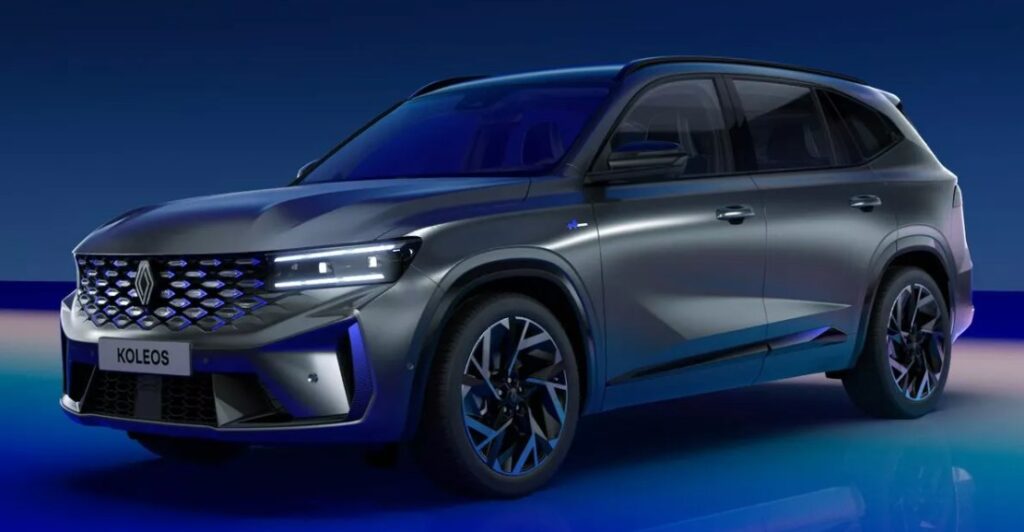
Comparing the Renault Koleos vs Nissan X-Trail is more interesting than it first appears. Park the two SUVs beside each other and they seem to come from completely different families. The Koleos looks sophisticated and slightly European, while the X-Trail presents itself as the practical adventurer ready for school runs, camping trips, and muddy weekends.
Look underneath the skin of certain generations, though, and the family resemblance becomes obvious.
The second-generation Renault Koleos was developed on the Renault-Nissan Alliance's CMF-C/D architecture, which was also used by the third-generation Nissan X-Trail, known as the T32. Renault itself explained when introducing the second-generation Koleos that components hidden from customers were shared while each brand retained its own design identity.
So, are we basically comparing the same SUV wearing two different jackets?
Not exactly.
Although the related versions share considerable engineering DNA, Renault and Nissan gave their SUVs noticeably different personalities. The Koleos concentrates on comfort, styling, cabin ambience, and five-seat spaciousness, while the X-Trail leans toward versatility, family practicality, and—in many markets—the option of seven seats.
There is another important wrinkle. The latest-generation Nissan X-Trail has moved on considerably from the X-Trail that was mechanically close to the second-generation Koleos. Current Australian-market examples, for instance, offer petrol and e-POWER powertrains, while the Koleos availability and specifications vary widely by country.
Consequently, model year matters enormously.
Let's dig into the differences that actually matter when choosing between them.
Content in this publication
- Renault Koleos vs Nissan X-Trail at a Glance
- Are the Renault Koleos and Nissan X-Trail the Same Car?
- Exterior Design: Elegance vs Adventure
- Size and Dimensions
- Interior Quality: Renault Koleos Takes a Different Approach
- Seating Capacity: One of the Biggest Differences
- Boot Space and Practicality
- Engine Comparison
- Nissan X-Trail e-POWER Changes the Game
- Transmission: What About the CVT?
- Ride Comfort
- Handling and Steering
- All-Wheel Drive and Rough-Road Ability
- Fuel Economy
- Towing: Which SUV Is Better?
- Technology and Infotainment
- Safety
- Reliability: Renault Koleos vs Nissan X-Trail
- Maintenance Costs
- Resale Value
- Renault Koleos vs Nissan X-Trail for Families
- Renault Koleos vs Nissan X-Trail for City Driving
- Renault Koleos vs Nissan X-Trail for Long Trips
- Used Koleos vs Used X-Trail: Which Should We Buy?
- Newer Nissan X-Trail vs Renault Koleos
- Which SUV Is Better Overall?
- Conclusion: Renault Koleos or Nissan X-Trail?
- Frequently Asked Questions
Renault Koleos vs Nissan X-Trail at a Glance
For buyers comparing similarly aged used examples, we can simplify the battle like this:
| Category | Renault Koleos | Nissan X-Trail |
|---|---|---|
| Main personality | Comfortable and premium-feeling | Practical and family-focused |
| Seating | Usually 5 | 5 or 7 depending on version |
| Cabin approach | Stylish and upscale | Functional and versatile |
| Ride | Comfort-oriented | Balanced and practical |
| Engine choices | Depend heavily on market | Generally broader |
| AWD availability | Available on selected versions | Available on selected versions |
| Used-market appeal | Often strong value | Usually easier to find |
| Best suited to | Couples and 5-seat families | Larger or versatility-focused families |
That table tells only half the story, however. The fascinating part is understanding why two closely related SUVs can feel so different.
Are the Renault Koleos and Nissan X-Trail the Same Car?
No, although certain generations are close mechanical relatives.
The second-generation Koleos and T32 X-Trail shared the CMF-C/D vehicle architecture, and some markets also saw considerable overlap in engines, transmissions, all-wheel-drive hardware, and suspension design. Contemporary reviews noted that the related Koleos and X-Trail shared engines, gearboxes and four-wheel-drive technology on applicable variants.
Think of them as two houses built using similar foundations.
One homeowner chooses minimalist furniture, softer lighting, and an elegant lounge. The other adds storage cupboards, bunk beds, and an enormous family table. The foundations may have similarities, but living in them feels different.
Manufacturers deliberately tune related vehicles differently.
Changes can involve:
- suspension calibration,
- steering feel,
- interior materials,
- sound insulation,
- seating layouts,
- infotainment,
- equipment packages,
- exterior dimensions and styling,
- transmission calibration,
- wheel and tyre combinations.
That is why simply saying "the Koleos is an X-Trail with a Renault badge" sells the Renault short.
It also becomes increasingly inaccurate when comparing the second-generation Koleos with the much newer T33-generation X-Trail.
Exterior Design: Elegance vs Adventure
Design is subjective, but Renault and Nissan clearly approached these SUVs from different directions.
Renault Koleos Styling
The second-generation Koleos has a relatively elegant profile. Renault gave it broad shoulders, prominent lighting signatures, chrome detailing, and a front end closely connected to the brand's passenger cars.
We could describe it as the SUV that remembered to wear a decent shirt to dinner.
Higher-specification versions can still look surprisingly expensive for their age.
Nissan X-Trail Styling
The X-Trail generally emphasizes its SUV identity more strongly.
Its appearance is functional rather than flamboyant. The relatively upright body, substantial wheel arches, roof rails on many versions, and practical proportions reinforce the family-adventure theme.
The newer X-Trail pushes this theme further with more angular styling and a more contemporary front end.
Which One Looks Better?
We would choose the Koleos for elegance and the X-Trail for a tougher SUV appearance.
Neither approach is objectively superior. It depends whether we want our SUV to resemble a comfortable long-distance cruiser or something eager to swallow bicycles and head toward the mountains.
Size and Dimensions
The related second-generation Koleos and T32 X-Trail are extremely close dimensionally. Renault launched the Koleos at roughly 4.67 metres long with a wheelbase of approximately 2.71 metres, placing it very close to the contemporary X-Trail.
The current X-Trail remains firmly in the medium-SUV category. Nissan Australia lists the latest model at approximately 4,680 mm long with a 2,705 mm wheelbase, although equipment and exact specifications vary by market.
On crowded streets, neither SUV feels tiny.
Yet both remain manageable enough for everyday driving.
Which Feels Bigger Inside?
This is where design priorities matter more than tape-measure dimensions.
The Koleos generally gives its five occupants generous space, particularly in the second row.
The X-Trail sacrifices some simplicity in favour of versatility because selected versions accommodate a third seating row.
If we're carrying five adults regularly, the Renault makes a compelling argument.
If we occasionally need seats six and seven, Nissan answers a question the traditional five-seat Koleos cannot.
Interior Quality: Renault Koleos Takes a Different Approach
Open the door and the personalities separate immediately.
The Renault cabin was designed to push the Koleos slightly upmarket. Depending on trim and model year, that can mean larger infotainment displays, leather upholstery, ambient touches, electrically adjustable seats, panoramic roofing, and more decorative dashboard materials.
It tries to create an environment rather than merely provide a dashboard.
Nissan X-Trail Interior
The X-Trail generally feels more utilitarian.
That doesn't mean cheap.
Instead, controls tend to prioritize accessibility and family use. Storage areas, practical surfaces, cupholders, and straightforward ergonomics matter more than visual theatre.
On newer X-Trails, cabin technology and presentation have improved substantially, making the distinction much less dramatic than it was when comparing the Koleos directly with the T32.
Which Cabin Would We Choose?
For a five-seat household wanting something that feels slightly luxurious without jumping into a prestige badge, the Koleos is attractive.
For parents who measure a good interior by how easily it survives bottles, backpacks, toys, muddy shoes, and charging cables, the X-Trail makes tremendous sense.
Seating Capacity: One of the Biggest Differences
Here's the difference that can make the entire comparison irrelevant for some buyers.
The Koleos is fundamentally a five-seat SUV.
The X-Trail has historically been available with five or seven seats, depending on generation, market and specification. Current Australian petrol X-Trail variants, for example, include configurations capable of seating seven, while other trims and e-POWER versions are five-seat models.
Are the X-Trail's Third-Row Seats Good?
We wouldn't think of them as replacements for the third row in a large MPV or full-size SUV.
They're better regarded as emergency or occasional seats.
Children will usually appreciate them more than six-foot adults.
But occasional seats can be tremendously valuable. When another child's friend needs a lift home, seven seats suddenly feel like a superpower.
Koleos Advantages Without a Third Row
The absence of a third row isn't automatically a disadvantage.
Renault could devote the available cabin packaging more directly to five passengers and luggage without trying to squeeze additional occupants behind them.
For buyers who know they'll never need seven seats, that philosophy is arguably cleaner.
Boot Space and Practicality
A family SUV lives or dies by its cargo area.
The X-Trail is designed around versatility, and modern five-seat Australian versions provide up to 585 litres of luggage capacity to the roof with the second row upright, according to Nissan's specification data. The equivalent figure is slightly different for e-POWER versions.
Cargo-volume measurements aren't directly comparable across every manufacturer or market because measurement standards differ, so we should avoid treating litres alone like a football score.
The more useful questions are:
- Is the opening wide?
- Is the load floor easy to use?
- Can the rear seats fold conveniently?
- Is there useful underfloor storage?
- Can awkward objects fit without wrestling them through the tailgate?
X-Trail for Maximum Flexibility
Nissan generally wins on family adaptability.
Its cabin philosophy has traditionally been about moving people and things in different combinations.
Koleos for Five-Person Touring
Renault counters with a useful, broad luggage area and good passenger accommodation.
If we're packing suitcases for four or five people rather than regularly rearranging seven seats, it works beautifully.
Engine Comparison
Here we need to tread carefully because Renault Koleos and Nissan X-Trail engines vary dramatically by country and model year.
Second-generation Koleos models have been sold globally with several petrol and diesel engines. Renault's launch material described a range of petrol and diesel engines tailored to individual markets.
The T32 X-Trail likewise appeared with different petrol, diesel and hybrid combinations around the world.
So rather than pretending one engine specification covers every buyer, let's consider the broader personalities.
Koleos Petrol Engines
The naturally aspirated petrol Koleos variants found in several markets generally suit relaxed everyday driving.
They're not rocket ships.
But that's missing the point.
These engines work well when treated like comfortable touring powerplants rather than hot-hatch motors hiding under an SUV body.
Koleos Diesel Engines
Diesel versions offered in certain markets bring stronger low-speed torque and can make sense for high-mileage motorway driving or towing.
Used buyers must naturally consider emissions-system condition, service history, turbocharger health, and the type of driving the previous owner performed.
You may be interested in reading Renault Koleos vs Audi Q5: Which SUV Makes More Sense?
X-Trail Petrol Engines
The X-Trail's conventional petrol engines also prioritize usability and efficiency over drama.
Current Australian petrol versions use a 2.5-litre four-cylinder producing 135 kW and 244 Nm, paired with a CVT.
That's a meaningful generational step beyond many of the older comparisons between the two models.
Nissan X-Trail e-POWER Changes the Game
The newest X-Trail has one enormous advantage when compared with an older Koleos: Nissan's e-POWER option in markets where it is sold.
Unlike a conventional hybrid where the combustion engine can directly drive the wheels, Nissan's e-POWER concept uses the petrol engine primarily to generate electricity while electric motors propel the vehicle.
That creates an electric-car-like sensation without plugging into a charger.
Current Australian X-Trail e-POWER models are offered with Nissan's e-4ORCE electric all-wheel-drive system.
Why That Matters
Around town, electric-motor response can make the X-Trail feel smoother and more immediate.
It also gives the modern Nissan a technological advantage that fundamentally changes the old "Koleos versus X-Trail" argument.
If we're comparing a similarly priced used Koleos against an older T32 X-Trail, the contest is close.
Compare that Koleos against a brand-new e-POWER X-Trail and we're effectively comparing different eras.
Transmission: What About the CVT?
CVTs often divide drivers into two tribes.
One tribe appreciates their smoothness and efficiency.
The other hears an engine holding steady rpm during hard acceleration and wonders whether somebody disconnected the gearbox.
Both reactions are understandable.
Several Koleos and X-Trail versions have used Nissan-related X-Tronic continuously variable transmissions.
Is a CVT Bad?
Not inherently.
A properly maintained CVT can suit these SUVs extremely well because neither vehicle is trying to be a sports car.
What matters considerably more on a used vehicle is service history.
We would investigate:
- transmission-fluid servicing,
- hesitation when pulling away,
- juddering,
- unusual whining,
- delayed engagement between reverse and drive,
- warning messages,
- evidence of overheating or heavy towing.
A neglected gearbox can turn an inexpensive used SUV into a very expensive driveway ornament.
Ride Comfort
This is one area where the Koleos frequently makes a strong impression.
Renault positioned the vehicle as something more sophisticated than a purely functional family carrier. The chassis feels happiest cruising comfortably rather than chasing apexes.
Renault Koleos Ride
On appropriate wheels and tyres, the Koleos can deliver a composed and relaxed motorway experience.
Long journeys suit it.
It feels like the type of SUV that asks us to turn on the cruise control, put on a podcast, and watch kilometres disappear.
Nissan X-Trail Ride
The X-Trail is comfortable too, but its personality traditionally feels slightly more practical.
It balances urban manoeuvrability, family use, and rougher-road capability rather than trying to imitate an executive car.
Winner for Comfort
For similarly aged T32-era vehicles, we'd give a small advantage to the Koleos.
Handling and Steering
Neither vehicle belongs at a track day.
And that's perfectly fine.
These are medium SUVs designed around visibility, security, passenger comfort, and predictable responses.
The Koleos typically feels settled and stable rather than playful.
The X-Trail is similarly safe and approachable.
Body roll exists because physics hasn't yet accepted marketing requests.
Push either SUV quickly into a corner and its mass reminds us what we're driving.
For normal family use, however, both provide exactly the sort of predictable behaviour most owners want.
All-Wheel Drive and Rough-Road Ability
Selected Koleos versions use an electronically controlled all-wheel-drive system closely connected to Nissan's technology.
Contemporary versions included selectable two-wheel drive, automatic four-wheel drive and a lock function intended to improve traction under appropriate conditions.
That's useful on:
- gravel,
- slippery roads,
- wet grass,
- snowy routes,
- moderate dirt tracks,
- loose surfaces.
It doesn't transform the Koleos into a Toyota Land Cruiser.
The same basic warning applies to the X-Trail.
Is the X-Trail Better Off Road?
Its adventure-oriented design may make it feel more naturally at home off asphalt, and some versions offer useful AWD systems and respectable ground clearance.
The current conventional Australian X-Trail, for example, lists 205 mm of unladen ground clearance between the axles, while e-POWER versions are listed lower at 187 mm.
For serious rock crawling, though, we'd look elsewhere.
These are soft-roaders, not mountain goats wearing number plates.
Fuel Economy
There can be no universal winner because engines and testing procedures differ across markets and generations.
For context, Nissan currently quotes Australian combined-cycle consumption of approximately 7.4–7.8 L/100 km for conventional petrol X-Trails depending on configuration, while e-POWER versions are listed around 6.1 L/100 km.
Older Koleos consumption will depend on engine, transmission, drivetrain and driving environment.
Real-World Economy Matters More
Published figures are useful for comparisons but should not be treated as promises.
A driver crawling through traffic with the air conditioning blasting will see different numbers from somebody cruising gently along open roads.
Tyre pressure, payload, temperature, elevation and driving style all move the needle.
Towing: Which SUV Is Better?
Again, specification sheets must be checked for the exact model.
Current Australian conventional petrol X-Trail versions have a maximum braked towing rating of up to 2,000 kg, while e-POWER versions are rated up to 1,650 kg. Nissan also stresses that actual towing capability depends on vehicle loading, towing equipment and other limitations.
Koleos towing ratings differ by engine and country.
That means anyone buying specifically for caravanning should ignore generic online numbers and check the VIN-specific manual and local homologation data.
Don't Compare Only Maximum Ratings
The maximum headline figure isn't the entire story.
We should also consider:
- tow-ball download,
- payload after passengers are aboard,
- gross vehicle mass,
- transmission cooling,
- trailer brakes,
- roof loads,
- luggage,
- terrain.
A car that can technically tow a particular trailer may not necessarily be the combination we'd choose for crossing a continent.
Technology and Infotainment
Older Koleos models often win points for visual drama.
Large portrait-oriented displays in some specifications helped Renault create a modern-looking dashboard.
Whether the software itself ages as gracefully as the screen is another question.
Nissan's older systems can seem less glamorous but often prioritize conventional usability.
New X-Trail Moves Ahead
Modern X-Trail versions offer a much more contemporary technology package, meaning a new-model comparison favours Nissan heavily.
That's not surprising.
Technology develops brutally quickly. Comparing infotainment systems several years apart is like putting an old smartphone beside a new one and acting surprised that the newer device knows more tricks.
Safety
Safety equipment depends on specification and year.
Across later examples, buyers may encounter features such as autonomous emergency braking, blind-spot warning, lane assistance, parking sensors, surround-view cameras, adaptive cruise technologies and traffic-sign recognition.
Our advice is simple: don't assume a feature is standard because an online review mentions it.
Trim levels differ enormously between countries.
Check the exact vehicle.
Reliability: Renault Koleos vs Nissan X-Trail
This is perhaps the most interesting part of the comparison because shared components can blur brand stereotypes.
Someone might assume the Nissan is automatically more reliable because it carries a Japanese badge while the Renault is automatically more complicated because it carries a French one.
That logic is too simplistic.
You may be interested in readingRenault Koleos vs Audi Q5: Which SUV Makes More Sense?You may be interested in reading
Renault Koleos vs Austral: Which Renault SUV Is Better?With related generations sharing significant architecture and drivetrain technology, their mechanical foundations can overlap considerably.
What Matters More Than the Badge?
Condition.
A meticulously serviced Koleos can be a far better purchase than a neglected X-Trail.
Likewise, a well-maintained X-Trail is preferable to a Koleos with unexplained transmission noises and missing service records.
Used-Buyer Inspection Checklist
Before buying either one, we'd pay particular attention to:
- CVT operation and servicing.
- Engine oil leaks or abnormal consumption.
- Cooling-system condition.
- Suspension knocks and worn bushes.
- Electronics and infotainment.
- Air-conditioning performance.
- AWD operation where fitted.
- Complete service documentation.
- Signs of accident repair.
- Diesel emissions equipment on diesel models.
A pre-purchase inspection is money well spent.
Maintenance Costs
The X-Trail usually enjoys an advantage in market penetration.
More X-Trails on the road can mean broader parts availability, more independent workshops familiar with them, and a healthier supply of used components.
However, shared engineering can sometimes work in the Koleos owner's favour.
Certain mechanical components may have Nissan connections, although we should never assume parts are interchangeable without verifying exact part numbers.
Renault Koleos as a Used-Value Opportunity
The Koleos sometimes suffers heavier depreciation than the equivalent Nissan.
For the first owner, that's painful.
For the second owner, it can be delicious.
If a well-equipped Koleos costs noticeably less than a comparable X-Trail, we may obtain a lot of cabin, comfort and equipment per dollar.
Resale Value
Nissan's broader SUV recognition can help the X-Trail in many used markets.
Buyers know the badge.
They understand the model.
They may already have a mechanic familiar with it.
Koleos buyers can be a smaller crowd, which occasionally means selling takes longer.
Yet that same weakness creates buying opportunities.
Cars are unusual products: sometimes the less fashionable option is precisely where the smart money hides.
Renault Koleos vs Nissan X-Trail for Families
For a conventional five-person household, both work well.
But priorities separate them.
Choose the Koleos when:
- five seats are enough,
- cabin comfort matters,
- upscale styling appeals,
- you take frequent long trips,
- a strong used-car bargain appears,
- you prefer Renault's interior atmosphere.
Choose the X-Trail when:
- seven-seat availability matters,
- versatility is crucial,
- you regularly transport children,
- resale matters more,
- local Nissan support is stronger,
- you want newer hybrid-style technology such as e-POWER.
Renault Koleos vs Nissan X-Trail for City Driving
Neither SUV is tiny, but elevated seating and good visibility make them pleasant urban companions.
The Koleos feels particularly relaxed in stop-start everyday driving when equipped with the appropriate automatic transmission.
The X-Trail counters with family-friendly ergonomics and, in current e-POWER form, especially smooth electrically driven responses.
If parking spaces around us resemble shoeboxes, though, we'd want cameras and parking sensors on either one.
Renault Koleos vs Nissan X-Trail for Long Trips
This is where the Renault makes perhaps its strongest argument.
A comfortable driving position, generous passenger room, refined cruising character and premium-style cabin make the Koleos an appealing road-trip machine.
The Nissan fights back with superior seating flexibility and excellent practicality.
Think about the passengers we're carrying.
Four adults and suitcases?
Koleos.
Two adults, three children, a grandparent, bags and somebody's forgotten football kit?
Suddenly the X-Trail's versatility becomes extremely persuasive.
Used Koleos vs Used X-Trail: Which Should We Buy?
If comparing similar-age T32-era X-Trails with second-generation Koleos models, we wouldn't choose purely by badge.
We'd shortlist the best examples of both and buy according to condition, specification and price.
A pristine Koleos with full history should beat a battered X-Trail.
A carefully maintained X-Trail should beat a suspiciously cheap Koleos.
Simple.
When the Koleos Is the Better Used Buy
The Renault becomes especially attractive when depreciation creates a large price gap.
If we're getting leather, premium features, AWD and strong service history for substantially less money, the Koleos can be an underrated choice.
When the X-Trail Is Worth Paying More For
The Nissan justifies a premium when we need seven-seat versatility, stronger local parts support, easier resale or a larger pool of vehicles from which to choose.
Newer Nissan X-Trail vs Renault Koleos
This comparison requires different thinking.
The modern T33 X-Trail has progressed beyond the relationship that made the older X-Trail and second-generation Koleos such fascinating cousins.
It brings updated architecture, contemporary safety and infotainment, revised petrol powertrains, and—depending on market—e-POWER with e-4ORCE.
Therefore, we shouldn't assume that everything written about an older Koleos-versus-X-Trail comparison applies to the newest Nissan.
The family tree has grown new branches.
Which SUV Is Better Overall?
If we're talking second-generation Koleos versus a similar-age T32 X-Trail, there isn't a universal winner.
The Renault Koleos is our pick for comfort, five-seat spaciousness, design and potential used-car value.
The Nissan X-Trail wins for seating flexibility, practicality, market familiarity and broader family appeal.
When the comparison involves the latest-generation X-Trail, Nissan gains a substantial advantage in technology and powertrain sophistication simply because it represents a newer generation of SUV development.
Our Verdict
Here's the easiest way to decide.
Buy the Koleos with your heart and your calculator. Buy the X-Trail with your family calendar.
The Renault can feel like the clever used purchase hiding in plain sight. Its styling is distinctive, its cabin can feel expensive, and its shared Alliance engineering makes it more familiar underneath than many shoppers realize.
The Nissan is the safer all-round recommendation. It's practical, versatile and easy to understand. If seven seats matter, the argument may end right there.
But don't buy either SUV because somebody on the internet declared one "more reliable."
Buy the best-maintained example.
Cars remember how their previous owners treated them.
Conclusion: Renault Koleos or Nissan X-Trail?
The Renault Koleos vs Nissan X-Trail comparison proves that shared engineering doesn't necessarily produce identical cars.
The related generations are like siblings who grew up in the same house and chose completely different wardrobes.
Renault took the shared foundations and concentrated on style, refinement and five-seat comfort. Nissan emphasized practicality, family flexibility and SUV versatility.
For buyers wanting an underrated, comfortable and often well-equipped five-seater, we'd seriously consider the Renault Koleos.
For those wanting the most adaptable family package—especially when a third row is required—the Nissan X-Trail is difficult to ignore.
And if we're shopping for a recent model, the newer X-Trail's e-POWER technology and modern equipment move the Nissan into another league technologically.
The final decision therefore isn't simply Koleos or X-Trail.
It's which generation, which engine, which specification, and which individual vehicle.
Get those four questions right and the badge on the bonnet becomes much less important.
Frequently Asked Questions
1. Is the Renault Koleos the same as the Nissan X-Trail?
No. However, the second-generation Renault Koleos and T32-generation Nissan X-Trail are closely related. They used the Renault-Nissan Alliance's CMF-C/D architecture and shared various underlying technologies depending on market and specification. Their styling, interiors, equipment and overall personalities remained different.
2. Which is more reliable, Renault Koleos or Nissan X-Trail?
Reliability depends heavily on the engine, transmission, model year and maintenance history. Because related generations share significant engineering, assuming the Nissan is automatically more reliable simply because of its badge is misleading. For used vehicles, service records and a professional inspection matter more than stereotypes.
3. Is the Nissan X-Trail bigger than the Renault Koleos?
They are very similar in overall size when comparing the T32 X-Trail with the second-generation Koleos. The bigger practical difference is seating: the Koleos is generally a five-seater, whereas selected X-Trail versions offer seven seats. Current X-Trail dimensions also vary somewhat from those of earlier generations.
4. Which is better for a family, Koleos or X-Trail?
For families needing maximum flexibility, we'd generally choose the X-Trail because selected variants offer seven seats and its cabin is strongly focused on practicality. For a family of four or five prioritizing comfort, rear-seat room and a more premium atmosphere, the Koleos may be the better choice.
You may be interested in readingRenault Koleos vs Audi Q5: Which SUV Makes More Sense?You may be interested in reading
Renault Koleos vs Austral: Which Renault SUV Is Better?You may be interested in reading
Renault Koleos vs Mitsubishi Outlander: Which SUV Should We Buy?5. Should I buy a used Renault Koleos or Nissan X-Trail?
Buy the vehicle with the strongest service history and condition rather than choosing purely by badge. A Koleos can represent excellent value because depreciation sometimes makes highly equipped examples surprisingly affordable. The X-Trail may offer easier resale, greater model availability and stronger local parts support. Always inspect the CVT carefully on applicable versions and verify maintenance records before purchasing.
If you want to know other articles similar to Renault Koleos vs Nissan X-Trail: Which SUV Is Better? you can visit the category Models.
Honda Passport vs Toyota 4Runner: Which SUV Is Better?
Honda Passport vs Ford Bronco: Which SUV Is Better?
Honda Passport vs Ford Explorer: Which SUV Is Better?
Honda Passport or Pilot: Which SUV Is Better?
Honda Passport vs Jeep Grand Cherokee: Which SUV Is Better?
Honda Passport vs Nissan Pathfinder: Which SUV Is Better?
Leave a Reply
More content of your interest