

Renault Koleos vs Mitsubishi Outlander: Which SUV Should We Buy?

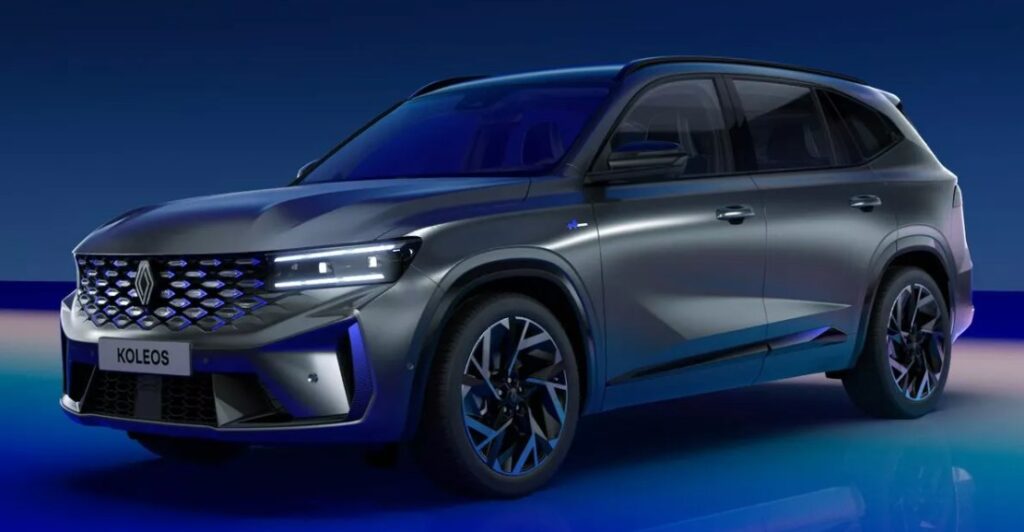
Put the Renault Koleos vs Mitsubishi Outlander side by side and we get one of those comparisons that seems simple until we start digging.
Both are family-friendly SUVs. Both have been offered with four-wheel drive. Both have competed for buyers who want more space than a compact crossover without jumping into a huge, expensive SUV. And on the used market, examples of both can often look surprisingly affordable.
Yet their personalities are quite different.
The Koleos has generally leaned toward comfort, refinement, five-seat spaciousness and value. The Outlander has spent much more of its life emphasizing versatility, available seven-seat configurations, all-wheel-drive expertise and, eventually, plug-in hybrid technology.
There is another wrinkle: we cannot compare these vehicles intelligently without considering their generations.
The Koleos first appeared in the late 2000s, underwent a major reinvention for its second generation in 2016, and entered another era with the Grand Koleos introduced in South Korea in 2024. The Outlander has an even longer evolutionary story, progressing through four generations while also spawning the enormously influential Outlander PHEV. Renault describes the Grand Koleos as a 4.78-metre D-segment SUV developed initially for Korea, while Mitsubishi officially identifies its 2021 redesign as the fourth-generation Outlander.
So, which one belongs in our driveway?
Let's find out.
Content in this publication
- Renault Koleos vs Mitsubishi Outlander at a Glance
- The Generations Change Everything
- Understanding the Mitsubishi Outlander Generations
- Renault Koleos vs Mitsubishi Outlander Exterior Design
- Interior Quality: Koleos or Outlander?
- Koleos vs Outlander Seating Capacity
- Cargo Space and Everyday Practicality
- Engine Options: A Story of Different Philosophies
- Outlander PHEV: The Mitsubishi Ace Card
- Fuel Economy: Which SUV Is Cheaper to Run?
- Driving Experience
- Koleos vs Outlander Off-Road Ability
- Reliability: Renault Koleos vs Mitsubishi Outlander
- Maintenance and Repair Costs
- Safety and Driver Assistance
- Technology and Infotainment
- Which Is Better for Families?
- Which Is Better for Long Trips?
- Which Is Better in the City?
- Used Renault Koleos vs Used Mitsubishi Outlander
- First-Generation Koleos vs Older Outlander
- Second-Generation Koleos vs Third-Generation Outlander
- Latest Koleos vs Fourth-Generation Outlander
- Renault Koleos vs Mitsubishi Outlander Resale Value
- Which SUV Feels More Premium?
- Which SUV Offers Better Value?
- Koleos vs Outlander: Pros and Cons
- Who Should Buy the Renault Koleos?
- Who Should Buy the Mitsubishi Outlander?
- Renault Koleos vs Mitsubishi Outlander: Our Final Verdict
- Frequently Asked Questions
Renault Koleos vs Mitsubishi Outlander at a Glance
For buyers who want the short version before we dive under the hood, here is how the rivalry generally shakes out.
| Category | Renault Koleos | Mitsubishi Outlander |
|---|---|---|
| General character | Comfortable, refined SUV | Practical, versatile family SUV |
| Generations | Three broad eras | Four generations |
| Seating | Primarily five seats | Five or seven depending on version |
| Petrol engines | Yes | Yes |
| Diesel availability | Strong on older models in some markets | Available historically in selected markets |
| Hybrid availability | Latest Grand Koleos markets | Yes |
| Plug-in hybrid | No traditional Koleos PHEV rival | Major Outlander strength |
| AWD/4WD | Available | Available |
| Third row | Generally no | Available on numerous generations |
| Used-car appeal | Value and comfort | Versatility and broader choice |
| Best for | Couples/small families | Families and mixed-use buyers |
Notice the central theme?
The Koleos tends to be the simpler proposition. The Outlander gives us more configurations.
That difference matters enormously when shopping used.
The Generations Change Everything
Comparing a 2010 Koleos with a 2025 Outlander PHEV would be like comparing a flip phone with a modern smartphone simply because both make calls.
We need context.
First-Generation Renault Koleos: The Beginning
The original Koleos arrived around 2008 and represented Renault's early move into the crossover SUV market.
Its engineering reflected Renault's relationship with Nissan. Contemporary coverage noted that the first Koleos used Nissan-related architecture and shared elements with the X-Trail.
Depending on country, buyers encountered petrol and diesel engines, manual or automatic transmissions, and front- or four-wheel-drive configurations.
It was not particularly flashy.
Instead, it offered a comfortable cabin, useful equipment and manageable dimensions.
Today, first-generation Koleos models appeal mainly because of price. We can sometimes get a lot of SUV for surprisingly little money.
However, age matters more than the badge at this point.
Maintenance records, transmission condition, cooling-system health, suspension wear, electronics and evidence of proper servicing deserve far more attention than trim level.
Second-Generation Renault Koleos: The Sweet Spot
Then Renault changed the recipe.
The second-generation Koleos debuted at the Beijing Motor Show in 2016 and used the Renault-Nissan Alliance CMF-CD architecture, also associated with vehicles including the Nissan X-Trail.
This generation grew substantially and looked far more sophisticated.
For many used-SUV buyers, this is the Koleos that makes the comparison with the Outlander particularly interesting.
It combines:
- Generous passenger room
- Attractive exterior styling
- A relatively upscale cabin in higher trims
- Comfortable suspension tuning
- Available all-wheel drive
- Petrol or diesel engines depending on market
- Competitive used prices
And because it remained primarily a five-seat SUV, Renault could dedicate more cabin length to passengers and cargo rather than squeezing in a small third row.
For couples or families with two or three children, that can be an advantage rather than a limitation.
Third-Generation Renault Grand Koleos: A Completely New Chapter
Here is where older comparison articles can already become outdated.
Renault unveiled the Grand Koleos in June 2024 as a 4.78-metre D-segment SUV initially tailored to the Korean market. It is part of Renault's newer international strategy and represents a substantial departure from the preceding Koleos formula.
Renault Korea currently offers Grand Koleos powertrains including an E-Tech hybrid and a 2.0-litre turbo petrol configuration. Its official Korean specifications list the hybrid at up to 245 PS system output, while the 2.0 turbo is listed at 211 PS, with drivetrain availability varying by version.
That means the newest Koleos can no longer be judged purely through the lens of the older Nissan-linked model.
It is a different chapter.
And suddenly, the Outlander has a much more modern rival.
Understanding the Mitsubishi Outlander Generations
The Outlander story is longer and, arguably, more influential.
Mitsubishi says the Outlander first appeared in 2001, while the familiar second-generation model launched in 2005 as the company's mid-size SUV successor to the Airtrek.
Early Outlander Models
Older Outlanders built their reputation around straightforward SUV practicality.
The second-generation model introduced in 2005, for example, could feature electronically controlled four-wheel drive, a 2.4-litre MIVEC petrol engine and CVT transmission. Mitsubishi also offered an occasional-use third row on some versions.
That folding third row became an important distinction.
Even if seats six and seven were not limousine-like, having them was better than leaving two relatives behind.
Third-Generation Mitsubishi Outlander
The third generation became especially significant because this was the period when the Outlander PHEV entered the picture.
Mitsubishi launched the Outlander PHEV in Japan in 2013, combining SUV practicality, four-wheel-drive capability and plug-in electrification.
That was not a cosmetic change.
It fundamentally altered the Outlander's identity.
Suddenly, this practical family SUV could handle shorter journeys using electricity while retaining an internal-combustion engine for long-distance driving.
It was a clever bridge between conventional petrol cars and full EVs.
Fourth-Generation Mitsubishi Outlander
The fourth-generation Outlander was officially revealed in February 2021.
Mitsubishi introduced a redesigned platform, 2.5-litre engine, updated electronically controlled four-wheel drive, S-AWC and three-row seating.
The PHEV was subsequently redesigned as well.
By 2026, Mitsubishi was describing the current Outlander PHEV as the second generation of its plug-in-hybrid version, following the full redesign introduced in 2021.
This latest Outlander feels significantly more premium than the old utilitarian models.
Renault Koleos vs Mitsubishi Outlander Exterior Design
Design is subjective, but these SUVs rarely look like twins.
The second-generation Koleos is smoother and more European in presentation. Large Renault badges, chrome detailing and C-shaped lighting gave it a distinctive road presence.
The Outlander traditionally looks more rugged.
Its recent Dynamic Shield design pushes that attitude further with an upright nose and strong visual shoulders.
So which wins?
If we want understated elegance, we may gravitate toward the Koleos.
If we like an SUV that looks ready to wrestle its way through bad weather, the Outlander probably has more visual muscle.
Which One Ages Better Visually?
Interestingly, the second-generation Koleos has aged rather gracefully.
Its design does not scream its production year.
Some earlier Outlanders look more obviously from their respective eras, although the latest model swings strongly in the opposite direction and appears noticeably more contemporary.
The Grand Koleos resets this comparison once again, bringing Renault's SUV into a much newer design era.
Interior Quality: Koleos or Outlander?
Climb inside and the rivalry becomes more nuanced.
Historically, Renault often tried to make the Koleos feel a little more luxurious than its price suggested.
Soft-touch surfaces, large infotainment screens on higher trims, leather upholstery and comfortable front seats made upper-spec second-generation examples particularly inviting.
The Outlander traditionally prioritised usefulness.
That was not necessarily glamorous—but families rarely complain about usability after someone spills a drink in the second row.
Second-Generation Koleos Cabin
This may be one of the Koleos' strongest areas.
It can feel spacious without becoming cumbersome.
Adults generally get useful rear-seat room, while the absence of a third row allows the cabin to focus on five occupants.
Higher trims can feel surprisingly premium for used-car money.
Newer Outlander Cabin
The fourth-generation Outlander closed much of the perceived-quality gap.
Mitsubishi specifically emphasized higher-quality materials, digital displays, wireless smartphone charging and improved cabin refinement when launching the fourth generation.
It no longer feels like practicality wearing a cheap suit.
It feels like a proper modern family SUV.
Koleos vs Outlander Seating Capacity
Here Mitsubishi lands one of its biggest punches.
Many Outlanders offer seven seats.
The Koleos traditionally does not.
Do We Actually Need Seven Seats?
That question matters more than simply counting headrests.
If we regularly carry six or seven people, buy the Outlander.
Simple.
But if those rear seats would spend 98% of their life folded away, the calculation changes.
Third rows consume packaging space. In many mid-size SUVs they are best reserved for children or occasional trips.
A five-seat Koleos may therefore feel more spacious and straightforward for the five people who actually use the vehicle every day.
Our Seating Verdict
Outlander wins for maximum flexibility.
Koleos works beautifully if five seats are enough.
Cargo Space and Everyday Practicality
Boot capacity varies widely by generation, drivetrain and whether an Outlander has seven seats.
So we should resist throwing around one cargo figure and pretending it applies to twenty years of vehicles.
Instead, consider the layouts.
A five-seat Koleos generally offers an uncomplicated cargo area with no third-row seating hardware competing for space.
The Outlander gives us more flexibility but becomes a different vehicle depending on seat position.
Seven seats up?
Cargo space becomes limited.
Third row folded?
Much better.
You may be interested in reading How Many BMW 8 Series Were Made? Production Numbers Explained
All rear seats folded?
Now we have serious hauling potential.
For strollers, luggage, dogs and supermarket runs, both work well.
For people?
Outlander.
Engine Options: A Story of Different Philosophies
This is another area where geography dramatically changes the comparison.
The Koleos has been offered with petrol and diesel engines, while the modern Grand Koleos adds hybrid and turbo-petrol powertrains in markets where it is sold.
The Outlander has used petrol, diesel in certain markets, conventional internal-combustion powertrains and, most importantly, plug-in hybrid technology.
Koleos Petrol Engines
A 2.5-litre naturally aspirated petrol four-cylinder became familiar in numerous Koleos markets.
Paired with a CVT, it focuses on smoothness rather than fireworks.
Press the accelerator hard and the engine may become vocal.
But family SUVs are not drag racers.
Driven calmly, the combination suits the Koleos' relaxed personality.
Koleos Diesel Engines
Diesel Koleos versions can make considerable sense for long-distance users, particularly where diesel fuel remains economical and emissions regulations do not make ownership troublesome.
Torque is the attraction.
On motorways, a diesel Koleos can feel effortless.
For repeated short urban trips, however, modern diesel emissions systems can make petrol or hybrid alternatives more sensible.
Outlander Petrol Engines
Conventional petrol Outlanders are the simpler choice for buyers who do not want to plug anything in.
Older 2.0- and 2.4-litre engines were widely used depending on generation and market, while the fourth-generation North American launch centred on a 2.5-litre engine.
Again, smooth practicality comes before performance theatrics.
Outlander PHEV: The Mitsubishi Ace Card
Here the comparison changes completely.
The Outlander PHEV is not merely another engine option.
It is arguably the defining advantage Mitsubishi has held over the traditional Koleos.
Mitsubishi launched the original Outlander PHEV in 2013 and has continued developing the concept across subsequent models. The manufacturer reported in 2024 that more than 370,000 Outlander PHEVs had been sold across the first two PHEV generations.
Why does that matter?
Because a PHEV can make enormous sense for the right owner.
Charge overnight.
Drive daily journeys electrically when conditions permit.
Use petrol assistance when necessary.
Then take a road trip without planning every stop around public chargers.
That combination can feel like having two vehicles packed into one shell.
But Should Everyone Buy an Outlander PHEV?
No.
A plug-in hybrid only delivers its biggest advantages when we actually plug it in.
Buying one and never charging it misses the point.
Used PHEV shoppers should also pay close attention to battery condition, charging operation, service history and model-specific battery performance.
Fuel Economy: Which SUV Is Cheaper to Run?
There is no universal winner across all generations.
A diesel Koleos driven long distances can be economical.
A standard petrol Outlander may deliver reasonable but unremarkable consumption.
A petrol Koleos with a CVT can be acceptable without setting fuel-economy records.
But a properly charged Outlander PHEV used for frequent short trips can dramatically reduce petrol consumption.
The newest Grand Koleos hybrid complicates the picture further. Renault Korea quotes combined fuel economy of up to 15.7 km/L for a specified 19-inch-wheel hybrid configuration under its local testing system.
So the modern contest is increasingly hybrid versus hybrid rather than petrol versus petrol.
Driving Experience
Neither SUV exists to attack racetracks.
That is good.
What we want is confidence, comfort and predictable behaviour.
Renault Koleos on the Road
The Koleos tends to feel relaxed.
Steering is generally light, suspension comfort takes priority, and cruising is where the vehicle makes the most sense.
Think of it as a comfortable pair of walking shoes.
Maybe not exciting.
But after three hours on the road, excitement is rarely what our spine is asking for.
Mitsubishi Outlander on the Road
The Outlander often feels a little more utility-focused, especially in earlier generations.
Its available AWD systems are a major part of the appeal.
Later S-AWC-equipped versions introduce more sophisticated control over vehicle dynamics and traction.
For wet roads, gravel, snow or slippery rural surfaces, that can inspire confidence.
Koleos vs Outlander Off-Road Ability
Neither should automatically be treated like a hardcore 4x4.
These are crossovers.
Still, AWD variants of both can cope with conditions far beyond an ordinary front-wheel-drive hatchback.
Think:
- Gravel tracks
- Wet grass
- Snow-covered roads
- Muddy campsites
- Unsealed country roads
- Moderate trails
The Outlander's four-wheel-control heritage gives it an edge in perception and, depending on version, capability.
The Koleos AWD system is better viewed as extra security for poor surfaces rather than permission to chase heavily modified 4x4s into the wilderness.
Reliability: Renault Koleos vs Mitsubishi Outlander
Here buyers often want one simple sentence.
Unfortunately, one sentence would be misleading.
Reliability depends heavily on generation, engine, transmission, maintenance and previous use.
Older Koleos Reliability
The original Koleos is now old enough that condition dominates.
A meticulously maintained example may be far safer than a newer but neglected car.
Check:
- CVT behaviour
- Suspension noise
- Oil or coolant leaks
- Electrical functions
- AWD operation
- Service documentation
- Air-conditioning performance
Second-Generation Koleos Reliability
The Nissan-related mechanical foundation means this Koleos does not exist in an isolated French engineering bubble.
However, CVT maintenance deserves attention.
During a test drive, acceleration should feel smooth.
Jerking, shuddering, unusual whining or delayed engagement deserves investigation.
Outlander Reliability
Many conventional Outlanders have developed a reputation as durable family workhorses, but again, no generation is immune from problems.
On older examples, inspect suspension, CVT operation where fitted, AWD components, cooling systems and electronics.
PHEVs require an additional layer of inspection because the high-voltage system and traction battery become part of the purchasing equation.
Maintenance and Repair Costs
A cheap SUV can quickly become an expensive SUV if local parts support is weak.
This is where geography matters.
Before buying either model, check whether local workshops understand it.
Ask about:
- Parts availability
- CVT servicing
- AWD servicing
- Dealer coverage
- Hybrid expertise
- Battery diagnostics
- Common replacement parts
- Insurance costs
In some countries Mitsubishi has the stronger SUV network.
Elsewhere Renault may be extremely well established.
A vehicle that is common in our region is often easier to own than a theoretically superior model nobody knows how to repair.
Safety and Driver Assistance
Again, newer wins.
Early versions of both SUVs naturally lack the assistance technology now expected in modern family cars.
Move into later generations and we encounter features such as autonomous emergency braking, lane assistance, blind-spot monitoring, parking aids, adaptive cruise control and surround-view cameras depending on trim and market.
The fourth-generation Outlander substantially increased its technology offering, while the newest Grand Koleos pushes Renault into a similarly digital world.
Grand Koleos can feature a multi-screen cabin environment, while Renault Korea promotes three 12.3-inch displays on suitably equipped versions.
That is a huge leap from the earliest Koleos.
Technology and Infotainment
Older cars reveal their age fastest through their screens.
A mechanically healthy 2012 SUV may still be perfectly useful, but its infotainment system can feel prehistoric beside a modern smartphone.
If Android Auto or Apple CarPlay matters to us, check the exact year and trim rather than assuming every second-generation vehicle includes it.
Later Outlanders and Koleos models improve dramatically.
The most recent Grand Koleos is especially screen-heavy.
The current Outlander has also received infotainment updates; Mitsubishi's compatibility information distinguishes several Outlander infotainment eras, including 2022-onward and newer 2025 systems.
Which Is Better for Families?
For most large families, Outlander.
Why?
Seven-seat availability.
Hybrid choices.
You may be interested in readingHow Many BMW 8 Series Were Made? Production Numbers ExplainedYou may be interested in reading
 Mitsubishi Outlander vs Nissan Rogue: Which SUV Is the Better Buy?
Strong cargo flexibility.
Available AWD.
For families with no need for a third row, however, the answer becomes far less obvious.
The Koleos offers plenty of breathing room and may give us more equipment for the money.
Which Is Better for Long Trips?
The Koleos deserves serious attention.
Comfortable seats, good cabin space and relaxed road manners make it a natural cruiser.
Diesel versions can be particularly attractive for high-mileage driving where they remain practical to own.
The Outlander is hardly uncomfortable, though.
And the latest generations have become significantly more refined.
PHEV versions also give us electric urban driving without sacrificing petrol-powered long-distance flexibility.
Which Is Better in the City?
It depends on the powertrain.
For pure simplicity, a petrol Koleos or petrol Outlander works.
For commuting with regular home charging, the Outlander PHEV becomes much more interesting.
The Grand Koleos E-Tech hybrid gives Renault a modern answer without requiring the owner to plug in.
That is appealing for drivers who want electrification without managing a charging cable.
Used Renault Koleos vs Used Mitsubishi Outlander
This may be the most important section of the entire comparison.
When buying used, forget brand loyalty for a moment.
Condition wins.
A beautifully maintained Outlander beats a neglected Koleos.
A beautifully maintained Koleos beats an abused Outlander.
Simple.
Choose a Used Koleos If We Want
- Strong value for money
- Five spacious seats
- Comfortable road manners
- Attractive equipment levels
- A conventional SUV experience
- A less obvious alternative to mainstream Japanese SUVs
Choose a Used Outlander If We Want
- Seven-seat availability
- Greater configuration choice
- PHEV availability
- Strong family practicality
- AWD options
- A long-established SUV nameplate
First-Generation Koleos vs Older Outlander
At this age, we would buy based almost entirely on individual condition.
Service history is king.
Mileage matters less than neglect.
A 180,000-km SUV with meticulous maintenance could be a better purchase than a supposedly low-mileage example that has skipped fluid changes for years.
Pay for an independent inspection.
It could be the cheapest money we spend.
Second-Generation Koleos vs Third-Generation Outlander
Now things get really interesting.
This is arguably the strongest used-car matchup.
The Koleos may feel more stylish and comfortable.
The Outlander offers greater versatility and, crucially, PHEV availability.
Our choice comes down to lifestyle.
Need seven seats or want a plug-in?
Outlander.
Want five roomy seats and strong used-market value?
Koleos.
Latest Koleos vs Fourth-Generation Outlander
This comparison is fundamentally different from the historical one.
Renault's Grand Koleos brings hybridisation, modern screens, updated cabin technology and an entirely new technical proposition.
The fourth-generation Outlander counters with mature PHEV technology, available three-row seating and Mitsubishi's continuing S-AWC development.
The rivalry is closer than it has ever been.
Yet their philosophies remain distinct.
Grand Koleos feels like Renault trying to build an upscale, technology-rich family SUV.
Outlander feels like Mitsubishi refining decades of practical SUV experience and electrification into one package.
Renault Koleos vs Mitsubishi Outlander Resale Value
Resale varies enormously by country.
We should never assume a global rule.
Mitsubishi's strong recognition in SUV-heavy markets can benefit the Outlander.
Renault may perform better where its dealer network and brand presence are substantial.
PHEV resale deserves separate treatment because battery condition, fuel prices, charging infrastructure and government policy can all influence demand.
Before buying, browse local classified listings for three-year-old and five-year-old examples.
That tells us far more about our market than generic global depreciation percentages.
Historically?
Koleos often punches above its price.
Especially in high-spec second-generation form.
The newest Outlander, however, substantially narrows that advantage.
And Grand Koleos lifts Renault's interior ambitions again.
So there is no permanent winner.
Among affordable used models, we would still give the Koleos a slight edge for perceived luxury.
Among newer vehicles, trim level matters more than badge.
Which SUV Offers Better Value?
Used Koleos models can represent excellent value precisely because they are sometimes overlooked.
That can work beautifully for buyers.
We may get leather, AWD, large wheels, substantial cabin space and a long equipment list for less than more fashionable alternatives.
The Outlander fights back with versatility.
Seven seats have value.
PHEV technology has value.
A strong AWD system has value.
The cheapest sticker price is not always the best deal.
Koleos vs Outlander: Pros and Cons
Renault Koleos Pros
- Comfortable ride
- Spacious five-seat cabin
- Often generous equipment
- Appealing design
- Strong used value
- Good long-distance character
- Latest generation adds hybrid technology
Renault Koleos Cons
- No traditional seven-seat advantage
- Older CVT-equipped vehicles require careful inspection
- Resale can be weaker in some markets
- Parts/dealer availability varies significantly by country
- Older generations lack modern hybrid choices
Mitsubishi Outlander Pros
- Seven-seat availability
- Excellent family versatility
- Strong AWD heritage
- Major PHEV advantage
- Broad choice across generations
- Practical interior
- Latest models feel substantially more premium
Mitsubishi Outlander Cons
- Third-row seats can be tight
- Older cabins may feel utilitarian
- Used PHEVs need battery assessment
- Some powertrains prioritise economy over excitement
- Specification differences between markets can be confusing
Who Should Buy the Renault Koleos?
We would choose the Koleos if we mainly carry four or five people and want comfort, space and equipment without paying a premium for a fashionable badge.
The second generation is particularly attractive as a used buy.
Find one with complete history, sensible mileage and evidence of correct drivetrain maintenance and it can be a lot of SUV for the money.
The Grand Koleos adds another audience: buyers wanting a modern hybrid SUV with much more technology than previous versions offered.
Who Should Buy the Mitsubishi Outlander?
We would choose the Outlander if flexibility sits at the top of our list.
Maybe we occasionally need seven seats.
Maybe we want AWD.
Maybe we can charge at home and see genuine value in a PHEV.
Maybe we simply want an SUV platform that Mitsubishi has spent multiple generations refining.
The Outlander covers more lifestyles.
That is its biggest strength.
Renault Koleos vs Mitsubishi Outlander: Our Final Verdict
So, after crossing generations, engines, seating layouts and electrification, which SUV wins?
For the widest range of buyers, the Mitsubishi Outlander takes the overall victory.
Its seven-seat availability, established AWD credentials, broad model selection and pioneering PHEV powertrain give it extraordinary versatility. Mitsubishi's plug-in-hybrid story began with the Outlander PHEV in 2013 and remains central to the current model, giving the Outlander an electrification history the traditional Koleos simply cannot match.
But that does not make the Renault a bad choice.
Far from it.
For buyers who only need five seats, a second-generation Koleos can be one of the more interesting bargains in the used-SUV market. It is roomy, comfortable, handsome and often generously equipped.
And the newest Grand Koleos changes the equation again. Renault's 2024-era model moves beyond the older Koleos formula with hybrid technology, a larger body and a much more modern digital cabin.
So our verdict is really this:
Buy the Outlander for versatility.
Buy the Koleos for comfort and value.
Buy the Outlander PHEV if home charging fits our lifestyle.
Consider the Grand Koleos if we want Renault's newest hybrid technology and do not need the Outlander's traditional seven-seat advantage.
And when buying either one used?
Forget the badge for five minutes.
Look at the service history.
Because the best SUV in the world becomes the wrong SUV when its previous owner treated maintenance like an optional subscription.
Frequently Asked Questions
1. Is a Renault Koleos better than a Mitsubishi Outlander?
It depends on what we need. The Koleos is especially attractive for buyers prioritising comfort, five-seat spaciousness and used-car value. The Outlander is generally the more versatile choice because many versions offer seven seats, AWD and, importantly, plug-in-hybrid technology.
2. Which is more reliable, Renault Koleos or Mitsubishi Outlander?
There is no reliable all-generations answer because both names cover many engines, transmissions and technical eras. Condition and maintenance history matter enormously on older examples. When shopping used, we should inspect the transmission, drivetrain, suspension, electronics and service records carefully. Outlander PHEV buyers should additionally assess the hybrid battery and charging system.
3. Is the Renault Koleos bigger than the Mitsubishi Outlander?
Dimensions depend on generation. The second-generation Koleos is a substantial mid-size SUV, while the latest Grand Koleos measures about 4.78 metres long. Outlander dimensions have also increased across generations. Instead of choosing purely by exterior length, buyers should compare rear-seat room, boot configuration and whether they require the Outlander's available third row. Renault officially describes Grand Koleos as a 4.78-metre D-segment SUV.
You may be interested in readingHow Many BMW 8 Series Were Made? Production Numbers ExplainedYou may be interested in reading
Mitsubishi Outlander vs Nissan Rogue: Which SUV Is the Better Buy?You may be interested in reading
Mitsubishi Outlander vs Toyota Highlander: Which SUV Should You Buy?4. Does the Renault Koleos have seven seats like the Outlander?
Traditional Koleos models are primarily five-seat SUVs, whereas various Outlander generations have offered a third row and seven-seat capacity. Mitsubishi specifically launched the fourth-generation Outlander with three-row, seven-seat accommodation. If we genuinely need seats six and seven, the Outlander is therefore the more obvious choice.
5. Should we buy a used Koleos or Outlander?
Choose a used Koleos if we want five comfortable seats, strong equipment and potentially excellent value. Choose an Outlander if we need seven-seat flexibility, AWD capability or access to a PHEV. In either case, a documented service history and professional pre-purchase inspection should carry more weight than mileage or trim alone.
If you want to know other articles similar to Renault Koleos vs Mitsubishi Outlander: Which SUV Should We Buy? you can visit the category Models.
Nissan Rogue Dark Armor vs Platinum: Which Trim Is Better?

Kia Sorento Models: Complete Guide to Trims, Engines and Versions
BYD Shark 6 vs Ranger vs HiLux: Which Ute Makes the Most Sense in 2026?
BYD Shark 6 vs MG U9: Which Ute Makes More Sense in 2026?
BYD Shark 6 vs Ford Ranger Raptor: Which Performance Ute Is Better in 2026?
BYD Shark 6 vs Kia Tasman: Which Ute Is Better?
Leave a Reply
More content of your interest