

How Many BMW 8 Series Were Made? Production Numbers Explained

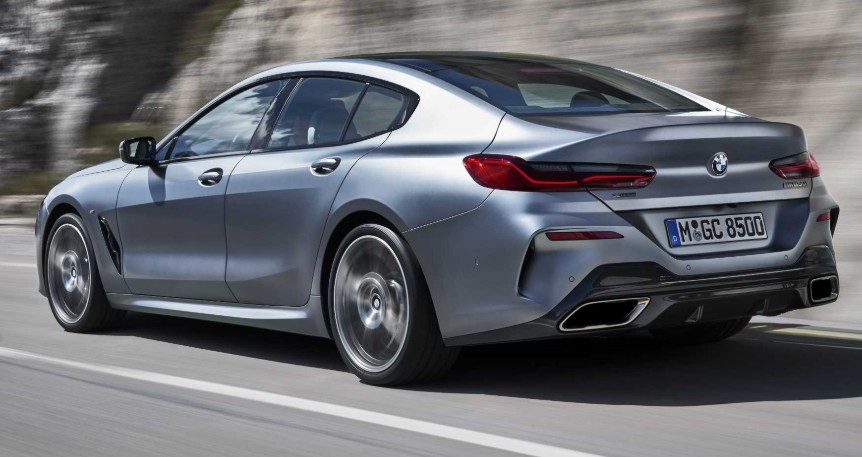
When we ask how many BMW 8 Series were made, the answer looks simple at first. Dig a little deeper, though, and things become more interesting.
For the original BMW 8 Series—the legendary E31 built during the 1990s—we have a remarkably clear figure: 30,621 cars were produced worldwide before production ended in 1999. Of those, only 1,510 were the high-performance BMW 850CSi.
The modern BMW 8 Series is a different story.
BMW revived the nameplate in 2018 with the G15 Coupé, followed by the G14 Convertible and G16 Gran Coupé. Production eventually came to an end in April 2026, meaning the second-generation 8 Series enjoyed roughly an eight-year production run.
However, BMW has not publicly presented one convenient, definitive lifetime production number covering every modern 8 Series variant in the way historical sources document the E31.
So, how many BMW 8 Series were actually built across both eras? Let's untangle the numbers carefully rather than throwing around an attractive but questionable total.
Content in this publication
- The Short Answer: How Many BMW 8 Series Were Made?
- BMW 8 Series Production at a Glance
- How Many First-Generation BMW 8 Series Were Made?
- Why Was E31 Production So Low?
- How Many BMW 850CSi Were Made?
- How Many BMW 850i and 850Ci Cars Were Made?
- How Many BMW M8 E31 Cars Were Made?
- When Did BMW Stop Making the First 8 Series?
- When Did BMW Bring Back the 8 Series?
- How Many Modern BMW 8 Series Were Made?
- Where Was the Modern BMW 8 Series Built?
- How Many Body Styles Did the Modern BMW 8 Series Have?
- How Many BMW M8 Cars Were Made?
- When Did BMW 8 Series Production End Again?
- Which BMW 8 Series Is the Rarest?
- Is the BMW 8 Series Considered a Rare Car?
- Why Did BMW Discontinue the 8 Series?
- Is the BMW 8 Series Likely to Become Collectible?
- What Makes the Original 8 Series More Special Today?
- How the Two Generations Compare by Production Philosophy
- So How Many BMW 8 Series Were Made in Total?
- Conclusion: BMW 8 Series Production Was Always Exclusive
- Frequently Asked Questions
The Short Answer: How Many BMW 8 Series Were Made?
The most important confirmed number is:
30,621 first-generation BMW 8 Series E31 cars were produced worldwide between 1989 and 1999.
The modern 8 Series added tens of thousands more vehicles after production resumed in 2018. BMW's own reporting shows 12,219 deliveries in 2019 and 20,703 in 2020 alone, illustrating that the revived model quickly exceeded 30,000 worldwide deliveries during its early years.
But here's the key distinction: deliveries are not exactly the same thing as production, and BMW later combined the 7 Series and 8 Series in some of its annual reporting instead of giving the 8 Series its own line. That makes a precise modern lifetime manufacturing total much harder to establish from BMW's publicly available financial reports.
Therefore, we can confidently say that considerably more than 60,000 BMW 8 Series cars across both generations were built, but stating one exact all-generation number without qualification would imply a level of certainty the available factory data does not support.
BMW 8 Series Production at a Glance
| Generation | Production period | Body styles | Confirmed or publicly reported volume |
|---|---|---|---|
| E31 | 1989–1999 | Coupé | 30,621 total |
| G15 | 2018–2026 | Coupé | Included in modern 8 Series figures |
| G14 | 2018–2026 | Convertible | Included in modern 8 Series figures |
| G16 | 2019–2026 | Gran Coupé | Included in modern 8 Series figures |
| 850CSi | 1992–1996 | Coupé | 1,510 total |
| Modern 8 Series | 2018–2026 | Coupé, Convertible, Gran Coupé | Exact final lifetime total not separately published by BMW |
The contrast itself tells us something important. The original E31 was essentially one exotic-looking grand touring coupé offered with several engines. The modern family became much broader, stretching from six-cylinder 840 models to V8-powered M850i versions and full-blown M8s.
Think of the first 8 Series as an exclusive restaurant with one dining room. The second generation became the same restaurant with a terrace, private lounge and rooftop bar.
How Many First-Generation BMW 8 Series Were Made?
The E31 Total Was 30,621 Cars
BMW built 30,621 examples of the E31 8 Series before production finished in 1999.
That figure includes the various 850 and 840 derivatives sold during the decade.
A historical account of the model notes another fascinating detail: 24 E31 cars were hand-assembled at BMW's Rosslyn facility in South Africa, where local assembly was more economical because of taxation rules.
For a flagship BMW produced over approximately a decade, 30,621 cars isn't much.
BMW sells mass-market models in quantities that can dwarf that figure relatively quickly. The E31 therefore occupied an unusual position. It was technically sophisticated, hugely expensive and intentionally exclusive.
And that exclusivity is one reason we're still talking about it decades later.
Why Was E31 Production So Low?
BMW did not design the E31 to chase the volume of the 3 Series or 5 Series.
This was the company's technological showcase.
It arrived with futuristic styling, electronically controlled systems, sophisticated suspension technology and V12 power at a time when all of that felt wonderfully extravagant.
Unfortunately for BMW, extravagance isn't always compatible with economics.
The early 1990s brought difficult market conditions, while the 8 Series itself carried a substantial price tag. Buyers who loved the appearance might still have hesitated when they saw what BMW wanted for one.
The result?
Production stayed relatively limited.
And today, ironically, the sales challenge BMW faced then helps give the E31 its collector appeal.
Was the BMW 8 Series a Sales Failure?
Calling the E31 a failure is too simplistic.
Did BMW sell enormous numbers? No.
Did the car achieve the commercial scale associated with mainstream BMW models? Definitely not.
But that wasn't entirely the point.
The 8 Series served as a flagship grand tourer—a technological statement sitting close to the summit of BMW's range. It demonstrated what the company could engineer when cost wasn't the first item on the agenda.
We could compare it to a concept car that escaped the motor-show stand and somehow received licence plates.
Three decades later, clean examples turn heads precisely because we don't see them everywhere.
How Many BMW 850CSi Were Made?
Only 1,510 BMW 850CSi Cars Were Produced
Now we reach the jewel in the crown.
BMW produced just 1,510 examples of the 850CSi from 1992 until 1996. Independent historical records and auction documentation consistently report the same figure.
That makes the 850CSi dramatically rarer than the regular E31.
Do the maths and roughly one 850CSi was built for every twenty E31 8 Series cars produced overall.
The CSi wasn't merely an 850 with a few badges and larger wheels, either.
BMW Motorsport had a substantial hand in its development, and the car used the S70 5.6-litre V12, producing around 380 PS in European specification. Unlike the more relaxed versions of the 8 Series, the CSi pushed the car toward genuine high-performance GT territory.
Why the 850CSi Matters to Collectors
Rarity alone doesn't create a collectible car. Lots of unpopular machines are rare because nobody wanted them.
The 850CSi is different.
It combines limited production with historical significance, a naturally aspirated V12, a six-speed manual transmission and direct BMW Motorsport involvement.
That's a recipe collectors tend to adore.
As combustion-engine cars become more technologically complex and increasingly electrified, the combination becomes even harder to recreate.
How Many BMW 850i and 850Ci Cars Were Made?
The V12 sat at the heart of the original 8 Series story.
Historical production summaries indicate that more than two-thirds of all E31 cars produced used twelve-cylinder engines.
That might sound surprising today.
Imagine BMW launching a large luxury coupé and making the V12 the dominant powertrain. In the modern automotive world, where emissions targets and downsized engines shape model planning, it almost feels like we're describing another planet.
Yet that was the character of the E31.
The early 850i established the formula before BMW progressively evolved the range, introducing updated 850Ci versions and eventually adding V8-powered 840 variants.
How Rare Is a Manual BMW 8 Series E31?
Here's another number worth remembering.
Only around one in six E31 8 Series cars was fitted with the six-speed manual gearbox, according to historical BMW production information.
That helps explain why manual E31 examples attract so much enthusiast interest.
Combine the right engine, gearbox, condition, colour and specification, and suddenly we're no longer looking at an ordinary old luxury BMW.
We're looking at something genuinely scarce.
How Many BMW M8 E31 Cars Were Made?
The Original BMW M8 Never Entered Series Production
This question causes plenty of confusion.
There was an E31-based BMW M8 project, but the spectacular high-performance machine never became a normal production model.
BMW developed a prototype featuring a highly modified V12 and significant performance changes, but it remained essentially a one-off development exercise rather than reaching showrooms.
Historical BMW accounts describe the prototype as having approximately 550 hp, along with dedicated chassis and aerodynamic changes.
So if somebody asks:
How many original E31 BMW M8s were produced?
The practical answer is one prototype, not a customer production series.
The closest production relative was the 850CSi.
And with only 1,510 examples made, the CSi wasn't exactly common either.
When Did BMW Stop Making the First 8 Series?
E31 production continued until 1999.
You may be interested in reading Mitsubishi Outlander vs Nissan Rogue: Which SUV Is the Better Buy?
Then the 8 Series disappeared.
Not for two years.
Not for five.
For nearly two decades.
BMW continued building prestigious coupés, of course, but the 8 Series badge itself went into hibernation.
That long absence gave the original model an almost mythological quality. By the time BMW announced a new 8 Series, enthusiasts who remembered the E31 had waited long enough to raise children, change careers and perhaps finally afford the BMW they dreamed about in the 1990s.
When Did BMW Bring Back the 8 Series?
Modern BMW 8 Series Production Started in 2018
The comeback began in July 2018, when series production of the G15 BMW 8 Series Coupé started at BMW Group Plant Dingolfing in Germany.
The Convertible followed soon afterward.
BMW began series production of the G14 8 Series Convertible in November 2018, approximately four months after the Coupé entered production.
Then came another major expansion.
On July 1, 2019, BMW started producing the G16 8 Series Gran Coupé, together with new M8 Competition Coupé and Convertible models at Dingolfing.
Suddenly, the 8 Series wasn't a single grand touring coupé anymore.
It had become an entire luxury family.
How Many Modern BMW 8 Series Were Made?
This is where we need to distinguish a useful estimate from a verified lifetime factory figure.
BMW's 2020 annual report recorded 12,219 BMW 8 Series deliveries in 2019 and 20,703 in 2020. That's 32,922 customer deliveries across just those two years.
Production had already started during 2018, and sales continued through subsequent years.
Clearly, therefore, the second-generation 8 Series exceeded that 32,922 figure substantially during its complete lifespan.
However, from 2021 BMW began combining certain model families in published delivery tables. Its 2021 report, for example, lists 62,628 combined worldwide deliveries for the BMW 7 Series and 8 Series, rather than giving us an isolated 8 Series number.
That's the problem.
We can't simply take the combined figure and pretend every car was an 8 Series.
Why You May See Different BMW 8 Series Production Totals Online
Search the internet and you'll encounter different answers because websites often mix three categories:
- factory production;
- worldwide customer deliveries;
- regional registrations or sales.
Those figures are related, but they aren't interchangeable.
A vehicle can be produced in December and delivered to its customer in January. Inventory can move between reporting periods. Regional sales figures tell us nothing about cars delivered elsewhere.
That's why our safest approach is to keep factory-confirmed and officially reported numbers clearly labelled.
If somebody claims an extremely precise lifetime total for every G14, G15 and G16 without identifying a credible production database or BMW factory record, we'd treat that number cautiously.
Where Was the Modern BMW 8 Series Built?
The modern BMW 8 Series was primarily associated with BMW Group Plant Dingolfing in Lower Bavaria, Germany.
That's fitting.
Dingolfing has long been one of BMW's most important locations for upper-luxury vehicles. When the G15 entered production, BMW integrated it onto assembly structures that also handled models such as the 5 Series and 7 Series.
Rather than establishing an isolated boutique factory for the 8 Series, BMW used highly flexible production systems.
The Convertible was similarly integrated into the same production environment, and the Gran Coupé joined in 2019.
This flexibility makes perfect business sense. A low-volume luxury model doesn't need its own enormous factory when the manufacturer can efficiently mix it with other premium vehicles.
How Many Body Styles Did the Modern BMW 8 Series Have?
BMW offered three fundamental body configurations during the modern generation.
The G15 Coupé was the spiritual successor to the E31—a long, low grand tourer with two doors.
The G14 Convertible added an electrically operated fabric roof and a more relaxed grand-touring personality.
The G16 Gran Coupé stretched the concept into a four-door fastback, providing genuine rear-seat practicality while preserving much of the visual drama.
Then BMW M turned up and added another layer of madness.
There were M8 derivatives of the major body styles, alongside M850i and less extreme 840 configurations depending on market.
So when someone says "8 Series production," we need to remember they're no longer talking about one car.
They're talking about an extended family.
How Many BMW M8 Cars Were Made?
Unlike the abandoned E31 M8 project, the modern BMW M8 became a genuine production model.
Production of the M8 Competition Coupé and Convertible began at Dingolfing in July 2019 alongside the new 8 Series Gran Coupé.
An M8 Gran Coupé followed as BMW expanded the range.
BMW did not, however, provide a simple public lifetime production figure for every M8 configuration comparable to the famous 1,510-unit 850CSi total.
The modern M8 therefore isn't necessarily rare in precisely the same documented sense as the CSi, but it remained a relatively exclusive high-performance flagship.
And unlike the original M8 prototype, you could actually walk into a dealership and order one.
Quite an improvement.
When Did BMW 8 Series Production End Again?
The Second Generation Ended in April 2026
The modern 8 Series reached the end of its lifecycle in April 2026.
Reports citing BMW confirmation stated that standard 8 Series production was scheduled to continue until April 2026 for remaining markets, while production of the M8 had already finished earlier.
That means the revived generation lasted approximately as long as many conventional model cycles, despite never becoming a mass-market BMW.
Its retirement also created an intriguing parallel.
The original 8 Series vanished in 1999.
The second-generation model disappeared in 2026.
Twice, BMW created a glamorous flagship grand tourer. Twice, enthusiasts had to watch it leave.
Will there be a third chapter?
BMW hasn't given us an answer that lets us carve the next generation into stone.
Which BMW 8 Series Is the Rarest?
If we're restricting the question to recognisable series-production E31 models, the 850CSi sits near the top of the rarity discussion with just 1,510 units produced worldwide.
Individual configurations can be considerably scarcer.
Choose a specific exterior colour, interior, market, transmission and model year, and production numbers shrink rapidly.
Special modern editions can also have extremely limited runs, so "rarest 8 Series" depends on whether we're discussing ordinary series models, limited editions or prototypes.
If prototypes count, the original M8 changes the conversation completely.
But for collectors searching for a car they can realistically buy, the 850CSi remains the poster child.
Is the BMW 8 Series Considered a Rare Car?
The E31 Is Undeniably Uncommon
With 30,621 vehicles produced globally, the original E31 was uncommon from the beginning.
More importantly, that production total doesn't tell us how many remain today.
Cars have been crashed, dismantled, neglected, exported, converted or simply lost to time.
So surviving numbers are naturally lower.
A good E31 can therefore feel considerably rarer on the road than the original 30,621 production figure suggests.
You may be interested in readingMitsubishi Outlander vs Nissan Rogue: Which SUV Is the Better Buy?You may be interested in reading
Mitsubishi Outlander vs Toyota Highlander: Which SUV Should You Buy?The Modern 8 Series Is Uncommon Rather Than Ultra-Rare
The G14/G15/G16 family was produced in significantly larger annual numbers during its strongest years than the E31.
For example, BMW reported 20,703 worldwide 8 Series deliveries in 2020 alone.
That's almost two-thirds of the entire E31's decade-long production volume in one calendar year.
Still, compare the modern 8 Series with mainstream luxury SUVs, compact executive saloons or BMW's own high-volume models, and it remains relatively unusual.
You aren't likely to encounter five M850i Coupés every time you visit the supermarket.
And that matters.
Luxury cars feel more special when the exact same one isn't parked three spaces away.
Why Did BMW Discontinue the 8 Series?
Every car has a lifecycle.
The modern 8 Series launched during a period when BMW was aggressively expanding its luxury portfolio. By 2026, however, the company was moving toward a new generation of products, electrification and updated design and technology architectures.
BMW indicated that the 8 Series had reached the end of its standard product lifecycle when production concluded.
There was also considerable overlap inside BMW's lineup.
Want a luxurious four-door flagship? The 7 Series exists.
Want an extravagant luxury SUV? There's the X7.
Want brutal M performance? Buyers have several alternatives.
Want an electric flagship? BMW's range now provides options that didn't exist when the modern 8 Series was conceived.
That left the 8 Series in an emotionally appealing but commercially narrow corner.
And perhaps that's exactly why enthusiasts love it.
Cars positioned between rational categories often become the interesting ones.
Is the BMW 8 Series Likely to Become Collectible?
Nobody can guarantee future collector values, but the 8 Series has many ingredients enthusiasts typically appreciate.
The E31 already has history on its side.
It's unmistakably styled, relatively scarce and packed with fascinating period technology. V12 and manual versions naturally attract particular attention, while the 850CSi occupies another level.
Modern cars may take longer to establish their collector identity.
Yet certain configurations seem particularly interesting: V8-powered Coupés, M8 variants, unusual specifications and low-mileage final-year cars.
We're entering an automotive era dominated increasingly by electrification and smaller production portfolios.
A large, luxurious, two-door BMW with a 4.4-litre twin-turbo V8 may someday look gloriously excessive.
Actually, it already does.
What Makes the Original 8 Series More Special Today?
Numbers only tell half the story.
Thirty thousand cars sounds like plenty until we remember the production run stretched across approximately a decade and served markets around the world.
Then divide those cars by engine.
By transmission.
By country.
By specification.
By survival rate.
Suddenly the pool becomes rather small.
That's where rarity starts becoming tangible.
A good E31 doesn't merely represent old BMW engineering. It captures a moment when manufacturers were experimenting with electronic sophistication while still offering huge naturally aspirated engines and unapologetically expensive grand tourers.
It's an automotive time capsule with pop-up headlights.
What's not to like?
How the Two Generations Compare by Production Philosophy
The E31 and the modern 8 Series share a badge but emerged from very different BMWs.
The original was a single dramatic coupé carrying an enormous engineering burden. Its cost and complexity helped limit demand.
The modern generation was engineered around BMW's flexible manufacturing ecosystem. Coupé, Convertible, Gran Coupé, M and non-M versions allowed the company to spread investment across a broader customer base.
That helps explain why comparing the generations solely by unit count can mislead us.
The modern car had far more ways to find a buyer.
The original had one basic mission:
Be BMW's spectacular grand tourer.
So How Many BMW 8 Series Were Made in Total?
Let's return to our original question.
For the E31, we know the answer: 30,621 cars.
For the modern G14/G15/G16 generation, BMW reported tens of thousands of deliveries during its production run, including 12,219 in 2019 and 20,703 in 2020.
Production continued until April 2026.
Therefore, the combined total across both generations is unquestionably much higher than the 30,621 E31 figure and safely exceeds 60,000 vehicles.
But because BMW's later annual reports combined some 7 Series and 8 Series sales data, an exact factory-certified lifetime total for the modern generation isn't readily available in BMW's public reporting.
That's the distinction many quick answers miss.
Sometimes the best automotive answer isn't the most precise-looking number.
It's the one that admits where precision ends.
Conclusion: BMW 8 Series Production Was Always Exclusive
So, how many BMW 8 Series were made?
The number every enthusiast should remember is 30,621. That's the confirmed worldwide production total for the original E31.
Within that group, just 1,510 were 850CSi models, making the Motorsport-developed flagship dramatically rarer.
The second-generation 8 Series began production in 2018 and broadened the formula with Coupé, Convertible and Gran Coupé body styles. It lasted until April 2026 and added tens of thousands more cars to the story.
Yet perhaps the production numbers aren't what make the 8 Series fascinating.
The real magic is that BMW built it at all.
Both generations represented an expensive answer to a question practical buyers rarely ask: What happens when we make a BMW grand tourer more dramatic than necessary?
The answer had frameless windows, enormous engines and proportions that looked like they were sketched after midnight.
Sometimes excess ages beautifully.
Frequently Asked Questions
How many BMW E31 8 Series were made?
BMW produced 30,621 E31 8 Series cars worldwide before production ended in 1999. The figure includes the different 840 and 850 derivatives produced during the first-generation model's lifetime.
How many BMW 850CSi were made?
Only 1,510 BMW 850CSi cars were produced between 1992 and 1996. Its low production volume, S70 V12 engine, manual gearbox and BMW Motorsport involvement have helped make it one of the most desirable E31 variants.
How many original BMW M8s were made?
The E31 M8 never entered normal series production. BMW created an extremely powerful development prototype, but the project did not reach dealerships. The production 850CSi became the closest relative to the proposed original M8.
You may be interested in readingMitsubishi Outlander vs Nissan Rogue: Which SUV Is the Better Buy?You may be interested in reading
Mitsubishi Outlander vs Toyota Highlander: Which SUV Should You Buy?You may be interested in reading
Mitsubishi Outlander vs Kia Sorento: Which SUV Is Better?When did BMW stop making the 8 Series?
The first-generation E31 ended production in 1999. BMW revived the 8 Series in 2018, and the second-generation model subsequently reached the end of production in April 2026.
Is the BMW 8 Series rare?
The original E31 is relatively rare, especially compared with mainstream BMW models. Only 30,621 were produced globally, while desirable versions such as the 850CSi are significantly scarcer. The modern 8 Series was produced in greater volume but remains uncommon compared with BMW's higher-volume models.
If you want to know other articles similar to How Many BMW 8 Series Were Made? Production Numbers Explained you can visit the category Models.
Honda Passport vs Toyota 4Runner: Which SUV Is Better?
Honda Passport vs Ford Bronco: Which SUV Is Better?
Honda Passport vs Ford Explorer: Which SUV Is Better?
Honda Passport or Pilot: Which SUV Is Better?
Honda Passport vs Jeep Grand Cherokee: Which SUV Is Better?
Honda Passport vs Nissan Pathfinder: Which SUV Is Better?
Leave a Reply
More content of your interest