
Ford Ka Reliability: Is This Tiny Ford Actually Dependable?

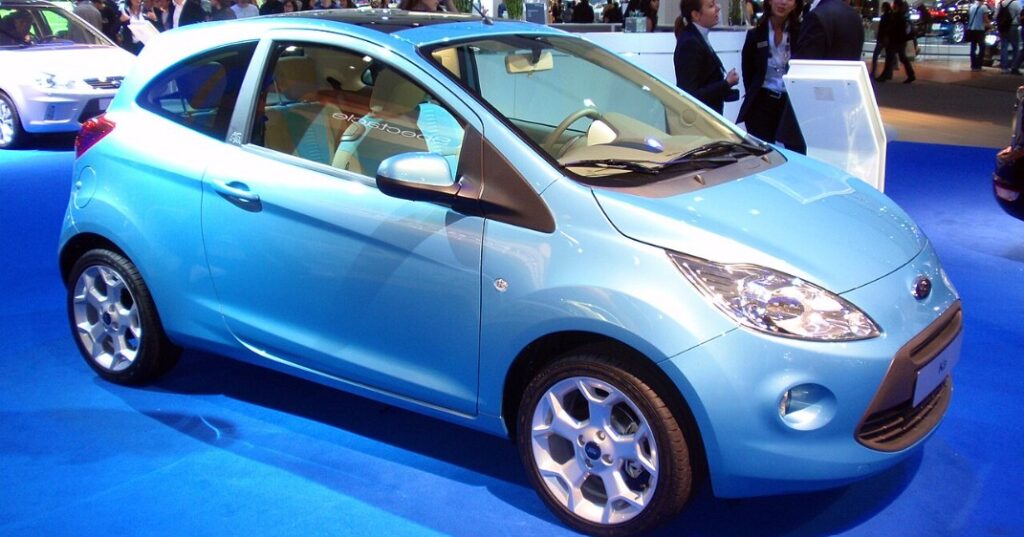
The Ford Ka has always been a slightly unusual little car. It is small enough to squeeze into parking spaces that larger hatchbacks simply have to drive past, inexpensive enough to attract first-time buyers, and mechanically simple enough that many repairs do not require a small bank loan.
But what about Ford Ka reliability?
That question is more complicated than it initially sounds because the Ka name covers several quite different cars. The funky first-generation Ka introduced in the 1990s is mechanically unrelated in important ways to the second-generation model launched in 2008, while the later Ka+ is effectively another chapter altogether.
So, rather than throwing every Ford Ka into the same reliability bucket, we are going to examine the generations individually.
The short answer? A properly maintained Ford Ka can be a surprisingly dependable and inexpensive small car. However, certain generations have distinct weaknesses, and on the oldest examples, corrosion can matter far more than mileage.
Let's dig deeper.
Content in this publication
- Ford Ka Reliability at a Glance
- Understanding the Three Main Ford Ka Generations
- How Reliable Is the First-Generation Ford Ka?
- Rust Is the Original Ka's Biggest Enemy
- First-Generation Ford Ka Engine Reliability
- Cooling-System Reliability
- Ford Ka Steering Reliability
- Ford Ka Suspension Problems
- Ford Ka Clutch and Gearbox Reliability
- How Reliable Is the 2008-2016 Ford Ka?
- Second-Generation Engine Reliability
- Electrical and Power-Steering Issues
- Is the Ford Ka+ Reliable?
- Ford Ka Reliability Compared With Modern Small Cars
- Are Ford Ka Parts Expensive?
- How Long Can a Ford Ka Last?
- What Is the Most Reliable Ford Ka Engine?
- Best Ford Ka Generation for Reliability
- Ford Ka Reliability: Red Flags Before Buying
- The Ford Ka Pre-Purchase Inspection Checklist
- Can a Cheap Ford Ka Be a Good First Car?
- Is an Old Ford Ka Still Worth Buying?
- Ford Ka Reliability Verdict
- Frequently Asked Questions
Ford Ka Reliability at a Glance
If we had to summarize the Ka's reliability in one sentence, we would say:
The Ford Ka is generally mechanically straightforward and inexpensive to maintain, but condition matters enormously, especially on first-generation cars.
That distinction is important.
A 20-year-old Ka with 60,000 miles is not automatically a safer purchase than one with 100,000 miles. If the lower-mileage car has spent its life outdoors collecting rust underneath, the higher-mileage example with regular servicing and a clean structure could easily be the better car.
Some recurring Ka trouble spots reported by repair specialists include suspension wear, steering issues, electrical faults and, depending on generation, cooling-system or gearbox problems.
So we would describe Ford Ka dependability as reasonable rather than exceptional.
It is no indestructible Toyota-like appliance, but neither is it necessarily a troublesome little money pit.
Understanding the Three Main Ford Ka Generations
Before judging reliability, we need to know which Ka we are discussing.
First-Generation Ford Ka: 1996-2008
This is the original bubble-shaped Ka most people instantly recognize.
It was based on Ford mechanical components of the era and was deliberately simple. Earlier cars commonly used Ford's old 1.3-liter Endura-E engine, while later versions received the more modern Duratec unit.
Its simplicity is both its greatest advantage and its biggest trap.
Mechanically, there is not an enormous amount to go wrong.
Structurally, however, age and corrosion can now be serious considerations.
Second-Generation Ford Ka: 2008-2016
The second Ka looks like a Ford, but underneath it shares much of its basic architecture with the Fiat 500 and Fiat Panda family.
That completely changed the character of the car.
It offered more modern engines, improved safety equipment and a more contemporary cabin. It can also suffer several problems familiar to related Fiat-platform cars, although that does not automatically make it unreliable.
Ford Ka+: 2016-2020
Despite its name, the Ka+ was not simply a stretched Ka.
It was a larger, five-door budget hatchback designed to provide Fiesta-like practicality at a lower price.
By this point the Ka had moved away from being a quirky urban fashion statement and became something much more conventional.
The Ka+ can therefore be one of the easier versions to live with today, particularly because examples are younger.
How Reliable Is the First-Generation Ford Ka?
A good first-generation Ka can still be wonderfully simple.
The engines are uncomplicated, parts availability has historically been strong, and independent mechanics are generally familiar with the car.
Unfortunately, reliability in 2026 is no longer purely a question of engineering.
These cars are now roughly 18 to 30 years old.
At that age, rubber deteriorates, electrical connectors corrode, suspension components wear out, seals harden and previous-owner neglect becomes increasingly important.
That means our biggest concern would not necessarily be whether the Ka was reliable when new.
We would ask:
How well has this particular Ka survived the last two decades?
Rust Is the Original Ka's Biggest Enemy
If there is one word prospective first-generation Ka buyers should remember, it is rust.
Corrosion can occur around structural and body areas, including the sills and sections around the doors, while historical reports also identify corrosion around other welded areas of the body.
Minor surface rust is one thing.
Structural corrosion is something entirely different.
A cheap £1,000 Ka suddenly stops looking cheap when welding becomes necessary.
Where Should We Check for Corrosion?
A thorough inspection should include:
- Sills and sill ends
- Rear wheel-arch areas
- Floorpan
- Suspension mounting areas
- Door bottoms
- Areas beneath plastic trim
- Tailgate edges
- Engine-bay seams
- Previous welding or poorly repaired accident damage
If possible, inspect the car on a lift.
A shiny exterior can hide an underside that resembles an abandoned garden gate.
Why Mileage Does Not Protect Against Rust
Low mileage is often treated as a magic phrase in used-car advertisements.
It should not be.
A 45,000-mile Ka stored outside in a damp climate can have substantially more corrosion than a 90,000-mile example kept in a garage.
When buying an original Ka today, body condition outranks odometer mileage.
First-Generation Ford Ka Engine Reliability
The early 1.3-liter Endura-E engine is old-school engineering in almost every sense.
It is noisy and hardly sophisticated, but simplicity has advantages.
There are fewer complicated systems than in a modern turbocharged engine.
Nevertheless, very old examples can develop oil-related problems, worn valvetrain components and noticeable mechanical tapping. Historical owner and workshop reports have specifically mentioned tappet or cam-follower wear on some early engines.
Regular oil changes are therefore critical.
Neglected oil is like bad cholesterol for an old engine: the damage builds quietly until the symptoms become expensive.
Spark Plug Problems on Early Ford Ka Engines
Another unusual first-generation Ka issue concerns spark plugs.
Some early engines have developed corrosion around the plugs, making removal difficult. In severe circumstances a seized plug can turn what should be routine maintenance into cylinder-head work.
We would therefore check the maintenance history rather than assuming spark plugs have been replaced simply because the mileage is low.
Cooling-System Reliability
Cooling-system health matters on any elderly Ka.
Ageing hoses, thermostats, radiator components and heater-control parts can cause coolant loss or erratic cabin heating.
One historically reported first-generation weak point is the electrically operated heater valve.
The component itself is not necessarily catastrophic, but ignored cooling problems can become catastrophic.
When inspecting a Ka, we would therefore:
- Start the engine completely cold.
- Watch for warning lights.
- Check coolant level and condition.
- Allow the engine to reach operating temperature.
- Test the cabin heater.
- Look underneath for coolant leaks.
- Check whether the cooling fan activates correctly.
Any unexplained overheating deserves investigation before purchase.
Ford Ka Steering Reliability
Steering deserves another careful look, particularly on older cars.
First-generation Ka steering-rack problems have been reported over the years, including failures on power-assisted versions.
During a test drive, the steering should feel predictable and consistent.
Watch for:
- Unusually heavy steering
- Knocking when turning
- Fluid leaks
- Excessive play
- Steering that does not self-center correctly
- Grinding or whining noises
A Ka should feel agile.
If steering the thing feels like wrestling a shopping trolley with one seized wheel, something needs attention.
Ford Ka Suspension Problems
Small city cars live hard lives.
Curbs, potholes, speed bumps and endless stop-start driving punish suspension components.
You may be interested in reading Is BMW 8 Series a Good Car? A Complete Buyer’s Guide
As Kas age, worn bushes, drop links, springs, dampers and wheel bearings become increasingly plausible.
Fortunately, many suspension repairs are relatively straightforward compared with sophisticated modern vehicles.
That is a recurring theme with Ka ownership:
things may wear out, but many of them are not terribly complicated to replace.
Listen Carefully on Rough Roads
Drive across a slightly uneven road with the radio switched off.
Listen for:
- Metallic knocking
- Clunks from the front suspension
- Repeated rattling
- Wheel-bearing humming
- Suspension creaks
- Excessive bouncing after bumps
Noise does not automatically mean the car is doomed, but it gives us bargaining power and tells us what inspection is needed next.
Ford Ka Clutch and Gearbox Reliability
Manual gearboxes are common across the Ka range and are generally straightforward, but age changes the equation.
A high clutch biting point, slipping under acceleration or difficulty selecting gears could indicate clutch wear.
Historical reports also mention premature clutch wear on some early first-generation cars, although later examples were improved.
Gear selection should feel positive.
Test reverse several times as well.
Unusual grinding, jumping out of gear or significant gearbox noise deserves professional inspection.
How Reliable Is the 2008-2016 Ford Ka?
Now things get interesting.
The second-generation Ka shared its basic platform with the Fiat 500, which means internet discussions occasionally dismiss it with the lazy statement that it is "just a Fiat."
That is not particularly useful.
Sharing components with another car does not automatically make something unreliable.
In fact, the second Ka uses relatively well-understood small-car mechanicals, and a properly maintained example can make a sensible inexpensive runabout.
Its biggest advantage today is that it is substantially newer than the original Ka.
Second-Generation Engine Reliability
Depending on market, petrol and diesel engines were offered.
For most buyers looking for simplicity, we would normally favour a basic naturally aspirated petrol engine over an ageing diesel unless long-distance fuel economy is essential.
Why?
Older diesel engines can bring additional components and emissions hardware into the maintenance equation.
A simple petrol Ka generally suits short urban journeys better.
With proper servicing, the petrol engine can provide respectable durability. The related Fiat 500 platform has commonly been regarded as mid-pack rather than disastrous for reliability, although ignition, cooling and other age-related problems can occur.
Cold Starts Tell Us Plenty
Whenever buying a used Ka, insist on seeing the engine cold.
A seller who has conveniently warmed the car before we arrive may simply be thoughtful.
Or they may be hiding something.
A cold start can expose:
- Weak batteries
- Misfires
- Noisy timing components
- Smoke
- Rough idle
- Slow starting
- Warning lights
The engine should settle into a stable idle without dramatic noises.
Electrical and Power-Steering Issues
As cars became more modern, electrical systems became more important.
Second-generation examples can therefore experience the normal range of age-related electrical niggles that were largely absent from extremely basic early Kas.
Check every switch.
That sounds ridiculously simple, yet buyers routinely test the engine and gearbox while forgetting half of the cabin electronics.
Operate the windows, mirrors, central locking, heater controls, air conditioning, radio and dashboard display.
Electric power steering deserves particular attention too.
The steering should remain consistent at parking speeds without warning lights or intermittent assistance.
Is the Ford Ka+ Reliable?
For buyers who simply want an affordable small Ford rather than the classic Ka shape, the Ka+ may be the most sensible version.
It is newer, roomier and more practical.
Reliability data specifically for the Ka+ is limited compared with huge-selling models such as the Fiesta, but used-car guidance identifies several issues worth checking rather than describing the model as fundamentally unreliable.
That makes the Ka+ a car we would judge primarily on maintenance history and individual condition.
Ka+ Battery-Monitoring Wiring Recall
One specific issue deserves attention.
Some Ka+ examples produced between September 2017 and May 2019 were affected by a battery-monitoring-system wiring problem in which wiring could chafe. Buyers should verify whether any required recall inspection or repair has been completed.
Recall work should be checked using the vehicle identification number rather than assuming every car is affected.
And whenever buying any used Ka, verifying outstanding manufacturer recalls is sensible.
Ford Ka Reliability Compared With Modern Small Cars
Does a Ford Ka offer Toyota Yaris levels of dependability?
We would not make that promise.
But that misses part of the Ka's appeal.
Reliability is not simply about how often something breaks.
It is also about how painful the repair is when something does break.
A complex modern vehicle can run faultlessly for years, then deliver one spectacularly expensive electronic or powertrain failure.
A basic Ka may need suspension bushes, a battery, a thermostat and a few other small repairs over the same period, yet still cost less overall.
That is why total ownership cost matters more than some mythical reliability score.
Are Ford Ka Parts Expensive?
Generally, one of the Ka's strengths is that it belongs to the inexpensive end of the automotive world.
Routine service parts are typically straightforward, and independent garages can handle most jobs.
You are unlikely to need a laboratory full of exotic equipment simply to replace ordinary wear items.
Common maintenance expenses include:
- Engine oil and filters
- Spark plugs
- Brake pads and discs
- Batteries
- Suspension bushes
- Shock absorbers
- Wheel bearings
- Clutch components
- Tyres
- Cooling-system components
The important exception is structural corrosion.
Mechanical parts can be changed.
Once rust begins consuming structural metal, the economics can deteriorate quickly.
How Long Can a Ford Ka Last?
There is no reliable expiration mileage.
A well-maintained Ka can comfortably exceed 100,000 miles, and mileage alone should not frighten us.
The real determining factors are:
maintenance + driving environment + corrosion + previous repairs + owner care.
A serviced 110,000-mile engine is preferable to a neglected 60,000-mile one.
Likewise, a mechanically healthy original Ka with severe corrosion may effectively be at the end of its economical life even if its engine runs beautifully.
Maintenance History Beats Mileage
We would happily consider a higher-mileage Ka with:
- Regular oil changes
- Documented servicing
- Recent clutch or suspension work
- Good-quality tyres
- No overheating history
- Clean structural condition
over a suspiciously cheap low-mileage car with no paperwork.
Mileage tells us how far a car travelled.
You may be interested in readingIs BMW 8 Series a Good Car? A Complete Buyer’s GuideYou may be interested in reading
Why Do BMW 8 Series Depreciate So Much? The Real Reasons Behind the DropService history tells us how it was treated while travelling there.
What Is the Most Reliable Ford Ka Engine?
For buyers prioritizing simplicity, naturally aspirated petrol engines usually make the strongest case.
They suit the Ka's original purpose perfectly.
The car was designed primarily for inexpensive everyday transport, not endless high-speed motorway journeys.
A basic petrol engine means fewer diesel-specific components to worry about as the vehicle ages.
That does not mean every petrol Ka is reliable or every diesel is troublesome.
Condition always wins.
But if two cars were equally well maintained, we would usually choose the simpler petrol configuration for low annual mileage and city use.
Best Ford Ka Generation for Reliability
Each generation offers something different.
Choose the Original Ka If...
We would buy the first generation if we wanted:
- Character
- Very simple mechanicals
- Low purchase prices
- Classic Ka styling
But only after an extremely careful rust inspection.
Choose the Second-Generation Ka If...
This generation makes sense if we want:
- A more modern cabin
- Compact dimensions
- Affordable running costs
- Better everyday refinement than the original car
A clean petrol example with comprehensive maintenance records can be a particularly appealing budget choice.
Choose the Ka+ If...
The Ka+ is probably the logical answer for buyers prioritizing practical daily transportation.
It gives us:
- Five doors
- More useful rear seating
- Newer examples
- Improved practicality
- Less age-related deterioration than most original Kas
It lacks some of the personality of the original Ka, but reliability shoppers are usually buying transportation rather than automotive sculpture.
Ford Ka Reliability: Red Flags Before Buying
A cheap Ka can be excellent value.
A neglected one can turn into a collection of repair bills wearing number plates.
Before handing over money, we would walk away—or at least investigate carefully—if we found:
- Serious structural rust
- Overheating
- Coolant disappearing
- Persistent engine warning lights
- Heavy or inconsistent power steering
- Gearbox grinding
- Clutch slipping
- Strong suspension knocks
- Oil and coolant contamination
- Extensive electrical faults
- Uneven tyre wear
- Missing service records combined with obvious neglect
- Poorly repaired accident damage
One fault is not necessarily fatal.
Five faults usually tell a story.
The Ford Ka Pre-Purchase Inspection Checklist
The best reliability upgrade we can buy is often an inspection before buying the car.
Exterior
Check panel gaps, paint consistency, lights, tyres and corrosion.
Underneath
Look carefully for structural rust, leaks and previous repairs.
Engine
Start it cold and listen for knocking, excessive tapping or uneven running.
Cooling System
Check coolant condition and confirm the engine maintains normal temperature.
Transmission
Test every gear and accelerate firmly enough to reveal clutch slip.
Steering
Perform slow parking maneuvers and faster-road driving.
Suspension
Drive over rough surfaces and listen for knocks.
Electrics
Push every button.
Yes, every button.
Paperwork
Compare invoices, service records, inspection history and mileage progression.
Never Skip the Test Drive
A five-minute trip around the dealership block tells us very little.
Drive long enough for the engine to reach operating temperature.
Use urban roads, faster roads and rougher surfaces where practical.
Reliability problems often reveal themselves only after the car warms up.
Can a Cheap Ford Ka Be a Good First Car?
Absolutely.
That is arguably one of its strongest roles.
A well-maintained Ka can offer inexpensive tyres, modest fuel consumption, manageable dimensions and straightforward mechanicals.
New drivers also benefit from its compact size.
Parking a Ka after learning in a larger modern hatchback can feel like switching from navigating a boat to steering a roller skate.
However, we would never buy purely because the price is low.
The cheapest example available is rarely the cheapest example to own.
Spending more for strong service history and good condition is usually money well spent.
Is an Old Ford Ka Still Worth Buying?
For the right price and purpose, yes.
An old Ka makes little sense if we expect modern refinement, advanced safety technology and completely maintenance-free ownership.
But as a simple commuter, learner car, second vehicle or inexpensive city runabout, it can still make tremendous sense.
The crucial word is simple.
Its charm lies precisely in what it does not have.
No enormous touchscreen controlling the heater.
No unnecessarily complex drivetrain.
No mountain of luxury electronics.
Just a tiny car designed to move people efficiently.
Sometimes simplicity ages rather well.
Ford Ka Reliability Verdict
So, is the Ford Ka reliable?
Generally, yes—but with qualifications.
The Ford Ka's underlying mechanical simplicity gives it a respectable chance of long-term durability, especially when servicing has been consistent. Repair specialists continue to identify recurring issues across different generations, but the model is better described as an affordable small car with identifiable weak spots than as inherently unreliable.
The first-generation Ka demands the greatest caution because corrosion can outweigh every other consideration. Mechanical components can often be repaired cheaply; structural rust can make repairs uneconomical.
The second-generation Ka is more modern and can be an excellent inexpensive runabout, although buyers should check steering, suspension, electrics and general maintenance carefully.
The Ka+ is younger and more practical, making it arguably the easiest version for someone who simply wants inexpensive transportation, while recall history should still be verified.
Our overall approach is simple:
Buy condition, not mileage. Buy history, not promises.
A cared-for Ford Ka can keep buzzing around town for years like a determined little mosquito.
A neglected one can consume its bargain purchase price surprisingly quickly.
Choose the former, and the Ford Ka remains one of those rare inexpensive cars that can make basic motoring genuinely enjoyable.
Frequently Asked Questions
1. Is the Ford Ka a reliable car?
Yes, a well-maintained Ford Ka can be reasonably reliable. Its relatively simple mechanical design helps keep many repairs manageable. However, reliability varies significantly by generation and vehicle condition. The original Ka requires particularly careful corrosion checks, while second-generation cars should be inspected for steering, suspension, cooling and electrical problems.
2. What is the biggest problem with the Ford Ka?
For the original 1996-2008 Ford Ka, corrosion is arguably the biggest concern. Rust can affect body and structural areas and may cost far more to repair than ordinary mechanical faults. Later Kas are less defined by this single issue, although suspension, steering and electrical wear can occur as they age.
3. How many miles can a Ford Ka last?
There is no fixed mileage limit. A properly maintained Ford Ka can exceed 100,000 miles without automatically becoming unreliable. Service history, corrosion, previous repairs and driving conditions are more useful indicators than mileage alone.
4. Which Ford Ka is the most reliable?
For buyers today, a well-maintained later petrol Ka or Ka+ is often the safest overall choice because age-related deterioration is less severe than on early models. However, an exceptionally well-preserved original Ka can still be dependable. Individual condition remains more important than generation alone.
You may be interested in readingIs BMW 8 Series a Good Car? A Complete Buyer’s GuideYou may be interested in reading
Why Do BMW 8 Series Depreciate So Much? The Real Reasons Behind the DropYou may be interested in reading
 Is Ford Ka a Good Car? A Complete Used Buyer’s Guide
5. Is a used Ford Ka worth buying?
Yes, particularly as an inexpensive first car, commuter or second vehicle. We would look for a petrol model with documented maintenance, clean body structure, smooth steering and transmission operation, and no overheating history. A pre-purchase inspection is strongly recommended on older examples.
If you want to know other articles similar to Ford Ka Reliability: Is This Tiny Ford Actually Dependable? you can visit the category Blog.
Volvo S90 Reliability: Problems, Costs & Best Years
Is Haval Jolion a Good Car? Honest Review, Reliability, Pros and Cons
How to Start Haval Jolion With Spare Key: Complete Guide
How to Calculate Per Diem on an Auto Loan

How to Calculate the Residual Value of a Car

Is the Honda Passport Selling Well? Sales Numbers Tell the Story
Leave a Reply
More content of your interest