
Ford Ka Weight: Complete Guide by Generation, Engine, and Model

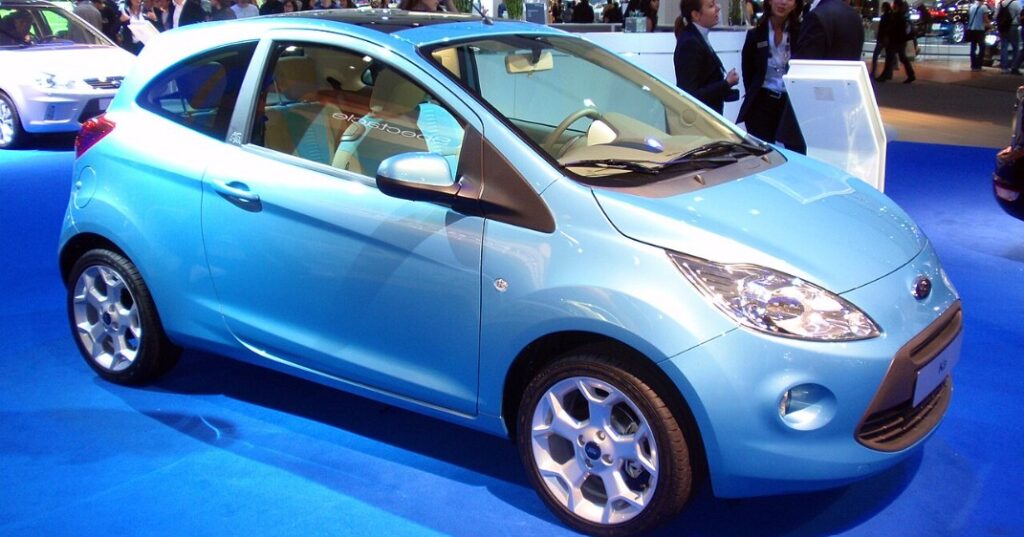
The Ford Ka weight might seem like a tiny detail on a specification sheet, but it tells us a surprising amount about how this little Ford behaves. Weight influences acceleration, fuel consumption, braking, handling, payload, tyre wear, and even how lively a modest engine feels.
And the Ka has an interesting story here. Early versions were genuinely featherweight city cars, while later generations became larger, safer, better equipped, and inevitably heavier.
So, how much does a Ford Ka actually weigh?
Depending on the generation, engine, body style, equipment level, and measurement method, a Ford Ka can weigh roughly 840 kg to more than 1,100 kg (1,852-2,425 lb) in kerb-weight terms. Special models such as the StreetKa can be heavier again.
Ford's own documentation for the later Ka+ gives a minimum kerb weight of 1,009 kg, while period specification data for the second-generation Ka commonly puts the 1.2 petrol at around 940 kg and the 1.3 TDCi diesel at roughly 1,055 kg.
But those headline numbers only tell half the story.
Let's put the Ford Ka on the scales and find out what all those kilograms actually mean.
Content in this publication
- How Much Does a Ford Ka Weigh?
- Ford Ka Weight by Generation
- Ford StreetKa Weight
- Second-Generation Ford Ka Weight: 2008-2016
- Ford Ka+ Weight
- Why Ford Ka Weight Figures Differ Online
- Kerb Weight vs Gross Vehicle Weight
- Ford Ka Weight in Pounds
- How Ford Ka Weight Affects Performance
- Does Ford Ka Weight Improve Fuel Economy?
- How Much Payload Can a Ford Ka Carry?
- Does Passenger Weight Matter in a Ford Ka?
- Does Ford Ka Weight Affect Tyre Pressure?
- Ford Ka Weight Compared With Modern Cars
- Is a Lighter Ford Ka Better?
- How to Find the Exact Weight of Your Ford Ka
- Ford Ka Weight and Power-to-Weight Ratio
- Which Ford Ka Is the Lightest?
- Which Ford Ka Is the Heaviest?
- Ford Ka Weight: What Buyers Should Remember
- Conclusion: Ford Ka Weight Is Part of Its Character
- Frequently Asked Questions About Ford Ka Weight
How Much Does a Ford Ka Weigh?
For a quick overview, here are representative kerb weights for the major Ka families:
| Ford Ka version | Approximate kerb weight |
|---|---|
| Early Mk1 Ka petrol | 840-900 kg |
| Later Mk1 1.3 Ka | Around 865-962 kg |
| SportKa 1.6 | Around 935-1,019 kg |
| StreetKa 1.6 | Around 1,060 kg |
| Mk2 Ka 1.2 petrol | Around 940 kg |
| Mk2 Ka 1.3 TDCi diesel | Around 1,055 kg |
| Ka+ | From approximately 1,009 kg |
These figures should be treated as a guide rather than a universal specification.
Why?
Because the precise Ford Ka kerb weight depends on things such as the engine, trim level, optional equipment, market specification, fuel level, and even the definition of kerb weight being used.
Ford's first-generation technical information, for example, lists an EC base kerb weight of 962 kg for a 1.3 Duratec Ka and 1,019 kg for the 1.6 Duratec SportKa in certain configurations.
That illustrates why two websites can quote slightly different figures for apparently similar cars without either number necessarily being wrong.
Ford Ka Weight by Generation
The easiest way to understand the Ka's changing weight is to look at its development over time.
The original Ka was a minimalist three-door city car. Its successors gradually became more substantial.
First-Generation Ford Ka Weight: 1996-2008
The first-generation Ford Ka is the car most people picture when somebody says "Ka."
Its rounded shape and distinctive New Edge styling made it look almost like a concept car that had accidentally escaped onto public roads.
More importantly for our discussion, it was extremely light.
Typical early first-generation Ka versions sit somewhere around 850-900 kg depending on year and specification.
One specification database lists early versions as low as approximately 870 kg, with later 1.3 models around 890 kg under its measurement methodology.
Other data sources list common European Ka 1.3 variants at around 865 kg, showing how substantially lighter these cars were than most modern hatchbacks.
That low mass was one of the Ka's secret weapons.
Why Was the Original Ford Ka So Light?
Think about what the first Ka didn't carry around.
There were no enormous infotainment displays, complex hybrid systems, panoramic roofs, powered seats, radar sensors, giant wheels, battery packs, or layers of modern driver-assistance equipment.
It was basically an engine, four wheels, a compact body and enough interior to get the job done.
That simplicity paid dividends.
Even with relatively modest engine outputs, the first Ka could feel responsive around town because its engine didn't have much mass to move.
A light car can make 60 or 70 horsepower feel surprisingly enthusiastic.
Ford Ka 1.3 Weight
The 1.3-litre petrol engine formed the backbone of the original Ka range for years.
Depending on production year and measurement method, you'll commonly see figures ranging from roughly 865 kg into the mid-900 kg region.
Ford technical material for a later 1.3 Duratec specification states an EC base kerb weight of 962 kg, a maximum payload of 303 kg, and a permissible gross weight of 1,265 kg.
That payload number deserves attention.
It means the difference between the car sitting empty at the kerb and the maximum legally permitted operating weight is not unlimited.
Four adults, luggage and assorted belongings can add mass remarkably quickly.
Ford SportKa Weight
The SportKa was the mischievous sibling in the family.
Ford fitted it with a larger 1.6-litre Duratec petrol engine, wider tyres and sportier hardware.
Naturally, those upgrades added weight.
Ford documentation lists the 1.6-litre version with an EC base kerb weight of 1,019 kg, maximum payload of 281 kg and permissible gross weight of 1,300 kg.
That's significantly heavier than some basic early Ka models, but still extremely light by modern performance-car standards.
And that's exactly why the SportKa could be such fun.
You don't always need enormous horsepower when the car itself barely tips the scales beyond a tonne.
SportKa Power-to-Weight Matters More Than Power Alone
Imagine two runners.
One is stronger but carrying a heavy backpack. The other isn't as powerful but is travelling light.
Which one feels more agile?
That's essentially what power-to-weight ratio tells us.
The SportKa's 1.6-litre engine didn't produce outrageous numbers, but paired with a roughly one-tonne body, it had enough muscle to make the chassis entertaining.
Ford StreetKa Weight
The StreetKa deserves its own section because it wasn't simply a normal Ka with the roof chopped off.
Convertible cars require substantial structural reinforcement because removing a fixed roof takes away an important part of the body shell's rigidity.
That means extra steel.
Extra steel means extra kilograms.
Published specification databases commonly place the StreetKa around 1,064 kg, making it one of the heavier members of the original Ka family.
That's still hardly heavyweight territory, but it's considerably more than an early basic Ka hatchback.
The difference shows us something important: body style can influence vehicle weight almost as much as the engine.
Second-Generation Ford Ka Weight: 2008-2016
The second-generation European Ka arrived in 2008 and represented a major change.
Rather than evolving directly from the original architecture, this Ka was jointly developed in connection with Fiat and shared important underpinnings with Fiat's small-car platform.
The design remained cheeky, but the engineering underneath had moved on.
Typical kerb-weight figures are approximately:
- 1.2 petrol: around 940 kg
- 1.3 TDCi diesel: around 1,055 kg
- Some equipment and measurement combinations may produce higher quoted figures.
Period specification information for the 2009 range lists a 940 kg kerb weight for several 1.2-litre models and 1,055 kg for the 1.3 TDCi Zetec.
A contemporary road test of the diesel likewise quoted a 1,055 kg kerb weight.
Ford Ka 1.2 Weight
For most buyers researching second-generation cars, the petrol model is probably the important one.
The Ford Ka 1.2 weight is generally around 940 kg for common UK specifications.
Individual equipment packages can push the figure around slightly, but the crucial point is that the petrol Ka stayed below the one-tonne mark in many versions.
That's one reason the 1.2 didn't necessarily feel as slow around town as its modest horsepower figure might suggest.
You weren't asking the engine to drag a 1.5-tonne crossover away from every traffic light.
It was moving less than a tonne of city car.
Ford Ka 1.3 TDCi Weight
The diesel model is noticeably heavier.
Period sources put the Ford Ka 1.3 TDCi kerb weight at roughly 1,055 kg in common UK specification.
Why the jump?
Diesel engines and their supporting hardware tend to weigh more.
A diesel typically introduces heavier components associated with the engine block, fuel system, turbocharging, emissions equipment and related mechanical systems.
So even though the body dimensions remain essentially unchanged, the car can gain more than 100 kg compared with a petrol counterpart.
Does the Diesel Feel Heavy?
"Heavy" would be exaggerating things.
A 1,055 kg car is still light by current standards.
However, compared with the 1.2 petrol, the extra mass can alter the character slightly.
The diesel counters that with stronger low-rpm torque, which makes it useful for relaxed driving and longer journeys.
Ford Ka+ Weight
Then came the Ka+.
Despite its name, the Ka+ represented a very different interpretation of the idea.
It was larger, had five doors, carried five occupants more convincingly and focused more heavily on practicality than the cheeky original Ka.
Naturally, it weighed more.
Ford's preliminary technical specification states a minimum kerb weight of 1,009 kg, measured as the lightest kerb-weight configuration without a driver, with full fluid levels and approximately 90% fuel.
That's an especially useful official number because it also reminds us how weight definitions work.
Why Is the Ford Ka+ Heavier?
The answer is simple: there's more car.
The Ka+ stretches to roughly 3,929 mm long in Ford's early specification compared with about 3,620 mm for the second-generation European Ka. It also has five doors and considerably more interior space.
More metal, more interior trim, additional doors and additional equipment inevitably add weight.
Yet starting around one tonne still made the Ka+ relatively light.
It's almost amusing when we compare that with today's automotive landscape, where plenty of compact SUVs sail comfortably past 1,400 or 1,500 kg.
Why Ford Ka Weight Figures Differ Online
Search "how much does a Ford Ka weigh?" and you might quickly become suspicious.
One website says 865 kg.
Another says 962 kg.
A third might give a different number again.
What's happening?
Usually, we're comparing different things.
Kerb Weight Isn't Always Defined Identically
Kerb weight generally describes the vehicle ready to operate with fluids and fuel, but precise standards differ.
One specification may include:
- 90% fuel
- Full operating fluids
- No driver
Another methodology may incorporate a nominal driver or use a different regulatory definition.
That alone can shift the published number substantially.
Equipment Changes Weight
Air conditioning isn't weightless.
Neither are:
- Alloy wheels
- Larger tyres
- Side airbags
- Audio systems
- Electric accessories
- Panoramic roofs
- Spare wheels
- Different seat structures
None of those changes individually turns a Ka into a heavyweight, but together they can explain why two trim levels aren't identical on the scales.
Engine Choice Changes Weight
This is particularly noticeable when comparing petrol and diesel models.
The second-generation 1.3 TDCi demonstrates the point nicely.
A diesel engine and its supporting systems can add substantial mass compared with the simpler 1.2 petrol configuration.
Kerb Weight vs Gross Vehicle Weight
These terms are regularly confused, so let's separate them.
What Is Ford Ka Kerb Weight?
Kerb weight is essentially the mass of the car in road-ready form under the relevant measurement standard.
It does not mean the fully loaded car.
What Is Ford Ka Gross Vehicle Weight?
Gross vehicle weight, sometimes referred to as gross vehicle mass or maximum permissible mass, represents the maximum authorised weight of the vehicle once people and cargo are onboard.
For example, Ford's first-generation technical information lists the 1.3 Duratec Ka at:
- EC base kerb weight: 962 kg
- Maximum payload: 303 kg
- Permissible gross weight: 1,265 kg
For the 1.6 Duratec version listed in the same documentation:
- EC base kerb weight: 1,019 kg
- Maximum payload: 281 kg
- Permissible gross weight: 1,300 kg
Those figures show why we shouldn't treat "car weight" and "maximum vehicle weight" as interchangeable terms.
Ford Ka Weight in Pounds
Prefer imperial measurements?
Here are some handy approximate conversions:
| Weight in kg | Weight in lb |
| 850 kg | 1,874 lb |
| 865 kg | 1,907 lb |
| 900 kg | 1,984 lb |
| 940 kg | 2,072 lb |
| 962 kg | 2,121 lb |
| 1,000 kg | 2,205 lb |
| 1,009 kg | 2,224 lb |
| 1,019 kg | 2,247 lb |
| 1,055 kg | 2,326 lb |
| 1,064 kg | 2,346 lb |
So when somebody asks how much does a Ford Ka weigh in pounds?, a sensible broad answer is somewhere around 1,850-2,350 lb, depending heavily on model.
How Ford Ka Weight Affects Performance
This is where things get interesting.
Weight isn't merely an engineering statistic. We feel it from behind the steering wheel.
Acceleration
A lighter car requires less energy to accelerate.
That's why the Ka could survive with engines that look almost comically modest compared with modern cars.
Sixty horsepower doesn't sound exciting.
But 60 horsepower moving roughly 900 kg is a completely different proposition from 60 horsepower trying to shift 1,400 kg.
The Ka's lightness gives its engine a fighting chance.
Handling
Less mass can make a car feel eager to change direction.
Early Kas became well known for entertaining handling partly because there simply wasn't much weight for the suspension and tyres to manage.
Point the nose into a corner and the rest of the car follows like a terrier chasing a tennis ball.
That's very different from driving a tall, heavy SUV where every direction change requires the suspension to negotiate considerably more mass.
Braking
Lower vehicle mass can also reduce the energy brakes need to dissipate during deceleration.
That doesn't automatically mean every light car stops shorter—tyres, brakes, road conditions, ABS and suspension all matter—but vehicle mass remains an important part of the equation.
Does Ford Ka Weight Improve Fuel Economy?
Generally, lower mass helps.
Every time we accelerate a car, energy is required to move its weight.
The heavier the vehicle, the more work the engine must perform.
A lightweight vehicle can therefore be particularly efficient in stop-start urban environments where constant acceleration repeatedly exposes excess mass.
Of course, weight isn't everything.
Fuel economy also depends on:
- Engine efficiency
- Gear ratios
- Aerodynamics
- Tyres
- Driving speed
- Traffic conditions
- Driver behaviour
A light car with an inefficient engine can still drink more fuel than a heavier car fitted with a sophisticated modern powertrain.
Still, all else being equal, carrying fewer kilograms helps.
How Much Payload Can a Ford Ka Carry?
Don't assume a tiny car means tiny payload.
Some Ka versions can legally carry several hundred kilograms beyond their base kerb weight.
Ford's cited first-generation technical specifications provide a maximum payload of 303 kg for the listed 1.3 Duratec model and 281 kg for the 1.6 Duratec version.
But remember that payload includes people.
Suppose four occupants weigh an average of 70 kg each.
That's already:
4 × 70 kg = 280 kg
Suddenly there isn't much capacity remaining for luggage in a variant rated around that level.
That's why gross vehicle limits matter, particularly if we're loading a small car for a long trip.
Does Passenger Weight Matter in a Ford Ka?
Absolutely.
Passenger weight represents a much larger percentage of total mass in a light vehicle than it does in a large SUV.
Put three additional adults into a 900 kg Ka and you can increase the moving mass by well over 20%.
We notice that.
Acceleration becomes slower, braking distances can increase, the suspension sits lower and the engine works harder climbing hills.
This doesn't mean something is wrong with the car.
It's simply physics making itself known.
Why a Loaded Ka Feels So Different
Imagine carrying a 10 kg backpack when you weigh 50 kg.
You'll notice it.
Give the same backpack to somebody weighing 120 kg and the relative change is much smaller.
A lightweight city car behaves similarly.
Additional passengers form a meaningful proportion of its total operating mass.
Does Ford Ka Weight Affect Tyre Pressure?
Vehicle loading does influence the tyre pressures Ford recommends.
Manufacturers often provide different tyre-pressure settings for normal and fully loaded conditions.
That's because additional mass places more load on the tyres.
The correct specification should always come from the specific car's tyre-pressure label or owner's handbook rather than a generic internet figure.
Model year, wheel size and tyre specification matter.
Ford Ka Weight Compared With Modern Cars
This comparison really demonstrates how dramatically cars have grown.
A sub-900 kg Ka sounds almost alien in today's market.
Modern cars carry far more structural reinforcement, electronics, emissions equipment, convenience features, airbags and driver-assistance technologies.
Electric vehicles add another major ingredient: batteries.
A contemporary small crossover can easily weigh several hundred kilograms more than an original Ka.
Why Modern Cars Have Become Heavier
Much of the increase isn't pointless.
Modern vehicles provide features the 1990s Ka could barely dream of.
We now expect:
- Advanced crash structures
- Multiple airbags
- Stability control
- Large infotainment screens
- Automatic climate control
- Parking sensors and cameras
- Radar-based driver aids
- Quieter cabins
- Stronger bodies
Those improvements require hardware.
Hardware weighs something.
So while enthusiasts may romanticise ultra-light older cars, modern weight gain often comes with significant improvements in comfort and safety.
Is a Lighter Ford Ka Better?
Not automatically.
Lightweight models usually offer charming agility and can feel lively with limited horsepower.
But heavier versions may offer stronger equipment levels, better refinement or more powerful engines.
The better choice depends on what we want.
If the Ka is being purchased as a simple urban runabout, a lightweight petrol version makes plenty of sense.
If we're travelling longer distances and value torque or equipment, accepting some extra kilograms isn't necessarily a problem.
How to Find the Exact Weight of Your Ford Ka
Internet specifications are useful for research, but they shouldn't be your final reference when an exact legal figure matters.
If you need the precise weight of a particular Ka, check:
- The vehicle identification or statutory plate.
- The owner's manual.
- Registration documentation where applicable.
- Ford technical information for the exact model.
- An accredited vehicle weighbridge when actual running weight is required.
This matters especially when calculating maximum loading.
Don't assume that another Ka with the same engine has precisely the same specification as yours.
Ford Ka Weight and Power-to-Weight Ratio
Here's where the humble Ka becomes more interesting than its horsepower figures suggest.
Power-to-weight ratio describes how much power the engine has relative to the mass it must move.
A lighter vehicle can therefore feel significantly quicker than raw horsepower figures suggest.
That's part of the magic behind lightweight cars.
They don't have to overpower physics.
They simply have less physics to fight.
The original Ka was never intended to be a supercar, obviously. But its low mass gave it an energetic character that would be difficult to reproduce simply by adding horsepower to a much heavier vehicle.
Which Ford Ka Is the Lightest?
Some of the earliest and simplest first-generation models are among the lightest.
Published specifications can dip into the mid-800 kg range, depending on exact version and measurement method. One broad specification database lists first-generation variants beginning around 846 kg, while another gives early examples around 870 kg.
That's extraordinarily light by current passenger-car standards.
For perspective, adding four 75 kg occupants to an 850 kg car adds 300 kg—a more than 35% increase before any luggage is considered.
Which Ford Ka Is the Heaviest?
Special derivatives and diesel models generally sit at the upper end.
The StreetKa convertible is commonly quoted at around 1,064 kg, while some specifications for second-generation diesel Kas also pass the one-tonne mark.
The larger Ka+ naturally occupies similar territory because its body is substantially bigger than the original Ka's.
Again, however, "heavy" is relative.
A Ka weighing around 1,050 kg is still remarkably light alongside many contemporary vehicles.
Ford Ka Weight: What Buyers Should Remember
If you're comparing used Ford Kas, don't obsess over a difference of 20 or 30 kg between specification sources.
Focus on the bigger picture.
The original Ka is exceptionally light.
The second-generation petrol Ka remains comfortably below or around one tonne in common specifications.
Diesel models gain noticeable mass.
The Ka+ is larger and consequently heavier.
And specialised derivatives such as the StreetKa carry additional structural weight.
Most importantly, verify the exact vehicle documentation if weight matters for legal loading calculations.
Conclusion: Ford Ka Weight Is Part of Its Character
The Ford Ka weight tells the story of how small cars evolved over roughly two decades.
Early models could weigh comfortably below 900 kg. They were basic, compact and wonderfully light on their feet.
Later first-generation versions gained equipment and stronger engines. The second-generation Ka remained light but became more substantial, with petrol models commonly around 940 kg and diesel versions climbing above one tonne. The Ka+ then moved the formula toward a larger, five-door supermini, with Ford quoting a minimum kerb weight of 1,009 kg for its early European specification.
And that's really the charm of the Ka.
It reminds us that performance doesn't have to come from enormous horsepower. Efficiency doesn't require complicated technology alone. Sometimes making a car smaller and lighter achieves an enormous amount.
In a world where vehicles seem to gain weight with every generation, driving an old Ka can feel like picking up a lightweight pair of running shoes after spending all week in hiking boots.
Simple? Absolutely.
But sometimes simple works beautifully.
Frequently Asked Questions About Ford Ka Weight
1. How much does a Ford Ka weigh?
Most Ford Ka models weigh approximately 840-1,100 kg (1,850-2,425 lb) depending on generation, engine, body style and equipment. Common second-generation 1.2 petrol versions are around 940 kg, while diesel models can exceed one tonne.
2. What is the weight of a Ford Ka 1.2?
A common second-generation Ford Ka 1.2 petrol has a kerb weight of approximately 940 kg (2,072 lb) in typical UK specification. Exact weight can vary slightly according to trim and optional equipment.
3. How much does a first-generation Ford Ka weigh?
Many first-generation Ka models fall somewhere between roughly 850 and 960 kg, depending on engine, year and specification. Certain early versions are particularly light, while SportKa and StreetKa derivatives weigh considerably more.
4. Is the Ford Ka lighter than a Ford Fiesta?
Generally, comparable Ka generations were designed as smaller city cars and were often lighter than equivalent Fiesta models. However, the exact comparison depends on model year, engine and specification.
5. Why is the Ford Ka diesel heavier than the petrol model?
Diesel engines and their associated turbocharging, fuel-injection and emissions hardware generally weigh more. Consequently, second-generation 1.3 TDCi versions can weigh over 100 kg more than some 1.2 petrol configurations.
If you want to know other articles similar to Ford Ka Weight: Complete Guide by Generation, Engine, and Model you can visit the category Service and Parts.
Vauxhall Mokka Tyre Pressure Reset: Complete Guide
How to Reset the Tire Pressure System on Your Hyundai Tucson

Hyundai Kona Tire Pressure: Complete PSI Guide
Vauxhall Corsa Timing Belt Replacement Cost UK 2026
Mazda CX-5 Tire Size Chart: 2013–2026 Guide

How to Reset a Honda Civic: Complete Step-by-Step Guide
Leave a Reply
More content of your interest