

Renault Koleos Towing Capacity: Complete Towing Guide

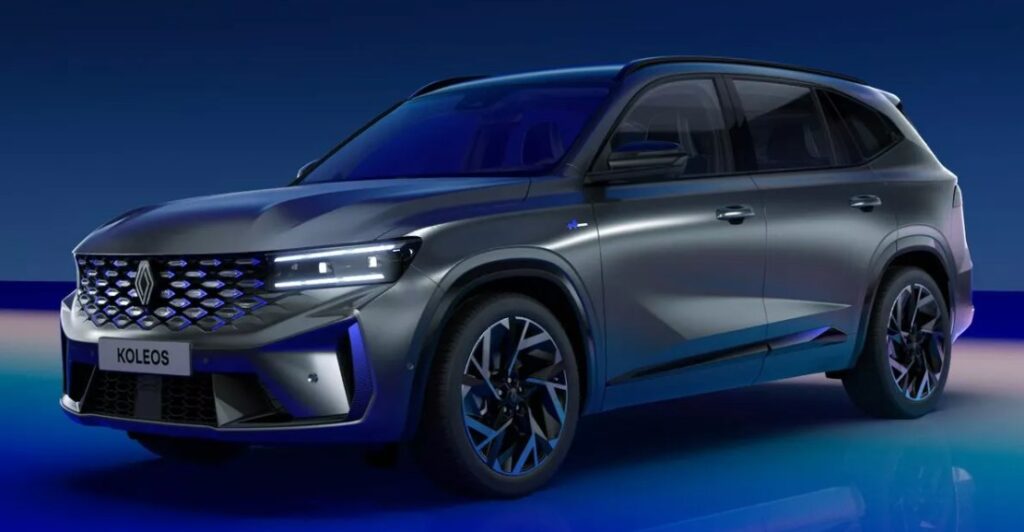
The Renault Koleos towing capacity is one of those specifications that looks wonderfully simple until we start digging into the details. We might see a headline figure of 2,000 kg, hitch up a caravan, and assume everything is sorted. Unfortunately, towing doesn't work quite like that.
Depending on the model year, engine, drivetrain, transmission, country, and trailer braking system, the amount a Renault Koleos can legally and comfortably tow may vary. Payload, tow-ball load, passengers, luggage, altitude, and even the exact information stamped on the vehicle identification plate can influence the real limit.
For many second-generation Koleos models—particularly the 2.5-litre petrol versions sold in markets such as Australia—the headline braked towing capacity reaches 2,000 kg, while unbraked trailers are generally limited to 750 kg. Recent Australian specification listings, for example, show a 2,000 kg braked capacity across several 2WD and 4WD Koleos variants.
But that doesn't mean every Koleos ever built can automatically tow two tonnes.
So, how much can your Renault Koleos actually tow? And is it genuinely a good SUV for pulling a caravan, boat, camper, or utility trailer?
Let's hook up the facts and find out.
Content in this publication
- What Is the Renault Koleos Towing Capacity?
- Renault Koleos 2.5 Petrol Towing Capacity
- Renault Koleos Diesel Towing Capacity
- Renault Koleos 4x4 Towing Capacity
- Can a Renault Koleos Tow a Caravan?
- Can a Renault Koleos Tow a Boat?
- What Is Tow-Ball Download?
- Gross Train Weight Explained
- How to Calculate Your Real Towing Weight
- Does Altitude Affect Koleos Towing Capacity?
- How Towing Affects Koleos Fuel Consumption
- Is the Renault Koleos Good for Towing?
- What Should We Check Before Towing?
- Does Towing Damage a Renault Koleos?
- Can You Install a Tow Bar on a Renault Koleos?
- Does Model Year Change Koleos Towing Capacity?
- Renault Koleos Towing Capacity: Practical Example
- Renault Koleos Towing Safety Tips
- Should You Buy a Koleos for Towing?
- Conclusion: How Much Can a Renault Koleos Tow?
- Frequently Asked Questions
What Is the Renault Koleos Towing Capacity?
For many later-generation Renault Koleos versions, the headline towing specifications are approximately:
| Trailer Type | Typical Maximum Capacity |
|---|---|
| Braked trailer | Up to 2,000 kg |
| Unbraked trailer | Up to 750 kg |
| Tow-ball/nose load | Often around 75–80 kg |
| Roof load | Around 80 kg on applicable models |
These figures should be treated as a guide rather than a universal specification for every Koleos.
Renault's own technical information explains that the allowable braked trailer weight can depend on the difference between Gross Train Weight and the vehicle's maximum authorised mass. It also lists a typical unbraked trailer limit of 750 kg and, depending on the version, a permitted nose weight around 75 or 80 kg.
That's important.
Think of the 2,000 kg figure as the size written on the door of an elevator. We still need to know how many people are already standing inside before loading another suitcase.
Braked vs Unbraked Towing Capacity
This distinction is essential.
A braked trailer has its own braking system. When the towing vehicle slows down, the trailer brakes contribute to stopping the combination.
An unbraked trailer relies almost entirely on the vehicle's brakes.
Because a heavy trailer creates considerably more momentum, unbraked towing limits are substantially lower. For the Koleos, 750 kg is a common maximum unbraked figure. Renault documentation for Koleos 2 likewise lists an unbraked trailer weight of 750 kg.
So when someone says, "The Koleos tows 2,000 kg," the crucial missing word is braked.
Why Trailer Brakes Matter
Imagine pushing an empty shopping trolley. Easy.
Now fill the trolley with concrete blocks and push it downhill.
Stopping becomes the interesting part.
That's essentially why a braking system becomes so important as trailer mass increases. The engine may be capable of pulling a heavy trailer forward, but towing capacity is also determined by braking, stability, chassis strength, cooling, transmission capability, and vehicle control.
Renault Koleos 2.5 Petrol Towing Capacity
The 2.5-litre naturally aspirated petrol Koleos is particularly common in Australia and several other international markets.
Recent Australian specifications show up to 2,000 kg of braked towing capacity for 2.5-litre petrol Koleos versions equipped with the continuously variable transmission, including both 4x2 and 4x4 variants in applicable model years.
That's fairly respectable for a medium SUV.
It means the Koleos can potentially handle equipment such as:
- Medium caravans
- Small-to-medium boats
- Jet-ski trailers
- Box trailers
- Camping trailers
- Motorcycle trailers
- Some horse floats
- Lightweight car trailers
We use the word potentially deliberately.
The trailer's actual loaded weight—not merely its empty or "tare" weight—is what matters.
Does the CVT Affect Towing?
The petrol Koleos commonly uses Renault's X-Tronic continuously variable transmission.
A CVT behaves differently from a conventional stepped automatic. Instead of moving through distinct gears, it continuously varies its transmission ratio. Under acceleration or while climbing hills with a trailer, engine speed can therefore remain relatively high.
Drivers unfamiliar with CVTs sometimes interpret this sustained engine note as excessive strain. It isn't necessarily a problem by itself; it's part of how a CVT maintains the required power.
However, towing adds heat and mechanical load.
We would therefore be especially careful about:
- Correct transmission maintenance
- Specified transmission fluid
- Cooling-system condition
- Avoiding unnecessary overload
- Allowing additional stopping distance
- Using appropriate speeds on long climbs
- Checking the owner's manual for severe-duty maintenance requirements
If we're regularly hauling close to the maximum permissible weight through hills, we're asking much more of the drivetrain than someone towing a 600 kg garden trailer twice per year.
Renault Koleos Diesel Towing Capacity
European and some other markets received diesel Koleos variants that were not offered everywhere.
Depending on generation and specification, these included versions of Renault's diesel engines paired with manual or automatic transmissions.
Diesel engines can feel particularly well suited to towing because they generally produce strong torque at relatively low engine speeds. That useful low-down muscle makes pulling away, maintaining speed on inclines, and towing at moderate road speeds feel more relaxed.
Yet we shouldn't assume that a diesel engine automatically gives every Koleos a 2,000 kg rating.
The only reliable number is the rating applying to the specific VIN, variant, model year, and market.
Why Diesel Torque Helps When Towing
Torque is what gives an engine that "pulling" sensation.
Horsepower becomes increasingly important as speed rises, while abundant low-to-mid-range torque can make a towing vehicle feel less strained when:
- Leaving a junction
- Climbing a steep road
- Accelerating onto a motorway
- Hauling a caravan uphill
- Moving a trailer from low speed
A torquey diesel can therefore feel like a person carrying a heavy suitcase with both hands instead of balancing it on two fingers.
That doesn't change the legal tow rating, though.
More pulling power does not equal permission to tow more weight.
Renault Koleos 4x4 Towing Capacity
Many buyers naturally assume that a Koleos 4x4 must tow significantly more than a front-wheel-drive model.
Not necessarily.
For example, recent Australian listings give both applicable 4x2 and 4x4 2.5-litre Koleos variants a 2,000 kg braked towing rating.
Where four-wheel drive makes a difference is traction.
That becomes useful when towing on:
- Gravel
- Wet grass
- Muddy campsites
- Slippery boat ramps
- Loose tracks
- Steep surfaces
Picture reversing a boat into a wet ramp. Maximum engine power isn't usually the problem. Getting that power to the ground without spinning the front wheels is.
That's where AWD can earn its keep.
Koleos 2WD vs 4WD for Towing
If we mainly tow on paved roads, a front-wheel-drive Koleos may perform perfectly well within its rated limits.
If our weekends regularly involve boat ramps, campsites, rough tracks, or slippery surfaces, we'd lean toward 4WD.
The distinction is therefore less about the number printed under "maximum towing capacity" and more about how confidently the vehicle can deploy its performance in challenging conditions.
Can a Renault Koleos Tow a Caravan?
Yes, many Renault Koleos variants can tow a caravan.
But caravan specifications deserve close attention.
A caravan advertised at 1,500 kg may weigh considerably more once we add:
- Water
- LPG bottles
- Batteries
- Food
- Bedding
- Camping equipment
- Chairs
- Outdoor tables
- Clothing
- Kitchen equipment
- Solar accessories
- Bikes
Suddenly, our supposedly light caravan starts gaining kilograms like luggage the night before a long holiday.
What Size Caravan Can a Koleos Tow?
For a Koleos rated to tow 2,000 kg braked, the theoretical ceiling is a caravan with an allowable loaded mass within that limit.
But we wouldn't automatically shop for the heaviest 1,999 kg caravan available.
Operating some distance below the absolute maximum generally gives us more breathing room for passengers, cargo, road gradients, weather, and real-world loading.
We also need to confirm that the combined vehicle-and-trailer mass stays within the permitted Gross Train Weight.
Why Maximum Capacity Isn't Always the Ideal Capacity
A manufacturer rating tells us what the vehicle is approved to tow under specified conditions.
It doesn't promise that towing right at the limit will feel effortless.
A heavy caravan increases:
- Acceleration times
- Fuel consumption
- Braking distances
- Transmission load
- Engine workload
- Tyre load
- Sensitivity to crosswinds
- Suspension movement
For occasional flat-road towing, that's one thing.
Crossing mountain ranges with four adults, a boot full of luggage, and a nearly two-tonne caravan is another.
Can a Renault Koleos Tow a Boat?
Absolutely, depending on the boat and trailer weight.
Small aluminium fishing boats and personal watercraft will often sit comfortably below the maximum rating of a properly specified Koleos.
Larger fibreglass boats require more homework.
Always calculate the combined weight of:
Boat + trailer + fuel + batteries + motor + safety gear + fishing equipment + accessories.
A boat listed at 1,200 kg may be nowhere near 1,200 kg once ready for the water.
Is the Koleos 4x4 Better for Boat Ramps?
Generally, yes.
A slippery ramp is one scenario where AWD can offer a meaningful advantage.
The front tyres of a two-wheel-drive vehicle may be sitting on a wet or contaminated part of the ramp while trying to drag several hundred kilograms—or more—uphill.
Four driven wheels provide more opportunities to find grip.
Still, no AWD system can repeal physics. Worn road tyres on an algae-covered ramp can turn even a capable SUV into a very expensive sled.
What Is Tow-Ball Download?
Here's a towing specification beginners often overlook.
The trailer doesn't merely pull backward. Some of its mass pushes downward on the tow ball.
This is usually called:
- Tow-ball download
- Tow-ball mass
- Nose weight
- Tongue weight
Renault documentation indicates a permissible Koleos nose weight of around 75 or 80 kg depending on the particular vehicle, while Renault's Koleos 2 manual information lists 80 kg in the applicable specification.
That figure matters because tow-ball load effectively becomes additional load carried by the vehicle.
Why Nose Weight Is So Important
Too little downward force can contribute to trailer instability.
Too much may overload the rear axle or vehicle.
We need a properly balanced trailer rather than simply throwing every heavy item toward the front because "more nose weight is safer."
Proper towing is about balance.
Like carrying two grocery bags, one in each hand, the whole setup behaves better when mass isn't wildly concentrated in the wrong place.
Gross Train Weight Explained
If there's one section we'd bookmark before towing, it's this one.
Gross Train Weight, sometimes called Gross Combination Mass depending on the market, specifies how heavy the complete vehicle-and-trailer combination is allowed to be.
Renault's Koleos documentation states that the braked trailer allowance can be determined from the difference between the relevant maximum train weight and vehicle maximum authorised mass, with the applicable values shown on the vehicle identification plate.
This creates an important possibility:
The headline towing rating and the practical towing allowance may not always be identical once the vehicle is heavily loaded.
Passengers and Luggage Can Affect Towing
Imagine our Koleos has:
Four adults.
A boot full of suitcases.
A roof box.
A tow bar.
An 80 kg load on the tow ball.
Now compare it with exactly the same Koleos occupied by one driver and an empty boot.
Those aren't equivalent towing conditions.
That's why simply memorising "2,000 kg" can be misleading.
We have to look at the whole combination.
How to Calculate Your Real Towing Weight
Before a long trip, we'd use this straightforward process.
First, confirm the vehicle's exact towing limit in the owner's manual or identification documentation.
Next, establish the actual loaded trailer weight.
Then calculate everything placed in the car, including passengers and luggage.
Check the permitted vehicle mass.
Check tow-ball or nose-weight limits.
Finally, confirm that the combined mass remains within the applicable Gross Train Weight.
A public weighbridge can eliminate a lot of guesswork.
And when we're dealing with thousands of kilograms moving at motorway speeds, guesswork is precisely what we don't want.
Does Altitude Affect Koleos Towing Capacity?
This is an unusually important detail.
Renault's Koleos 2 documentation recommends reducing maximum load by approximately 10% at 1,000 metres of altitude and by a further 10% for each additional 1,000 metres, because engine performance and hill-climbing ability decline with altitude.
That's something worth remembering if our towing adventures involve mountains rather than coastal highways.
Why Mountain Towing Is Harder
A steep road challenges virtually every system at once.
Going uphill loads the engine and transmission.
Going downhill loads the brakes.
Tighter corners work the tyres.
Higher altitude may reduce engine performance.
And repeated climbs generate heat.
This is why a towing combination that feels effortless on a flat motorway can suddenly feel very different in mountainous terrain.
How Towing Affects Koleos Fuel Consumption
There is no single meaningful fuel-consumption figure when towing.
Aerodynamics often matter just as much as mass.
A low utility trailer might barely disturb airflow.
A tall caravan behaves more like a giant wall strapped behind the car.
As speed rises, aerodynamic drag grows dramatically. Consequently, towing at fast motorway speeds can use considerably more fuel.
Wind, gradient, tyre pressure, trailer shape, traffic, and vehicle load all contribute.
Ways to Reduce Fuel Consumption While Towing
A few sensible habits make a noticeable difference:
- Maintain steady speeds.
- Leave plenty of room ahead.
- Accelerate progressively.
- Avoid unnecessary cargo.
- Keep tyres correctly inflated.
- Maintain the engine and transmission.
- Reduce excessive aerodynamic accessories.
- Anticipate hills instead of reacting at the last second.
The goal isn't to drive painfully slowly.
It's to drive smoothly.
Smooth towing usually means less fuel, lower component temperatures, less brake wear, and happier passengers.
Is the Renault Koleos Good for Towing?
For moderate recreational towing, we'd say the Koleos can be a capable choice—particularly when we're talking about versions rated for 2,000 kg braked.
Its advantages include a useful SUV footprint, comfortable cabin, available AWD, and respectable maximum towing capacity.
But context matters.
A Koleos isn't a body-on-frame pickup truck or large heavy-duty 4x4.
If our lifestyle revolves around repeatedly towing very large caravans close to two tonnes across demanding terrain, we'd want to compare it against heavier vehicles designed with intensive towing in mind.
For someone occasionally towing a boat, camper, small caravan, or general-purpose trailer, the Koleos makes much more sense.
Koleos Towing Strengths
We particularly like its combination of:
- Up to 2,000 kg braked capacity on applicable models
- 750 kg unbraked capacity on applicable versions
- Available four-wheel drive
- Comfortable everyday driving
- Practical SUV interior
- Manageable dimensions
- Strong diesel torque on applicable older-market versions
The beauty of the Koleos is that we don't have to drive something truck-like every Monday through Friday just because we occasionally tow at the weekend.
What Should We Check Before Towing?
Before hitching anything substantial to a Renault Koleos, check the vehicle itself.
Tyres deserve particular attention.
Make sure pressures meet Renault's recommendations for the intended load. Check the trailer tyres too—they often age long before their tread disappears.
Brakes should be healthy.
Engine coolant must be correct.
Transmission servicing should be up to date.
Trailer lights need to work.
The coupling must lock correctly.
Safety chains or breakaway equipment must meet local regulations.
Mirrors need to provide sufficient rear visibility.
And perhaps most importantly, verify the actual weights rather than estimating them.
Does Towing Damage a Renault Koleos?
Towing within manufacturer limits should not inherently damage a correctly maintained vehicle.
But towing increases wear.
That's unavoidable.
We are asking the engine to produce more power, the transmission to handle greater load, the cooling system to remove additional heat, and the brakes to manage substantially more kinetic energy.
Frequent towing can therefore accelerate wear on:
- Brake pads and rotors
- Tyres
- Transmission fluid
- Suspension components
- Wheel bearings
- Cooling components
That doesn't mean "don't tow."
It means maintenance becomes more important.
Towing Near the Maximum Limit
We wouldn't panic about occasionally approaching the rated towing capacity under suitable conditions.
But permanently operating near the maximum leaves less margin.
If our trailer is always around two tonnes fully loaded, we'd carefully consider whether a larger and heavier tow vehicle would be a more comfortable long-term solution.
There's a difference between capable of doing the job and ideal for doing the job every week.
Can You Install a Tow Bar on a Renault Koleos?
Yes, compatible tow-bar systems are available for the Koleos.
The crucial word is compatible.
The tow bar itself must have an adequate rating, and fitting a tow bar with a huge theoretical capacity does not increase the vehicle's legal towing limit.
If the Koleos is rated for 2,000 kg, installing a 3,000 kg tow bar does not magically transform the car into a 3,000 kg tow vehicle.
The lowest relevant rating wins.
That may be the vehicle, tow bar, coupling, trailer, or another regulated component.
Does Model Year Change Koleos Towing Capacity?
It can.
Never assume the specification from a new Koleos applies to a ten-year-old vehicle simply because they share the same badge.
Engines changed.
Transmissions changed.
Body generations changed.
Markets received different powertrains.
Homologation requirements changed.
Even trims sold during the same generation can differ.
For reference, Australian 2024, 2025, and 2026 listings show a maximum 2,000 kg braked towing capacity for relevant 2.5-litre Koleos variants.
That provides a useful benchmark—not permission to apply the figure blindly to every Koleos worldwide.
Where to Find Your Exact Koleos Towing Capacity
For your particular vehicle, check:
- Owner's manual
- Vehicle identification plate
- Renault dealer specifications
- Local homologation documentation
- Tow-bar certification
- Trailer compliance plate
Renault itself notes that weights can vary depending on equipment and vehicle specification.
When documentation disagrees with a random forum post, trust the documentation.
Renault Koleos Towing Capacity: Practical Example
Suppose we own a Koleos approved for a 2,000 kg braked trailer.
Our caravan weighs 1,350 kg empty.
Great—we seemingly have 650 kg to spare.
Then we add:
Water: 80 kg.
Two gas cylinders: 35 kg.
Camping equipment: 70 kg.
Food: 40 kg.
Bikes: 35 kg.
Battery and electrical accessories: 30 kg.
Clothes and miscellaneous equipment: 60 kg.
Now the caravan is around 1,700 kg.
Still potentially within the trailer limit.
But we haven't yet checked the tow-ball load, vehicle payload, occupants, luggage, or combined train weight.
This is exactly why towing calculations should use loaded numbers, not brochure optimism.
Renault Koleos Towing Safety Tips
When we start towing, the vehicle will behave differently.
It accelerates more slowly.
It needs more room to stop.
It occupies more road space.
It reacts differently to wind.
Reversing becomes a new skill.
And emergency manoeuvres become much more demanding.
A few habits can make every journey safer:
- Increase following distance.
- Slow earlier for corners.
- Avoid abrupt steering inputs.
- Check trailer coupling before departure.
- Recheck loads after the first few kilometres.
- Use extended mirrors when required.
- Respect trailer tyre speed ratings.
- Take breaks during long journeys.
- Avoid exceeding local towing speed limits.
- Secure every loose item inside the trailer.
Towing rewards patience.
The person racing uphill with a caravan rarely gets somewhere dramatically sooner than the driver taking things gently.
Should You Buy a Koleos for Towing?
If towing is one requirement rather than your entire reason for owning a vehicle, the Koleos can strike an appealing balance.
During the week, it's a comfortable family SUV.
At the weekend, an appropriately rated version can hitch up a camper, boat, or caravan.
That's a useful combination.
For lightweight trailers, it's arguably more vehicle than many owners need.
For trailers approaching two tonnes, we'd become much more meticulous about specifications, weight distribution, terrain, maintenance, and how frequently the vehicle will perform heavy towing work.
If we were buying specifically to tow a heavy caravan every month, we'd compare the Koleos against larger SUVs and pickups.
If we wanted a comfortable SUV that occasionally needs serious towing capability, the Koleos makes a stronger case.
Conclusion: How Much Can a Renault Koleos Tow?
The headline Renault Koleos towing capacity can reach 2,000 kg for a braked trailer on applicable models, while 750 kg is a commonly specified maximum for an unbraked trailer. Recent Australian 2.5-litre petrol versions, for example, are listed with a 2,000 kg braked rating.
But the big number isn't the whole story.
The real towing limit depends on the exact Koleos, its model year, engine, drivetrain, market specification, total vehicle loading, tow-ball load, trailer configuration, and Gross Train Weight.
Renault documentation makes this especially clear by tying permissible trailer weight to vehicle weight ratings and identification-plate information.
So before we hitch a two-tonne caravan to the back and head toward the mountains, we should verify the numbers for the actual car sitting in the driveway.
Do that, keep the vehicle properly maintained, balance the trailer correctly, and drive smoothly, and the Koleos can be a surprisingly useful tow vehicle.
It doesn't need to pretend to be a pickup truck.
For the right trailer, it simply needs to do its job well.
Frequently Asked Questions
1. What is the maximum Renault Koleos towing capacity?
Many later Renault Koleos versions can tow up to 2,000 kg with a braked trailer, although the exact maximum depends on engine, drivetrain, model year, and market. Always verify your specific vehicle's documentation rather than applying the 2,000 kg figure universally.
2. What is the Renault Koleos unbraked towing capacity?
A 750 kg maximum unbraked trailer weight is specified for many Koleos versions and appears in Renault's technical documentation for the Koleos 2. If the trailer exceeds the applicable unbraked limit, an appropriate braking system is required according to the vehicle specification and local law.
3. Can a Renault Koleos tow a 2,000 kg caravan?
A Koleos specifically rated for 2,000 kg braked towing may legally be capable of towing a caravan at that figure, provided all other vehicle, combination, axle, tow-ball, and local regulatory limits are satisfied. For frequent towing at the absolute maximum, a heavier dedicated tow vehicle may nevertheless offer greater comfort and reserve capacity.
4. Is a Renault Koleos 4x4 better for towing?
Four-wheel drive doesn't necessarily increase the official towing limit, but it can provide better traction on slippery surfaces, gravel roads, muddy campsites, and boat ramps. Recent Australian 4x2 and 4x4 Koleos variants have both been listed with the same 2,000 kg braked maximum.
5. How much tow-ball weight can a Renault Koleos carry?
Depending on the vehicle, Renault documentation indicates approximately 75–80 kg of permissible nose or tow-ball load, with 80 kg specified in current Koleos 2 manual information. Always confirm the exact limit applying to your model before loading the trailer.
If you want to know other articles similar to Renault Koleos Towing Capacity: Complete Towing Guide you can visit the category Service and Parts.
Kia Sorento Service Reset: How to Reset the Service Light
Kia Sorento Fuel Tank Capacity: Gallons, Litres and Model Differences
Kia Sorento Tyre Pressure: Recommended PSI, Bar and Complete Guide
Kia Sorento Boot Space: How Much Luggage Space Does It Really Have?
Kia Sorento Towing Capacity: How Much Can a Sorento Tow?

Honda Passport Payload Capacity: How Much Weight Can It Carry?
Leave a Reply
More content of your interest