

Toyota Estima Hybrid Problems: Common Faults, Symptoms, and Reliability Guide

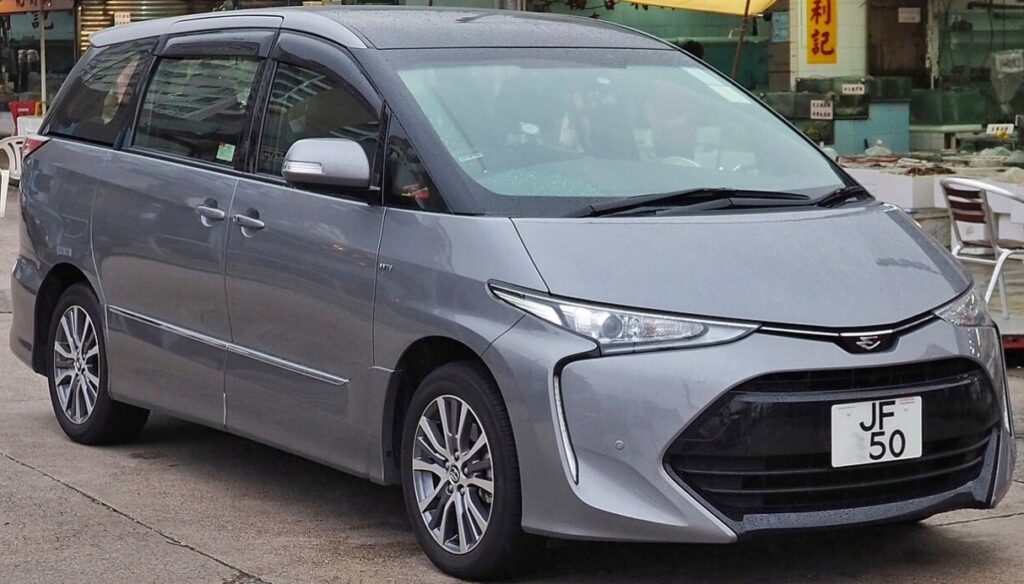
The Toyota Estima Hybrid has always been a fascinating machine. It combines the space of a large family minivan with Toyota's fuel-saving hybrid technology, electric all-wheel drive, and the sort of smooth urban manners that make long family journeys feel remarkably relaxed.
Yet most Toyota Estima Hybrids on the used market today are no longer young vehicles. Many have covered considerable mileage, and age can turn a sophisticated hybrid drivetrain into an expensive puzzle if previous owners have neglected maintenance.
So, what are the most common Toyota Estima Hybrid problems?
Hybrid battery deterioration, inverter problems, cooling-system faults, weak 12-volt batteries, suspension wear, brake actuator issues, engine oil consumption, electrical glitches, and problems caused by poor maintenance can all appear as these vehicles age. The earliest AHR10 Estima Hybrid deserves particular caution because its first-generation hybrid hardware is considerably more complex and troublesome than the later system.
The good news? A healthy Estima Hybrid can still be an excellent family vehicle.
The trick is knowing what to inspect before buying one.
Let's dig into the problems that matter.
Content in this publication
- Is the Toyota Estima Hybrid Reliable?
- 1. Toyota Estima Hybrid Battery Problems
- 2. Hybrid Battery Cooling Fan Problems
- 3. Toyota Estima Hybrid Inverter Problems
- 4. Inverter Cooling System Failure
- 5. Toyota Estima Hybrid 12V Battery Problems
- 6. Brake Actuator and ABS Problems
- 7. Regenerative Braking Can Feel Strange
- 8. 2.4-Liter 2AZ-FXE Engine Problems
- 9. Engine Cooling System Problems
- 10. E-Four All-Wheel-Drive Problems
- 11. Suspension Wear on High-Mileage Estimas
- 12. Electric Sliding Door Problems
- 13. Power Tailgate Problems
- 14. Air-Conditioning Problems
- 15. Warning Lights Caused by Sensor or Electrical Faults
- 16. Imported Toyota Estima Hybrid Problems
- 17. Poor Maintenance Is One of the Biggest Estima Hybrid Problems
- 18. Toyota Estima Hybrid Fuel Economy Getting Worse
- 19. Should You Avoid the First-Generation AHR10 Estima Hybrid?
- 20. Toyota Estima Hybrid Pre-Purchase Inspection Checklist
- 21. How Expensive Are Toyota Estima Hybrid Repairs?
- 22. Can a Toyota Estima Hybrid Last 200,000 km?
- 23. Is a Toyota Estima Hybrid Worth Buying Today?
- Conclusion: Should Toyota Estima Hybrid Problems Stop You Buying One?
- Frequently Asked Questions About Toyota Estima Hybrid Problems
Is the Toyota Estima Hybrid Reliable?
Overall, the Toyota Estima Hybrid can be reliable, particularly when we're talking about the second-generation hybrid model introduced in 2006.
Toyota redesigned the Estima Hybrid around its newer THS II architecture and paired a 2.4-liter 2AZ-FXE petrol engine with front and rear electric motors. The hybrid battery is a nickel-metal hydride unit rated at 245 volts, while Toyota's E-Four system electrically powers the rear axle rather than relying on a conventional mechanical driveshaft.
That's clever engineering.
But reliability depends heavily on age.
We're no longer evaluating these vans as five-year-old vehicles. Many examples are approaching or exceeding two decades of service. Rubber seals, pumps, electrical connectors, suspension bushings, cooling systems, batteries, and electronic modules don't care that there's a Toyota badge on the grille. Eventually, everything ages.
AHR10 vs AHR20 Toyota Estima Hybrid Reliability
This distinction matters enormously.
The AHR10, sold from the early 2000s, represents Toyota's earlier generation of hybrid technology. It used a more complicated drivetrain architecture than its successor, and specialist technical sources describe the first-generation Estima Hybrid as particularly troublesome compared with later Toyota hybrids.
The AHR20, introduced for the redesigned Estima Hybrid in 2006, is generally the model we'd prefer.
It benefits from later-generation THS II technology and a more refined hybrid drivetrain.
That doesn't mean an AHR20 is immune to faults. It simply gives us a better starting point.
1. Toyota Estima Hybrid Battery Problems
Let's address the elephant quietly humming underneath the floor.
The high-voltage hybrid battery is usually what scares buyers most.
Toyota used a nickel-metal hydride battery in the AHR20 Estima Hybrid. These batteries can last remarkably well, but they're still consumable components. After many years and thousands of charge-and-discharge cycles, individual modules can weaken.
Age matters almost as much as mileage.
Symptoms of a Weak Estima Hybrid Battery
We may notice:
- Rapid fluctuations in the battery charge display
- The petrol engine running more frequently
- Reduced fuel economy
- Weak electric assistance
- A loud hybrid-battery cooling fan
- Reduced acceleration
- Hybrid-system warning messages
- Diagnostic trouble codes related to battery blocks
- The vehicle entering reduced-power mode
One especially revealing symptom is a state-of-charge gauge that climbs and falls unnaturally quickly.
Imagine filling a bucket that appears full after adding one cup of water and empty again moments later. That's roughly what a severely reduced usable battery capacity can feel like electronically.
Toyota also notes more generally that hybrid battery deterioration, cell imbalance, obstructed battery cooling airflow and natural aging can trigger hybrid-system warnings.
Can an Estima Hybrid Battery Be Repaired?
Sometimes.
Hybrid specialists may replace weak modules and rebalance the pack. This can be substantially cheaper than replacing the entire battery.
However, there's an important catch.
If one module has failed because the battery pack is simply old, several other modules may not be far behind.
A repaired battery may therefore work perfectly for years—or another weak module could appear months later.
For long-term ownership, a properly rebuilt or high-quality replacement battery usually makes more sense than repeatedly replacing individual failing modules.
2. Hybrid Battery Cooling Fan Problems
Heat is the enemy of batteries.
The Estima Hybrid uses airflow to help regulate battery temperature. Dust, hair, lint, pet fur, and years of interior debris can gradually restrict the cooling system.
When airflow falls, temperatures rise.
And when battery temperature rises regularly, battery aging accelerates.
Watch for a Loud Cooling Fan
A cooling fan working aggressively doesn't automatically mean the battery is dying.
It may simply be trying to compensate for inadequate airflow.
That's why cleaning the battery's intake vents and cooling pathway can be worthwhile preventive maintenance, particularly on high-mileage vehicles.
If we're inspecting an Estima that has transported pets for years, we'd pay even closer attention.
3. Toyota Estima Hybrid Inverter Problems
Here's where things become expensive.
The inverter is one of the central components of the hybrid drivetrain. It manages electrical energy flowing between the high-voltage battery and the electric motors.
Without it, the hybrid system cannot operate correctly.
Technical reviews of early Toyota hybrid systems identify the inverter as an especially important weakness on first-generation Estima Hybrids.
Estima Hybrid Inverter Failure Symptoms
Possible warning signs include:
- Hybrid-system warning light
- Sudden loss of electric assistance
- Reduced vehicle power
- Vehicle entering fail-safe mode
- Multiple warning lights appearing simultaneously
- Failure to enter READY mode
- Intermittent shutdown
- Diagnostic inverter or voltage-converter codes
We shouldn't diagnose an inverter purely from dashboard lights.
A weak 12V battery, cooling problem, wiring fault, sensor error, or another hybrid component can produce surprisingly dramatic warnings.
Scan the vehicle first.
Replace parts second.
4. Inverter Cooling System Failure
Sometimes the inverter itself isn't the villain.
Its cooling system is.
Hybrid electronics generate significant heat, particularly when the vehicle is accelerating hard, climbing hills, or operating in hot weather.
A failed electric coolant pump, insufficient coolant, blocked circulation, air trapped in the system, or another cooling problem can allow inverter temperatures to rise.
Toyota notes that hybrid-system cooling faults can trigger warnings and cause the vehicle to limit power to protect itself.
Why Inverter Cooling Matters
Think of the inverter as a powerful computer working inside an oven.
Without effective cooling, even perfectly functional electronics eventually become unhappy.
If a warning appears mainly during:
- Highway driving
- Long climbs
- Hot weather
- Heavy acceleration
we'd investigate cooling-system operation before assuming the inverter has permanently failed.
5. Toyota Estima Hybrid 12V Battery Problems
Not every terrifying hybrid warning requires a terrifying repair bill.
Sometimes the humble 12-volt battery causes the drama.
Even though the Estima has a high-voltage traction battery, its computers, control modules, relays, and other low-voltage systems still depend upon the conventional auxiliary battery.
When voltage drops too far, electronic systems can behave strangely.
Common Weak 12V Battery Symptoms
We might see:
- Multiple warning lights
- Failure to enter READY mode
- Intermittent starting problems
- Electrical equipment behaving strangely
- Central-locking problems
- Dashboard resets
- Hybrid warnings
- Errors that disappear after charging or replacing the battery
Toyota itself lists low 12V battery voltage among potential causes of hybrid-system warnings.
That's why checking the auxiliary battery should be one of our first diagnostic steps.
A battery test is cheap.
An inverter isn't.
6. Brake Actuator and ABS Problems
Hybrid braking systems are more complicated than conventional hydraulic brakes because regenerative braking must work seamlessly alongside friction braking.
When we press the pedal, the vehicle constantly decides how much braking should come from electrical regeneration and how much should come from the conventional brakes.
It's wonderfully smooth when everything works.
Less wonderful when an actuator or associated system begins failing.
Possible Brake System Warning Signs
Look for:
- ABS warning light
- Brake warning light
- VSC warning
- Unusual buzzing or pump activity
- Brake pump operating very frequently
- Changes in brake-pedal feel
- Reduced regenerative braking
- Diagnostic brake-system codes
Any braking fault deserves immediate attention.
We wouldn't buy an Estima with unexplained brake warnings simply because someone claims it "only needs a sensor."
Maybe it does.
Maybe it doesn't.
Get the codes.
7. Regenerative Braking Can Feel Strange
Not everything unusual is actually broken.
Drivers moving from a conventional petrol vehicle to an older Toyota hybrid sometimes find the brakes unusual at first.
At light pedal pressure, regenerative braking may perform much of the deceleration. Push harder and conventional friction brakes contribute increasingly.
The transition should still feel predictable.
Sudden changes, warning lights, harsh pedal behaviour, or inconsistent braking deserve investigation.
8. 2.4-Liter 2AZ-FXE Engine Problems
The AHR20 Estima Hybrid uses Toyota's 2.4-liter 2AZ-FXE engine.
It differs from the conventional 2AZ-FE and operates as part of the hybrid system, but we still need to remember that underneath all the electrical sophistication sits an internal-combustion engine requiring ordinary maintenance.
Potential concerns on aging vehicles include:
- Oil consumption
- Oil leaks
- Cooling-system deterioration
- Ignition-coil problems
- Dirty throttle bodies
- Worn engine mounts
- Water-pump leaks
- Old spark plugs
- Carbon or deposit buildup
Check Engine Oil Carefully
Oil level is one of the easiest things to inspect before buying an Estima Hybrid.
Pull the dipstick.
Look at the level.
Ask how often the owner checks it.
If the seller seems surprised that an engine contains a dipstick, we have probably learned something useful about the maintenance history.
Why Hybrid Engines Can Hide Problems
Hybrid operation can mask mechanical issues surprisingly well.
The electric motors provide immediate torque, so a slightly tired petrol engine may not initially feel as weak as it would in a conventional minivan.
That's why we shouldn't judge engine condition from acceleration alone.
Inspect it mechanically.
9. Engine Cooling System Problems
The Estima Hybrid contains multiple thermal-management requirements because we're dealing with an internal-combustion engine and electrically driven hybrid components.
Old coolant isn't something we'd ignore.
Neither are:
- Coolant leaks
- Brittle hoses
- Weak pumps
- Damaged radiator components
- Inoperative electric fans
- Air trapped after poor servicing
Overheating any modern aluminium engine can turn a manageable repair into a wallet-emptying event remarkably quickly.
10. E-Four All-Wheel-Drive Problems
One of the coolest features of the Estima Hybrid is Toyota's E-Four electric all-wheel-drive system.
There's no traditional mechanical connection driving the rear axle in the way we'd expect from a conventional AWD system. Instead, a dedicated rear electric motor contributes traction when required.
Toyota rated the rear motor in the redesigned 2006 Estima Hybrid at 50 kW, or roughly 68 PS.
Potential E-Four Issues
Possible problems can involve:
- Rear electric-motor components
- Wiring
- Sensors
- Control electronics
- Wheel-speed information
- Hybrid-system faults disabling AWD assistance
An E-Four warning doesn't automatically condemn the rear motor.
The vehicle's electronic systems communicate with one another extensively, meaning one fault can illuminate several seemingly unrelated warning lights.
Diagnostics matter more than dashboard guesswork.
11. Suspension Wear on High-Mileage Estimas
Not every Toyota Estima Hybrid problem is hybrid-related.
These are large, heavy people carriers.
Suspension components work hard.
On older or high-mileage examples, expect to inspect:
- Shock absorbers
- Anti-roll-bar links
- Control-arm bushings
- Ball joints
- Wheel bearings
- Top mounts
- Steering components
Listen for knocking over broken pavement.
Watch whether the vehicle wanders.
Check the tyres for uneven wear.
A car that chews through the inside edges of expensive tyres may be quietly announcing worn suspension parts or poor alignment.
12. Electric Sliding Door Problems
Power-operated sliding doors are brilliant when we're carrying shopping, children, bags, or all three simultaneously.
They're also another source of potential headaches.
As Estimas age, we may encounter:
- Slow door movement
- Doors reversing direction
- Failed motors
- Worn cables
- Dirty or misaligned tracks
- Faulty switches
- Weak electrical connections
- Doors refusing to close electrically
Before buying, operate every door repeatedly.
Don't accept, "It usually works."
If it usually works during a five-minute inspection, imagine what happens after six months of ownership.
13. Power Tailgate Problems
Higher-specification Estimas may also have an electric tailgate.
Again, test it.
Gas struts weaken. Switches fail. Motors age. Wiring breaks. Sensors become temperamental.
Individual faults aren't necessarily catastrophic, but repairing numerous neglected convenience features can turn a supposedly cheap imported minivan into a slow financial leak.
14. Air-Conditioning Problems
A large minivan needs effective air conditioning.
That's particularly true if we're carrying passengers across three rows.
Potential aging-system problems include:
- Refrigerant leaks
- Compressor problems
- Failed sensors
- Blower-motor faults
- Dirty evaporators
- Weak airflow
- Electrical control issues
Test both heating and cooling.
Don't simply check whether cold air appears from one vent.
Run the climate system through different temperatures, fan speeds, vent settings, and rear controls where fitted.
15. Warning Lights Caused by Sensor or Electrical Faults
Older hybrid Toyotas contain a substantial network of sensors and electronic modules.
One failing component can sometimes generate several dashboard warnings.
We might suddenly see:
ABS + VSC + 4WD + hybrid warnings.
That looks catastrophic.
It might be.
But multiple lights don't necessarily indicate four separate failures.
Modern vehicle modules share information. If one crucial signal disappears, several systems may disable themselves because they no longer have trustworthy data.
Never Diagnose by Warning Light Alone
Use a Toyota-compatible diagnostic scanner capable of reading:
- Hybrid control codes
- Battery data
- ABS codes
- Engine codes
- Body electronics
- Freeze-frame information
A basic generic OBD reader may not reveal everything we need.
16. Imported Toyota Estima Hybrid Problems
Most Estima Hybrids outside Japan arrived as used imports.
That's neither inherently good nor bad, but it adds another layer to our inspection.
We need to establish:
- Genuine mileage
- Service history
- Auction history where available
- Accident repairs
- Corrosion
- Previous hybrid repairs
- Battery replacement history
- Correct fluids
- Availability of local specialists
Parts Availability Matters
An Estima Hybrid may be cheap to buy in one country but surprisingly difficult to repair if local garages rarely work on Japanese domestic-market hybrids.
Before purchasing one, we'd locate a competent hybrid specialist.
Not afterward.
Before.
A rare part that costs $300 isn't really a $300 repair if the vehicle sits unusable for six weeks waiting for it.
17. Poor Maintenance Is One of the Biggest Estima Hybrid Problems
This deserves its own section because many apparent reliability problems originate with previous owners.
Used Japanese MPVs sometimes pass through several owners precisely because they're inexpensive for the amount of vehicle offered.
That's great until maintenance gets deferred.
One owner skips the coolant.
Another delays suspension repairs.
The next ignores a noisy wheel bearing.
Someone fits the cheapest 12V battery available.
Then the van reaches us with seventeen little problems wearing a Toyota badge.
Maintenance history often matters more than mileage.
A properly maintained 180,000-km Estima can be a better purchase than a neglected 100,000-km example.
18. Toyota Estima Hybrid Fuel Economy Getting Worse
Increasing fuel consumption can signal several issues rather than one specific failure.
Possibilities include:
- Weak hybrid battery
- Low tyre pressure
- Poor wheel alignment
- Dragging brakes
- Dirty engine components
- Incorrect oil
- Cold weather
- Short journeys
- Excessive cargo
- Engine problems
Don't immediately blame the hybrid battery.
Start with fundamentals.
If fuel consumption deteriorates gradually alongside increasingly frequent engine operation and rapid battery-charge fluctuations, however, battery health becomes more suspicious.
19. Should You Avoid the First-Generation AHR10 Estima Hybrid?
For most buyers, we'd strongly favour the later AHR20.
The AHR10 is technologically interesting, increasingly rare, and undeniably cool for enthusiasts who appreciate early hybrid engineering.
But that engineering complexity can become troublesome.
Specialist technical reviews describe the first-generation Estima Hybrid as one of Toyota's more problematic early hybrid applications, pointing particularly to inverter and drivetrain-related weaknesses.
For an enthusiast who understands the technology?
Interesting project.
For a family needing dependable school-run transport every morning?
We'd choose carefully.
Who Should Consider an AHR10?
Someone who:
- Has access to a hybrid specialist
- Understands its unusual drivetrain
- Can obtain replacement parts
- Buys a thoroughly inspected example
- Accepts greater repair risk
Otherwise, the newer generation makes considerably more sense.
20. Toyota Estima Hybrid Pre-Purchase Inspection Checklist
If we were standing beside an Estima Hybrid tomorrow with money ready to change hands, here's what we'd inspect:
- Start the vehicle completely cold.
- Confirm it enters READY mode normally.
- Scan every control module for fault codes.
- Check hybrid-battery block voltages and condition where possible.
- Watch battery state-of-charge behaviour during the road test.
- Listen for excessive battery cooling-fan noise.
- Test the 12V battery.
- Inspect engine oil level and condition.
- Check for coolant loss or leaks.
- Confirm inverter cooling circulation.
- Look for ABS, VSC, E-Four, engine, or hybrid warnings.
- Test hard and gentle braking.
- Check suspension for knocks.
- Drive at city and motorway speeds.
- Test every electric sliding door.
- Test the electric tailgate.
- Run the entire climate-control system.
- Check all interior electronics.
- Inspect tyres for uneven wear.
- Verify servicing and previous hybrid repairs.
That inspection won't guarantee perfection.
Nothing can.
But it dramatically reduces the chances of buying someone else's expensive problem.
21. How Expensive Are Toyota Estima Hybrid Repairs?
Costs vary enormously between countries.
That's particularly true because the Estima was primarily a Japanese-market vehicle.
A repair that is straightforward in Japan or New Zealand may be complicated elsewhere because specialists and used components are harder to find.
Generally, routine mechanical repairs aren't what frighten us.
It's the larger hybrid components that deserve budgeting:
- Hybrid battery
- Inverter
- Brake actuator
- Electronic control components
- Rear electric-drive hardware
Used and refurbished components can make ownership considerably more affordable, but quality varies.
Cheap hybrid components can be like cheap parachutes.
The price isn't the only thing we should evaluate.
22. Can a Toyota Estima Hybrid Last 200,000 km?
Absolutely.
Many can travel substantially farther.
Mileage alone doesn't kill a Toyota.
Neglect does.
A high-mileage Estima with regular engine servicing, clean cooling systems, a healthy battery, good suspension, and documented repairs can remain useful for years.
Likewise, a low-mileage vehicle sitting unused for long periods isn't automatically superior.
Hybrid batteries age partly through time, and mechanical components can deteriorate while vehicles sit.
Condition Beats the Odometer
When choosing between two Estimas, we'd rather see:
Higher mileage + excellent history
than:
Low mileage + mystery history.
The odometer tells us how far the vehicle has travelled.
It doesn't tell us how it was treated.
23. Is a Toyota Estima Hybrid Worth Buying Today?
Yes—for the right buyer.
Few vehicles combine seven- or eight-seat practicality, electric-assisted driving, Japanese MPV packaging, comfortable highway manners, and E-Four traction quite like an Estima Hybrid.
The later AHR20 especially remains appealing.
But we wouldn't buy blindly.
At this age, the purchase price is only one part of the equation.
A beautifully maintained Estima that costs slightly more initially may become dramatically cheaper over three years than the cheapest example on the marketplace.
That's the funny thing about used cars.
Sometimes the expensive one is cheaper.
Conclusion: Should Toyota Estima Hybrid Problems Stop You Buying One?
The Toyota Estima Hybrid problems we've discussed sound intimidating when stacked together, but perspective matters.
We're examining everything that can go wrong—not claiming every Estima suffers every fault.
The main concerns are an aging hybrid battery, inverter and cooling-system trouble, auxiliary 12V battery problems, brake-system faults, engine wear, suspension deterioration, and aging electrical accessories. First-generation AHR10 vehicles require greater caution, while the later AHR20 generally makes the more sensible everyday choice.
Our biggest recommendation is simple: don't buy an Estima Hybrid without proper diagnostics.
A ten-minute drive around the block isn't enough.
Scan the hybrid system. Check battery behaviour. Inspect coolant systems. Test the brakes, doors, air conditioning, suspension, and E-Four operation. Look at its maintenance history as carefully as its bodywork.
A neglected Estima Hybrid can become an expensive science experiment.
A maintained one?
It can still be one of the most interesting, practical, comfortable, and unusually clever family vans available for the money.
Frequently Asked Questions About Toyota Estima Hybrid Problems
1. What is the most common Toyota Estima Hybrid problem?
There isn't one fault affecting every Estima, but aging high-voltage batteries, weak 12V batteries, hybrid-system warnings, inverter or cooling-system issues, suspension wear, and electrical accessory problems are among the areas worth checking. Battery condition becomes increasingly important as these vehicles age.
2. How long does a Toyota Estima Hybrid battery last?
There's no fixed expiration date. Battery life depends on age, mileage, temperature, usage patterns, cooling-system condition, and previous maintenance. Some original Toyota nickel-metal hydride packs last impressively long, while others experience weak modules earlier. A diagnostic battery-health test is far more useful than estimating condition from mileage alone.
3. Is the AHR20 Toyota Estima Hybrid reliable?
A well-maintained AHR20 can be very reliable and is generally the Estima Hybrid generation we'd prefer for regular use. Toyota introduced it in 2006 with its later THS II hybrid architecture, a 2.4-liter 2AZ-FXE engine, nickel-metal hydride battery, and electrically driven E-Four rear axle. Age and previous maintenance remain crucial.
4. Can you drive an Estima Hybrid with a hybrid-system warning?
It depends on the cause and severity. Toyota advises that some hybrid warnings may result in reduced-power protection mode, while a red warning, major power loss, unusual smells, or serious symptoms warrant stopping safely and obtaining assistance. We wouldn't continue driving normally until the stored diagnostic codes have been checked.
5. Should I buy a Toyota Estima Hybrid with more than 150,000 km?
Potentially, yes. Mileage alone shouldn't decide the purchase. We'd place more importance on hybrid battery health, service documentation, engine condition, cooling-system maintenance, suspension wear, diagnostic codes, and evidence of previous repairs. A maintained 180,000-km Estima can easily be a smarter purchase than a neglected example showing 100,000 km.
If you want to know other articles similar to Toyota Estima Hybrid Problems: Common Faults, Symptoms, and Reliability Guide you can visit the category Common Problems.
Kia Sorento Issues: Common Problems, Reliability and What to Watch For

Honda Passport Not Starting: Causes, Symptoms, and How to Fix It
Honda Passport Keyless Remote Battery Low: What It Means and How to Fix It

Nissan Rogue Apple CarPlay Not Working: Causes and Fixes
Nissan Rogue No Key Detected: Causes, Fixes, and What to Do
Nissan Rogue Engine Problems: Common Issues, Symptoms, Years and Solutions
Leave a Reply
More content of your interest