

Toyota Estima Fuel Consumption: Complete MPG and L/100km Guide

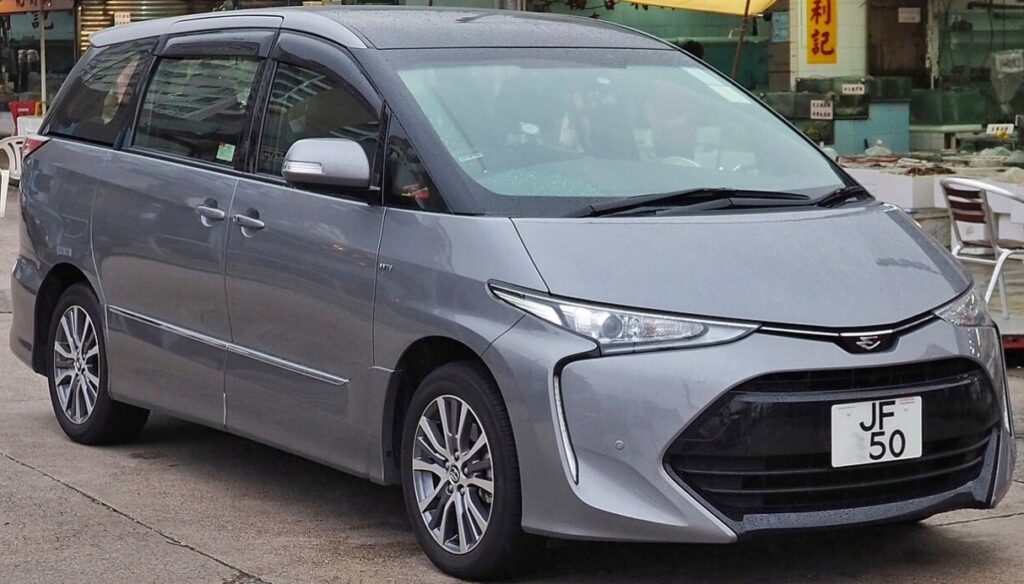
Toyota Estima fuel consumption can vary dramatically depending on which version we drive. Put a 3.5-liter V6 petrol Estima beside a 2.4-liter Estima Hybrid and they may look like close relatives in the driveway, but at the fuel pump they can behave like completely different vehicles.
That is why quoting one fuel-consumption number for the Toyota Estima is misleading.
Over its long production life, the Estima appeared with several petrol engines, front-wheel drive, four-wheel drive, automatic transmissions, CVTs, and two generations of hybrid technology. Vehicle age, passenger load, traffic, tyre pressure, driving speed, air-conditioning use, and hybrid-battery health can change consumption further.
As a broad real-world guide, many petrol Estimas may return somewhere around 7–12 km/L (8.3–14.3 L/100 km) depending on engine and conditions, while a healthy Estima Hybrid can often do considerably better, particularly around town.
So, which Toyota Estima is actually the most economical? How much fuel should we realistically expect to use? And is the hybrid worth buying simply for lower fuel bills?
Let's break it down.
Content in this publication
- Toyota Estima Fuel Consumption at a Glance
- Understanding Toyota Estima Fuel Economy Numbers
- Toyota Estima Fuel Consumption by Generation
- First-Generation Toyota Estima Fuel Consumption: 1990–1999
- Second-Generation Toyota Estima Fuel Consumption: 2000–2005
- Toyota Estima 2.4 Fuel Consumption
- Toyota Estima 3.0 V6 Fuel Consumption
- First-Generation Toyota Estima Hybrid Fuel Consumption
- Third-Generation Toyota Estima Fuel Consumption: 2006–2019
- Toyota Estima 2.4 Petrol Fuel Consumption
- Toyota Estima 3.5 V6 Fuel Consumption
- Toyota Estima Hybrid Fuel Consumption
- Why the Estima Hybrid Is So Efficient in Town
- Toyota Estima Fuel Consumption in City Driving
- Toyota Estima Highway Fuel Consumption
- Speed Makes a Bigger Difference Than We Think
- 2WD vs 4WD Toyota Estima Fuel Consumption
- What Affects Toyota Estima Fuel Consumption?
- Hybrid Battery Condition and Fuel Economy
- How to Calculate Your Estima's Real Fuel Consumption
- How to Improve Toyota Estima Fuel Economy
- Toyota Estima Hybrid vs Petrol Fuel Costs
- Which Toyota Estima Has the Best Fuel Consumption?
- Is the Toyota Estima 2.4 Economical?
- Is the Toyota Estima V6 Worth the Extra Fuel?
- Is an Estima Hybrid Worth Buying for Fuel Economy?
- Best Estima for Different Types of Drivers
- Toyota Estima Fuel Consumption: Final Thoughts
- Frequently Asked Questions
Toyota Estima Fuel Consumption at a Glance
Before diving into individual generations, here is a practical overview.
| Toyota Estima version | Approx. expected consumption | Approx. L/100 km |
|---|---|---|
| First-generation 2.4 petrol | 7–10 km/L | 10.0–14.3 |
| Second-generation 2.4 petrol | 8–11 km/L | 9.1–12.5 |
| Second-generation 3.0 V6 | 6–9 km/L | 11.1–16.7 |
| First Estima Hybrid | 11–16 km/L | 6.3–9.1 |
| Third-generation 2.4 petrol | 8–11 km/L | 9.1–12.5 |
| Third-generation 3.5 V6 | 6.5–9 km/L | 11.1–15.4 |
| Third-generation 2.4 Hybrid | 12–17 km/L | 5.9–8.3 |
These are practical ranges rather than guaranteed figures. A gentle highway journey can beat them, while short journeys in heavy traffic can send consumption in the opposite direction.
Official Japanese laboratory ratings were often substantially better than owners can expect under everyday conditions.
For example, Toyota rated the third-generation 2.4-liter petrol Estima at 12.4 km/L for front-wheel drive and 11.4 km/L for four-wheel drive under Japan's historical 10-15 test cycle. The 3.5-liter V6 was rated at 9.8 km/L for front-wheel drive and 9.4 km/L for four-wheel drive.
Those figures give us a useful benchmark, but they shouldn't be treated like a promise from the fuel gauge.
Understanding Toyota Estima Fuel Economy Numbers
Fuel economy becomes confusing surprisingly quickly because different countries describe exactly the same thing differently.
Kilometers Per Liter
Japanese vehicle specifications commonly use km/L.
Higher is better.
If an Estima manages 10 km/L, it travels approximately 10 kilometers using one liter of petrol.
Liters Per 100 Kilometers
Australia, New Zealand, Canada, Europe, and many other markets often use L/100 km.
Here, lower is better.
For example:
- 20 km/L = 5.0 L/100 km
- 15 km/L = 6.7 L/100 km
- 12 km/L = 8.3 L/100 km
- 10 km/L = 10.0 L/100 km
- 8 km/L = 12.5 L/100 km
- 6 km/L = 16.7 L/100 km
Think of km/L as asking, "How far can we travel with each liter?" L/100 km asks, "How much fuel do we burn covering 100 km?"
Same journey, different language.
Toyota Estima Fuel Consumption by Generation
The Estima ran through three major generations, and engine technology changed considerably along the way.
That matters because comparing a 1995 Estima directly with a 2015 Estima Hybrid is like comparing an old refrigerator with a modern inverter model. Both accomplish the same basic task, but they manage energy very differently.
First-Generation Toyota Estima Fuel Consumption: 1990–1999
The original Estima remains one of Toyota's most recognizable MPVs.
Its futuristic egg-shaped body was unusual when it appeared, and the mechanical layout was equally interesting. Rather than placing the engine conventionally under the bonnet, Toyota mounted the four-cylinder engine beneath the front seats.
Most Japanese-market versions used variations of Toyota's 2.4-liter petrol engine, including naturally aspirated and supercharged configurations.
2.4-Liter Petrol Estima Fuel Economy
Today, a well-maintained first-generation petrol Estima might realistically achieve approximately:
7–10 km/L, or roughly 10–14.3 L/100 km.
Highway use can push consumption toward the better end of the scale. Dense urban traffic, hills, heavy loads, and automatic-transmission losses can pull it downward.
We also need to remember the age of these vehicles.
A 30-year-old Estima isn't operating in the laboratory where it was tested when new. Injectors may be dirty, sensors tired, tyres different from factory specification, and compression no longer perfect.
Age can quietly steal efficiency one kilometer per liter at a time.
Does the Supercharged Estima Use More Fuel?
Usually, yes.
The supercharged 2.4-liter engine provides stronger performance, but additional power doesn't arrive for free. Once we frequently ask the supercharger for help, fuel consumption rises.
Driven carefully, the difference may not be enormous. Driven enthusiastically, however, the fuel gauge can begin moving almost as quickly as the speedometer.
Second-Generation Toyota Estima Fuel Consumption: 2000–2005
The second-generation Estima changed the formula significantly.
Toyota moved to a more conventional front-engine layout and offered several powertrains, most notably:
- 2.4-liter four-cylinder petrol
- 3.0-liter V6 petrol
- 2.4-liter Estima Hybrid
This generation therefore gives buyers three quite different fuel-economy personalities.
Toyota Estima 2.4 Fuel Consumption
The 2.4-liter petrol engine is arguably the sensible middle ground.
We can generally expect approximately 8–11 km/L, equivalent to roughly 9.1–12.5 L/100 km, depending on driving conditions.
On a relaxed open-road trip, an efficiently running vehicle may do better. Constant short-distance urban use can produce much poorer numbers.
Why the 2.4 Is Popular
It doesn't have the effortless acceleration of the V6, but it avoids some of the V6's thirst.
For many buyers, that trade-off makes sense.
We're driving a large multi-seat MPV, after all. Nobody should expect Yaris consumption while moving seven or eight passengers plus luggage.
The 2.4 simply keeps the compromise reasonably balanced.
Toyota Estima 3.0 V6 Fuel Consumption
The 3.0-liter V6 provides smoother and stronger performance, particularly when the vehicle is heavily loaded.
The penalty comes at the pump.
A realistic consumption range can fall around 6–9 km/L, or approximately 11.1–16.7 L/100 km.
Urban driving tends to hurt the most.
Large petrol engines dislike repeatedly accelerating a heavy vehicle from zero. Every traffic light effectively asks the engine to get nearly two tonnes of minivan moving again.
Once cruising steadily, the difference becomes less painful.
First-Generation Toyota Estima Hybrid Fuel Consumption
Toyota introduced the original Estima Hybrid in 2001, making the model historically significant.
It combined a 2.4-liter petrol engine with Toyota's early hybrid technology and electric four-wheel drive.
Toyota described the 2001 model as the world's first mass-produced gasoline/electric four-wheel-drive hybrid vehicle.
Early versions carried an official Japanese 10-15-mode rating of 18.0 km/L, while later updates improved the catalog rating to 18.6 km/L.
That equates to approximately:
- 18.0 km/L = 5.6 L/100 km
- 18.6 km/L = 5.4 L/100 km
Those laboratory numbers were remarkable for a large MPV of the period.
Real-World Estima Hybrid Consumption
Today, expecting an older Estima Hybrid to consistently achieve its original laboratory rating would be optimistic.
A more useful everyday expectation might be roughly 11–16 km/L (6.3–9.1 L/100 km) for a healthy vehicle.
Why such a wide range?
Because hybrid-battery condition matters enormously.
A strong hybrid battery can absorb regenerative energy and assist the petrol engine effectively. A tired battery may spend less time assisting and more time requiring charging.
The petrol engine then carries a greater share of the workload.
Third-Generation Toyota Estima Fuel Consumption: 2006–2019
The third-generation Estima is particularly popular on the used-import market.
It was offered primarily with three powertrain choices:
2.4-liter 2AZ-FE petrol
3.5-liter 2GR-FE V6 petrol
2.4-liter 2AZ-FXE hybrid
The differences in fuel consumption are substantial.
Toyota Estima 2.4 Petrol Fuel Consumption
Toyota's original Japanese specification placed the 2.4-liter front-wheel-drive model at 12.4 km/L under the 10-15 test cycle. Four-wheel-drive versions were rated at 11.4 km/L, while some heavier configurations had slightly different figures.
Converted to L/100 km:
12.4 km/L = about 8.1 L/100 km
11.4 km/L = about 8.8 L/100 km
Those are laboratory numbers.
Realistic 2.4 Estima Consumption
In normal use, approximately 8–11 km/L (9.1–12.5 L/100 km) is a more conservative range.
Urban traffic may see consumption around the lower end, while longer journeys at steady speeds can deliver better results.
The CVT helps because it can keep the engine closer to an efficient operating speed.
However, aggressive acceleration cancels much of that advantage.
Floor the accelerator frequently and the engine revs rise like someone just opened the curtains on a sleeping teenager.
Toyota Estima 3.5 V6 Fuel Consumption
Now we reach the fun one.
The 2GR-FE 3.5-liter V6 transformed the Estima into a surprisingly fast family MPV.
Toyota quoted output of 280 PS when the third-generation Estima originally appeared. Official Japanese fuel-economy figures were 9.8 km/L for front-wheel drive and 9.4 km/L for four-wheel drive.
Converted:
- 9.8 km/L = approximately 10.2 L/100 km
- 9.4 km/L = approximately 10.6 L/100 km
Real-World 3.5 V6 Consumption
Everyday consumption may be closer to 6.5–9 km/L, or approximately 11.1–15.4 L/100 km.
Heavy city driving can push consumption higher still.
Yet we shouldn't dismiss the V6 immediately.
On long motorway journeys, the larger engine doesn't need to work particularly hard. With gentle throttle inputs and steady speeds, consumption can become surprisingly reasonable for the performance available.
Around town?
Different story.
The V6 likes petrol the way a bonfire likes dry wood.
Toyota Estima Hybrid Fuel Consumption
For fuel-conscious Estima buyers, the third-generation hybrid is the star of the range.
It combines the 2.4-liter 2AZ-FXE Atkinson-cycle petrol engine with electric motors and Toyota's E-Four electric all-wheel-drive system.
Toyota originally claimed 20.0 km/L under Japan's 10-15 test cycle, equivalent to exactly 5.0 L/100 km.
Toyota also quoted total system output of approximately 190 PS, meaning the hybrid wasn't designed merely to crawl around while saving petrol.
Real-World Toyota Estima Hybrid MPG
A healthy vehicle driven normally might produce approximately 12–17 km/L, equivalent to 5.9–8.3 L/100 km.
Some journeys can produce better results.
Others won't.
Short winter trips, sustained high-speed motorway driving, steep terrain, a heavily loaded cabin, or deteriorating hybrid components can increase fuel consumption noticeably.
Why the Estima Hybrid Is So Efficient in Town
Traditional petrol vehicles hate stop-and-go traffic.
Each time we brake, kinetic energy becomes heat through the brakes. Then we burn more fuel accelerating again.
A hybrid changes the equation.
Regenerative Braking
During deceleration, the hybrid system can recover some vehicle energy and convert it into electricity.
That electricity is stored in the hybrid battery.
Electric Assistance
The stored energy can later help propel the Estima.
The petrol engine therefore doesn't need to provide every ounce of acceleration itself.
Engine Stop-Start Operation
When conditions allow, the petrol engine can shut down rather than idling continuously.
This is why an Estima Hybrid can sometimes produce surprisingly good economy in suburban conditions where a conventional petrol Estima struggles.
Toyota Estima Fuel Consumption in City Driving
City driving represents the hardest environment for most petrol Estimas.
Expect frequent:
- Acceleration
- Braking
- Low-speed operation
- Air-conditioning use
- Traffic-light stops
- Short journeys
A 2.4 petrol Estima might return around 7–9 km/L in demanding city use.
A V6 might fall toward 5.5–7.5 km/L.
The hybrid can often perform significantly better because regenerative braking and electric assistance are most useful in this environment.
But Traffic Isn't Always Good for Hybrids
There's an important distinction between flowing urban traffic and sitting virtually stationary for an hour.
The air conditioner, electrical systems, battery charging, and repeated engine warm-up cycles still consume energy.
Hybrid doesn't mean fuel-free.
Toyota Estima Highway Fuel Consumption
Steady-speed highway driving narrows the difference between petrol and hybrid models.
Why?
Because regenerative braking isn't being used very often.
Once we're cruising at motorway speed, aerodynamic drag becomes one of the largest energy demands, and the petrol engine typically operates for much of the journey even in a hybrid.
A 2.4 petrol Estima might manage roughly 10–12 km/L during suitable open-road driving.
The V6 may approach 8–10 km/L if driven gently.
A hybrid might achieve roughly 13–17 km/L, although results depend strongly on speed.
Speed Makes a Bigger Difference Than We Think
Driving at 80–90 km/h and driving at 120 km/h don't require remotely the same amount of energy.
Aerodynamic drag rises sharply with speed.
And the Estima isn't a tiny aerodynamic coupe. It's a tall, wide people carrier pushing a substantial hole through the air.
That means sustained high-speed driving can increase consumption surprisingly quickly.
Saving ten minutes by driving harder may cost considerably more petrol than expected.
2WD vs 4WD Toyota Estima Fuel Consumption
Four-wheel-drive Estimas generally use slightly more fuel than equivalent front-wheel-drive versions.
Additional drivetrain components add weight and mechanical losses.
Toyota's own third-generation figures illustrate this nicely.
The 2.4 petrol was originally rated at 12.4 km/L in front-wheel-drive form versus 11.4 km/L with four-wheel drive. The 3.5 V6 showed a smaller gap: 9.8 versus 9.4 km/L.
So if maximum fuel economy is our priority and AWD isn't genuinely necessary, front-wheel drive normally has the advantage.
What Affects Toyota Estima Fuel Consumption?
Two apparently identical Estimas can produce very different numbers.
The most important influences include:
- Engine choice: The 3.5 V6 naturally consumes more than the hybrid under most conditions.
- Driving style: Hard acceleration converts petrol into speed very efficiently—and into lower fuel economy even more efficiently.
- Traffic: Stop-start conditions punish conventional petrol models.
- Vehicle load: Seven passengers plus luggage require more energy to accelerate than one driver.
- Tyre pressure: Underinflated tyres increase rolling resistance.
- Wheel size: Heavy aftermarket wheels and wide tyres can worsen efficiency.
- Air conditioning: Climate-control demand increases energy consumption.
- Terrain: Constant climbing increases fuel use significantly.
- Trip length: Engines operate less efficiently before reaching normal temperature.
- Mechanical condition: Dirty filters, worn spark plugs, dragging brakes, incorrect alignment, and faulty sensors can all hurt economy.
Hybrid Battery Condition and Fuel Economy
Hybrid-battery condition deserves its own discussion because the third-generation Estima Hybrid is now an aging vehicle.
A degraded battery doesn't necessarily mean the vehicle stops driving.
Instead, symptoms can begin subtly.
Possible Signs of Reduced Hybrid Efficiency
We may notice:
- Fuel consumption becoming noticeably worse
- Battery state of charge changing unusually quickly
- Petrol engine running more frequently
- Cooling fan operating often
- Reduced electric assistance
- Large economy changes without a change in driving conditions
None of these symptoms proves the battery is defective by itself.
Proper hybrid-system diagnostics are far more useful than guessing.
How to Calculate Your Estima's Real Fuel Consumption
Dashboard fuel-economy displays are convenient, but calculating consumption manually gives us a useful reality check.
Tank-to-Tank Method
Fill the tank completely and reset the trip meter.
Drive normally.
At the next fill-up, record:
- Kilometers travelled
- Liters required to refill
Then calculate:
km/L = kilometers travelled ÷ liters used
Suppose we travel 520 km and refill with 50 liters.
520 ÷ 50 = 10.4 km/L
For L/100 km:
Liters used ÷ kilometers travelled × 100
50 ÷ 520 × 100 = 9.6 L/100 km
Use Several Tanks
One tank tells us very little.
Fuel-pump shutoff points vary. Traffic varies. Weather varies.
Tracking three to five complete tanks gives a much more reliable average.
How to Improve Toyota Estima Fuel Economy
We don't need to drive everywhere at bicycle speed to reduce consumption.
Small changes add up.
Accelerate Smoothly
The accelerator doesn't have to behave like an on/off switch.
Build speed progressively.
Anticipate Traffic
If the traffic light 300 meters ahead is red, continuing to accelerate only to brake hard makes little sense.
Coast early where safe.
Hybrid owners benefit particularly because smooth deceleration allows regenerative braking to recover energy.
Check Tyre Pressures
Incorrect pressure increases rolling resistance and can also affect tyre wear and handling.
Use the specification appropriate for the actual vehicle and tyre setup.
Remove Unnecessary Weight
We don't need to empty the glovebox to save fuel, but permanently carrying heavy equipment for no reason doesn't help.
Maintain the Engine
A healthy engine is usually an efficient engine.
Keep on top of:
- Engine oil
- Spark plugs
- Air filter
- Fuel system
- Oxygen sensors
- Mass-airflow sensor
- Cooling system
Check for Brake Drag
A sticking brake caliper can quietly destroy fuel economy.
If one wheel becomes unusually hot after normal driving, the braking system deserves inspection.
Toyota Estima Hybrid vs Petrol Fuel Costs
Imagine two drivers each travel 15,000 km annually.
One petrol Estima averages 9 km/L.
The hybrid averages 14 km/L.
The petrol model uses:
15,000 ÷ 9 = 1,667 liters per year
The hybrid uses:
15,000 ÷ 14 = 1,071 liters per year
That's a difference of approximately 596 liters annually.
Multiply that by the local petrol price and the savings can become significant.
However, fuel isn't the entire ownership equation.
Hybrid buyers should also consider vehicle condition, battery health, purchase price, specialist servicing availability, and potential hybrid-system repairs.
The cheapest Estima to fuel isn't automatically the cheapest Estima to own.
Which Toyota Estima Has the Best Fuel Consumption?
The 2.4-liter Estima Hybrid is the clear winner.
Toyota's official launch figure of 20.0 km/L for the 2006 hybrid was dramatically better than the contemporary petrol models under the same Japanese test methodology.
In real life, the difference will usually be smaller than the laboratory numbers suggest, but the hybrid remains the strongest choice for drivers focused on economy.
It's particularly attractive for:
- Urban driving
- School runs
- Delivery or shuttle-style use
- Frequent stop-start journeys
- High annual mileage
Is the Toyota Estima 2.4 Economical?
For a large petrol MPV, reasonably so.
It won't behave like a Corolla, but an Estima can carry seven or eight occupants, luggage, and plenty of equipment.
Context matters.
Getting around 9–11 km/L from a large petrol people carrier isn't extraordinary by modern compact-car standards, but it's respectable considering the Estima's size and age.
The 2.4 also represents a practical compromise between fuel consumption and purchase complexity.
Is the Toyota Estima V6 Worth the Extra Fuel?
That depends entirely on what we value.
The 3.5 V6 offers effortless acceleration and much stronger performance when overtaking or carrying a full load.
It's the version we choose with our heart rather than our fuel calculator.
If most journeys involve congested city traffic, the V6 can become expensive.
If annual mileage is low and we value smooth, strong performance, the fuel penalty may matter less.
There's no universally correct answer.
Is an Estima Hybrid Worth Buying for Fuel Economy?
Potentially, yes—but condition matters more than the badge.
A properly maintained hybrid with a healthy battery can give an older Estima remarkably competitive economy.
A neglected hybrid with deteriorating components may become false economy.
Before buying, we'd rather pay for a proper hybrid-system inspection than rely on a seller saying, "Battery is perfect, mate."
Data beats optimism.
Best Estima for Different Types of Drivers
Best for Lowest Fuel Consumption
2.4 Estima Hybrid
Especially suitable for frequent urban driving.
Best Simple All-Rounder
2.4 petrol
Reasonable economy without the added hybrid system.
Best for Performance
3.5 V6
Fast, smooth, effortless—and thirsty.
Best Older Budget Choice
A carefully maintained 2.4 petrol may provide a better balance than buying the cheapest hybrid available purely to save fuel.
Toyota Estima Fuel Consumption: Final Thoughts
Toyota Estima fuel consumption ranges from impressively economical to unapologetically thirsty depending on which engine sits underneath the bonnet.
The petrol 2.4-liter models offer the sensible middle ground. Expect roughly 8–11 km/L in many everyday situations, although conditions can move the number significantly.
The 3.0 and 3.5-liter V6 models prioritize smoothness and performance rather than economy. Around 6–9 km/L is more realistic for many owners, especially when city driving enters the picture.
Then we have the Estima Hybrid, the economy champion. Toyota originally rated the third-generation model at an impressive 20.0 km/L under the Japanese 10-15 test cycle, while real-world consumption from an aging vehicle will usually be less spectacular. Still, a healthy hybrid can deliver excellent fuel economy for such a large and practical MPV.
Ultimately, the best number isn't the one printed in an old brochure.
It's the one our particular Estima produces over several full tanks.
A well-maintained vehicle, correct tyre pressures, smooth driving, sensible speeds, and good mechanical condition can make a surprisingly large difference. When we're moving seven people in comfort, every extra kilometer squeezed from a liter of petrol feels like a small victory.
Frequently Asked Questions
1. What is the average Toyota Estima fuel consumption?
Petrol Toyota Estima models commonly achieve roughly 7–11 km/L, depending on engine, generation, drivetrain, traffic, and driving style. Hybrid models can often achieve approximately 12–17 km/L in favorable real-world conditions. These are practical ranges rather than guaranteed figures.
2. What fuel consumption does the Toyota Estima 2.4 have?
A 2.4-liter petrol Estima can typically return around 8–11 km/L, equivalent to roughly 9.1–12.5 L/100 km. Toyota originally rated the third-generation 2.4 FWD at 12.4 km/L under Japan's 10-15 laboratory test cycle.
3. What is the Toyota Estima Hybrid fuel consumption?
Toyota officially rated the 2006 Estima Hybrid at 20.0 km/L (5.0 L/100 km) under the Japanese 10-15 test cycle. Real-world consumption on today's used vehicles may commonly fall around 12–17 km/L, depending heavily on battery condition, temperature, traffic, journey length, and driving style.
4. Why is my Toyota Estima using too much fuel?
High consumption can result from low tyre pressure, short journeys, aggressive acceleration, heavy loads, dirty filters, worn spark plugs, poor wheel alignment, dragging brakes, faulty engine sensors, or—in hybrid models—problems affecting the hybrid system. A sudden unexplained increase deserves proper diagnosis.
5. Which Toyota Estima is most fuel-efficient?
The 2.4-liter Toyota Estima Hybrid is generally the most fuel-efficient Estima. The third-generation hybrid's original 20.0 km/L Japanese laboratory rating was substantially better than the corresponding 2.4 and 3.5 petrol models, although actual consumption in an older used example will depend heavily on its condition.
If you want to know other articles similar to Toyota Estima Fuel Consumption: Complete MPG and L/100km Guide you can visit the category Driving.
Can Nissan Rogue Pull a Boat? Complete Towing Guide
Can Nissan Rogue Be Flat Towed? Complete Towing Guide
Are Nissan Rogue Good on Gas? MPG, Fuel Economy, and Real-World Costs
Can Nissan Rogue Drive in Snow? Complete Winter Driving Guide

Kia Sorento Diesel Fuel Consumption: MPG, Efficiency and Real-World Range
Haval Jolion Hybrid Fuel Consumption: How Efficient Is It Really?
Leave a Reply
More content of your interest