
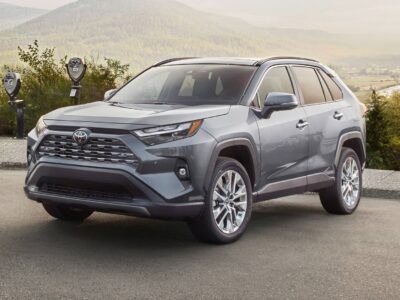
Mazda CX-5 0-60: Acceleration Times by Year and Engine

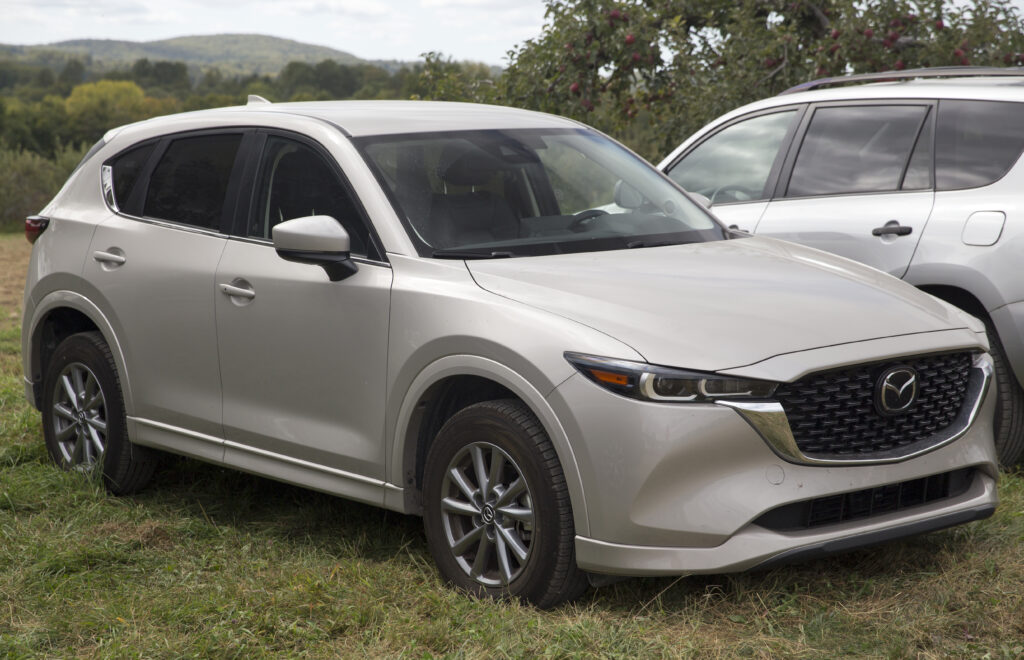
The Mazda CX-5 0-60 mph time is one of the most interesting performance figures for drivers considering this popular compact SUV. While the CX-5 has always focused on delivering an engaging driving experience, its acceleration varies significantly depending on the model year, engine, and configuration.
So, how fast is the Mazda CX-5?
The answer depends largely on whether we're looking at a naturally aspirated model or the more powerful turbocharged version.
The Mazda CX-5 Turbo can accelerate from 0 to 60 mph in approximately 6.1 to 6.2 seconds, making it one of the quicker conventional gasoline-powered SUVs in its class during its production years. Meanwhile, the standard 2.5-liter engine generally needs around 8 seconds.
For the redesigned 2026 Mazda CX-5, independent acceleration tests have recorded times between 8.0 and 8.8 seconds.
In this complete guide, we'll explore Mazda CX-5 acceleration times by year, compare the different engines, examine how performance has evolved, and explain whether the CX-5 is fast enough for everyday driving.
Content in this publication
- Mazda CX-5 0-60 MPH: Quick Answer
- Mazda CX-5 0-60 Times by Model Year
- Mazda CX-5 Engine Options and Acceleration
- Mazda CX-5 Turbo vs Non-Turbo: Which Is Faster?
- Does the 2026 Mazda CX-5 Have a Turbo Engine?
- Mazda CX-5 0-60 vs 0-100 KM/H
- Mazda CX-5 Quarter-Mile Performance
- How Does the Mazda CX-5 Compare With Other SUVs?
- What Affects Mazda CX-5 0-60 Times?
- Mazda CX-5 Sport Mode and Acceleration
- Is the Mazda CX-5 Fast Enough for Highway Driving?
- Mazda CX-5 Acceleration and Fuel Economy
- Is the Mazda CX-5 Turbo Worth It?
- Which Mazda CX-5 Is the Fastest?
- How to Identify a Mazda CX-5 Turbo
- Should You Buy an Older Mazda CX-5 Turbo?
- Frequently Asked Questions About Mazda CX-5 0-60
- Conclusion: Is the Mazda CX-5 Quick?
Mazda CX-5 0-60 MPH: Quick Answer
Let's start with the most important acceleration figures.
| Mazda CX-5 Version | 0-60 MPH Time |
|---|---|
| 2026 CX-5 2.5 AWD | 8.0–8.8 seconds |
| 2025 CX-5 2.5 non-turbo | Approximately 8.1 seconds |
| 2025 CX-5 2.5 Turbo | Approximately 6.2 seconds |
| 2022 CX-5 2.5 Turbo | 6.2 seconds |
| 2021 CX-5 2.5 Turbo | 6.1 seconds |
| 2019 CX-5 2.5 Turbo | 6.2 seconds |
| 2017 CX-5 2.5 FWD | 7.8 seconds |
| 2017 CX-5 2.5 AWD | 8.1 seconds |
| 2014 CX-5 2.5 AWD | 7.6 seconds |
| 2013 CX-5 2.0 Manual FWD | 9.2 seconds |
Important: These figures represent published instrumented tests or, for the 2025 entries, approximate benchmarks cited in model reviews from previously tested engine configurations. They are not Mazda's official acceleration ratings. Actual results may differ depending on vehicle condition, tires, weather, fuel, and testing procedures.
The biggest takeaway is clear: the turbocharged Mazda CX-5 delivers considerably stronger acceleration than the standard gasoline model.
Mazda CX-5 0-60 Times by Model Year
Over the years, Mazda has introduced different engines, improved transmission calibration, and made significant changes to the CX-5's design.
These developments have influenced its acceleration characteristics.
2026 Mazda CX-5 0-60 MPH
The redesigned 2026 Mazda CX-5 introduces a larger body, updated technology, and a revised driving experience.
However, one important change affects acceleration: the turbocharged engine is no longer offered in the U.S. 2026 lineup.
Instead, the new CX-5 uses a naturally aspirated 2.5-liter four-cylinder engine.
Key specifications include:
- Engine: 2.5-liter Skyactiv-G four-cylinder
- Horsepower: 187 hp
- Torque: 186 lb-ft
- Transmission: Six-speed automatic
- Drivetrain: Standard all-wheel drive
- 0-60 mph: 8.0 seconds in Car and Driver testing
- 0-60 mph: 8.8 seconds in MotorTrend testing
The difference between the published test results demonstrates why acceleration measurements should be viewed as performance benchmarks rather than guaranteed numbers.
In everyday driving, we can expect the 2026 CX-5 to provide adequate acceleration for commuting, city traffic, and highway travel.
However, drivers coming from an older turbocharged CX-5 may immediately notice the reduction in straight-line performance.
2025 Mazda CX-5 0-60 MPH
The 2025 Mazda CX-5 is particularly interesting because it offers two different engine options in the U.S. market.
The standard engine produces 187 horsepower, while the optional turbocharged engine delivers considerably more power.
Typical performance benchmarks are:
| 2025 Engine | Horsepower | Approximate 0-60 MPH |
|---|---|---|
| 2.5L Skyactiv-G | 187 hp | 8.1 seconds |
| 2.5L Turbo, premium fuel | 256 hp | 6.2 seconds |
These times are representative figures from published CX-5 engine testing and reviews, not necessarily separate tests of every 2025 trim.
The turbocharged version offers noticeably stronger acceleration, particularly when entering highways or overtaking slower vehicles.
For drivers prioritizing performance, the 2025 CX-5 Turbo is an especially appealing option because the following generation discontinued this engine.
2024 Mazda CX-5 0-60 MPH
The 2024 Mazda CX-5 retains the same general powertrain strategy as the 2025 model.
Buyers can choose between a naturally aspirated 2.5-liter engine and a turbocharged 2.5-liter engine.
Based on comparable powertrain testing, we can use the following broad expectations:
- Standard 2.5-liter engine: Around 8 seconds, depending on configuration and test method
- 2.5-liter Turbo: Approximately 6–7 seconds, depending on conditions and testing
These are useful comparison ranges rather than year-specific measured results.
The CX-5 Turbo combines strong low-end torque with a conventional six-speed automatic transmission.
This makes acceleration feel responsive without requiring the engine to operate continuously at high rpm.
2022–2023 Mazda CX-5 0-60 MPH
The 2022 model year brought updates to the CX-5, including standard all-wheel drive in the U.S. lineup.
The turbocharged version also received increased output when operating on premium gasoline.
The 2022 CX-5 Turbo Signature achieved a tested 0-60 mph time of 6.2 seconds.
Its performance specifications included:
| Specification | 2022 Mazda CX-5 Turbo |
|---|---|
| Engine | 2.5L Turbo |
| Maximum horsepower | 256 hp |
| Maximum torque | 320 lb-ft |
| Transmission | 6-speed automatic |
| Drivetrain | AWD |
| 0-60 mph | 6.2 seconds |
| Quarter mile | 14.9 seconds |
These numbers highlight the difference between the turbocharged CX-5 and a typical compact SUV designed primarily for economy.
Although the CX-5 was never intended to be a high-performance sports SUV, it could provide surprisingly quick acceleration.
2019–2021 Mazda CX-5 Turbo 0-60 MPH
The introduction of the turbocharged 2.5-liter engine transformed the CX-5's acceleration capabilities.
In 2019, a tested CX-5 Signature AWD reached 60 mph in 6.2 seconds.
The 2021 turbocharged model improved slightly, recording a 6.1-second run in Car and Driver testing.
| Model | Tested 0-60 MPH |
|---|---|
| 2019 CX-5 Turbo AWD | 6.2 seconds |
| 2021 CX-5 Turbo AWD | 6.1 seconds |
These results are particularly impressive considering that the CX-5 remains a practical five-passenger SUV.
The turbocharged engine's substantial torque output helps deliver strong acceleration without requiring aggressive driving.
2013–2018 Mazda CX-5 0-60 MPH
Earlier CX-5 models featured naturally aspirated gasoline engines.
The original 2.0-liter engine emphasized fuel efficiency rather than acceleration.
A 2013 Mazda CX-5 Sport equipped with the 2.0-liter engine and six-speed manual transmission completed the 0-60 mph sprint in 9.2 seconds.
Mazda subsequently expanded availability of its larger 2.5-liter engine.
In 2014, a CX-5 equipped with the 2.5-liter engine and all-wheel drive achieved a 7.6-second 0-60 mph time.
The redesigned 2017 CX-5 produced the following tested results:
- Front-wheel-drive 2.5L: 7.8 seconds
- All-wheel-drive 2.5L: 8.1 seconds
These results demonstrate that engine displacement, vehicle weight, and drivetrain configuration can influence acceleration even without turbocharging.
Mazda CX-5 Engine Options and Acceleration
The engine is the most important factor affecting Mazda CX-5 0-60 performance.
Let's examine how the main gasoline engines compare.
Mazda CX-5 2.0-Liter Engine
The 2.0-liter Skyactiv-G engine powered some of the earliest CX-5 models and remained available in selected international markets.
In early U.S. specifications, it produced approximately 155 horsepower.
Its main strengths included:
- Relatively modest fuel consumption
- Smooth power delivery
- Straightforward naturally aspirated design
- Adequate performance for regular commuting
However, acceleration was relatively modest compared with later versions.
The tested 2013 manual model required 9.2 seconds to reach 60 mph.
For relaxed driving, this performance can be sufficient. However, drivers frequently traveling with passengers or climbing steep roads may prefer the larger engine.
Mazda CX-5 2.5-Liter Naturally Aspirated Engine
The 2.5-liter Skyactiv-G engine became one of the CX-5's most widely used gasoline powertrains.
Depending on model year and market, horsepower ratings vary.
Recent U.S. versions produce approximately 187 horsepower.
Compared with the smaller 2.0-liter engine, the 2.5-liter offers:
- Stronger acceleration from a standstill
- Better flexibility during highway driving
- More confident performance with passengers
- Improved responsiveness during everyday acceleration
Typical instrumented 0-60 mph results for modern versions are around 8 seconds, although some tests record slower or faster results.
For most drivers, this engine provides a reasonable balance between performance and everyday usability.
Mazda CX-5 2.5 Turbo Engine
The 2.5-liter turbocharged engine is the standout option for acceleration enthusiasts.
In later U.S. versions, it produces:
| Fuel Type | Horsepower | Torque |
|---|---|---|
| Regular gasoline | 227 hp | 310 lb-ft |
| Premium gasoline | 256 hp | 320 lb-ft |
These specifications apply to the later-generation turbo engine. Earlier turbo versions had different power ratings.
The engine produces substantial torque at relatively low rpm, which is especially useful when accelerating from moderate speeds.
Unlike some smaller turbocharged engines that need to rev aggressively to generate power, the Mazda 2.5 Turbo delivers strong pulling performance across normal driving conditions.
This explains why turbocharged CX-5 models can accelerate to 60 mph in approximately 6.1–6.2 seconds in published tests.
Mazda CX-5 Turbo vs Non-Turbo: Which Is Faster?
The turbocharged CX-5 is considerably quicker in a straight line.
Using representative acceleration benchmarks:
| Performance Metric | Standard 2.5L | 2.5L Turbo |
|---|---|---|
| Horsepower | 187 hp | Up to 256 hp |
| Torque | About 185–186 lb-ft | Up to 320 lb-ft |
| 0-60 mph | Around 8.1 sec | Around 6.2 sec |
| Power delivery | Linear | Stronger low-rpm torque |
| Driving character | Balanced | More responsive |
The approximate difference between 8.1 and 6.2 seconds is 1.9 seconds.
That represents a substantial improvement in acceleration.
In percentage terms, the turbocharged version completes the 0-60 mph sprint approximately 23% faster based on those representative times.
But what does that mean on the road?
Acceleration in City Traffic
In city driving, both engines provide enough performance for normal conditions.
The naturally aspirated engine delivers predictable acceleration and smooth throttle response.
The Turbo feels stronger when accelerating away from traffic lights or increasing speed quickly.
However, we do not need the turbocharged engine to handle routine urban traffic.
Acceleration on the Highway
The difference becomes more noticeable when merging onto highways.
The Turbo's additional torque allows it to build speed more rapidly, which can be useful when joining faster-moving traffic.
The standard 2.5-liter engine can also handle highway driving, but drivers may need to plan acceleration earlier, particularly on short entrance ramps.
Overtaking Performance
Overtaking performance is another important consideration.
The turbocharged engine provides stronger acceleration without requiring as much effort from the powertrain.
When passing slower vehicles, this additional responsiveness can be convenient.
Nevertheless, no amount of engine power eliminates the need to check visibility, distance, road conditions, and available passing space.
Does the 2026 Mazda CX-5 Have a Turbo Engine?
No. The redesigned 2026 Mazda CX-5 sold in the United States does not offer the previous-generation turbocharged 2.5-liter engine.
The U.S. model instead uses a 187-horsepower naturally aspirated four-cylinder engine paired with a six-speed automatic transmission and standard all-wheel drive.
This is an important distinction for anyone researching Mazda CX-5 acceleration figures.
A 2025 Mazda CX-5 Turbo and a 2026 Mazda CX-5 do not offer equivalent straight-line performance.
The 2026 model brings improvements in interior space, technology, and overall packaging, but buyers seeking the quickest gasoline CX-5 may find an older Turbo more attractive.
Mazda has also announced plans to introduce a hybrid CX-5 powertrain in 2027.
However, we should avoid assigning an exact 0-60 mph time to the upcoming hybrid until reliable instrumented performance results are available.
Mazda CX-5 0-60 vs 0-100 KM/H
Drivers outside the United States often encounter acceleration specifications measured from 0 to 100 km/h instead of 0 to 60 mph.
Although these measurements are similar, they are not identical.
The conversions are:
- 60 mph = approximately 96.6 km/h
- 100 km/h = approximately 62.1 mph
Therefore, a vehicle's 0-100 km/h time is normally slightly slower than its 0-60 mph time because it must accelerate to a higher speed.
We should never compare the two measurements as though they represent exactly the same test.
What About the UK Mazda CX-5?
The difference between regional specifications is particularly important for the redesigned CX-5.
In the United Kingdom, the new CX-5 is offered with a 2.5-liter e-Skyactiv G engine incorporating Mazda M Hybrid technology.
This powertrain differs from the North American 187-horsepower gasoline engine.
The UK front-wheel-drive version produces approximately 141 PS and has a manufacturer-stated 0-62 mph acceleration time of 10.5 seconds.
Consequently, acceleration figures for the U.S. and UK models should not be used interchangeably.
When researching CX-5 performance, we should always confirm the market, engine, transmission, and model year.
Mazda CX-5 Quarter-Mile Performance
A 0-60 mph test measures initial acceleration, but quarter-mile results provide additional information about how a vehicle builds speed.
The quarter-mile test measures the time needed to travel 1,320 feet from a standing start.
Here are selected instrumented CX-5 results.
| Model Tested | Quarter-Mile Time | Trap Speed |
|---|---|---|
| 2013 CX-5 2.0 Manual | 17.1 sec | 83 mph |
| 2014 CX-5 2.5 AWD | 15.8 sec | 87 mph |
| 2017 CX-5 2.5 AWD | 16.3 sec | 85 mph |
| 2019 CX-5 Turbo AWD | 14.8 sec | 95 mph |
| 2021 CX-5 Turbo AWD | 14.7 sec | 94 mph |
| 2022 CX-5 Turbo AWD | 14.9 sec | 93 mph |
| 2026 CX-5 AWD, Car and Driver | 16.2 sec | 85 mph |
| 2026 CX-5 AWD, MotorTrend | 16.7 sec | 83.1 mph |
These numbers reinforce the advantage of the turbocharged engine.
A turbocharged CX-5 does not simply launch quicker. It can also continue accelerating more strongly at higher speeds.
However, the results are drawn from tests conducted at different times and under different conditions.
How Does the Mazda CX-5 Compare With Other SUVs?
The compact SUV segment includes several strong competitors, such as the Toyota RAV4, Honda CR-V, Hyundai Tucson, and Volkswagen Tiguan.
When we compare acceleration, the Mazda CX-5's position depends heavily on which version we're evaluating.
Mazda CX-5 vs Toyota RAV4
The conventional gasoline Toyota RAV4 has generally focused on balanced performance and everyday practicality.
In older comparative testing, the standard CX-5 delivered acceleration broadly similar to the gasoline RAV4.
However, Toyota also offers hybrid and plug-in hybrid powertrains in certain model years, which can significantly change the comparison.
A turbocharged CX-5 may outperform some conventional gasoline RAV4 versions, while higher-output electrified RAV4 models can be quicker.
Therefore, we should compare specific engines and model years rather than entire nameplates.
Mazda CX-5 vs Honda CR-V
The Honda CR-V is another direct competitor.
Both SUVs offer practical interiors, comfortable driving characteristics, and powertrains designed for everyday use.
In independent testing, naturally aspirated CX-5 models have produced acceleration figures in the same general range as some gasoline-powered CR-V versions.
The CX-5 Turbo, however, delivers substantially stronger acceleration than many earlier nonhybrid CR-V configurations.
Hybrid CR-V versions require a separate comparison.
Mazda CX-5 vs Volkswagen Tiguan
The Volkswagen Tiguan uses turbocharged engines in many markets.
Nevertheless, turbocharging alone does not guarantee better acceleration.
Horsepower, torque, transmission behavior, vehicle weight, and drivetrain configuration all play significant roles.
The Mazda CX-5 Turbo is particularly competitive with many conventional compact SUVs, while the standard CX-5 is better described as adequately quick rather than exceptionally fast.
What Affects Mazda CX-5 0-60 Times?
Even two identical Mazda CX-5 vehicles may produce different acceleration results.
Several factors contribute to these variations.
1. Engine Type and Horsepower
The naturally aspirated 2.5-liter and turbocharged 2.5-liter engines deliver different power outputs.
The higher-output Turbo generally accelerates faster, particularly when enough traction is available.
2. Vehicle Weight
Additional weight increases the amount of energy required to accelerate a vehicle.
Passengers, luggage, aftermarket accessories, and heavier wheel-and-tire combinations can all affect performance.
The 2026 CX-5 is larger than the previous model, which contributes to the challenge of maintaining acceleration with a similar naturally aspirated engine.
3. All-Wheel Drive vs Front-Wheel Drive
All-wheel drive can improve traction when accelerating, particularly on slippery surfaces.
However, AWD hardware also adds weight and mechanical complexity.
On dry pavement, an AWD model is not automatically faster than a comparable FWD version.
The final result depends on traction, weight, transmission calibration, and engine output.
4. Fuel Octane
Fuel selection matters particularly for later Mazda CX-5 Turbo models.
These engines produce more power when operating on the specified premium gasoline.
For example, later U.S. turbo versions are rated at 256 horsepower on 93-octane fuel compared with 227 horsepower on regular gasoline.
That does not mean premium gasoline will provide the same benefit in the naturally aspirated engine.
We should follow Mazda's fuel recommendations for the particular vehicle rather than assuming higher octane always produces faster acceleration.
5. Tires and Road Surface
Tires influence how effectively engine power reaches the road.
Worn tires, incorrect tire pressures, or slippery pavement can reduce available traction.
Likewise, acceleration testing performed on an uphill road will produce different results from testing on level ground.
6. Weather and Temperature
Air temperature and atmospheric conditions can influence engine performance.
Turbocharged and naturally aspirated engines may respond differently to these changes.
Wet weather also reduces available traction.
7. Test Methodology
Different automotive publications use different measuring equipment, corrections, and test procedures.
Some acceleration results incorporate a one-foot rollout convention, while others may measure from the instant the vehicle begins moving.
Rollout can make the reported 0-60 mph figure lower.
This is one reason the same model can record different results in independent tests.
Mazda CX-5 Sport Mode and Acceleration
Many Mazda CX-5 models offer a Sport driving mode.
But does Sport mode actually improve the 0-60 mph time?
Sport mode typically changes transmission and throttle-response behavior.
Depending on the model, it may:
- Hold lower gears for longer
- Downshift more readily
- Make throttle response feel more immediate
- Keep the engine operating at higher rpm when accelerating
These changes can make the CX-5 feel more responsive.
However, Sport mode does not normally increase the engine's maximum rated horsepower.
Its effect on a measured 0-60 mph result depends on the specific vehicle and testing conditions.
If the transmission already selects optimal gears during full-throttle acceleration, switching to Sport mode may produce only a small difference.
Is the Mazda CX-5 Fast Enough for Highway Driving?
Yes. Most Mazda CX-5 gasoline models offer sufficient performance for ordinary highway use.
Even the naturally aspirated 2.5-liter engine can maintain typical highway speeds and handle routine acceleration.
However, reaching 60 mph quickly and accelerating from 50 to 70 mph are different performance characteristics.
The second measurement is especially relevant for overtaking and merging.
For example, published Car and Driver tests recorded these 50–70 mph top-gear acceleration times:
| Model | 50–70 MPH |
|---|---|
| 2017 CX-5 2.5 AWD | 5.5 sec |
| 2022 CX-5 Turbo AWD | 4.6 sec |
| 2026 CX-5 AWD | 5.5 sec |
These figures show why the Turbo feels particularly responsive when we ask for additional speed.
The benefit is not limited to launching from a stop.
It also delivers stronger midrange acceleration.
For drivers regularly carrying passengers or traveling through mountainous regions, this characteristic may make the turbocharged version more enjoyable.
Mazda CX-5 Acceleration and Fuel Economy
Faster acceleration can come with increased fuel consumption.
This is particularly relevant when comparing the naturally aspirated and turbocharged CX-5 engines.
For reference, the 2026 U.S. CX-5 has EPA ratings of:
- City: 24 mpg
- Highway: 30 mpg
- Combined: 26 mpg
The tested 2022 Turbo model had EPA ratings of:
- City: 22 mpg
- Highway: 27 mpg
- Combined: 24 mpg
These figures illustrate the trade-off between stronger acceleration and fuel efficiency.
However, fuel consumption depends heavily on driving habits.
Frequent hard acceleration, heavy traffic, short trips, and sustained high speeds can increase fuel usage in either engine.
We should therefore evaluate fuel economy alongside purchase price, maintenance costs, and the performance we actually need.
Is the Mazda CX-5 Turbo Worth It?
For drivers who prioritize acceleration, the CX-5 Turbo can be worth considering.
It delivers substantially stronger straight-line performance than the naturally aspirated model while retaining the CX-5's practical body style.
Reasons to Choose the Turbo
The turbocharged CX-5 may appeal to drivers who want stronger highway acceleration, more responsive overtaking performance, and additional power when carrying passengers.
Its high torque output is particularly useful in everyday driving.
It also provides a noticeable performance difference without requiring a dedicated sports SUV.
Reasons to Choose the Non-Turbo
The naturally aspirated CX-5 remains a sensible option for buyers who prioritize commuting, lower purchase costs in comparable trims, and straightforward daily driving.
Its performance is adequate for most situations.
It can also be appealing to drivers who prefer predictable power delivery over maximum acceleration.
Ultimately, the better choice depends on how and where we drive.
Which Mazda CX-5 Is the Fastest?
Among the gasoline-powered CX-5 models discussed here, the 2021 Mazda CX-5 Turbo Signature AWD is one of the quickest independently tested versions, achieving 0-60 mph in 6.1 seconds.
Other turbocharged versions, including the 2019 and 2022 models, recorded nearly identical times of approximately 6.2 seconds.
This suggests that Mazda's turbocharged 2.5-liter engine delivers consistently strong performance across several model years.
However, a difference of one-tenth of a second should not automatically be interpreted as a meaningful performance advantage.
Weather, traction, vehicle condition, and testing procedures can easily influence such small differences.
For practical purposes, the turbocharged 2019–2025 generation represents the strongest CX-5 acceleration option among the U.S. gasoline versions covered in this guide.
How to Identify a Mazda CX-5 Turbo
If we're shopping for a used Mazda CX-5, identifying the engine is essential.
Depending on the model year, U.S. turbocharged trims have included names such as Grand Touring Reserve, Signature, Turbo, Turbo Premium, Turbo Signature, and Carbon Turbo.
However, trim names can change between markets and years.
We should not rely exclusively on exterior badges or advertisements.
The most reliable approach is to check the vehicle's original specification sheet, VIN-based build information, and engine details.
This helps prevent confusing a naturally aspirated CX-5 with a turbocharged version.
Should You Buy an Older Mazda CX-5 Turbo?
An older CX-5 Turbo can offer excellent acceleration for a compact SUV.
However, straight-line performance should not be the only consideration when purchasing a used vehicle.
We should evaluate maintenance history, engine condition, transmission behavior, previous accidents, and service records.
A properly maintained vehicle is usually a better purchase than one with slightly quicker acceleration but unresolved mechanical issues.
Before buying, it is sensible to arrange a professional inspection and confirm that the vehicle has received any applicable recalls or service updates.
We should also verify whether the previous owner used the appropriate fuel and maintained the vehicle according to Mazda's recommendations.
Frequently Asked Questions About Mazda CX-5 0-60
1. How fast does a Mazda CX-5 go from 0 to 60 mph?
A modern Mazda CX-5 with the naturally aspirated 2.5-liter engine typically reaches 60 mph in around 8 seconds in independent testing. The redesigned 2026 U.S. model has recorded times of 8.0 to 8.8 seconds. Turbocharged versions from previous years have achieved approximately 6.1 to 6.2 seconds.
2. What is the Mazda CX-5 Turbo 0-60 time?
The Mazda CX-5 Turbo can accelerate from 0 to 60 mph in approximately 6.1 to 6.2 seconds, based on instrumented tests of several model years. Actual acceleration depends on the specific vehicle, testing conditions, and fuel used.
3. Is the Mazda CX-5 faster than the Toyota RAV4?
It depends on the engines and model years being compared. Some turbocharged CX-5 versions accelerate faster than conventional gasoline RAV4 models. However, certain hybrid and plug-in hybrid RAV4 versions offer stronger acceleration. Comparing specific configurations provides the most accurate answer.
4. Does Sport mode make the Mazda CX-5 faster?
Sport mode can improve responsiveness by adjusting transmission and throttle behavior. However, it does not normally increase maximum horsepower. Its effect on a measured 0-60 mph time may be limited, depending on the model and testing conditions.
5. What is the 2026 Mazda CX-5 0-60 time?
The U.S.-specification 2026 Mazda CX-5 recorded 8.0 seconds in Car and Driver testing and 8.8 seconds in MotorTrend testing. It uses a 187-horsepower 2.5-liter naturally aspirated engine with a six-speed automatic transmission and standard all-wheel drive.
Conclusion: Is the Mazda CX-5 Quick?
The Mazda CX-5 offers different levels of acceleration depending on its engine and model year.
For drivers interested in the quickest gasoline-powered versions, the turbocharged CX-5 stands out with tested 0-60 mph times of approximately 6.1 to 6.2 seconds.
Meanwhile, the naturally aspirated 2.5-liter engine delivers more moderate acceleration, generally around 8 seconds in published modern-model testing.
The redesigned 2026 CX-5 focuses on a larger cabin, updated technology, and everyday usability rather than matching the acceleration of its turbocharged predecessor.
When choosing between these versions, we should consider more than a single performance number.
Fuel efficiency, driving comfort, reliability, maintenance costs, and everyday practicality all influence the ownership experience.
Ultimately, the Mazda CX-5 Turbo is the more exciting choice for acceleration, while the standard CX-5 remains a well-rounded compact SUV for daily driving.
If you want to know other articles similar to Mazda CX-5 0-60: Acceleration Times by Year and Engine you can visit the category Driving.
Toyota RAV4 Miles Per Gallon: Complete MPG and Fuel Economy Guide
Toyota Prius MPG UK: Official and Real Fuel Economy

Mazda CX-5 Real-World MPG: What Drivers Actually Get
MG HS Fuel Consumption: Complete MPG Guide

Can Nissan Rogue Pull a Boat? Complete Towing Guide
Can Nissan Rogue Be Flat Towed? Complete Towing Guide
Leave a Reply
More content of your interest