

Toyota Prius MPG UK: Official and Real Fuel Economy

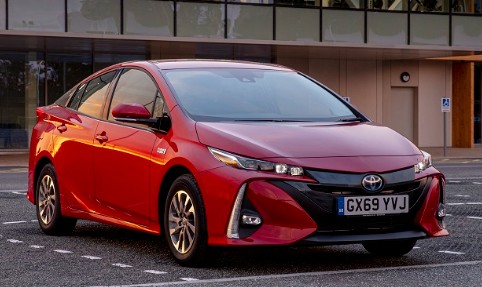
The Toyota Prius has built a reputation as one of the most fuel-efficient cars available in the UK. From its early petrol-electric hybrid technology to the latest plug-in hybrid models, the Prius has consistently focused on reducing fuel consumption without sacrificing everyday practicality.
But how many miles per gallon does a Toyota Prius actually achieve on British roads?
The answer depends on the generation, engine, driving conditions and whether you choose a conventional self-charging hybrid or a plug-in hybrid.
Older Prius models commonly achieve between 50 and 70 mpg (UK) in everyday driving, while newer plug-in hybrid versions can use considerably less petrol when charged regularly.
In this guide, we'll explore Toyota Prius MPG figures across different generations, compare official and real-world fuel consumption, examine motorway efficiency and calculate how much petrol costs for UK drivers.
Content in this publication
- Toyota Prius MPG UK: Quick Overview
- Toyota Prius MPG by Generation
- New Toyota Prius Plug-in Hybrid MPG UK
- Toyota Prius Real-World MPG UK
- Toyota Prius Motorway MPG UK
- Toyota Prius City MPG
- Toyota Prius MPG in Winter
- Toyota Prius Fuel Cost Per Mile UK
- Toyota Prius Plug-in Charging vs Petrol Costs
- Toyota Prius MPG vs Toyota Corolla Hybrid
- Toyota Prius MPG vs Diesel Cars
- How to Improve Toyota Prius MPG
- How to Calculate Your Toyota Prius MPG
- Toyota Prius UK MPG vs US MPG
- Is the Toyota Prius Economical to Run in the UK?
- Common Toyota Prius Fuel Economy Problems
- Frequently Asked Questions About Toyota Prius MPG UK
- Conclusion: Is the Toyota Prius Good on Fuel in the UK?
Toyota Prius MPG UK: Quick Overview
Before examining individual models, here is a comparison of the Toyota Prius fuel economy figures most relevant to UK buyers.
| Toyota Prius Model | Official UK MPG | Typical Real-World MPG |
|---|---|---|
| Prius 2004–2009 1.5 Hybrid | Up to 65.7 mpg | 48–58 mpg |
| Prius 2009–2015 1.8 Hybrid | 70.6–72.4 mpg | 53–63 mpg |
| Prius 2016–2022 1.8 Hybrid | 59.6–67.3 mpg (WLTP) | 58–70 mpg |
| Prius 2016–2022 AWD-i | Around 58.7–58.9 mpg (WLTP) | 50–60 mpg |
| Prius Plug-in 2024–2025 | 403.5–564.9 mpg (weighted WLTP) | Highly dependent on charging |
| Prius Plug-in current UK range | 134.5–176.5 mpg (weighted WLTP) | Around 50–60 mpg with depleted battery |
Note: Real-world figures are approximate driving expectations, not guaranteed results. Official figures use different testing standards and, for plug-in hybrids, include electricity-assisted driving. They should not all be compared directly.
The biggest distinction is between conventional hybrids and plug-in hybrids.
Traditional Toyota Prius models improve petrol efficiency through regenerative braking and electric assistance without requiring an external charger.
The latest plug-in Prius can travel substantial distances using electricity alone, making its petrol consumption especially low for drivers who charge regularly.
Toyota Prius MPG by Generation
Toyota has continuously improved the Prius since its introduction, with each generation bringing changes in hybrid technology, aerodynamic efficiency and powertrain performance.
Toyota Prius 2004–2009 MPG
The second-generation Prius helped establish hybrid technology in the UK.
It used a 1.5-litre petrol engine combined with an electric motor and Toyota's Hybrid Synergy Drive system.
Fuel economy figures:
- Official combined consumption: up to 65.7 mpg.
- Typical real-world consumption: approximately 48–58 mpg.
- Best driving conditions: gentle urban and mixed driving.
- Fuel type: unleaded petrol.
For a car developed in the early 2000s, these figures remain competitive.
Its electric motor assists during acceleration, while regenerative braking recovers energy that would otherwise be wasted.
However, older examples may experience reduced efficiency due to worn tyres, mechanical condition and ageing hybrid components.
Toyota Prius 2009–2015 MPG
The third-generation Toyota Prius introduced a larger 1.8-litre petrol engine.
Although this might initially appear less economical than the previous 1.5-litre unit, the newer powertrain improved overall efficiency.
Toyota published official combined figures of approximately 70.6–72.4 mpg under the NEDC testing system.
In everyday UK driving, many owners can expect approximately 53–63 mpg.
One of this generation's strengths is its ability to maintain respectable economy on longer journeys.
The larger engine can operate more efficiently at cruising speeds, while electric assistance helps reduce petrol consumption in urban conditions.
For buyers searching the used market, this generation offers an appealing balance between purchase price and fuel efficiency.
Toyota Prius 2016–2022 MPG
The fourth-generation Prius delivered another significant improvement in efficiency.
It introduced a more aerodynamic design, refined hybrid components and improved energy management.
Depending on specification, official WLTP combined fuel economy figures ranged from approximately 59.6 to 67.3 mpg for front-wheel-drive models.
Real-world consumption can often reach approximately 58–70 mpg, particularly when driven smoothly.
Some drivers achieve better results during favourable summer conditions and longer mixed journeys.
The fourth-generation Prius is particularly attractive for motorists who want excellent economy without having to install a home charging point.
Its self-charging hybrid system manages the battery automatically.
Toyota Prius AWD-i MPG
Certain fourth-generation Prius models were available with Toyota's AWD-i all-wheel-drive system.
This configuration provides additional electric assistance to the rear wheels when required.
The extra components and different vehicle configuration slightly affect fuel efficiency.
Official WLTP consumption is approximately 58.7–58.9 mpg.
In practice, around 50–60 mpg can be a reasonable planning estimate, depending on the route and conditions.
Drivers living in areas with slippery roads may appreciate the additional traction, although the standard front-wheel-drive version is generally the more economical choice.
New Toyota Prius Plug-in Hybrid MPG UK
The fifth-generation Toyota Prius returned to the UK market in 2024 as a plug-in hybrid.
Unlike older conventional Prius models, the latest UK version combines a 2.0-litre petrol engine with a larger rechargeable battery and an electric motor.
The system develops approximately 223 DIN horsepower.
This makes the new Prius considerably more powerful than previous generations while maintaining a strong focus on efficiency.
Official Toyota Prius Plug-in MPG
Official figures vary significantly by model year, trim and certification data.
When the latest Prius Plug-in was introduced in the UK, published weighted WLTP figures ranged from approximately 403.5 to 564.9 mpg.
For the current UK range, Toyota lists weighted combined figures of approximately 134.5–176.5 mpg.
These figures should not be interpreted as the petrol-only consumption achievable during a continuous motorway journey.
They represent a laboratory-based calculation incorporating both petrol and electricity usage.
Changes to published certification figures and different vehicle specifications also mean that figures from separate model years are not always directly comparable.
Why Is the Official Prius MPG So High?
Plug-in hybrids can complete some journeys without using petrol.
During official testing, part of the driving is completed using electricity stored in the battery.
As a result, the measured petrol consumption can be extremely low.
For example, a driver completing a 25-mile commute entirely in electric mode may use no petrol on that journey.
However, the electricity used to recharge the battery still has a cost.
This is why plug-in hybrid mpg figures should always be evaluated alongside electricity consumption, charging frequency and total running costs.
Toyota Prius Plug-in Electric Range
The latest Toyota Prius Plug-in offers an official electric driving range of up to approximately 53 miles, depending on specification.
Toyota's current UK figures include approximately:
| Version | Official Electric Range |
|---|---|
| Prius Plug-in Design | Up to 52.2 miles |
| Prius Plug-in Excel | Approximately 44.1 miles |
Actual electric range can be lower, particularly during winter or sustained motorway driving.
A practical expectation of around 35–45 miles may be sensible for many journeys, although individual results vary considerably.
For someone commuting 20 miles each way, the Prius Plug-in could potentially complete the entire return journey using electricity, assuming favourable conditions and sufficient charge.
Toyota Prius Real-World MPG UK
Official figures are useful when comparing vehicles, but they rarely tell the entire story.
Everyday fuel economy depends on traffic, weather, speed, road conditions and driving behaviour.
For example, a Toyota Prius used mainly for commuting around Manchester may return a different average from one driven regularly between London and Birmingham.
What MPG Do Toyota Prius Owners Actually Get?
Historical UK owner-reported fuel economy data provides useful context.
Approximate reported averages include:
| Prius Generation | Owner-Reported Average |
|---|---|
| 2004–2009 Prius | Around 54 mpg |
| 2009–2015 Prius 1.8 Hybrid | Around 57 mpg |
| 2016–2022 Prius Hybrid | Around 65 mpg |
These are averages from reported ownership data, not guaranteed results for every vehicle.
Vehicle condition, driving habits and the type of journey can produce substantial differences.
Nevertheless, the figures illustrate how much the Prius improved between generations.
Real MPG for the Latest Prius Plug-in
The latest Prius Plug-in requires a slightly different approach.
When its electric battery has been depleted to the level at which the car operates primarily as a normal hybrid, petrol economy becomes much easier to compare with other vehicles.
British automotive testing has recorded approximately 53.8 mpg from a Prius Plug-in Excel with a depleted battery.
Other road tests suggest that around 50–60 mpg is achievable in normal hybrid operation.
However, drivers who recharge regularly may achieve much higher petrol-only mpg averages because a substantial proportion of their journeys use electricity.
The most meaningful comparison is therefore total petrol and electricity spending rather than mpg alone.
Toyota Prius Motorway MPG UK
Motorway fuel consumption is particularly important for British motorists who regularly travel long distances.
The Toyota Prius performs well on motorways, but hybrid technology generally delivers its greatest advantage when driving involves acceleration, deceleration and regenerative braking.
At a steady motorway speed, the petrol engine provides much of the energy required.
Toyota Prius MPG at 70 MPH
At a sustained 70 mph, a conventional Toyota Prius may achieve approximately 48–60 mpg, depending on generation, weather conditions and vehicle load.
Newer examples can perform better under favourable conditions.
However, higher speeds increase aerodynamic resistance, meaning fuel economy generally falls as cruising speed rises.
Driving at 60 mph rather than 70 mph can make a noticeable difference to consumption.
This is especially relevant on longer motorway journeys.
Does the Prius Use More Petrol on Motorways?
Not necessarily compared with an ordinary petrol car.
The Toyota Prius remains efficient at motorway speeds, but the relative benefit of its hybrid system is often smaller than in urban traffic.
During motorway driving:
- The petrol engine operates for longer periods.
- Regenerative braking opportunities are limited.
- Aerodynamic drag increases at higher speeds.
- Cold weather and headwinds can raise fuel consumption.
The latest Prius Plug-in also uses its battery more quickly at sustained high speeds than during gentle urban driving.
Toyota Prius City MPG
Urban driving is one of the main strengths of Toyota's hybrid system.
The Prius can use electric assistance at low speeds, recover energy through regenerative braking and shut down the petrol engine when operating conditions allow.
This helps reduce wasted fuel in stop-start traffic.
A well-maintained fourth-generation Prius may return approximately 60–70 mpg in favourable urban and suburban driving.
However, very short journeys are a different matter.
If the petrol engine never reaches its normal operating temperature, consumption can increase substantially.
Is the Prius Good for London Traffic?
Yes. The Prius is particularly well suited to city driving.
Its smooth automatic transmission, hybrid assistance and regenerative braking make it convenient in heavy traffic.
This explains its longstanding popularity among private-hire drivers and motorists covering high urban mileages.
Nevertheless, drivers should remember that fuel efficiency is not the only ownership cost.
Insurance, servicing, tyres, depreciation and applicable road charges must also be considered.
Toyota Prius MPG in Winter
Cold weather can significantly affect Toyota Prius fuel economy.
During a British winter, the petrol engine may run more frequently to warm the vehicle and provide cabin heating.
The hybrid battery also operates under different thermal conditions.
Why Does Prius MPG Drop in Cold Weather?
Several factors contribute to reduced efficiency:
- The engine requires more time to reach its normal operating temperature.
- Cabin heating may increase engine operation.
- Cold tyres can have higher rolling resistance.
- Wet roads and poor weather increase energy consumption.
- Short trips place greater emphasis on the inefficient warm-up phase.
Drivers may notice a substantial difference between summer and winter fuel economy.
For example, a Prius averaging 65 mpg in summer could achieve noticeably less during colder months.
The exact reduction depends heavily on journey length and driving conditions.
Prius Plug-in Winter Range
Cold weather also affects the electric range of plug-in hybrid models.
Cabin heating, battery temperature and reduced battery efficiency can all decrease the distance travelled on electricity.
If you rely on electric driving for daily commuting, allow a margin rather than assuming the maximum official range will always be available.
Toyota Prius Fuel Cost Per Mile UK
Fuel economy becomes more meaningful when we translate mpg into actual running costs.
Let's calculate how much a Toyota Prius might cost to drive in the UK.
For these examples, we'll assume petrol costs £1.45 per litre.
This is an illustrative price rather than a live nationwide average.
Petrol Cost per 100 Miles
| Fuel Economy | Petrol Used per 100 Miles | Fuel Cost |
|---|---|---|
| 45 mpg | 10.10 litres | £14.65 |
| 50 mpg | 9.09 litres | £13.18 |
| 55 mpg | 8.27 litres | £11.99 |
| 60 mpg | 7.58 litres | £10.99 |
| 65 mpg | 6.99 litres | £10.14 |
| 70 mpg | 6.49 litres | £9.42 |
A Toyota Prius averaging 60 mpg costs approximately 11 pence per mile in petrol at the assumed price.
For drivers covering thousands of miles every year, these savings can add up.
Toyota Prius Annual Petrol Costs
Suppose we drive 10,000 miles annually.
Here is how much petrol spending would vary according to average fuel economy.
| Average MPG | Annual Mileage | Estimated Petrol Cost |
|---|---|---|
| 50 mpg | 10,000 miles | £1,318 |
| 55 mpg | 10,000 miles | £1,199 |
| 60 mpg | 10,000 miles | £1,099 |
| 65 mpg | 10,000 miles | £1,014 |
| 70 mpg | 10,000 miles | £942 |
The difference between averaging 50 mpg and 70 mpg is approximately £376 per year.
Over five years, that represents around £1,880 in petrol savings, assuming unchanged prices and annual mileage.
This illustrates why driving conditions and driving style matter even when using an efficient hybrid.
Toyota Prius Plug-in Charging vs Petrol Costs
The plug-in Prius introduces electricity as another running-cost consideration.
Charging can be considerably cheaper than buying petrol, but the financial benefit depends on electricity tariffs.
How Much Does Electric Driving Cost?
Toyota publishes an electric consumption figure of approximately 21.7 kWh per 100 miles for a current Prius Plug-in specification.
Assuming an electricity price of 25p per kWh:
- Electricity consumption: 21.7 kWh per 100 miles.
- Electricity price: £0.25 per kWh.
- Estimated energy cost: £5.43 per 100 miles.
- Approximate electricity cost: 5.4p per mile.
These calculations use the published test consumption and exclude any additional charging losses.
Now compare this with petrol driving at 60 mpg and £1.45 per litre.
Petrol costs approximately £10.99 per 100 miles.
Under these assumptions, electric driving costs roughly half as much per mile.
However, expensive public charging can reduce or eliminate this advantage.
Is a Prius Plug-in Worth Charging Every Day?
For many owners, yes.
Regular home charging allows the vehicle to use electricity for more short journeys.
The biggest potential savings are available to motorists who:
- Have access to affordable home electricity.
- Drive within the electric range most days.
- Can recharge between longer journeys.
- Avoid relying heavily on expensive public chargers.
A driver covering short daily distances may consume very little petrol.
Someone regularly driving 200 miles without recharging will use the petrol engine much more often.
That distinction is central to understanding the real cost of owning a plug-in Prius.
Toyota Prius MPG vs Toyota Corolla Hybrid
The Toyota Corolla Hybrid is one of the Prius's closest alternatives in the UK.
Both use Toyota hybrid technology, but they have slightly different designs and driving characteristics.
A conventional Corolla Hybrid offers strong fuel economy without requiring external charging.
The older self-charging Prius is particularly efficient because of its aerodynamic shape and powertrain calibration.
For used-car buyers, both models are worth considering.
The fifth-generation Prius Plug-in has a different advantage: the ability to complete significant distances in electric mode.
However, it also has a larger rechargeable battery and a different ownership proposition.
The better choice depends on your typical mileage, purchase budget and access to charging.
Which Is Better for Motorway Driving?
Both cars can deliver economical motorway performance.
A conventional Corolla Hybrid may suit drivers wanting straightforward ownership without charging.
The Prius Plug-in becomes more attractive when daily journeys include substantial electric driving.
For someone covering high motorway mileage and rarely charging, the financial advantage of the plug-in system may be less significant.
Toyota Prius MPG vs Diesel Cars
Diesel cars traditionally perform well on long motorway journeys.
A modern economical diesel may achieve impressive fuel consumption during sustained cruising.
However, the Prius offers several advantages, particularly in mixed and urban driving.
Its hybrid powertrain does not use a diesel particulate filter, and its petrol engine is well suited to frequent stop-start operation.
A diesel may still be competitive for drivers regularly covering long motorway distances.
The Prius becomes especially appealing when journeys include town traffic, commuting and frequent braking.
Choosing between them should involve more than comparing official mpg figures.
Maintenance costs, emissions regulations, purchase price and driving patterns are also relevant.
How to Improve Toyota Prius MPG
Even an efficient hybrid can consume more petrol than necessary.
Fortunately, several straightforward driving and maintenance habits can help maximise economy.
1. Accelerate Smoothly
Avoid unnecessarily aggressive acceleration.
Smooth pedal inputs help the hybrid system distribute power efficiently between the petrol engine and electric motor.
You do not need to accelerate extremely slowly, but avoiding repeated hard acceleration can improve consumption.
2. Maintain the Correct Tyre Pressure
Underinflated tyres increase rolling resistance.
Check pressures regularly and follow the values recommended by Toyota for the vehicle and its load.
Correct tyre pressure also supports safe handling and tyre life.
3. Anticipate Traffic Conditions
Look ahead and avoid unnecessary braking.
Gradual deceleration allows the regenerative braking system to recover energy efficiently.
This is especially useful in urban traffic.
4. Avoid Excessive Motorway Speeds
Driving faster increases aerodynamic resistance.
Maintaining a steady, legal speed is usually more efficient than repeated acceleration and braking.
Cruise control may help on suitable roads, although it is not always the most efficient option on steep or frequently changing gradients.
5. Reduce Unnecessary Weight
Carrying heavy items increases the energy required to accelerate and climb hills.
Remove unnecessary luggage when it is safe and practical.
Roof boxes and roof racks can also increase aerodynamic drag.
6. Keep Up With Servicing
Regular maintenance helps ensure the engine and hybrid system operate as intended.
Important areas include:
- Correct engine oil specification.
- Clean air filters.
- Suitable tyres.
- Healthy braking components.
- Proper hybrid battery cooling.
A poorly maintained vehicle may consume more petrol than an equivalent model in good condition.
7. Use Electric Mode Sensibly
For Prius Plug-in owners, using electric power for suitable short journeys can reduce petrol consumption significantly.
However, repeatedly forcing electric-only operation is not always the most efficient approach.
The vehicle's automatic hybrid management can often make effective decisions based on driving conditions.
How to Calculate Your Toyota Prius MPG
The best way to determine your actual fuel economy is to measure petrol consumption over several journeys.
Dashboard estimates are useful, but calculating consumption at the pump provides an independent check.
Step 1: Fill the Petrol Tank
Fill the tank consistently and reset the trip meter.
Step 2: Drive Normally
Complete a representative mixture of your usual journeys.
Longer measurement periods generally provide more meaningful results.
Step 3: Refill the Tank
Return to the pump and refill using a consistent method.
Record how many litres were added.
Step 4: Calculate UK MPG
Use the following formula:
UK MPG = Miles Driven × 4.54609 ÷ Litres Used
For example, suppose we drive 400 miles and use 30 litres of petrol.
The calculation is:
400 × 4.54609 ÷ 30 = 60.61 mpg UK
That means our average fuel economy is approximately 60.6 mpg.
For a plug-in hybrid, this calculation measures petrol consumption only. To assess overall efficiency, also record the electricity used for charging.
Toyota Prius UK MPG vs US MPG
An important detail often overlooked online is the difference between British and American miles-per-gallon measurements.
The UK uses the imperial gallon, while the United States uses the smaller US gallon.
- One UK gallon equals approximately 4.546 litres.
- One US gallon equals approximately 3.785 litres.
- UK mpg figures are therefore numerically higher for the same actual fuel consumption.
For example:
| UK MPG | Equivalent US MPG |
|---|---|
| 50 mpg | 41.6 mpg |
| 55 mpg | 45.8 mpg |
| 60 mpg | 50.0 mpg |
| 65 mpg | 54.1 mpg |
| 70 mpg | 58.3 mpg |
This distinction matters when researching the Prius online.
American reviews commonly report lower mpg numbers even when the actual fuel efficiency is equivalent.
For UK buyers, always check which gallon measurement has been used.
Is the Toyota Prius Economical to Run in the UK?
The Toyota Prius remains an attractive option for motorists prioritising fuel economy.
Older generations are capable of delivering approximately 50–65 mpg in normal conditions, while well-driven fourth-generation examples can achieve even better results.
The latest plug-in version provides additional savings opportunities when it is charged regularly.
However, the most economical Prius for an individual driver depends on several factors.
For Urban Commuters
A conventional hybrid Prius is an excellent choice because it does not require charging.
The plug-in model may offer lower energy costs if home charging is available.
For Motorway Drivers
An older Prius can still deliver good motorway economy.
The latest plug-in version remains efficient with a depleted battery, although its greatest fuel-saving advantage comes from regular charging.
For High-Mileage Drivers
Purchase price, servicing, fuel costs and depreciation become particularly important.
A used fourth-generation Prius may offer a compelling balance between efficiency and affordability.
For Drivers With Home Charging
The fifth-generation Prius Plug-in may provide the best opportunity to minimise petrol consumption.
It is particularly appealing when most daily journeys fall within the vehicle's electric range.
Common Toyota Prius Fuel Economy Problems
If your Toyota Prius suddenly starts consuming significantly more petrol, it is worth investigating.
A small change in economy may be explained by colder weather or different driving conditions.
A large or persistent reduction could indicate another issue.
Low Tyre Pressure
Incorrect pressures increase rolling resistance and fuel consumption.
Frequent Short Journeys
A cold petrol engine operates less efficiently.
Repeated journeys of only a few miles can noticeably reduce average mpg.
Brake Drag
A sticking brake component can increase resistance and reduce fuel efficiency.
If you suspect a brake problem, have the vehicle inspected promptly.
Hybrid Battery or Cooling Issues
Hybrid-system faults may affect operation and efficiency.
Warning messages or unusual behaviour should be checked by a qualified technician.
Incorrect Maintenance
Unsuitable engine oil, neglected servicing or mechanical problems can also affect consumption.
Maintaining a consistent service history helps protect both efficiency and reliability.
Frequently Asked Questions About Toyota Prius MPG UK
1. What Is the Average Toyota Prius MPG in the UK?
A conventional Toyota Prius commonly achieves approximately 50–70 mpg UK, depending on generation and driving conditions. Fourth-generation models are particularly efficient, with owner-reported averages around 65 mpg. Plug-in hybrid versions can record much higher petrol-only mpg averages when charged frequently.
2. What MPG Does a Toyota Prius Get on the Motorway?
Many conventional Prius models achieve approximately 48–60 mpg during sustained motorway driving, although results vary. Speed, headwinds, temperature, gradients and traffic all influence consumption. The latest Prius Plug-in has also demonstrated around 50–60 mpg when operating mainly on petrol.
3. Is the Toyota Prius More Economical Than a Normal Petrol Car?
In many driving situations, yes. Its hybrid technology recovers energy during braking and allows the petrol engine to stop when appropriate. These features can provide substantial efficiency improvements, particularly in urban and mixed driving compared with a similar conventional petrol vehicle.
4. How Many Miles Can a Toyota Prius Travel on a Full Tank?
The distance depends on fuel tank capacity and average mpg. For example, a Prius with a 43-litre tank averaging 60 mpg has a theoretical full-tank range of approximately 567 miles. Actual usable range will be lower when allowing for a fuel reserve and changing driving conditions. The latest Prius Plug-in has a 40-litre petrol tank and additional electric range when charged.
5. Which Toyota Prius Generation Has the Best MPG?
Among conventional self-charging Prius models sold in the UK, the fourth generation is particularly efficient and can deliver excellent real-world fuel economy. The fifth-generation Prius Plug-in can use substantially less petrol if charged regularly, but comparing its weighted official mpg directly with conventional hybrid figures is misleading because electricity supplies part of the energy.
Conclusion: Is the Toyota Prius Good on Fuel in the UK?
The Toyota Prius continues to be one of the most recognisable choices for drivers who value fuel efficiency.
For motorists interested in a used hybrid, the 2009–2015 Prius offers respectable economy, while the 2016–2022 generation delivers improved efficiency and often achieves approximately 60–70 mpg under suitable conditions.
The newest Toyota Prius Plug-in takes a different approach. Its ability to travel up to approximately 53 miles on electricity under official test conditions can reduce petrol consumption dramatically for drivers who charge frequently.
However, official plug-in hybrid figures should not be mistaken for the mpg achievable on petrol alone.
For realistic budgeting, it is sensible to calculate fuel costs using approximately 50–60 mpg for sustained petrol-powered driving in the latest plug-in model, then account separately for any electricity used.
Ultimately, the best Toyota Prius MPG in the UK comes from matching the right generation and powertrain to your driving habits.
Whether we prioritise affordable used-car ownership, efficient motorway journeys or electric-assisted commuting, the Prius remains a strong option for reducing everyday motoring costs.
If you want to know other articles similar to Toyota Prius MPG UK: Official and Real Fuel Economy you can visit the category Driving.
Toyota RAV4 Miles Per Gallon: Complete MPG and Fuel Economy Guide

Mazda CX-5 Real-World MPG: What Drivers Actually Get

Mazda CX-5 0-60: Acceleration Times by Year and Engine

MG HS Fuel Consumption: Complete MPG Guide

Can Nissan Rogue Pull a Boat? Complete Towing Guide
Can Nissan Rogue Be Flat Towed? Complete Towing Guide
Leave a Reply
More content of your interest