

Toyota RAV4 Weight (2002–2026): Complete Guide by Year and Model

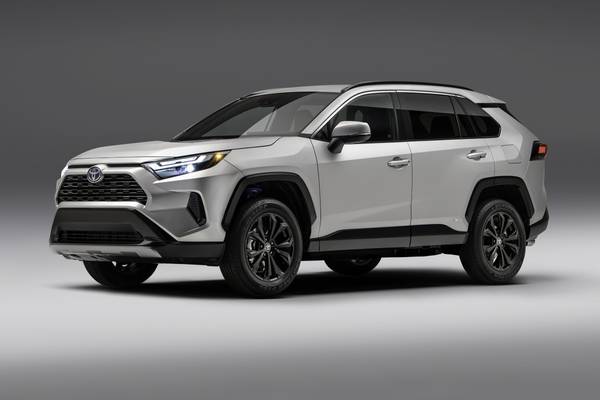
The Toyota RAV4 weight has changed significantly over the years as this popular compact SUV has evolved in size, technology, safety, and performance. From the relatively lightweight models of the early 2000s to the advanced hybrid and plug-in hybrid versions available in 2026, each generation offers different weight specifications.
If we're comparing older RAV4 models, considering buying a used vehicle, or researching the latest generation, understanding vehicle weight can help us evaluate fuel efficiency, driving dynamics, payload capacity, and towing capability.
So, how much does a Toyota RAV4 weigh? Depending on the model year, engine, drivetrain, and trim level, the Toyota RAV4 has a curb weight ranging from approximately 2,711 pounds (1,230 kg) in 2002 to 4,540 pounds (2,059 kg) in 2026.
In this comprehensive guide, we'll explore Toyota RAV4 weight specifications from 2002 through 2026, including a detailed comparison chart, generational differences, hybrid weight variations, and everything else worth knowing.
Content in this publication
- How Much Does a Toyota RAV4 Weigh?
- Toyota RAV4 Weight by Year (2002–2026)
- 2026 Toyota RAV4 Weight by Trim Level
- Toyota RAV4 Weight (2019–2025): Fifth Generation
- Toyota RAV4 Weight (2013–2018): Fourth Generation
- Toyota RAV4 Weight (2006–2012): Third Generation
- Toyota RAV4 Weight (2002–2005): Second Generation
- How Has Toyota RAV4 Weight Changed Over the Generations?
- What Is Toyota RAV4 Curb Weight?
- Toyota RAV4 Curb Weight vs. Gross Vehicle Weight
- Does AWD Increase Toyota RAV4 Weight?
- Toyota RAV4 Hybrid Weight vs. Gasoline Weight
- Toyota RAV4 Plug-in Hybrid Weight
- How Does Toyota RAV4 Weight Affect Performance?
- Does Toyota RAV4 Weight Affect Towing Capacity?
- How Can We Find the Exact Weight of a Toyota RAV4?
- Why Do Toyota RAV4 Weight Figures Vary Between Websites?
- Is the Toyota RAV4 a Heavy SUV?
- Frequently Asked Questions About Toyota RAV4 Weight
- Conclusion: Toyota RAV4 Weight From 2002 to 2026
How Much Does a Toyota RAV4 Weigh?
The Toyota RAV4 typically weighs between 3,300 and 4,000 pounds, although older compact versions can be considerably lighter and modern plug-in hybrid models can exceed 4,500 pounds.
The exact weight depends on several factors:
- Model year: Newer generations generally have larger bodies and additional equipment.
- Engine configuration: Four-cylinder, V6, hybrid, and plug-in hybrid powertrains have different weights.
- Drivetrain: All-wheel-drive models often weigh more than front-wheel-drive versions.
- Trim level: Premium equipment, larger wheels, and additional features can increase weight.
- Battery technology: Plug-in hybrids contain larger battery packs than conventional hybrid models.
- Market specifications: Vehicles sold in different countries may have different configurations.
For example, the 2026 RAV4 LE Hybrid with front-wheel drive weighs approximately 3,594 pounds, while the 2026 RAV4 Plug-in Hybrid XSE weighs around 4,540 pounds.
That's a difference of almost 950 pounds within the same model year.
Toyota RAV4 Weight by Year (2002–2026)
The following Toyota RAV4 weight chart compares curb weight across 25 model years.
These figures reflect selected U.S.-market configurations and include gasoline, hybrid, plug-in hybrid, and certain electric versions where applicable.
| Model Year | Weight (lbs) | Weight (kg) |
|---|---|---|
| 2026 | 3,594–4,540 | 1,630–2,059 |
| 2025 | 3,370–4,300 | 1,529–1,950 |
| 2024 | 3,370–4,300 | 1,529–1,950 |
| 2023 | 3,370–4,300 | 1,529–1,950 |
| 2022 | 3,370–4,300 | 1,529–1,950 |
| 2021 | 3,370–4,300 | 1,529–1,950 |
| 2020 | 3,370–3,800 | 1,529–1,724 |
| 2019 | 3,370–3,800 | 1,529–1,724 |
| 2018 | 3,455–3,950 | 1,567–1,792 |
| 2017 | 3,455–3,950 | 1,567–1,792 |
| 2016 | 3,455–3,950 | 1,567–1,792 |
| 2015 | 3,435–3,610 | 1,558–1,637 |
| 2014 | 3,435–4,032 | 1,558–1,829 |
| 2013 | 3,435–4,032 | 1,558–1,829 |
| 2012 | 3,360–4,032 | 1,524–1,829 |
| 2011 | 3,360–3,699 | 1,524–1,678 |
| 2010 | 3,360–3,699 | 1,524–1,678 |
| 2009 | 3,360–3,699 | 1,524–1,678 |
| 2008 | 3,300–3,677 | 1,497–1,668 |
| 2007 | 3,300–3,677 | 1,497–1,668 |
| 2006 | 3,300–3,677 | 1,497–1,668 |
| 2005 | 2,897–3,119 | 1,314–1,415 |
| 2004 | 2,897–3,119 | 1,314–1,415 |
| 2003 | 2,711–2,877 | 1,230–1,305 |
| 2002 | 2,711–2,877 | 1,230–1,305 |
Note: These are published curb-weight ranges for the configurations covered by the referenced specifications, not necessarily every configuration sold worldwide. The upper weights for 2012–2014 include the RAV4 EV, while 2021–2025 include RAV4 Prime plug-in hybrids.
Understanding the Toyota RAV4 Weight Chart
Several important trends stand out.
First, the 2002 and 2003 RAV4 models were significantly lighter than modern examples. Their relatively compact dimensions and simpler powertrains helped keep curb weight below 2,900 pounds in the listed configurations.
Second, the third generation introduced a larger platform and more powerful engine options, increasing weight considerably.
Third, the arrival of hybrid technology created a wider variation between lighter gasoline models and heavier electrified versions.
Finally, the sixth-generation 2026 RAV4 combines conventional hybrid and plug-in hybrid technology, with the heaviest configurations exceeding 4,500 pounds.
2026 Toyota RAV4 Weight by Trim Level
The 2026 Toyota RAV4 represents the beginning of the sixth generation, featuring redesigned styling, updated technology, and an electrified powertrain lineup in the United States.
Unlike the previous generation, the U.S.-market 2026 RAV4 no longer offers a traditional gasoline-only powertrain.
Instead, buyers can choose between hybrid and plug-in hybrid versions.
2026 Toyota RAV4 Curb Weight Chart
| 2026 RAV4 Trim | Weight (lbs) | Weight (kg) |
|---|---|---|
| LE Hybrid FWD | 3,594 | 1,630 |
| LE Hybrid AWD | 3,715 | 1,685 |
| SE Hybrid FWD | 3,616 | 1,640 |
| SE Hybrid AWD | 3,737 | 1,695 |
| XLE Premium Hybrid FWD | 3,616 | 1,640 |
| XLE Premium Hybrid AWD | 3,770 | 1,710 |
| Woodland Hybrid AWD | 3,814 | 1,730 |
| XSE Hybrid AWD | 3,825 | 1,735 |
| Limited Hybrid AWD | 3,847 | 1,745 |
| Plug-in Hybrid GR SPORT AWD | 4,430 | 2,009 |
| Plug-in Hybrid SE AWD | 4,435 | 2,012 |
| Plug-in Hybrid Woodland AWD | 4,500 | 2,041 |
| Plug-in Hybrid XSE AWD | 4,540 | 2,059 |
These figures show how significantly the powertrain and drivetrain influence overall weight.
Why Is the 2026 RAV4 Plug-in Hybrid Heavier?
The biggest difference comes from battery technology.
A conventional Toyota RAV4 Hybrid uses a comparatively small battery to support its gasoline engine and electric motors.
A plug-in hybrid requires a substantially larger battery because it can travel meaningful distances using electricity alone.
That additional battery capacity increases vehicle weight.
Plug-in hybrid versions also incorporate charging hardware and other components required for their powertrain.
However, the additional weight comes with important advantages, including electric-only driving capability, greater flexibility in daily operation, and strong combined performance.
Is the 2026 Toyota RAV4 Heavier Than the 2025 Model?
Not necessarily.
The 2025 RAV4 gasoline LE FWD weighs approximately 3,370 pounds, compared with 3,594 pounds for the 2026 Hybrid LE FWD.
However, the 2025 RAV4 Hybrid LE AWD weighs approximately 3,690 pounds, compared with 3,715 pounds for the equivalent 2026 AWD version.
This shows that comparisons depend heavily on the selected powertrain.
The 2026 plug-in hybrid versions are also heavier than their 2025 counterparts, reflecting changes to their electrified systems and overall vehicle configuration.
Toyota RAV4 Weight (2019–2025): Fifth Generation
The fifth-generation Toyota RAV4 debuted for the 2019 model year with a redesigned platform, modern styling, and improved driving characteristics.
This generation offered gasoline, hybrid, and eventually plug-in hybrid options.
2019–2020 Toyota RAV4 Weight
For 2019 and 2020, published curb weights range from approximately 3,370 to 3,800 pounds.
The lighter versions generally feature front-wheel drive and a conventional gasoline engine.
Heavier models include AWD configurations and hybrid versions.
One interesting feature of this generation is that Toyota managed to combine a larger, more sophisticated SUV design with relatively competitive weight figures.
The platform was engineered to improve handling, structural rigidity, and overall driving refinement.
2021–2025 Toyota RAV4 Weight
The introduction of the RAV4 Prime for the 2021 model year significantly increased the upper end of the weight range.
Across these years, curb weight spans approximately 3,370 to 4,300 pounds.
Typical examples include:
- RAV4 LE gasoline FWD: approximately 3,370 lbs.
- RAV4 LE gasoline AWD: approximately 3,490 lbs.
- RAV4 Hybrid LE AWD: approximately 3,690–3,710 lbs.
- RAV4 Prime SE AWD: approximately 4,235 lbs.
- RAV4 Prime XSE AWD: approximately 4,300 lbs.
The RAV4 Prime illustrates an important point: a plug-in hybrid SUV can weigh substantially more than a conventional gasoline version, even when their exterior dimensions are similar.
For buyers, this difference is worth considering alongside electric driving range, fuel economy, acceleration, and purchase price.
Toyota RAV4 Weight (2013–2018): Fourth Generation
The fourth-generation RAV4 introduced a more modern crossover design and a stronger emphasis on interior practicality.
U.S.-market gasoline versions primarily used a 2.5-liter four-cylinder engine.
2013–2015 Toyota RAV4 Weight
Conventional gasoline models from this period typically weigh approximately 3,435 to 3,610 pounds, depending on trim and drivetrain.
A front-wheel-drive RAV4 LE is among the lighter configurations.
Higher-specification AWD versions weigh more because of additional drivetrain components and equipment.
Although these models are heavier than early RAV4 generations, they offer significantly more passenger space, comfort, and safety technology.
It's also worth noting that certain 2013 and 2014 RAV4 EV models weigh approximately 4,032 pounds.
Those electric models should not be confused with conventional gasoline versions.
2016–2018 Toyota RAV4 Weight
The RAV4 Hybrid arrived in the United States for the 2016 model year.
This increased the upper weight range to approximately 3,950 pounds.
A conventional 2018 RAV4 LE FWD weighs approximately 3,455 pounds, while certain 2018 RAV4 Hybrid configurations approach 3,950 pounds.
The difference comes from the electric motors, battery, AWD hardware, and associated hybrid components.
Despite the additional mass, hybrid technology can deliver better fuel economy than the gasoline-only version, particularly in city driving.
Toyota RAV4 Weight (2006–2012): Third Generation
The third-generation Toyota RAV4 was a major turning point.
Toyota enlarged the vehicle and introduced more powerful engine options in several markets.
In the United States, this generation offered both four-cylinder and V6 engines.
2006–2008 Toyota RAV4 Weight
The 2006–2008 Toyota RAV4 weighs approximately 3,300 to 3,677 pounds in the listed U.S. configurations.
The lightest models use a 2.4-liter four-cylinder engine with front-wheel drive.
Heavier versions feature the available 3.5-liter V6 engine and four-wheel-drive configuration.
The V6 introduced substantially greater engine performance than the smaller four-cylinder, making it particularly appealing to buyers who wanted stronger acceleration.
2009–2012 Toyota RAV4 Weight
In 2009, Toyota updated the four-cylinder engine in the U.S. lineup to a 2.5-liter unit.
Gasoline versions from 2009 through 2012 generally weigh approximately 3,360 to 3,699 pounds.
The V6 versions remain near the higher end of that range.
Another important development occurred during this period with the introduction of the second-generation RAV4 EV.
Certain 2012 electric models have a curb weight of approximately 4,032 pounds.
This is considerably heavier than most contemporary gasoline versions because of the electric battery system.
Why Did the Third-Generation RAV4 Gain Weight?
The increase was largely related to the model's physical growth.
Compared with its predecessor, the third-generation RAV4 offered:
- A larger body.
- A longer wheelbase.
- More passenger and cargo space.
- Additional comfort equipment.
- More advanced safety features.
- More powerful engine configurations.
These changes made the RAV4 more suitable for families and longer journeys, although they also increased overall vehicle mass.
Toyota RAV4 Weight (2002–2005): Second Generation
The Toyota RAV4 models produced between 2002 and 2005 belong to the second generation.
Compared with modern RAV4 models, these vehicles are notably smaller and lighter.
2002–2003 Toyota RAV4 Weight
The 2002 and 2003 Toyota RAV4 have published curb weights ranging from approximately 2,711 to 2,877 pounds for the listed U.S. manual-transmission configurations.
These vehicles use a 2.0-liter four-cylinder engine.
The front-wheel-drive model is lighter, while the four-wheel-drive version gains additional weight from its drivetrain.
Their relatively low weight contributes to the responsive, compact driving character associated with early RAV4 models.
2004–2005 Toyota RAV4 Weight
For 2004 and 2005, the listed curb weight increases to approximately 2,897–3,119 pounds.
These model years received a larger 2.4-liter four-cylinder engine in the U.S. market.
The combination of updated mechanical components and equipment explains part of the weight increase.
Even so, these RAV4 models remain considerably lighter than modern hybrid and plug-in hybrid versions.
How Has Toyota RAV4 Weight Changed Over the Generations?
Looking at the full evolution of the RAV4 reveals a clear pattern.
| Generation | Model Years | Approximate Weight Range |
|---|---|---|
| Second | 2002–2005 | 2,711–3,119 lbs |
| Third | 2006–2012 | 3,300–4,032 lbs |
| Fourth | 2013–2018 | 3,435–4,032 lbs |
| Fifth | 2019–2025 | 3,370–4,300 lbs |
| Sixth | 2026 | 3,594–4,540 lbs |
The third- and fourth-generation maximum figures include limited-production electric RAV4 models. The fifth- and sixth-generation maximum figures include plug-in hybrids.
The overall trend is toward a heavier vehicle, but the increase has not been perfectly consistent.
Toyota has also reduced or controlled weight in certain configurations through platform design, material selection, and engineering improvements.
As a result, newer models are not automatically heavier than every vehicle from the preceding generation.
What Is Toyota RAV4 Curb Weight?
Before comparing vehicle specifications, it's important to understand what curb weight actually means.
Curb weight refers to the mass of a vehicle equipped with its standard operating fluids and equipment, but without passengers or additional cargo.
It generally includes:
- The vehicle's body and chassis.
- The engine or electric powertrain.
- Transmission and drivetrain components.
- Installed battery systems.
- Operating fluids.
- Fuel under the applicable measurement standard.
- Standard factory equipment.
Curb weight does not include the weight of people or luggage.
For example, if a Toyota RAV4 has a curb weight of 3,600 pounds, its total weight increases once passengers and belongings are added.
Toyota RAV4 Curb Weight vs. Gross Vehicle Weight
These two measurements are frequently confused.
Curb Weight
Curb weight represents the vehicle's weight before passengers and cargo are added.
It's useful when evaluating fuel economy, vehicle comparisons, handling, and power-to-weight ratios.
Gross Vehicle Weight Rating (GVWR)
GVWR represents the maximum permitted operating weight of the vehicle as specified by the manufacturer.
This rating includes the vehicle itself, passengers, cargo, and installed accessories.
For example, the 2026 RAV4 LE Hybrid FWD has a listed curb weight of approximately 3,594 pounds and a GVWR of approximately 4,785 pounds.
The difference is 1,191 pounds.
This difference illustrates the nominal weight allowance available for occupants, cargo, and accessories, subject to the vehicle's actual equipment and loading label.
We should always follow the manufacturer's rating rather than assuming that a vehicle can carry unlimited additional weight.
What Is Toyota RAV4 Payload Capacity?
Payload capacity is the weight the vehicle can safely carry within its GVWR.
A simplified calculation is:
Payload Capacity = GVWR − Curb Weight
However, factory options, aftermarket accessories, and equipment variations can affect the actual remaining capacity.
For the most accurate information, we should consult the tire and loading label on the driver's door jamb.
Does AWD Increase Toyota RAV4 Weight?
Yes. In most comparable Toyota RAV4 configurations, all-wheel drive increases curb weight.
AWD systems require additional hardware to transfer power to the rear wheels.
Depending on the model year and powertrain, this may involve mechanical drivetrain components or a dedicated rear electric motor.
Consider the 2026 RAV4 LE Hybrid:
- FWD curb weight: 3,594 pounds.
- AWD curb weight: 3,715 pounds.
- Difference: 121 pounds.
This means the AWD configuration weighs approximately 3.4% more than the equivalent FWD model.
The additional weight can affect acceleration, fuel efficiency, and handling, although AWD also provides valuable traction advantages in slippery conditions.
Is the Extra AWD Weight Worth It?
That depends on how we use the vehicle.
Drivers who frequently encounter snow, wet roads, steep terrain, or loose surfaces may appreciate the additional traction.
Those who mainly drive on dry urban roads may find a front-wheel-drive version perfectly adequate.
Vehicle weight is only one factor in this decision. Tire quality, road conditions, drivetrain design, and driving habits are also important.
Toyota RAV4 Hybrid Weight vs. Gasoline Weight
Hybrid models generally weigh more than comparable conventional gasoline versions.
The additional weight comes from components such as:
- High-voltage traction batteries.
- Electric drive motors.
- Power electronics.
- Hybrid-specific transmission components.
- Electrical cooling and control systems.
For example, a 2025 RAV4 LE gasoline FWD weighs approximately 3,370 pounds.
A 2025 RAV4 Hybrid LE AWD weighs approximately 3,690 pounds.
Although that's a considerable difference, the comparison also includes a change from FWD to AWD.
We therefore shouldn't attribute the entire difference solely to the hybrid battery.
Does a Heavier Hybrid Use More Fuel?
Not necessarily.
Vehicle weight influences the energy required for acceleration, but hybrid powertrains can recover energy during braking and operate their gasoline engines more efficiently.
This is particularly helpful during urban driving, where repeated acceleration and braking occur.
Consequently, a heavier RAV4 Hybrid can achieve better fuel economy than a lighter gasoline-only version.
Toyota RAV4 Plug-in Hybrid Weight
Plug-in hybrid RAV4 models are generally the heaviest vehicles in the lineup.
The 2021–2025 RAV4 Prime reaches approximately 4,300 pounds in certain configurations.
For 2026, the RAV4 Plug-in Hybrid XSE increases to approximately 4,540 pounds.
The larger battery is the primary contributor to the additional mass.
However, plug-in hybrid owners can potentially complete many daily trips without using much gasoline, provided the battery is charged regularly.
The vehicle's real-world efficiency depends strongly on charging frequency, driving distance, and operating conditions.
How Does Toyota RAV4 Weight Affect Performance?
Weight influences several aspects of vehicle performance.
Acceleration and Power-to-Weight Ratio
All else being equal, a lighter vehicle requires less energy to accelerate.
However, engine output and electric motor performance are equally important.
A heavier RAV4 Plug-in Hybrid may accelerate more quickly than a lighter gasoline RAV4 because it produces substantially more combined power.
Therefore, curb weight alone doesn't determine acceleration.
Fuel Economy
Heavier vehicles generally require more energy when accelerating or climbing hills.
However, fuel economy also depends on:
- Engine efficiency.
- Hybrid technology.
- Aerodynamic drag.
- Tire rolling resistance.
- Transmission calibration.
- Vehicle speed.
- Driving conditions.
Comparing official fuel-economy ratings is more reliable than making conclusions based only on weight.
Braking Performance
Additional vehicle mass means more energy must be managed during braking at a given speed.
The braking system, tires, road surface, and vehicle condition all affect stopping distance.
A heavier vehicle is not necessarily less safe, but its brakes and tires must be appropriate for its operating weight.
Handling and Stability
Vehicle mass and its distribution influence handling characteristics.
A lower center of gravity can improve stability, while additional weight may influence cornering response.
Battery placement in hybrid and plug-in hybrid vehicles can also change the distribution of mass.
Toyota's suspension and chassis tuning play an important role in how each RAV4 handles.
Does Toyota RAV4 Weight Affect Towing Capacity?
Yes, vehicle weight is related to towing performance, but it does not determine towing capacity by itself.
The manufacturer's towing rating also depends on:
- Engine and electric motor output.
- Transmission capacity.
- Cooling systems.
- Chassis strength.
- Braking capability.
- Hitch specifications.
- Drivetrain configuration.
Some 2026 Toyota RAV4 AWD hybrid and plug-in hybrid configurations have a maximum towing rating of up to 3,500 pounds in the United States.
Other versions have lower ratings.
A heavier RAV4 does not automatically have a higher towing capacity.
We should always check the towing specifications for the exact model, particularly when planning to tow a camper, small trailer, or recreational equipment.
Trailer tongue weight and vehicle occupants can also reduce available payload capacity.
How Can We Find the Exact Weight of a Toyota RAV4?
Published weight charts are useful for general comparisons, but determining the exact specification of a particular vehicle requires more detail.
The most reliable approach is to identify its model year, trim, drivetrain, and powertrain.
We can then consult the following information.
Owner's Manual and Manufacturer Specifications
Toyota's official specifications and manuals provide important details about operating limits.
Depending on the document, we may find curb weight, GVWR, towing limits, and related measurements.
Driver's Door Jamb Label
The vehicle certification label normally displays the GVWR and axle weight ratings.
The nearby tire and loading information label provides important details about the allowable combined weight of occupants and cargo.
These labels do not necessarily show curb weight.
Vehicle Identification Number
A VIN can help identify the original model configuration.
Once we've established the exact vehicle specifications, we can compare them with the relevant manufacturer data.
If we require the actual current weight after accessories or modifications, a certified vehicle scale is the better option.
Why Do Toyota RAV4 Weight Figures Vary Between Websites?
It's common to find slightly different numbers when researching Toyota RAV4 curb weight.
Several explanations are possible.
First, some websites list only specific trim levels rather than every available configuration.
Second, international versions may use different engines, transmissions, emissions equipment, or drivetrain systems.
Third, vehicles can have additional factory-installed equipment that influences weight.
Finally, weight terminology and measurement conventions may differ between countries.
For example, curb weight is the common American term, while kerb weight is typically used in the United Kingdom and Australia.
Although both terms refer to the vehicle in running condition, the precise measurement convention should always be checked.
When researching weight for registration, shipping, commercial transportation, or legal load limits, we should use official information for the exact vehicle and market.
Is the Toyota RAV4 a Heavy SUV?
The Toyota RAV4 is generally classified as a compact SUV, and its weight is consistent with the broad expectations for this vehicle category.
However, comparing its weight with other SUVs requires us to consider powertrain technology.
A conventional gasoline compact SUV may weigh substantially less than a plug-in hybrid.
Similarly, an AWD model often weighs more than an otherwise comparable FWD vehicle.
The RAV4 offers a balance between manageable exterior dimensions, passenger space, practicality, and available electrified powertrains.
We shouldn't judge whether it's too heavy based on curb weight alone.
Instead, we should evaluate the combination of weight, power, efficiency, carrying capacity, and intended use.
Frequently Asked Questions About Toyota RAV4 Weight
1. How Much Does a 2026 Toyota RAV4 Weigh?
The 2026 Toyota RAV4 weighs approximately 3,594 to 4,540 pounds (1,630 to 2,059 kg), depending on the trim, drivetrain, and powertrain. The LE Hybrid FWD is among the lightest configurations, while the Plug-in Hybrid XSE is the heaviest among the listed versions.
2. How Much Does a 2025 Toyota RAV4 Weigh?
The 2025 Toyota RAV4 has a curb weight ranging from approximately 3,370 to 4,300 pounds (1,529 to 1,950 kg). Conventional gasoline models occupy the lower end, while plug-in hybrid versions are substantially heavier.
3. What Is the Lightest Toyota RAV4 Between 2002 and 2026?
Among the listed U.S.-market configurations, the lightest is the 2002–2003 Toyota RAV4 Base FWD with a manual transmission, weighing approximately 2,711 pounds (1,230 kg).
4. Is a Toyota RAV4 Hybrid Heavier Than a Gasoline RAV4?
Generally, yes. Hybrid vehicles contain additional components, including electric motors, high-voltage batteries, and power electronics. However, hybrid technology can offset the disadvantages of additional weight through improved energy efficiency and regenerative braking.
5. How Much Does a Toyota RAV4 Weigh in Kilograms?
Depending on the year and configuration, Toyota RAV4 curb weight ranges from approximately 1,230 kg to 2,059 kg across the 2002–2026 models covered in this guide. Many modern non-plug-in versions weigh approximately 1,500–1,750 kg.
Conclusion: Toyota RAV4 Weight From 2002 to 2026
The Toyota RAV4 has evolved considerably since the early 2000s, with changes in size, engines, safety features, and electrification contributing to different weight specifications.
The earliest models in our comparison weigh as little as 2,711 pounds, while the heaviest 2026 plug-in hybrid reaches approximately 4,540 pounds.
Despite this substantial difference, a heavier Toyota RAV4 isn't necessarily less efficient, slower, or less practical. Modern hybrid technology, advanced chassis engineering, and improved powertrains can compensate for additional mass in important ways.
For anyone comparing RAV4 generations, choosing between FWD and AWD, or evaluating gasoline versus hybrid models, understanding curb weight is a useful starting point.
Ultimately, the best Toyota RAV4 isn't simply the lightest one. It's the version that delivers the right combination of efficiency, performance, comfort, payload capacity, and everyday usability for our needs.
If you want to know other articles similar to Toyota RAV4 Weight (2002–2026): Complete Guide by Year and Model you can visit the category Service and Parts.
Suzuki Swift Fuel Tank Capacity: Complete Guide
Mazda CX-5 Weight (2013–2026): Complete Guide in Pounds and KG
Kia Sportage Dashboard Symbols and Warning Lights

MINI Cooper Weight (2002–2027): Complete Weight Chart & Guide

Toyota RAV4 Engine Sizes: Complete Guide (1994–2026)

How to Replace a Toyota Camry Tail Light: Step-by-Step Guide
Leave a Reply
More content of your interest