
MG HS Fuel Consumption: Complete MPG Guide

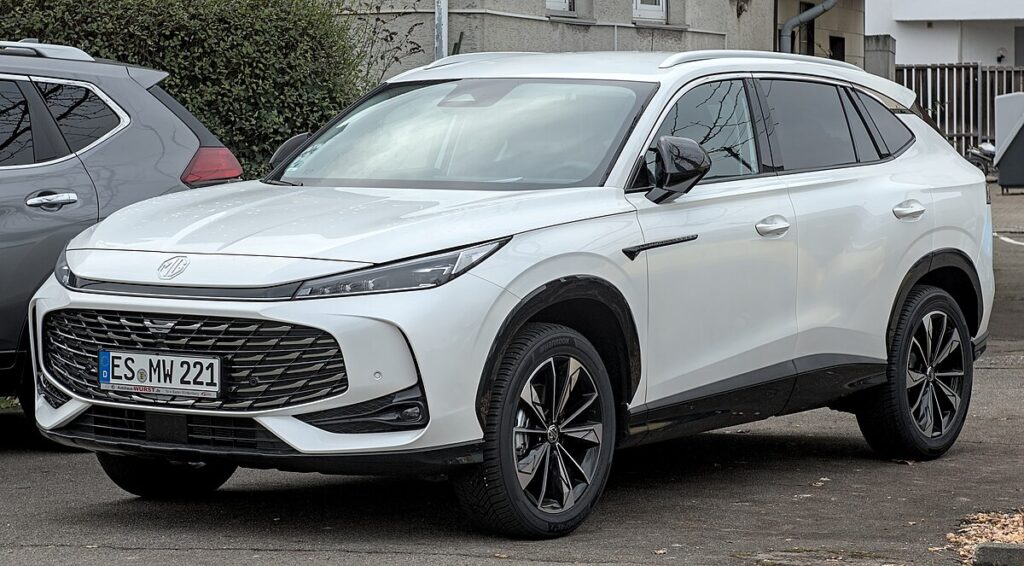
The MG HS has become an increasingly attractive option for drivers looking for a spacious, affordable family SUV. However, one of the most important questions before buying is simple: how much fuel does the MG HS actually use?
The answer depends on the engine, model year, driving conditions, and whether we choose the conventional petrol, Hybrid+, or plug-in hybrid version.
For recent models, the petrol-powered MG HS delivers an official combined fuel consumption figure of 6.9 L/100 km in Australia, while the Hybrid+ reduces that to approximately 5.2 L/100 km. The plug-in hybrid can use considerably less petrol when its battery is regularly charged.
In this guide, we'll examine MG HS fuel consumption in detail, compare official and real-world results, calculate running costs, and explain which powertrain offers the best fuel economy for everyday driving.
Content in this publication
- MG HS Fuel Consumption at a Glance
- MG HS Petrol Fuel Consumption
- MG HS MPG in the UK
- MG HS Hybrid+ Fuel Consumption
- MG HS Plug-in Hybrid Fuel Consumption
- MG HS Real-World Fuel Consumption
- MG HS Fuel Consumption by Model Year
- MG HS Fuel Tank Capacity and Driving Range
- How Much Does It Cost to Fuel an MG HS?
- Why Is My MG HS Using So Much Fuel?
- How to Improve MG HS Fuel Economy
- MG HS Petrol vs Hybrid+ vs PHEV
- Is the MG HS Fuel Efficient Compared With Rivals?
- How to Measure Your MG HS Fuel Consumption
- Frequently Asked Questions About MG HS Fuel Consumption
- Conclusion: Is the MG HS Economical to Run?
MG HS Fuel Consumption at a Glance
The latest MG HS is available with different powertrains depending on the market. Here are the main official figures.
| MG HS version | Official combined consumption | Test market |
|---|---|---|
| 1.5 Turbo Petrol Automatic | 6.9 L/100 km | Australia |
| 1.5 Turbo Petrol Manual | 7.4 L/100 km | UK |
| 1.5 Turbo Petrol Automatic | 7.6 L/100 km | UK |
| MG HS Hybrid+ | 5.2 L/100 km | Australia |
| MG HS Hybrid+ | 5.5 L/100 km | UK |
| MG HS Super Hybrid PHEV | 0.7 L/100 km | Australia, weighted test |
These figures are based on different official testing procedures and should not be treated as directly interchangeable.
The Australian figures use the ADR testing framework, while the UK figures are based on WLTP measurements.
The plug-in hybrid figure also needs special attention. Its extremely low petrol consumption assumes substantial use of stored electricity and does not represent what we should expect when driving continuously with a depleted battery.
MG HS Petrol Fuel Consumption
The conventional MG HS uses a 1.5-litre turbocharged four-cylinder petrol engine.
In the current Australian specification, this engine produces approximately 125 kW and 275 Nm of torque, paired with a seven-speed dual-clutch automatic transmission.
It provides sufficient performance for everyday family driving, although fuel economy is not its strongest advantage compared with a full hybrid.
MG HS 1.5 Turbo Fuel Consumption
For the latest Australian petrol model, the official figures are:
| Driving condition | Fuel consumption |
|---|---|
| City | 8.9 L/100 km |
| Highway | 5.8 L/100 km |
| Combined | 6.9 L/100 km |
These numbers highlight an important characteristic of the MG HS.
The engine performs more efficiently during steady open-road driving than in congested urban environments.
When we spend considerable time in traffic, the engine must repeatedly accelerate a relatively heavy SUV from low speeds. This increases fuel consumption.
On highways, a constant cruising speed generally allows the engine and transmission to operate more efficiently.
MG HS Fuel Consumption in City Driving
Urban driving can be the most demanding environment for the petrol MG HS.
Several factors contribute to increased fuel usage:
- Frequent stopping and starting
- Accelerating from traffic lights
- Extended periods of idling
- Short journeys with a cold engine
- Heavy traffic and low average speeds
- Air-conditioning usage
The Australian official urban rating of 8.9 L/100 km is a useful reference point, although actual consumption can be higher or lower.
For example, a driver covering mainly short journeys in heavy traffic may experience noticeably different results from someone travelling on suburban roads with relatively few stops.
MG HS Highway Fuel Consumption
Highway driving is generally where the petrol MG HS delivers its most favourable results.
The official Australian extra-urban figure is 5.8 L/100 km.
However, the extra-urban laboratory cycle should not be interpreted as a guarantee of achieving 5.8 L/100 km on every motorway journey.
Actual motorway consumption depends on cruising speed, wind resistance, road gradients and vehicle load.
At moderate speeds, the engine can maintain a steady operating condition. At higher speeds, aerodynamic resistance increases significantly, requiring more power and fuel.
For drivers who regularly travel long distances, maintaining a consistent speed can make a meaningful difference.
MG HS MPG in the UK
British drivers generally measure fuel economy using miles per gallon rather than litres per 100 kilometres.
The newer MG HS petrol models have the following approximate WLTP combined figures:
| Transmission | UK MPG | L/100 km |
|---|---|---|
| Six-speed manual | 38.1 mpg | 7.4 |
| Seven-speed automatic | 37.1 mpg | 7.6 |
The manual version offers a small advantage in official fuel economy.
However, the difference is relatively modest, and real-world results may depend more heavily on traffic conditions and driving style than on the transmission alone.
It is also important to remember that UK imperial gallons are larger than US gallons.
For that reason, 38 mpg UK is not equivalent to 38 mpg US.
When comparing international reviews, we should always confirm which measurement standard is being used.
MG HS Hybrid+ Fuel Consumption
The MG HS Hybrid+ is designed to deliver better efficiency without requiring external charging.
Unlike a conventional petrol SUV, it combines an internal combustion engine with an electric motor and a small high-voltage battery.
The system automatically decides when to use electric assistance, petrol power, or a combination of both.
How Efficient Is the MG HS Hybrid+?
Official combined consumption is approximately:
- Australia: 5.2 L/100 km
- United Kingdom: 5.5 L/100 km, or 51.3 mpg UK
The Australian Hybrid+ also has an official urban figure of approximately 4.2 L/100 km and an extra-urban figure of 5.8 L/100 km.
This reveals something interesting: the hybrid's greatest fuel-saving advantage is typically found in urban driving.
Regenerative braking captures some of the energy that would otherwise be lost during deceleration, while electric assistance reduces the petrol engine's workload.
How Does the Hybrid+ System Work?
The MG HS Hybrid+ uses a 1.5-litre turbocharged petrol engine and an electric motor.
Its battery has a capacity of approximately 1.83 kWh.
Although relatively small compared with a plug-in hybrid battery, it is sufficient to support low-speed electric driving and improve efficiency.
The battery is recharged through the vehicle's hybrid system and regenerative braking.
We do not need to connect the Hybrid+ to an external charger.
The system manages energy automatically, making it particularly practical for drivers who cannot install a home charging point.
Does the MG HS Hybrid+ Save Much Petrol?
Yes, particularly when we compare the Australian combined consumption figures.
The petrol MG HS consumes 6.9 L/100 km, while the Hybrid+ consumes 5.2 L/100 km.
That represents an official reduction of approximately 24.6% in petrol consumption.
Over 10,000 kilometres, the difference becomes substantial.
| Version | Petrol used over 10,000 km |
|---|---|
| MG HS Petrol | 690 litres |
| MG HS Hybrid+ | 520 litres |
| Difference | 170 litres |
The hybrid saves around 170 litres of petrol over this distance under the stated official combined-cycle assumptions.
Actual savings will depend on driving conditions, but the difference illustrates why the Hybrid+ may appeal to high-mileage drivers.
MG HS Plug-in Hybrid Fuel Consumption
The MG HS plug-in hybrid, marketed as the Super Hybrid in Australia, takes electrification further.
It combines a petrol engine with a significantly larger rechargeable battery, allowing the SUV to cover much longer distances using electric power alone.
The current model uses a battery of approximately 24.7 kWh.
Its official electric-only range reaches up to approximately 120 kilometres under WLTP testing, equivalent to about 75 miles.
Some Australian marketing material quotes 135 kilometres under the different NEDC test cycle.
These are laboratory ratings, and the actual electric range will vary.
MG HS PHEV Fuel Economy With a Charged Battery
The Australian MG HS Super Hybrid has a weighted combined fuel consumption figure of approximately 0.7 L/100 km.
This can appear extraordinary compared with a conventional petrol SUV.
However, the figure is heavily influenced by the vehicle's ability to cover much of the test cycle using electricity.
For a driver who regularly charges the battery and travels relatively short distances, petrol consumption can be extremely low.
Some daily journeys may require no petrol at all.
Nevertheless, electricity is not free, and the cost of charging must be included when evaluating total energy expenses.
MG HS PHEV Fuel Consumption With a Low Battery
When the battery has little usable electric-only range remaining, the MG HS plug-in hybrid continues operating using its petrol engine and hybrid system.
Its petrol consumption will then be considerably higher than the headline weighted figure.
Independent driving tests have reported consumption around 5–6 L/100 km in some conditions when the vehicle is functioning mainly as a hybrid.
Results can vary significantly depending on speed, terrain, temperature, and remaining battery charge.
The essential point is that the plug-in hybrid achieves its greatest savings when we regularly recharge it.
If charging is inconvenient or rarely possible, the regular Hybrid+ may be a more sensible choice.
Is the MG HS PHEV Worth Charging Every Day?
For many drivers, yes.
Imagine that our normal commute involves 40 kilometres per day.
If the plug-in hybrid has sufficient battery charge, much or all of that journey may be completed using electric power.
Over five working days, this could replace a substantial amount of petrol consumption with electricity.
However, we still need to consider the following:
- Local household electricity prices
- Public charging costs
- Charging losses
- Daily driving distance
- Availability of overnight charging
- Frequency of long journeys
Drivers with inexpensive home electricity and predictable daily routes are generally best positioned to benefit from a plug-in hybrid.
MG HS Real-World Fuel Consumption
Official fuel economy figures provide a standardised comparison between vehicles, but they do not always represent everyday driving.
Real-world consumption can be affected by road conditions, traffic, weather, tyres, vehicle weight and driving habits.
Independent testing provides a useful perspective.
Real-World MG HS Petrol Consumption
Australian automotive reviews of the newer petrol MG HS have recorded varying results.
Some tests have reported approximately 7.5–8.3 L/100 km, while others have achieved lower figures during journeys containing a substantial amount of highway driving.
For example, a predominantly open-road test may produce fuel economy close to or better than the official combined figure.
Meanwhile, an urban-focused test can deliver significantly higher consumption.
These results are not universal owner averages. They are individual tests conducted under different conditions.
Real-World MG HS Hybrid+ Consumption
The Hybrid+ has also demonstrated encouraging results in independent testing.
One Australian road test reported an average close to 5.5 L/100 km, reasonably near the official combined rating of 5.2 L/100 km.
This suggests the hybrid can deliver competitive everyday efficiency when driven normally.
However, short winter journeys, prolonged motorway travel and heavy loads can still increase consumption.
Real-World MG HS Plug-in Hybrid Consumption
The plug-in hybrid is more complicated to evaluate.
A fully charged vehicle travelling mostly short distances can return extremely low petrol usage.
The same vehicle, driven hundreds of kilometres without recharging, will consume substantially more petrol.
This means two owners could report dramatically different fuel economy figures while both are accurately describing their experiences.
When reading MG HS PHEV reviews, we should check whether the battery was charged, the distance travelled and the amount of electricity consumed.
MG HS Fuel Consumption by Model Year
The MG HS has undergone significant changes since its introduction.
Consequently, figures for older vehicles should not automatically be applied to the latest generation.
MG HS 2019–2024 Fuel Consumption
Earlier UK petrol models used a 1.5-litre turbocharged engine with manual or automatic transmission options.
Official combined consumption figures for later first-generation versions included approximately:
| Earlier MG HS variant | Combined consumption |
|---|---|
| 1.5 Turbo Manual | 7.4 L/100 km |
| 1.5 Turbo Automatic | 7.7 L/100 km |
| Earlier Plug-in Hybrid | 1.8 L/100 km, weighted |
The earlier plug-in hybrid figure depends on electrical energy being used during the test, just like the newer PHEV.
Depending on the production year and market, equipment, engine calibration and homologation figures can differ.
MG HS 2025–2026 Fuel Consumption
The newer-generation MG HS introduced changes to its petrol drivetrain and expanded the availability of hybrid powertrains.
In Australia, the latest petrol automatic achieves an official combined figure of 6.9 L/100 km.
The Hybrid+ offers a substantial improvement, particularly around town.
The newer plug-in hybrid also benefits from a larger battery and much longer electric-only range than its predecessor.
For buyers comparing a used MG HS with a new model, engine type and generation are more important than simply comparing registration years.
MG HS Fuel Tank Capacity and Driving Range
Fuel tank capacity affects how far we can drive between refuelling stops.
The newer MG HS has a petrol tank of approximately 55 litres in Australian specifications, including petrol and hybrid variants.
To estimate the theoretical range, we can divide the tank capacity by average fuel consumption.
How Far Can an MG HS Travel on a Full Tank?
Using the Australian official combined figures:
| MG HS model | Tank | Consumption | Theoretical range |
|---|---|---|---|
| Petrol | 55 L | 6.9 L/100 km | 797 km |
| Hybrid+ | 55 L | 5.2 L/100 km | 1,058 km |
These are mathematical estimates rather than guaranteed real-world driving ranges.
Actual range will normally vary, and we should not assume every litre in the tank will be available before the fuel warning appears.
The plug-in hybrid can also achieve an extended total driving range when starting with a full fuel tank and a charged battery.
However, its petrol-plus-electric range should not be calculated by dividing 55 litres by the weighted 0.7 L/100 km figure. That figure includes energy supplied by the battery and cannot be sustained indefinitely without recharging.
How Much Does It Cost to Fuel an MG HS?
One of the best ways to understand fuel consumption is to translate it into actual running expenses.
Let's use a hypothetical petrol price of AUD $2.00 per litre and compare the conventional petrol MG HS against the Hybrid+.
The following examples assume both vehicles achieve their Australian official combined consumption ratings.
Fuel Cost per 100 Kilometres
| Version | Litres used | Cost at $2.00/L |
|---|---|---|
| MG HS Petrol | 6.9 L | $13.80 |
| MG HS Hybrid+ | 5.2 L | $10.40 |
| Hybrid savings | 1.7 L | $3.40 |
Annual MG HS Fuel Costs
At 15,000 kilometres per year:
| Version | Annual petrol | Annual cost |
|---|---|---|
| MG HS Petrol | 1,035 L | $2,070 |
| MG HS Hybrid+ | 780 L | $1,560 |
| Difference | 255 L | $510 |
Under these assumptions, the Hybrid+ saves approximately $510 per year in petrol.
Over five years, that becomes $2,550, assuming identical annual mileage and constant fuel prices.
These figures do not account for differences in vehicle purchase prices, insurance, maintenance or financing.
How Much Does the MG HS PHEV Cost to Run?
Calculating plug-in hybrid expenses requires both petrol and electricity.
Consider a simplified example in which we travel 1,000 kilometres:
- 800 kilometres using electricity at 18 kWh/100 km
- 200 kilometres using petrol at 5 L/100 km
- Electricity costs $0.30/kWh
- Petrol costs $2.00/L
Electricity consumption would be approximately 144 kWh, costing $43.20.
Petrol consumption would be 10 litres, costing $20.
Our estimated combined energy cost would therefore be $63.20.
This is only an illustrative scenario. Real results depend on charging losses, how the vehicle blends petrol and electric power, and the electricity required from the battery.
Nevertheless, it demonstrates why regular charging can make a plug-in hybrid economical.
Why Is My MG HS Using So Much Fuel?
Some MG HS owners may notice fuel consumption that is higher than official estimates.
This does not necessarily mean the vehicle has a mechanical problem.
There are several common explanations.
1. Short Journeys
Petrol engines generally use more fuel while warming up.
A vehicle driven exclusively on short journeys may rarely reach ideal operating temperatures.
This can increase average consumption significantly.
2. Heavy Urban Traffic
Repeated acceleration consumes energy.
Although modern transmissions can optimise engine operation, stop-start traffic remains challenging for a conventional petrol SUV.
Hybrid versions are usually better suited to this environment.
3. Aggressive Acceleration
Rapid acceleration requires additional fuel.
A turbocharged engine can deliver strong performance, but frequent heavy throttle inputs will increase consumption.
Smooth, progressive acceleration is usually more economical.
4. Low Tyre Pressure
Underinflated tyres increase rolling resistance.
This forces the engine to work harder to maintain speed.
We should check tyre pressures regularly and use the values recommended on the vehicle's tyre-pressure label.
5. Excessive Vehicle Weight
Passengers, luggage and accessories add weight.
Carrying unnecessary equipment can increase consumption, particularly in stop-start driving.
Roof-mounted cargo can also increase aerodynamic drag.
6. High Motorway Speeds
Air resistance rises rapidly as speed increases.
Consequently, driving at a consistently high motorway speed can use substantially more petrol than cruising moderately.
This is especially noticeable in taller vehicles such as SUVs.
7. Climate Control and Temperature
Air conditioning places an additional load on the vehicle's energy system.
Cold weather can also increase fuel consumption, especially on short trips.
Hybrid and plug-in hybrid efficiency may vary further because battery temperature influences electrical performance.
How to Improve MG HS Fuel Economy
Improving fuel consumption does not necessarily require major changes or expensive upgrades.
Small driving habits can make a significant difference over time.
Maintain a Consistent Speed
Avoid unnecessary acceleration and braking wherever traffic conditions allow.
Smooth driving helps the engine operate more efficiently and conserves kinetic energy.
Anticipate Traffic Conditions
Looking ahead allows us to reduce speed gradually instead of braking sharply at the last moment.
This is particularly useful in city driving.
Use Eco Mode When Appropriate
Where fitted, Eco mode can modify throttle response and powertrain behaviour to encourage economical driving.
It will not guarantee lower consumption in every circumstance, but it can help reduce unnecessary acceleration.
Keep Tyres Properly Inflated
Check pressures when the tyres are cold and follow the manufacturer's recommendations.
Correct inflation can improve rolling efficiency while supporting tyre safety and longevity.
Remove Unnecessary Weight
Avoid permanently carrying heavy items that are rarely needed.
Removing unused roof boxes or roof-mounted accessories can also reduce drag.
Maintain the Vehicle
Follow the recommended service schedule and use the correct engine oil specification.
Air-filter condition, spark plugs, engine sensors and fuel-system operation can influence efficiency.
If consumption rises suddenly without an obvious explanation, a professional inspection may be worthwhile.
Recharge the Plug-in Hybrid Regularly
For PHEV owners, regular charging is one of the most effective ways to minimise petrol usage.
Whenever practical, begin daily journeys with sufficient battery charge.
MG HS Petrol vs Hybrid+ vs PHEV
Choosing the most efficient MG HS depends on how we use the vehicle.
The powertrain with the lowest official petrol consumption is not automatically the cheapest option for every driver.
| Feature | Petrol | Hybrid+ | PHEV |
|---|---|---|---|
| External charging | No | No | Yes |
| City fuel economy | Moderate | Very good | Excellent when charged |
| Long-distance flexibility | Excellent | Excellent | Excellent |
| Electric-only driving | No | Short periods | Extended distances |
| Mechanical and electrical complexity | Lower | Higher | Highest |
| Best suited to | General driving | Mixed and urban journeys | Regular charging and commuting |
When Should We Choose the Petrol MG HS?
The petrol model makes sense for drivers who prioritise a lower purchase price or do relatively modest annual mileage.
It can also suit buyers who spend much of their time travelling at steady speeds.
Although its consumption is higher than the Hybrid+, the savings from upgrading to a hybrid may take several years to recover, depending on the purchase-price difference.
When Is the Hybrid+ the Better Choice?
The Hybrid+ is especially appealing for drivers who regularly travel in urban and suburban environments.
It offers lower fuel consumption without requiring charging infrastructure.
For many families, this creates a convenient balance between running costs and practicality.
Who Should Buy the Plug-in Hybrid?
The plug-in hybrid makes the most sense when we can charge frequently, preferably at home.
Drivers with predictable commutes and affordable electricity may cover a large proportion of their mileage without using much petrol.
However, frequent long-distance driving without charging opportunities reduces its economic advantage.
Is the MG HS Fuel Efficient Compared With Rivals?
The MG HS competes with several popular medium-sized family SUVs, including the Toyota RAV4, Hyundai Tucson, Kia Sportage, Mazda CX-5 and Nissan Qashqai.
Fuel efficiency comparisons must account for engine type.
Comparing a petrol MG HS with a full-hybrid Toyota RAV4, for example, does not provide a like-for-like powertrain comparison.
The petrol MG HS delivers reasonable official fuel economy for a turbocharged mid-sized SUV, but it is not a class-leading efficiency choice.
The Hybrid+ strengthens its position by offering lower consumption, particularly in traffic.
The plug-in hybrid provides another alternative for drivers who can make effective use of its electric range.
Ultimately, vehicle price, equipment, energy costs and driving patterns should be considered alongside official consumption figures.
How to Measure Your MG HS Fuel Consumption
The trip computer is a convenient way to monitor fuel usage, but we can also calculate consumption manually.
For a more reliable estimate, use the full-tank method over several refuelling cycles.
Step 1: Fill the Fuel Tank
Refuel the vehicle and record the odometer reading.
Reset the trip meter if desired.
Step 2: Drive Normally
Use the MG HS under typical conditions, including the journeys that form most of your driving routine.
Avoid changing driving habits simply to obtain an unusually low result.
Step 3: Refuel Again
Fill the tank using a consistent method and record the litres added.
Note the distance travelled since the previous refuelling.
Step 4: Calculate Consumption
Use the following formula:
\[ \text{L/100 km}=\frac{\text{Litres used}}{\text{Kilometres driven}}\times100 \]
For example, suppose we use 42 litres after driving 550 kilometres.
\[ \frac{42}{550}\times100=7.64 \]
Our calculated consumption is approximately 7.6 L/100 km.
Repeating the calculation over several tanks provides a more useful average than relying on one short journey.
For plug-in hybrids, petrol consumption should be tracked alongside electricity drawn from chargers to obtain a meaningful picture of overall energy use.
Frequently Asked Questions About MG HS Fuel Consumption
1. Is the MG HS Good on Fuel?
The MG HS offers reasonable fuel economy for a mid-sized SUV, although efficiency varies significantly between powertrains. The newer Australian petrol model is rated at 6.9 L/100 km combined, while the Hybrid+ achieves approximately 5.2 L/100 km. Drivers prioritising efficiency should consider the hybrid versions, especially for regular urban journeys.
2. What Is the Real-World MPG of the MG HS?
Real-world results depend on the model and driving conditions. Independent tests of the newer petrol MG HS have recorded approximately 7.5–8.3 L/100 km in some mixed-driving conditions, while a UK automatic test returned around 33.6 mpg UK. Hybrid models generally consume less petrol, particularly around town.
3. How Many Kilometres Can an MG HS Travel on a Full Tank?
The newer petrol MG HS has a theoretical combined-cycle range of approximately 797 kilometres using its 55-litre tank and 6.9 L/100 km official consumption. The Hybrid+ can theoretically exceed 1,000 kilometres under its Australian combined-cycle rating. Actual range will vary depending on driving conditions and usable fuel.
4. Does the MG HS Hybrid Need to Be Plugged In?
The regular MG HS Hybrid+ does not need external charging. Its battery recharges through the hybrid system and regenerative braking. However, the MG HS plug-in hybrid, also called the Super Hybrid in Australia, has a much larger battery that should be charged externally to achieve its best fuel-saving potential.
5. Which MG HS Has the Lowest Fuel Consumption?
The MG HS plug-in hybrid has the lowest official weighted petrol consumption, provided its battery is used and recharged regularly. For drivers who do not have charging facilities, the Hybrid+ is generally the more fuel-efficient choice compared with the conventional petrol model.
Conclusion: Is the MG HS Economical to Run?
The MG HS offers several fuel-efficiency options, making it easier to choose a model that suits our driving habits.
The conventional petrol version provides reasonable consumption for a spacious family SUV, particularly during steady highway driving. However, heavy urban traffic can increase its fuel usage substantially.
The Hybrid+ offers a meaningful improvement, with official combined consumption of approximately 5.2 L/100 km in Australia and 5.5 L/100 km in the UK. It is a particularly attractive option for drivers looking to reduce petrol expenses without plugging in their vehicle.
The plug-in hybrid goes further by offering substantial electric-only range and the potential for very low petrol consumption on daily journeys. Its financial advantage, however, depends heavily on regular charging and electricity prices.
For most drivers seeking lower petrol consumption without changing their refuelling routine, the MG HS Hybrid+ represents a strong balance of efficiency, convenience and everyday practicality.
The best way to choose is to evaluate our annual mileage, typical journeys, local energy prices and purchase budget before deciding which MG HS powertrain provides the greatest long-term value.
If you want to know other articles similar to MG HS Fuel Consumption: Complete MPG Guide you can visit the category Driving.
Toyota RAV4 Miles Per Gallon: Complete MPG and Fuel Economy Guide
Toyota Prius MPG UK: Official and Real Fuel Economy

Mazda CX-5 Real-World MPG: What Drivers Actually Get
Mazda CX-5 0-60: Acceleration Times by Year and Engine

Can Nissan Rogue Pull a Boat? Complete Towing Guide
Can Nissan Rogue Be Flat Towed? Complete Towing Guide
Leave a Reply
More content of your interest