

Nissan Frontier Generations: Complete History From 1998 to Today

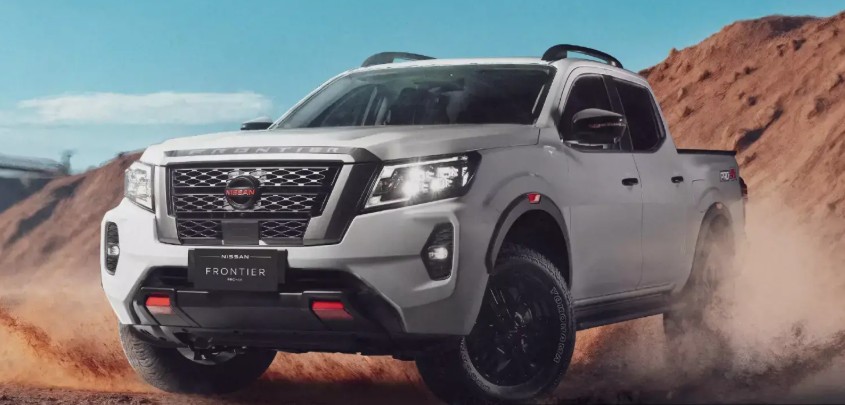
The Nissan Frontier generations tell a surprisingly interesting story. At first glance, the Frontier seems like a straightforward midsize pickup: engine up front, bed in the back, and enough toughness to disappear down a dirt road without complaining. Look closer, though, and we find a truck that has repeatedly reinvented itself while holding onto an old-school personality that many rivals gradually abandoned.
In North America, the Frontier name arrived for the 1998 model year, replacing Nissan's legendary Hardbody pickup. Nissan then introduced a second-generation Frontier for 2005, followed by the modern third-generation truck for 2022. Nissan itself confirms this North American chronology.
That sounds simple: three generations.
But search for Nissan Frontier generations online and things quickly become muddy. Why do some sources talk about a D22, D40, D23, or D41? Why does Nissan refer to a Frontier sold elsewhere as part of a much longer pickup lineage? And why did the second-generation American Frontier survive for what felt like geological time?
We're going to untangle all of it.
Content in this publication
- Nissan Frontier Generations at a Glance
- Before the Frontier: Nissan's Long Pickup-Truck Heritage
- First-Generation Nissan Frontier: 1998–2004
- First-Generation Nissan Frontier Strengths
- Second-Generation Nissan Frontier: 2005–2021
- The D40 Frontier Era
- King Cab and Crew Cab Appeal
- The Rise of the PRO-4X Identity
- The Unusual 2020 Nissan Frontier Powertrain Change
- Third-Generation Nissan Frontier: 2022–Present
- The Current Frontier's 3.8-Liter V6
- Modern Technology Finally Reaches the Frontier
- 2025 Refresh: Refining the Third Generation
- 2026 Nissan Frontier: Where the Generation Stands Today
- Nissan Frontier Generation Comparison
- Which Nissan Frontier Generation Is Most Reliable?
- Which Nissan Frontier Generation Is Best?
- What Are D22, D40, D23, and D41?
- Why Global Nissan Frontier Generations Are Confusing
- Frontier vs Navara: Are They the Same Truck?
- How to Identify Your Nissan Frontier Generation
- Which Frontier Generation Has the Best Styling?
- How the Frontier Has Changed Over Nearly Three Decades
- What Could Come After the Current Frontier?
- Final Thoughts on Nissan Frontier Generations
- Frequently Asked Questions
Nissan Frontier Generations at a Glance
For shoppers in the United States and Canada, the easiest way to understand the Frontier family tree is this:
| Frontier Generation | North American Model Years | Common Platform/Code Reference | Main Character |
|---|---|---|---|
| First generation | 1998–2004 | D22 | Compact, simple, rugged |
| Second generation | 2005–2021 | D40 | Larger, stronger, long-lived |
| Third generation | 2022–present | D41 commonly used | Modern styling with traditional truck fundamentals |
Nissan states that the first-generation Frontier replaced the Hardbody for the 1998 model year, while the second generation arrived for 2005. The latest North American redesign was introduced as the all-new 2022 Frontier.
As of the 2026 model year, Nissan is still selling this current-generation Frontier in the United States.
That gives us the basic map. Now let's explore the road.
Before the Frontier: Nissan's Long Pickup-Truck Heritage
The Frontier didn't appear out of thin air in 1998. Nissan had already spent decades building small pickups.
In fact, Nissan's pickup lineage stretches back to the Datsun era. Nissan's heritage collection notes that commercial pickups had existed since the company's early history, with vehicles such as the Datsun 220 appearing in the late 1950s.
That background matters because the Frontier inherited something more important than a badge: a philosophy.
Nissan's smaller trucks historically emphasized usefulness, mechanical simplicity, maneuverability, and durability rather than pretending to be luxury vehicles with cargo beds.
The Hardbody Connection
Immediately before the Frontier came Nissan's famous Hardbody pickup.
The Hardbody earned its nickname from its squared-off, muscular body design, and its reputation still hangs over older Nissan trucks like a shadow. When Nissan replaced it with the Frontier for 1998, the company wasn't abandoning its compact-pickup identity. It was modernizing it. Nissan specifically identifies the 1998 Frontier as the Hardbody's successor.
That's why early Frontiers can sometimes feel more closely related in spirit to old compact pickups than today's increasingly sophisticated midsize trucks.
First-Generation Nissan Frontier: 1998–2004
The first Nissan Frontier generation arrived for the 1998 model year.
This was the Frontier before giant infotainment displays, elaborate terrain modes, and luxury-truck pricing entered the conversation. It was relatively compact, straightforward, and designed around the fundamentals of what a pickup needed to do.
Think of it as a good pair of work boots. Maybe not fashionable at a fancy restaurant, but that's hardly the point.
What Defined the First-Generation Frontier?
Early Frontiers embodied a transitional period in the pickup market. Trucks were becoming more comfortable and more commonly used as everyday transportation, yet buyers still expected them to be machines first and lifestyle products second.
Depending on configuration and model year, buyers encountered four-cylinder and V6 power, two- and four-wheel-drive layouts, and different cab arrangements.
The Frontier also developed a more adventurous personality as Nissan expanded the range.
The D22 Frontier Explained
You'll commonly see the first-generation Frontier associated with the D22 designation.
This chassis-code terminology is helpful because Nissan marketed related pickups under different names around the world. The badge on the tailgate might change by country, while the broader engineering family could remain related.
For a North American shopper, however, remembering every internal designation isn't necessary.
The easy equation is:
1998–2004 = first-generation North American Frontier.
A More Aggressive Frontier Emerges
As the first generation matured, Nissan gave the Frontier stronger styling and more specialized versions. This was an era when manufacturers began realizing that pickups could sell on personality as much as utility.
The Frontier gradually became less anonymous.
Chunkier styling, off-road-oriented versions, and stronger engines helped move it away from the image of a purely inexpensive work truck.
Why First-Generation Trucks Still Appeal
There's something refreshing about an older Frontier today.
Compared with a modern truck, its cabin can seem sparse. Technology is basic. Safety equipment reflects the period. Refinement is nowhere near current standards.
Yet simplicity itself can be attractive.
Owners who want an uncomplicated pickup for occasional hauling, local jobs, recreational use, or a project vehicle may find that an older Frontier scratches an itch newer trucks can't reach.
First-Generation Nissan Frontier Strengths
The original Frontier's biggest advantages come from its old-school nature.
Common attractions include:
- Relatively manageable exterior dimensions
- Straightforward mechanical design
- Genuine pickup-truck utility
- Availability of 4WD configurations
- Lower complexity than newer trucks
- Strong connection to Nissan's compact-truck heritage
Of course, age now matters enormously. The newest first-generation North American Frontiers are more than two decades old.
At that point, maintenance history can matter more than the badge on the grille.
Second-Generation Nissan Frontier: 2005–2021
Then came the truck that seemingly refused to leave.
Nissan launched the second-generation Frontier for the 2005 model year.
And it remained the foundation of the North American Frontier through 2021.
Yes, you read that correctly.
Seventeen model years.
In automotive time, that's practically an entire civilization.
The 2005 Redesign Changed the Frontier's Personality
The second-generation Frontier became larger, more substantial, and more capable than its predecessor.
Nissan's own heritage material described the 2005 Frontier as an all-new midsize pickup and highlighted the strength of its V6 at launch.
This was the point where the Frontier firmly stepped away from the old compact-pickup formula and into the modern midsize-truck battlefield.
The proportions looked tougher. Performance became a bigger part of the sales pitch. The truck felt better suited to buyers who wanted one vehicle for commuting, hauling, towing, and weekend recreation.
The D40 Frontier Era
The second generation is commonly identified as the D40 Frontier.
If you spend any time browsing used-truck forums, parts listings, repair discussions, or enthusiast communities, "D40" appears constantly.
And understandably so.
Because this generation lasted so long, the D40 became almost synonymous with the Frontier itself.
Why Did the D40 Last So Long?
Seventeen model years sounds absurd in an industry where manufacturers regularly redesign vehicles after five or six years.
Yet the Frontier had a peculiar advantage: familiarity.
Its basic formula worked.
Rather than chasing every emerging trend, Nissan kept the truck relatively conventional. Buyers who wanted a simple midsize pickup could walk into a Nissan dealership long after many competitors had become considerably more complicated.
That age eventually became both its weakness and its charm.
Its interior looked dated beside newer rivals. Technology fell behind. Some competitors offered fresher powertrains and more advanced cabins.
But the Frontier remained recognizable, proven, and refreshingly uncomplicated.
King Cab and Crew Cab Appeal
One reason the second-generation Frontier remained useful was the range of configurations available across its long production life.
Different buyers could prioritize passenger space or cargo-bed practicality.
A Crew Cab made considerably more sense for families or anyone regularly carrying adults in the rear, while more work-oriented buyers could choose configurations better suited to cargo duty.
That flexibility helped the Frontier occupy the middle ground between basic commercial pickup and recreational truck.
The Rise of the PRO-4X Identity
One of the most important developments during the Frontier's evolution was the growth of Nissan's PRO-4X identity.
Rather than treating off-road equipment as an afterthought, Nissan developed PRO-4X into a recognizable part of its truck lineup.
You may be interested in reading Nissan Frontier Trim Levels: Complete 2026 Guide
That identity remains important today. The current 2026 Frontier PRO-4X, for example, includes an electronic locking rear differential designed to improve traction in demanding conditions.
The roots of today's rugged Frontier image were strengthened significantly during the long second-generation era.
The Unusual 2020 Nissan Frontier Powertrain Change
Here's where Frontier history gets especially interesting.
Normally, manufacturers introduce a new engine when they introduce a new truck.
Nissan did something different.
For the 2020 Frontier, the company installed a new 3.8-liter direct-injection V6 and nine-speed automatic transmission while retaining the older-generation truck around them. Nissan described the engine and transmission as the "heart of the next-generation Frontier."
It was essentially a preview hidden inside the old body.
Why the 2020–2021 Frontier Is Unusual
Imagine putting the heart of tomorrow's truck into yesterday's clothes.
That's effectively what happened.
The 2020 and 2021 Frontiers combine the familiar D40-era structure and styling with the powertrain that would help carry the Frontier into its next chapter.
For used-truck shoppers, that makes those final second-generation years particularly distinctive.
They're not third-generation trucks, but mechanically they foreshadow what was coming.
Third-Generation Nissan Frontier: 2022–Present
After waiting longer than almost anyone expected, North American Frontier buyers finally got a genuinely redesigned truck for 2022.
Nissan officially introduced it as the all-new 2022 Nissan Frontier.
And visually, there was no mistaking it for its predecessor.
The new truck looked broad, squared-off, and deliberately muscular. If the outgoing Frontier had quietly blended into traffic, the replacement seemed determined to announce its arrival.
Retro Influence Without Becoming a Retro Truck
One of the cleverest things about the current Frontier is that its appearance feels connected to older Nissan pickups without becoming a costume.
The upright front end and chunky geometry recall the tough Nissan trucks of previous decades, particularly the Hardbody era.
But this isn't a replica.
It's more like hearing a familiar guitar riff in a completely new song.
The truck preserves enough Nissan pickup DNA to feel familiar while operating in a vastly more modern environment.
The Current Frontier's 3.8-Liter V6
The 3.8-liter V6 introduced in the previous-generation truck became central to the new Frontier.
For 2026, Nissan lists the Frontier with a standard 310-horsepower 3.8-liter V6 paired with a nine-speed automatic transmission.
That consistency gives the generation a straightforward powertrain story.
Where some competitors have moved heavily toward smaller turbocharged engines or increasingly complex drivetrain menus, the Frontier remains refreshingly easy to understand.
V6. Automatic. Pickup.
Sometimes simplicity sells itself.
Modern Technology Finally Reaches the Frontier
The biggest generational leap may actually be inside the cabin.
The old D40 Frontier came from an era before smartphones reshaped automotive interiors. By the end of its run, that heritage was impossible to hide.
The modern Frontier corrects that.
Current Frontier models offer substantially more contemporary connectivity and display technology. Nissan's 2026 materials, for example, show an available 12.3-inch touchscreen along with modern connectivity features.
Yet Nissan has resisted turning the entire dashboard into one giant sheet of glass.
For truck owners who prefer recognizable physical controls and a traditional cabin layout, that balance can be appealing.
2025 Refresh: Refining the Third Generation
Generations aren't frozen in time.
Manufacturers usually update vehicles midway through their production cycle, changing styling, equipment, trim availability, towing capability, technology, or configurations without creating an entirely new generation.
That's exactly why shoppers shouldn't treat every year within one Frontier generation as identical.
Recent third-generation trucks gained meaningful updates while remaining members of the same overall generation.
Among the notable developments was the availability of additional long-bed configuration choices, giving shoppers more flexibility between passenger and cargo priorities.
2026 Nissan Frontier: Where the Generation Stands Today
For the 2026 model year, Nissan continues to sell the current Frontier in the United States. Its official specifications highlight the 310-horsepower V6, nine-speed automatic, 4x4 availability, PRO-4X trim, and maximum advertised towing capability of up to 7,150 pounds when properly configured.
Nissan's current configurator also shows Crew Cab long-bed availability, including a 2026 Long Bed PRO-4X configuration.
So although the basic generation began for 2022, Nissan has continued developing the formula.
That's worth remembering when comparing a 2022 Frontier against a 2025 or 2026 example. Same generation doesn't necessarily mean same specification.
Nissan Frontier Generation Comparison
What really changed between the generations?
Quite a lot.
| Area | 1998–2004 | 2005–2021 | 2022–Present |
| Overall feel | Compact and simple | Traditional midsize | Modern midsize |
| Styling | Classic late-'90s truck | Tough and functional | Bold and squared-off |
| Cabin | Basic | Practical but increasingly dated | Modern and tech-focused |
| Powertrain character | Four-cylinder/V6 era | Strong V6 focus | Standard 3.8L V6 in current U.S. lineup |
| Technology | Minimal | Improved gradually | Major advancement |
| Best suited for | Budget/simple-truck buyers | Value and traditional-truck fans | Everyday modern-truck buyers |
The biggest jump isn't merely horsepower or screen size.
It's usability.
The third-generation Frontier attempts to preserve the mechanical straightforwardness people liked about the older truck while removing many of the compromises that made the D40 feel outdated near the end of its life.
Which Nissan Frontier Generation Is Most Reliable?
This question sounds simple but deserves nuance.
We shouldn't declare an entire generation "reliable" or "unreliable" without considering year, engine, maintenance, mileage, climate, previous use, recalls, and individual vehicle condition.
A beautifully maintained older Frontier can be a much smarter purchase than a neglected newer one.
When shopping used, we would pay particular attention to:
- Documented maintenance history.
- Signs of towing or heavy commercial use.
- Rust underneath the chassis and body.
- Fluid leaks.
- Transmission behavior.
- Cooling-system condition.
- Suspension and steering wear.
- 4WD system operation where equipped.
- Dashboard warning lights.
- Accident and title history.
A generation guide gets us into the right neighborhood. A pre-purchase inspection tells us whether we should actually buy the house.
Which Nissan Frontier Generation Is Best?
For most drivers who want a daily-use truck, the 2022-present Frontier is the obvious all-around choice.
It's quieter, more comfortable, more contemporary, and far better suited to modern expectations.
But "best" changes depending on what we value.
Best for Old-School Simplicity: First Generation
The 1998–2004 Frontier wins when compact dimensions and basic mechanical character matter more than technology.
Age is the catch.
Finding a clean one may become harder than deciding whether we want one.
Best for Used-Truck Value: Second Generation
The D40 deserves serious consideration for buyers who prioritize a proven traditional pickup layout over cabin fashion.
Because it remained on sale for so many years, the used market contains trucks spanning dramatically different ages, mileages, conditions, and prices.
That variety can create opportunities.
Best Daily Driver: Third Generation
For commuting, road trips, modern safety expectations, connectivity, cabin comfort, and overall refinement, the newest generation wins comfortably.
It feels like a modern vehicle rather than a surviving artifact from another era.
What Are D22, D40, D23, and D41?
Here's where many Frontier articles become confusing.
Names such as D22 and D40 refer to vehicle/platform generations or internal engineering families rather than simply being public-facing model names.
You may be interested in readingNissan Frontier Trim Levels: Complete 2026 GuideYou may be interested in reading
Nissan Frontier Years to Avoid: A Smart Used-Truck Buyer’s GuideIn broad enthusiast usage:
- D22 is associated with the first-generation North American Frontier.
- D40 is associated with the 2005–2021 North American Frontier.
- D23 is associated with the newer Navara/Frontier sold in a number of international markets.
- D41 is commonly used when discussing the latest North American Frontier.
The important lesson?
Don't assume every Frontier sold around the world follows the exact American generational timeline.
Why Global Nissan Frontier Generations Are Confusing
This is perhaps the biggest trap surrounding the phrase Nissan Frontier generations.
The Frontier badge doesn't represent exactly the same truck in every country.
In some markets, Frontier and Navara names overlap. In others, pickup generations were introduced on completely different schedules.
For example, Nissan described the Frontier introduced in Brazil in 2016 as the 12th generation of its pickup lineage.
That obviously doesn't mean Americans had eleven earlier vehicles named Frontier.
Instead, Nissan was counting the much longer ancestry of its pickup trucks.
North American Generation Count vs Nissan Pickup Lineage
This distinction solves most of the confusion.
When an American buyer asks, "How many Nissan Frontier generations are there?" the useful answer is three North American Frontier generations so far.
When Nissan discusses its global pickup history, the company may count decades of Datsun and Nissan trucks that predate the Frontier name itself.
Both can be correct because they're counting different things.
It's like asking how many movies belong to one character versus how many films exist in the entire franchise.
Sometimes they're closely related.
Sometimes they're substantially different.
And that's why we shouldn't automatically use "Frontier" and "Navara" interchangeably.
Nissan currently markets Navara pickups in various international regions, while the U.S.-market Frontier follows its own product path. Nissan has also continued developing new Frontier-branded pickups for other markets, including the Frontier Pro plug-in hybrid revealed in 2025.
That international diversity makes identifying the country and model year essential before ordering parts or researching specifications.
A 2020 Frontier in the United States may not be mechanically equivalent to a Frontier carrying the same model year somewhere else.
How to Identify Your Nissan Frontier Generation
Fortunately, determining the generation of a North American Frontier is usually easy.
If we're working from model year alone:
1998–2004: first generation
2005–2021: second generation
2022 onward: third generation
For parts, repairs, or major modifications, we should go beyond model year and confirm the VIN, engine, drivetrain, cab configuration, production date, and market.
That's particularly important around transition years.
The 2020 powertrain change is a perfect example of why blindly assuming "same body equals same mechanical parts" can cause expensive mistakes.
Which Frontier Generation Has the Best Styling?
This is subjective, but the generations have radically different personalities.
The first generation has nostalgic charm. It looks small and honest by modern standards.
The second generation captures the classic mid-2000s truck formula: pronounced fenders, chunky proportions, and little interest in pretending to be aerodynamic jewelry.
The third generation is the visual heavyweight.
Its strong grille, tall nose, squared body, and detailed lighting give it more presence. Nissan's current design continues that deliberately rugged theme for the 2026 truck.
For us, the clever part isn't simply that the latest Frontier looks aggressive.
It's that it still looks like a Nissan pickup.
How the Frontier Has Changed Over Nearly Three Decades
Place a 1998 Frontier beside a 2026 Frontier and it's almost hard to believe they share the same badge.
The transformation mirrors the truck market itself.
Pickups have grown.
Buyers expect better interiors.
Technology has exploded.
Towing and off-road capability receive far more marketing attention.
Trucks increasingly double as family vehicles.
Yet the Frontier has avoided becoming completely unrecognizable.
It still relies on the basic appeal that made compact Nissan pickups popular decades ago: practical dimensions, proper truck capability, and a slightly rebellious willingness to remain simpler than some competitors.
What Could Come After the Current Frontier?
The Frontier story isn't finished.
Nissan continues developing its pickup portfolio globally. In 2025, Nissan outlined future Frontier/Navara developments for international markets, while also unveiling an all-new Frontier Pro plug-in hybrid for China.
That doesn't automatically tell us what will replace the present North American Frontier or precisely when it will happen.
It does, however, show that Nissan still considers midsize pickups an important part of its broader global strategy.
Hybridization, electrification, tougher emissions requirements, connected technology, and increasingly sophisticated driver-assistance systems could all influence future trucks.
Will the Frontier eventually become electrified?
Will Nissan keep a V6?
Will the next truck share more technology internationally?
Those are the questions that will define the next chapter.
Final Thoughts on Nissan Frontier Generations
The history of the Nissan Frontier generations is unusual because Nissan has never followed the industry's rhythm perfectly.
The first-generation 1998–2004 Frontier carried Nissan's compact-truck heritage into a new era.
The second-generation 2005–2021 Frontier grew into a legitimate midsize pickup and then stayed around so long that it practically became part of the scenery.
Finally, the third-generation Frontier arrived for 2022 with the styling, comfort, connectivity, and technology necessary to compete in today's truck market while retaining a surprisingly traditional personality. Nissan continues offering that generation for the 2026 model year.
If we're shopping used, there isn't one universally perfect generation.
Want simple and compact? The original Frontier has charm.
Want an affordable, traditional midsize pickup? The D40 era has plenty to offer.
Want modern comfort without losing that straightforward truck feeling? The 2022-present model is where we'd look first.
Through every transformation, one thing has remained surprisingly consistent: the Frontier has never tried too hard to be anything other than a truck.
And perhaps that's why it has lasted.
Frequently Asked Questions
1. How many Nissan Frontier generations are there?
There are three main Nissan Frontier generations in North America: the first generation from 1998–2004, the second from 2005–2021, and the third beginning with the 2022 model year. Nissan confirms that the first Frontier replaced the Hardbody for 1998 and that the second generation arrived for 2005.
2. What years are the second-generation Nissan Frontier?
The second-generation North American Nissan Frontier covers the 2005 through 2021 model years. Its unusually long production run makes it one of the longest-lasting modern midsize-pickup designs.
3. When did the new Nissan Frontier generation come out?
The current North American Frontier generation launched for the 2022 model year. Nissan introduced it as the all-new 2022 Frontier.
Not universally. Frontier and Navara models have shared engineering relationships in various markets, but their designs, powertrains, launch dates, and specifications can differ by country. That's why global generation lists don't always match the North American Frontier timeline.
You may be interested in readingNissan Frontier Trim Levels: Complete 2026 GuideYou may be interested in reading
Nissan Frontier Years to Avoid: A Smart Used-Truck Buyer’s GuideYou may be interested in reading
Nissan Frontier Best Years: The Smartest Model Years to Buy5. What is the best Nissan Frontier generation to buy?
The 2022-present generation is generally the strongest choice for buyers prioritizing modern comfort, technology, and daily usability. The 2005–2021 generation can be attractive for used-truck value, while the 1998–2004 Frontier appeals most to buyers seeking old-school simplicity. Vehicle condition and maintenance history remain crucial when buying any used Frontier.
If you want to know other articles similar to Nissan Frontier Generations: Complete History From 1998 to Today you can visit the category Models.
Nissan Rogue Dark Armor vs Platinum: Which Trim Is Better?

Kia Sorento Models: Complete Guide to Trims, Engines and Versions
BYD Shark 6 vs Ranger vs HiLux: Which Ute Makes the Most Sense in 2026?
BYD Shark 6 vs MG U9: Which Ute Makes More Sense in 2026?
BYD Shark 6 vs Ford Ranger Raptor: Which Performance Ute Is Better in 2026?
BYD Shark 6 vs Kia Tasman: Which Ute Is Better?
Leave a Reply
More content of your interest