

Hyundai Santa Fe Towing Capacity: Complete Guide

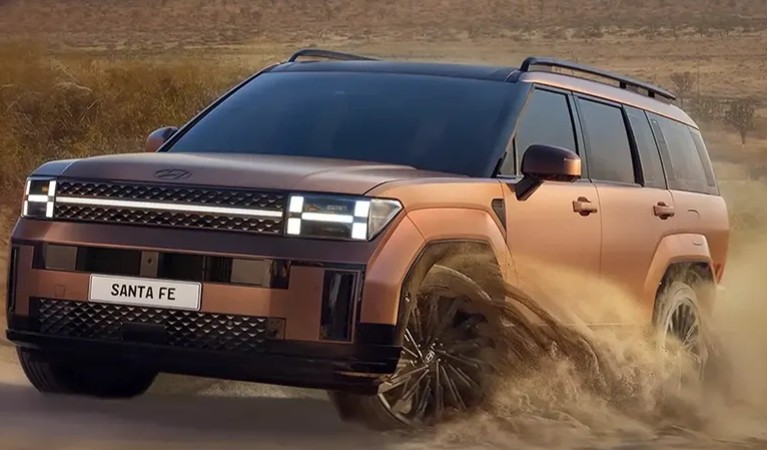
The Hyundai Santa Fe towing capacity is one of those specifications that sounds wonderfully simple until we actually start comparing models. Ask how much a Santa Fe can tow and we might hear 2,000 pounds, 3,500 pounds, 4,500 pounds, 1,650 kilograms, or even 2,500 kilograms.
Strangely enough, several of those answers can be correct.
Towing capacity depends heavily on the model year, engine, drivetrain, trim level, trailer braking system, and country where the vehicle is sold. Hyundai's current U.S. Santa Fe lineup, for example, offers configurations capable of towing as much as 4,500 lb, while other versions are rated lower. Hyundai also publishes different limits for hybrid models and vehicles sold in markets such as the UK and Australia.
That sounds complicated, but it really isn't once we break it down.
In this guide, we'll explain how much a Hyundai Santa Fe can tow, why XRT models can pull more, what the hybrid can handle, what trailers realistically fit within those limits, and what we should check before attaching anything to the hitch.
Content in this publication
- What Is the Hyundai Santa Fe Towing Capacity?
- Hyundai Santa Fe Towing Capacity by Configuration
- Hyundai Santa Fe Hybrid Towing Capacity
- Hyundai Santa Fe Towing Capacity in Kilograms
- Braked vs Unbraked Towing Capacity
- What Can a Hyundai Santa Fe Tow?
- Can a Hyundai Santa Fe Tow a Boat?
- Can a Hyundai Santa Fe Tow 5,000 Pounds?
- Does AWD Increase Santa Fe Towing Capacity?
- Understanding Tongue Weight
- Does Engine Power Matter When Towing?
- How Towing Changes the Way a Santa Fe Drives
- Trailer Sway and the Santa Fe
- How to Prepare a Hyundai Santa Fe for Towing
- Hyundai Santa Fe Towing Capacity vs Everyday Practicality
- Is 3,500 Pounds Enough Towing Capacity?
- Is the 4,500-Lb Santa Fe XRT Worth It for Towing?
- Hyundai Santa Fe Towing Capacity for Older Models
- Common Hyundai Santa Fe Towing Mistakes
- How Much Towing Capacity Do We Actually Need?
- Final Thoughts on Hyundai Santa Fe Towing Capacity
- Frequently Asked Questions
What Is the Hyundai Santa Fe Towing Capacity?
For the current U.S.-market Hyundai Santa Fe, maximum towing capacity can reach 4,500 pounds when properly configured.
Hyundai specifies that this maximum applies to the Santa Fe XRT with a trailer equipped with brakes. Other gasoline configurations are generally rated at up to 3,500 pounds with trailer brakes. Without trailer brakes, the rating is considerably lower. Hyundai lists a 1,650-pound maximum unbraked towing capacity for current gasoline Santa Fe configurations.
A simple way to think about the current U.S. lineup is:
| Santa Fe Configuration | Approximate Maximum Towing Capacity |
|---|---|
| Gasoline Santa Fe | Up to 3,500 lb |
| Santa Fe XRT | Up to 4,500 lb |
| Santa Fe Hybrid | Up to 2,000 lb with trailer brakes |
| Gasoline Santa Fe without trailer brakes | Up to 1,650 lb |
Hyundai's U.S. specifications list the Santa Fe Hybrid at 2,000 pounds with trailer brakes.
These numbers immediately tell us something important: buying a Santa Fe does not automatically give us the highest advertised towing capacity.
Configuration matters.
Hyundai Santa Fe Towing Capacity by Configuration
The easiest mistake to make when researching towing is seeing the largest number in an advertisement and assuming it applies to every Santa Fe sitting at the dealership.
It doesn't.
Standard Gasoline Santa Fe Towing Capacity
The conventional gasoline Santa Fe is the better place to start if towing is going to be a regular part of ownership.
For current U.S. models, Hyundai lists 3,500 pounds of towing capacity with trailer brakes for applicable non-XRT gasoline configurations.
That puts the Santa Fe into useful recreational territory.
A 3,500-pound limit can potentially accommodate smaller campers, utility trailers, personal watercraft, lightweight boats, motorcycles, ATVs, and similar recreational loads.
But remember that the trailer's advertised dry weight isn't necessarily the number we'll tow.
Camping equipment, propane tanks, batteries, water, coolers, bicycles and luggage can turn a seemingly lightweight trailer into something considerably heavier.
Hyundai Santa Fe XRT Towing Capacity
This is where things become more interesting.
Hyundai's 2026 Santa Fe XRT is rated for a maximum towing capacity of 4,500 pounds when properly equipped and when the trailer has brakes. The XRT also comes standard with HTRAC all-wheel drive and receives all-terrain-oriented equipment and additional ground clearance.
That extra 1,000 pounds over the standard 3,500-pound gasoline rating substantially changes what we can reasonably consider towing.
Four thousand five hundred pounds moves the Santa Fe closer to the territory occupied by larger recreational trailers and boats, although we still need to watch payload, tongue weight and loaded trailer weight carefully.
Why Can the XRT Tow More?
A towing rating isn't determined simply by horsepower.
Manufacturers consider the entire vehicle: cooling capability, drivetrain calibration, brakes, suspension, chassis loads, hitch specifications and other engineering limits.
That is why two SUVs sharing essentially the same basic engine architecture can receive different towing ratings.
Think of horsepower as only one member of the towing team. Having a strong engine without the rest of the vehicle being designed for the additional load is like having an excellent striker but no defense—the team still isn't complete.
Hyundai Santa Fe Hybrid Towing Capacity
Hybrid SUVs sometimes create confusion because buyers assume an electric motor automatically means enormous low-speed pulling power.
Torque certainly helps, but towing certification involves considerably more than torque.
Hyundai lists the current U.S. Santa Fe Hybrid towing capacity at up to 2,000 pounds when the trailer is equipped with brakes.
For many owners, that's actually plenty.
Two thousand pounds can cover jobs such as towing:
- Small utility trailers
- Lightweight teardrop campers
- Some small boats
- Personal watercraft
- Motorcycles
- Small cargo trailers
The hybrid therefore makes sense when fuel economy and everyday driving matter more than maximum towing capability.
If we routinely intend to pull something approaching 4,000 pounds, the higher-rated gasoline configuration—particularly the XRT—is the more logical Santa Fe to investigate.
Is the Santa Fe Hybrid Good for Towing?
Yes, within its limits.
The Hybrid isn't designed to be a heavy-duty towing machine, but neither is it incapable of doing useful work.
Its sweet spot is lighter recreational towing.
For someone who commutes every weekday and occasionally takes a small camper or jet ski away for the weekend, that balance can be attractive.
For someone pulling a heavier travel trailer several times each month, the equation changes.
Hyundai Santa Fe Towing Capacity in Kilograms
The Santa Fe is sold worldwide, which is where online towing research becomes messy.
A specification from Britain or Australia should not automatically be applied to a vehicle sold in the United States or Canada.
For example, Hyundai UK currently states that the Santa Fe Hybrid can tow up to 2,000 kg with a braked trailer and 750 kg with an unbraked trailer.
Hyundai Australia lists a 1,650 kg braked and 750 kg unbraked towing capacity for its current Santa Fe Hybrid specification.
Those figures differ despite the vehicles carrying the same Santa Fe badge.
Why Do Towing Ratings Differ by Country?
Different markets have different certification rules, powertrains, equipment packages, cooling requirements and trailer regulations.
That means we should never convert an overseas towing specification into pounds and assume it applies to a North American Santa Fe.
Check the specification published for the exact vehicle and market.
Older Australian documentation demonstrates how significant these differences can become: Hyundai has published ratings as high as 2,500 kg braked and 750 kg unbraked for certain previous Santa Fe models, together with a 200 kg maximum ball download figure.
Same model name. Very different towing story.
Braked vs Unbraked Towing Capacity
This distinction matters enormously.
What Is a Braked Trailer?
A braked trailer has its own braking system.
Instead of asking the Santa Fe's four brakes to slow the combined mass of the SUV and trailer, the trailer helps slow itself.
That's why manufacturers permit significantly heavier trailers when proper trailer brakes are used.
What Is an Unbraked Trailer?
An unbraked trailer relies primarily on the tow vehicle to stop everything.
That dramatically restricts how much weight can safely be pulled.
For current U.S. gasoline Santa Fe models, Hyundai lists an unbraked towing limit of 1,650 pounds.
European and Australian specifications commonly use a 750 kg unbraked limit for the Santa Fe.
Never compare a braked trailer rating with an unbraked trailer weight as though they were interchangeable.
What Can a Hyundai Santa Fe Tow?
Now we reach the fun question.
What can we actually hook behind it?
The answer depends on the exact configuration, but the Santa Fe's towing range opens the door to quite a few recreational toys.
Can a Hyundai Santa Fe Tow a Camper?
Yes, certain campers.
A Santa Fe with a 3,500- or 4,500-pound towing rating can potentially handle lightweight travel trailers, pop-up campers and teardrop trailers.
The important word is loaded.
Suppose a camper has a dry weight of 3,200 pounds.
That looks comfortably below a 3,500-pound limit.
Then we add:
100 pounds of camping equipment.
A battery.
Propane.
Food.
Outdoor furniture.
Water.
Clothing.
Suddenly our "3,200-pound camper" might exceed the vehicle's towing limit.
That margin disappears surprisingly quickly.
Should We Tow at the Maximum Rating?
A published maximum is a limit, not a target.
Leaving some margin generally makes trip planning easier, particularly if we're traveling through mountains, carrying passengers or loading lots of equipment.
It also protects us against one of the most common towing mistakes: comparing the vehicle's maximum rating with the trailer's empty weight instead of its actual loaded weight.
Can a Hyundai Santa Fe Tow a Boat?
Absolutely—provided the total trailer weight remains inside the vehicle's rated capacity.
Small fishing boats, aluminum boats, personal watercraft and some compact fiberglass boats may fit comfortably within Santa Fe territory.
But remember to calculate the entire package:
Boat + trailer + fuel + batteries + fishing equipment + accessories = actual towing load.
The trailer itself isn't weightless.
A 2,700-pound boat sitting on an 800-pound trailer already represents approximately 3,500 pounds before we've added equipment.
This is exactly why towing math matters.
Can a Hyundai Santa Fe Tow 5,000 Pounds?
Current U.S. Santa Fe specifications do not support a 5,000-pound maximum towing rating.
The highest published current U.S. figure is 4,500 pounds for the Santa Fe XRT when the required towing conditions are satisfied.
If our trailer genuinely weighs 5,000 pounds loaded, we need a vehicle officially rated for that load or higher.
Pulling something and being rated to pull it are two very different things.
An SUV might physically move an overweight trailer around a parking lot without protest. That tells us almost nothing about how it will behave during an emergency stop, prolonged highway climb, evasive maneuver or steep descent.
Does AWD Increase Santa Fe Towing Capacity?
Not automatically.
All-wheel drive can certainly improve traction when launching a trailer on gravel, wet grass, snow or a slippery boat ramp.
But AWD itself doesn't magically rewrite the manufacturer's towing rating.
The best example is the XRT. Its higher towing capacity comes as part of a particular overall configuration; Hyundai lists HTRAC AWD as standard on the XRT alongside its 4,500-pound maximum towing capability.
We should therefore follow the rating for the exact trim and configuration rather than assuming AWD always equals more towing.
Understanding Tongue Weight
Trailer weight gets most of the attention, but tongue weight can quietly become the limiting factor.
Tongue weight is the downward force the trailer places on the hitch.
Too little can contribute to trailer instability.
Too much can overload the rear axle or consume valuable vehicle payload.
And this is where families sometimes get caught out.
Four adults, luggage, a roof box and cargo in the rear already put weight into the Santa Fe. Add the trailer's tongue load, and we're placing even more weight on the vehicle.
Payload and Towing Capacity Are Not the Same Thing
This difference deserves emphasis.
Towing capacity tells us how much trailer the vehicle is rated to pull.
Payload capacity tells us how much weight the vehicle itself can carry.
Passengers count toward payload.
Luggage counts.
Cargo counts.
Accessories can count.
Trailer tongue weight counts.
So even if the trailer remains below the maximum towing limit, we can still overload the vehicle through payload.
The owner's manual, certification label and specifications for the individual Santa Fe should always win over a generic internet chart.
Does Engine Power Matter When Towing?
Of course—but perhaps not in the way we imagine.
The modern Santa Fe is available globally with several powertrain configurations. Hyundai has documented engines including a 2.5-liter turbo gasoline unit and 1.6-liter turbo hybrid systems depending on region.
More torque can make acceleration with a trailer feel easier, especially on hills.
Yet engine output doesn't define maximum towing capacity by itself.
Cooling systems, transmission durability, brakes, chassis limits and homologation all matter.
That explains why looking at horsepower figures alone is a poor way to determine whether one Santa Fe can tow more than another.
How Towing Changes the Way a Santa Fe Drives
Attach a trailer and our Santa Fe is suddenly playing a different game.
Everything happens more slowly.
Acceleration takes longer.
Braking distances increase.
Passing requires planning.
Sharp steering movements become more consequential.
Crosswinds become more noticeable.
Fuel consumption increases.
A trailer also acts like a giant sail behind the vehicle, particularly when it's tall and boxy.
Expect Higher Fuel Consumption
There is no universal percentage by which towing reduces fuel economy.
Trailer weight matters, but aerodynamics can matter just as much.
A relatively lightweight but tall travel trailer may create considerably more aerodynamic drag than a heavier low-profile utility trailer.
At highway speed, we're not merely pulling weight—we're pushing a larger hole through the air.
Trailer Sway and the Santa Fe
Trailer sway occurs when the trailer begins moving laterally behind the tow vehicle.
Wind, improper loading, excessive speed and sudden steering inputs can contribute.
Current U.S. Santa Fe specifications include Trailer Sway Control.
Helpful technology is welcome, but it shouldn't replace correct trailer loading and responsible driving.
If a poorly balanced trailer wants to dance behind the vehicle, electronics shouldn't be our excuse for ignoring the physics.
How to Prepare a Hyundai Santa Fe for Towing
Before towing, we want the vehicle and trailer working as one system rather than two machines reluctantly tied together.
A sensible pre-trip inspection should include:
- Verify the Santa Fe's exact towing rating.
- Confirm the trailer's loaded weight.
- Check the hitch and towing equipment ratings.
- Verify trailer brake requirements.
- Inspect trailer tires and pressures.
- Test brake lights and turn signals.
- Connect safety chains correctly.
- Secure all cargo.
- Check tongue load and trailer balance.
- Make sure vehicle payload remains within limits.
The single most useful resource remains the owner's manual for the specific vehicle.
Hyundai itself directs owners to consult the towing guidance in the Owner's Manual because capability varies by configuration.
Hyundai Santa Fe Towing Capacity vs Everyday Practicality
Here's where the Santa Fe makes an interesting case for itself.
It's fundamentally a family-focused SUV rather than a pickup disguised as one.
That means most of the time we get a comfortable passenger vehicle with flexible seating and cargo space.
Then, when the weekend arrives, properly equipped versions provide enough towing capacity for plenty of recreational activities.
That dual personality is useful.
If we need to tow 8,000 pounds every week, the Santa Fe isn't pretending to be the right tool.
If we occasionally need to pull a small camper, boat or utility trailer while still wanting a manageable everyday SUV, the equation becomes much more appealing.
Is 3,500 Pounds Enough Towing Capacity?
For many households, yes.
Three thousand five hundred pounds covers a surprisingly large range of lightweight recreational trailers.
The mistake is buying the trailer first and doing the calculation afterward.
If towing is important, work backward.
Determine the trailer's realistic loaded weight.
Add a sensible margin.
Then choose the appropriate Santa Fe configuration.
This approach is far more useful than purchasing an SUV because an advertisement says "up to 4,500 lb" and discovering later that our specific trim isn't rated for that amount.
Is the 4,500-Lb Santa Fe XRT Worth It for Towing?
If we expect to tow heavier recreational equipment, the XRT deserves particular attention because Hyundai gives it the highest current U.S. Santa Fe towing rating.
The 4,500-pound maximum, HTRAC AWD, all-terrain tires and increased ground clearance give the XRT a more adventure-oriented personality than the standard Santa Fe.
However, buying the XRT purely because the maximum number is larger doesn't make sense if we're towing a 1,200-pound utility trailer twice a year.
Choose capability according to what we'll actually use.
Hyundai Santa Fe Towing Capacity for Older Models
Older Santa Fe models shouldn't be judged using current specifications.
Across generations, the Santa Fe has used numerous gasoline, diesel, turbocharged, naturally aspirated and hybrid powertrains. Different markets have also received different engines and towing certifications.
Consequently, an older diesel Santa Fe sold in Australia may have a towing rating quite different from a gasoline Santa Fe sold in the United States.
The safest rule is simple:
Never use another generation's towing capacity for your vehicle.
Check the model year, engine, drivetrain and market.
If we're shopping used, verifying those specifications should be part of the buying process.
Common Hyundai Santa Fe Towing Mistakes
Most towing problems aren't caused by owners failing to read the headline capacity. They're caused by the details underneath it.
The most common mistakes include assuming every Santa Fe can tow the advertised maximum, using dry trailer weight instead of loaded weight, ignoring tongue weight, forgetting passenger and cargo payload, towing without required trailer brakes, fitting towing hardware with an inadequate rating, and applying specifications from another country or model year.
One number cannot describe an entire towing setup.
That's the central lesson.
How Much Towing Capacity Do We Actually Need?
Imagine our camper weighs 2,900 pounds dry.
Buying a vehicle rated for exactly 3,000 pounds might technically appear possible before cargo is added, but it leaves virtually nowhere to go.
A 4,500-pound-rated configuration gives us considerably more breathing room.
On the other hand, if our trailer weighs only 900 pounds fully loaded, chasing the largest towing figure provides little practical benefit.
Buy for the real load—not the bragging rights.
When the Santa Fe Makes Sense
The Santa Fe is particularly compelling for drivers who want one vehicle capable of handling family transportation during the week and moderate recreational towing on weekends.
When We Should Consider Something Larger
If a trailer approaches or exceeds the Santa Fe's maximum rating once loaded, move up to a vehicle designed for heavier towing.
We shouldn't attempt to turn a midsize family SUV into a heavy-duty tow rig through optimism.
Physics tends to win those arguments.
Final Thoughts on Hyundai Santa Fe Towing Capacity
So, how much can a Hyundai Santa Fe tow?
For current U.S. gasoline models, the answer can reach 3,500 pounds, while the properly configured Santa Fe XRT can tow up to 4,500 pounds with a braked trailer. The current U.S. Santa Fe Hybrid is rated at up to 2,000 pounds with trailer brakes.
International specifications differ. Hyundai UK, for instance, publishes a 2,000 kg braked towing capacity for the Santa Fe Hybrid, whereas Hyundai Australia's current Hybrid specification lists 1,650 kg braked.
That's why the smartest question isn't simply, "How much can a Santa Fe tow?"
It's:
How much can this exact Santa Fe tow?
Once we know the model year, engine, trim, drivetrain and trailer type, everything becomes much clearer.
Stay comfortably within the official limits, calculate using the trailer's actual loaded weight, respect payload and tongue-weight restrictions, and the Santa Fe can be a remarkably versatile companion—one that takes the family to work on Monday and the camper toward the mountains on Friday.
Frequently Asked Questions
1. What is the maximum Hyundai Santa Fe towing capacity?
Current U.S. Hyundai specifications list a maximum towing capacity of 4,500 pounds for the Santa Fe XRT when properly configured with a trailer equipped with brakes. Other gasoline versions can have lower limits.
2. How much can a Hyundai Santa Fe Hybrid tow?
The current U.S.-market Santa Fe Hybrid is rated to tow up to 2,000 pounds with trailer brakes. International specifications differ, so owners should use the rating published for their exact market and model.
3. Can a Hyundai Santa Fe tow a travel trailer?
Yes. Depending on the Santa Fe configuration, many teardrop trailers, pop-up campers and lightweight travel trailers can fit within its towing limits. Always compare the SUV's rating against the trailer's loaded weight rather than dry weight alone.
4. Can a Hyundai Santa Fe tow 4,500 pounds?
Yes, but not every Santa Fe can. Hyundai rates the current U.S. Santa Fe XRT at up to 4,500 pounds when properly equipped and towing a trailer with brakes.
5. Does the Hyundai Santa Fe need trailer brakes for maximum towing capacity?
Yes for the highest current U.S. ratings. Hyundai specifically states that the 4,500-pound maximum for the Santa Fe XRT requires a trailer equipped with brakes. Braked and unbraked towing limits should always be treated separately.
If you want to know other articles similar to Hyundai Santa Fe Towing Capacity: Complete Guide you can visit the category Service and Parts.
Kia Sorento Service Reset: How to Reset the Service Light
Kia Sorento Fuel Tank Capacity: Gallons, Litres and Model Differences
Kia Sorento Tyre Pressure: Recommended PSI, Bar and Complete Guide
Kia Sorento Boot Space: How Much Luggage Space Does It Really Have?
Kia Sorento Towing Capacity: How Much Can a Sorento Tow?

Honda Passport Payload Capacity: How Much Weight Can It Carry?
Leave a Reply
More content of your interest