

Hyundai Santa Fe Reliability: Is It a Dependable SUV?

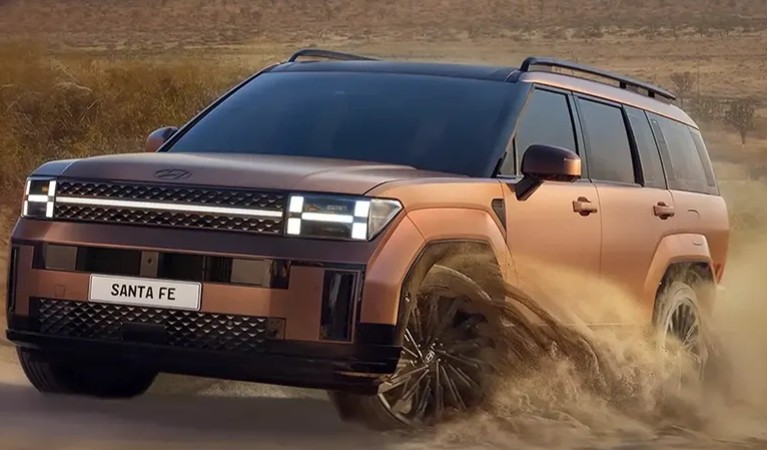
Buying an SUV is easy. Buying one that still feels like a smart decision after 80,000, 120,000, or even 180,000 miles? That is where things get interesting.
The Hyundai Santa Fe reliability question comes up frequently because this midsize SUV sits in an attractive part of the market. It generally offers generous equipment, comfortable seating, useful cargo space, modern technology, and a price that can look friendlier than some Japanese rivals. On paper, it checks a lot of boxes.
But reliability is not something we can judge from a glossy brochure.
What happens after the warranty expires? Are the engines durable? Do transmissions cause headaches? Can a Santa Fe realistically last 200,000 miles? And perhaps most importantly, are some model years considerably safer purchases than others?
Overall, the Hyundai Santa Fe can be a dependable SUV, particularly when it has been properly maintained and we choose the engine and model year carefully. However, reliability has varied significantly between generations. Some Santa Fe models have accumulated impressive mileage with little more than routine servicing, while others have been associated with engine, transmission, electrical, or oil-consumption concerns.
So rather than stamping the Santa Fe simply "reliable" or "unreliable," we need to dig deeper.
Content in this publication
- How Reliable Is the Hyundai Santa Fe Overall?
- Hyundai Santa Fe Reliability by Generation
- Are Hyundai Santa Fe Engines Reliable?
- Hyundai Santa Fe Transmission Reliability
- Hyundai Santa Fe Hybrid Reliability
- Hyundai Santa Fe Electrical Reliability
- Suspension and Steering Reliability
- How Long Does a Hyundai Santa Fe Last?
- Common Hyundai Santa Fe Reliability Concerns
- Is the Hyundai Santa Fe Expensive to Maintain?
- Is Hyundai's Warranty a Reliability Advantage?
- Hyundai Santa Fe Reliability vs Toyota Highlander
- Hyundai Santa Fe Reliability vs Honda CR-V
- Hyundai Santa Fe Reliability vs Kia Sorento
- Is a Used Hyundai Santa Fe a Good Buy?
- Which Hyundai Santa Fe Is Most Reliable?
- Should We Avoid High-Mileage Santa Fe Models?
- Can a Hyundai Santa Fe Reach 200,000 Miles?
- Does Maintenance Make a Big Difference?
- Should You Buy a Hyundai Santa Fe for Long-Term Ownership?
- Final Verdict: Is the Hyundai Santa Fe Reliable?
- Frequently Asked Questions
How Reliable Is the Hyundai Santa Fe Overall?
In broad terms, we would describe Hyundai Santa Fe reliability as average to good, depending heavily on the generation, engine, maintenance history, and driving conditions.
That distinction matters.
Two Santa Fe SUVs wearing almost identical badges can have completely different ownership stories. One owner may cruise past 150,000 miles with nothing more dramatic than brakes, tires, fluids, and a battery replacement. Another might encounter expensive mechanical trouble much earlier.
Why?
Modern vehicles are complex machines. A car is less like a hammer and more like a small rolling computer network wrapped around thousands of mechanical parts. Engine design, transmission calibration, electronics, previous maintenance, climate, driving habits, and manufacturing changes can all influence longevity.
Hyundai has also improved considerably over the decades. Older perceptions of the brand do not necessarily reflect newer products, yet newer automatically does not mean bulletproof either.
The Santa Fe's reputation therefore sits somewhere between "dependable family workhorse" and "buy carefully."
Reliability Depends Strongly on the Model Year
This is one of the biggest things prospective owners should understand.
As the Santa Fe evolved, Hyundai introduced different naturally aspirated engines, turbocharged engines, hybrid systems, automatic transmissions, dual-clutch transmissions, infotainment systems, driver-assistance technology, and emissions equipment.
Every change creates opportunities for improvements but also for new weaknesses.
A 2008 Santa Fe and a 2025 Santa Fe may share a name, yet mechanically they belong to completely different worlds.
For that reason, asking whether the Santa Fe is reliable without mentioning the model year is a little like asking whether restaurants are good. Some are excellent, some are disappointing, and the details make the difference.
Hyundai Santa Fe Reliability by Generation
Looking at reliability generation by generation gives us a much clearer picture.
First-Generation Hyundai Santa Fe Reliability
The first-generation Santa Fe introduced Hyundai to many SUV buyers who previously might not have considered the brand.
These vehicles were relatively straightforward compared with modern Santa Fe models. Fewer sophisticated electronics can sometimes work in an older vehicle's favor because there are simply fewer expensive modules waiting to malfunction.
However, age is now the main concern.
Even a fundamentally reliable first-generation Santa Fe may suffer from deteriorated rubber components, suspension wear, cooling-system problems, oil leaks, corrosion, tired sensors, transmission wear, or neglected maintenance.
At this stage, condition matters considerably more than reputation.
A well-kept older Santa Fe with service records can be a better buy than a newer vehicle that has been neglected.
Second-Generation Hyundai Santa Fe Reliability
The second generation generally helped strengthen the Santa Fe's reputation as a legitimate family SUV.
These models can deliver respectable long-term durability when serviced correctly, although older examples now need close inspection.
Potential age-related concerns may involve suspension components, steering parts, cooling systems, alternators, air-conditioning equipment, seals, sensors, and transmission behavior.
None of those issues automatically make the vehicle unreliable. Most cars approaching 15 or 20 years old will eventually require repairs beyond routine maintenance.
What matters is whether those repairs arrive gradually like manageable rain showers or all at once like a thunderstorm.
Why Maintenance Records Matter More on Older Santa Fe Models
Service history can tell us more than mileage alone.
Imagine two Santa Fe SUVs.
One has 90,000 miles but received irregular oil changes, cheap fluids, and almost no preventive maintenance.
The other has 140,000 miles but has been serviced carefully since new.
Which would we rather own?
Usually, the second vehicle.
Mileage tells us how far a vehicle has traveled. Maintenance tells us how it traveled.
Third-Generation Hyundai Santa Fe Reliability
The third-generation Santa Fe deserves more caution.
This era included vehicles equipped with engines that have generated more owner concern than some earlier versions. Depending on market and specification, buyers may encounter discussions surrounding oil consumption, engine wear, bearing-related problems, knocking, reduced performance, or significant engine repairs.
That does not mean every third-generation Santa Fe is destined for failure.
Far from it.
Thousands have covered substantial mileage successfully. Nevertheless, when buying used, this generation deserves a thorough history check and mechanical inspection.
Engine noise when cold, unusual oil consumption, warning lights, inconsistent servicing, hesitation, smoke, or unexplained previous engine work should never be brushed aside.
Engine History Can Be More Important Than Cosmetic Condition
A sparkling interior can seduce us.
Freshly polished paint can too.
But shiny wheels cannot rescue a poorly maintained engine.
When examining a used Santa Fe from a potentially troublesome production period, we would happily choose a vehicle with a few scratches and an immaculate service record over a perfect-looking example with mysterious mechanical history.
Mechanical transparency is worth more than showroom sparkle.
Fourth-Generation Hyundai Santa Fe Reliability
The fourth generation brought major improvements in cabin quality, technology, refinement, safety systems, and powertrain choices.
Reliability tends to depend heavily on the exact configuration.
Naturally aspirated engines are often mechanically simpler than turbocharged alternatives. Turbo engines can provide stronger performance, but their additional heat, pressure, plumbing, sensors, and forced-induction hardware add complexity.
Some versions also use more sophisticated transmissions.
That does not make them unreliable automatically. Modern turbocharged powertrains can be extremely durable.
But simplicity generally gives us fewer things to worry about over very high mileage.
Latest-Generation Santa Fe Reliability
The newest Santa Fe is dramatically different in appearance and technology. It has become more sophisticated, more spacious, and more electronically dependent.
For buyers considering a nearly new example, the usual reliability challenge applies: long-term evidence takes time.
A vehicle can perform beautifully through its first few years and still develop weaknesses after a decade.
We therefore should distinguish between early reliability and proven long-term durability.
Newer Santa Fe models may benefit from improved engineering, updated systems, and warranty coverage, but their eventual performance at extremely high mileage will only become fully clear as owners accumulate more real-world use.
Are Hyundai Santa Fe Engines Reliable?
The engine is the heart of the reliability conversation.
And just like people, not every heart has the same history.
Some Santa Fe engines have proven capable of long service lives, while others require more cautious shopping.
Proper oil changes are particularly important.
Engines rely on oil not only for lubrication but also for cooling, cleaning, hydraulic operation, and protecting internal components from friction. Stretching oil-change intervals excessively can turn a healthy engine into an expensive experiment.
Naturally Aspirated vs Turbo Santa Fe Reliability
When comparing two otherwise similar used vehicles, naturally aspirated engines may appeal to buyers prioritizing simplicity.
A turbocharged engine squeezes more performance from a relatively small displacement by forcing extra air into the cylinders.
That is clever engineering, but it creates additional heat and mechanical stress.
Turbochargers themselves also depend heavily on good lubrication.
Regular oil changes therefore become especially important.
Still, we should avoid the simplistic idea that naturally aspirated always equals reliable and turbo always equals unreliable. Design quality and maintenance matter more than the presence of a turbocharger alone.
A lovingly maintained turbo engine can easily outlast a neglected naturally aspirated one.
Does the Hyundai Santa Fe Burn Oil?
Oil consumption is something used Santa Fe shoppers should investigate carefully on certain engines and production years.
Every internal-combustion engine can consume a small amount of oil, particularly as mileage climbs.
The concern begins when consumption becomes excessive.
Low oil levels can reduce lubrication and increase wear. If an owner repeatedly allows the engine to run significantly below its proper oil level, the consequences can become serious.
When purchasing a used Santa Fe, asking whether the owner ever adds oil between services is perfectly reasonable.
Check the dipstick too.
Oil that is slightly dark is not automatically concerning. Oil that is barely registering on the dipstick may be far more revealing.
Warning Signs of Potential Engine Trouble
Engine problems often whisper before they shout.
Listen for knocking, ticking that does not disappear after startup, rough idle, hesitation, abnormal smoke, unexplained vibration, or irregular acceleration.
Also pay attention to dashboard warning lights.
You may be interested in reading Is Toyota Estima Reliable? A Complete Long-Term Ownership Guide
A seller who says, "That light has been on forever, but it drives fine," is not giving us reassurance. They are giving us a reason to investigate.
Hyundai Santa Fe Transmission Reliability
Transmission reliability also varies between versions.
Traditional torque-converter automatics are familiar technology and often provide smooth operation when maintained correctly.
Some newer performance-oriented versions use more complex transmission designs that can feel different at low speeds.
What should we watch for?
Delayed engagement when selecting Drive or Reverse deserves attention. So does excessive shuddering, slipping, harsh gear changes, abnormal noises, overheating warnings, or unpredictable behavior in traffic.
A small hesitation may be a software characteristic.
A violent thump is another matter entirely.
Should Santa Fe Transmission Fluid Be Changed?
We are strong believers in sensible preventive maintenance.
Transmission fluid works hard. It lubricates moving parts, controls hydraulic pressure, carries heat away, and gradually deteriorates.
The exact service schedule depends on the model, transmission, operating conditions, and manufacturer recommendations.
Vehicles used for towing, mountainous driving, extreme temperatures, repeated short trips, or heavy urban traffic may place additional stress on transmission fluid.
Ignoring fluid maintenance because a vehicle currently shifts well can be like ignoring dental care because our teeth do not hurt yet.
Preventive maintenance is usually cheaper than repair.
Hyundai Santa Fe Hybrid Reliability
Hybrid Santa Fe models introduce another dimension to the reliability discussion.
A hybrid combines a combustion engine with electric propulsion hardware and a high-voltage battery system.
At first glance, that sounds twice as complicated.
In reality, hybrid systems can also reduce stress on certain mechanical components because the electric motor shares part of the workload.
Regenerative braking may reduce conventional brake wear, and the gasoline engine does not always need to work as aggressively under every condition.
The long-term reliability question revolves around system design, battery durability, cooling, electronic controls, and proper maintenance.
Hybrid batteries are expensive components, but they should not automatically be treated as consumables that fail after a few years.
Still, buyers purchasing an older hybrid should check remaining battery warranty coverage where applicable and have system health assessed.
Hyundai Santa Fe Electrical Reliability
Modern Santa Fe models include a mountain of technology.
Touchscreens, digital instrument displays, parking sensors, cameras, keyless systems, electronic tailgates, USB ports, adaptive cruise control, blind-spot systems, seat electronics, radar sensors, and countless control modules all communicate with each other.
That convenience is wonderful when everything works.
When it does not, troubleshooting can become frustrating.
Minor electrical glitches may include intermittent sensors, infotainment freezes, battery-related warning messages, key-fob issues, cameras temporarily malfunctioning, or software bugs.
Fortunately, not every electrical problem means an expensive module has failed.
A weak 12-volt battery can make a modern vehicle behave as though it has suddenly become possessed.
Why a Weak Battery Can Cause Strange Problems
Modern vehicles monitor voltage closely.
When voltage drops too low, computers may receive inconsistent power.
The result can be seemingly unrelated warning messages.
One morning the dashboard may illuminate like a Christmas tree. We replace the tired battery, and suddenly half the "problems" disappear.
That is why proper diagnosis matters.
Throwing parts at a modern vehicle without testing can become painfully expensive.
Suspension and Steering Reliability
The Santa Fe is a relatively heavy family SUV, so suspension components eventually wear.
Bushings, links, wheel bearings, ball joints, shocks, struts, and steering components all absorb thousands of bumps over the vehicle's life.
A knocking sound over rough roads may be a minor worn link.
Uneven tire wear could indicate alignment or suspension problems.
A vague steering feel may point toward worn components.
None of these necessarily qualify as catastrophic reliability problems. They are normal wear items on higher-mileage vehicles.
What matters is whether previous owners dealt with them promptly.
How Long Does a Hyundai Santa Fe Last?
A properly maintained Hyundai Santa Fe can potentially exceed 150,000 miles, and some examples may travel beyond 200,000 miles.
But mileage targets should never be treated as guarantees.
Cars do not expire like milk.
Their lifespan is shaped gradually by maintenance, driving environment, component design, accident history, oil quality, fluid changes, temperature extremes, road conditions, and sometimes plain luck.
A Santa Fe used mainly for long highway journeys may age more gracefully than one covering half the mileage through constant stop-and-go traffic and short cold starts.
What Helps a Santa Fe Reach High Mileage?
The habits that support long vehicle life are not glamorous.
Regular oil changes matter. Monitoring coolant matters. Transmission servicing matters. Replacing worn components before they damage surrounding parts matters. Fixing warning lights matters. Checking fluid levels matters.
Reliability is partly engineered at the factory.
The rest is earned in the driveway.
Common Hyundai Santa Fe Reliability Concerns
Although exact weaknesses differ between generations, used buyers should be alert for recurring categories of trouble.
Here are some of the areas worth inspecting carefully:
- Engine oil consumption or abnormal engine noise on certain models.
- Delayed, harsh, or inconsistent transmission operation.
- Infotainment or electrical glitches.
- Weak 12-volt batteries creating warning messages.
- Suspension noises as mileage increases.
- Air-conditioning problems on older vehicles.
- Worn engine or transmission mounts causing vibration.
- Sensors producing intermittent warning lights.
- Power-tailgate or keyless-entry problems on highly equipped versions.
- Cooling-system deterioration on older or poorly maintained vehicles.
The presence of one issue does not automatically mean we should walk away.
The real question is whether the problem is understood, documented, and priced appropriately.
An inexpensive repair on an otherwise excellent vehicle can still make sense.
An unexplained engine knock on a suspiciously cheap SUV usually does not.
Is the Hyundai Santa Fe Expensive to Maintain?
Routine Santa Fe maintenance is generally manageable for a midsize SUV.
Regular expenses include oil and filters, tires, brakes, coolant, batteries, spark plugs, suspension wear, and transmission service where applicable.
Complex versions naturally introduce more expensive possibilities.
Turbochargers, hybrid components, advanced electronic systems, sophisticated driver-assistance equipment, panoramic roofs, and complicated transmissions can all raise repair costs if something fails outside warranty.
This is not unique to Hyundai.
Modern SUVs from almost every manufacturer are becoming increasingly complicated.
The days when a mechanic could diagnose nearly everything using a screwdriver, a socket set, and suspicious facial expressions are long gone.
Is Hyundai's Warranty a Reliability Advantage?
Warranty coverage can provide substantial peace of mind, especially for newer buyers.
But warranty and reliability are not identical.
A long warranty protects us financially against certain failures.
Reliability determines how frequently those failures occur in the first place.
Think of warranty coverage as an umbrella. A large umbrella is great.
We would still prefer that it does not rain.
Used buyers should also verify whether remaining warranty coverage transfers to subsequent owners and what exclusions or regional conditions apply.
Never assume the coverage enjoyed by the first owner automatically applies unchanged to the second.
Hyundai Santa Fe Reliability vs Toyota Highlander
The Toyota Highlander is one of the Santa Fe's most obvious reliability benchmarks.
Toyota has built a powerful reputation for long-term durability, and that reputation significantly influences used prices.
A comparable Highlander may therefore cost more.
The Santa Fe can counter with strong equipment levels, attractive interior design, comfortable road manners, and potentially better value.
If our priority is minimizing long-term mechanical uncertainty above everything else, the Highlander often deserves serious consideration.
If we are balancing purchase price, features, comfort, and reliability together, the Santa Fe can make a compelling case.
Hyundai Santa Fe Reliability vs Honda CR-V
The Honda CR-V sits slightly differently in the market depending on generation, but buyers frequently compare it with the Santa Fe.
Honda traditionally enjoys strong reliability credentials.
The CR-V may also deliver excellent fuel economy and practical interior packaging.
You may be interested in readingIs Toyota Estima Reliable? A Complete Long-Term Ownership GuideYou may be interested in reading
 Hyundai Santa Fe Pros and Cons: Is It Worth Buying?
The Santa Fe generally feels like the more substantial vehicle and may offer more equipment for the money.
Again, reliability differences should be examined at model-year and powertrain level rather than simply through brand reputation.
Hyundai Santa Fe Reliability vs Kia Sorento
This comparison is particularly interesting because Hyundai and Kia share significant engineering resources.
Depending on generation, the Santa Fe and Sorento may use related engines, transmissions, platforms, and electronics.
That means certain strengths and weaknesses can overlap.
Buying one instead of the other does not necessarily allow us to escape every potential mechanical concern.
The decision may come down to styling, seating arrangements, price, warranty situation, maintenance history, and exact powertrain.
Is a Used Hyundai Santa Fe a Good Buy?
Yes, a used Hyundai Santa Fe can be an excellent purchase.
But we would not buy one blindly.
The ideal used example has documented service history, a clean mechanical inspection, smooth transmission behavior, proper oil level, no suspicious warning lights, healthy cooling performance, even tire wear, and no evidence of neglected repairs.
Mileage matters less than many buyers imagine.
A meticulously maintained 100,000-mile Santa Fe may be a safer purchase than a neglected example showing only 60,000 miles.
What Should We Check Before Buying One?
Begin with a cold engine.
Why cold?
Because some mechanical noises become less noticeable after the engine warms up.
Check the oil level before starting.
Watch the exhaust when the engine fires.
Listen closely.
Test every electronic feature.
Drive at parking-lot speed and highway speed.
Accelerate gently and aggressively.
Brake firmly.
Turn tightly.
Reverse.
Let the vehicle idle.
A proper test drive should feel less like a five-minute demonstration and more like an interrogation.
A Pre-Purchase Inspection Can Save Thousands
Paying an independent mechanic to inspect a used Santa Fe can feel unnecessary when the SUV appears perfect.
That feeling disappears quickly if the inspection uncovers a major problem.
Mechanics can identify leaks, suspension play, diagnostic trouble codes, worn tires, previous repairs, fluid contamination, abnormal noises, and countless clues buyers may miss.
A pre-purchase inspection is one of the cheapest forms of insurance we can buy.
Which Hyundai Santa Fe Is Most Reliable?
There is no single universal answer because different countries received different engines, transmissions, and specifications.
Still, shoppers prioritizing long-term durability may prefer configurations with proven powertrains, complete maintenance records, and fewer complicated performance components.
Later production years within an established generation can also be appealing because manufacturers often refine software, components, and assembly processes after early production.
But we should never choose exclusively by year.
An excellent model year can still become a terrible vehicle when neglected.
Should We Avoid High-Mileage Santa Fe Models?
Not automatically.
High mileage often scares buyers because the odometer presents one large, emotionally powerful number.
Yet highway mileage is generally less punishing than repeated short-distance city use.
A 130,000-mile SUV driven predominantly on open roads might have experienced fewer cold starts and less stop-and-go stress than a 70,000-mile vehicle driven exclusively in congested urban traffic.
Instead of asking only, "How many miles does it have?" we should ask, "How were those miles accumulated?"
That question tells a richer story.
Can a Hyundai Santa Fe Reach 200,000 Miles?
Yes, it is possible.
Reaching 200,000 miles requires some combination of good design, proper maintenance, sensible driving, and timely repairs.
We should also keep expectations realistic.
A vehicle reaching that mileage will almost certainly need replacement wear components along the journey.
Expecting zero repairs over 200,000 miles is unrealistic for almost any automobile.
Reliability does not mean nothing ever breaks.
It means failures remain reasonably infrequent, predictable, and manageable relative to the vehicle's age and mileage.
Does Maintenance Make a Big Difference?
Absolutely.
Few things influence Santa Fe reliability more strongly.
Oil should be changed at sensible intervals with the correct specification.
Cooling systems should not be ignored.
Transmission behavior deserves attention.
Strange noises should be diagnosed rather than masked by turning up the radio.
Fluid leaks should be investigated.
Warning lights should not become permanent dashboard decorations.
Cars usually tell us when something is wrong.
The challenge is listening before the whisper becomes a scream.
Should You Buy a Hyundai Santa Fe for Long-Term Ownership?
For many buyers, yes.
The Santa Fe combines comfort, practicality, equipment, and competitive pricing in a package that can deliver strong long-term value.
Still, we would be selective.
Research the exact model year. Identify the specific engine and transmission. Review maintenance documentation. Investigate outstanding recalls or manufacturer campaigns applicable to the vehicle. Arrange an independent inspection before buying used.
Those steps matter much more than internet arguments claiming every Hyundai is fantastic or every Hyundai is terrible.
Automotive reliability is rarely that simple.
Who Should Consider a Santa Fe?
The Santa Fe makes particular sense for families who want generous interior space without stepping into a huge SUV.
It also appeals to buyers who appreciate technology and comfort but do not necessarily want to pay the premium associated with certain competitors.
Used models can offer significant value because depreciation sometimes makes higher trim levels surprisingly affordable.
Who Might Want Something Else?
Buyers who prioritize the simplest possible mechanical design, extremely proven long-term resale strength, or maximum historical reliability confidence may prefer alternatives from Toyota or Honda depending on the year and market.
Someone planning to keep a vehicle for 15 years may evaluate reliability differently from someone leasing for three.
There is no perfect vehicle.
Only vehicles that fit particular priorities better than others.
Final Verdict: Is the Hyundai Santa Fe Reliable?
The Hyundai Santa Fe can absolutely be a reliable SUV, but the answer depends heavily on which Santa Fe we are talking about.
Some generations and powertrains have stronger track records than others. Certain engines deserve more scrutiny. Newer models deliver excellent technology and refinement but introduce greater complexity. Older models may be mechanically simpler but increasingly vulnerable to age-related wear.
The smartest approach is not to ask whether Hyundai Santa Fe reliability is "good" or "bad."
Instead, ask whether the specific vehicle sitting in front of us has the right engine, the right maintenance history, the right condition, and the right price.
A well-maintained Santa Fe can become the kind of SUV that quietly handles school runs, road trips, grocery hauls, commuting, vacations, and family duty year after year.
Neglected examples can become expensive remarkably quickly.
Choose carefully, maintain it properly, and the Santa Fe can be a dependable companion rather than a financial storm cloud following us down the highway.
Frequently Asked Questions
Is the Hyundai Santa Fe reliable after 100,000 miles?
Yes. A properly maintained Hyundai Santa Fe can remain reliable beyond 100,000 miles. Service history becomes increasingly important at higher mileage, so buyers should check oil-change records, transmission condition, cooling-system maintenance, suspension wear, and any previous major engine repairs.
How many miles can a Hyundai Santa Fe last?
Many well-maintained Santa Fe models can exceed 150,000 miles, while some may pass 200,000 miles. Actual lifespan depends on the engine, model year, maintenance practices, climate, driving habits, and whether developing mechanical problems are repaired promptly.
What is the biggest reliability concern with a Hyundai Santa Fe?
The answer varies by generation, but certain engine-related concerns deserve particular attention when buying specific used Santa Fe models. Oil consumption, unusual engine noises, neglected oil maintenance, transmission behavior, and electrical faults should all be investigated carefully.
You may be interested in readingIs Toyota Estima Reliable? A Complete Long-Term Ownership GuideYou may be interested in reading
Hyundai Santa Fe Pros and Cons: Is It Worth Buying?You may be interested in reading
Hyundai Santa Fe Life Expectancy: How Long Can It Really Last?Is the Hyundai Santa Fe more reliable than the Kia Sorento?
They can be relatively similar because Hyundai and Kia often share platforms and powertrain technology. Reliability differences usually depend more on model year, engine, transmission, maintenance history, and individual vehicle condition than on the badge alone.
Is a used Hyundai Santa Fe worth buying?
Yes, provided we choose carefully. A used Santa Fe with documented maintenance, a healthy engine, smooth transmission, functioning electronics, and a successful independent inspection can offer excellent value. Avoid selecting one purely because it looks inexpensive compared with competitors.
If you want to know other articles similar to Hyundai Santa Fe Reliability: Is It a Dependable SUV? you can visit the category Blog.
Volvo S90 Reliability: Problems, Costs & Best Years
Is Haval Jolion a Good Car? Honest Review, Reliability, Pros and Cons
How to Start Haval Jolion With Spare Key: Complete Guide
How to Calculate Per Diem on an Auto Loan

How to Calculate the Residual Value of a Car

Is the Honda Passport Selling Well? Sales Numbers Tell the Story
Leave a Reply
More content of your interest