

Is Toyota Estima Reliable? A Complete Long-Term Ownership Guide

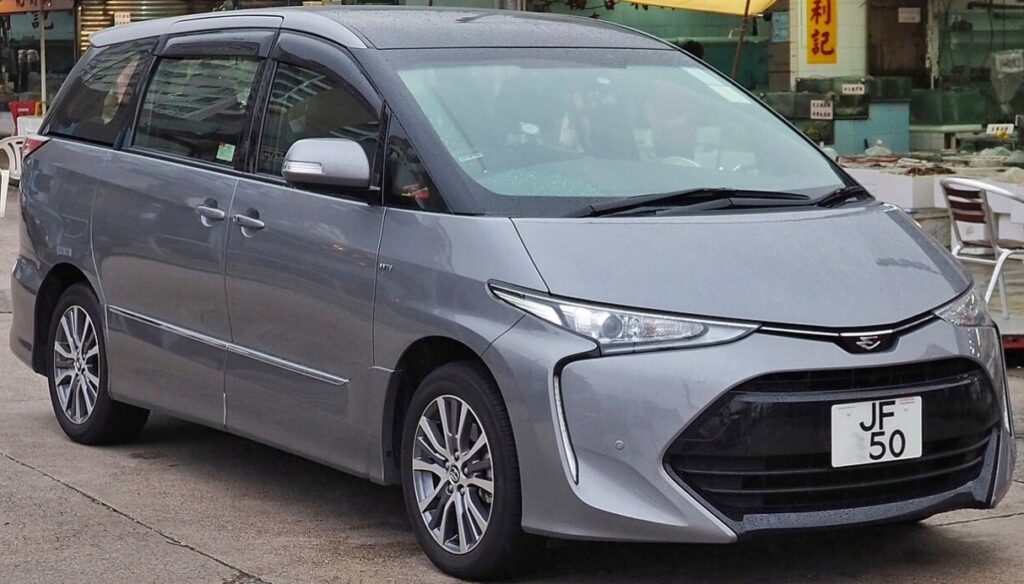
If we are shopping for a spacious Japanese people mover, sooner or later one question tends to appear: is Toyota Estima reliable? The short answer is yes, generally—but the condition of the individual vehicle matters far more than the badge on the bonnet.
The Toyota Estima built its reputation around clever packaging, comfortable family transport, proven Toyota mechanical components, and, in later generations, a choice of petrol or hybrid powertrains. Toyota's third-generation Estima, introduced in January 2006, offered a 2.4-liter four-cylinder 2AZ-FE, a 3.5-liter 2GR-FE V6, and later a THS II hybrid using the 2AZ-FXE engine with front and rear electric motors.
But there's an important catch.
Most Estimas available today are used vehicles, and many outside Japan arrived as grey-market imports. That means we're rarely comparing a fresh Estima with another fresh minivan. We're comparing vehicles that may have accumulated years of school runs, motorway trips, neglected oil changes, short journeys, hot summers, cold winters, or uncertain service histories.
In other words, reliability isn't just about what Toyota built. It's about what previous owners did—or didn't do—to it.
Let's dig into the details.
Content in this publication
- How Reliable Is the Toyota Estima Overall?
- Toyota Estima Reliability by Generation
- Is the Toyota Estima 2.4 Reliable?
- Is the Toyota Estima 3.5 V6 Reliable?
- Is the Toyota Estima Hybrid Reliable?
- Common Toyota Estima Problems
- How Many Kilometers Can a Toyota Estima Last?
- Is High Mileage a Problem on an Estima?
- Toyota Estima Reliability Versus Toyota Previa and Tarago
- Are Toyota Estima Parts Easy to Find?
- Toyota Estima Maintenance: What Matters Most?
- What Should We Check Before Buying a Toyota Estima?
- Should We Get a Pre-Purchase Inspection?
- Which Toyota Estima Is the Most Reliable?
- Toyota Estima Reliability: Red Flags to Avoid
- Does the Toyota Estima Have a Reliable Hybrid System?
- Are Toyota Estimas Expensive to Maintain?
- Is the Toyota Estima a Good Family Car?
- Can a Toyota Estima Be a Reliable Daily Driver?
- Toyota Estima Reliability Rating
- Final Verdict: Is Toyota Estima Reliable?
- Frequently Asked Questions
How Reliable Is the Toyota Estima Overall?
We'd describe the Toyota Estima as a generally reliable MPV with several age- and powertrain-specific weaknesses worth checking carefully.
A properly serviced example can make an excellent long-term family vehicle. The basic mechanical architecture is not unusually exotic, and Toyota used recognizable engines and hybrid technology rather than turning the Estima into some mechanical science experiment.
That doesn't mean every Estima is bulletproof.
Older 2.4-liter examples deserve particular attention for oil consumption. Specialist Estima workshops and owners have reported excessive oil use in some vehicles fitted with the 2AZ family of engines.
Hybrid models introduce another variable: battery and electrical-system age. The hybrid system itself can be durable, but a 15- or 20-year-old hybrid battery should never be treated as if it were new. Battery degradation is a normal consideration when evaluating an older hybrid, regardless of how dependable the original engineering was.
So our verdict isn't simply "Toyota equals reliable."
It's more useful than that:
A well-maintained Estima is usually a sensible used MPV. A neglected Estima can become expensive surprisingly quickly.
Toyota Estima Reliability by Generation
Understanding the generation we're looking at makes a huge difference because the engines, transmissions, technology, and age-related problems vary.
First-Generation Toyota Estima
The earliest Estimas are now classic-age vehicles rather than ordinary used family cars.
That changes the reliability equation completely.
Even if the engine and gearbox remain healthy, rubber hoses, bushings, seals, cooling-system components, electrical connections, interior mechanisms, suspension parts, and air-conditioning hardware may have decades of wear behind them.
At this age, asking, "Was the Estima reliable when new?" isn't very useful.
We need to ask:
What has already been rebuilt, replaced, serviced, or neglected?
A beautifully maintained early Estima can still be enjoyable. A cheap neglected one may become a restoration project wearing the disguise of a family van.
Second-Generation Toyota Estima
The second-generation Estima moved the model toward the more familiar front-engine MPV layout and became a popular used import in numerous markets.
Again, age is becoming the defining factor.
Engine condition, cooling-system health, transmission servicing, suspension wear, sliding-door operation, air conditioning, electrical accessories, and corrosion deserve more attention than mileage alone.
A higher-mileage Estima supported by years of invoices can actually be a safer purchase than a suspiciously low-mileage example with almost no history.
Mileage tells us how far it travelled.
Service history tells us how it was treated.
Third-Generation Toyota Estima
The third generation is probably the version most used buyers have in mind when researching Estima reliability.
Toyota launched it in January 2006. Representative Japanese-market versions included the 2.4-liter 2AZ-FE four-cylinder and 3.5-liter 2GR-FE V6. The 2.4 used Toyota's Super CVT-i, while the 3.5-liter version used a six-speed automatic. A THS II hybrid followed in June 2006 using the 2AZ-FXE engine plus electric motors.
This generation offers impressive comfort and versatility, but many examples are now old enough that maintenance history should outweigh trim level, paint color, wheels, entertainment equipment, and cosmetic modifications.
A sparkling Aeras with poor maintenance can be a worse purchase than an ordinary-looking example with meticulous records.
Is the Toyota Estima 2.4 Reliable?
The 2.4-liter petrol Estima can be reliable, but it's also the version where we should be particularly alert to engine oil consumption.
Reports from Estima specialists and owner communities describe some 2.4-liter 2AZ-powered vehicles using excessive amounts of oil.
That's important because an engine that burns oil isn't automatically doomed.
The real danger comes when an owner doesn't check the dipstick.
Imagine a slow leak in a water bottle. If we keep topping it up, it's annoying. If we ignore it until the bottle is empty, the problem becomes rather more serious.
The same logic applies here.
Signs of Excessive Oil Consumption
Before buying a 2.4 Estima, we'd look for:
- A low engine-oil level before the test drive
- Blue smoke, particularly under acceleration
- Heavy deposits around the exhaust
- Frequent oil top-ups recorded by the owner
- Oil warning-light history
- Rough operation or unusual engine noise
- Poorly documented servicing
- Evidence the seller recently topped up the oil without explaining why
Oil consumption is not something we'd diagnose from the exhaust pipe alone. Some engines can consume meaningful amounts of oil without producing an obvious cloud of blue smoke.
Ask the Seller One Simple Question
Ask:
"How much oil do you add between services?"
That's often more revealing than asking whether the engine has "any problems."
A seller who knows the car might say, "About half a liter every few thousand kilometers."
Useful information.
Someone who immediately replies, "Toyotas don't use oil," while the dipstick sits near minimum?
That's our cue to investigate harder.
Is the Toyota Estima 3.5 V6 Reliable?
For buyers wanting stronger acceleration, the 3.5-liter Estima is appealing.
Toyota's third-generation V6 model used the 3,456 cc 2GR-FE, producing 280 PS in the representative Japanese specification listed by Toyota. It was paired with a six-speed automatic transmission.
The V6 avoids the exact same ownership profile as the 2.4, but that doesn't mean it deserves a free pass.
We'd inspect the cooling system carefully, listen for bearing or pulley noises, check for leaks, confirm transmission behavior, and examine the maintenance history.
A V6 also tends to bring a simple trade-off: more performance can mean higher running costs.
That's not unreliability. It's physics.
More cylinders, more power, and a larger engine usually mean we'd budget more for fuel and potentially some maintenance jobs.
Who Should Buy the V6?
The 3.5 makes sense if we:
- Frequently carry several passengers
- Drive at motorway speeds
- Value smooth acceleration
- Live in hilly areas
- Don't mind higher fuel consumption
- Prefer a conventional automatic to the 2.4's CVT arrangement
For city-only family use, the extra performance may be unnecessary.
For loaded highway driving?
The V6 can feel like the engine the Estima always wanted.
Is the Toyota Estima Hybrid Reliable?
The Estima Hybrid is one of the most interesting versions in the range.
Toyota added a third-generation hybrid in June 2006 using its upgraded THS II system. Toyota's historical documentation lists a 2AZ-FXE 2.4-liter petrol engine with electric motors powering the front and rear, giving the model electrically assisted all-wheel-drive capability.
The system was sophisticated for a family MPV of its era.
And there's the key phrase:
of its era.
We're now evaluating vehicles where the battery, pumps, control electronics, wiring, sensors, and supporting components may have been working for many years.
Hybrid Battery Age Matters More Than Mileage Alone
Hybrid batteries degrade with time and use. General hybrid-battery longevity varies substantially with temperature, operating conditions, mileage, and vehicle history, which is why battery diagnostics are especially valuable when buying an older hybrid.
Don't buy an Estima Hybrid merely because the dashboard currently shows no warning lights.
We'd rather have actual diagnostic information.
What Should a Hybrid Battery Test Show?
Ideally, a hybrid specialist should evaluate:
- Battery-block voltage differences
- Internal resistance
- State-of-health indicators where available
- Stored hybrid fault codes
- Cooling-fan condition
- Charge and discharge behavior
- Temperature differences across the pack
A battery can still operate while becoming noticeably weaker.
You may be interested in reading Hyundai Santa Fe Pros and Cons: Is It Worth Buying?
That's why a diagnostic scan is like a blood test for the hybrid system: it can reveal what appearances hide.
Common Toyota Estima Problems
Reliability research becomes much easier when we stop asking whether the whole car is reliable and instead examine its individual systems.
1. Engine Oil Consumption
This is one of the most discussed concerns associated with the 2.4-liter 2AZ engine in Estima circles. Specialist workshops and owner reports describe examples requiring regular oil top-ups.
Not every 2.4 will suffer severely.
But we wouldn't purchase one without checking oil level and asking about consumption.
2. Cooling-System Problems
Any aging MPV deserves a serious cooling-system inspection.
Check:
- Radiator condition
- Coolant level and appearance
- Hoses
- Expansion tank
- Water-pump area
- Cooling fans
- Signs of dried coolant
- Evidence of previous overheating
Overheating can turn a manageable repair into an engine-level problem very quickly.
Never Ignore Coolant Loss
If coolant keeps disappearing, we need to know why.
"Just top it up occasionally" is not a diagnosis.
3. Hybrid Battery Degradation
On older Estima Hybrids, battery degradation is an ownership consideration rather than proof that the hybrid design is unreliable. Hybrid battery packs naturally lose capacity as they age, and specialists working on Estima hybrids list battery degradation among the faults they commonly diagnose.
The right question isn't:
"Will the battery last forever?"
It won't.
The better question is:
"How healthy is this particular battery today, and what would replacement cost where I live?"
4. Hybrid Inverter and Cooling Components
Estima hybrid specialists also identify inverter faults, electric water-pump issues, and hybrid-system cooling problems among the areas they diagnose on aging examples.
These aren't reasons to avoid every hybrid.
They're reasons to avoid buying one without appropriate diagnostics.
5. ABS and Brake-System Faults
A dashboard full of ABS, VSC, brake, or traction-control warning lamps should never be dismissed as "probably just a sensor."
It might be relatively simple.
It might not.
Either way, we want diagnostic codes before money changes hands.
6. Power Sliding Door Problems
The Estima's electric sliding doors are wonderful when working.
Press a button and the giant side door glides away like a curtain.
When aging motors, rollers, cables, sensors, switches, or alignment problems appear, that convenience can become an irritating repair job.
During a viewing, we'd open and close every electric door several times using every available control.
Don't test it once.
Intermittent faults love behaving perfectly when the seller is standing beside us.
7. Suspension Wear
A large MPV carries weight.
Passengers add more.
Luggage adds more again.
Over years of driving, suspension bushes, links, bearings, dampers, and related components eventually wear.
Listen for:
- Knocks over bumps
- Clunks while turning
- Uneven tire wear
- Wandering steering
- Excessive bouncing
- Steering vibration
These problems don't necessarily make the Estima unreliable. They're simply normal consequences of age and use.
How Many Kilometers Can a Toyota Estima Last?
There isn't a magic number at which an Estima suddenly becomes unreliable.
We'd much rather buy a well-maintained 180,000 km vehicle than a neglected 90,000 km vehicle whose servicing history consists of three oil changes and positive thinking.
High mileage matters, but so do:
- Oil-change frequency
- Cooling-system maintenance
- Transmission servicing
- Driving environment
- Previous overheating
- Hybrid battery condition
- Accident history
- Rust
- Quality of replacement parts
- Whether problems were repaired promptly
A vehicle that's been gently maintained for 200,000 km can have a far easier mechanical life than one abused for half that distance.
Is High Mileage a Problem on an Estima?
Not automatically.
What scares us more is unknown mileage.
Grey-market imports can sometimes have incomplete historical records. If documentation is limited, condition becomes even more important.
Check Japanese inspection sheets, auction information where available, service stickers, workshop invoices, odometer history, and the physical wear inside the vehicle.
If the steering wheel, driver's seat, pedals, switches, and door handles look like they've survived three trips around Earth but the odometer says 48,000 km, we'd ask questions.
Trust evidence, not optimism.
Toyota Estima Reliability Versus Toyota Previa and Tarago
The names Estima, Previa, and Tarago are closely associated with Toyota's MPV lineage, but buyers shouldn't automatically assume that every version sold under those names has identical engines, equipment, specifications, or market requirements.
The Estima was primarily associated with the Japanese domestic market, while related versions appeared elsewhere under different names and specifications.
That matters for reliability because imported Estimas can require parts sourcing and specialist knowledge that differ from officially sold local models.
A mechanically dependable vehicle can still be inconvenient to own if nobody nearby can identify its parts.
Are Toyota Estima Parts Easy to Find?
This depends enormously on where we live.
Routine Toyota components may be easy to obtain.
Estima-specific trim pieces, Japanese-market electronics, hybrid components, sliding-door hardware, body panels, unusual sensors, or model-specific modules can be another story.
Before buying, we'd call a few local Toyota specialists and ask:
"Do you regularly work on imported Estimas?"
That single question can save a huge amount of frustration.
Parts Availability Is Part of Reliability
This sounds strange, but hear us out.
A car that fails rarely but takes six weeks to obtain every uncommon component might feel less dependable in everyday life than a car needing slightly more maintenance whose parts are available tomorrow.
Ownership reliability is partly mechanical and partly logistical.
Toyota Estima Maintenance: What Matters Most?
The secret to keeping an older Estima reliable isn't complicated.
We need to stop small problems from growing teeth.
Engine Oil and Filter Changes
Correct oil level matters enormously, particularly if we're running a 2.4-liter version known to consume oil.
Check the dipstick regularly rather than waiting for the next service.
The oil-pressure warning lamp is not a friendly reminder telling us it's time to buy a bottle.
If lubrication pressure has already fallen enough to illuminate a warning, we're far beyond the stage where casual neglect makes sense.
Cooling-System Maintenance
Fresh coolant, sound hoses, functioning fans, and a leak-free cooling system are cheap insurance compared with repairing an overheated engine.
Transmission and CVT Care
The 2.4-liter third-generation Estima used Toyota's Super CVT-i, while the 3.5-liter version received a conventional six-speed automatic.
Whichever version we're buying, smooth operation matters.
During a test drive, pay attention to:
- Delayed engagement
- Shuddering
- Unusual whining
- Harsh shifts
- Fluctuating engine speed
- Warning lights
- Signs of neglected fluid servicing
Hybrid Cooling Maintenance
On the hybrid, don't forget the battery and inverter cooling systems.
You may be interested in readingHyundai Santa Fe Pros and Cons: Is It Worth Buying?You may be interested in reading
Hyundai Santa Fe Life Expectancy: How Long Can It Really Last?Heat is a major enemy of batteries, making clean airflow and correct cooling-system operation especially valuable for long-term battery health.
What Should We Check Before Buying a Toyota Estima?
This is where we can dramatically improve our odds.
Mechanical Checklist
Before buying, inspect:
- Engine oil level
- Evidence of oil burning or leaks
- Coolant condition and level
- Cold-start behavior
- Engine noise
- Transmission or CVT behavior
- Steering
- Suspension noise
- Brake operation
- Tire wear
- Air conditioning
- Electrical accessories
- Power sliding doors
- Underbody condition
- Service history
For a hybrid, add:
- Hybrid battery diagnostic test
- Hybrid system fault-code scan
- Inverter cooling operation
- Battery cooling system
- ABS/VSC warning-system scan
Always Start the Engine Cold
A warm engine can hide problems.
If possible, ask the seller not to start the Estima before we arrive.
A cold start tells us more about:
- Startup noise
- Smoke
- Battery condition
- Idle quality
- Warning lights
- Cold-engine behavior
If the bonnet is hot when we arrive unexpectedly, there's nothing wrong with asking why.
Should We Get a Pre-Purchase Inspection?
Absolutely.
On an inexpensive small hatchback, some buyers might gamble.
On an aging imported seven- or eight-seat MPV with power doors, optional four-wheel drive, sophisticated electronics, and potentially a hybrid powertrain?
A professional inspection is money well spent.
For an Estima Hybrid, we'd go one step further and choose someone genuinely comfortable with Toyota hybrid diagnostics.
A normal workshop saying "the battery seems okay because the car starts" isn't the level of inspection we're looking for.
Which Toyota Estima Is the Most Reliable?
There isn't one universally perfect version.
Our choice depends on our priorities.
For Simplicity
A well-maintained petrol version reduces the number of hybrid-specific components we need to evaluate.
For Performance
The 3.5-liter 2GR-FE V6 offers considerably more power than the 2.4-liter four-cylinder. Toyota listed 280 PS for representative Japanese-market 3.5-liter versions compared with 170 PS for the 2.4.
For Fuel-Saving Potential
The hybrid becomes attractive, especially for buyers who value Toyota's hybrid architecture and can access qualified hybrid servicing.
But at today's vehicle ages, we'd never choose a hybrid purely because its purchase price looks cheap.
Battery health matters.
Our Preferred Buying Strategy
Instead of chasing a particular engine at all costs, we'd rank prospective Estimas like this:
Excellent history + excellent condition > preferred engine + uncertain history.
That's the formula.
Toyota Estima Reliability: Red Flags to Avoid
Some warning signs are loud.
Others whisper.
Walk carefully around any Estima showing several of these:
- No service history whatsoever
- Oil below minimum
- Coolant mysteriously low
- Seller refuses a diagnostic scan
- Hybrid warning lights recently "reset"
- Transmission shudder
- Multiple electrical faults
- Sliding doors failing repeatedly
- Heavy smoke
- Signs of overheating
- Uneven tire wear
- Accident repairs of questionable quality
- Suspiciously low mileage
- Dashboard warning lamps that don't illuminate during startup
- Seller insists every fault is "normal for these"
One minor problem isn't necessarily frightening.
Five unrelated problems are a pattern.
Does the Toyota Estima Have a Reliable Hybrid System?
Conceptually, Toyota's hybrid system is one of the Estima's strengths. Toyota had already developed substantial hybrid experience by the time the third-generation Estima Hybrid arrived in 2006, and Toyota describes that model as using an upgraded THS II system.
However, engineering durability cannot stop time.
A hybrid system that's nearly two decades old deserves inspection regardless of manufacturer.
We shouldn't confuse old components with bad design.
That's an important distinction when assessing any used hybrid.
Are Toyota Estimas Expensive to Maintain?
Routine maintenance can be reasonable, particularly if we have access to knowledgeable independent Toyota specialists.
The potentially expensive moments arrive when we encounter:
- Major engine repairs
- Hybrid battery replacement
- Hybrid electrical faults
- Air-conditioning problems
- Power-door failures
- Difficult-to-source imported parts
- Deferred maintenance from previous owners
That's why the cheapest Estima on the market can easily become the most expensive.
Buying condition costs money once.
Buying neglect can cost money repeatedly.
Is the Toyota Estima a Good Family Car?
From a practicality perspective, it's easy to understand why families like them.
Third-generation Estimas could seat seven or eight people, while Toyota designed the third row to fold beneath the floor. Seven-seat versions also offered an unusually long sliding range for the second-row seats, improving cabin flexibility.
That combination makes the Estima much more than a box with seats.
It can function as:
- Family transportation
- School-run vehicle
- Airport shuttle
- Long-distance cruiser
- Multi-generation family car
- Luggage carrier
- Comfortable road-trip MPV
And because the Estima is now primarily a used-car proposition, we can often get an impressive amount of cabin for the money.
Can a Toyota Estima Be a Reliable Daily Driver?
Yes—provided we buy wisely.
The best daily-driver Estima isn't necessarily the youngest, prettiest, or lowest-mileage example.
It's the one that starts cleanly every morning, maintains correct oil and coolant levels, shifts smoothly, has healthy electronics, comes with credible servicing evidence, and doesn't light the dashboard like a Christmas tree.
Reliability is boring.
That's exactly what we want.
The ideal Estima should simply get on with its job while we forget about what's happening beneath the bonnet.
Toyota Estima Reliability Rating
If we had to summarize the Estima as a used vehicle, we'd rate its reliability roughly like this:
Mechanical design: Good
Long-term durability: Good when maintained
2.4-liter oil-consumption risk: Worth checking carefully
3.5 V6: Strong option when properly maintained
Hybrid system: Potentially durable, but battery age matters
Electrical complexity: Moderate to high on well-equipped models
Parts availability: Highly location-dependent
Used-buying risk: Mostly determined by history and condition
The crucial point is that these vehicles are old enough that individual condition creates huge differences between examples.
Two Estimas from the same year can now feel like completely different cars.
Final Verdict: Is Toyota Estima Reliable?
So, is Toyota Estima reliable?
Yes, the Toyota Estima can be a very dependable used people mover, and its combination of Toyota engineering, spacious seating, comfortable road manners, and available hybrid technology remains appealing.
But we wouldn't buy one with our eyes closed simply because Toyota built it.
The third-generation 2.4-liter model deserves careful investigation for oil consumption. Older hybrids deserve battery and hybrid-system diagnostics. Every version deserves a thorough cooling-system, transmission, suspension, electrical, and service-history inspection.
Think of an Estima like a well-built house that's been standing for years.
The foundations may be excellent.
But we still inspect the roof before moving in.
Find a cared-for example, keep fluids and servicing under control, address problems before they escalate, and an Estima can remain a wonderfully practical family companion.
Buy the cheapest neglected one we can find?
That's when the famous Toyota reliability badge can't save us.
Frequently Asked Questions
1. Is a Toyota Estima reliable for long-distance driving?
Yes, a well-maintained Estima can make a comfortable long-distance vehicle. Before relying on an older example for frequent motorway journeys, we'd make sure its cooling system, engine, transmission, tires, brakes, suspension, and fluids have been properly inspected.
2. Is the Toyota Estima Hybrid reliable?
Generally, it can be. The third-generation Estima Hybrid uses Toyota's THS II architecture, but battery age becomes increasingly important as these vehicles get older. A hybrid battery and fault-code diagnostic test is strongly recommended before buying one.
3. Does the Toyota Estima 2.4 have engine problems?
Some 2.4-liter 2AZ-powered Estimas have been reported to consume excessive engine oil. It doesn't affect every vehicle to the same extent, but checking the oil level, service history, exhaust behavior, and seller's top-up routine is important before purchase.
4. Which is more reliable, the Toyota Estima 2.4 or 3.5?
Condition matters more than displacement. The 2.4 deserves additional scrutiny for oil consumption, while the 3.5 V6 comes with higher fuel and potentially higher maintenance costs simply because it is a larger, more powerful engine. We'd choose the vehicle with the strongest service history rather than automatically selecting one engine.
5. Is an old Toyota Estima worth buying?
It can be, especially if we need a spacious seven- or eight-seat MPV and have access to parts and a mechanic familiar with Japanese imports. However, a professional pre-purchase inspection becomes increasingly important as the vehicle ages. Check its service history, oil consumption, cooling system, transmission, electrical equipment, sliding doors, and—on hybrid versions—the high-voltage battery before committing.
You may be interested in readingHyundai Santa Fe Pros and Cons: Is It Worth Buying?You may be interested in reading
Hyundai Santa Fe Life Expectancy: How Long Can It Really Last?You may be interested in reading
 Nissan Frontier Life Expectancy: How Many Miles Can It Last?
If you want to know other articles similar to Is Toyota Estima Reliable? A Complete Long-Term Ownership Guide you can visit the category Blog.
Volvo S90 Reliability: Problems, Costs & Best Years
Is Haval Jolion a Good Car? Honest Review, Reliability, Pros and Cons
How to Start Haval Jolion With Spare Key: Complete Guide
How to Calculate Per Diem on an Auto Loan

How to Calculate the Residual Value of a Car

Is the Honda Passport Selling Well? Sales Numbers Tell the Story
Leave a Reply
More content of your interest