
BMW iX2 vs iX1: Which Electric BMW SUV Is Better?

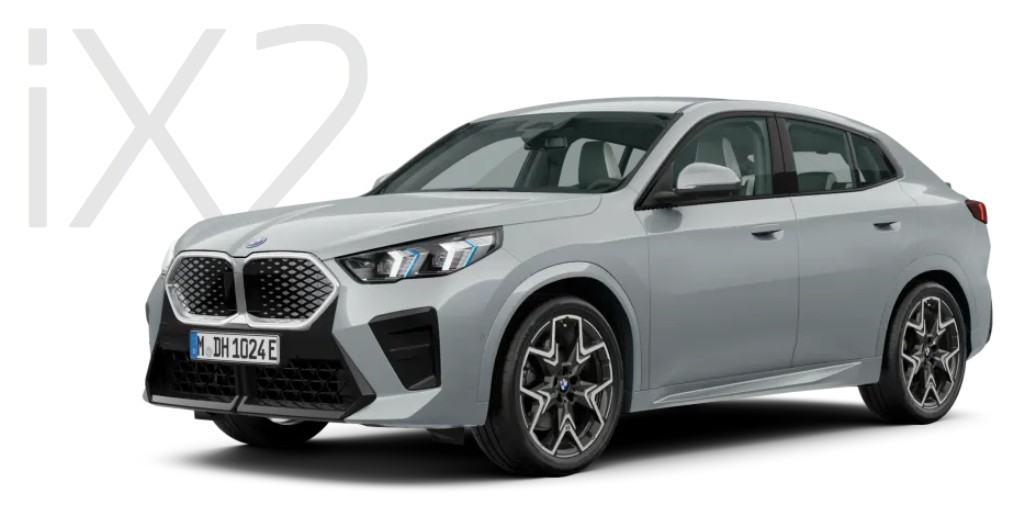
Choosing between the BMW iX2 vs iX1 looks simple until we spend a few minutes with both cars. Underneath, they are close relatives. They share much of their electric technology, offer similar powertrain choices, and even use the same 2,692 mm wheelbase. Yet BMW has given them noticeably different personalities. One feels like the sensible pair of premium walking shoes; the other is the same shoe with a sharper suit wrapped around it.
The BMW iX1 is the more traditional small electric SUV. It is taller, squarer, practical, and clearly aimed at buyers who want one premium EV to handle commuting, family duties, shopping trips, and holidays.
The BMW iX2, meanwhile, sacrifices some of that traditional SUV shape for a lower coupé-style roofline and more expressive appearance. Interestingly, that does not make it dramatically less practical. In fact, its standard luggage compartment is slightly larger, although the iX1 offers more maximum cargo capacity once the rear seats are folded.
So, which one should we buy?
For most families, we would lean toward the BMW iX1. Buyers who place style, efficiency, and road presence higher on the priority list may find the BMW iX2 considerably more tempting.
Let's dig deeper.
Content in this publication
- BMW iX2 vs iX1 at a Glance
- What Is the Main Difference Between the BMW iX1 and iX2?
- BMW iX2 vs iX1 Exterior Design
- BMW iX1 vs iX2 Dimensions
- BMW iX2 vs iX1 Interior
- BMW iX2 vs iX1 Boot Space
- BMW iX2 vs iX1 Passenger Space
- BMW iX1 eDrive20 vs iX2 eDrive20
- BMW iX1 xDrive30 vs iX2 xDrive30
- BMW iX2 vs iX1 Range
- Real-World Range: What Should We Expect?
- BMW iX2 vs iX1 Battery
- BMW iX1 vs iX2 Charging Speed
- BMW iX2 vs iX1 Driving Experience
- BMW iX1 vs iX2 Comfort
- BMW iX2 vs iX1 Technology
- BMW iX1 vs iX2 Practicality
- BMW iX2 vs iX1 for Families
- BMW iX2 vs iX1 for Commuting
- BMW iX2 vs iX1 for Long Journeys
- BMW iX1 vs iX2 Towing
- BMW iX2 vs iX1 Weight
- BMW iX2 vs iX1: Which Is More Efficient?
- BMW iX2 vs iX1: Which Looks More Premium?
- BMW iX1 vs iX2 Pros and Cons
- Which BMW Should We Buy: iX1 or iX2?
- BMW iX2 vs iX1: Our Verdict
- FAQs About BMW iX2 vs iX1
BMW iX2 vs iX1 at a Glance
Before we dissect every detail, here is the basic picture based on current UK-market specifications. Depending on country, trim levels and quoted ranges can differ.
| Feature | BMW iX1 | BMW iX2 |
|---|---|---|
| Body style | Compact SUV | Coupé-style compact SUV |
| Length | 4,500 mm | 4,554 mm |
| Width | 1,845 mm | 1,845 mm |
| Height | 1,616 mm | 1,560 mm |
| Wheelbase | 2,692 mm | 2,692 mm |
| Boot capacity | 490 litres | 525 litres |
| Maximum cargo space | 1,495 litres | 1,400 litres |
| eDrive20 power | 204 hp | 204 hp |
| xDrive30 power | Up to 313 hp* | Up to 313 hp* |
| eDrive20 drivetrain | Front-wheel drive | Front-wheel drive |
| xDrive30 drivetrain | All-wheel drive | All-wheel drive |
| Maximum DC charging | 130 kW | 130 kW |
*Official power figures can be presented differently depending on market and measurement convention. BMW's spring-2026 German-market update lists 150 kW/204 hp for the eDrive20 and 225 kW/306 hp for the xDrive30, while current BMW UK specifications quote up to 230 kW/313 hp in relevant xDrive30 listings.
The surprising part is how closely matched these EVs really are. We are not comparing two completely different engineering philosophies. We are choosing between two interpretations of the same premium electric crossover idea.
What Is the Main Difference Between the BMW iX1 and iX2?
The biggest difference is shape and character.
The BMW iX1 wears conventional SUV clothing. Its roof stays relatively high toward the rear, creating a square passenger compartment and giving the vehicle a practical, upright stance.
The iX2 takes a different path. Its roofline slopes down more aggressively, producing the sort of SUV-coupé silhouette BMW has used on models such as the X4 and X6.
That difference is obvious in the numbers. The iX2 is approximately 54 mm longer yet 56 mm lower than the iX1, while width and wheelbase remain identical at 1,845 mm and 2,692 mm respectively.
In other words, the iX2 stretches horizontally while the iX1 reaches upward.
That seemingly small distinction changes almost everything about how the two cars look and feel.
BMW iX2 vs iX1 Exterior Design
The iX1 Takes the Traditional SUV Route
The iX1 looks exactly how many buyers expect a compact BMW SUV to look.
Its taller roof, upright tail, large kidney grille treatment, pronounced wheel arches, and relatively boxy proportions make it instantly recognizable as a crossover.
There is a certain honesty to the design. The iX1 does not pretend to be a sports coupé. It looks like a useful car that happens to wear an expensive jacket.
That matters.
Some buyers want an electric vehicle that quietly fits into family life instead of making a fashion statement every time it enters a supermarket car park.
The iX2 Is the Fashion-Forward Choice
The iX2 is more dramatic.
Its lower profile and descending roofline make the car look longer and sportier than the iX1, even though the two share the same wheelbase. BMW's official dimensions confirm that the iX2 stretches to 4,554 mm compared with 4,500 mm for the iX1.
The visual result is almost like comparing a backpack with a messenger bag. Both carry roughly the same essentials, but one makes a much stronger stylistic statement.
Which Design Will Age Better?
That is subjective, but the iX1 arguably has the safer shape.
Traditional SUVs rarely look radically outdated because their proportions are dictated partly by practicality.
The iX2 is more adventurous. Buyers who love its coupé roof will probably never look twice at the iX1. Buyers who dislike SUV coupés probably will not be persuaded by technical specifications.
This may be the biggest emotional split in the entire comparison.
BMW iX1 vs iX2 Dimensions
Dimensions help explain why these cars behave differently despite their shared foundations.
The current BMW iX1 measures 4,500 mm long, 1,845 mm wide, and 1,616 mm tall, with a 2,692 mm wheelbase. The iX2 measures 4,554 mm long, 1,845 mm wide, and 1,560 mm tall, while retaining that same 2,692 mm wheelbase.
That means parking difficulty should be broadly similar, although the iX2's extra length is worth remembering in tight spaces.
The biggest practical distinction is height.
Those additional millimetres in the iX1 translate into a more upright cabin and a shape that naturally suits passengers and bulky luggage.
BMW iX2 vs iX1 Interior
Inside, the family resemblance becomes much stronger.
Both cars embrace BMW's modern minimalist cabin philosophy, with a curved digital display arrangement, relatively few traditional physical buttons, contemporary infotainment, and an elevated centre console area.
The atmosphere is unmistakably modern BMW rather than old-school luxury.
Instead of covering the dashboard with dozens of switches, the company increasingly routes functions through digital interfaces. Some drivers will appreciate the clean appearance. Others may miss having a dedicated physical button for every routine adjustment.
Which Interior Feels More Spacious?
The iX1 generally has the psychological advantage.
Its higher roof creates a more open cabin atmosphere, particularly when we sit in the rear seats. The squared-off body shape also makes it feel like the more natural family SUV.
The iX2 does not suddenly become cramped because of its roofline, but taller rear occupants are more likely to appreciate the iX1.
That is one of those differences that specifications alone cannot fully communicate.
Sit inside both cars immediately one after another and the contrast becomes much clearer.
BMW iX2 vs iX1 Boot Space
Here the comparison gets interesting.
The BMW iX1 provides 490 litres of luggage capacity, expanding to 1,495 litres when maximum cargo space is required. BMW explicitly quotes the iX1 at 490–1,495 litres.
The iX2 offers 525 litres with the seats upright, but maximum capacity reaches 1,400 litres.
So which is better?
It depends on what we carry.
iX2 Wins for Everyday Boot Volume
With all seats in use, the iX2's quoted 525 litres beats the iX1's 490 litres.
That difference could matter when carrying groceries, suitcases, pushchairs, or everyday luggage.
iX1 Wins When the Rear Seats Are Folded
Fold everything down and the result reverses.
The iX1 reaches 1,495 litres versus 1,400 litres in the iX2.
That taller, squarer body suddenly earns its keep.
If we regularly transport boxes, bicycles, furniture, dogs, or bulky equipment, the iX1's more conventional SUV shape becomes the better tool.
BMW iX2 vs iX1 Passenger Space
Passenger comfort follows a similar pattern.
Both cars use the same 2,692 mm wheelbase, so fundamental cabin packaging is closely related.
Front-seat occupants should feel comfortable in either vehicle. The meaningful difference emerges farther back.
The iX1's taller roof is naturally friendlier to rear passengers, particularly adults. Getting in and out can also feel slightly more natural because the roof does not fall away as dramatically.
For couples who rarely use the rear seats, this difference may be irrelevant.
For parents carrying growing teenagers, grandparents, or adult passengers, the iX1 starts making more sense.
BMW iX1 eDrive20 vs iX2 eDrive20
The eDrive20 versions are arguably the sweet spot for buyers focused on efficiency rather than outright speed.
BMW currently lists both the iX1 eDrive20 and iX2 eDrive20 with 150 kW/204 hp and 250 Nm, using front-wheel drive and a single-speed electric transmission in UK specifications. Both reach 62 mph in a quoted 8.6 seconds.
That performance will not snap necks at traffic lights, but it is perfectly appropriate for a compact premium EV.
Remember how electric motors deliver torque immediately.
Even an 8.6-second 0–62 mph figure can feel energetic around town because there is no conventional gearbox waiting to downshift and no combustion engine searching for its power band.
You may be interested in reading BMW iX2 vs iX: Which Electric BMW SUV Makes More Sense?
Press the accelerator and the car simply goes.
Why the iX2 eDrive20 Is Particularly Interesting
Efficiency.
BMW's current UK specifications put the iX2 eDrive20 at approximately 4.1–4.3 miles/kWh and 305–319 miles of WLTP range, depending on specification. The comparable iX1 eDrive20 listings are roughly 3.9–4.2 miles/kWh with around 283–308 miles of WLTP range, although individual trim listings can differ slightly.
That suggests the iX2's lower, more aerodynamic body can provide a meaningful efficiency advantage.
BMW's spring 2026 updates reinforce the same theme: German-market figures list the iX2 eDrive20 at 15.7–15.6 kWh/100 km versus 16.1–16.0 kWh/100 km for the iX1 eDrive20.
BMW iX1 xDrive30 vs iX2 xDrive30
Move to the xDrive30 and the personality changes dramatically.
BMW's current UK technical information gives the iX1 xDrive30 up to 230 kW/313 hp and 494 Nm, with all-wheel drive and a quoted 0–62 mph time of 5.6 seconds.
The iX2 xDrive30 uses the same broad dual-motor performance concept, with all-wheel drive and similar output depending on market specification. BMW's spring-2026 German-market information lists both xDrive30 models at 225 kW/306 hp.
This is where both compact SUVs become genuinely quick.
Five-and-a-half seconds to motorway speed is enough to make an ordinary overtaking manoeuvre feel effortless.
Do We Actually Need xDrive30 Performance?
Probably not.
Do we enjoy it?
Absolutely.
That distinction matters because the eDrive20 is already more than adequate for commuting and motorway work.
The xDrive30 makes sense for buyers who specifically want stronger acceleration, all-wheel drive, or additional traction in difficult conditions.
BMW iX2 vs iX1 Range
Range is one area where the sleek iX2 can justify its more dramatic body.
Current UK specifications show an iX2 eDrive20 maximum WLTP range of approximately 319 miles, whereas iX1 eDrive20 figures vary by configuration and can reach slightly above 300 miles. BMW's iX1 model page currently quotes up to roughly 312 miles for certain eDrive20 configurations.
BMW's March 2026 production update is even more revealing.
With silicon-carbide inverter technology introduced as part of the spring-2026 changes, BMW said maximum range would increase, with the iX2 eDrive20 reaching as much as 512 km and the iX2 xDrive30 up to 477 km under the relevant German-market WLTP configuration.
The broader lesson is simple:
If maximum electric range is one of our highest priorities, the iX2 deserves serious attention.
Its lower shape is not merely cosmetic.
Real-World Range: What Should We Expect?
WLTP numbers are useful for comparisons, but they should never be treated like promises carved in granite.
Actual EV range changes with:
- speed,
- temperature,
- wheel and tyre choice,
- heating and air-conditioning use,
- traffic,
- elevation,
- payload,
- driving style,
- and battery condition.
BMW itself notes that real-life electric range depends on factors including cargo weight, driving style, route, weather, auxiliary electrical consumption, tyres, and battery condition.
So rather than obsessing over one laboratory figure, we should view the official range as a comparison tool.
On that basis, the iX2 generally has the efficiency advantage.
BMW iX2 vs iX1 Battery
The two vehicles are extremely closely matched here.
Current UK technical data lists roughly 65.2 kWh battery capacity for the eDrive20 versions, while xDrive30 figures are around 65 kWh depending on specification.
Because the usable energy supply is fundamentally similar, differences in range are driven more by efficiency and vehicle configuration than by one model carrying a dramatically larger battery.
Think of two runners carrying similar water bottles.
The one using slightly less water per kilometre travels farther.
That is essentially what the iX2's aerodynamic advantage accomplishes.
BMW iX1 vs iX2 Charging Speed
There is almost nothing separating the two cars here.
Current BMW UK specifications list maximum DC charging at 130 kW, with a quoted minimum 10–80% charging time of approximately 29 minutes under appropriate conditions. AC charging is listed at 11 kW, with 22 kW support available depending on configuration.
BMW also quotes around 85–100 miles of added range after ten minutes of high-power charging for relevant eDrive20 configurations.
Is 130 kW Fast Enough?
It is respectable rather than class-leading.
Some newer EV architectures can charge substantially faster.
However, headline charging power is not everything. What matters on a journey is how consistently a car maintains useful charging speeds across its battery curve.
For everyday ownership, home charging remains the bigger factor for many buyers.
Plug in overnight, wake up with a replenished battery, and public rapid charging becomes something we mainly worry about on longer journeys.
BMW iX2 vs iX1 Driving Experience
Although the cars share their mechanical foundation, the iX2 visually promises more sportiness.
Its lower body gives the driver a slightly more coupé-like impression, while the iX1 feels more like a traditional crossover.
Neither vehicle behaves like an old-fashioned, softly sprung family SUV.
The battery sits low in the chassis, helping lower the centre of gravity, while immediate electric torque makes both cars responsive in urban driving.
The xDrive30 versions add enough performance to turn either one into something unexpectedly rapid.
But we should keep our expectations realistic.
These are still compact electric SUVs carrying substantial battery weight. Their mission is to combine refinement, usability, technology, and performance rather than behave like lightweight sports cars.
BMW iX1 vs iX2 Comfort
For everyday comfort, the iX1 has a slight conceptual advantage because buyers typically choose it with practicality in mind.
Wheel size matters enormously here.
Large wheels may look spectacular underneath either car, but lower-profile tyres can make broken roads feel more pronounced.
Anyone prioritizing comfort should therefore pay close attention to wheel and suspension configuration rather than assuming the iX1 or iX2 badge alone determines ride quality.
A test drive over the roads we actually use every day is worth considerably more than reading twenty specification sheets.
BMW iX2 vs iX1 Technology
Technology is not a major deciding factor because the two cars belong to the same generation of BMW's compact architecture.
Both offer BMW's modern curved-display environment and heavily digital user interface.
That means our decision should probably not revolve around infotainment unless specific equipment differs between trims in our market.
Instead, compare actual cars.
One vehicle may include upgraded audio, parking assistance, larger wheels, heated seats, additional driver assistance, or premium packages that the other does not.
Trim level can sometimes make a bigger difference than model designation.
BMW iX1 vs iX2 Practicality
This is where the iX1 earns its strongest victory.
Yes, the iX2 actually has the larger quoted standard boot.
But practicality involves far more than litres.
We also need to consider:
You may be interested in readingBMW iX2 vs iX: Which Electric BMW SUV Makes More Sense?You may be interested in reading
BMW iX2 vs Mercedes EQA: Which Electric SUV Is Better?- roof height,
- rear passenger access,
- shape of the cargo area,
- visibility,
- loading bulky objects,
- family use,
- and how frequently the rear seats are occupied.
The iX1's tall, conventional SUV body simply gives us fewer compromises.
If we are buying one vehicle to do everything, that matters enormously.
BMW iX2 vs iX1 for Families
For families, we would choose the iX1.
Its 490-litre boot is already substantial, and maximum luggage volume grows to 1,495 litres with the rear seating area folded.
More importantly, its taller roof and more traditional body make passenger accommodation easier to live with.
Installing child seats, carrying teenagers, transporting luggage, or loading awkward equipment should feel slightly less compromised.
The iX2 can absolutely work as a family car.
It simply prioritizes visual drama more strongly.
BMW iX2 vs iX1 for Commuting
This competition is much closer.
For a predominantly solo commuter, the iX2 eDrive20 may actually be the more appealing machine.
Why?
Its lower body contributes to excellent official efficiency figures, and the eDrive20's 204 hp should be plenty for normal driving. Current BMW specifications also give the iX2 eDrive20 a slightly stronger official range outlook than the equivalent iX1 in comparable configurations.
If rear-seat headroom barely matters, we may as well enjoy the sleeker car.
BMW iX2 vs iX1 for Long Journeys
Again, this depends on priorities.
The iX2's range advantage can reduce charging anxiety.
The iX1's cabin shape may be preferable for four adults travelling together.
Charging speed is effectively comparable, since both support up to 130 kW DC under current UK specifications.
For two occupants with luggage, we would lean toward the iX2.
For four occupants plus luggage, the iX1 becomes more compelling.
BMW iX1 vs iX2 Towing
Towing specifications vary by powertrain.
BMW UK's current iX1 data lists up to 750 kg braked trailer capacity for eDrive20 configurations and up to 1,200 kg for xDrive30 versions.
BMW's UK iX2 data similarly lists 750 kg for relevant eDrive20 configurations.
Anyone buying specifically to tow should confirm the exact approved figure for their market, trim, production date, and factory towing equipment before purchase.
BMW iX2 vs iX1 Weight
Electric cars are not featherweights.
Current UK specifications list an iX1 eDrive20 curb weight of around 1,940 kg, while an iX2 eDrive20 is around 1,960 kg. Corresponding xDrive30 examples rise to roughly 2,085 kg for the iX1 and 2,095 kg for the iX2.
Despite looking sportier, therefore, the iX2 is not meaningfully lighter.
Its athletic appearance comes from proportion and design rather than radical weight reduction.
BMW iX2 vs iX1: Which Is More Efficient?
The iX2 wins.
BMW's spring-2026 German-market figures list:
- iX1 eDrive20: 16.1–16.0 kWh/100 km
- iX2 eDrive20: 15.7–15.6 kWh/100 km
- iX1 xDrive30: 17.2–17.1 kWh/100 km
- iX2 xDrive30: 16.7–16.5 kWh/100 km.
Those differences look small.
Over thousands of kilometres, however, small efficiency improvements accumulate.
More importantly, efficiency helps range without needing a larger and heavier battery.
That is arguably the iX2's cleverest trick.
The iX2 probably attracts more attention.
Its dramatic silhouette communicates lifestyle and design in a way the more conventional iX1 deliberately avoids.
But premium does not automatically mean stylish.
Some buyers associate luxury with elegance and restraint. Others want visual theatre.
The iX1 whispers.
The iX2 raises its voice.
Neither approach is objectively better.
BMW iX1 vs iX2 Pros and Cons
BMW iX1 Pros
- Taller, more practical SUV shape
- Better maximum cargo capacity
- More family-friendly packaging
- Easier rear-seat accommodation
- Similar performance to equivalent iX2 versions
- Same basic rapid-charging capability
- Strong everyday usability
BMW iX1 Cons
- Less distinctive styling
- Slightly weaker official efficiency than comparable iX2 versions
- Lower standard boot volume on current figures
- More conventional road presence
BMW iX2 Pros
- Sportier coupé-SUV styling
- Larger quoted boot with rear seats upright
- Stronger official efficiency
- Potentially better electric range
- Same wheelbase as iX1
- Same 204 hp eDrive20 performance
- Rapid xDrive30 option available
BMW iX2 Cons
- Lower roofline
- Less maximum luggage capacity
- Rear-seat packaging is less naturally practical
- Style may divide opinion
- Its sportier appearance does not mean it is substantially lighter
Which BMW Should We Buy: iX1 or iX2?
Here is the simplest way to decide.
Buy the BMW iX1 if:
We carry passengers frequently, have children, regularly load bulky objects, want maximum versatility, prefer a conventional SUV shape, or simply want the most rational option.
Buy the BMW iX2 if:
We normally travel alone or with one passenger, care strongly about styling, want slightly better efficiency and range potential, and do not mind sacrificing some maximum cargo versatility.
Choose eDrive20 if:
Efficiency and value matter more than performance.
Its 204 hp output is perfectly adequate for ordinary roads, and the single-motor setup delivers the longest-range potential in the range.
Choose xDrive30 if:
We want all-wheel drive and genuinely quick acceleration.
Current BMW specifications place the iX1 xDrive30 at around 5.6 seconds from 0–62 mph, illustrating how substantial the performance jump is.
BMW iX2 vs iX1: Our Verdict
There is no dramatic loser here because these two electric BMWs are fundamentally close relatives.
The BMW iX1 is the better all-rounder.
Its taller body, more accommodating proportions, 1,495-litre maximum cargo capacity, and family-friendly character make it easier to recommend to the widest range of drivers.
The BMW iX2 is the more emotional choice, but calling it irrational would be unfair.
It provides a larger 525-litre boot with the seats upright and can deliver superior official efficiency and range in comparable powertrain configurations.
Think of the iX1 as the Swiss Army knife and the iX2 as the designer folding knife.
Both perform the fundamental job.
One simply values versatility while the other brings a little more theatre.
If we needed one electric BMW for family life, we'd choose the iX1 eDrive20.
If we wanted the more interesting-looking daily driver and rarely carried tall adults in the rear, the iX2 eDrive20 would be extremely difficult to resist.
And if acceleration matters more than restraint?
That is where the xDrive30 enters the conversation.
FAQs About BMW iX2 vs iX1
1. Is the BMW iX2 bigger than the iX1?
The iX2 is longer but lower. BMW UK lists the iX2 at 4,554 mm long and 1,560 mm high, compared with 4,500 mm long and 1,616 mm high for the iX1. Both are 1,845 mm wide and use a 2,692 mm wheelbase.
2. Which has more boot space, BMW iX1 or iX2?
With the rear seats upright, the iX2 wins with 525 litres versus 490 litres for the iX1. With maximum cargo space required, however, the iX1 expands to 1,495 litres compared with 1,400 litres for the iX2.
3. Does the BMW iX2 have more range than the iX1?
Generally, comparable iX2 versions can achieve slightly better official efficiency and range because of their lower, more aerodynamic body. BMW's spring-2026 figures also show lower energy consumption for both iX2 powertrains than their corresponding iX1 versions.
4. Are the BMW iX1 and iX2 batteries the same size?
They are very closely matched. Current UK technical specifications quote around 65.2 kWh for relevant eDrive20 versions and approximately 65 kWh for xDrive30 configurations, depending on the exact model.
You may be interested in readingBMW iX2 vs iX: Which Electric BMW SUV Makes More Sense?You may be interested in reading
BMW iX2 vs Mercedes EQA: Which Electric SUV Is Better?You may be interested in reading
 Ford Ka vs Hyundai i10: Which Small Car Is Better?
5. Which is better, BMW iX1 or BMW iX2?
The iX1 is generally better for families and buyers prioritizing passenger space, versatility, and maximum luggage capacity. The iX2 suits buyers who value coupé styling and slightly stronger efficiency and range potential. Neither is universally better—the right choice depends on whether practicality or design matters more.
If you want to know other articles similar to BMW iX2 vs iX1: Which Electric BMW SUV Is Better? you can visit the category Models.
Honda Passport vs Toyota 4Runner: Which SUV Is Better?
Honda Passport vs Ford Bronco: Which SUV Is Better?
Honda Passport vs Ford Explorer: Which SUV Is Better?
Honda Passport or Pilot: Which SUV Is Better?
Honda Passport vs Jeep Grand Cherokee: Which SUV Is Better?
Honda Passport vs Nissan Pathfinder: Which SUV Is Better?
Leave a Reply
More content of your interest