

BMW iX2 vs iX: Which Electric BMW SUV Makes More Sense?

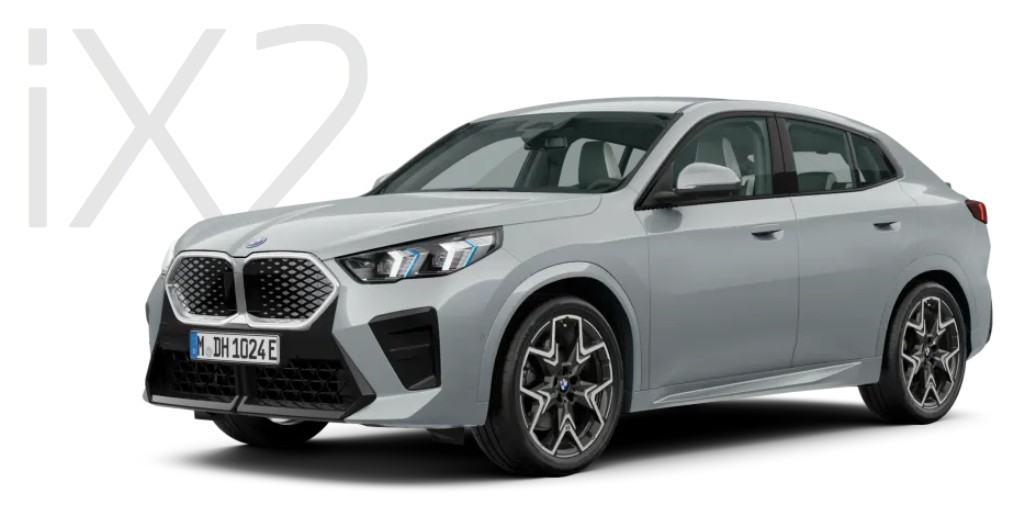
The BMW iX2 vs iX comparison is an interesting one because these two electric BMWs share a badge, a premium identity, and zero tailpipe emissions, yet they approach the electric SUV idea from completely different directions.
The BMW iX2 is the sharper, smaller, more urban-minded choice. Think of it as the fashionable electric crossover that arrives wearing running shoes and a fitted jacket. The BMW iX, meanwhile, feels more like BMW's electric luxury lounge on wheels. It is substantially larger, more powerful in comparable configurations, more spacious, and designed to make long-distance driving feel almost effortless.
So, which one should we choose?
That depends less on which car is objectively "better" and more on what we expect from an electric BMW. If we want compact dimensions, easier parking, a sporty coupé-like shape, and lower energy consumption, the iX2 has a strong case. If we value maximum comfort, range, passenger room, towing ability, and flagship-level performance, the iX starts pulling ahead.
Let's break the differences down properly.
Content in this publication
- BMW iX2 vs iX at a Glance
- What Is the Main Difference Between BMW iX2 and iX?
- BMW iX2 vs iX Dimensions
- BMW iX2 vs iX Exterior Design
- BMW iX2 vs iX Interior
- BMW iX2 vs iX Boot Space
- BMW iX2 vs iX Range
- BMW iX2 vs iX Performance
- BMW iX2 vs iX Driving Experience
- BMW iX2 vs iX Efficiency
- BMW iX2 vs iX Charging Speed
- BMW iX2 vs iX Towing Capacity
- BMW iX2 vs iX Technology
- BMW iX2 vs iX Luxury
- BMW iX2 vs iX for City Driving
- BMW iX2 vs iX for Long Trips
- BMW iX2 vs iX for Families
- BMW iX2 vs iX Running Costs
- BMW iX2 vs iX: Pros and Cons
- BMW iX2 vs iX: Which One Should We Buy?
- BMW iX2 vs iX Verdict
- FAQs About BMW iX2 vs iX
BMW iX2 vs iX at a Glance
Before diving into the details, here's the simplest way to understand these two electric SUVs.
| Category | BMW iX2 | BMW iX |
|---|---|---|
| Vehicle type | Compact electric SUV-coupé | Large luxury electric SUV |
| Length | 4,554 mm | Around 4,965 mm |
| Seating | 5 | 5 |
| Cargo space | 525–1,400 L | 500–1,750 L |
| Maximum published range | Up to 478 km WLTP | Up to around 620 km WLTP |
| Battery capacity | 64.8 kWh | Up to 108.8 kWh |
| Drivetrain | FWD or AWD depending on version | AWD |
| Maximum DC charging | 130 kW | Up to 195 kW |
| Best suited to | City use and compact luxury | Long trips and premium comfort |
BMW lists the current iX2 at 4,554 mm long, while the iX stretches to roughly 4,965 mm depending on version. The iX also has a 3,000 mm wheelbase compared with 2,692 mm for the iX2, immediately explaining why the larger model feels significantly roomier inside.
What Is the Main Difference Between BMW iX2 and iX?
The biggest difference is simple: they belong to different size and luxury classes.
The BMW iX2 is based around BMW's compact crossover philosophy. Its sloping roof, relatively tidy footprint, and sporty appearance make it suitable for drivers who want an EV that feels premium without becoming enormous.
The BMW iX sits much higher in BMW's electric hierarchy. It was conceived as a dedicated luxury EV rather than simply an electric derivative of a conventional compact crossover.
That difference influences almost everything else: cabin width, battery size, power, ride comfort, towing capability, charging speed, range, and price.
In other words, comparing the BMW iX2 with the iX is a little like comparing a premium city apartment with a large country house. Both can be luxurious, but they solve very different problems.
BMW iX2 vs iX Dimensions
Size may actually be the most important factor for many buyers.
The BMW iX2 measures 4,554 mm long, 1,845 mm wide, and 1,560 mm tall. Its wheelbase is 2,692 mm. BMW's current iX specifications list roughly 4,965 mm of length, 1,970 mm of width, 1,695 mm of height, and a 3,000 mm wheelbase for the iX xDrive45.
That makes the iX roughly:
- 411 mm longer
- 125 mm wider
- 135 mm taller
- 308 mm longer between the axles
Those numbers sound clinical on paper, but we notice them immediately in real life.
Which Is Easier to Drive in the City?
The iX2.
Its smaller dimensions make narrow streets, compact parking spaces, underground garages, and crowded shopping centres less stressful.
The iX isn't ridiculously difficult to drive, but at nearly five metres long and more than two metres wide with mirrors, it demands more attention in tight spaces. BMW lists the iX at 2,230 mm wide including mirrors, compared with 2,104 mm for the iX2.
If our daily routine involves city centres more often than motorways, that difference matters.
Parking Advantage: BMW iX2
The iX2 wins here because it asks less of the driver.
The iX compensates with driver-assistance technology, but physics still matters. Cameras can help us squeeze into a space; they cannot make the vehicle physically narrower.
BMW iX2 vs iX Exterior Design
Styling may be subjective, but these two BMWs clearly target different personalities.
The iX2 follows the SUV-coupé formula. Its roofline drops toward the rear, giving the car a sporty silhouette. It looks younger, sharper, and arguably more conventional than the futuristic iX.
The iX makes a much stronger visual statement.
Its large proportions, distinctive front design, broad body, slim lighting elements, and unusual surfaces give it the appearance of a concept vehicle that escaped from an auto show.
Some buyers love that.
Others may prefer the cleaner, more familiar proportions of the iX2.
Which BMW Looks Sportier?
The iX2 looks sportier, particularly because of its coupé-like roofline and more compact stance.
The iX looks more expensive and imposing.
That distinction is important. Sporty and luxurious aren't always the same thing.
BMW iX2 vs iX Interior
Step inside and the gap between the cars becomes more obvious.
Both feature BMW's modern digital design philosophy, but the iX feels more like a flagship environment.
Its wider cabin and longer wheelbase create a sense of space that the iX2 simply cannot reproduce.
The iX2 still feels premium, but its cabin is packaged more like a conventional compact SUV. The iX uses its greater width and electric-focused architecture to create a much airier environment.
Front Seat Comfort
Both models can provide excellent front-seat comfort, but the iX is the stronger long-distance companion.
There's more room to stretch out, and the entire driving environment feels less constrained.
The iX2 places us closer to the action. That can actually feel better when we're driving quickly on narrow roads.
Rear Seat Space
This is where the iX establishes a clear advantage.
Its 3,000 mm wheelbase gives BMW considerably more room to work with than the iX2's 2,692 mm wheelbase.
Adults travelling regularly in the second row will appreciate the iX.
Families with growing children may also find that the iX remains comfortable for longer as those children become teenagers.
Which Is Better for Families?
For smaller families living in cities, the iX2 could actually be the more practical overall package.
For families that regularly travel with four or five people, the iX offers the better cabin.
BMW iX2 vs iX Boot Space
Here's where the comparison becomes surprisingly interesting.
The BMW iX2 provides 525 litres of luggage capacity with the rear seats in place and up to 1,400 litres when they are folded. The iX provides around 500 litres behind the rear seats but expands to as much as 1,750 litres with the seats folded.
Wait — the smaller iX2 has the larger official seats-up boot figure?
Yes.
Packaging, body shape, and measurement methods can create unexpected results.
However, once the seats are folded, the iX's much larger body becomes obvious.
Which Has the More Useful Cargo Area?
If we routinely carry several suitcases but keep the rear seats upright, the difference may be smaller than expected.
If we frequently haul bulky furniture, bicycles, sports equipment, or large boxes, the iX's maximum 1,750-litre capacity gives it a meaningful advantage.
BMW iX2 vs iX Range
Range could be the deciding factor.
BMW currently lists the iX2 eDrive20 with up to 478 km of WLTP range, while the iX2 xDrive30 is listed at up to 395 km in BMW Australia's technical data. Both use a 64.8 kWh battery.
The iX operates on another level.
The iX xDrive45 is listed with up to 616 km, while another iX configuration on BMW's current technical page reaches approximately 620 km WLTP with a 108.8 kWh battery.
You may be interested in reading BMW iX2 vs Mercedes EQA: Which Electric SUV Is Better?
That's a substantial advantage.
Why Does the iX Travel Farther?
Mostly because it carries a much bigger battery.
The iX2 uses a 64.8 kWh battery, whereas current iX versions can use battery capacities of 94.3 kWh or 108.8 kWh depending on configuration.
The iX is heavier and requires more energy to move, but its enormous battery reserve more than compensates.
Is the iX2 Range Enough?
For most daily routines, absolutely.
Even a realistic range below the official WLTP figure can comfortably cover commuting, shopping, school runs, and typical weekend driving for many owners.
The iX becomes more attractive when we frequently drive between cities.
BMW also notes that actual electric range varies with factors including driving style, road conditions, temperature, heating, air-conditioning, and pre-conditioning.
Best Long-Distance EV: BMW iX
If motorway travel dominates our life, the larger iX makes the stronger case.
BMW iX2 vs iX Performance
Neither vehicle is slow.
The BMW iX2 xDrive30 produces 230 kW, equivalent to 313 hp under BMW's published temporary boost figure, and 494 Nm of torque. It accelerates from 0–100 km/h in 5.6 seconds.
The front-wheel-drive iX2 eDrive20 is calmer, producing 150 kW or 204 hp and completing 0–100 km/h in 8.6 seconds.
The iX raises the ceiling considerably.
BMW lists the iX xDrive45 with 300 kW or 408 hp, 700 Nm of torque, and a 0–100 km/h time of 5.1 seconds. Another current iX configuration produces 385 kW or 523 hp and reaches 100 km/h in 4.6 seconds.
Does the iX Feel Faster?
In stronger specifications, yes.
But speed isn't everything.
The iX2 xDrive30's 5.6-second sprint already puts it firmly into quick-car territory. In normal traffic, we rarely need more.
The iX delivers its performance with greater authority. It feels as though there's always another reserve of acceleration waiting beneath our right foot.
BMW iX2 vs iX Driving Experience
This is where personality enters the discussion.
The iX2 feels smaller because it is smaller. That makes it easier to place on a road and generally gives it the more agile personality.
The iX feels substantial.
Its larger footprint and significantly heavier curb weight naturally change the experience. BMW lists the iX xDrive45 at approximately 2,525 kg, while the iX2 xDrive30 weighs around 2,095 kg.
That's roughly 430 kg of difference.
We can feel that mass.
Which Is More Fun on a Twisty Road?
We'd lean toward the iX2.
It isn't necessarily the fastest, but its smaller dimensions make it easier to enjoy on narrow roads.
Which Is Better on the Highway?
The iX.
It feels like it was born for sweeping along motorways.
Its size becomes an advantage rather than a disadvantage once roads open up.
BMW iX2 vs iX Efficiency
The smaller BMW wins the efficiency argument.
BMW lists the iX2 eDrive20 at around 15.3 kWh/100 km WLTP, while the xDrive30 is listed around 16.5–18.5 kWh/100 km depending on specification.
The iX consumes more energy, with BMW publishing figures around 20 kWh/100 km or slightly above for current versions.
That shouldn't surprise us.
Moving a larger, heavier luxury SUV through the air requires more electricity.
Which Will Cost Less to Charge?
Assuming identical electricity prices and similar mileage, the iX2 should generally cost less per kilometre because it consumes less energy.
That's one of its strongest practical advantages.
BMW iX2 vs iX Charging Speed
Battery size isn't the only thing that matters. Charging speed does too.
The BMW iX2 supports up to 130 kW DC charging, with BMW listing approximately 29 minutes for a 10–80% charge under suitable conditions.
The iX can charge faster.
BMW lists up to 175 kW for the iX xDrive45 and up to 195 kW for a larger-battery version. Official 10–80% times are approximately 34–35 minutes.
"But isn't 35 minutes slower than 29?"
Technically, yes.
But remember that the iX is refilling a much larger battery.
Which Is Better for Road Trips?
The iX.
Higher DC charging power combined with significantly greater battery capacity and longer driving range gives it an obvious advantage when we're covering hundreds of kilometres in a day.
BMW iX2 vs iX Towing Capacity
Planning to tow?
The iX is substantially more capable.
BMW lists the iX2 xDrive30 with up to 1,200 kg of braked trailer capacity, while the iX can support up to 2,500 kg depending on configuration and equipment.
That's more than double.
Which Is Better for Caravans and Trailers?
The iX, without much debate.
Towing reduces EV range, so having the larger battery also becomes especially valuable when a trailer is attached.
BMW iX2 vs iX Technology
Both vehicles provide the digital ecosystem we expect from modern BMWs.
The difference is less about whether one has screens and connectivity and more about how luxurious the total experience feels.
The iX was designed as a technological showcase, so the cabin architecture has a stronger futuristic character.
The iX2 feels modern but more familiar.
For some of us, that's actually preferable.
You may be interested in readingBMW iX2 vs Mercedes EQA: Which Electric SUV Is Better?You may be interested in reading
 Ford Ka vs Hyundai i10: Which Small Car Is Better?
Not everyone wants their car interior to resemble the command deck of a spacecraft.
BMW iX2 vs iX Luxury
This category belongs to the iX.
The iX2 is premium.
The iX is luxurious.
There's a difference.
Premium means high-quality materials, technology, strong refinement, and prestige.
Luxury adds generous space, greater isolation from the outside world, more relaxed proportions, and the feeling that nothing had to be squeezed into a smaller footprint.
Is the iX Worth Paying More For?
It can be.
If we want maximum space, range, performance, comfort, and towing capability, the additional cost buys tangible improvements.
If we don't need those advantages, the iX2 could actually be the smarter purchase.
Paying for capability we rarely use is still paying for capability we rarely use.
BMW iX2 vs iX for City Driving
The iX2 wins.
Its smaller footprint:
- Fits parking spaces more easily
- Feels less intimidating on narrow streets
- Uses less energy
- Is easier to manoeuvre
- Still offers useful cargo capacity
- Still gives us genuine BMW EV performance
For someone living in a densely populated city, the iX may simply be more vehicle than necessary.
BMW iX2 vs iX for Long Trips
The iX wins.
The equation changes completely once we regularly travel long distances.
Its larger battery means fewer charging stops, while its more spacious cabin makes several hours behind the wheel less demanding.
Current BMW figures show a potential range advantage exceeding 100 km compared with the longest-range iX2 configuration.
Over one commute, that may not matter.
Across a 1,000-km road trip, it absolutely can.
BMW iX2 vs iX for Families
This isn't quite as straightforward.
Choose the iX2 if:
We have one or two children, drive mostly in town, want easier parking, and rarely travel with five adults.
Choose the iX if:
We regularly carry adults in the rear, take long family trips, tow trailers, or need maximum flexibility when the rear seats are folded.
The iX's 1,750-litre maximum luggage capacity makes it noticeably more adaptable when transporting bulky items.
BMW iX2 vs iX Running Costs
The iX2 should generally be the less expensive vehicle to operate.
It's lighter, consumes less electricity, and typically uses smaller-capacity components than the much larger flagship SUV.
But actual ownership costs depend heavily on country, insurance, charging tariffs, tyres, finance terms, specification, and local servicing policies.
We shouldn't buy either vehicle purely because "EVs are cheap to run."
Premium electric SUVs can still carry premium-sized expenses.
BMW iX2 vs iX: Pros and Cons
BMW iX2 Pros
- Compact dimensions
- Lower electricity consumption
- Sporty SUV-coupé styling
- Easier city driving
- Useful 525-litre boot
- Strong xDrive30 performance
- Up to 478 km WLTP range in the eDrive20
- More approachable than the flagship iX
Official BMW specifications support the iX2's 525-litre cargo capacity, 64.8 kWh battery and maximum published 478 km WLTP range for the eDrive20.
BMW iX2 Cons
- Less rear-seat room
- Smaller battery
- Lower maximum DC charging power
- Shorter maximum range
- Less luxurious than the iX
- Lower towing capacity
- Coupé roof styling won't appeal to everyone
BMW iX Pros
- Excellent long-distance range
- Much larger interior
- Strong acceleration
- Larger battery options
- Faster peak DC charging
- Up to 2,500 kg towing capacity
- Large maximum cargo volume
- Flagship-level comfort
BMW's current specifications list battery capacity as high as 108.8 kWh, DC charging up to 195 kW, and luggage capacity up to 1,750 litres for the iX configurations shown.
BMW iX Cons
- Much larger exterior dimensions
- Harder to park
- Heavier
- Higher energy consumption
- More expensive positioning
- Probably unnecessary for short urban journeys
BMW iX2 vs iX: Which One Should We Buy?
Here's the simplest answer.
Buy the BMW iX2 if we want a stylish, relatively compact electric BMW that works brilliantly as an everyday urban vehicle.
It's easier to park, more efficient, lighter, and still genuinely quick in xDrive30 form.
Buy the BMW iX if we want the full luxury-EV experience.
It has more space, more range, bigger batteries, more powerful configurations, faster peak charging, significantly greater towing capability, and a cabin better suited to long journeys.
Neither choice is wrong.
They're simply aimed at different lifestyles.
BMW iX2 Makes More Sense for Most Urban Drivers
There's something appealing about not buying more car than we need.
If 90% of our driving consists of commuting, errands, weekend trips, and school runs, the iX2 may deliver everything we realistically require.
The big iX could feel like using a private jet to travel across town.
BMW iX Makes More Sense as an All-Round Luxury EV
On the other hand, if this will be our only vehicle and we expect it to handle everything — family holidays, motorway trips, luggage, passengers, towing, winter journeys, and long-distance touring — the iX becomes easier to justify.
Its extra capability creates breathing room.
And breathing room is often what luxury is really about.
BMW iX2 vs iX Verdict
The BMW iX2 vs iX contest doesn't produce one universal winner.
Instead, we get two very different interpretations of an electric BMW SUV.
The iX2 is the sensible athlete. It's compact, efficient, stylish, fast enough, and practical enough for everyday life.
The iX is the luxury heavyweight. It's larger, stronger, roomier, longer-legged, and more relaxed.
If we live in a city and rarely drive enormous distances, we'd choose the BMW iX2.
If we regularly travel long distances, carry passengers, tow, or simply want BMW's more luxurious electric SUV experience, we'd choose the BMW iX.
Sometimes the smaller car is the smarter car.
Sometimes, though, the extra space and range of the flagship are exactly what make an EV easier to live with.
That's ultimately the question we need to answer: do we want maximum convenience around town, or maximum capability everywhere else?
FAQs About BMW iX2 vs iX
1. Is the BMW iX bigger than the iX2?
Yes. The current BMW iX is roughly 4,965 mm long with a 3,000 mm wheelbase, while the BMW iX2 measures 4,554 mm long with a 2,692 mm wheelbase. The iX is also wider and taller.
2. Which has more range, BMW iX2 or iX?
The BMW iX offers significantly greater maximum range. BMW currently lists up to approximately 620 km WLTP for certain iX configurations, while the iX2 eDrive20 reaches up to 478 km WLTP. Actual driving range varies with conditions and driving style.
3. Is the BMW iX2 faster than the iX?
Not in comparable high-performance configurations. The iX2 xDrive30 accelerates from 0–100 km/h in 5.6 seconds, while current iX versions listed by BMW can achieve 5.1 or 4.6 seconds depending on configuration.
You may be interested in readingBMW iX2 vs Mercedes EQA: Which Electric SUV Is Better?You may be interested in reading
Ford Ka vs Hyundai i10: Which Small Car Is Better?You may be interested in reading
Ford Ka vs Fiesta: Which Is Better for First-Time Buyers?4. Which is better for families, BMW iX2 or iX?
The iX is generally better for families prioritizing passenger space and long-distance comfort. The iX2 remains a good choice for smaller families that value compact dimensions and easier city driving.
5. Which is better value, BMW iX2 or iX?
For buyers who mainly need a premium electric crossover for everyday driving, the iX2 is likely the more rational choice. The iX becomes worthwhile when we actually benefit from its greater range, space, performance, charging capability, and towing capacity.
If you want to know other articles similar to BMW iX2 vs iX: Which Electric BMW SUV Makes More Sense? you can visit the category Models.
Honda Passport vs Toyota 4Runner: Which SUV Is Better?
Honda Passport vs Ford Bronco: Which SUV Is Better?
Honda Passport vs Ford Explorer: Which SUV Is Better?
Honda Passport or Pilot: Which SUV Is Better?
Honda Passport vs Jeep Grand Cherokee: Which SUV Is Better?
Honda Passport vs Nissan Pathfinder: Which SUV Is Better?
Leave a Reply
More content of your interest