

Ford Ka vs Fiesta: Which Is Better for First-Time Buyers?

Choosing a first car is a bit like choosing your first apartment. We want something affordable, easy to live with, forgiving when we make mistakes, and preferably not something that empties our bank account every time it needs attention.
That brings us to a classic Ford dilemma: Ford Ka vs Fiesta.
At first glance, the answer seems obvious. The Ka is smaller, simpler, and usually cheaper. The Fiesta is larger, more sophisticated, and more versatile. Case closed, right?
Not quite.
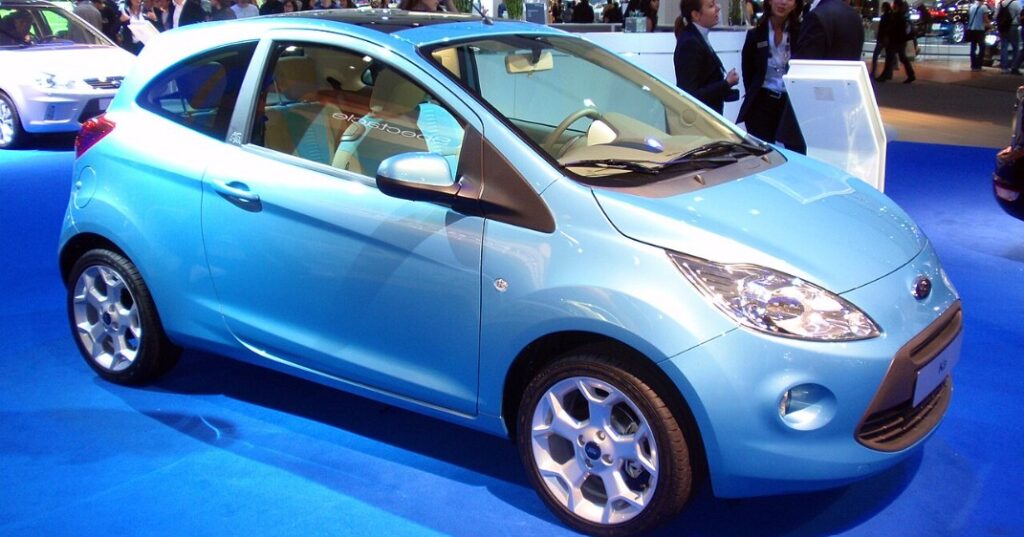
Both cars changed dramatically over their lifetimes. The original Ford Ka was a tiny three-door city car with unmistakable styling, while the later Ka+ became something much closer to a conventional five-door hatchback. Meanwhile, the Fiesta evolved through multiple generations from an inexpensive supermini into a surprisingly refined small car.
For a first-time buyer, therefore, the better choice depends not simply on which badge we prefer but on purchase price, insurance, fuel economy, practicality, reliability, driving experience, and how long we expect to keep the car.
Let’s break down the Ford Ka vs Fiesta comparison generation by generation and find out which one deserves a place on our driveway.
Content in this publication
- Ford Ka vs Fiesta at a Glance
- Understanding the Ford Ka Generations
- Understanding the Ford Fiesta Generations
- Ford Ka vs Fiesta Size
- Ford Ka vs Fiesta Interior Space
- Ford Ka vs Fiesta Boot Space
- Ford Ka vs Fiesta Engines
- Ford Ka vs Fiesta Fuel Economy
- Ford Ka vs Fiesta Driving Experience
- Ford Ka vs Fiesta Motorway Driving
- Ford Ka vs Fiesta Comfort
- Ford Ka vs Fiesta Reliability
- Older Ford Ka vs Older Fiesta
- Ford Ka vs Fiesta Maintenance Costs
- Ford Ka vs Fiesta Insurance
- Ford Ka vs Fiesta Safety
- Ford Ka vs Fiesta for New Drivers
- Ford Ka+ vs Fiesta
- Ford Ka vs Fiesta Used Prices
- What Should We Inspect Before Buying?
- Which Ford Ka Generation Is Best for a First Car?
- Which Ford Fiesta Generation Is Best for a First Car?
- Should First-Time Buyers Avoid Performance Fiestas?
- Ford Ka vs Fiesta for Students
- Ford Ka vs Fiesta for City Driving
- Ford Ka vs Fiesta for Long Trips
- Ford Ka vs Fiesta: Which Holds Up Better as We Gain Experience?
- Ford Ka vs Fiesta: Pros and Cons
- Ford Ka vs Fiesta: Our Buying Strategy
- Ford Ka vs Fiesta: Which Is Cheaper to Own?
- Ford Ka vs Fiesta: Which Is Better for First-Time Buyers?
- Conclusion: Ford Ka or Fiesta?
- FAQs About Ford Ka vs Fiesta
Ford Ka vs Fiesta at a Glance
The simplest way to understand these cars is to think of the Ka as Ford's urban specialist and the Fiesta as its small-car all-rounder.
Historically, the Ka sat below the Fiesta in Ford's European lineup. It was designed primarily for inexpensive city motoring. The Fiesta occupied the next class up, offering more room, more engines, more equipment, and considerably greater flexibility.
For first-time buyers, that creates an interesting trade-off.
The Ka often wins when our priorities are:
- Low purchase cost
- Easy parking
- Simple city driving
- Modest running expenses
- A small physical footprint
The Fiesta usually makes more sense when we need:
- More passenger space
- A larger boot
- Better motorway comfort
- More engine choices
- Better long-term versatility
There is considerable overlap, particularly with the later Ford Ka+, so we shouldn't assume every Ka is dramatically smaller than every Fiesta.
Understanding the Ford Ka Generations
Before comparing the two cars properly, we need to understand what the name "Ford Ka" actually represents.
Ford used the Ka badge on several very different vehicles.
First-Generation Ford Ka
The original Ford Ka appeared during the 1990s and immediately stood apart from ordinary hatchbacks.
It was short, curvy, playful, and unmistakably youthful.
Mechanically, it was relatively straightforward. Small petrol engines and compact dimensions made it particularly suitable for urban driving.
For somebody buying an inexpensive first car today, an original Ka may appear extremely tempting because older examples can be cheap.
However, age matters enormously.
Even a mechanically simple car can become expensive when corrosion, worn suspension components, neglected servicing, deteriorated rubber parts, or electrical problems begin appearing.
Why the Original Ka Still Appeals
Its biggest strength is character.
Many inexpensive modern cars feel like appliances. The original Ka doesn't. It feels light, nimble, and entertaining at normal speeds.
We don't need huge horsepower to enjoy one.
Around town, its tiny dimensions also make parking remarkably easy.
The weakness is that we are now dealing with genuinely old vehicles. Condition is more important than mileage alone.
Second-Generation Ford Ka
The second-generation Ka arrived with a very different recipe.
This generation shared much of its underlying engineering with the Fiat 500, giving the Ka a more modern platform and a different personality from its predecessor.
It remained compact and predominantly city-focused, but interior refinement, safety, efficiency, and everyday usability moved forward considerably.
For first-time buyers who want a Ka without going as far back as the original model, this generation can occupy an appealing middle ground.
Ford Ka+
Then things became interesting.
The Ford Ka+ abandoned much of the tiny, fashion-oriented city-car formula.
It became a five-door hatchback with greater practicality and interior space.
In other words, it crept surprisingly close to Fiesta territory.
For used-car shoppers, that means a Ka+ and an older Fiesta can sometimes appear in the same price bracket. At that point, choosing between them becomes far more complicated.
Understanding the Ford Fiesta Generations
The Fiesta's history is considerably longer.
Ford introduced the Fiesta in the 1970s, and it subsequently became one of Europe's best-known small cars.
Early generations were basic transportation. Later versions added increasingly sophisticated engines, improved crash protection, modern infotainment, turbocharging, automatic transmissions, driver-assistance systems, and performance derivatives.
By its later generations, the Fiesta barely resembled the minimalist supermini from which it originated.
For first-time buyers, the enormous used-car supply is both an advantage and a challenge.
There is almost certainly a Fiesta available at our budget.
Finding the right Fiesta is the tricky part.
Ford Ka vs Fiesta Size
Size is one of the clearest differences.
Most traditional Ka models are noticeably shorter than corresponding Fiestas.
That matters more than we might expect.
A new driver navigating narrow streets, busy car parks, or cramped residential areas may appreciate every missing centimetre. The Ka can feel almost tailor-made for this environment.
The Fiesta is still a small car, though.
It isn't remotely cumbersome. Instead, it gives us slightly more car around us while remaining manageable for inexperienced drivers.
Which Is Easier to Park?
The Ka generally wins.
Its short body makes parallel parking less intimidating, while its tight dimensions help when squeezing through crowded streets.
Older versions may lack parking sensors or cameras, but the basic shape remains easy to judge.
A Fiesta is hardly difficult to park, particularly later examples equipped with parking assistance technology, but the Ka's smaller footprint gives nervous beginners an advantage.
Ford Ka vs Fiesta Interior Space
Here the Fiesta begins fighting back.
The Ka's compact dimensions inevitably impose compromises inside.
Front-seat accommodation can be perfectly acceptable, but rear passengers and luggage often reveal the limits of the smaller body.
The Fiesta generally provides more useful passenger space, especially if we're comparing five-door models.
That might not seem important when buying our first car.
Then life happens.
Friends need a lift. We take a weekend trip. Someone brings luggage. We buy something larger than expected. Suddenly, those extra centimetres matter.
Rear-Seat Practicality
A three-door Ka requires passengers to climb past a folded front seat.
For occasional use, that's manageable.
For regular passengers, it gets old quickly.
Five-door Fiestas are much easier to live with. The Ka+ also largely solves the accessibility problem by offering five doors.
For young buyers regularly carrying friends, we'd strongly favor a five-door Fiesta or Ka+.
Ford Ka vs Fiesta Boot Space
The same pattern continues behind the rear seats.
The Fiesta typically offers the more practical luggage area.
A traditional Ka works well for groceries, backpacks, and modest everyday loads. Start adding suitcases or bulky equipment and things become tighter.
The Fiesta is better suited to road trips, university moves, sports equipment, and general life outside the city.
Think of the Ka's boot as a drawer.
The Fiesta gives us something closer to a cupboard.
Neither is enormous, but one clearly gives us more breathing room.
Ford Ka vs Fiesta Engines
Engine choice varies dramatically by year, country, and generation, so buyers should always check the specification of the exact vehicle they're considering.
Broadly speaking, the Ka has traditionally favored relatively small engines designed around economy and urban usability.
The Fiesta has offered a much wider selection.
Depending on generation and market, Fiesta buyers may encounter naturally aspirated petrol engines, turbocharged petrol engines, diesel engines, mild-hybrid technology, and numerous performance-oriented variants.
Is the Ka Fast Enough?
Usually, yes—provided our expectations match the car.
A Ka doesn't need enormous power because it is small and relatively light.
Around town, modest performance can feel perfectly adequate.
Motorways expose the limitations more clearly. Accelerating onto fast roads, overtaking, or carrying several passengers can make lower-powered versions feel busy.
Does the Fiesta Feel More Powerful?
Potentially, yes.
The Fiesta's broader engine range means buyers can choose anything from very economical basic engines to genuinely quick versions.
For a new driver, however, the fastest option isn't necessarily the smartest option.
More power can mean higher insurance costs, greater fuel consumption, or simply unnecessary expense.
A sensible mainstream Fiesta engine is usually a much better first-car choice than an enthusiast-oriented version.
Ford Ka vs Fiesta Fuel Economy
Fuel economy depends heavily on engine, transmission, generation, driving style, maintenance, traffic conditions, and wheel size.
Neither car can be given one meaningful universal MPG figure.
Still, both have historically been designed as economical small cars.
The Ka's low weight and small engines often make it inexpensive to fuel during urban use.
A well-chosen Fiesta can also be remarkably economical, especially on longer journeys where better gearing and refinement may help.
Which Uses Less Fuel in the Real World?
There isn't an automatic winner.
A tiny Ka driven entirely through congested streets could be exceptionally economical.
Meanwhile, a suitable Fiesta cruising steadily on faster roads may perform better than we'd expect.
Instead of choosing purely by advertised consumption, first-time buyers should consider where they actually drive.
Mostly urban?
The Ka makes sense.
Mixed city and motorway driving?
The Fiesta becomes increasingly attractive.
Ford Ka vs Fiesta Driving Experience
This category might surprise people unfamiliar with small Fords.
Both cars can be enjoyable.
Ford has historically placed considerable emphasis on chassis tuning, and many generations of the Fiesta developed a reputation for responsive steering and entertaining handling.
The Ka can also feel wonderfully agile.
Ford Ka Around Town
This is where the Ka feels at home.
It's small, responsive, and easy to place on the road.
You may be interested in reading Ford Ka or Vauxhall Corsa: Which Small Car Should We Buy?
Driving through a crowded city in a Ka can feel like wearing trainers instead of hiking boots. Everything requires a little less effort.
Its compact dimensions also help inexperienced drivers develop confidence.
Ford Fiesta on Country Roads
The Fiesta generally feels more substantial and composed.
Many generations combine light controls with excellent handling balance.
A Fiesta can therefore be easy enough for beginners without feeling dull once our driving confidence grows.
That's an important advantage.
We may outgrow the Ka's limitations before we outgrow a Fiesta.
Ford Ka vs Fiesta Motorway Driving
This is one of the most important considerations first-time buyers overlook.
A ten-minute test drive around town tells us almost nothing about motorway comfort.
Older Ka models can become noisy at speed. Short gearing, modest engines, limited sound insulation, and compact dimensions mean long journeys may feel tiring.
The Fiesta generally handles motorway travel better.
It tends to offer greater stability, better refinement, more comfortable seating, and more effortless performance.
For drivers regularly commuting between cities, we'd usually choose the Fiesta.
Ford Ka vs Fiesta Comfort
Around town, the difference may be modest.
Over longer distances, the Fiesta's advantages become clearer.
The Fiesta typically provides a more mature driving position and greater refinement, particularly in later generations.
That doesn't make the Ka uncomfortable.
Instead, we need to understand its intended mission.
The Ka is like a studio apartment: efficient, inexpensive, and perfectly adequate when our requirements are modest.
The Fiesta is more like a one-bedroom apartment. It still isn't huge, but the extra space makes everyday life easier.
Ford Ka vs Fiesta Reliability
Reliability is tricky because we're comparing vehicles spanning several decades.
The badge on the boot tells us far less than the condition of the individual car.
A carefully maintained 15-year-old Fiesta may be a substantially safer purchase than a neglected eight-year-old Ka.
Likewise, a simple older Ka with documented maintenance could prove less troublesome than a technically complicated Fiesta that has been poorly serviced.
What Matters More Than the Model Name?
When buying either car used, we would focus heavily on:
- Service history
- Evidence of regular oil changes
- Cooling-system condition
- Clutch operation
- Gearbox behavior
- Suspension noises
- Electrical equipment
- Tire condition
- Brake wear
- Corrosion
- Warning lights
- Previous accident repairs
For certain engines and transmissions, specific maintenance requirements may also be critical.
Research the exact engine code and drivetrain rather than relying purely on general statements about "Ford Ka reliability" or "Ford Fiesta reliability."
Older Ford Ka vs Older Fiesta
At the cheapest end of the used market, condition dominates everything.
Imagine one car costs $1,500 and another costs $2,000.
The $500 difference sounds enormous percentage-wise.
But if the cheaper car immediately needs tires, brakes, suspension work, and a timing-belt service, we've saved nothing.
For older cars, we'd rather buy a mechanically healthy Fiesta than a neglected Ka simply because the Ka appears cheaper.
The reverse is equally true.
Buy the best-condition car, not the lowest advertised price.
Ford Ka vs Fiesta Maintenance Costs
Because both are mainstream small Fords, routine maintenance can be reasonably affordable compared with larger or premium vehicles.
However, age and mechanical specification matter enormously.
A simple engine with easily available parts can be cheap to maintain.
A more sophisticated turbocharged engine or complicated transmission may introduce higher potential repair costs.
First-time buyers should therefore budget beyond the purchase price.
The First-Car Repair Fund
Suppose we have $6,000 available.
Spending every dollar on the car is rarely wise.
Keeping perhaps 10–20% of our total budget available for registration, servicing, tires, insurance, minor repairs, or unexpected problems can prevent a first car from becoming a financial headache.
Cheap cars still require expensive parts occasionally.
Rubber, steel, and labor don't care how little we paid for the vehicle.
Ford Ka vs Fiesta Insurance
Insurance can make or break a first-car purchase.
Younger and inexperienced drivers often face high premiums.
Lower-powered versions of the Ka can sometimes be attractive because they were designed as economical entry-level cars.
Basic Fiestas may also be relatively insurance-friendly.
But the Fiesta family contains significantly more powerful derivatives, and performance versions can be expensive to insure.
Never assume.
Get an insurance quote using the registration or exact specification before buying the car.
A bargain Fiesta that costs hundreds more each year to insure may no longer be a bargain.
Ford Ka vs Fiesta Safety
This is an area where generation matters enormously.
A car designed decades ago cannot reasonably be expected to offer the same crash protection and active safety systems as one designed much later.
Newer vehicles generally benefit from developments such as improved structural design, additional airbags, electronic stability systems, stronger safety requirements, and increasingly sophisticated driver-assistance technologies.
For that reason, we'd hesitate to recommend the oldest possible vehicle purely to save money.
Safety Matters More for Beginners
Inexperienced drivers make mistakes.
That's normal.
A first car should therefore help rather than punish us when something goes wrong.
When choosing between an extremely old Ka and a considerably newer Fiesta within budget, the newer vehicle's safety improvements may be worth paying for.
Always compare the actual year and specification, since safety equipment can differ between trim levels and markets.
Ford Ka vs Fiesta for New Drivers
Now we reach the heart of the comparison.
Which one is actually easier to learn in?
For pure urban driving, the Ka is excellent.
It feels manageable. Parking is easy. Narrow streets aren't intimidating. Running costs can be modest.
The Fiesta requires only slightly more confidence while giving us much more flexibility.
Why We Might Choose the Ka
Choose the Ka when:
- Most journeys are short.
- We rarely carry rear passengers.
- Parking space is limited.
- Purchase price is our biggest constraint.
- Motorway journeys are uncommon.
- We want the smallest possible car.
Why We Might Choose the Fiesta
Choose the Fiesta when:
- We regularly carry friends.
- We expect to travel longer distances.
- We need more luggage capacity.
- We want to keep the car several years.
- Refinement matters.
- We want more engines and trim levels to choose from.
- We need one small car capable of doing almost everything.
For most first-time buyers, that final point gives the Fiesta a significant advantage.
Ford Ka+ vs Fiesta
The Ka+ deserves its own discussion because it breaks many of the traditional rules.
Unlike earlier Ka generations, the Ka+ is a practical five-door hatchback.
It offers useful cabin space and approaches the Fiesta much more closely as an everyday family-style small car.
So why choose one over the other?
Advantages of the Ka+
The Ka+ appeals through simplicity and value.
Used examples can sometimes provide a lot of practical transportation for relatively modest money.
Its straightforward positioning also suits buyers who don't care about having the most stylish cabin or sophisticated driving experience.
Advantages of the Fiesta
The Fiesta generally feels like the more developed product.
Depending on generation and specification, buyers may get better refinement, a more polished interior, stronger road manners, and a wider selection of equipment.
If a similarly aged Ka+ and Fiesta cost roughly the same and both are in comparable condition, we'd usually lean toward the Fiesta.
If the Ka+ is significantly cheaper while being better maintained, the calculation changes.
Ford Ka vs Fiesta Used Prices
Used prices fluctuate dramatically according to country, model year, mileage, trim, condition, service history, and supply.
Broadly speaking, Ka models often sit below equivalent Fiestas in the used market.
But buying the cheapest car isn't necessarily economical.
A $3,000 car requiring $1,500 of immediate work costs $4,500.
A well-maintained $4,000 car needing nothing may actually be cheaper.
We should always think in terms of total ownership cost, not sticker price.
What Should We Inspect Before Buying?
Whether we're considering a Ka or Fiesta, the inspection process matters enormously.
Ideally, a knowledgeable independent mechanic should inspect the car.
If that's impossible, look carefully yourself.
Exterior Checks
Walk around the car slowly.
Look for mismatched paint, unusual panel gaps, corrosion, dents, cracked lights, damaged wheels, and uneven tire wear.
Uneven tire wear can sometimes point toward alignment or suspension issues.
Engine Checks
Ideally inspect the engine while it's cold.
A seller who has warmed the engine before our arrival hasn't necessarily done anything wrong, but a cold start reveals considerably more.
Listen for unusual knocking, rattling, squealing, or prolonged cranking.
Watch the exhaust.
Check for leaks.
Look at fluid levels and ask when the vehicle was last serviced.
Clutch and Gearbox Checks
On manual cars, the clutch should engage smoothly without slipping.
The gearbox should move between gears cleanly without excessive resistance or grinding.
A worn clutch isn't necessarily a reason to walk away, but its replacement cost should be reflected in the price.
Warning Lights
Turn the ignition on and check that appropriate dashboard warning lights illuminate.
After the engine starts, most should disappear.
You may be interested in readingFord Ka or Vauxhall Corsa: Which Small Car Should We Buy?You may be interested in reading
 Hyundai Santa Fe Trim Levels: Complete Guide to Choosing the Right Version
A warning lamp that never illuminates can sometimes be just as suspicious as one that refuses to turn off.
Never Ignore Dashboard Warnings
Don't accept phrases such as:
"It's just a sensor."
"It has always done that."
"My mechanic says it's nothing."
Maybe it is nothing.
Maybe it isn't.
Get the fault diagnosed before handing over money.
Which Ford Ka Generation Is Best for a First Car?
If budget allows, we'd generally prefer a later Ka over an extremely old first-generation example simply because age influences safety, corrosion, reliability, parts deterioration, and everyday usability.
The second-generation Ka can make a charming small first car for city use.
The Ka+ is the more practical choice for buyers wanting five doors and additional interior space.
The first-generation Ka can still be appealing to enthusiasts or buyers on tiny budgets, but condition must be examined especially carefully.
Which Ford Fiesta Generation Is Best for a First Car?
There isn't one universally best Fiesta generation.
Budget matters too much.
For first-time buyers, however, the sweet spot usually lies in finding a relatively modern, mainstream Fiesta with sensible power, good maintenance history, appropriate safety equipment, and affordable insurance.
We wouldn't automatically chase the newest car our budget allows if that means buying a neglected example.
Likewise, we wouldn't automatically choose an extremely old car simply because it has low mileage.
Age affects cars even when they aren't driven.
Should First-Time Buyers Avoid Performance Fiestas?
Cars such as the Fiesta ST are extremely appealing.
They're quick, entertaining, and among the most celebrated hot hatchbacks of their eras.
But are they ideal first cars?
Usually not.
Insurance can be expensive. Tires and brakes may cost more. Previous owners may have driven them enthusiastically. Their performance also exceeds what a learner needs.
There is plenty of time for fast cars later.
For our first vehicle, learning good habits in a modestly powered car can be the smarter route.
Ford Ka vs Fiesta for Students
Students often need three things above everything else: low costs, reliability, and easy parking.
The Ka has obvious strengths here.
If we're commuting a few miles to university and rarely leaving town, why pay for more car than necessary?
However, students who regularly travel home between cities may appreciate the Fiesta's greater motorway comfort and luggage space.
The deciding question becomes wonderfully simple:
Where will we actually drive?
Not where we imagine we might drive.
Where will the car spend 90% of its time?
Buy for that reality.
Ford Ka vs Fiesta for City Driving
The Ka wins this round.
Smaller dimensions are difficult to beat in dense urban environments.
Finding parking is easier, narrow roads feel wider, and low-speed maneuvering becomes less stressful.
The Fiesta remains excellent in town, though.
And for drivers who leave the city regularly, its added versatility can easily outweigh its slightly larger size.
Ford Ka vs Fiesta for Long Trips
The Fiesta wins.
More cabin room, greater refinement, improved luggage space, and often stronger performance make it the better road-trip companion.
Can a Ka travel long distances?
Absolutely.
People have crossed entire countries in much smaller cars.
The question isn't whether it can.
It's whether we'd rather spend four hours in one than in a Fiesta.
For most people, the Fiesta is the answer.
Ford Ka vs Fiesta: Which Holds Up Better as We Gain Experience?
This is a surprisingly important question.
Our first car may initially only take us to work, university, or the supermarket.
Two years later, our lifestyle could look completely different.
Maybe our commute becomes longer.
Maybe we start taking road trips.
Maybe we carry passengers regularly.
Maybe we move somewhere requiring motorway travel.
The Fiesta adapts better to those changes.
That's why paying slightly more initially can sometimes save money later. Instead of replacing a Ka because we've outgrown it, we may simply keep the Fiesta.
Ford Ka vs Fiesta: Pros and Cons
Ford Ka Pros
The Ka offers:
- Excellent urban maneuverability
- Easy parking
- Potentially low purchase prices
- Simple first-car appeal
- Small-car charm
- Economical everyday transport
Ford Ka Cons
Depending on generation, disadvantages may include:
- Limited rear space
- Smaller luggage capacity
- Three-door access on many versions
- Less motorway refinement
- Fewer engine choices
- Very old examples now requiring careful inspection
Ford Fiesta Pros
The Fiesta offers:
- Better all-round practicality
- More passenger room
- Larger luggage capacity
- Greater engine selection
- Better long-distance comfort
- Excellent driving dynamics
- Large used-car availability
- Greater long-term versatility
Ford Fiesta Cons
Potential drawbacks include:
- Usually costs more than an equivalent Ka
- Some versions can be expensive to insure
- Certain engines or transmissions require particularly careful maintenance
- More equipment can mean more potential faults on older cars
- High-performance versions may have led demanding lives
Ford Ka vs Fiesta: Our Buying Strategy
Here's how we'd approach the decision as first-time buyers.
Start by calculating our complete first-year car budget, not merely the purchase price.
Include the car, insurance, registration or taxes, servicing, tires, fuel, and an emergency repair reserve.
Next, decide where the vehicle will actually be used.
If we're driving almost exclusively in town, search for good Ka and Fiesta examples.
If motorway journeys will be frequent, prioritize the Fiesta.
Then obtain insurance quotes for specific vehicles.
After that, compare actual cars rather than theoretical models.
At the used end of the market, a beautifully maintained Ka can be a much smarter purchase than a neglected Fiesta.
Condition changes everything.
Ford Ka vs Fiesta: Which Is Cheaper to Own?
The Ka may initially appear cheaper because of its lower position in Ford's historical model hierarchy.
Purchase prices can be lower and some versions use relatively simple mechanical components.
But ownership cost depends on the individual vehicle.
Age is particularly important.
A cheap first-generation Ka suffering corrosion and overdue maintenance could consume money surprisingly quickly.
Meanwhile, a tidy Fiesta with extensive service records may require little beyond routine servicing.
Cheap to buy and cheap to own aren't always the same thing.
Ford Ka vs Fiesta: Which Is Better for First-Time Buyers?
For most first-time buyers, we'd choose the Ford Fiesta.
It simply covers more bases.
It's small enough to be beginner-friendly but spacious enough not to feel restrictive. It works in cities, on motorways, on weekend trips, and during everyday errands. There's also a huge variety of used examples from which to choose.
The Ka remains an excellent choice for a specific type of buyer.
If our budget is tight, our driving is predominantly urban, and we don't regularly need rear seats or substantial luggage capacity, the Ka's simplicity and compact dimensions make plenty of sense.
The Ka+ closes the gap considerably and can be a particularly sensible value purchase.
Still, if two comparable cars were sitting in front of us with similar age, condition, mileage, service history, and price, we'd usually take the Fiesta.
It's the car we're less likely to outgrow.
Conclusion: Ford Ka or Fiesta?
The Ford Ka vs Fiesta battle isn't really about declaring one car universally superior.
It's about buying the right amount of car.
The Ka represents simplicity. It slips into tiny parking spaces, handles urban life with ease, and can provide genuinely inexpensive transportation.
The Fiesta stretches that formula without abandoning it.
We gain more space, greater refinement, better long-distance usability, and a much broader range of specifications while retaining compact dimensions.
For a first-time buyer who only needs an inexpensive city runabout, a well-maintained Ka can be brilliant.
For almost everyone else, the Fiesta is the stronger all-round first car.
But there's one rule we'd place above every comparison in this article:
Buy on condition, not badge.
A cared-for Ka beats a neglected Fiesta every day of the week.
Service history, inspection results, insurance cost, and mechanical condition should decide the final purchase.
Find a good example, leave money aside for maintenance, and don't buy the first shiny car that catches your eye.
Your first car doesn't need to be perfect.
It simply needs to help you enjoy the road rather than become best friends with your mechanic.
FAQs About Ford Ka vs Fiesta
1. Is a Ford Ka or Fiesta better for a first-time driver?
For most first-time drivers, the Ford Fiesta is the better all-round option because it combines compact dimensions with greater passenger space, luggage capacity, refinement, and long-distance capability. The Ka may be preferable for buyers who mainly drive around town and prioritize easy parking and a low purchase price.
2. Is the Ford Ka cheaper than the Fiesta?
Used Ford Ka models are often cheaper than comparable Fiestas, although prices depend heavily on age, mileage, specification, condition, and market. First-time buyers should compare total ownership costs rather than purchase price alone because an inexpensive car requiring major repairs can quickly become the more expensive option.
3. Is the Ford Ka smaller than the Fiesta?
Traditional Ford Ka generations are generally smaller and more city-focused than the Fiesta. This gives the Ka an advantage when parking or driving through narrow streets. The later Ka+ is larger and more practical, bringing it considerably closer to the Fiesta in concept.
4. Is the Ford Fiesta good for beginners?
Yes. Mainstream Ford Fiesta models can make excellent beginner cars thanks to manageable dimensions, predictable handling, broad availability, and useful practicality. First-time buyers should obtain insurance quotes before purchasing and research the exact engine and transmission because costs and maintenance requirements vary considerably between versions.
You may be interested in readingFord Ka or Vauxhall Corsa: Which Small Car Should We Buy?You may be interested in reading
Hyundai Santa Fe Trim Levels: Complete Guide to Choosing the Right VersionYou may be interested in reading
Hyundai Santa Fe Competitors: The Best Alternatives Compared5. Which should I buy used: Ford Ka or Fiesta?
Choose the Ka if you need inexpensive, compact transportation primarily for urban use. Choose the Fiesta if you need more passenger space, motorway comfort, luggage capacity, or expect to keep the vehicle as your needs evolve. When buying older examples, however, condition and service history matter more than the model name.
If you want to know other articles similar to Ford Ka vs Fiesta: Which Is Better for First-Time Buyers? you can visit the category Models.
Honda Passport vs Toyota 4Runner: Which SUV Is Better?
Honda Passport vs Ford Bronco: Which SUV Is Better?
Honda Passport vs Ford Explorer: Which SUV Is Better?
Honda Passport or Pilot: Which SUV Is Better?
Honda Passport vs Jeep Grand Cherokee: Which SUV Is Better?
Honda Passport vs Nissan Pathfinder: Which SUV Is Better?
Leave a Reply
More content of your interest