

Ford Ka or Vauxhall Corsa: Which Small Car Should We Buy?

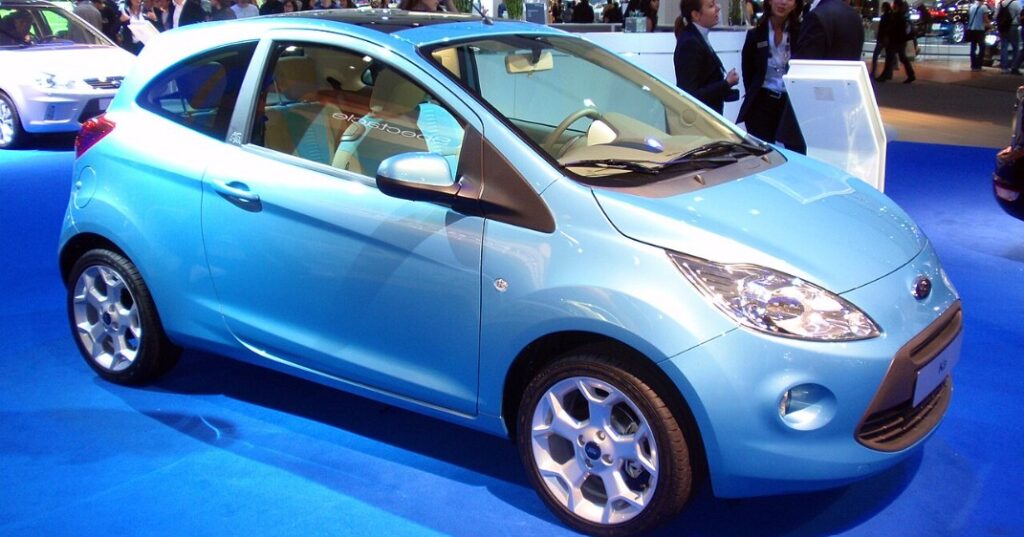
Choosing between a Ford Ka or Vauxhall Corsa sounds simple until we start looking at what each car actually offers. Both are familiar sights on British roads, both can be bought surprisingly cheaply on the used market, and both have spent years attracting first-time drivers, commuters and anyone who simply wants inexpensive transport.
Yet they approach the small-car formula from different directions.
The Ford Ka is the smaller, more city-focused choice. It is light on its feet, easy to squeeze into parking spaces and refreshingly uncomplicated. The Vauxhall Corsa is more substantial. It offers more passenger space, a larger boot, a wider range of engines and a stronger argument as an only car rather than simply a city runabout.
So, which one deserves our money?
For drivers who mainly tackle congested streets and want something compact and inexpensive, the Ka can be a wonderfully sensible little machine. For buyers expecting motorway journeys, regular passengers or more luggage, the Corsa usually makes the stronger all-rounder.
But that is only the beginning.
Content in this publication
- Ford Ka vs Vauxhall Corsa at a Glance
- Understanding the Ford Ka
- Understanding the Vauxhall Corsa
- Ford Ka or Vauxhall Corsa for City Driving?
- Ford Ka or Vauxhall Corsa for Motorway Driving?
- Interior Space: Is a Corsa Bigger Than a Ford Ka?
- Boot Space and Practicality
- Ford Ka vs Vauxhall Corsa Driving Experience
- Engine Choices
- Fuel Economy
- Insurance and First-Time Drivers
- Which Is Better as a First Car?
- Reliability: Ford Ka or Vauxhall Corsa?
- Common Ford Ka Used-Car Concerns
- Common Vauxhall Corsa Used-Car Concerns
- Safety Comparison
- Comfort and Refinement
- Parking and Manoeuvrability
- Ford Ka or Vauxhall Corsa for Students?
- Which Is Better for a Small Family?
- Ford Ka vs Vauxhall Corsa Styling
- Equipment and Technology
- Used Prices and Value for Money
- Ford Ka Pros and Cons
- Vauxhall Corsa Pros and Cons
- Ford Ka or Vauxhall Corsa: Which Is Cheaper to Own?
- Should We Buy a Ford Ka Instead of a Corsa?
- Should We Buy a Vauxhall Corsa Instead of a Ka?
- What Should We Check Before Buying Either Car?
- Ford Ka or Vauxhall Corsa: Our Final Verdict
- Frequently Asked Questions
Ford Ka vs Vauxhall Corsa at a Glance
Before diving into the details, here is the basic personality difference.
| Category | Ford Ka | Vauxhall Corsa |
|---|---|---|
| City driving | Excellent | Very good |
| Passenger space | Limited | Better |
| Boot practicality | Adequate | Better |
| Parking | Very easy | Easy |
| Long-distance driving | Acceptable | Better |
| Engine choice | Limited | Much broader |
| First-car appeal | Excellent | Excellent |
| Running costs | Generally low | Generally low |
| Driving character | Light and playful | More mature |
| Family usefulness | Limited | Better |
The important thing is that neither car automatically wins.
Instead, we need to ask what kind of driving we actually do.
A tiny car that is brilliant at navigating central London might feel cramped on a family holiday. Likewise, buying the larger Corsa merely to travel two miles to work every morning could be like wearing hiking boots to walk around the kitchen.
Understanding the Ford Ka
The Ford Ka has existed in several quite different forms.
The original Ka arrived in the 1990s with distinctive curved styling and became one of Ford's most recognisable small cars. The second-generation European Ka followed later, sharing much of its underlying architecture with the Fiat 500. Ford's 2014 UK brochure listed the second-generation Ka with a compact 3,620 mm overall length, illustrating just how city-oriented the car was.
Ford later expanded the idea with the Ka+, a noticeably more practical five-door model.
That matters when shopping used because saying simply "Ford Ka" can describe cars with very different levels of refinement, safety equipment and practicality.
What Does the Ford Ka Do Best?
The Ka's greatest strength is simplicity.
We sit relatively close to the corners of the car, the body is short and narrow, and squeezing through crowded streets rarely feels intimidating. Parallel parking feels less like solving a geometry problem and more like putting a shopping trolley back into its bay.
The second-generation Ka also offered an uncomplicated petrol-engine setup. A typical 1.2-litre version produced about 69 PS and was paired with a five-speed manual gearbox.
It was never intended to pin us against the seat.
That isn't really the point.
The Ka works best when we appreciate it as simple transportation with a little character.
Understanding the Vauxhall Corsa
The Vauxhall Corsa belongs to a slightly different category.
Although still a small hatchback, it has traditionally been closer to cars such as the Ford Fiesta, Volkswagen Polo, Peugeot 208 and Renault Clio than ultra-compact city cars.
That gives it an immediate practical advantage.
Depending on generation, Corsas have been available with three or five doors, multiple petrol engines, diesel options and substantially more trim variation than the Ka. The 2015 Corsa range, for example, included several petrol and diesel configurations rather than the Ka's far simpler engine lineup.
Why Is the Corsa So Popular?
The Corsa succeeds because it rarely demands major compromises.
It is small enough for urban driving but large enough for everyday life.
Need to carry friends?
Fine.
Need supermarket shopping for a household?
No problem.
Need to spend an hour on the motorway?
The Corsa feels much more at home there than a traditional city car.
It is the automotive equivalent of a comfortable pair of trainers. It may not always be exciting, but it works in an enormous variety of situations.
Ford Ka or Vauxhall Corsa for City Driving?
This is where the Ford Ka starts throwing punches above its weight.
A Ka feels made for busy urban environments. Its compact dimensions help in narrow streets, cramped supermarket car parks and older residential areas where parking spaces appear to have been designed for bicycles.
Visibility is generally manageable, steering is light and the short body means we quickly understand where the car ends.
The Corsa is hardly difficult to drive through a city, of course. It remains a small hatchback.
But compared with a traditional Ka, there is simply more car around us.
Winner for Urban Driving: Ford Ka
If our typical journey consists of commuting across town, popping to the shops and searching for street parking, we would lean toward the Ka.
Its size becomes a genuine everyday advantage.
Ford Ka or Vauxhall Corsa for Motorway Driving?
Move onto the motorway and the balance changes quickly.
The Corsa feels like the more grown-up machine.
Longer gearing on suitable versions, a broader engine range, greater cabin space and the generally more substantial nature of the car make sustained motorway driving less tiring.
A Ka can certainly travel at motorway speeds.
But "can" and "ideal for" are different things.
Smaller engines may require more effort when overtaking or climbing gradients, while the shorter and more city-focused package can feel busier at speed.
Winner for Motorways: Vauxhall Corsa
Anyone expecting regular motorway journeys should put the Corsa higher on the shopping list.
The difference becomes particularly noticeable if passengers and luggage regularly come along for the ride.
Interior Space: Is a Corsa Bigger Than a Ford Ka?
Generally, yes.
And this may be the deciding factor.
The Ka's front seats offer reasonable accommodation for such a small vehicle, but rear-seat passengers quickly expose the limitations of its city-car proportions.
Adults may tolerate the back for short journeys, but few will volunteer for a cross-country adventure.
The Corsa provides considerably more flexibility.
Rear Passenger Space
If we regularly carry three or four adults, we would choose the Corsa without much hesitation.
Access also matters.
Many older Kas are three-door cars, meaning rear passengers have to climb behind the front seats. It is perfectly manageable occasionally but becomes frustrating when done every day.
Five-door Corsas remove that inconvenience entirely.
Families Should Think Carefully About Doors
Parents fitting child seats should pay particular attention here.
Reaching through the front door of a three-door hatchback while attempting to fasten a child into the rear seat can turn a peaceful morning into an Olympic event.
A five-door Corsa is simply easier.
Boot Space and Practicality
Once again, the Corsa has the advantage.
The Ford Ka's boot suits shopping bags, backpacks and everyday essentials. What it does not particularly enjoy is being asked to behave like a small estate car.
The Corsa gives us more flexibility for luggage.
A weekend away?
Easier.
A pushchair?
More realistic.
A large supermarket trip?
Less rearranging required.
The Ka's smaller footprint inevitably demands compromises somewhere, and luggage capacity is one of them.
Winner for Practicality: Vauxhall Corsa
For one or two people, the Ka may provide everything required.
For a household using one car for multiple jobs, the Corsa is normally the more sensible choice.
Ford Ka vs Vauxhall Corsa Driving Experience
Here things become more subjective.
Ford has historically been good at making small cars enjoyable to drive, and the Ka often feels light and eager around town.
It responds quickly, changes direction easily and can make ordinary roads surprisingly entertaining.
We are not talking about sports-car thrills.
Instead, think of it like riding a lightweight bicycle rather than a heavy commuter bike. The speed may not be dramatically different, but the smaller machine feels keen to move.
The Corsa takes a calmer approach.
It tends to feel more substantial and planted, which becomes particularly welcome as speeds increase.
Ka for Playfulness, Corsa for Maturity
So the question becomes:
Do we value agility or stability?
For urban streets and twisty local roads, the Ka has charm.
For mixed driving involving faster A-roads and motorways, the Corsa feels better rounded.
Engine Choices
Engine availability differs substantially depending on model year, so buyers should always investigate the exact car rather than relying only on the badge.
You may be interested in reading Hyundai Santa Fe Trim Levels: Complete Guide to Choosing the Right Version
That said, the general pattern is clear.
Ford Ka Engines
The second-generation Ka sold in Britain kept things relatively simple. The 2014 Ford brochure included a 1.2-litre Duratec petrol alongside a 1.3-litre Duratorq diesel.
For most used buyers today, the petrol makes considerable sense.
Simple petrol engines suit short journeys better than older diesels, particularly when much of our driving occurs around town.
Vauxhall Corsa Engines
The Corsa offers considerably greater variety.
Depending on generation, buyers can encounter small naturally aspirated petrol engines, turbocharged petrol units and diesels.
That variety is useful but makes research more important.
Two Corsas of the same year can offer very different performance, economy and ownership experiences depending on what sits beneath the bonnet.
Never Buy on Engine Size Alone
A larger number on the boot badge doesn't automatically mean a worse choice.
Consider:
- How many miles do we drive each year?
- Are those miles mostly urban or motorway?
- Do we carry passengers?
- Do we care more about acceleration or economy?
- How strong is the service history?
- Has the car mainly done short trips?
Condition matters enormously on older small cars.
A meticulously maintained engine that suits our needs is usually a smarter purchase than chasing a specific specification with questionable history.
Fuel Economy
Both cars can be inexpensive to run when bought in sensible specifications.
Yet official economy figures should never be treated as guaranteed real-world consumption.
Traffic, weather, tyre pressure, driving style, maintenance condition and journey length all matter.
The Ka's low weight and small petrol engine make it naturally suited to economical urban transportation.
The Corsa can also deliver strong economy, particularly with smaller engines, while providing more space.
Which Uses Less Fuel?
There is no universal answer across all generations.
If we compare similar older petrol versions and mostly drive around town, the Ka's simplicity and compact dimensions make it appealing.
For longer journeys, however, an efficiently geared Corsa may provide similar real-world economy while feeling far more comfortable.
The cheapest car at the filling station isn't always the car with the smallest engine.
Insurance and First-Time Drivers
Both cars have long appealed to new drivers.
Small engines, modest performance and widespread parts availability can make them logical first-car candidates.
But insurance premiums depend on far more than the model name.
Our age, postcode, driving history, occupation, annual mileage, parking arrangements and exact trim can radically change the quote.
Always Quote Before Buying
Never assume:
"Small car equals cheap insurance."
Run insurance quotes using the registration number of the specific vehicle before paying a deposit.
Two cars that appear nearly identical in an advert can produce surprisingly different insurance prices.
Which Is Better as a First Car?
This contest is extremely close.
The Ka's tiny dimensions make it less intimidating for newly qualified drivers. Parking is easy, performance is manageable and the controls are generally straightforward.
The Corsa, meanwhile, teaches us to drive something slightly more substantial without becoming cumbersome.
It can also remain useful for longer.
Someone who buys a Ka at 18 may quickly want more space when circumstances change. The Corsa has a broader range of abilities, so there may be less urgency to replace it.
Best First Car for Pure Simplicity: Ford Ka
If confidence and easy manoeuvring matter most, the Ka wins.
Best First Car for Long-Term Versatility: Vauxhall Corsa
If we expect to keep the vehicle for several years, regularly carry friends or travel beyond town, the Corsa probably makes more sense.
Reliability: Ford Ka or Vauxhall Corsa?
This is where buyers should resist simplistic internet rankings.
When these cars are old enough to appear at the lower end of the used market, individual condition becomes more important than broad brand reputation.
A well-maintained Ka may be an excellent purchase.
A neglected one may become a financial headache.
Exactly the same applies to a Corsa.
What Matters More Than the Badge?
Look carefully at:
- Service records
- MOT history
- Evidence of regular oil changes
- Clutch condition
- Suspension noises
- Warning lights
- Tyre wear
- Fluid leaks
- Cooling-system condition
- Electrical equipment
- Previous accident repairs
- Corrosion on older examples
We should also start the engine from cold whenever possible.
Some problems become much easier to detect before the seller has warmed everything up.
Common Ford Ka Used-Car Concerns
Problems vary significantly between generations, so we should avoid treating every Ka as mechanically identical.
On older examples, age itself becomes the enemy.
Rubber components harden. Suspension parts wear. Batteries weaken. Exhaust systems corrode. Previous owners may postpone maintenance because the car has little market value.
That last issue deserves attention.
Cheap cars sometimes receive cheap maintenance.
A £2,000 vehicle does not magically require less servicing simply because its resale value has fallen.
Inspect the Ka Carefully
On a test drive, listen for knocks over rough roads, check the clutch biting point, test the heating and air conditioning, and make sure every warning light behaves normally when the ignition is switched on.
If the steering feels strange, the engine temperature behaves unusually or the car pulls under braking, investigate rather than hoping it is "probably nothing."
Common Vauxhall Corsa Used-Car Concerns
The Corsa's broader range means common problems vary more dramatically by engine and generation.
Again, history is crucial.
Listen carefully during a cold start, check that the gearbox shifts cleanly, inspect for leaks and make sure dashboard warning lights do not remain illuminated.
Older Corsas may also have suffered years of urban use.
Clutches, brakes, wheels and suspension components often experience a hard life when a vehicle spends thousands of journeys bouncing over speed humps, negotiating potholes and repeatedly stopping in traffic.
Mileage Doesn't Tell the Whole Story
A 45,000-mile city car may have worked harder in some respects than a 70,000-mile motorway car.
Look at the whole story.
Wear on the steering wheel, pedals, driver's seat and controls can sometimes reveal more about a car's life than the odometer alone.
Safety Comparison
Safety comparisons require care because testing standards change over time.
A star rating awarded to an older car should not automatically be compared directly with one awarded years later under a tougher assessment protocol.
The broader principle is straightforward: newer generations generally gained access to more modern safety structures and electronic assistance.
For example, Euro NCAP rated the later Ford Ka+ at three stars under its applicable test regime.
When safety is a major priority, compare the exact model year and specification of the cars you are considering rather than assuming every Ka or every Corsa has identical equipment.
Check the Actual Equipment
Look for features such as:
- Electronic stability control
- Side airbags
- Curtain airbags
- ISOFIX mounting points
- Autonomous emergency braking on newer cars
- Tyre-pressure monitoring
- Lane assistance on recent generations
Older budget specifications can differ considerably from newer or higher-trim models.
Comfort and Refinement
This is one category where the Corsa usually justifies its extra size.
A longer journey exposes things we barely notice during a ten-minute test drive.
Road noise becomes tiring.
Engine noise becomes tiring.
A cramped seating position becomes tiring.
Small differences accumulate like pebbles in a shoe.
The Corsa generally offers the more relaxed environment for longer journeys.
The Ka feels perfectly pleasant when used for the sort of trips it was primarily designed to tackle. Ask it to spend hours on fast roads, however, and the compromises become clearer.
Winner for Comfort: Vauxhall Corsa
Drivers covering substantial annual mileage should seriously consider the Corsa.
Parking and Manoeuvrability
Now the Ka strikes back.
Finding a space large enough for a Ka rarely feels difficult.
The second-generation model's roughly 3.62-metre length gives us an idea of how compact the package is.
That matters every single day if we live somewhere crowded.
The Corsa is still manageable, especially with parking sensors on better-equipped versions, but the Ka feels almost purpose-built for squeezing into forgotten corners of a car park.
Winner for Parking: Ford Ka
No surprise here.
If parking stress ranks high on our list of frustrations, the Ka deserves serious consideration.
Ford Ka or Vauxhall Corsa for Students?
Students often need three things:
You may be interested in readingHyundai Santa Fe Trim Levels: Complete Guide to Choosing the Right VersionYou may be interested in reading
Hyundai Santa Fe Competitors: The Best Alternatives Comparedlow purchase cost, affordable running costs and enough practicality to survive changing circumstances.
The Ka nails the first two.
It is easy to drive, usually straightforward to park and doesn't encourage excessive performance.
The Corsa wins on flexibility.
Moving accommodation?
Carrying friends?
Driving home at the weekend?
Taking luggage to university?
Suddenly that extra cabin and boot space becomes extremely useful.
For students using the car almost entirely around town, we would consider the Ka.
For anyone frequently travelling between cities, the Corsa is probably worth the extra size.
Which Is Better for a Small Family?
The Corsa.
Quite comfortably.
Families need doors, space and flexibility more than they need the smallest possible exterior footprint.
A Ka can certainly transport parents and children, but we would not deliberately choose one over a five-door Corsa if family duties were central to the purchase.
The moment child seats, bags, shopping and a pushchair enter the equation, every additional centimetre starts feeling valuable.
Ford Ka vs Vauxhall Corsa Styling
Now we leave logic behind.
The Ka has traditionally been the more distinctive vehicle.
The original model still looks unusual decades after its introduction, while the second generation carried a cheerful, compact design that suited its personality.
The Corsa is more conventional.
That may actually be preferable for buyers who want something understated.
Styling is impossible to score objectively.
One person's "cute" is another person's "strange."
One person's "subtle" is another person's "boring."
Buy the one that makes us glance back after parking.
Life is too short to own a car we dislike looking at.
Equipment and Technology
Specification depends heavily on trim level and year.
Later Corsas generally have an advantage simply because the model continued evolving into a more modern era, while traditional European Ka production ended earlier.
Higher-spec used Corsas may therefore offer features such as larger infotainment systems, smartphone connectivity, heated equipment, parking sensors and more advanced driver aids depending on model year.
Older Kas are much simpler.
That can be either a weakness or a strength.
Do We Really Need More Technology?
A basic car has fewer distractions.
For some owners, a simple radio, air conditioning and electric windows are enough.
Others would quickly become frustrated without smartphone integration, navigation or modern driver assistance.
Decide before buying.
Retrofitting features later can quickly erase the savings made by choosing a cheaper vehicle.
Used Prices and Value for Money
Used prices change constantly, so it makes little sense to declare one model permanently cheaper.
Age, mileage, location, condition, trim and history influence asking prices.
Instead of concentrating purely on purchase price, calculate what we might call the real first-year cost:
Purchase price + immediate servicing + tyres + insurance + tax + likely repairs.
That £500-cheaper car is not a bargain if it immediately requires four tyres, front brakes and a clutch.
Condition Beats Specification
When choosing between two inexpensive used cars, we would often take the cleaner, better-maintained example even if it has fewer options.
A healthy engine is more useful than fancy alloy wheels.
Every time.
Ford Ka Pros and Cons
Advantages of the Ford Ka
- Extremely easy to park
- Ideal size for urban driving
- Simple and approachable
- Often appealing to first-time drivers
- Light, agile character
- Small-car charm
- Generally uncomplicated petrol options
Disadvantages of the Ford Ka
- Limited rear-seat space
- Smaller boot
- Many versions have only three doors
- Less comfortable on long journeys
- Restricted engine choice compared with Corsa
- Older examples may need age-related repairs
Vauxhall Corsa Pros and Cons
Advantages of the Vauxhall Corsa
- More practical interior
- Better rear passenger accommodation
- Five-door versions widely available
- Larger and more useful boot
- Better suited to motorways
- Wider choice of engines and trims
- Stronger choice as an only household car
Disadvantages of the Vauxhall Corsa
- Larger than the Ka in crowded cities
- Engine choice can make used buying more complicated
- Some inexpensive examples may have been neglected
- Insurance can vary substantially by version
- Less distinctive than the Ka for some buyers
Ford Ka or Vauxhall Corsa: Which Is Cheaper to Own?
We cannot crown an absolute winner without knowing the year, engine and condition.
However, we can identify the likely pattern.
For low-mileage urban driving, a simple petrol Ka can be extremely economical ownership.
For mixed driving, the Corsa may cost slightly more in certain areas but compensate by doing more jobs.
That distinction matters.
The cheapest vehicle is not always the smallest one.
The cheapest vehicle is the one that meets our needs without constantly forcing us to find another solution.
If owning a Ka means hiring a larger car three times a year, the savings begin disappearing.
Should We Buy a Ford Ka Instead of a Corsa?
Buy the Ka if we mainly need personal urban transport.
It makes particularly good sense when:
- We normally travel alone
- Parking space is limited
- Most journeys are short
- We rarely carry rear passengers
- We want simple controls
- We value manoeuvrability over space
The Ka works brilliantly when we stop asking it to be something it isn't.
Think of it as a small backpack.
A backpack is fantastic when carrying a laptop and lunch.
It becomes considerably less impressive when we try to move house with it.
Should We Buy a Vauxhall Corsa Instead of a Ka?
Choose the Corsa when flexibility matters.
It makes more sense if:
- We regularly use motorways
- Adults travel in the rear
- We need a usable boot
- We want five doors
- The car must handle family duties
- We plan to keep it for several years
- We want more engine and trim choices
The Corsa is simply capable of playing more roles.
For many buyers, that versatility outweighs the Ka's urban advantages.
What Should We Check Before Buying Either Car?
Never buy an inexpensive used car simply because the advert looks clean.
Photos hide a lot.
Before purchasing either model:
- Check the MOT history. Look for repeated advisories and patterns of neglected repairs.
- Inspect the service records. Regular maintenance matters more than an unusually low mileage reading.
- Start the engine cold. Listen for rattles, hesitation or unusual smoke.
- Test the clutch. Make sure it engages smoothly without slipping.
- Check every gear. Shifts should feel consistent and predictable.
- Test all electrical equipment. Windows, locks, lights, heating and air conditioning should work.
- Inspect the tyres. Uneven wear may reveal alignment or suspension issues.
- Look underneath. Search for obvious leaks, corrosion or damage.
- Drive on different roads. A five-minute loop around the dealership is not enough.
- Get an independent inspection if uncertain.
A pre-purchase inspection can feel expensive when buying a cheap car.
So can buying somebody else's problem.
Ford Ka or Vauxhall Corsa: Our Final Verdict
So, Ford Ka or Vauxhall Corsa?
For most buyers who need one small car to handle almost everything, we would choose the Vauxhall Corsa.
Its additional passenger space, stronger practicality, wider engine selection and better long-distance ability make it the more versatile package.
But that doesn't make the Ford Ka a bad choice.
Far from it.
If our world mostly consists of congested streets, tight parking bays, short commutes and occasional shopping trips, the Ford Ka can actually be the smarter car. It is smaller, simpler and wonderfully easy to place on the road.
The choice comes down to priorities.
Choose the Ford Ka for compact dimensions, easy parking and city-focused simplicity.
Choose the Vauxhall Corsa for space, versatility, motorway comfort and everyday practicality.
And when shopping at the cheaper end of the used market, remember one final rule:
Buy on condition first and badge second.
The best-maintained Ka will often be a better purchase than a neglected Corsa, and vice versa.
A used-car badge tells us what the vehicle was when it left the factory.
Its history tells us what we are actually buying today.
Frequently Asked Questions
1. Is a Ford Ka better than a Vauxhall Corsa?
The Ford Ka is better for buyers prioritising compact dimensions, easy parking and short urban journeys. The Vauxhall Corsa is generally better for passengers, luggage, motorway driving and all-round practicality. Neither is universally better; the right choice depends on how we intend to use the car.
2. Is a Ford Ka smaller than a Vauxhall Corsa?
Yes, traditional Ford Ka models are generally smaller and more city-focused than comparable Vauxhall Corsas. That gives the Ka an advantage when manoeuvring and parking, while the Corsa's larger dimensions provide more cabin and luggage space.
3. Which is better for a first-time driver, Ford Ka or Corsa?
Both can make good first cars. The Ford Ka is particularly easy to manoeuvre and may feel less intimidating to inexperienced drivers. The Corsa offers more versatility and may remain useful for longer as the driver's needs change. Always compare insurance quotes for the exact registration before buying.
You may be interested in readingHyundai Santa Fe Trim Levels: Complete Guide to Choosing the Right VersionYou may be interested in reading
Hyundai Santa Fe Competitors: The Best Alternatives ComparedYou may be interested in reading
Hyundai Santa Fe Years: Complete Model Year and Generation Guide4. Which is better for motorway driving, Ford Ka or Vauxhall Corsa?
The Vauxhall Corsa is generally the stronger motorway choice. Its more substantial size, broader engine selection and additional cabin space make it better suited to sustained high-speed journeys. The Ka can use motorways but is more naturally suited to urban and shorter-distance driving.
5. Should we buy an old Ford Ka or Vauxhall Corsa?
Buy whichever example has the better mechanical condition and maintenance history. On older budget cars, service records, MOT history, tyres, clutch condition, suspension and evidence of proper maintenance matter enormously. A clean, well-maintained Ka can easily be a better purchase than a poorly maintained Corsa.
If you want to know other articles similar to Ford Ka or Vauxhall Corsa: Which Small Car Should We Buy? you can visit the category Models.
Honda Passport vs Toyota 4Runner: Which SUV Is Better?
Honda Passport vs Ford Bronco: Which SUV Is Better?
Honda Passport vs Ford Explorer: Which SUV Is Better?
Honda Passport or Pilot: Which SUV Is Better?
Honda Passport vs Jeep Grand Cherokee: Which SUV Is Better?
Honda Passport vs Nissan Pathfinder: Which SUV Is Better?
Leave a Reply
More content of your interest