
Hyundai Santa Fe Weight: Complete Guide by Model and Drivetrain

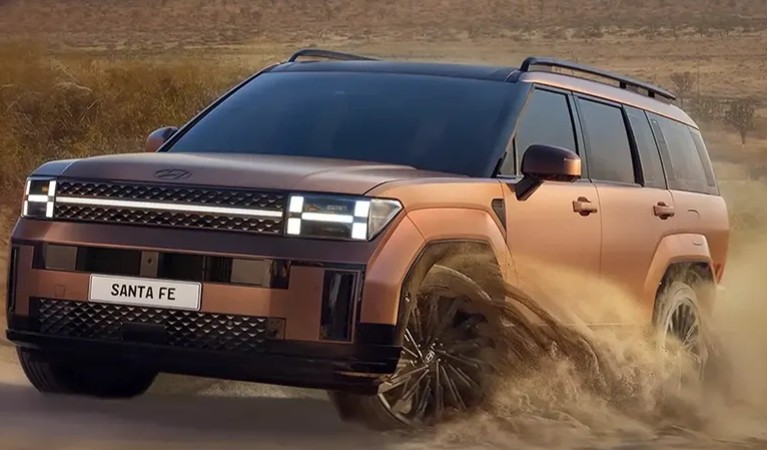
The Hyundai Santa Fe weight might look like a simple specification, but dig beneath the surface and things quickly become more interesting. The Santa Fe has evolved from a relatively conventional midsize SUV into a larger, more sophisticated family vehicle offered with turbocharged gasoline engines, hybrid systems, all-wheel drive, and different seating configurations.
As a result, there is no single number that answers the question, “How much does a Hyundai Santa Fe weigh?”
Depending on the model year, drivetrain, trim, equipment, and country, a Santa Fe can weigh considerably more or less than another vehicle wearing exactly the same badge. Current models generally sit around the two-ton mark, although some configurations fall below it while electrified and heavily equipped versions can push beyond it.
For example, Hyundai Australia lists current Santa Fe kerb-weight figures ranging from roughly 1,835 kg to 2,105 kg across gasoline, hybrid, front-wheel-drive, and all-wheel-drive configurations. Hyundai's current UK hybrid specifications similarly show kerb weights between approximately 1,900 and 2,095 kg, while the plug-in hybrid reaches roughly 2,090–2,145 kg.
So, why should we care about all those kilograms and pounds? Because vehicle weight affects much more than a specification sheet. It influences acceleration, braking, fuel economy, handling, payload, towing, tire wear, and even how planted the SUV feels on a highway.
Let's unpack the numbers.
Content in this publication
- How Much Does a Hyundai Santa Fe Weigh?
- Hyundai Santa Fe Weight in Pounds
- Hyundai Santa Fe Curb Weight Explained
- Hyundai Santa Fe Weight by Drivetrain
- Hyundai Santa Fe Hybrid Weight
- Hyundai Santa Fe Plug-In Hybrid Weight
- Hyundai Santa Fe Weight by Generation
- How Santa Fe Trim Level Affects Weight
- Does the Hyundai Santa Fe Weight Affect Fuel Economy?
- Does Weight Affect Santa Fe Performance?
- How Weight Influences Santa Fe Handling
- Hyundai Santa Fe Payload Capacity
- Hyundai Santa Fe Gross Vehicle Weight
- Hyundai Santa Fe Weight and Towing
- Does AWD Make the Santa Fe Much Heavier?
- Is the Hyundai Santa Fe a Heavy SUV?
- How Vehicle Weight Affects Tires and Brakes
- Does Hyundai Santa Fe Weight Affect Tire Wear?
- How Passenger and Cargo Weight Changes the Santa Fe
- Why Santa Fe Weight Differs Between Countries
- How to Find Your Exact Hyundai Santa Fe Weight
- Hyundai Santa Fe Weight Compared With Everyday Objects
- Should Santa Fe Weight Influence Your Buying Decision?
- What Is the Best Weight for a Hyundai Santa Fe?
- Hyundai Santa Fe Weight: Key Takeaway
- Frequently Asked Questions About Hyundai Santa Fe Weight
- 1. How much does a Hyundai Santa Fe weigh in pounds?
- 2. How much does a Hyundai Santa Fe weigh in kilograms?
- 3. Is the Hyundai Santa Fe Hybrid heavier than the gasoline model?
- 4. Does AWD increase Hyundai Santa Fe weight?
- 5. What is the difference between Santa Fe curb weight and gross vehicle weight?
- Conclusion
How Much Does a Hyundai Santa Fe Weigh?
A modern Hyundai Santa Fe generally weighs somewhere between approximately 1,800 and 2,150 kg, or around 4,000 to 4,740 pounds, depending on configuration.
That is deliberately a broad range. A front-wheel-drive gasoline model does not carry the additional hardware of an AWD version. Likewise, a hybrid carries a battery, electric motor, and related components that add mass even though they can dramatically improve fuel efficiency.
Current US specifications illustrate the variation nicely. Hyundai lists the 2026 Santa Fe Limited gasoline model at approximately 4,343 lb with front-wheel drive and 4,486 lb with HTRAC all-wheel drive. Meanwhile, the 2026 Santa Fe Hybrid is listed at approximately 4,431 lb with front-wheel drive and 4,575 lb with AWD.
That means two visually similar Santa Fe SUVs can differ by hundreds of pounds before we have put a single passenger or suitcase inside.
Typical Hyundai Santa Fe Weight Range
For shoppers wanting a quick reference, we can think about current Santa Fe models in approximate terms:
| Santa Fe configuration | Approximate weight |
|---|---|
| Gasoline FWD | 1,835–1,955 kg |
| Gasoline AWD | 1,900–2,020 kg |
| Hybrid FWD | 1,900–2,040 kg |
| Hybrid AWD | 1,965–2,105 kg |
| Plug-in Hybrid AWD | 2,090–2,145 kg |
These aren't universal values for every country. They are representative figures based on current official Hyundai specifications, and regional equipment packages can change the final number.
Think of the Santa Fe badge as the name of a family rather than one identical vehicle. Two siblings can look alike while carrying rather different amounts of weight.
Hyundai Santa Fe Weight in Pounds
Drivers in the United States usually encounter vehicle weight in pounds.
The current-generation Santa Fe sits broadly in the neighborhood of 4,000 to 4,700+ pounds, although exact figures depend strongly on powertrain and trim.
The 2026 Santa Fe Hybrid provides a particularly clear example. Hyundai USA quotes curb weights of 4,431 pounds for FWD and 4,575 pounds for HTRAC AWD.
That additional AWD equipment adds mass, but it also provides extra traction capability.
Hyundai Santa Fe Weight in Kilograms
Outside the United States, kilograms are usually more useful.
Current international specifications put many Santa Fe models somewhere around 1,835–2,145 kg, depending on whether we're discussing gasoline, hybrid, plug-in hybrid, FWD, or AWD versions.
A useful mental shortcut is that 2,000 kg is approximately 4,409 pounds.
So when somebody describes the latest Santa Fe as roughly a two-ton SUV, they aren't exaggerating.
Hyundai Santa Fe Curb Weight Explained
"Curb weight" is one of those automotive terms everyone sees but relatively few people stop to define.
Broadly speaking, curb weight describes the vehicle in operating condition with its standard equipment and required fluids, but without the passengers and cargo we intend to carry.
Definitions and measurement conventions can vary slightly between markets, which is another reason we should avoid comparing figures from different countries as though they were perfectly interchangeable.
Curb Weight Is Not Gross Vehicle Weight
This distinction matters.
The curb weight tells us approximately how heavy the SUV itself is. Gross vehicle weight or gross vehicle mass represents a much higher limit: the maximum permitted operating mass once occupants, luggage, accessories, and other loads are included.
For example, Hyundai Australia's current Santa Fe specification sheet quotes gross vehicle mass figures reaching approximately 2,680 kg on certain configurations, substantially above their corresponding kerb weights.
Mixing these two numbers would be like confusing the weight of an empty suitcase with the maximum weight the airline allows us to check in.
They are related, but they answer different questions.
Hyundai Santa Fe Weight by Drivetrain
One of the biggest variables is drivetrain.
A front-wheel-drive Santa Fe generally weighs less because the vehicle does not require the complete set of components needed to send power to all four wheels.
AWD adds hardware. Hardware adds mass.
It really is that straightforward.
Santa Fe FWD Weight
Front-wheel-drive models typically sit toward the lighter end of each Santa Fe powertrain range.
Australia's current specification sheet, for example, lists the 2.5-liter turbo gasoline FWD model between approximately 1,835 and 1,955 kg, depending on equipment.
Lower weight has several potential advantages. There is less mass for the engine to accelerate, less mass for the brakes to slow down, and generally a slightly easier job for the tires and suspension.
Santa Fe AWD Weight
All-wheel-drive Santa Fe models carry additional components responsible for transmitting torque to the rear axle.
In Hyundai Australia's specifications, the comparable turbo gasoline AWD configuration ranges from approximately 1,900 to 2,020 kg.
So we're looking at roughly 65 kg of additional mass at the lighter end of those published ranges.
Will we notice 65 kg every time we press the accelerator? Probably not.
But engineers certainly notice it while calibrating suspension, brakes, fuel economy, and vehicle dynamics.
Hyundai Santa Fe Hybrid Weight
Now things get more interesting.
Hybrid vehicles combine a combustion engine with electric components. The technology can significantly reduce fuel consumption, particularly in slower urban driving, but motors and batteries don't float in the air. They add weight.
Hyundai Australia's current hybrid Santa Fe specifications list kerb weights beginning around 1,925 kg for FWD and around 1,990 kg for AWD, with highly equipped variants reaching approximately 2,040 and 2,105 kg, respectively.
Current UK specifications show a similarly broad range: approximately 1,900–2,030 kg for the 2WD hybrid and 1,965–2,095 kg for the 4WD hybrid.
Why Is the Santa Fe Hybrid Heavier?
The hybrid needs equipment its conventional gasoline sibling does not.
That includes the traction battery, electric motor, power electronics, high-voltage cabling, and hybrid-specific control components.
We essentially give the SUV a second source of propulsion. Naturally, that comes with some additional baggage.
Yet weight alone doesn't determine efficiency.
A heavier hybrid can still consume considerably less fuel because regenerative braking can recover energy that a conventional vehicle would otherwise dissipate as heat, while the electric motor can assist the engine during suitable driving conditions.
Hyundai Santa Fe Plug-In Hybrid Weight
The plug-in hybrid, where offered, takes electrification another step.
Its larger battery allows meaningful electric-only driving but also increases vehicle mass.
Hyundai's current UK technical specification lists the Santa Fe Plug-in Hybrid AWD with a kerb weight of approximately 2,090–2,145 kg, payload between 595 and 650 kg, and a gross vehicle weight of 2,740 kg.
In other words, we're comfortably above two metric tons before passengers climb aboard.
Does Extra Hybrid Weight Matter?
Yes—but perhaps not in the way we immediately imagine.
More weight usually works against acceleration, braking distance, and cornering agility. Yet modern hybrids compensate with instantaneous electric torque, regenerative braking, and chassis tuning specifically designed around the additional mass.
The real question isn't simply whether the hybrid weighs more.
It is whether the complete powertrain makes good use of that weight.
In the Santa Fe, electrification is aimed primarily at combining family-SUV practicality with improved efficiency rather than producing a featherweight driving machine.
Hyundai Santa Fe Weight by Generation
Santa Fe weight has generally increased as the SUV has grown, become safer, gained technology, and adopted more sophisticated drivetrains.
Older Santa Fe generations could weigh noticeably less than today's boxier, larger model.
One older Hyundai-market brochure for the previous-generation Santa Fe, for example, lists curb weight around 1,745–1,872 kg for the configuration documented there.
Compare that with current variants above 2,000 kg and the evolution becomes obvious.
Why Has the Santa Fe Become Heavier?
It's tempting to blame size alone, but that would only tell half the story.
Modern vehicles carry structural reinforcements, larger wheels, more safety technology, powered convenience features, expansive infotainment displays, extra sound insulation, sophisticated seating, emissions hardware, and increasingly complex powertrains.
The Santa Fe has also moved deeper into three-row family-SUV territory.
We're effectively asking today's car to be a lounge, computer, safety capsule, luggage carrier, and road-trip machine at the same time. Each demand leaves its fingerprint on the scales.
How Santa Fe Trim Level Affects Weight
Trim levels matter more than many buyers expect.
Add larger alloy wheels, panoramic glass, powered seating mechanisms, upgraded interior equipment, additional driver-assistance hardware, and premium convenience features, and the scale starts creeping upward.
That's why official specifications often provide a range rather than a single exact weight.
Small Features Add Up
One electric motor for a seat might seem insignificant.
So might a larger wheel.
So might additional glass.
Combine dozens of upgrades and the difference between an entry-level and fully equipped SUV can become meaningful.
It is automotive compound interest—except we're accumulating kilograms instead of money.
Does the Hyundai Santa Fe Weight Affect Fuel Economy?
Absolutely.
Moving a heavier object generally requires more energy, especially when repeatedly accelerating in urban traffic.
However, weight is only one ingredient in the fuel-economy recipe.
Aerodynamics, tire resistance, engine efficiency, transmission programming, gearing, drivetrain losses, driving speed, road gradient, temperature, and driving style all matter too.
That's particularly important when comparing gasoline and hybrid Santa Fe models.
A hybrid may weigh more yet use less fuel because its powertrain manages energy much more effectively during many driving conditions.
City Driving Makes Weight More Noticeable
Every stoplight forces us to accelerate the vehicle's mass again.
That's where weight becomes particularly relevant.
On a steady highway cruise, aerodynamic resistance gradually becomes a much bigger part of the equation. Around town, repeatedly moving two tons from zero takes energy.
Hybrid regenerative braking changes the equation by recovering some kinetic energy during deceleration instead of simply throwing all of it away through friction braking.
Does Weight Affect Santa Fe Performance?
Yes.
Imagine running with an empty backpack and then adding 20 kg. The same legs suddenly have much more work to do.
Cars aren't fundamentally different.
More vehicle mass generally increases the amount of force required for acceleration.
Yet powertrain output matters just as much.
A powerful engine in a heavier vehicle may still deliver quicker acceleration than a weak engine in something lighter.
Weight-to-Power Ratio Matters
This is why performance enthusiasts often focus on power-to-weight ratio rather than horsepower alone.
Two SUVs producing identical horsepower can feel remarkably different if one weighs several hundred kilograms more.
The Santa Fe isn't designed primarily as a performance SUV, though.
Its priorities lean toward passenger space, stability, comfort, practicality, safety technology, and everyday usability.
How Weight Influences Santa Fe Handling
Heavier SUVs tend to feel substantial.
On highways, that can be pleasant. The vehicle feels planted rather than nervous, particularly in crosswinds or over imperfect pavement.
But physics never disappears.
Extra mass creates more inertia, so quick direction changes demand more from the suspension and tires.
Modern electronic stability systems and carefully tuned chassis geometry help tremendously, but they cannot repeal Newton's laws.
A Lower Center of Gravity Can Help
Hybrid battery placement can sometimes benefit vehicle dynamics because heavy components can be positioned relatively low in the chassis.
That doesn't magically erase the battery's weight, but distributing mass intelligently helps engineers manage it.
Weight distribution often matters nearly as much as total weight.
Hyundai Santa Fe Payload Capacity
Payload and curb weight are connected, but they aren't interchangeable.
Payload represents how much weight we can add to the vehicle within the manufacturer's limits.
That means people, luggage, accessories, and other cargo.
Current UK Santa Fe Hybrid specifications quote payload ranges of roughly 580–740 kg depending on drivetrain and specification, while the plug-in hybrid lists approximately 595–650 kg.
Those figures make an important point: a heavier empty vehicle doesn't automatically mean we can load more into it.
What Counts Toward Payload?
Before packing for a family road trip, remember that payload can include all of the following:
- Driver and passengers
- Suitcases and groceries
- Child seats
- Sporting equipment
- Aftermarket accessories
- Roof-mounted cargo
- Other items carried inside or on the vehicle
Five adults plus holiday luggage can add hundreds of kilograms surprisingly quickly.
Hyundai Santa Fe Gross Vehicle Weight
Gross vehicle weight is the maximum permitted operating weight of the complete loaded vehicle.
For current Santa Fe models, the precise figure again depends on powertrain and market.
Hyundai's Australian documentation lists GVM values around 2,630–2,680 kg for several gasoline and hybrid versions, while Hyundai UK's current technical data lists gross vehicle weights of 2,640 kg for a hybrid 2WD, 2,675 kg for hybrid 4WD, and 2,740 kg for the plug-in hybrid.
That is the number we should care about when wondering how much total load the vehicle is designed to handle.
Hyundai Santa Fe Weight and Towing
Weight also enters the towing conversation, but heavier does not automatically mean better.
Towing capacity depends on engineering factors including cooling, chassis design, suspension, transmission, engine characteristics, braking systems, and the manufacturer's certified limits.
A current Australian Santa Fe specification sheet, for example, lists up to 2,000 kg braked towing capacity for the 2.5-liter turbo configuration and 1,650 kg for the hybrid configuration covered by that document.
Meanwhile, specifications differ in other markets, illustrating why owners should always use the documentation for their exact vehicle rather than borrowing a number from another country.
Never Guess Towing Limits From Vehicle Weight
Seeing that an SUV weighs two tons tells us virtually nothing definitive about how much it is legally or mechanically rated to tow.
Always verify the actual VIN-specific or market-specific towing information.
That's especially important when carrying passengers and luggage at the same time because vehicle, axle, payload, tow-ball, and trailer limits can interact.
Does AWD Make the Santa Fe Much Heavier?
Usually, yes, but not dramatically.
The additional driveline hardware required for AWD often adds tens of kilograms rather than hundreds.
In current Australian specifications, for example, the lightest gasoline AWD version is roughly 65 kg heavier than the lightest equivalent FWD configuration listed, while hybrid AWD variants are also heavier than their FWD counterparts.
That difference is meaningful but hardly transformational.
For buyers who regularly encounter snow, loose gravel, steep terrain, or slippery conditions, the additional traction may easily justify the modest weight penalty.
Is the Hyundai Santa Fe a Heavy SUV?
Compared with a compact crossover, yes.
Compared with large body-on-frame SUVs and full-size trucks, not especially.
The Santa Fe occupies a middle ground.
It has enough mass to feel substantial and accommodate three-row family duties without entering the truly heavyweight territory occupied by some large luxury SUVs and truck-based vehicles.
The current model's roughly two-ton curb weight is therefore unsurprising given its dimensions, equipment, and available electrified powertrains.
Weight Can Actually Improve the Driving Experience
We often talk about vehicle weight as though every kilogram were an enemy.
That's too simplistic.
A certain amount of mass can make an SUV feel solid, quiet, and stable. Additional sound insulation improves refinement. Stronger structural components can support safety objectives. Larger seats and convenience equipment make long trips more comfortable.
The objective isn't simply to build the lightest possible Santa Fe.
It's to make every kilogram earn its place.
How Vehicle Weight Affects Tires and Brakes
Tires carry the entire vehicle, so heavier configurations place more demand on them.
The same applies to brakes.
Every time we slow down, the braking system must dissipate the vehicle's kinetic energy. The heavier and faster the SUV is moving, the more energy needs managing.
That helps explain why tire load ratings are important.
Mounting the correct size isn't enough; tires must also satisfy the manufacturer's required load and speed ratings.
Heavy Loads Make Proper Tire Pressure Even More Important
Underinflated tires generate additional heat and deformation.
Combine underinflation with a heavily loaded SUV, luggage, passengers, high-speed highway driving, and hot weather, and we're asking the tire to work extremely hard.
The pressure label on the vehicle should remain our primary reference rather than a generic figure found online.
Does Hyundai Santa Fe Weight Affect Tire Wear?
Potentially.
Heavier vehicles apply greater loads to their tires, but weight is only part of the story.
Alignment, tire pressure, driving style, road surface, tire compound, rotation intervals, wheel size, and suspension condition can have equally dramatic effects.
A properly maintained heavier Santa Fe can easily achieve better tire life than a lighter SUV driven aggressively with poor alignment.
The scales don't tell the whole story.
How Passenger and Cargo Weight Changes the Santa Fe
A curb-weight figure represents only the beginning of the journey.
Suppose we load the Santa Fe with several adults, luggage, drinks, child seats, and camping gear. We can easily add several hundred kilograms.
Suddenly the SUV's real-world operating mass looks very different from the brochure figure.
That extra weight may subtly change steering response, acceleration, braking, suspension movement, and fuel consumption.
A Fully Loaded Santa Fe Feels Different
Anyone who has driven the same vehicle both empty and packed for vacation knows this instinctively.
The accelerator may need a little more pressure.
Braking requires slightly more anticipation.
The rear suspension sits differently.
Nothing has gone wrong—the SUV is simply obeying physics.
Why Santa Fe Weight Differs Between Countries
This is one of the most important lessons for anyone researching specifications online.
A US Santa Fe is not necessarily identical to an Australian, British, Canadian, Korean, or European-market model.
Engines can differ.
Standard equipment can differ.
Seating layouts can differ.
Emissions hardware can differ.
Even the way vehicle mass is defined or presented may vary.
Hyundai itself notes in its Australian specification material that vehicle weight figures are approximate and may vary between individual vehicles, particularly when accessories or other equipment are involved.
So if our owner's manual disagrees with a random table online, the documentation supplied for the actual vehicle wins.
Every time.
How to Find Your Exact Hyundai Santa Fe Weight
For an individual vehicle, the best information comes from the manufacturer's documentation and vehicle labels rather than generic internet specifications.
Check the certification label or compliance plate, owner's documentation, official Hyundai specifications for the exact model year, and market-specific vehicle information.
This becomes especially important when we're calculating payload or preparing to tow.
A difference of 50 kg might sound trivial when discussing general performance. It becomes much more important if we're already close to a legal load limit.
Hyundai Santa Fe Weight Compared With Everyday Objects
Numbers such as 2,000 kg can feel abstract.
So imagine roughly two metric tons of moving machinery.
That's substantially heavier than the average small passenger car and dramatically heavier than the lightweight hatchbacks many of us learned to drive.
Yet behind the wheel, modern steering, braking assistance, and suspension tuning hide much of that physical bulk.
That's one of the fascinating things about modern SUVs: they can make two tons feel surprisingly manageable.
Should Santa Fe Weight Influence Your Buying Decision?
It should influence the decision, but it probably shouldn't dominate it.
If maximizing fuel efficiency is the priority, we'd examine both vehicle weight and powertrain technology.
If towing matters, we'd focus on official towing and payload specifications.
If snow or loose surfaces are common, AWD may be worth its additional weight.
If we mostly drive through congested cities, a lighter vehicle altogether might be easier and more economical.
But if we need three-row flexibility, comfort, cargo space, and highway stability, the Santa Fe's mass is largely the consequence of delivering those capabilities.
Gasoline vs Hybrid: Which Weight Makes More Sense?
This depends on how we use the vehicle.
The conventional gasoline Santa Fe can be somewhat lighter, depending on configuration.
The hybrid carries additional electrical hardware but may reward us with substantially better efficiency in suitable driving conditions.
The plug-in hybrid is heavier still, yet it provides meaningful electric driving capability where offered.
Instead of asking, “Which one weighs least?” we should ask, “Which drivetrain uses its weight most effectively for the way we drive?”
That's a far more useful question.
What Is the Best Weight for a Hyundai Santa Fe?
There isn't one.
Vehicle design is a balancing act.
Remove too much weight and we may sacrifice refinement, equipment, structural strength, battery capacity, passenger comfort, or drivetrain capability.
Add too much and efficiency and agility suffer.
Engineers therefore chase optimization rather than a magic number.
For the current Santa Fe, roughly two tons has become the neighborhood where space, technology, electrification, safety equipment, and road manners meet.
Hyundai Santa Fe Weight: Key Takeaway
The simplest answer is that the Hyundai Santa Fe weight varies considerably depending on year, engine, drivetrain, trim, seating configuration, and market.
Current models typically fall around 1,835 to 2,145 kg, or roughly 4,000 to 4,700+ pounds, based on published Hyundai specifications across different markets. Gasoline FWD models tend to occupy the lighter end, while AWD, hybrid, and especially plug-in hybrid versions generally add weight.
But the number on the scale tells only part of the story.
The heavier Santa Fe has also become more spacious, more sophisticated, increasingly electrified, and loaded with technology previous generations never carried.
So rather than treating weight as automatically good or bad, we should view it as part of the SUV's broader engineering equation.
After all, a family SUV isn't built to float like a feather.
It's built to carry people, luggage, technology, and sometimes a trailer while remaining comfortable enough that a five-hour road trip doesn't feel like a five-hour workout.
Frequently Asked Questions About Hyundai Santa Fe Weight
1. How much does a Hyundai Santa Fe weigh in pounds?
Most current Hyundai Santa Fe configurations weigh roughly 4,000 to 4,700 pounds, although the precise curb weight varies with drivetrain, equipment, and market. Hyundai USA lists the current Santa Fe Hybrid at about 4,431 lb in FWD form and 4,575 lb with HTRAC AWD.
2. How much does a Hyundai Santa Fe weigh in kilograms?
Depending on configuration, many current models fall approximately between 1,835 and 2,145 kg. Conventional gasoline versions generally sit toward the lighter end, while plug-in hybrid models can exceed 2,100 kg.
3. Is the Hyundai Santa Fe Hybrid heavier than the gasoline model?
Generally, yes. Hybrid systems require a traction battery, electric motor, power electronics, and related hardware. Current Australian specifications show the hybrid configurations beginning at higher kerb weights than comparable gasoline versions.
4. Does AWD increase Hyundai Santa Fe weight?
Yes. AWD versions normally weigh more because they require additional drivetrain components. Official current specifications demonstrate noticeable weight increases between corresponding front-wheel-drive and all-wheel-drive variants.
5. What is the difference between Santa Fe curb weight and gross vehicle weight?
Curb weight describes approximately what the vehicle itself weighs in operating condition before passengers and cargo are added. Gross vehicle weight or gross vehicle mass is the maximum permitted loaded mass. Current Santa Fe gross vehicle mass figures can reach roughly 2,680–2,740 kg, depending on market and powertrain.
Conclusion
Understanding Hyundai Santa Fe weight is useful whether we're comparing trims, calculating payload, planning to tow, researching fuel economy, or simply wondering how substantial this SUV really is.
The main lesson is simple: there is no universal Santa Fe weight.
A lighter gasoline FWD version and a heavily equipped AWD plug-in hybrid can differ by several hundred kilograms. That's a big enough gap to affect efficiency, payload, performance, and the general character of the vehicle.
Current Santa Fe models tend to hover around two metric tons, but that weight buys a great deal: three-row practicality, modern safety equipment, sophisticated drivetrains, generous interior space, and the planted road manners expected from a contemporary family SUV.
Before making any decision involving towing or maximum vehicle load, however, always check the specifications for the exact model year, powertrain, trim, and country. That's the number that matters—not the figure attached to a similar-looking Santa Fe halfway around the world.
If you want to know other articles similar to Hyundai Santa Fe Weight: Complete Guide by Model and Drivetrain you can visit the category Service and Parts.
Volvo S90 Engine Oil: Type, Capacity & Change Guide
Volvo S90 Boot Space: Size, Capacity and Practicality
SEO Title: Volvo S90 Oil Capacity: Complete Guide by Engine

Kia Sorento Oil Type: Complete Guide by Year & Engine
Kia Sorento Engine Capacity: Complete Guide by Year
Peugeot 308 Clutch Replacement Cost: Complete UK Guide for 2026
Leave a Reply
More content of your interest