

Hyundai Santa Fe Competitors: The Best Alternatives Compared

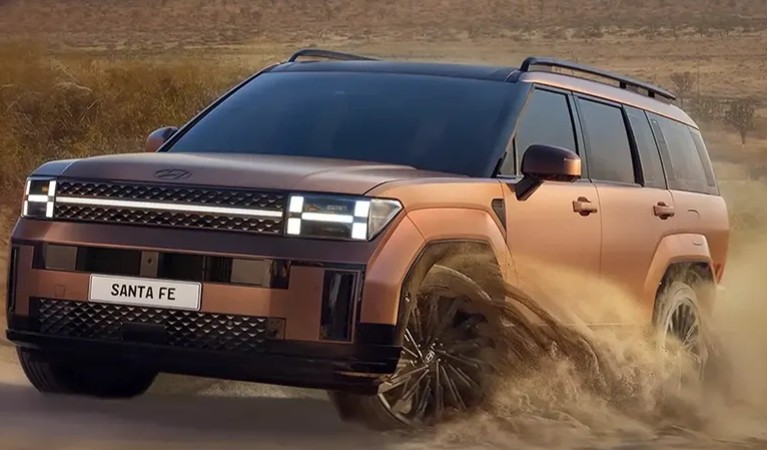
The Hyundai Santa Fe has become one of those SUVs that is surprisingly difficult to categorize—and that is part of its appeal. It has three rows, rugged styling, plenty of technology, useful cargo space, and available hybrid power, yet it does not feel quite as enormous as the biggest family SUVs on the road.
Naturally, that raises a question: what are the best Hyundai Santa Fe competitors?
There are plenty.
The Santa Fe sits in a crowded neighborhood where compact three-row crossovers, midsize family SUVs, hybrids, and adventure-oriented models frequently overlap. Depending on what we value most, a Kia Sorento, Toyota Highlander, Honda Pilot, Mazda CX-90, Subaru Ascent, Nissan Pathfinder, Volkswagen Atlas, or even a Hyundai Palisade may make more sense.
That does not mean the Santa Fe loses the comparison. Far from it.
Instead, think of shopping in this category like choosing a house. Several properties might have three bedrooms and two bathrooms, but one has the better kitchen, another has more yard space, and another sits closer to work. The specifications tell only half the story.
So, let’s compare the Hyundai Santa Fe competitors that matter most and determine where each SUV has an advantage.
Content in this publication
- What Kind of SUV Is the Hyundai Santa Fe?
- Hyundai Santa Fe vs Kia Sorento
- Hyundai Santa Fe vs Toyota Highlander
- Hyundai Santa Fe vs Honda Pilot
- Hyundai Santa Fe vs Hyundai Palisade
- Hyundai Santa Fe vs Mazda CX-90
- Hyundai Santa Fe vs Subaru Ascent
- Hyundai Santa Fe vs Nissan Pathfinder
- Hyundai Santa Fe vs Volkswagen Atlas
- Hyundai Santa Fe vs Kia Telluride
- Hyundai Santa Fe vs Toyota RAV4
- Hyundai Santa Fe vs Toyota Grand Highlander
- Hyundai Santa Fe vs Ford Explorer
- Hyundai Santa Fe vs Chevrolet Traverse
- Which Hyundai Santa Fe Competitor Has the Best Third Row?
- Which Santa Fe Alternative Is Best for Fuel Economy?
- Which Hyundai Santa Fe Competitor Is Best for Large Families?
- Which Santa Fe Rival Feels the Most Premium?
- Which Competitor Is Best for Outdoor Adventures?
- The Closest Hyundai Santa Fe Competitors Ranked by Buyer Type
- What Should We Look for When Comparing Santa Fe Alternatives?
- Is the Hyundai Santa Fe Better Than Its Competitors?
- Hyundai Santa Fe Competitors: Final Verdict
- Frequently Asked Questions About Hyundai Santa Fe Competitors
What Kind of SUV Is the Hyundai Santa Fe?
Before comparing alternatives, we need to establish what the Santa Fe actually offers.
The current Santa Fe uses an unusually boxy design that favors interior space and practicality. In the U.S., Hyundai offers the model with three rows, while shoppers can choose conventional gasoline or hybrid versions depending on trim and configuration. Hyundai lists up to 79.6 cubic feet of cargo volume behind the front seats and 40.5 cubic feet behind the second row for the 2026 model.
That gives the Santa Fe an interesting position.
It can work for:
- Families wanting three rows without an enormous SUV
- Couples needing serious cargo capacity
- Drivers interested in hybrid efficiency
- Buyers attracted to distinctive styling
- People wanting premium-looking technology without moving into a luxury brand
- Outdoor-oriented owners who value a squared-off, practical cabin
The catch? Its third row is useful, but shoppers who regularly carry six, seven, or eight people may want something larger.
That distinction shapes almost every comparison below.
Hyundai Santa Fe vs Kia Sorento
The Kia Sorento is probably the most obvious Santa Fe alternative.
These Korean cousins target many of the same buyers. Both provide three-row seating, turbocharged and electrified powertrain choices, generous technology, and upscale-looking interiors without requiring luxury-SUV money.
Kia's 2026 Sorento Hybrid combines a 1.6-liter turbocharged gasoline engine with an electric system for 227 horsepower and 258 lb-ft of torque. Kia also offers AWD configurations, making it particularly relevant to Santa Fe Hybrid shoppers.
Why Choose the Sorento?
The Sorento makes sense if we want something that feels slightly more compact and sporty.
Its broad powertrain range is another advantage. Depending on market and trim, the Sorento family stretches from conventional gasoline versions through hybrid and plug-in hybrid territory.
The Sorento is almost like the Swiss Army knife of this segment. It tries to cover commuting, family duty, efficiency, upscale comfort, and mild adventure within one model range.
Why Choose the Santa Fe?
The Santa Fe arguably makes the stronger impression if practicality and cabin design lead our priorities.
Its squared body gives it a more substantial visual personality and contributes to a cargo-friendly interior. The Santa Fe also feels like the newer interpretation of what a family crossover can be: less rounded commuter vehicle, more rolling living room.
Santa Fe or Sorento: Which Is Better?
Choose the Sorento if we prioritize maneuverability, powertrain variety, or slightly sportier character.
Choose the Santa Fe if interior space, distinctive design, and everyday versatility matter more.
For many shoppers researching direct Hyundai Santa Fe competitors, this should be the first comparison.
Hyundai Santa Fe vs Toyota Highlander
Few family SUVs have a reputation as established as the Toyota Highlander.
The Highlander has spent years serving buyers who want predictable ownership, family-friendly practicality, and straightforward usability.
Toyota's 2026 Highlander continues to offer three rows with seating for up to eight, while the Highlander Hybrid is rated at up to an EPA-estimated 35 mpg combined.
That hybrid model makes it a particularly interesting rival to the Santa Fe Hybrid.
Where the Highlander Has an Advantage
Toyota buyers are often attracted to familiarity.
The controls, ownership proposition, broad dealer presence, and strong reputation surrounding Toyota hybrids make the Highlander an easy vehicle to understand.
Its available eight-passenger layout may also matter if maximizing seating is important.
The Highlander feels like the sensible pair of walking shoes in the closet. It may not always be the flashiest choice, but plenty of people trust it to do the job.
Where the Santa Fe Has an Advantage
The Hyundai feels considerably more unconventional.
Its exterior styling has more visual drama, while its dashboard and cabin layout emphasize digital displays and contemporary design. Shoppers who find the Highlander a little conservative may immediately gravitate toward the Santa Fe.
The Santa Fe can also feel easier to place in urban environments than some larger three-row alternatives.
Best Choice for Hybrid Buyers
Both deserve serious consideration.
Toyota's Highlander Hybrid offers up to a manufacturer-estimated 35 combined mpg for 2026, while Hyundai offers a dedicated Santa Fe Hybrid range with available HTRAC AWD.
Our decision may therefore come down to price, equipment, seating needs, styling preference, and local availability rather than fuel economy alone.
Hyundai Santa Fe vs Honda Pilot
Now things get bigger.
The Honda Pilot sits farther into traditional midsize three-row SUV territory. That matters tremendously for families.
Honda says the 2026 Pilot offers seating for up to eight and up to 113.7 cubic feet of cargo area using its most expansive measurement configuration. It also provides one-touch second-row access to the third row.
Why Families May Prefer the Pilot
If the third row will actually be used every day rather than occasionally, the Pilot deserves attention.
More passenger-oriented proportions make it a stronger choice for families with several children, teenagers, grandparents, or frequent passengers.
This is where buying purely by category becomes misleading.
A Santa Fe technically has three rows. A Pilot has three rows too. Yet their missions are not identical.
Think of the Santa Fe's third row as an excellent bonus room. The Pilot treats all three rows more like permanent parts of the house.
Why Some Buyers Will Still Prefer the Santa Fe
Not everyone needs maximum size.
Extra vehicle dimensions have consequences when navigating parking garages, city streets, crowded shopping centers, or a tight driveway.
The Santa Fe also offers a hybrid alternative, while the current Pilot's appeal revolves more heavily around conventional family-SUV capability.
Santa Fe vs Pilot Verdict
Pick the Pilot for maximum family duty and frequent third-row use.
Pick the Santa Fe if we want three-row flexibility without committing to such a large family SUV.
Hyundai Santa Fe vs Hyundai Palisade
Yes, one of the Santa Fe's strongest competitors comes from Hyundai itself.
The Palisade occupies a larger and more family-focused position in Hyundai's SUV hierarchy.
This creates an interesting dilemma.
Why buy a Santa Fe when we could simply step up to a Palisade?
The Palisade Makes Sense for Bigger Families
The Palisade is designed around greater passenger capacity and a more substantial three-row experience.
If we regularly carry adults in the third row, frequently travel with a large family, or fill the SUV with luggage during vacations, stepping into the larger model may be worthwhile.
The Santa Fe Is the More Manageable Choice
The Santa Fe fights back with easier dimensions, adventurous styling, and a somewhat different personality.
It looks less like a conventional suburban three-row crossover and more like an outdoors-oriented lifestyle SUV.
For buyers who only occasionally need their third row, that formula may actually be better.
Who Should Upgrade to the Palisade?
Consider the Palisade if the third row is a requirement.
Stay with the Santa Fe if the third row is a convenience.
That single distinction can save us from buying more SUV than we actually need.
Hyundai Santa Fe vs Mazda CX-90
What happens when driving enjoyment becomes part of the equation?
Enter the Mazda CX-90.
Mazda has increasingly blurred the boundary between mainstream and near-luxury vehicles, and the CX-90 represents that strategy particularly well.
Where the Santa Fe emphasizes boxy versatility, the CX-90 takes a more road-focused approach.
CX-90 Strengths
The Mazda tends to appeal to drivers who care about steering feel, chassis behavior, power delivery, and premium design.
Its long proportions and upscale cabin can feel closer to European premium SUVs than the average mainstream three-row crossover.
If driving is more than simply getting from school to supermarket and back home, that matters.
Santa Fe Strengths
The Hyundai is the pragmatic counterargument.
Its shape prioritizes useful space, visibility, flexible cargo carrying, and family functionality.
Picture two backpacks.
The Mazda is the sleek leather one we'd happily carry into an upscale hotel. The Hyundai is the sophisticated adventure pack with pockets everywhere.
Neither philosophy is inherently superior.
They simply suit different people.
Hyundai Santa Fe vs Subaru Ascent
The Subaru Ascent enters the conversation whenever all-weather capability and family practicality matter.
Subaru's brand identity is heavily associated with standard all-wheel-drive vehicles, outdoor recreation, and owners who would rather spend Saturday morning reaching a trailhead than polishing chrome.
Sound familiar?
That overlaps surprisingly well with the Santa Fe's increasingly adventurous personality.
Why Consider the Ascent?
The Ascent is a traditional larger three-row crossover.
You may be interested in reading Hyundai Santa Fe Years: Complete Model Year and Generation Guide
Its major appeal comes from family space combined with Subaru's AWD-focused formula.
For snowy climates, mountain communities, and outdoors-oriented households, that combination makes sense.
Why the Santa Fe May Feel More Modern
The Hyundai counters with a more striking cabin and exterior design.
Its squared-off shape almost begs for camping equipment in the cargo area, while available HTRAC AWD broadens its usefulness beyond dry pavement.
The decision here could be emotional.
If we have always liked Subaru's practical, outdoorsy personality, the Ascent is compelling.
If we want that same general lifestyle compatibility wrapped in something more futuristic, the Santa Fe may win.
Hyundai Santa Fe vs Nissan Pathfinder
The Nissan Pathfinder represents another step toward traditional family-SUV territory.
It has a more substantial stance and is aimed directly at buyers who need three usable rows, road-trip comfort, and conventional SUV versatility.
Where the Pathfinder Makes Sense
Passenger capacity is a major reason to consider it.
The Pathfinder also suits buyers who prefer traditional gasoline performance rather than prioritizing a hybrid drivetrain.
It feels like an SUV built around the family first and everything else second.
Where the Santa Fe Pulls Ahead
The Santa Fe feels fresher and less predictable.
Its hybrid option is particularly significant for commuters who spend most of their week carrying one or two people and only need all three rows occasionally.
Why haul around more vehicle—and potentially consume more fuel—than we actually need?
That question pushes many buyers back toward Hyundai.
Hyundai Santa Fe vs Volkswagen Atlas
If cargo room and passenger space dominate the shopping list, the Volkswagen Atlas is difficult to ignore.
The Atlas follows a straightforward formula: make a spacious three-row crossover with an adult-friendly interior and broad family appeal.
Compared with the Santa Fe, it generally feels like the bigger instrument.
Reasons to Buy an Atlas
Consider the Atlas if we regularly:
- Carry several passengers
- Use the third row
- Travel with bulky luggage
- Take long family road trips
- Need substantial cabin flexibility
Its advantage is not mysterious. Space sells.
Reasons to Buy a Santa Fe Instead
The Hyundai's smaller footprint may better suit everyday life.
Most of us do not drive around with seven passengers from Monday through Friday. During those ordinary days, parking ease, fuel consumption, maneuverability, and practical exterior dimensions become important.
Buying the Atlas because we need maximum room twice a year can be like buying a moving truck because we occasionally visit IKEA.
Sometimes bigger really is better.
Sometimes it is simply bigger.
Hyundai Santa Fe vs Kia Telluride
The Kia Telluride deserves a place here even though it competes more directly with larger three-row SUVs.
Its popularity makes comparison inevitable.
Telluride Advantages
The Telluride appeals strongly to families who want genuine three-row usability, substantial road presence, and a premium-feeling cabin.
It also provides the sort of space that makes long family journeys easier.
If six or seven passengers are normal rather than exceptional, the Telluride quickly starts making sense.
Santa Fe Advantages
The Santa Fe occupies the sweeter spot for smaller households.
We still get three-row flexibility without adopting the physical footprint of a larger SUV.
There is also something more adventurous about the Santa Fe's shape.
The Telluride looks like a polished family SUV.
The Santa Fe looks as though somebody parked a futuristic expedition vehicle outside the supermarket.
Which appeals more depends entirely on us.
Hyundai Santa Fe vs Toyota RAV4
At first glance, this comparison seems strange.
The Toyota RAV4 is generally considered a smaller two-row crossover, while the Santa Fe now offers three-row seating.
But plenty of shoppers compare them anyway.
Why?
Because not everyone looking at a Santa Fe actually needs seven seats.
When the RAV4 Makes More Sense
If we rarely carry more than five occupants, a smaller SUV can be the smarter purchase.
The RAV4 is easier to maneuver and offers hybrid-oriented appeal without requiring us to carry an unused third row everywhere.
It is fundamentally more aligned with buyers prioritizing efficiency and straightforward everyday transportation.
When the Santa Fe Justifies Its Size
The Santa Fe earns its extra dimensions when we need flexibility.
Children have friends. Family members visit. Road trips generate luggage seemingly from thin air.
That third row can transform a logistical headache into a simple drive.
And when those seats are folded? The Santa Fe becomes a highly useful cargo carrier.
Hyundai Santa Fe vs Toyota Grand Highlander
Want Toyota practicality but need more room than the regular Highlander provides?
The Grand Highlander enters the picture.
This is another case where the Santa Fe competes with something larger rather than directly equivalent.
Grand Highlander for Maximum Utility
The Toyota is particularly attractive to shoppers who need serious passenger and luggage capacity simultaneously.
That last word matters.
Many three-row crossovers provide acceptable passenger space or acceptable cargo room. Doing both at once is much harder.
Large families benefit from the Grand Highlander's proportions.
Santa Fe for Everyday Balance
The Santa Fe remains easier to justify for households that occasionally need seven seats but spend most of their time with four or five occupants.
The Hyundai can therefore hit a practical middle ground between a traditional two-row compact SUV and full-scale three-row family crossover.
Hyundai Santa Fe vs Ford Explorer
The Ford Explorer is another familiar name among midsize three-row SUVs.
Its priorities lean toward size, power, and traditional family-SUV capability.
Explorer Advantages
Buyers may prefer the Explorer when stronger performance or greater three-row presence matters.
Its layout and positioning make it especially relevant for families moving upward from smaller crossovers.
Santa Fe Advantages
Hyundai answers with an available hybrid drivetrain, distinctive design, and compact-for-the-capability packaging.
For urban and suburban drivers, that last factor can become surprisingly important.
Horsepower sounds exciting in a brochure.
Being able to squeeze into the last parking space near the grocery store can feel considerably more exciting on Tuesday evening.
Hyundai Santa Fe vs Chevrolet Traverse
The Chevrolet Traverse belongs to the roomier end of the three-row crossover spectrum.
That naturally makes it appealing to large families.
Choose the Traverse for Space
If our buying process begins with passenger capacity and cargo requirements, a large crossover such as the Traverse deserves examination.
Its physical size gives engineers more room to solve the eternal three-row SUV puzzle: where do we put the passengers and their luggage?
Choose the Santa Fe for Efficiency of Space
The Santa Fe takes a different approach.
Rather than stretching into a much larger vehicle, it packs considerable utility into more manageable exterior dimensions.
That can make the Hyundai the better everyday tool even if the Chevrolet offers more ultimate capacity.
Which Hyundai Santa Fe Competitor Has the Best Third Row?
For regular third-row use, larger models deserve priority.
The Honda Pilot, Hyundai Palisade, Kia Telluride, Volkswagen Atlas, Toyota Grand Highlander, Chevrolet Traverse, and similar midsize three-row SUVs are generally more logical for households that genuinely need six to eight passenger positions.
Honda, for example, offers seating for up to eight in the 2026 Pilot and specifically emphasizes easy third-row access through one-touch second-row seats.
The Santa Fe occupies a slightly different niche.
Its third row gives us flexibility without forcing the vehicle into the largest end of the category.
For occasional use, that is excellent.
For daily adult occupancy, bigger rivals deserve attention.
Which Santa Fe Alternative Is Best for Fuel Economy?
Hybrid shoppers have several compelling choices.
You may be interested in readingHyundai Santa Fe Years: Complete Model Year and Generation GuideYou may be interested in reading
 Nissan Frontier Generation Years: Complete Guide From 1998 to 2026
The Toyota Highlander Hybrid, Kia Sorento Hybrid, and Hyundai Santa Fe Hybrid should all appear near the top of the research list.
Toyota states that the 2026 Highlander Hybrid can achieve up to an EPA-estimated 35 mpg combined, while Kia offers the 2026 Sorento Hybrid with three rows and available AWD. Hyundai likewise offers its 2026 Santa Fe Hybrid with three-row seating and optional HTRAC AWD.
But fuel economy should not exist in isolation.
Ask ourselves:
How many passengers do we actually carry?
How much cargo space do we need?
Will we tow?
Do we need AWD?
How much highway driving do we do?
A slightly more efficient SUV that fails our everyday needs is not genuinely economical.
Which Hyundai Santa Fe Competitor Is Best for Large Families?
The Honda Pilot is one of the strongest candidates.
Its seating capacity, accessible third row, and substantial cargo capability make it particularly family-oriented. Honda advertises seating for up to eight and up to 113.7 cubic feet of cargo space depending on configuration and measurement method.
The Palisade, Telluride, Atlas, Grand Highlander, and Traverse also deserve consideration.
If our family regularly fills three rows, we should not merely ask whether an SUV has a third row.
We need to ask whether passengers actually want to sit there.
That is a much better test.
The Mazda CX-90 makes a strong argument.
Its design philosophy emphasizes driving dynamics and upscale presentation, giving it a slightly different character than traditional mainstream family SUVs.
But Hyundai itself has moved aggressively upmarket in cabin presentation.
Modern Santa Fe trims can deliver the large-screen, minimalist-dashboard experience shoppers once associated primarily with premium brands.
This is good news.
We no longer need a luxury badge simply to get an interior that feels special.
Which Competitor Is Best for Outdoor Adventures?
The Subaru Ascent naturally belongs in this discussion, especially for buyers attracted to all-wheel-drive capability and outdoor lifestyles.
The Santa Fe, however, is hardly wearing office shoes.
Its boxy proportions and adventure-themed trims create considerable outdoors appeal, particularly for buyers whose version of adventure includes camping, bikes, muddy equipment, dogs, and weekends far away from downtown.
The key is understanding the difference between looking rugged and needing genuine off-road capability.
Most buyers in this class need dependable traction on gravel, snow, wet roads, campsites, and maintained trails—not rock-crawling hardware.
For that job, several Santa Fe competitors perform perfectly well.
The Closest Hyundai Santa Fe Competitors Ranked by Buyer Type
Instead of pretending one SUV wins everything, we can simplify the decision by matching each vehicle to the buyer.
- Kia Sorento — Best direct Santa Fe alternative: Similar dimensions, three rows, extensive technology, and hybrid availability make it the most natural cross-shop.
- Toyota Highlander — Best efficiency-minded family alternative: Particularly appealing in hybrid form, with seating for up to eight and a strong efficiency proposition.
- Honda Pilot — Best for larger families: More substantial passenger and cargo capacity makes sense when the third row gets constant use.
- Hyundai Palisade — Best larger Hyundai alternative: Familiar Hyundai philosophy with additional family-oriented space.
- Mazda CX-90 — Best for driving enjoyment: An appealing choice when premium feel and road manners matter alongside practicality.
- Subaru Ascent — Best outdoors-focused alternative: Particularly relevant to AWD-oriented family buyers.
- Volkswagen Atlas — Best for straightforward spaciousness: Big, practical, and focused on family usability.
- Kia Telluride — Best upscale mainstream alternative: Strong family credentials paired with an elevated cabin experience.
- Toyota Grand Highlander — Best for maximum family versatility: A logical choice when passengers and luggage routinely travel together.
- Toyota RAV4 — Best alternative if we don't need three rows: Smaller and potentially more sensible for couples or small families.
What Should We Look for When Comparing Santa Fe Alternatives?
Specifications can become overwhelming remarkably quickly.
One SUV has three more horsepower. Another has an extra inch of legroom. One touchscreen is slightly larger.
Does any of that determine whether we'll actually enjoy owning the vehicle?
Not necessarily.
Passenger Requirements
Start with reality.
Count how many people travel in the vehicle most weeks, not how many might ride in it once every Christmas.
If we usually carry four people, the Santa Fe may provide more than enough flexibility.
If we transport seven every morning, look harder at larger competitors.
Cargo Space
Consider the cargo configuration we actually use.
Maximum cargo volume with every rear seat folded sounds impressive, but families often need cargo capacity while passengers are still sitting in the second and third rows.
That measurement can matter far more.
Fuel Consumption
High-mileage drivers should investigate hybrid options closely.
The Santa Fe Hybrid, Sorento Hybrid, and Highlander Hybrid show that three-row flexibility no longer automatically means accepting traditional large-SUV fuel consumption.
Parking and Maneuverability
Take the test drive somewhere inconvenient.
Seriously.
Drive through a tight parking garage. Reverse into a narrow space. Perform a U-turn. Put the vehicle where we actually live rather than cruising exclusively down an empty dealership test route.
A vehicle can feel beautifully manageable at 50 mph and enormous at 2 mph.
Technology and Everyday Usability
Do not judge technology by screen size alone.
Test the functions we will repeatedly use:
Phone connectivity, climate controls, parking cameras, navigation, adaptive cruise control, seat folding, charging ports, and driver-assistance settings.
Good technology disappears into our routine.
Bad technology reminds us it exists every single morning.
Is the Hyundai Santa Fe Better Than Its Competitors?
In some ways, yes.
In others, no.
And that is precisely why the Santa Fe is interesting.
It does not dominate the segment through one extraordinary number. Instead, it combines a relatively manageable footprint with three-row seating, substantial cargo flexibility, modern cabin technology, bold styling, and available hybrid power.
Hyundai's 2026 specifications list 79.6 cubic feet of cargo capacity behind the front seats and 40.5 cubic feet behind the second row, illustrating how strongly the boxy design prioritizes usable interior volume.
The Honda Pilot is better suited to some large families.
A Highlander Hybrid may attract buyers heavily focused on Toyota's hybrid proposition.
The Mazda CX-90 can appeal more strongly to enthusiastic drivers.
A Telluride, Palisade, Atlas, or Grand Highlander may be better when maximum passenger room becomes the priority.
And yet the Santa Fe lands in the middle like a perfectly placed stepping stone.
That balance may be its greatest strength.
Hyundai Santa Fe Competitors: Final Verdict
Choosing between the Hyundai Santa Fe and its competitors becomes much easier once we stop asking which SUV is universally "best."
There isn't one.
The real question is which compromises match our life.
For the closest direct alternative, start with the Kia Sorento.
For hybrid-minded families, compare the Toyota Highlander Hybrid, Kia Sorento Hybrid, and Hyundai Santa Fe Hybrid.
For families needing maximum third-row functionality, consider larger choices such as the Honda Pilot, Hyundai Palisade, Kia Telluride, Volkswagen Atlas, Toyota Grand Highlander, and Chevrolet Traverse.
Drivers wanting something more premium and road-focused should investigate the Mazda CX-90, while outdoor-oriented families may find the Subaru Ascent especially appealing.
Yet the Santa Fe remains remarkably difficult to dismiss.
It gives us something many SUVs struggle to deliver: meaningful three-row versatility without immediately feeling oversized. Add its unusual styling, cargo-friendly proportions, available hybrid system, and technology-rich interior, and we get an SUV that occupies its own useful corner of the market.
Perhaps that explains why finding a perfect Santa Fe competitor is harder than it first appears.
Some rivals are bigger.
Some are smaller.
Some are sportier.
Some prioritize efficiency.
The Santa Fe simply mixes a little of everything.
And for many families, that may be exactly the point.
Frequently Asked Questions About Hyundai Santa Fe Competitors
What is the closest competitor to the Hyundai Santa Fe?
The Kia Sorento is arguably the closest direct competitor because both SUVs combine manageable dimensions, three-row seating, modern technology, and available hybrid powertrains. Kia confirms that the 2026 Sorento Hybrid comes with three rows and available AWD.
Is a Hyundai Santa Fe bigger than a Toyota Highlander?
They occupy overlapping family-SUV territory, but their proportions and interior packaging differ. Buyers should compare specific model-year dimensions rather than relying solely on vehicle categories, particularly because both models offer three rows and hybrid versions.
Which is better, Hyundai Santa Fe or Honda Pilot?
The Pilot generally makes more sense when carrying a large family and regularly using the third row are priorities. The 2026 Pilot provides seating for up to eight. The Santa Fe makes a compelling case for buyers wanting three-row flexibility in a more manageable package.
You may be interested in readingHyundai Santa Fe Years: Complete Model Year and Generation GuideYou may be interested in reading
Nissan Frontier Generation Years: Complete Guide From 1998 to 2026You may be interested in reading
 Volvo XC90 Models: Complete Guide to Trims, Engines, and Generations
What Toyota SUV competes with the Hyundai Santa Fe?
The Toyota Highlander is one of the most relevant competitors, particularly for buyers considering a Santa Fe Hybrid. However, shoppers wanting something smaller may compare the RAV4, while those needing considerably more third-row and cargo room may consider the Grand Highlander.
Is the Hyundai Santa Fe a good family SUV?
Yes, particularly for small and medium-sized families that value flexible seating and cargo space. The current model provides three-row seating, and Hyundai lists up to 79.6 cubic feet of cargo space behind the front seats for the 2026 Santa Fe. Families requiring constant third-row occupancy should also compare larger alternatives such as the Pilot, Palisade, Telluride, and Grand Highlander.
If you want to know other articles similar to Hyundai Santa Fe Competitors: The Best Alternatives Compared you can visit the category Models.
Honda Passport vs Toyota 4Runner: Which SUV Is Better?
Honda Passport vs Ford Bronco: Which SUV Is Better?
Honda Passport vs Ford Explorer: Which SUV Is Better?
Honda Passport or Pilot: Which SUV Is Better?
Honda Passport vs Jeep Grand Cherokee: Which SUV Is Better?
Honda Passport vs Nissan Pathfinder: Which SUV Is Better?
Leave a Reply
More content of your interest