

BMW iX2 vs Mercedes EQA: Which Electric SUV Is Better?

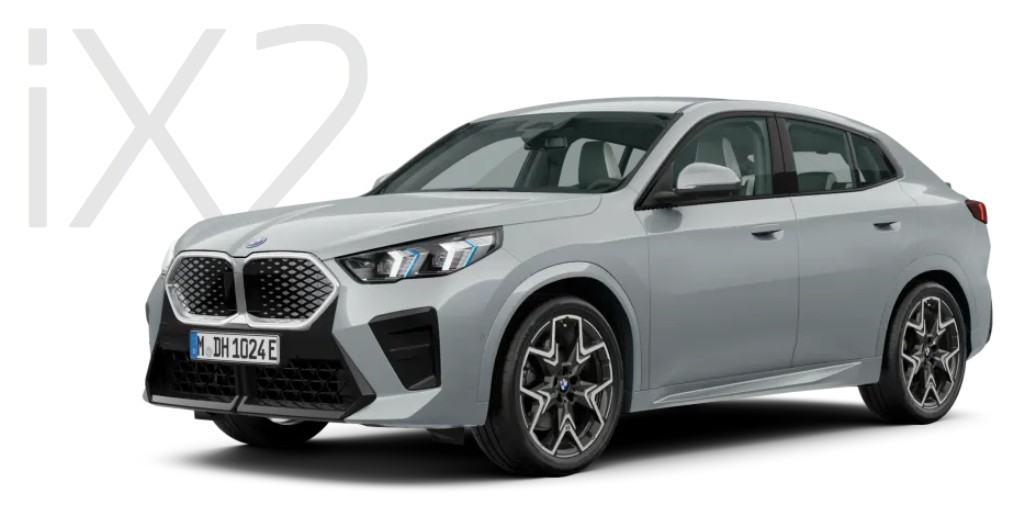
Choosing between the BMW iX2 vs Mercedes EQA feels a little like choosing between two different interpretations of the same premium-electric-SUV recipe. Both carry famous German badges. Both seat five. Both promise silent electric driving, sophisticated interiors, modern technology, and enough range for everyday life.
Yet spend a little time with their specifications and personalities, and the similarities begin to fade.
The BMW iX2 leans toward sportiness. Its sloping SUV-coupé body, sharper responses, and available dual-motor performance give it a more energetic character. The Mercedes EQA takes another path. It feels more conventional, softer around the edges, and focused on creating a comfortable transition from a petrol-powered compact Mercedes into an EV.
So, which one should we actually buy?
For many drivers, the answer will depend less on badges and more on priorities. Do we want acceleration and cargo room? The BMW immediately becomes attractive. Do we value a relaxed ride, compact dimensions, and Mercedes-style comfort? The EQA fights back.
Let's break down the BMW iX2 vs Mercedes EQA comparison properly.
Content in this publication
- BMW iX2 vs Mercedes EQA at a Glance
- BMW iX2 vs Mercedes EQA Exterior Design
- Which One Has the Better Interior?
- BMW iX2 vs Mercedes EQA Dimensions
- BMW iX2 vs Mercedes EQA Boot Space
- BMW iX2 vs Mercedes EQA Performance
- Driving Experience: Sportiness vs Comfort
- BMW iX2 vs Mercedes EQA Range
- BMW iX2 vs Mercedes EQA Charging
- Technology and Infotainment
- Comfort and Passenger Space
- Practicality for Families
- BMW iX2 vs Mercedes EQA for City Driving
- Which Is Better on Long Journeys?
- Running Costs and Maintenance
- BMW iX2 vs Mercedes EQA Reliability
- Which One Feels More Special?
- BMW iX2 vs Mercedes EQA: Pros and Cons
- Who Should Buy the BMW iX2?
- Who Should Buy the Mercedes EQA?
- BMW iX2 vs Mercedes EQA: Which Is the Better EV?
- Final Thoughts
- Frequently Asked Questions
BMW iX2 vs Mercedes EQA at a Glance
Before getting buried in numbers, here is the basic picture.
| Category | BMW iX2 | Mercedes EQA |
|---|---|---|
| Body style | Coupé-inspired compact SUV | Conventional compact SUV |
| Seats | 5 | 5 |
| Drive options | FWD or AWD depending on version | FWD or AWD depending on market/version |
| Character | Sporty and dynamic | Comfortable and refined |
| Boot space | Up to 525 litres | 340 litres on current EQA 250+ UK specification |
| Best suited to | Drivers wanting performance and practicality | Drivers prioritizing comfort and Mercedes ambience |
BMW officially lists 525 litres of luggage space, expanding to 1,400 litres with the rear seats folded, for the iX2. Mercedes lists 340 litres for the current UK-specification EQA 250+.
That difference alone tells us quite a lot. Although the iX2 looks less practical because of its dramatic roofline, it actually carries a surprisingly useful boot.
BMW iX2 vs Mercedes EQA Exterior Design
Design may be subjective, but these two vehicles clearly weren't drawn by people sitting at the same table.
The BMW iX2 Looks More Aggressive
The iX2 takes the traditional compact SUV and sends it to the gym.
Its roof slopes downward toward the rear, its body has a planted stance, and BMW's large kidney-grille treatment gives the front end considerable visual presence. BMW itself describes the vehicle as having an SUV-coupé silhouette.
Whether we love that look depends on our taste.
For buyers who want an EV that attracts attention, the iX2 has the advantage. It feels younger and more extroverted than the Mercedes.
The Coupé Roof Changes Its Personality
The roofline is particularly important because it makes the iX2 feel less like a traditional family crossover.
Park it beside a boxier electric SUV and the BMW almost seems to crouch.
There is a trade-off, of course. Coupé-SUV styling can reduce the feeling of openness around the rear passenger compartment, even when the actual cabin remains reasonably practical.
The Mercedes EQA Takes a Softer Approach
The EQA is more restrained.
Rather than shouting that it is an electric vehicle, it resembles a smoothly reworked compact Mercedes SUV. Its proportions are upright enough to remain practical, while rounded detailing and the distinctive lighting treatment add an EV identity.
Mercedes describes the EQA as a sporty compact SUV and positions it as an entry point into its all-electric vehicle world.
The difference is easy to summarize: the BMW tries harder to look sporty; the Mercedes tries harder to look elegant.
Which One Has the Better Interior?
Step inside and we find another philosophical divide.
BMW's cabin feels driver-oriented and contemporary. Mercedes puts more emphasis on visual luxury and the familiar MBUX experience.
Neither interior feels cheap, but they create different moods.
BMW iX2 Interior
The iX2 uses BMW's modern curved-display approach, combining digital instrumentation and infotainment into an expansive dashboard arrangement.
The dashboard is relatively clean, and physical controls have been reduced compared with older BMW interiors.
We may need some time to adapt if we're coming from a car filled with dedicated buttons, but the result looks modern.
BMW's cabin also suits the personality of the vehicle. The seating position and overall layout remind us that this is supposed to be the sportier member of this comparison.
Mercedes EQA Interior
The EQA cabin delivers more traditional Mercedes theatre.
Depending on specification, ambient lighting, turbine-style air vents, multiple trim finishes, and the MBUX interface create an interior that can feel more decorative than the BMW's.
Mercedes also offers features such as wireless smartphone integration and available Burmester surround sound in relevant markets and specifications.
Which Cabin Feels More Premium?
This one is close.
If we define premium as clean, contemporary design, the iX2 makes a strong argument.
If premium means ambient lighting, visual details, and a more lounge-like atmosphere, the EQA may feel more luxurious.
Our preference would depend heavily on specification because wheel designs, seat materials, trim packages, and optional equipment can dramatically change both vehicles.
BMW iX2 vs Mercedes EQA Dimensions
These EVs occupy roughly the same premium compact-SUV universe, although the BMW is slightly longer.
BMW lists the iX2 at approximately 4,554 mm long, 1,845 mm wide, and around 1.6 metres tall. Mercedes lists the EQA at 4,463 mm long, 1,834 mm wide without mirrors, and 1,608 mm tall in current UK specifications.
The difference in length is roughly nine centimetres.
That doesn't sound dramatic, but in a crowded city parking garage, every centimetre suddenly becomes interesting.
Mercedes EQA Has the Smaller Footprint
If urban manoeuvrability is our priority, the Mercedes has an advantage simply because it takes up slightly less road.
Mercedes lists an 11.4-metre turning circle for the EQA 250+.
For buyers living with tight streets and compact parking spaces, the EQA's dimensions may therefore be easier to manage.
BMW iX2 vs Mercedes EQA Boot Space
Here we reach one of the BMW's strongest points.
The iX2 provides 525 litres behind the rear seats and as much as 1,400 litres when the rear seatbacks are folded.
The current UK EQA 250+ specification lists 340 litres.
That's a substantial difference.
BMW iX2 Is the Better Luggage Carrier
We could assume the Mercedes would win because it has the more conventional roofline.
Surprise.
The BMW's cargo area is considerably larger on these published specifications.
That matters if we're regularly carrying pushchairs, suitcases, groceries, sports equipment, or the mysterious mountain of belongings that somehow follows small children everywhere.
For pure boot capacity, the iX2 wins clearly.
BMW iX2 vs Mercedes EQA Performance
This is where the comparison becomes tricky because both models are sold in different configurations depending on country.
Rather than pretending every iX2 and every EQA performs identically, we need to compare the broad model strategies.
BMW iX2 eDrive20: The Sensible Choice
The iX2 eDrive20 uses a single electric motor driving the front wheels.
BMW publishes 150 kW (204 hp) and 250 Nm of torque for this powertrain, with 0–100 km/h taking around 8.6 seconds in relevant specifications.
That's hardly slow.
It simply doesn't deliver the neck-snapping acceleration associated with some high-performance EVs.
For commuting, motorway driving, and everyday family use, it should be plenty.
BMW iX2 xDrive30: Considerably Quicker
Move into the xDrive30 and the BMW suddenly grows claws.
BMW quotes approximately 5.6 seconds from 0–100 km/h for this version.
That is proper performance-car territory by family-SUV standards.
The xDrive30 also brings all-wheel-drive traction, making it much more appealing to buyers who want strong acceleration or regularly drive in difficult weather.
Mercedes EQA Performance
The current EQA 250+ listed by Mercedes-Benz UK produces 140 kW, equivalent to 190 hp.
Mercedes has historically offered additional EQA configurations in different markets, so shoppers should compare the exact local variant rather than assuming every EQA shares identical power and drivetrain hardware.
Who Wins for Speed?
Against the EQA 250+, the BMW iX2 xDrive30 is the obvious performance choice.
The comparison becomes closer when we consider the front-wheel-drive iX2 eDrive20.
You may be interested in reading Ford Ka vs Hyundai i10: Which Small Car Is Better?
But overall, the BMW offers the more overtly performance-focused personality.
Driving Experience: Sportiness vs Comfort
Specifications can tell us how fast a vehicle reaches 100 km/h.
They can't completely describe how it feels getting there.
The iX2 follows BMW's familiar strategy: give the driver more involvement.
The EQA is happier playing the comfort card.
BMW iX2 Feels Like the Driver's Choice
The BMW's low-looking stance and sporty presentation create expectations before we've even pressed the accelerator.
It's the one we'd choose if our weekend journey includes a twisty road and we don't want the steering wheel to feel like an appliance control.
Even its faster configurations reinforce that identity.
Mercedes EQA Prioritizes Relaxation
The Mercedes philosophy fits EV driving extremely well.
Electric motors are quiet. Power delivery is smooth. There are no traditional gear changes.
Add Mercedes' comfort-focused character and the EQA becomes the kind of vehicle that makes a long commute feel less exhausting.
Neither approach is objectively better.
Think of the BMW as a tailored sports jacket and the Mercedes as an expensive sofa. One makes us want to move. The other makes us want to settle in.
BMW iX2 vs Mercedes EQA Range
Electric range deserves careful interpretation because it can change with wheels, trim, weather, driving conditions, test cycle, and market configuration.
BMW's current UK page states a 65 kWh battery for the iX2 eDrive20 and quotes range of up to 320 miles for the specified version.
BMW publishes different WLTP figures for different iX2 versions and markets. For example, another official BMW market page quotes approximately 446–479 km WLTP for the iX2 xDrive30.
The current Mercedes-Benz UK EQA 250+ specification uses a 70 kWh usable battery.
This is why we should never compare EVs by grabbing two random range figures from different markets or test procedures.
Real-World Range Matters More Than Brochure Range
A vehicle may claim an impressive laboratory figure and still travel considerably less when it's freezing outside, cruising quickly on a motorway, or wearing large wheels.
Before buying either car, we would compare the exact versions available locally.
The sensible method is to consider:
- official WLTP range for the exact trim;
- motorway efficiency;
- winter efficiency;
- battery size;
- wheel diameter;
- heat-pump availability;
- and the charging network along our normal routes.
In everyday ownership, usable range matters far more than winning a brochure-number contest.
BMW iX2 vs Mercedes EQA Charging
Charging is another area where specifications need context.
BMW states that the current UK iX2 eDrive20 can charge from 10 to 80 percent in around 29 minutes under appropriate DC fast-charging conditions.
Mercedes lists 11 kW maximum AC charging and a 70 kWh usable battery for the current EQA 250+ UK specification.
In practice, charging convenience depends on more than peak power.
A car that holds strong charging speeds throughout a session can sometimes be more useful on a long journey than one boasting a higher theoretical peak for only a brief period.
Home Charging Changes Everything
If we can install a wallbox at home, EV ownership becomes dramatically simpler.
Instead of thinking like petrol-car owners — drive until nearly empty and then refuel — we start treating the vehicle like a smartphone.
Park.
Plug in.
Wake up charged.
With that routine, the difference between these cars' public charging performance may matter much less to a driver covering modest daily distances.
Technology and Infotainment
Neither brand arrives empty-handed here.
BMW and Mercedes have spent years turning dashboards into miniature technology centres.
BMW Technology
BMW's modern infotainment environment integrates navigation, media, vehicle settings, connected features, and digital instrumentation.
The curved-screen presentation gives the iX2 a particularly modern appearance.
There's a learning curve, especially if we prefer physical buttons, but once familiar with the interface, the cockpit feels properly futuristic.
Mercedes MBUX
Mercedes-Benz's MBUX system remains one of the defining parts of the EQA experience.
Mercedes highlights Navigation with Electric Intelligence, ECO Assist, recuperation functions, and Plug & Charge capabilities among the EQA's available electric-driving technologies.
The system's biggest strength is how much information it can integrate into the driving experience.
Which Has Better Tech?
This largely comes down to preference.
BMW's interface feels modern and driver-centred.
Mercedes offers more visual flair.
Anyone seriously considering both should spend 20 minutes using each infotainment system before ordering. It's like choosing a smartphone ecosystem: tiny frustrations encountered every day matter more than impressive features we use twice a year.
Comfort and Passenger Space
Five adults can technically sit in either vehicle, but not all five-seat SUVs treat five adults equally.
The EQA's more traditional shape helps give it an airy impression.
The iX2 sacrifices some visual openness for style, especially around the rear.
Front-Seat Comfort
Both vehicles offer the supportive seating and broad adjustment we'd expect from premium German brands, although exact features depend on trim and options.
The iX2 will appeal more to drivers who enjoy a cockpit-like seating environment.
The EQA feels more relaxed.
Rear-Seat Considerations
The BMW's sloping roof deserves attention if we regularly carry tall rear passengers.
We wouldn't reject it automatically, but we'd definitely perform the old-fashioned test dealerships sometimes make us forget: sit in the back ourselves.
Numbers don't tell us whether our head touches the roof.
Practicality for Families
If family practicality is our main concern, the BMW's larger published luggage capacity gives it a meaningful advantage.
That 525-litre boot makes the iX2 much easier to recommend to owners who routinely carry substantial luggage.
Yet the EQA has its own appeal.
Its slightly shorter body may be more convenient around town, and its traditional SUV design feels straightforward and approachable.
So the practical winner depends on what kind of practicality we're talking about.
Need maximum cargo volume? BMW.
Need compact exterior dimensions? Mercedes.
BMW iX2 vs Mercedes EQA for City Driving
Electric SUVs shine in cities.
There's no engine vibration while waiting at traffic lights. Instant torque makes gaps easy to exploit. Regenerative braking can reduce how often we touch the brake pedal.
Between these two, we'd give the EQA a slight advantage for pure urban convenience because of its shorter overall length.
But the difference isn't huge.
The iX2 remains compact enough to use as a daily city car and gives us substantially more boot capacity.
You may be interested in readingFord Ka vs Hyundai i10: Which Small Car Is Better?You may be interested in reading
Ford Ka vs Fiesta: Which Is Better for First-Time Buyers?Which Is Better on Long Journeys?
Long-distance EV driving exposes weaknesses very quickly.
A beautiful interior won't cheer us up much if every motorway stop turns into a charging puzzle.
The right choice depends on the exact powertrain, battery, wheels, charging curve, climate, and local charging infrastructure.
The iX2 eDrive20's published range figures make it particularly interesting for distance driving, while its approximately 29-minute quoted 10–80 percent fast-charging time is competitive for the segment.
The EQA 250+ counters with its larger 70 kWh usable battery in current UK specification.
Neither should be judged using one number alone.
Running Costs and Maintenance
Electric vehicles eliminate several familiar combustion-engine maintenance items.
We don't have engine oil to replace. There are no spark plugs. There isn't a traditional exhaust system rusting away beneath the car.
That doesn't make either BMW or Mercedes maintenance-free.
Tyres, suspension components, cabin filters, brake fluid, air conditioning, electronics, brakes, and eventually suspension wear still exist.
Tyres Can Be Expensive
Heavy EVs can be surprisingly hungry for tyres, especially if we enjoy that instant torque.
Large optional wheels may also increase replacement costs.
So if minimizing ownership cost matters, the most spectacular wheel design in the showroom may not be the smartest option.
Insurance Should Be Checked Before Buying
Premium EV repair bills can be substantial.
Sensors, cameras, complex lighting, body panels, battery-related procedures, and specialist labour all influence insurance calculations.
Rather than guessing which vehicle will cost less, we would obtain insurance quotes for the exact iX2 and EQA registration/specification before signing anything.
BMW iX2 vs Mercedes EQA Reliability
Predicting long-term reliability for relatively modern electric vehicles is difficult.
Both manufacturers have extensive engineering resources, but complexity remains complexity.
Modern EVs contain sophisticated battery-management systems, thermal-management hardware, software, sensors, driver-assistance technology, power electronics, and large infotainment systems.
The electric motor itself may be mechanically simple. The vehicle around it isn't.
For used examples, service history, remaining battery warranty, software updates, accident history, tyre condition, and evidence of charging problems matter enormously.
Which One Feels More Special?
This category isn't scientific, yet luxury-car purchases rarely are.
We don't spend premium-car money based entirely on spreadsheets.
The iX2 feels more distinctive from the outside. Its coupé-SUV silhouette gives it an identity that is difficult to mistake for a conventional crossover.
The EQA feels more traditional.
That can either make the Mercedes seem less exciting or more timeless, depending on what we want.
BMW iX2 vs Mercedes EQA: Pros and Cons
The BMW iX2's strongest qualities are its much larger published luggage compartment, sportier design, powerful xDrive30 option, and driver-focused personality. Its drawbacks include polarizing styling, a coupé roofline that won't suit everybody, and potentially higher costs once we start adding desirable options.
The Mercedes EQA's strengths lie in its compact dimensions, comfortable character, attractive cabin ambience, established MBUX interface, and relatively conventional SUV shape. Its biggest weakness in this comparison is the modest 340-litre boot capacity listed for the current UK EQA 250+.
Who Should Buy the BMW iX2?
We would lean toward the BMW if we want driving enjoyment to remain part of the EV experience.
It's particularly attractive if we value cargo space but dislike boxy SUVs.
The xDrive30 also gives performance-minded shoppers something the more efficiency-focused variants can't quite replicate: acceleration that makes overtaking ridiculously effortless.
For families, that large boot may unexpectedly become the deciding feature.
Who Should Buy the Mercedes EQA?
The EQA makes more sense if comfort is higher on our priority list.
Drivers already accustomed to Mercedes-Benz products may also find the transition easier because the EQA retains much of the brand's familiar design language and digital ecosystem.
For mostly urban driving, its shorter body is another small but useful advantage.
And some buyers simply prefer its understated styling.
There's nothing wrong with that.
Not every electric vehicle needs to look as though it arrived from 2035 yesterday afternoon.
BMW iX2 vs Mercedes EQA: Which Is the Better EV?
If we judge purely on versatility, performance potential, and cargo capacity, the BMW iX2 wins this comparison.
The difference in boot space is especially difficult to ignore. BMW publishes 525 litres for the iX2, compared with 340 litres for the current EQA 250+ UK specification.
Add the rapid xDrive30 variant and the BMW begins to feel like the broader all-round package.
But that doesn't automatically make the EQA the wrong choice.
Mercedes offers something softer and more familiar. The EQA feels less like an electric sports crossover and more like an electric interpretation of the traditional premium compact SUV.
Some of us will prefer exactly that.
Our Verdict
Choose the BMW iX2 if we want:
stronger performance potential, dramatically more luggage space on the quoted specifications, bold coupé-inspired styling, and a more driver-focused personality.
Choose the Mercedes EQA if we want:
a slightly more compact body, comfortable driving manners, a traditional SUV appearance, and the distinctive Mercedes cabin experience.
Overall, the iX2 is the car we'd pick for buyers trying to combine fun, practicality, and EV efficiency in one package.
The EQA remains appealing, but the BMW simply offers more versatility.
Final Thoughts
The interesting thing about the BMW iX2 vs Mercedes EQA battle is that neither vehicle needs to destroy the other to make sense.
They're aimed at slightly different drivers.
The EQA is the calmer companion. It wants to glide through traffic, keep us comfortable, and make going electric feel reassuringly familiar.
The iX2 has more attitude.
It looks faster even when parked, offers significantly more published cargo capacity, and in xDrive30 form can sprint from 0–100 km/h in around 5.6 seconds.
For us, that makes the BMW the more convincing all-rounder.
But before buying either, test-drive the exact trim you're considering, check local WLTP figures, obtain an insurance quote, inspect charging options near home and along regular routes, and actually sit in every seat.
A premium EV isn't just a battery with leather wrapped around it.
It's something we may live with every day for years.
The right one is therefore not necessarily the car with the biggest number on the specification sheet.
It's the one whose compromises we barely notice.
Frequently Asked Questions
1. Is the BMW iX2 better than the Mercedes EQA?
For buyers prioritizing cargo capacity, performance, and sporty driving, we think the BMW iX2 has the advantage. The Mercedes EQA remains a compelling choice for buyers who prioritize comfort, compact dimensions, and a traditional premium-SUV experience.
2. Which has more boot space, BMW iX2 or Mercedes EQA?
The BMW iX2 has considerably more published luggage space in the specifications compared here. BMW lists 525 litres with the rear seats upright and up to 1,400 litres folded, while Mercedes-Benz UK lists 340 litres for the EQA 250+.
3. Which is faster, BMW iX2 or Mercedes EQA?
It depends on the version. The BMW iX2 xDrive30 is the performance star of this comparison, with BMW quoting approximately 5.6 seconds from 0–100 km/h. The front-wheel-drive iX2 eDrive20 is significantly slower at roughly 8.6 seconds.
4. Which is better for families, BMW iX2 or Mercedes EQA?
We would generally choose the BMW iX2 because its larger luggage compartment makes family trips easier. Families should nevertheless check rear headroom personally because the iX2's coupé-like roof may matter if tall passengers regularly sit in the back.
5. Which should we buy: BMW iX2 or Mercedes EQA?
Buy the BMW iX2 if performance, sporty styling, and luggage capacity matter most. Choose the Mercedes EQA if comfort, compact exterior dimensions, and Mercedes-style interior ambience matter more. Because specifications differ between markets, always compare the exact locally available versions before ordering.
You may be interested in readingFord Ka vs Hyundai i10: Which Small Car Is Better?You may be interested in reading
Ford Ka vs Fiesta: Which Is Better for First-Time Buyers?You may be interested in reading
Ford Ka or Vauxhall Corsa: Which Small Car Should We Buy?If you want to know other articles similar to BMW iX2 vs Mercedes EQA: Which Electric SUV Is Better? you can visit the category Models.
Honda Passport vs Toyota 4Runner: Which SUV Is Better?
Honda Passport vs Ford Bronco: Which SUV Is Better?
Honda Passport vs Ford Explorer: Which SUV Is Better?
Honda Passport or Pilot: Which SUV Is Better?
Honda Passport vs Jeep Grand Cherokee: Which SUV Is Better?
Honda Passport vs Nissan Pathfinder: Which SUV Is Better?
Leave a Reply
More content of your interest