
Hyundai Santa Fe Pros and Cons: Is It Worth Buying?

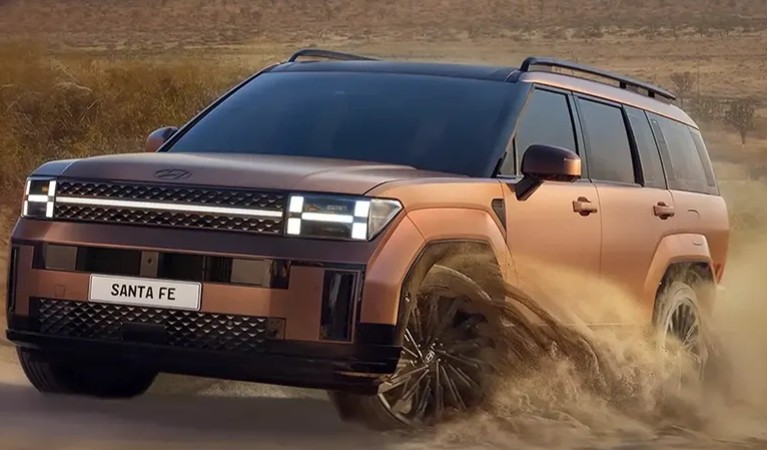
The Hyundai Santa Fe has spent years carving out a comfortable place in the crowded SUV market. It sits in that useful middle ground where families get plenty of space without necessarily having to drive something that feels like a school bus. Add a long list of features, several powertrain choices across different generations, and Hyundai's reputation for delivering plenty of equipment for the money, and we can see why the Santa Fe keeps appearing on shopping lists.
Still, no SUV is perfect.
When we look closely at the Hyundai Santa Fe pros and cons, we find a vehicle with impressive comfort, practicality, technology, and value, but also a few weaknesses involving driving dynamics, third-row usability on applicable models, long-term complexity, and differences between engines and generations.
So, is the Santa Fe genuinely a smart buy, or does the attractive equipment list hide compromises?
Let's break it down.
Content in this publication
- Quick Overview of Hyundai Santa Fe Pros and Cons
- What Kind of SUV Is the Hyundai Santa Fe?
- Hyundai Santa Fe Pro #1: Excellent Interior Space
- Hyundai Santa Fe Pro #2: Practical Cargo Capacity
- Hyundai Santa Fe Pro #3: Comfortable Ride Quality
- Hyundai Santa Fe Pro #4: Lots of Features for the Money
- Hyundai Santa Fe Pro #5: Attractive Modern Interior
- Hyundai Santa Fe Pro #6: Strong Safety Technology
- Hyundai Santa Fe Pro #7: Multiple Powertrain Choices
- Hyundai Santa Fe Pro #8: Easy Driving Character
- Hyundai Santa Fe Pro #9: Good Family-SUV Personality
- Hyundai Santa Fe Con #1: Not Every Engine Is Equally Appealing
- Hyundai Santa Fe Con #2: Fuel Economy Can Be Average
- Hyundai Santa Fe Con #3: Handling Is More Comfortable Than Sporty
- Hyundai Santa Fe Con #4: Some Older Models Require Careful Research
- Hyundai Santa Fe Con #5: Newer Versions Can Become Expensive
- Hyundai Santa Fe Con #6: Third-Row Space Can Be Compromised
- Hyundai Santa Fe Con #7: More Technology Means More Complexity
- Hyundai Santa Fe Con #8: Bold Styling Won't Appeal to Everyone
- Hyundai Santa Fe Pros and Cons for Families
- Hyundai Santa Fe Pros and Cons for Commuters
- Hyundai Santa Fe Pros and Cons for Road Trips
- Hyundai Santa Fe Pros and Cons for Used-Car Buyers
- Is the Hyundai Santa Fe Expensive to Maintain?
- Is the Hyundai Santa Fe Reliable?
- Hyundai Santa Fe vs Smaller SUVs
- Hyundai Santa Fe vs Larger Three-Row SUVs
- Who Should Buy a Hyundai Santa Fe?
- Who Might Want to Look Elsewhere?
- How to Choose the Best Hyundai Santa Fe
- Are the Hyundai Santa Fe Pros Greater Than the Cons?
- Final Verdict: Hyundai Santa Fe Pros and Cons
- Frequently Asked Questions
Quick Overview of Hyundai Santa Fe Pros and Cons
Before diving deeper, here's the short version.
Main Hyundai Santa Fe Pros
- Comfortable and spacious cabin
- Strong equipment levels for the money
- Practical cargo area
- Good family-friendly design
- Available hybrid options on newer generations
- Generally easy and relaxing to drive
- Attractive interior design on recent models
- Strong safety technology availability
- Competitive ownership value
- Useful SUV versatility
Main Hyundai Santa Fe Cons
- Some engines feel more impressive than others
- Certain older models have known reliability concerns
- Handling is usually comfort-focused rather than sporty
- Large wheels can reduce ride comfort
- Newer versions can become expensive in higher trims
- Third-row space varies significantly by generation and market
- Complex electronics may increase repair costs as vehicles age
- Fuel economy on conventional gasoline models can be average
That sounds fairly balanced, doesn't it? The Santa Fe's strengths are mostly things families use every day, while its weaknesses tend to become more noticeable depending on the engine, trim, model year, and expectations of the buyer.
What Kind of SUV Is the Hyundai Santa Fe?
The Santa Fe is generally positioned as a midsize crossover SUV.
Across its long production history, however, it has changed dramatically. Earlier generations were relatively simple family SUVs. Later versions became more refined, technologically advanced, and premium-looking.
That distinction matters.
Comparing an older Santa Fe with a recent model is almost like comparing a flip phone with a modern smartphone. They perform the same fundamental job, yet the experience has changed enormously.
Recent Santa Fe models emphasize interior space, comfort, technology, and distinctive styling. Older examples can represent affordable used-SUV transportation, but condition and maintenance history become increasingly important.
Hyundai Santa Fe Pro #1: Excellent Interior Space
One of the biggest advantages of the Santa Fe is usable passenger space.
Hyundai usually gives occupants generous headroom and legroom, particularly in the first two rows. Adults can sit comfortably without constantly negotiating knee room.
For families, that matters more than dramatic horsepower numbers.
Rear-Seat Comfort Is a Major Strength
The second row is often especially useful.
Depending on the year and configuration, passengers may benefit from reclining seatbacks, adjustable seating positions, charging ports, ventilation outlets, and generous door openings.
Think about installing a child seat. A narrow doorway can turn the process into a wrestling match. A broad opening and spacious rear bench make everyday life considerably easier.
A Roomy Cabin Makes Long Trips Better
Space also affects how relaxed a vehicle feels.
When passengers aren't shoulder-to-shoulder, road trips become less tiring. Adults can stretch, children have more personal space, and bags don't immediately invade the passenger compartment.
For many buyers, that alone places the Santa Fe ahead of smaller compact SUVs.
Hyundai Santa Fe Pro #2: Practical Cargo Capacity
The Santa Fe is also a capable cargo carrier.
Fold the rear seats and the vehicle can handle grocery runs, luggage, camping equipment, sports gear, furniture boxes, and the other random things life throws into an SUV.
The Boxy Design of Newer Models Helps
On newer Santa Fe generations, the increasingly upright body shape can be particularly useful.
A cargo bay isn't valuable only because of its official capacity. Shape matters.
A tall, square loading area is like a good suitcase: we can actually use the available volume instead of losing space to awkward curves and sharply sloping rooflines.
The Wide Tailgate Adds Convenience
Depending on the generation, the Santa Fe's rear opening can make loading bulky objects relatively straightforward.
That's useful if we're regularly carrying:
- Baby equipment
- Bicycles
- Camping gear
- Suitcases
- DIY materials
- Pet crates
- Sports equipment
This isn't glamorous, but practicality is often what makes us appreciate an SUV after the excitement of buying it has faded.
Hyundai Santa Fe Pro #3: Comfortable Ride Quality
The Santa Fe typically favors comfort.
Rather than trying to impersonate a sports car on stilts, most versions are tuned to make commuting and highway travel easy.
That's sensible.
We rarely attack mountain roads during the school run. Most SUV owners spend their time driving through traffic, cruising on highways, negotiating parking lots, and navigating ordinary suburban roads.
Suspension Tuning Works Well for Everyday Driving
In many Santa Fe models, the suspension absorbs regular bumps effectively and creates a relaxed driving character.
Small road imperfections are usually softened rather than transmitted sharply into the cabin.
Wheel Size Can Affect Comfort
There is one catch.
Larger wheels and lower-profile tires can make some higher trims noticeably firmer.
They may look fantastic, but physics always collects its payment. Less tire sidewall means less cushioning between the cabin and broken pavement.
If ride comfort is your priority, don't automatically assume the biggest available wheel is the best choice.
Hyundai Santa Fe Pro #4: Lots of Features for the Money
Value has historically been one of Hyundai's strongest weapons.
The Santa Fe often includes features that might require expensive option packages from rival manufacturers.
Depending on generation and trim, equipment may include items such as:
- Heated seats
- Ventilated seats
- Large infotainment displays
- Digital instrument panels
- Smartphone connectivity
- Surround-view cameras
- Power tailgate
- Panoramic roof
- Premium audio
- Driver-assistance technology
- Wireless charging
That long equipment list helps explain why buyers frequently cross-shop the Santa Fe against both mainstream and more premium SUVs.
Hyundai Santa Fe Pro #5: Attractive Modern Interior
Recent Santa Fe interiors can feel considerably more upscale than many people expect from a mainstream Hyundai.
The cabins often combine large screens, useful storage areas, clean dashboard layouts, and soft-touch materials.
It Can Feel More Expensive Than It Is
That's one of the Santa Fe's clever tricks.
Some competitors focus heavily on their badge. Hyundai often focuses on what drivers actually touch and use.
A comfortable steering wheel, sensible storage, attractive screens, good seat materials, and practical controls can make a cabin feel premium without requiring a luxury-brand price tag.
Of course, entry-level versions won't necessarily offer the same finish as top trims, but the overall design has improved dramatically over the years.
Hyundai Santa Fe Pro #6: Strong Safety Technology
Safety is another important attraction.
Newer Santa Fe models commonly offer a broad selection of driver-assistance systems.
Depending on model year and specification, these can include technologies designed to assist with:
- Forward collision avoidance
- Blind-spot monitoring
- Lane keeping
- Lane following
- Rear cross-traffic awareness
- Adaptive cruise control
- Parking assistance
- Driver-attention monitoring
We should still treat these systems as assistants rather than substitute drivers, but they can reduce stress during everyday driving.
Hyundai Santa Fe Pro #7: Multiple Powertrain Choices
Another advantage is variety.
Across different markets and generations, the Santa Fe has been available with naturally aspirated gasoline engines, turbocharged engines, diesel engines, hybrid systems, and plug-in hybrid configurations.
That gives buyers more freedom.
Conventional Gasoline Models Keep Things Familiar
A traditional gasoline engine is straightforward for drivers who don't want to think about charging or hybrid operation.
Turbo Engines Add Stronger Performance
Turbocharged versions can provide considerably stronger acceleration.
That's particularly noticeable during highway merging or overtaking.
Hybrid Models Can Improve Efficiency
For buyers who spend significant time in urban or mixed driving, hybrid versions can make the Santa Fe much more appealing.
A hybrid doesn't magically eliminate fuel costs, but recovering energy and using electric assistance can help reduce fuel consumption compared with a similarly sized conventional SUV.
Hyundai Santa Fe Pro #8: Easy Driving Character
The Santa Fe generally feels approachable.
Visibility is usually decent, steering tends to be manageable, and controls are designed for ordinary drivers rather than enthusiast experimentation.
That makes it attractive for families moving from a sedan or smaller crossover.
It Doesn't Feel Intimidating
Large SUVs can sometimes feel like steering a small apartment building.
The Santa Fe usually avoids that sensation.
You may be interested in reading Hyundai Santa Fe Life Expectancy: How Long Can It Really Last?
Even when the exterior dimensions increase, its driving environment typically remains friendly enough for urban use.
Parking cameras and driver-assistance features can further reduce the anxiety that comes with maneuvering a larger vehicle.
Hyundai Santa Fe Pro #9: Good Family-SUV Personality
Perhaps the Santa Fe's greatest strength is not one particular feature.
It's the combination.
Space, comfort, equipment, storage, safety technology, and reasonable drivability come together in a package that makes sense for families.
It's the automotive equivalent of a well-designed backpack. No single pocket changes your life, but everything is placed where you need it.
Hyundai Santa Fe Con #1: Not Every Engine Is Equally Appealing
Now we reach the other side of the equation.
One problem with evaluating the Santa Fe as a whole is that different engines can produce very different experiences.
Some offer relaxed performance. Others feel noticeably stronger.
Certain versions prioritize fuel efficiency, while others focus more heavily on power.
Base Engines May Feel Modest
In a large SUV loaded with passengers and luggage, a less powerful engine can sometimes feel strained.
That's especially noticeable when accelerating uphill or passing at highway speeds.
If performance matters, we should always test-drive the exact engine we're considering rather than assuming every Santa Fe drives the same way.
Hyundai Santa Fe Con #2: Fuel Economy Can Be Average
Conventional gasoline Santa Fe models aren't always fuel-economy champions.
The reason is straightforward: moving a midsize SUV requires energy.
Add all-wheel drive, large wheels, passengers, cargo, air conditioning, and urban traffic, and consumption can rise quickly.
Hybrid Versions Can Be More Attractive for Heavy Commuters
Buyers covering large annual distances may therefore find the hybrid versions particularly interesting.
But the equation depends on purchase price, local fuel costs, annual mileage, and how long we intend to keep the vehicle.
Hyundai Santa Fe Con #3: Handling Is More Comfortable Than Sporty
Comfort-focused suspension comes with a trade-off.
Push a Santa Fe aggressively through corners and it generally won't feel as sharp as SUVs deliberately tuned for enthusiastic driving.
Body movement may be more noticeable, and steering feedback can feel lighter.
Is that a serious flaw?
For most families, probably not.
But drivers who want an SUV that behaves like a sport sedan may prefer alternatives with firmer suspension and more communicative steering.
Hyundai Santa Fe Con #4: Some Older Models Require Careful Research
Used Santa Fe buyers should pay close attention to model year, engine, mileage, service history, and local specifications.
The Santa Fe has been produced for decades, and reliability experiences aren't identical across every generation or powertrain.
Maintenance History Matters More as the Vehicle Ages
An inexpensive used SUV can become very expensive when maintenance has been neglected.
Before buying, check:
- Engine behavior
- Transmission operation
- Fluid leaks
- Cooling system condition
- Suspension noises
- Warning lights
- Service records
- Recall completion where applicable
- Tire wear patterns
- Electrical accessories
- Air-conditioning performance
A pre-purchase inspection is often money well spent.
Hyundai Santa Fe Con #5: Newer Versions Can Become Expensive
The Santa Fe's reputation for value doesn't mean every version is cheap.
High trims with premium interiors, advanced technology, large wheels, upgraded drivetrains, and hybrid systems can command substantial prices.
At that level, competition becomes much stronger.
Suddenly we're no longer asking whether the Santa Fe is well equipped. We're asking whether it is better than several similarly priced alternatives.
Top Trim Doesn't Always Mean Best Value
This is why mid-level trims often make the most sense.
They can provide the useful technology we actually want without forcing us to pay for every available luxury feature.
Think of it like ordering coffee. Sometimes the medium size is the sweet spot; adding six syrups, whipped cream, and gold flakes doesn't necessarily improve the drink.
Hyundai Santa Fe Con #6: Third-Row Space Can Be Compromised
The Santa Fe's seating configuration varies by generation and region.
On versions equipped with three rows, the third row may be better suited to children or shorter journeys depending on the specific model.
Recent designs can improve usefulness, but buyers who regularly carry six or seven adults should test the seats themselves.
Don't Judge Third-Row Space From Photos
Wide-angle promotional images can make any third row look enormous.
Sit in it.
Check knee room, headroom, foot space, access, visibility, and whether luggage remains usable behind the seats.
If the third row will be occupied every day, a larger three-row SUV may be the better solution.
Hyundai Santa Fe Con #7: More Technology Means More Complexity
Modern vehicles are rolling computers.
The Santa Fe is no exception.
Large displays, cameras, sensors, power accessories, hybrid systems, radar modules, electronic parking brakes, and advanced driver-assistance features can make ownership more convenient.
They can also create more things that may eventually require diagnosis.
Long-Term Owners Should Consider Repair Complexity
This doesn't mean the technology is unreliable.
It means modern repairs can be expensive when a component does fail.
A broken mechanical switch might once have cost very little. A damaged camera or sensor system may require parts, scanning, calibration, and specialist labor.
Used buyers should therefore consider not just purchase price, but long-term maintenance affordability.
Hyundai Santa Fe Con #8: Bold Styling Won't Appeal to Everyone
Recent Santa Fe styling is intentionally distinctive.
Its boxier shape gives it presence and improves practicality, but design is subjective.
Some people love the rugged, architectural appearance.
Others may prefer the softer curves of traditional crossovers.
There's no technical answer here. Styling either clicks with us or it doesn't.
Still, distinctive design has one advantage: the Santa Fe is unlikely to disappear into a parking lot full of anonymous SUVs.
Hyundai Santa Fe Pros and Cons for Families
For families, the balance usually leans positive.
The Santa Fe offers exactly the qualities many households prioritize:
Family Benefits
- Spacious passenger area
- Useful cargo capacity
- Easy entry and exit
- Comfortable ride
- Available safety technology
- Plenty of storage
- Modern infotainment
- Flexible seating
Family Drawbacks
The biggest concerns tend to involve purchase cost on high trims, third-row limitations on certain versions, and the added complexity of modern technology.
For a four- or five-person household, however, the Santa Fe can be an especially sensible fit.
Hyundai Santa Fe Pros and Cons for Commuters
Daily commuters should focus heavily on powertrain selection.
A hybrid may make greater sense for frequent stop-and-go driving, while a conventional gasoline model might remain perfectly adequate for lower annual mileage.
Comfort is a clear strength.
Sit behind the wheel for an hour every day and seat design, cabin noise, visibility, and ride quality become much more important than flashy showroom features.
The Santa Fe generally performs well in those everyday areas.
You may be interested in readingHyundai Santa Fe Life Expectancy: How Long Can It Really Last?You may be interested in reading
 Nissan Frontier Life Expectancy: How Many Miles Can It Last?
Hyundai Santa Fe Pros and Cons for Road Trips
Long-distance driving highlights some of the Santa Fe's best qualities.
The cabin is roomy, luggage space is generous, and comfort-oriented suspension helps reduce fatigue.
Driver-assistance features such as adaptive cruise control can also make highway travel less demanding when fitted.
The downside is fuel consumption.
A heavily loaded gasoline SUV moving at highway speeds won't sip fuel like a compact hatchback.
Still, the extra room can make that trade-off worthwhile.
Hyundai Santa Fe Pros and Cons for Used-Car Buyers
A used Santa Fe can offer a lot of SUV for the money.
Depreciation allows buyers to access higher trim levels and useful technology without paying the original new-car price.
But used examples must be judged individually.
What We Would Check Before Buying a Used Santa Fe
Look closely at:
- Complete service history
- Engine oil condition
- Transmission smoothness
- Dashboard warning lights
- Cooling-system operation
- Suspension noises
- Tire condition
- Electrical equipment
- Signs of accident repairs
- Outstanding recalls or campaigns where applicable
We would also research the exact engine and transmission combination because reliability can differ significantly across markets and model years.
Is the Hyundai Santa Fe Expensive to Maintain?
Maintenance cost depends on age, engine, drivetrain, location, and repair shop.
Routine servicing is generally easier to budget for than major repairs.
Oil changes, filters, brakes, tires, batteries, and fluids should be predictable expenses.
The bigger financial uncertainty appears as the vehicle ages and more complicated components enter the picture.
Hybrid vehicles bring additional technology, turbocharged engines add forced-induction hardware, and heavily equipped trims contain more electronic systems.
The best strategy is boring but effective: maintain the vehicle properly from day one.
Preventive maintenance rarely feels exciting, yet it is far cheaper than ignoring small problems until they become large ones.
Is the Hyundai Santa Fe Reliable?
There's no useful single-word answer.
Reliability depends heavily on the specific Santa Fe.
A well-maintained example from a strong model year may deliver years of dependable service, while a neglected vehicle can become troublesome regardless of brand reputation.
We should therefore avoid treating all Santa Fe generations as one mechanical product.
Check the exact:
- Model year
- Engine
- Transmission
- Drivetrain
- Country specification
- Service history
- Mileage
- Recall history
That's far more useful than relying on a generic reliability score.
Hyundai Santa Fe vs Smaller SUVs
Compared with compact SUVs, the Santa Fe usually gives us more space and stronger family versatility.
The trade-offs are predictable.
A larger vehicle tends to use more fuel, require more parking space, cost more to buy, and potentially use more expensive tires.
If we rarely carry passengers or luggage, a smaller SUV may be smarter.
If we constantly fill the back seats and cargo area, the Santa Fe's extra size starts earning its keep.
Hyundai Santa Fe vs Larger Three-Row SUVs
Compared with bigger SUVs, the Santa Fe can feel easier to maneuver and more economical.
That's the appeal of its middle-ground positioning.
However, families that regularly need substantial third-row room plus luggage capacity may eventually outgrow it.
The question isn't simply, "How many seats does it have?"
The better question is, "How many seats can we use comfortably while still carrying everything we need?"
Those are very different things.
Who Should Buy a Hyundai Santa Fe?
The Santa Fe makes the most sense for buyers who prioritize comfort, interior space, equipment, and everyday usability.
It can suit:
- Families with children
- Commuters wanting a comfortable SUV
- Buyers downsizing from larger SUVs
- Drivers upgrading from compact crossovers
- Road-trip enthusiasts
- Buyers wanting strong equipment levels
- People considering hybrid SUV ownership
It is particularly attractive when we find the right trim and powertrain rather than automatically choosing the most expensive version.
Who Might Want to Look Elsewhere?
The Santa Fe may not be ideal for everyone.
Performance-focused drivers may prefer something sharper.
Buyers who regularly carry seven adults may want a larger vehicle.
Drivers prioritizing maximum fuel economy might be happier in a smaller hybrid crossover.
And anyone shopping for an older used Santa Fe should research the specific model carefully instead of buying purely because the price looks attractive.
How to Choose the Best Hyundai Santa Fe
Choosing the right Santa Fe comes down to matching the vehicle to our real life.
Ask yourself:
How Many People Will We Regularly Carry?
Don't buy three rows simply because they sound useful.
How Much Do We Drive Each Year?
Higher mileage can make fuel efficiency more important.
Do We Need AWD?
All-wheel drive can be valuable in slippery conditions, but not every driver needs it.
Do We Need the Most Powerful Engine?
Stronger performance is enjoyable, but it may bring higher purchase or fuel costs.
Which Features Will We Actually Use?
Heated seats used every morning may be worthwhile.
A feature buried three menus deep that we use twice a year probably isn't.
Are the Hyundai Santa Fe Pros Greater Than the Cons?
For many buyers, yes.
The Santa Fe's greatest strengths are relevant every single day.
We notice comfortable seats every commute. We use cargo space every grocery run. We appreciate rear-seat room every time passengers climb aboard. We interact with infotainment, storage compartments, cameras, and safety systems constantly.
Most of the disadvantages depend more heavily on context.
Fuel economy matters more to high-mileage drivers. Third-row space matters only if we use the third row. Handling matters more to enthusiastic drivers. Long-term reliability concerns vary by model year and powertrain.
That's why the Santa Fe works well as a mainstream family SUV: its strengths are broad, while many of its weaknesses are situational.
Final Verdict: Hyundai Santa Fe Pros and Cons
When we weigh the Hyundai Santa Fe pros and cons, we find an SUV built primarily around everyday usefulness.
Its spacious cabin, practical cargo area, comfortable ride, strong technology package, family-friendly design, and available efficient powertrains make it easy to recommend for buyers who want versatility without moving into an enormous SUV.
There are compromises. Some engines feel stronger than others, traditional gasoline models can consume a fair amount of fuel, handling isn't especially sporty, and higher trims can become expensive. Used buyers also need to research individual model years carefully.
Still, the Santa Fe's formula is compelling.
It doesn't need to be the fastest SUV, the cheapest SUV, or the most luxurious SUV. It simply needs to make everyday life easier.
And in many ways, that's exactly what it does.
Frequently Asked Questions
1. What are the biggest advantages of the Hyundai Santa Fe?
The biggest advantages include its spacious interior, comfortable ride, practical cargo capacity, strong equipment levels, modern safety technology, and family-friendly design. Newer versions also offer hybrid powertrains that can improve fuel efficiency.
2. What are the main disadvantages of the Hyundai Santa Fe?
Potential disadvantages include average fuel economy on some gasoline models, comfort-focused rather than sporty handling, limited third-row usefulness on certain versions, higher prices for premium trims, and different reliability records across engines and generations.
3. Is the Hyundai Santa Fe a good family car?
Yes. The Santa Fe can be an excellent family vehicle because it combines generous passenger room, flexible cargo space, useful storage, comfortable suspension, and available driver-assistance technology. Families needing frequent seven-adult seating should carefully evaluate third-row space before buying.
You may be interested in readingHyundai Santa Fe Life Expectancy: How Long Can It Really Last?You may be interested in reading
Nissan Frontier Life Expectancy: How Many Miles Can It Last?You may be interested in reading
Nissan Frontier Quality: Is This Midsize Truck Actually Built to Last?4. Is a used Hyundai Santa Fe worth buying?
A used Santa Fe can offer excellent value when it has been properly maintained. However, buyers should research the exact model year, engine, transmission, and recall history, and arrange a professional pre-purchase inspection whenever possible.
5. Should we buy a Hyundai Santa Fe or a smaller SUV?
Choose the Santa Fe if you frequently carry passengers, luggage, child seats, pets, or recreational equipment. A smaller SUV may make more sense if easier parking, lower fuel consumption, and lower purchase costs matter more than additional cabin and cargo space.
If you want to know other articles similar to Hyundai Santa Fe Pros and Cons: Is It Worth Buying? you can visit the category Blog.
Volvo S90 Reliability: Problems, Costs & Best Years
Is Haval Jolion a Good Car? Honest Review, Reliability, Pros and Cons
How to Start Haval Jolion With Spare Key: Complete Guide
How to Calculate Per Diem on an Auto Loan

How to Calculate the Residual Value of a Car
Is the Honda Passport Selling Well? Sales Numbers Tell the Story
Leave a Reply
More content of your interest